Where to stay
Where to Stay in Florence: Which Neighborhood to Choose
We may earn a commission when you book through links on this page, at no extra cost to you. We don't visit or try the places we cover: we summarize published sources. How we work
In short
- For a first visit, the historic center around the Duomo lets you do everything on foot; the Oltrarno, across the Arno, is a calmer neighborhood choice.
- The Santa Maria Novella station area suits travelers without a car or with several train excursions; the historic center is a few minutes' walk away.
- Much of the center is a limited traffic zone (ZTL) with automatic fines: no car is needed in town, and a rental is best picked up when you leave Florence.
- Book several weeks ahead for spring, early fall and long weekends, with free cancellation if possible.
Florence is a compact city: most of its treasures fit within a perimeter you can cover on foot. Even so, the choice of neighborhood really changes the experience. Staying steps from the Duomo means waking up in the crowd of visitors from the first hour; staying in the Oltrarno means sharing the daily life of artisans and residents, crossing the river to reach the big museums.
Here is an overview of the main neighborhoods, with their strengths, limits and the traveler profile each suits best. If you have not set your dates yet, first see our guide to the best time to visit Tuscany.
The historic center around the Duomo
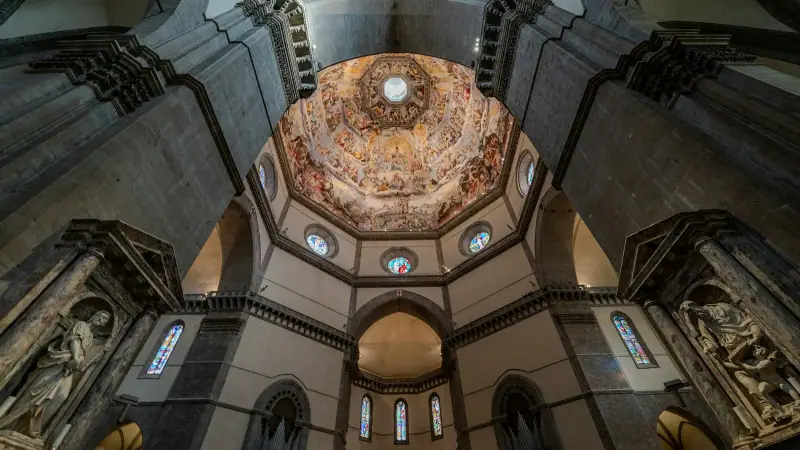
This is the choice for first stays. Santa Maria del Fiore cathedral, the baptistery, Piazza della Signoria and the Uffizi are a few minutes’ walk apart. You can go back to the hotel for a break in the middle of the day, which is precious in summer when the heat becomes oppressive.
This proximity has a price. Rates are among the highest in the city, the streets are very busy all day and until late in the evening, and rooms overlooking the main roads can be noisy. Ask for a courtyard-side room or a high floor if sleep is a priority.
A large part of the center is a limited traffic zone (ZTL): if you arrive by car, ask your accommodation before driving into these streets, because fines are automatic.
Ideal for: a first visit, a short stay of two or three days, those who want to do everything on foot.
Hotels in Florence
Compare hotels in the historic center and book early, especially in spring and fall.
The Santa Maria Novella station area
Florence’s main station is the arrival point for most travelers by train, and the neighborhood around it is a good compromise for those juggling excursions. From the station, trains serve Pisa, Siena (a slightly longer trip, sometimes with a change) and other Tuscan cities, and the historic center is a short quarter-hour walk.
The neighborhood is more functional than romantic: the surroundings of the station are lively, sometimes a bit rowdy in the evening, and the architecture is less picturesque than in the heart of the old town. In return, the hotel offer is very wide, with prices generally lower than in the very center.
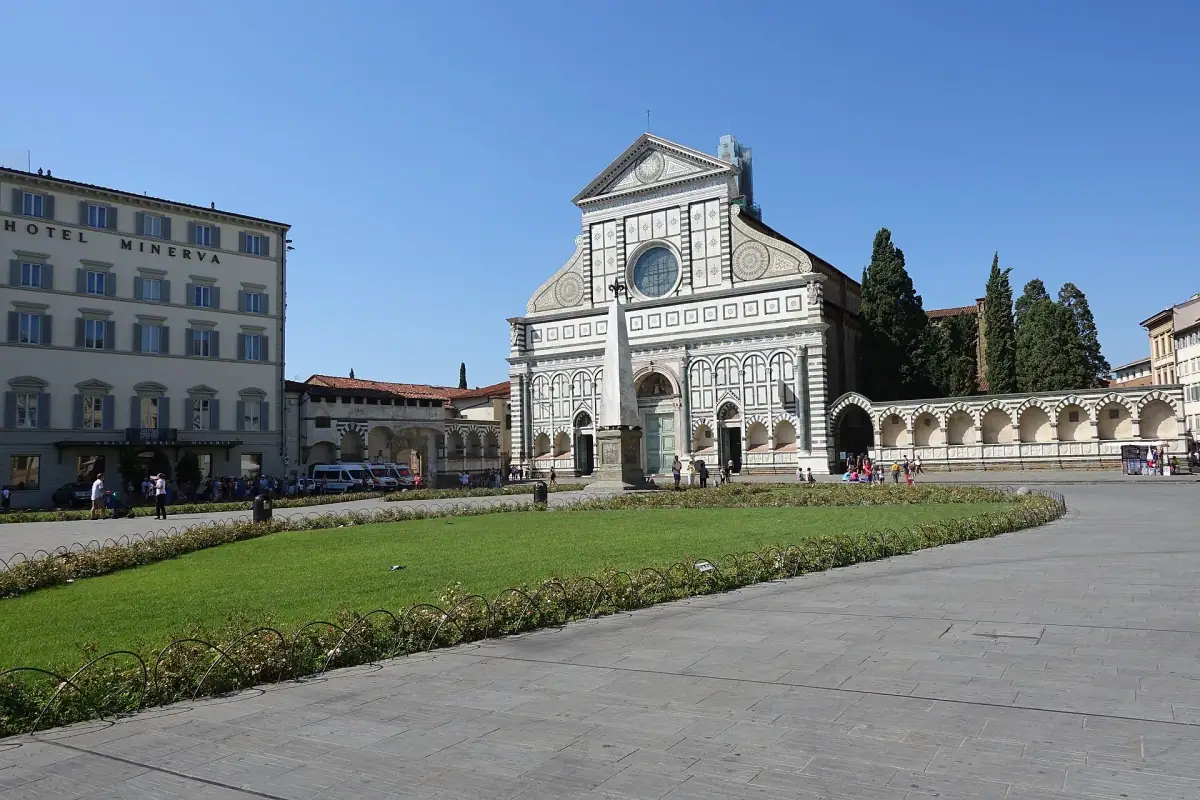
The Santa Maria Novella church, very close, deserves a detour on its own with its polychrome marble facade and its lively square.
Ideal for: travelers without a car, stays with several train excursions, mid-range budgets.
San Lorenzo and the central market
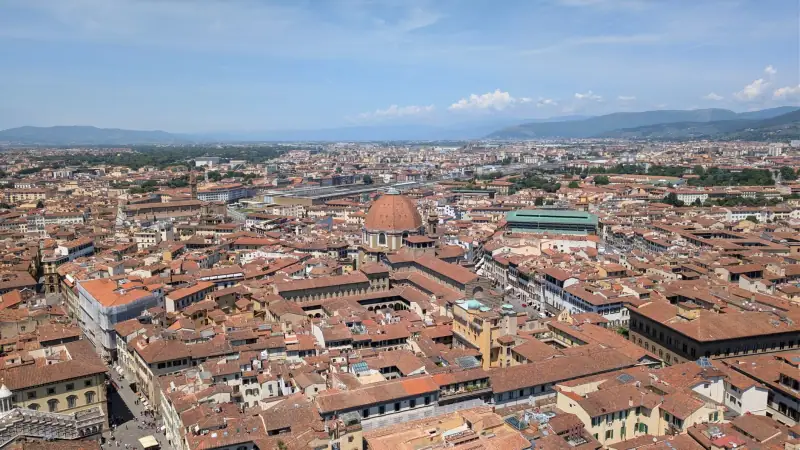
A few steps from the Duomo, the San Lorenzo district is organized around the basilica of the same name, the Medici chapels and the big covered market, which gathers fresh produce stalls and food counters. It is a working-class, noisy neighborhood in the daytime, very lively, where you eat well without breaking the bank.
The atmosphere is that of a merchants’ district rather than a postcard setting. The surrounding streets host many small hotels and guesthouses, sometimes in fine old buildings. Evenings are calmer, though, than around Piazza della Signoria.
Ideal for: food lovers, travelers who like lively neighborhoods, stays of a few nights on a reasonable budget.
Santa Croce, between local life and nightlife
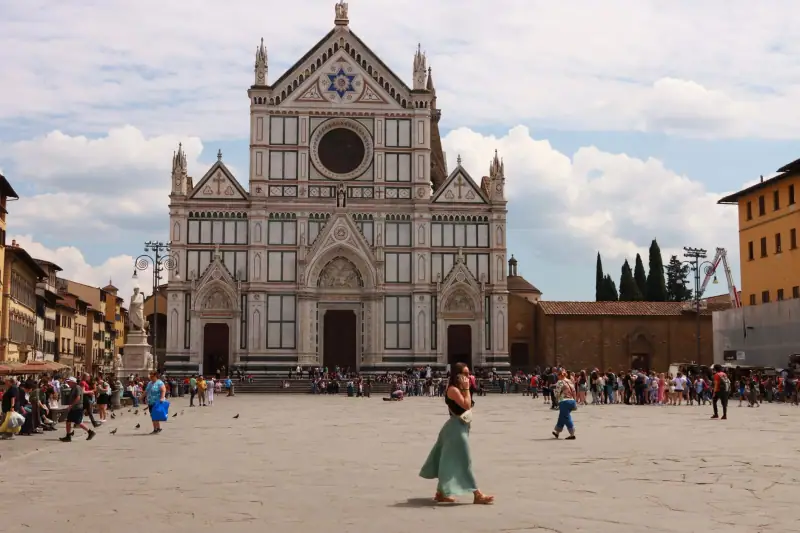
East of the center, the Santa Croce district is organized around the Franciscan basilica and its large square. You find leather artisans’ workshops, cafés, bars and a more marked nightlife than in other neighborhoods. The Duomo and Piazza della Signoria remain less than a quarter of an hour away on foot.
The downside is some evening noise, especially on weekends, around the busiest squares. Streets farther out, toward the east, are noticeably quieter while remaining well located.
Ideal for: travelers who like going out in the evening, craft-shop fans, couples.
The Oltrarno: the authentic side of the Arno
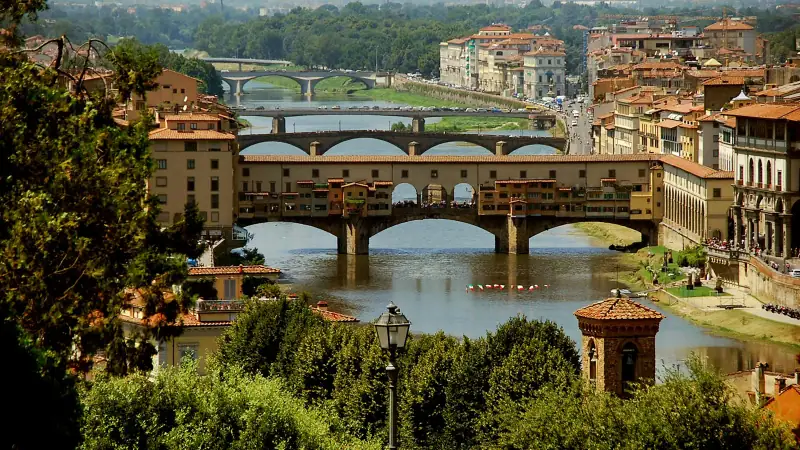
Cross the Ponte Vecchio or one of the neighboring bridges and you enter the Oltrarno, literally “the other side of the Arno.” The neighborhood keeps an atmosphere of artisans and small workshops, around Piazza Santo Spirito and San Frediano. The Pitti Palace and the Boboli Gardens are nearby, as is Piazzale Michelangelo, which offers one of the finest viewpoints over the city.
The evening mood there is pleasant, with terraces and small restaurants used by Florentines as much as by visitors. The center is reached by crossing a bridge, about a quarter of an hour on foot from most addresses.
Rates are often a bit better than in the very center for an equal or higher level of charm, but the offer is smaller: book early.
Ideal for: those returning to Florence, couples, travelers who prefer a neighborhood atmosphere to the Duomo crowds.
Guided tours and tickets in Florence
Museums, walking tours, excursions: book in advance to limit waiting in high season.
San Marco and the university area
North of the Duomo, the San Marco district is home to the Dominican convent famous for its frescoes, the Accademia Gallery with Michelangelo’s David, and a student population that gives the area a lively but affordable atmosphere. Lodgings there are often cheaper, with hostels, small hotels and apartments.
It is a good landing spot for visitors who want to stay close to the center without paying top price. The trade-off: little architectural charm in some streets and a less obvious neighborhood life than in the Oltrarno.
Ideal for: small budgets, young travelers, museum-focused stays.
Quick comparison of the neighborhoods
| Neighborhood | Atmosphere | Budget | Calm | For whom? |
|---|---|---|---|---|
| Historic center | 🏛️ Monumental | 🔴 High | 🟠 Medium | First visit |
| Santa Maria Novella station | 🚆 Practical | 🟡 Medium | 🟠 Medium | Train excursions |
| San Lorenzo | 🛍️ Working-class | 🟡 Medium | 🟠 Medium | Food lovers |
| Santa Croce | 🎨 Lively | 🟠 Fairly high | 🟠 Variable | Evening outings |
| Oltrarno | 🌉 Authentic | 🟠 Fairly high | 🟢 Good | Couples, repeat visitors |
| San Marco | 🌳 Student | 💚 Moderate | 🟡 Fairly good | Small budgets |
Which type of accommodation to choose?
Florence offers a very wide range: charming hotels in former palaces, chain properties near the station, guesthouses, rental apartments and hostels. Each formula has its advantages.
- Hotel: service, breakfast, a reception for luggage. The simplest for a short stay.
- Apartment: practical for families or groups, with a kitchen to enjoy market products. Check arrival conditions and any parking.
- Guesthouse: often more intimate, with a personal welcome and good neighborhood addresses.
- Hostel: the cheapest option, with dorms and sometimes private rooms.
If you stay in the countryside at a farm stay (agriturismo) and only come to Florence for the day, plan to leave the car outside the center: there is no point venturing into the ZTL.
Tips for booking well
- Plan ahead: the best-located lodgings get booked several weeks ahead for spring, early fall and long weekends.
- Choose free cancellation when possible, so you can compare and adjust afterward.
- Read recent reviews about noise, air conditioning in summer and heating in winter, which vary a lot in old buildings.
- Check the tourist tax, generally paid locally and calculated per person and per night.
- Think about luggage: some cobbled streets and stairs without elevators make suitcases a chore. Ask about access before booking.
- Car or not? For an urban stay, do not rent one. To fan out in Chianti or elsewhere in Tuscany, pick it up when you leave Florence.
Once your neighborhood is chosen, you still need to plan your sightseeing: with a well-placed base, Florence is discovered without fatigue and without wasting time in transit.
Frequently asked questions
What is the best neighborhood to stay in Florence?
For a first visit, the historic center around the Duomo lets you do everything on foot. If you want more calm and a neighborhood feel, the Oltrarno, across the Arno, is an excellent choice.
Is it practical to stay near Florence's train station?
Yes, the Santa Maria Novella station area is well served by trains and trams, and the historic center is a few minutes' walk away. The streets around the station are lively, though, and a bit less charming than the historic heart.
Should you rent a car if you stay in Florence?
Not to visit the city: the center is largely closed to non-resident traffic (ZTL) and is discovered on foot. A car is only useful for exploring Chianti or the surrounding villages, ideally picked up at the end of the city stay.
Do you need to book your hotel in Florence far in advance?
Yes, especially for spring, early fall and long weekends. Booking several weeks ahead, with a free cancellation option, lets you compare offers more calmly.
Where to stay in Florence on a tight budget?
The areas around the station and the San Marco district, as well as some streets farther from the center, generally offer more moderate rates. Off-season, prices drop noticeably everywhere in the city.
More Tuscany guides
Keep reading
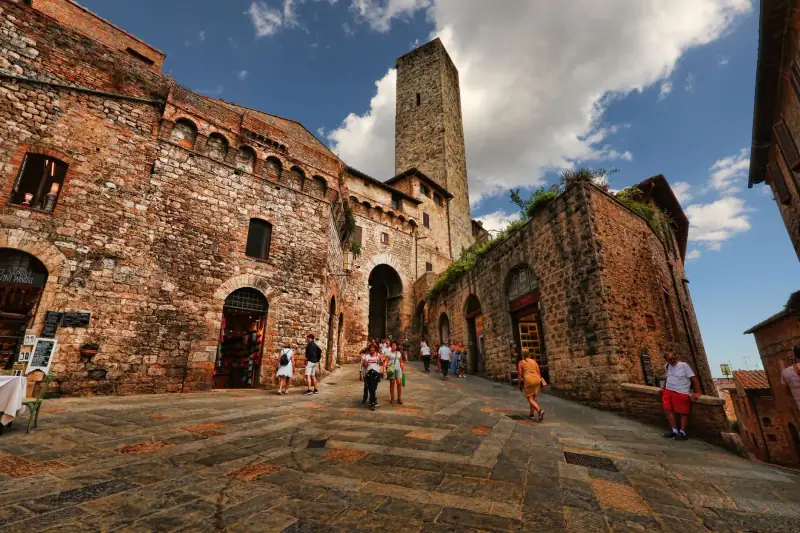
Where to Stay in Siena and San Gimignano: Neighborhoods, Villages and Tips
Where to stay in Siena and San Gimignano? Medieval center, areas by the walls or nearby countryside: pros, limits, parking and tips for choosing well.
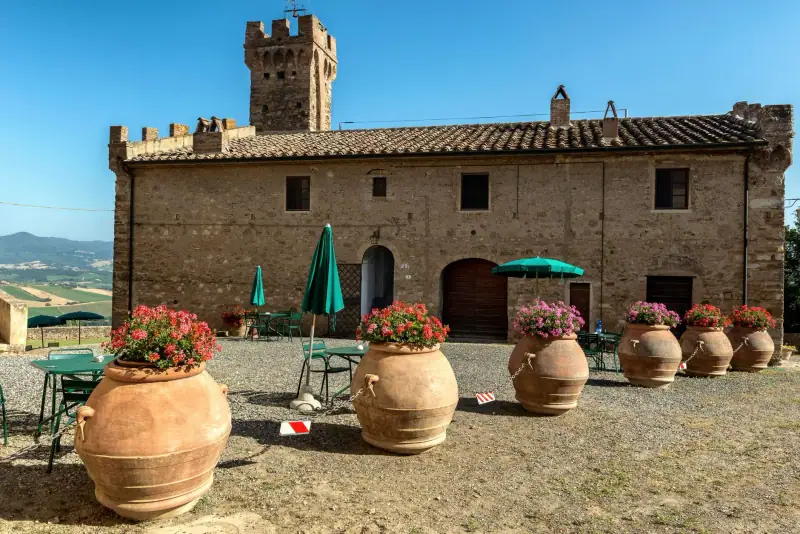
Agriturismo in Tuscany: Where to Stay in the Countryside and How to Choose
Agriturismo in Tuscany: how to choose a farm stay, which region to aim for (Chianti, Val d'Orcia, Maremma), what budget to plan and mistakes to avoid.
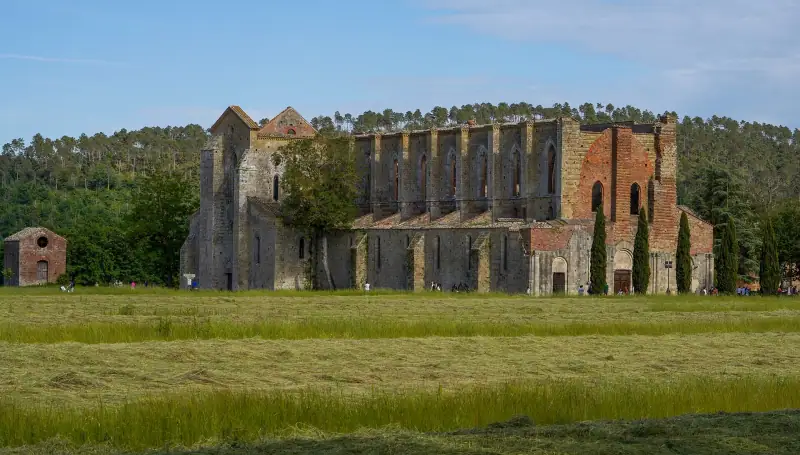
San Galgano Abbey and the Sword in the Stone: Hours, Prices and Access from Siena
Roofless abbey and Montesiepi hermitage near Siena: hours, 2026 rates, getting there without a car, visit length and what you really see.
Ready-made
Tuscany itineraries
2 days
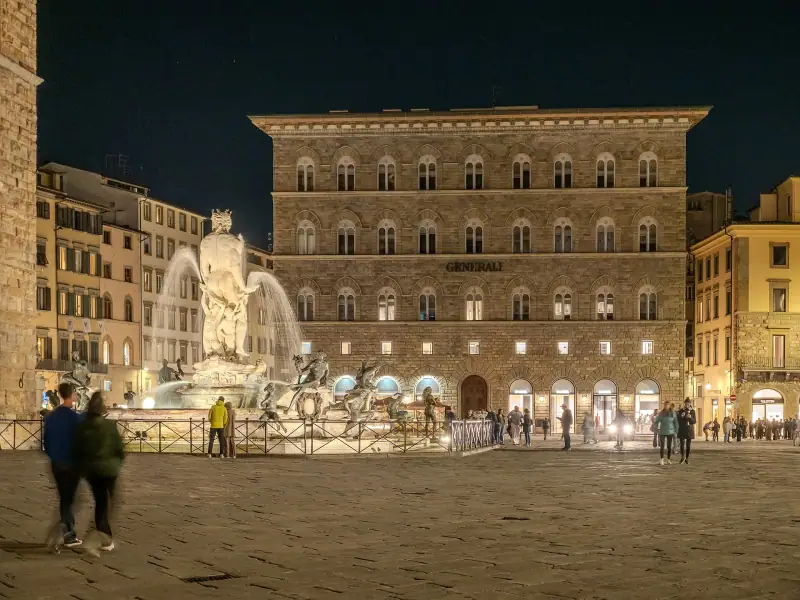
Florence in 2 Days: A Walking Itinerary, Day by Day
Florence in 2 days: Duomo, Uffizi, Accademia, Ponte Vecchio, Oltrarno and Piazzale Michelangelo. A realistic walking itinerary without rushing.
1 day
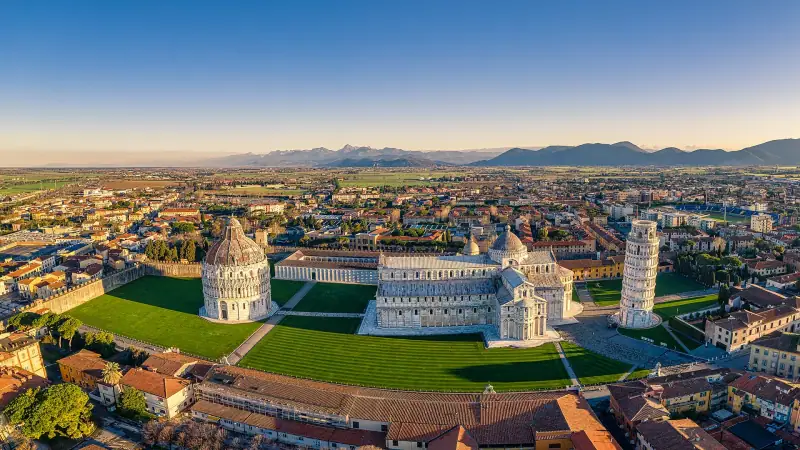
Pisa and Lucca in One Day from Florence: A Train Itinerary
Pisa and Lucca in one day from Florence: train itinerary, travel times, top sights and tips for enjoying both cities.
7 days
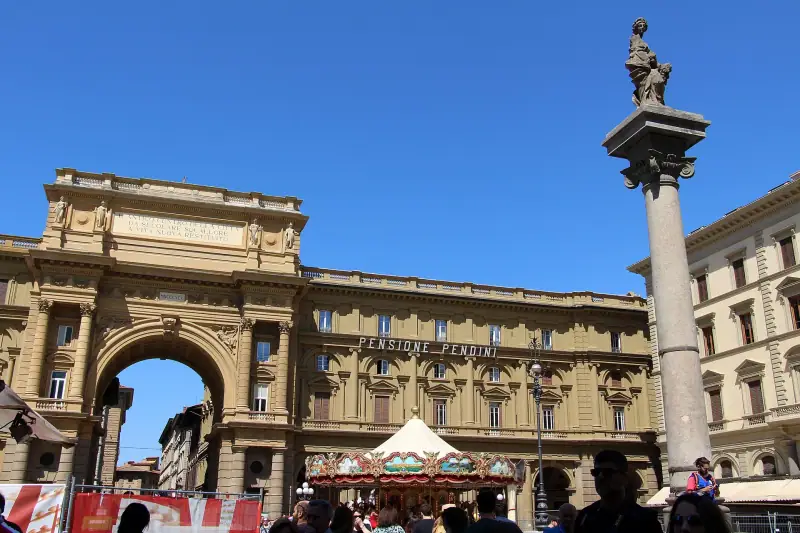
Tuscany in 7 Days: A Road Trip from Florence to the Val d'Orcia
A 7-day Tuscany itinerary: Florence, Pisa, Lucca, Chianti, Siena, San Gimignano and the Val d'Orcia, with realistic drives and practical tips.