Where to stay
Where to Stay in Siena and San Gimignano: Neighborhoods, Villages and Tips
We may earn a commission when you book through links on this page, at no extra cost to you. We don't visit or try the places we cover: we summarize published sources. How we work
In short
- Siena is the more flexible base, with more hotels, late-opening restaurants and bus links; San Gimignano is best for one or two nights, to enjoy the village after day visitors leave.
- Siena's historic center is a limited traffic zone (ZTL) with automatic fines: ask your accommodation for parking instructions before you arrive.
- The two sites are about 40 km (25 mi) apart, roughly 45 minutes to an hour by road.
- Book several weeks ahead for spring, early fall, long weekends and the Palio in July and August, with free cancellation if possible.
Siena and San Gimignano are two near-essential stops on a trip to Tuscany, and yet they hardly resemble each other. The first is a sizable medieval city, with its districts, sloping lanes and large shell-shaped square. The second is a hilltop village, tightly packed behind its walls, whose towers overlook the hills. Where you stay therefore changes the rhythm of the trip a lot: visiting hours, noise, parking and budget all depend on it.
This guide compares the options for staying in Siena, in San Gimignano and in the nearby countryside, with the traveler profiles each suits. To prepare the visit itself, see our article on Siena in one day.
Siena or San Gimignano: how to choose your base
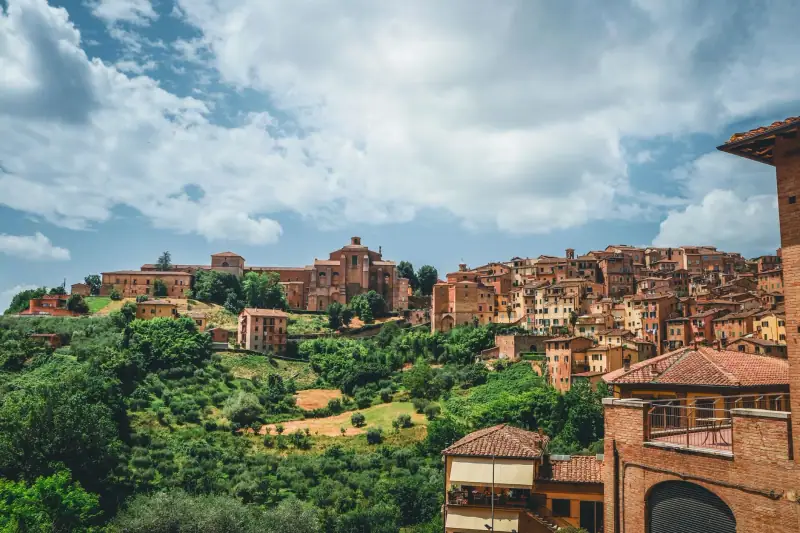
The first question is what you expect from your stay. The two sites are about 40 km (25 mi) apart, roughly 45 minutes to an hour by road depending on traffic and season. It is therefore quite possible to stay in one and visit the other.
Siena as a base offers more flexibility. The city has many hotels of varying sizes and budgets, guesthouses, apartments, and restaurants that stay open late. Bus links to Florence and nearby villages are more frequent. It is the best choice for three or four nights, and for those traveling without a car.
San Gimignano as a base is more romantic but more limited. The accommodation offer is capped by the size of the village and prices are often higher than in Siena for a comparable level of comfort. In return, you enjoy the village when it empties out, in the evening and early morning, which is a very different experience from a midday visit.
A combination is often the best solution for a stay of four to five nights: one or two nights in San Gimignano or the surrounding countryside, then two nights in Siena. If you are planning a wider circuit, our seven-day Tuscany itinerary shows how to link these stops with Florence and the Val d’Orcia.
Where to stay in Siena: the neighborhoods to know
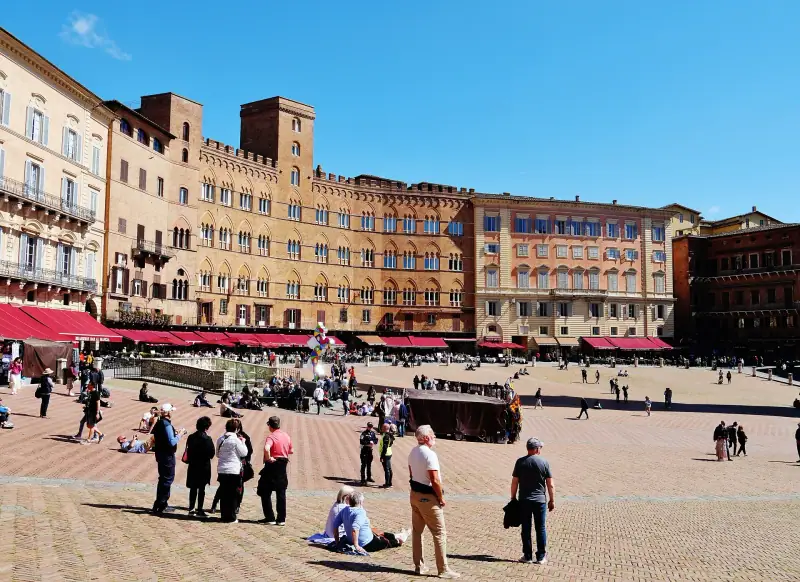
Siena is built on three hills and organized into historic districts, the terzi, themselves divided into contrade, the traditional neighborhoods that compete in the Palio. For the traveler, a few areas stand out.
Around Piazza del Campo
This is the heart of the city. Staying a few steps from the large sloping square, the Torre del Mangia and the Palazzo Pubblico means you can go back to rest between visits and enjoy the city in peace in the evening. The Duomo, with its striped marble facade, is a few minutes away on foot.
The downside is noise: the square and the shopping streets are very busy during the day, and some rooms overlooking the main streets pick up the hum of café terraces until late. The best-located lodgings are also the most expensive, and luggage often has to be carried along sloping cobbled streets and sometimes up stairs.
Ideal for: a short stay, a first visit, travelers who want to do everything on foot.
Hotels in Siena
Compare stays in the historic center and by the walls, and book early in high season.
Near the Duomo and the Camollia district
Northwest of the Campo, the part of the city leading toward Porta Camollia is more residential. You find small hotels and guesthouses in former palaces, with quiet streets in the evening. Piazza del Campo remains about ten to fifteen minutes away on foot.
It is a good compromise between calm and proximity, especially for those arriving by road from Florence who want to enter the city without crossing the whole center.
Ideal for: couples, travelers who like quieter streets, arrivals by car.
Near the walls and the train station
The city gates, notably on the south and east sides, as well as the streets near the railway station, host more functional and often more affordable hotels. The station sits below the center: the trip to Piazza del Campo is on foot uphill, or by bus, and takes a little time.
The main benefit is practical: easier access by car, easier parking than in the center, lower rates. There is less charm, but for an overnight stop between two days of excursions, the formula is efficient.
Ideal for: small budgets, travelers with a car, short stops.
Parking and the ZTL in Siena
Siena’s historic center is a limited traffic zone (ZTL), like most Tuscan cities. An unauthorized driver who enters it faces an automatic fine, sometimes sent several months after the trip through the rental company.
In practice:
- Ask before you arrive: ask your accommodation whether it can register your plate for luggage drop-off and what the procedure is for parking.
- Use the lots on the outskirts: several lots outside the center are linked to the square by escalators or short flights of steps. Rates and hours change: check them locally.
- Do not improvise with GPS: it does not always know the ZTL and may send you into it.
- Leave the car during the visit: in Siena everything is on foot, and the city is easy to cover in a day.
For more tips on getting around, see our guide to getting around Tuscany.
Where to stay in San Gimignano
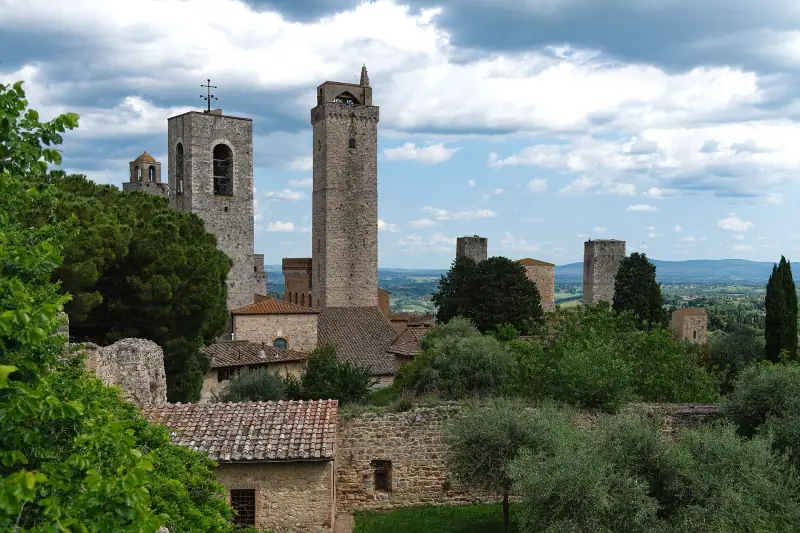
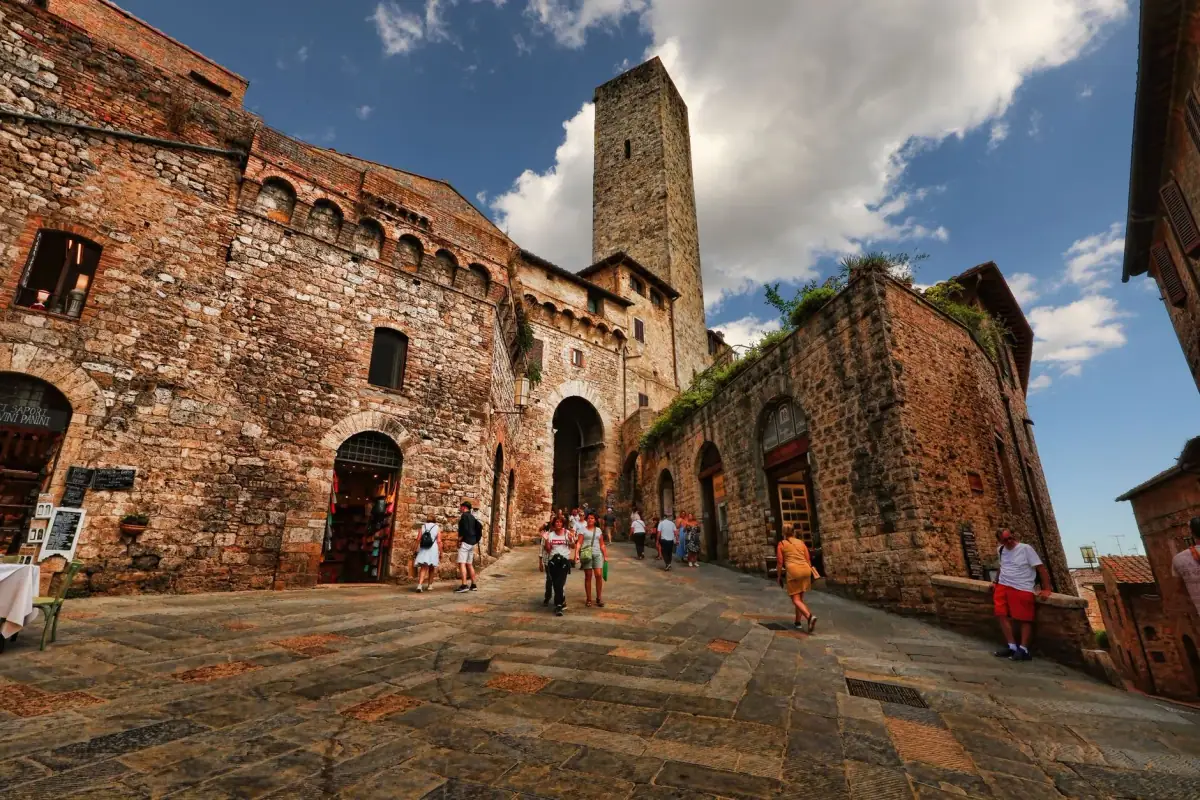
San Gimignano is a medieval village entirely surrounded by walls, with about fifteen towers still standing. It is a UNESCO World Heritage Site. Most of the action happens inside the walls, on a main axis that links the gates and passes through Piazza della Cisterna and Piazza del Duomo.
Inside the walled village
Staying inside the walls lets you enjoy a place that changes face with the hour. During the day, especially in high season, the lanes are very busy. But in the evening, once the coaches have left, the village regains a remarkable calm, and early in the morning you can cross the squares almost alone.
The offer is limited: small boutique hotels, guesthouses, a few apartments. Prices are often higher than elsewhere for the same category. Cars cannot drive freely in the center: parking is generally outside the walls, in paid lots a few minutes’ walk away.
Ideal for: couples, travelers who want to enjoy the village in the evening, short stays of one or two nights.
Hotels in San Gimignano
The offer is limited in the village: compare early to have a choice, especially in spring and fall.
Just outside the walls
The surroundings of the village, near the parking lots, have more conventional hotels with parking, sometimes with a pool or countryside views. You reach the center on foot in a few minutes.
It is a good option for those traveling by car who want to avoid hauling luggage through the lanes. Prices can be lower than inside the walls.
Ideal for: families, travelers with a car, anyone who wants a pool in summer.
In the surrounding countryside
Many travelers choose to stay in the countryside, in a farm stay (agriturismo) or a charming house a few kilometers from the village. The setting is unmatched, with vines, olive trees and cypresses, but a car becomes essential, and dinners are often taken at the property or after a short drive. Our guide to agriturismo in Tuscany details how to choose, which mistakes to avoid and what to expect on budget.
The area is also home to Vernaccia di San Gimignano, a renowned white wine of the appellation: many estates offer tastings and accommodation. To understand Tuscan appellations, see our guide to Tuscan wines.
Other possible bases around Siena
If Siena and San Gimignano are too touristy for your taste, other villages in the area let you stay more quietly while staying within reach by road.
- Monteriggioni: a small fortified village on the road between Siena and San Gimignano, very compact, with a limited but charming accommodation offer. It is ideal for a quiet night.
- Colle di Val d’Elsa: a small town with a medieval upper part and a more modern lower part, more authentic and less visited. It is well placed between the two sites.
- Poggibonsi: more functional, with its train station, it serves as a connection point for buses to San Gimignano. It mostly suits those traveling by train and bus on a tight budget.
- Countryside of Sienese Chianti: northeast of Siena, the Chianti hills offer many farm stays. See our article on the Chianti road.
- Chiusdino: southwest of Siena, the village near San Galgano Abbey suits a quiet night before or after the visit.
Quick comparison of the options
| Option | Atmosphere | Budget | Car needed? | For whom? |
|---|---|---|---|---|
| Siena center | 🏰 Monumental | 🔴 High | No | First visit |
| Outskirts of Siena | 🟢 Calm | 🟡 Medium | Often | Travelers with a car |
| San Gimignano inside the walls | 🗼 Romantic | 🔴 High | No (outside parking) | Couples |
| Outside the walls | 🅿️ Practical | 🟡 Medium | Yes | Families |
| Countryside | 🌾 Peaceful | 🟠 Variable | Yes | Relaxing stay |
| Colle di Val d’Elsa | 🏘️ Authentic | 🟡 Medium | Recommended | Quiet stop |
When to book and what to expect to pay
Crowds are not evenly spread across the year. Spring and early fall are particularly busy, as are long weekends and weekends in general. In Siena, the Palio, a horse race held in July and August on Piazza del Campo, pushes demand up: if you want to attend, book very far ahead, or consider staying in a nearby village and coming for the day.
Rates vary strongly by period. In winter, many lodgings are cheaper and the towns are quieter, but some countryside places close. To compare seasons and budget, see our guide to the best time to visit Tuscany and our article on the budget for a trip to Tuscany.
Do not forget the tourist tax: it is generally paid locally, calculated per person and per night, and varies by municipality and accommodation category.
Making the most of your stay: excursions without a car
If you stay in Siena without a car, several day excursions let you reach San Gimignano, Chianti or nearby villages with a guide. It is handy if you do not want to drive, especially to combine wine tasting and sightseeing.
Excursions to San Gimignano and Siena
Day tours, with or without tasting, to visit without driving.
Tips for booking well
- Check access: in both towns, cobbled streets and stairs make suitcases a chore. A small soft bag makes everything easier.
- Ask for parking instructions before you arrive, especially in Siena because of the ZTL.
- Read recent reviews about noise, air conditioning in summer and heating in winter, which vary a lot in old buildings.
- Choose free cancellation if possible, to keep flexibility while your dates are not set.
- Check the arrival time: small lodgings do not always have a reception open all day. Let them know if you arrive late.
- Think about a pool in summer: it is welcome after a day of sightseeing in the heat, and it is more common in the countryside than in town.
- Avoid too many moves: at least two nights per stop avoids spending your stay packing and unpacking.
Example of how to split your nights
For three nights, stay in Siena: you visit the city in one day, then devote a day to San Gimignano and Chianti. For four nights, spend one night in San Gimignano or in the countryside to enjoy the village in the evening. For a week in Tuscany, combine Florence, Siena and a rural stop, using our guide to where to stay in Florence.
Whatever you choose, keep in mind that Tuscany is savored slowly: fewer, better-chosen stops beat a circuit that is too dense.
Summary
- Siena: the most flexible base, with the most choice, for three or four nights.
- San Gimignano: ideal for one or two nights, to enjoy the village after the day visitors leave.
- Countryside: perfect for relaxing, provided you have a car.
- Nearby villages: Monteriggioni and Colle di Val d’Elsa offer calm alternatives.
- Book early for peak periods and around the Palio.
With a well-chosen base, you will spend less time in transit and more time strolling the squares, watching the light change on the towers and sipping a glass of wine at sunset.
Frequently asked questions
Is it better to stay in Siena or San Gimignano?
Siena is a real city, with more hotel choice, restaurants open in the evening and bus connections. San Gimignano is a very small village, magnificent in the morning and evening once the day-trippers have left, but with a smaller offer and often higher rates. If you only have one base, Siena is generally more flexible; if you are after atmosphere, San Gimignano is appealing for one or two nights.
Can you stay in Siena and visit San Gimignano without a car?
Yes, it is doable by bus, with generally a trip of about an hour and sometimes a change, notably at Poggibonsi. Timetables vary by season and day of the week: check them the day before, especially on Sundays and holidays when service is reduced.
Which neighborhood of Siena should you choose to stay in?
To do everything on foot, the historic center around Piazza del Campo and the Duomo is ideal, but it is noisy during the day and subject to traffic restrictions. The areas near the walls, such as streets close to the city gates, offer more calm, easier parking and often lower prices, at the cost of a few minutes of uphill walking.
Can you park in the center of Siena?
The historic center is a limited traffic zone (ZTL): non-residents cannot drive in freely. Some hotels have a temporary permit for dropping off luggage or a parking arrangement. Ask your accommodation for exact instructions before you arrive, because fines are automatic.
Do you need to book far in advance in Siena and San Gimignano?
Yes for spring, early fall, long weekends and especially around the Palio di Siena, held in July and August. Booking several weeks ahead, with free cancellation when possible, lets you compare calmly.
Is the village of San Gimignano pleasant in the evening?
It is one of its great assets: at the end of the day, once the groups have left, the lanes become much quieter and the light on the towers is superb. Staying overnight lets you enjoy it, which a simple day trip does not.
More Tuscany guides
Keep reading
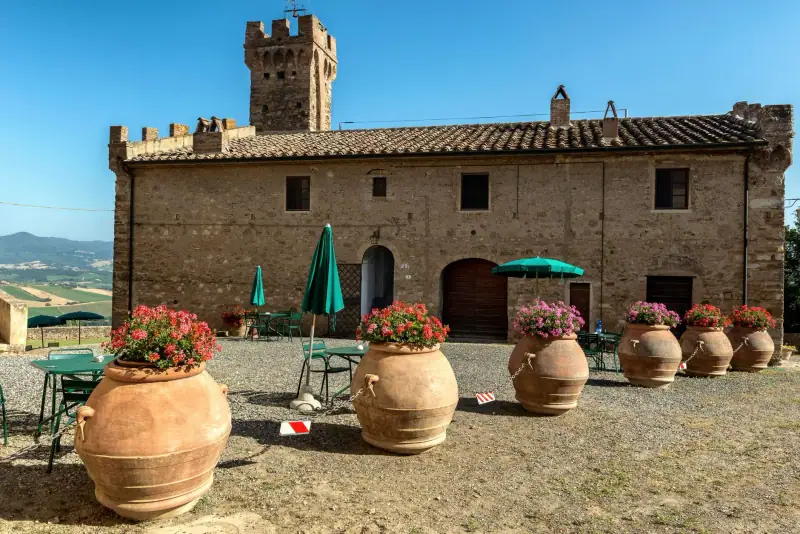
Agriturismo in Tuscany: Where to Stay in the Countryside and How to Choose
Agriturismo in Tuscany: how to choose a farm stay, which region to aim for (Chianti, Val d'Orcia, Maremma), what budget to plan and mistakes to avoid.
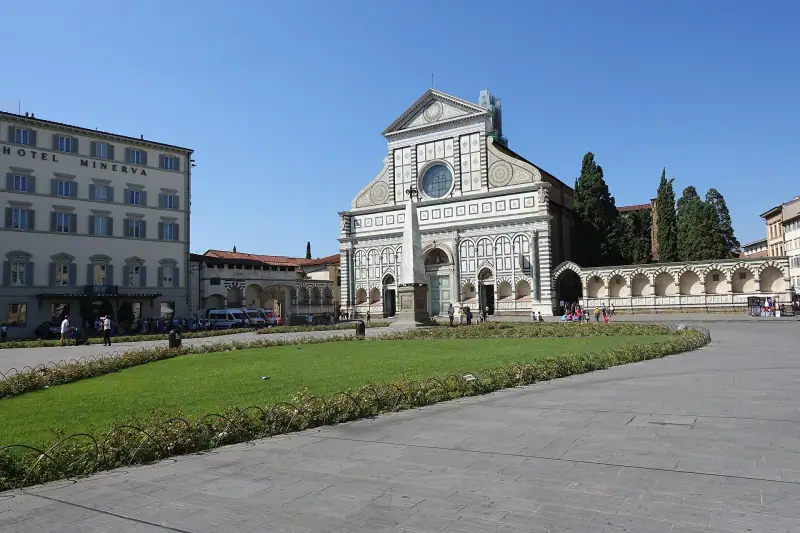
Where to Stay in Florence: Which Neighborhood to Choose
Where to stay in Florence? Historic center, station, Santa Croce, Oltrarno or San Marco: pros, cons and tips for choosing the right neighborhood.
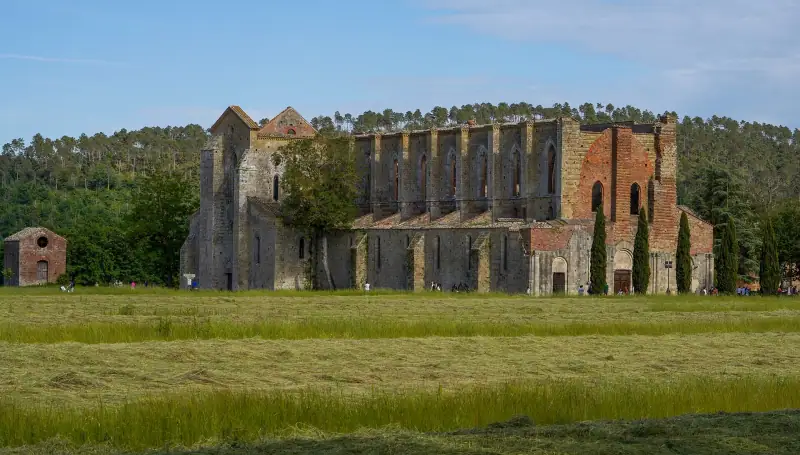
San Galgano Abbey and the Sword in the Stone: Hours, Prices and Access from Siena
Roofless abbey and Montesiepi hermitage near Siena: hours, 2026 rates, getting there without a car, visit length and what you really see.
Ready-made
Tuscany itineraries
2 days
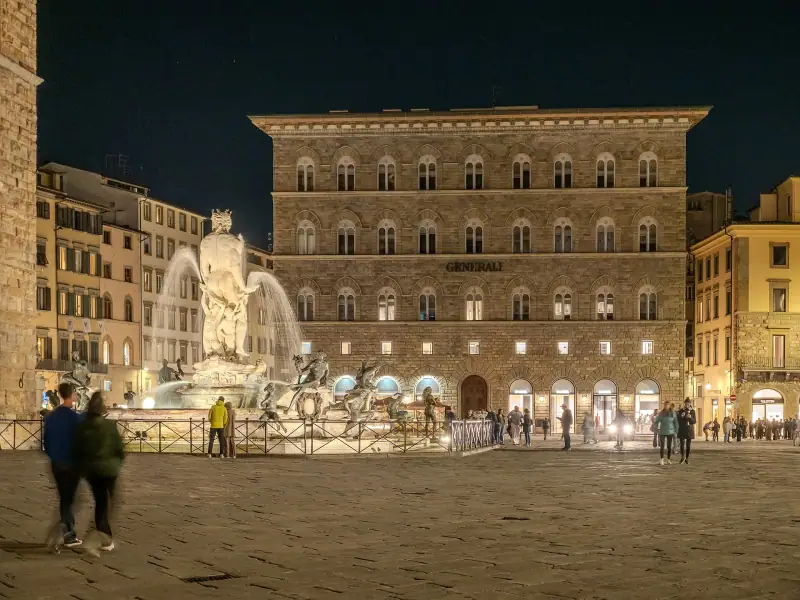
Florence in 2 Days: A Walking Itinerary, Day by Day
Florence in 2 days: Duomo, Uffizi, Accademia, Ponte Vecchio, Oltrarno and Piazzale Michelangelo. A realistic walking itinerary without rushing.
1 day
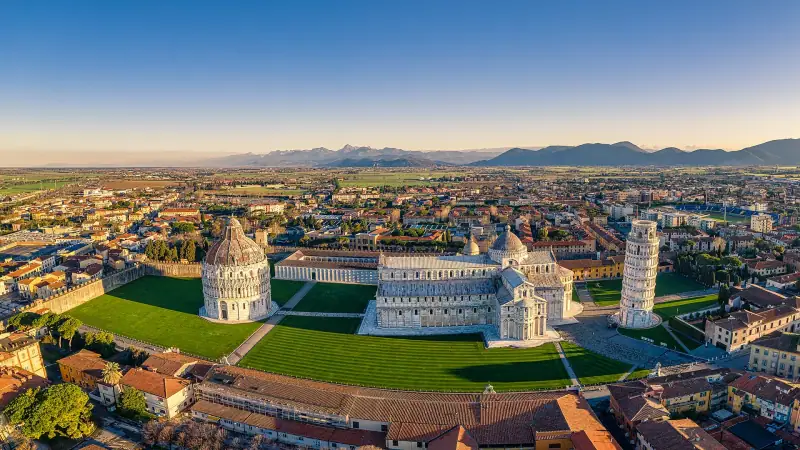
Pisa and Lucca in One Day from Florence: A Train Itinerary
Pisa and Lucca in one day from Florence: train itinerary, travel times, top sights and tips for enjoying both cities.
7 days
Tuscany in 7 Days: A Road Trip from Florence to the Val d'Orcia
A 7-day Tuscany itinerary: Florence, Pisa, Lucca, Chianti, Siena, San Gimignano and the Val d'Orcia, with realistic drives and practical tips.