Where to stay
Agriturismo in Tuscany: Where to Stay in the Countryside and How to Choose
We may earn a commission when you book through links on this page, at no extra cost to you. We don't visit or try the places we cover: we summarize published sources. How we work
In short
- An agriturismo is lodging on a working farm (vineyard, olive grove, livestock or grain), where farming must remain the main activity under Italian rules.
- Chianti is the most practical choice for a first stay, halfway between Florence and Siena; the Val d'Orcia has the iconic landscapes but is farther from Florence; the Maremma suits those who want countryside plus sea.
- A car is almost always needed: farms are isolated and public transport is rare.
- Many farms require two or three nights minimum, and sometimes a full week in July and August; book several months ahead for June, September and October.
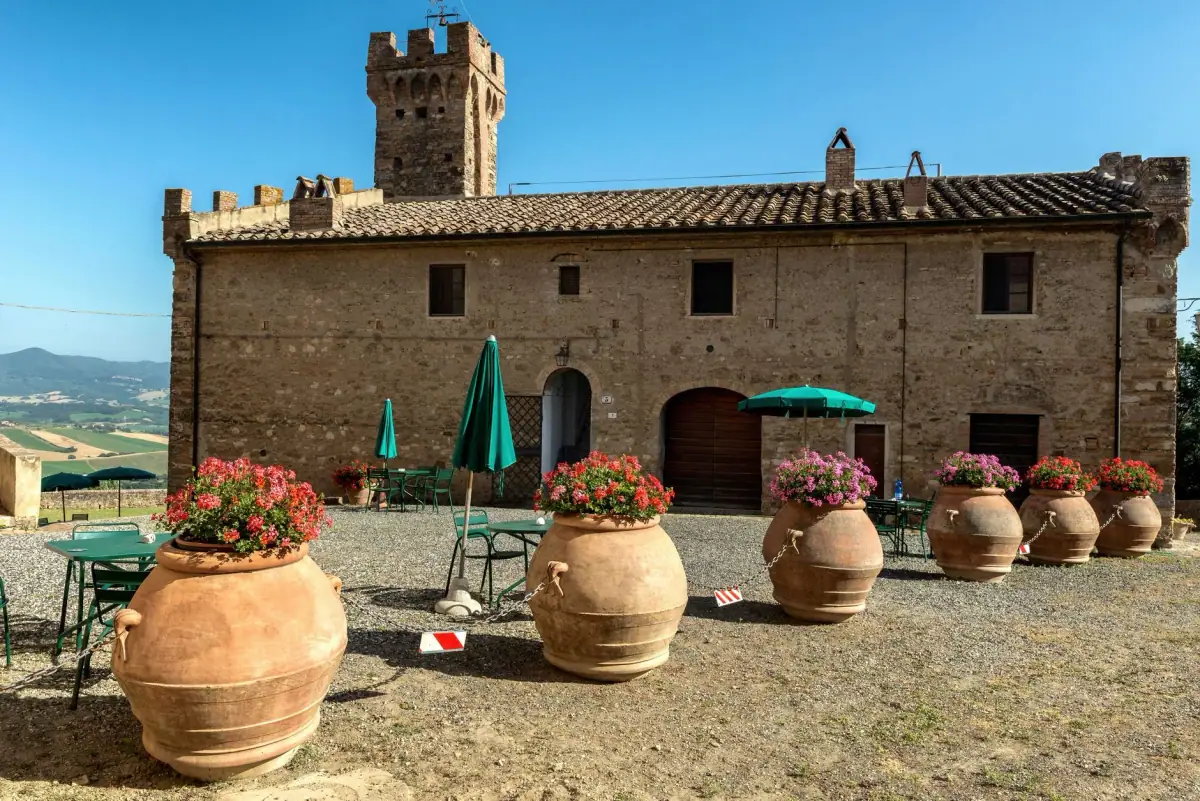
When you picture Tuscany, you think less of museums than of a gravel road lined with cypress trees, a big stone building on a hilltop and a table set under a pergola at sunset. That image is precisely what agriturismi sell: farms that open their rooms to travelers. Staying in the countryside changes the nature of the trip: you wake up with the hills on the horizon, you dine early, you taste the house’s oil and wine, and you get a real feel for the rhythm of Italian rural life.
But agriturismo is not a single formula. Between the elegant wine farm, the family house with chickens and dogs, the independent apartment among the olive trees and the luxury estate with an infinity pool, the experiences are very different. This guide helps you understand what the term really covers, choose the right region, anticipate practical constraints (car, minimum stay, season) and avoid the classic disappointments.
What an agriturismo really is
In Italy, agriturismo is a regulated status: the lodging must rest on a real farm whose main activity remains production. In practice, the farm grows vines, olive trees or grain, or raises animals, and welcomes guests as a complement. The exact details of the rule are set region by region, but the spirit is the same everywhere: the stay must remain tied to the land.
For the traveler, this generally translates into three things:
- An authentic setting: renovated buildings, former tobacco-drying sheds, barns or sharecroppers’ houses (poderi), often isolated in the middle of their land.
- Farm products: olive oil, wine, honey, jams, vegetables, cured meats or cheeses depending on the farm, served at breakfast or at the host table.
- A more personal welcome than in a city hotel: owners often live there and suggest walks, neighboring producers and villages worth visiting.
Don’t confuse them, though: some charming countryside places are called “relais” or “villa-hotel” without being agriturismi. They can be excellent, but contact with farming is often thinner. If that aspect matters to you, read the listing’s description and photos carefully, and see whether the farm offers direct sales, cellar visits or meals.
Chianti: the most practical choice
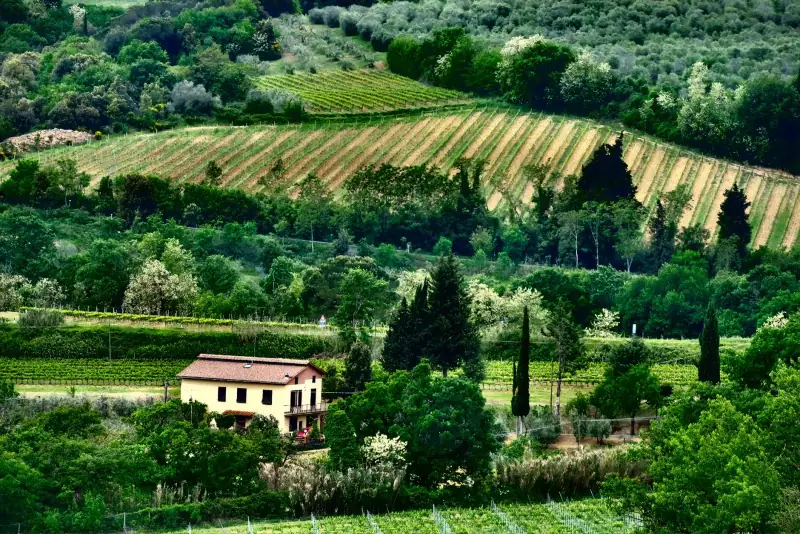
Between Florence and Siena, Chianti is the zone with the densest concentration of agriturismi. Its main asset is geographic: you can stay among the vines while reaching Florence or Siena by car in a reasonable time, generally under an hour from most municipalities. It is an ideal base for a first stay that combines art cities and countryside.
The landscape is more wooded and hilly than in the south of the region: an alternation of vineyards, olive groves, oak woods and small fortified villages. Many estates produce Chianti Classico and offer tastings at the estate, sometimes with a cellar visit. Our guide to the Chianti road by car with tastings details the stops worth making, and the one on Tuscan wines and their appellations will help you understand what you will taste at your host’s table.
Good to know: proximity to Florence has a downside. Prices at the best-known estates are high in high season, and secondary roads are sometimes narrow and winding. Allow time for trips and avoid driving at night if you are not comfortable on country roads.
Ideal for: first stays, wine lovers, those who want to alternate city days and farm days.
Countryside stays in Chianti
Compare farms, guesthouses and country houses in Chianti, with free cancellation when offered.
The Val d’Orcia: postcard landscapes
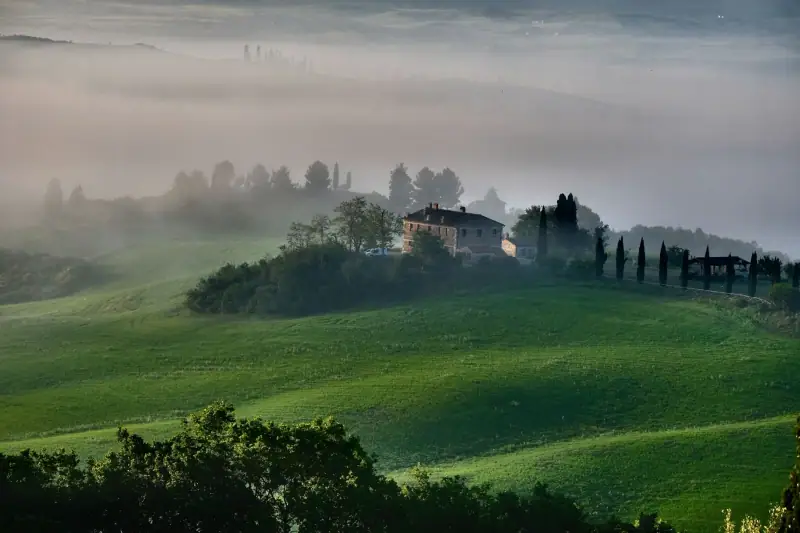
Farther south, around Pienza, Montalcino and Montepulciano, the Val d’Orcia offers that landscape of gentle hills, lone cypress trees and farms set on ridges that you see in so many photographs. A UNESCO World Heritage Site, it is much more open and clear than Chianti: skies are wide, the late-day light spectacular.
Agriturismo is an obvious choice here. Farms are often isolated, with 360-degree views, and the calm is total in the evening. The trade-off is distance: allow about an hour and a half to two hours’ drive from Florence depending on the farm, and the cities are visited more as day excursions. If you come mainly for the landscape, it is perfect; if you want to link Florence, Pisa and Siena, it is less practical.
Our Val d’Orcia road trip gives you a thread to organize your days around your farm. Pienza, Montalcino and Montepulciano are easily reached by car from most lodgings in the area, and neighboring wine estates often offer Brunello and Vino Nobile tastings.
Ideal for: landscape and photography lovers, couples, stays of four nights or more.
The Maremma: countryside, hot springs and sea
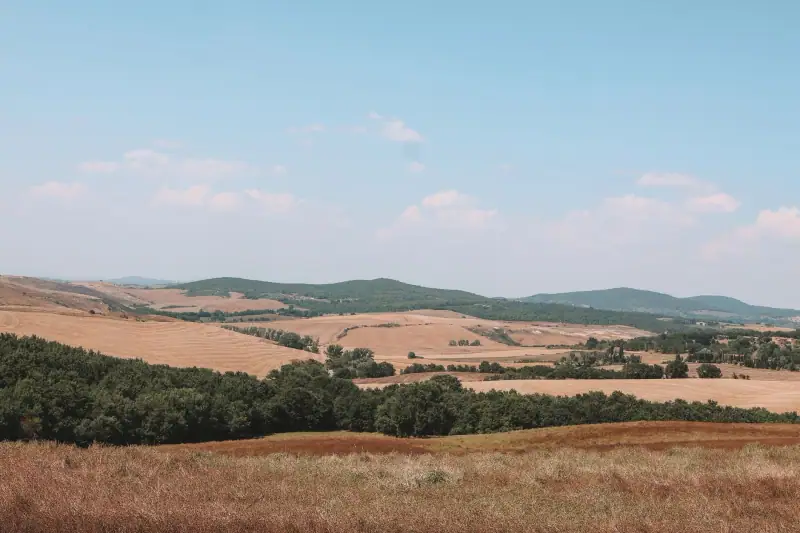
The Maremma, in the southwest of the region, is the Tuscany least known to foreign visitors, and that is also its strength. Wilder and more agricultural, it blends large livestock farms, hills covered with scrub, olive groves and vineyards, with the Tyrrhenian coast within driving distance. Agriturismi there are often more affordable than in Chianti or the Val d’Orcia, and the atmosphere is less touristy.
It suits stays with family or friends particularly well: you can spend the morning at the beach, the afternoon at the farm and the evening there. It is also a good base for the Saturnia hot springs, which we detail in our article on Tuscany’s hot springs. Distances to Florence are long, which rules out day excursions to the city: this formula is aimed at those who devote their stay to nature and relaxation.
Ideal for: families, travelers who want to combine beach and countryside, tighter budgets.
Around Siena, San Gimignano and Lucca
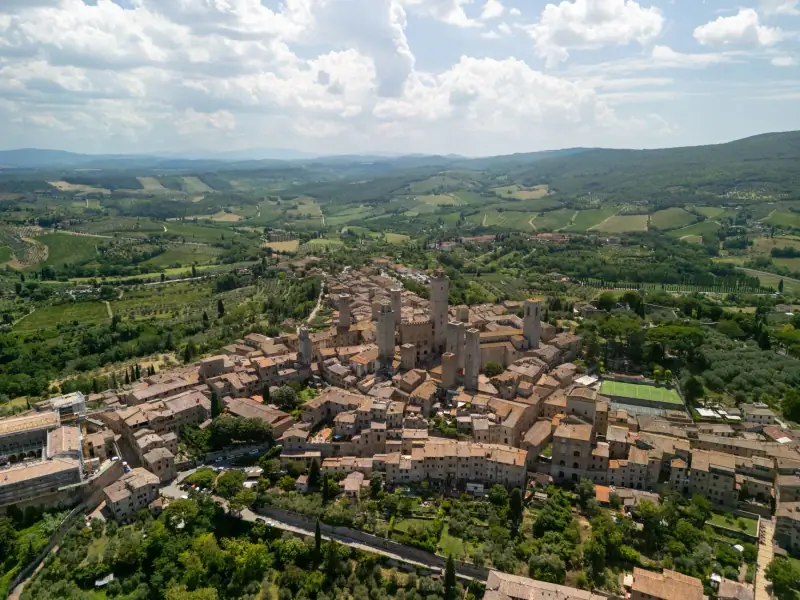
The surroundings of Siena and San Gimignano offer a good compromise: hills gentler than in Chianti, quick access to two of the region’s most beautiful medieval cities, and farms that are often smaller and family-run. It is an interesting option for those who want to visit the cities on foot during the day and return to calm in the evening.
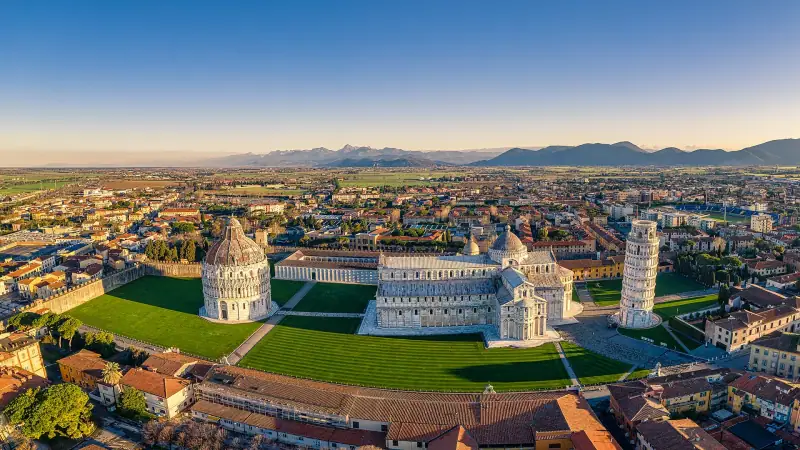
Around Lucca and Pisa, the countryside is greener and damper, marked by olive groves and hills overlooking the plain. You find agriturismi reachable by car from both cities, away from the crowds. It is a good choice if you plan to combine your stay with our itinerary Pisa and Lucca in one day.
Tastings and cooking classes in Tuscany
Wine estate visits, cooking workshops and food experiences to book in advance.
What budget to plan?
Prices vary strongly by region, season and comfort level. You can distinguish three broad categories, without fixed figures since rates change from year to year:
- Simple family farm: plain rooms, the house’s breakfast, a common room. This is the cheapest formula, often in the Maremma or in less popular areas.
- Comfort agriturismo: renovated rooms with private bathroom, pool, host table by reservation. This is the core of the offer, in Chianti and the Val d’Orcia.
- Upscale estate: building with character, spa, restaurant, large gardens. Rates soar, especially in high season.
A few levers to cut the bill: travel in May, September or October rather than midsummer, choose an apartment with a kitchen for long stays, share a lodging among several people, and book early. For an overview of what a trip to the region costs, see our guide to the budget for Tuscany.
Do not forget the tourist tax, generally paid at the property, per person and per night, as well as any end-of-stay cleaning or linen fees for apartments. These extras are shown in the listing: check them before confirming.
The car question
This is the most important point to anticipate: agriturismo almost always requires a car. Farms are isolated, sometimes several kilometers from the nearest village, and access is often by a dirt or gravel track. Buses are rare, taxis costly and hard to find in the countryside.
A few practical tips:
- Choose a small vehicle if the access road is narrow or steep. Ask your host for a description of the road before arrival.
- Beware of historic centers: most Tuscan cities have limited traffic zones (ZTL) where entering without authorization brings an automatic fine. Park on the outskirts.
- Use a GPS that works offline: the mobile network can be patchy in valley bottoms.
- Fill up before the end of the day: gas stations are fewer in the countryside and some are self-service outside opening hours.
Our guide to getting around Tuscany details transport options and driving rules to know. Book your vehicle at the same time as your lodging, especially if you travel in high season.
How to choose your agriturismo: the checklist
To sort through hundreds of listings, a few criteria really make the difference.
1. The exact location. Open the map, measure the travel time to the nearest village and to the cities you want to visit. A farm “20 minutes from Siena” may in fact require more if the road is winding.
2. Real farming activity. Look for mentions of direct sales, cellar or olive grove visits, meals prepared with the farm’s products. Traveler reviews often say whether the experience is authentic.
3. The type of lodging. Room with breakfast, independent apartment, whole villa: the choice depends on your group and whether you want to cook. Families will often prefer an apartment with a kitchen.
4. The facilities. Air conditioning in summer, heating in fall and spring, pool, wifi, parking: stone buildings can be cool in May or October and hot in August. Check for mosquito nets and real air conditioning if you go in midsummer.
5. The stay conditions. Minimum length, required arrival days, cancellation policy, deposit, rules for children and pets. In high season, many properties work by the week.
6. Recent reviews. Read them first for the welcome, cleanliness, noise and real quality of breakfast, more than for the overall score.
Farm stays and country houses in Tuscany
Filter by pool, breakfast included or free cancellation to compare farms and estates in the region.
When to go and how long to stay
The agriturismo high season covers spring (May to June), late summer and early fall. The grape harvest, in September and October, is a highlight: some farms offer to take part or to watch the first oil pressings, at the start of the olive season. The fall light is superb, and temperatures more bearable than in midsummer.
July and August are hot, sometimes very hot, and city sightseeing days take organization: you leave early, return to the farm at the hot hours, swim in the pool and go out again in the evening. Prices are also highest then. From November to March, many agriturismi close or reduce activity: if you travel in winter, check opening dates before building your plan. To go further, our guide to the best time to visit Tuscany compares seasons month by month.
As for length, three nights is a minimum to enjoy the place without rushing. Four to seven nights on the same base let you fan out without changing bags every day, which is often more restful than multiplying stops. If you want to combine city and countryside, a frequent formula is to spend two nights in Florence (see where to stay in Florence) then the rest of the stay at the farm.
Mistakes to avoid
- Booking without looking at the map. A pretty photo says nothing about travel time or the state of the access road.
- Underestimating isolation. Calm is the goal, but it also means having to shop before arriving and dining early if the host table closes at a set time.
- Arriving late. Many owners expect guests in a precise time window. Let them know if you are late, especially if you land in the evening.
- Wanting to see everything. Tuscany is bigger than you imagine. It is better to choose one or two zones and really explore them.
- Forgetting travel and cancellation insurance. For a stay booked long in advance, suitable coverage avoids unpleasant surprises.
- Planning to arrive without a car. If you come by train or plane, plan to rent a vehicle on arrival, or check whether the farm offers a transfer from the nearest station.
Enjoying farm life
The real appeal of an agriturismo lies in what you do there. Even without a busy program, you can fill whole days: a walk on the property’s paths, a cellar visit, olive oil tasting, a cooking class, watching the harvest or picking, a swim in the pool. Hosts are generally good at suggesting a village market, a small cheese producer, a little-used hiking trail.
For the table, do not hesitate to ask whether there is a farm dinner. It is often one of the best memories of the stay: antipasti of cured meats and vegetables, homemade pasta, slow-cooked dishes, dessert and the property’s wine, in a convivial atmosphere. Our article on what to eat in Tuscany gives you the keys to recognize regional dishes and order knowledgeably. Remember to book dinner in advance: farms generally cook only on request, and many limit access to the house’s guests.
Summary: which formula for which traveler?
- First stay, between cities and countryside: Chianti, with two or three nights in Florence and the rest at the farm.
- Landscapes and relaxation: the Val d’Orcia, for at least four nights, with excursions to Pienza, Montalcino and Montepulciano.
- Nature, beach and a reasonable budget: the Maremma, in summer or early fall.
- Medieval cities on foot, countryside in the evening: the surroundings of Siena and San Gimignano.
- Big touring trip: alternate two or three farms in different zones, without multiplying moves, and keep a margin in your stops.
In every case, agriturismo transforms a stay in Tuscany: you no longer just cross the region, you live in it for a few days. With good preparation, it often becomes the heart of the trip.
Frequently asked questions
What is an agriturismo in Tuscany?
It is lodging set on a working farm (vineyard, olive grove, livestock, grain farm), offering rooms or apartments. Italian regulation requires that farming remains the main activity, which generally guarantees an authentic setting and farm products.
Do you need a car to stay at an agriturismo?
In the great majority of cases, yes. Farms are isolated, often at the end of a dirt track, and public transport is rare. A few places near a village served by bus or train are exceptions: check before booking.
What is the minimum length of stay?
Many agriturismi require a minimum of two or three nights, and sometimes a full week (Saturday to Saturday) in July and August, especially for apartments. One-night stays are easier to find in low season.
Are meals included?
Breakfast generally is. Some farms offer dinner at a host table, by reservation, with the farm's products. Apartments with a kitchen let you cook yourself with products from nearby markets.
Which region should you choose for a first stay?
Chianti is the most practical, halfway between Florence and Siena. The Val d'Orcia appeals with its emblematic landscapes, but it is farther from Florence. The Maremma suits those who want to combine countryside and sea.
When should you book an agriturismo?
Several months ahead for June, September and October, which are the most requested periods. For summer and long weekends, the best places fill up early. Prefer free cancellation when offered.
More Tuscany guides
Keep reading
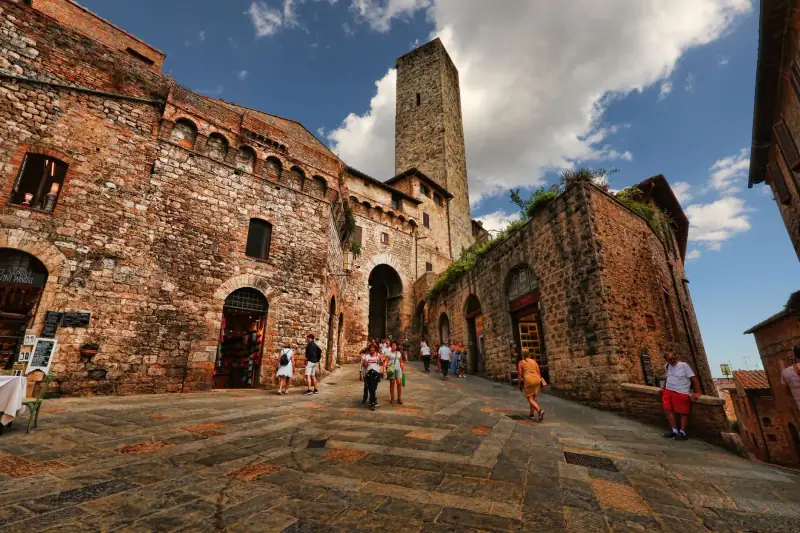
Where to Stay in Siena and San Gimignano: Neighborhoods, Villages and Tips
Where to stay in Siena and San Gimignano? Medieval center, areas by the walls or nearby countryside: pros, limits, parking and tips for choosing well.
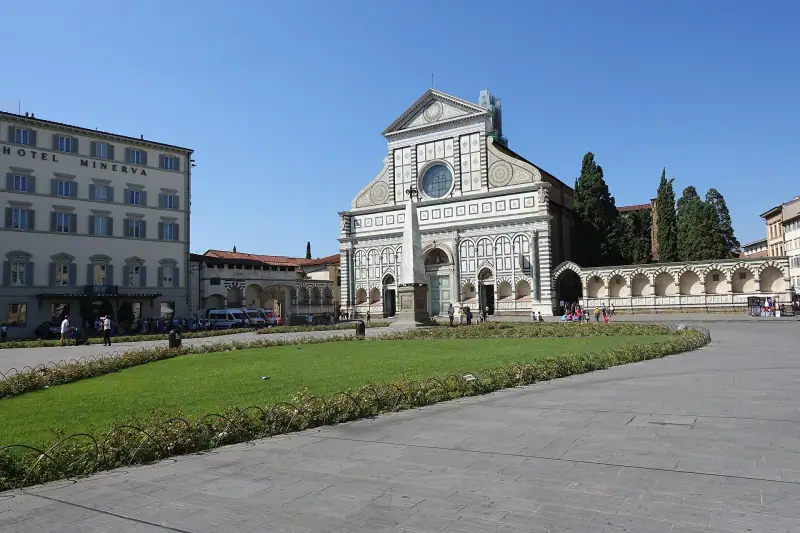
Where to Stay in Florence: Which Neighborhood to Choose
Where to stay in Florence? Historic center, station, Santa Croce, Oltrarno or San Marco: pros, cons and tips for choosing the right neighborhood.
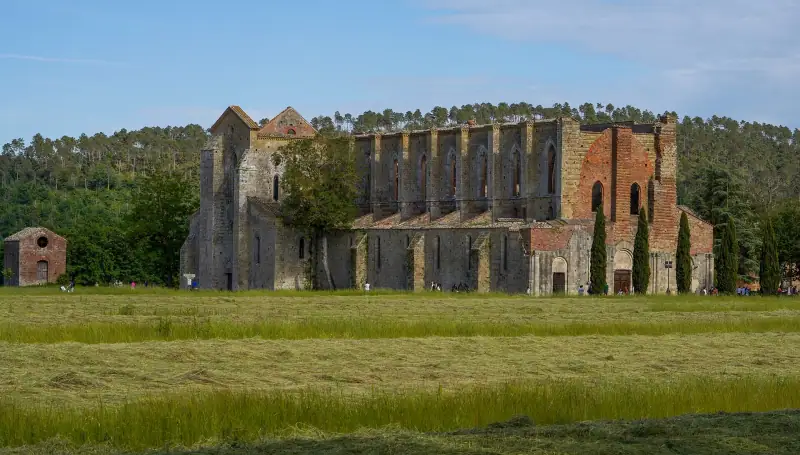
San Galgano Abbey and the Sword in the Stone: Hours, Prices and Access from Siena
Roofless abbey and Montesiepi hermitage near Siena: hours, 2026 rates, getting there without a car, visit length and what you really see.
Ready-made
Tuscany itineraries
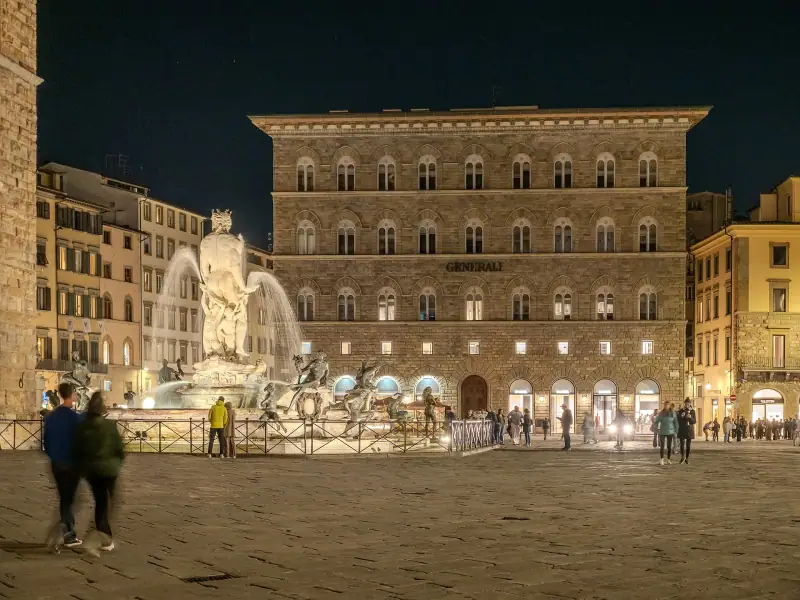
2 days
Florence in 2 Days: A Walking Itinerary, Day by Day
Florence in 2 days: Duomo, Uffizi, Accademia, Ponte Vecchio, Oltrarno and Piazzale Michelangelo. A realistic walking itinerary without rushing.
1 day
Pisa and Lucca in One Day from Florence: A Train Itinerary
Pisa and Lucca in one day from Florence: train itinerary, travel times, top sights and tips for enjoying both cities.
7 days
Tuscany in 7 Days: A Road Trip from Florence to the Val d'Orcia
A 7-day Tuscany itinerary: Florence, Pisa, Lucca, Chianti, Siena, San Gimignano and the Val d'Orcia, with realistic drives and practical tips.