Itineraries
Pisa and Lucca in One Day from Florence: A Train Itinerary
We may earn a commission when you book through links on this page, at no extra cost to you. We don't visit or try the places we cover: we summarize published sources. How we work
Day by day: Day trip from Florence by train
- Day 1Pisa: Piazza dei Miracoli; Lucca: walls and historic center
Weather through the year on this route
| Jan | Feb | Mar | Apr | May | Jun | Jul | Aug | Sep | Oct | Nov | Dec | |
|---|---|---|---|---|---|---|---|---|---|---|---|---|
| High °F (°C) | 5010 | 5211 | 5915 | 6418 | 7222 | 8127 | 8831 | 8831 | 7926 | 7021 | 5915 | 5211 |
| Low °F (°C) | 394 | 394 | 436 | 489 | 5513 | 6317 | 6820 | 7021 | 6317 | 5513 | 489 | 415 |
| Rain in (mm) | 2.255 | 2.255 | 2.255 | 2.460 | 2.050 | 1.640 | 1.025 | 1.435 | 3.180 | 4.1105 | 4.5115 | 3.075 |
Normals 1991–2020 at Pisa: averages over 30 years, not a forecast. Source: NASA POWER (MERRA-2), grid of about 50 km. Figures computed by us in November 2026.
In short
- Pisa in the morning (Piazza dei Miracoli), Lucca in the afternoon (walls and historic center), then the train back to Florence.
- Florence to Pisa takes about an hour by train, and Pisa to Lucca a little over half an hour.
- Book your Leaning Tower climb online in advance: it runs on time slots and places go fast in high season.
- No car needed: historic centers have limited traffic zones and parking is complicated.
Pisa and Lucca are two very different faces of western Tuscany. The first is known worldwide for its leaning tower, the second stays more discreet, ringed by 16th-century walls that you can tour on foot or by bike. Only about 20 km (12 mi) apart, they make an ideal day excursion from Florence.
Here is a realistic itinerary, designed around the train, with the time to give each stop and the traps to avoid. If you are preparing a longer stay, this day matches one of the stops of our 7-day Tuscany itinerary.
Organizing the day: schedules and transport
The key to a successful day is an early start. From Florence Santa Maria Novella station, trains to Pisa leave regularly and take about an hour to a little over an hour depending on the type of train. An early-morning departure gets you there before the organized groups arrive.
The typical plan is simple: Pisa in the morning and into early afternoon, then Lucca from the afternoon into the evening, before a train back to Florence. The trip between Pisa and Lucca takes a little over half an hour. The return from Lucca to Florence is generally by direct train or with a change, depending on the schedule: check timetables from the morning so you are not caught out by the last train.
A few practical points to remember:
- Buy your train tickets in advance or on the app, and remember to validate regional tickets before boarding if indicated.
- Pisa has two main stations near the center: Pisa Centrale, the larger, and Pisa San Rossore, closer to the historic center and Piazza dei Miracoli.
- Wear comfortable shoes: the day is almost entirely on foot.
- Avoid the car: historic centers have limited traffic zones and parking is complicated. For multi-day stays the question looks different, as our guide where to stay in Florence explains.
Pisa: Piazza dei Miracoli and beyond
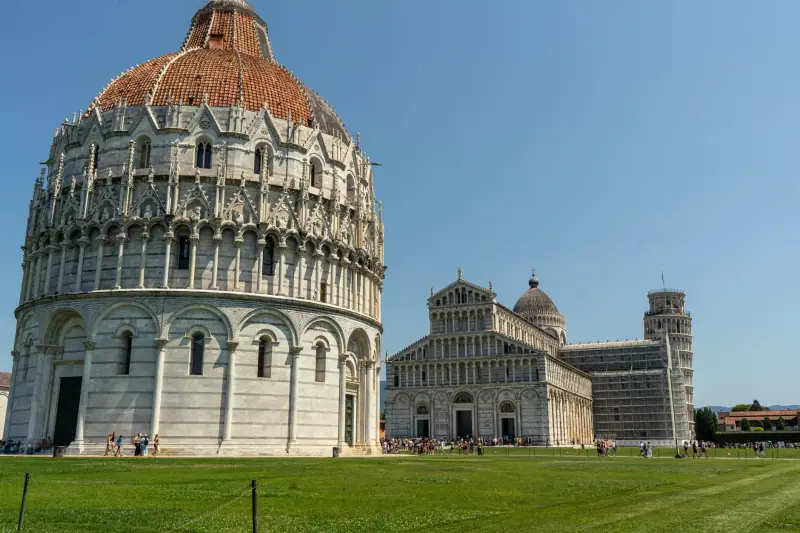
From Pisa Centrale station, Piazza dei Miracoli is a walk of a little over half an hour through the streets of the center, or a few minutes by bus. The walk has the advantage of crossing the old town, along the Arno, before reaching the famous esplanade.
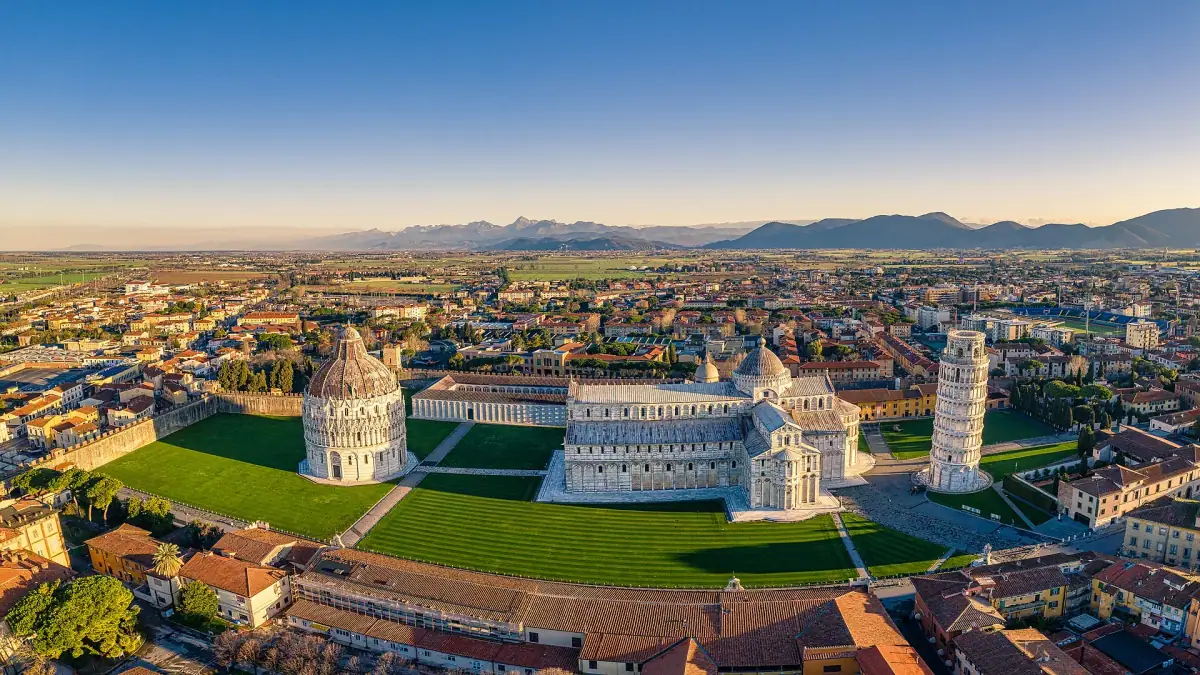
Piazza dei Miracoli (Square of Miracles) gathers four white monuments on a vast lawn: the cathedral, the baptistery, the Camposanto and the bell tower, that is, the Leaning Tower. A UNESCO World Heritage Site, the ensemble impresses with its harmony. The Leaning Tower stands just under 60 m (197 ft) tall and its tilt is visible as soon as you arrive on the square.
For the visit, here are a few tips:
- The tower climb is by time slot: book it online in advance, as places are limited.
- If you do not climb, the cathedral and baptistery are well worth the visit. The baptistery’s acoustics are renowned: staff regularly give a demonstration.
- The Camposanto, a former monumental cemetery, is quieter and often less crowded.
- Resist the “classic” photo of propping up the tower: it raises a smile, but it monopolizes the center of the lawn at peak hours.
Allow about two to three hours there, more if you visit all the monuments. On the way back, take time to stroll Piazza dei Cavalieri (Knights’ Square), the former political center of the city, surrounded by Renaissance palaces, including that of the prestigious Scuola Normale Superiore.
Guided tours in Pisa
Tickets, guided tours of Piazza dei Miracoli and day excursions from Florence.
Lunch in Pisa: what to eat
Avoid the restaurants that line Piazza dei Miracoli directly: prices are high and the menu is designed for groups. Prefer the lanes of the center, toward Piazza dei Cavalieri or the market district, where you find more authentic trattorias.
Pisan cooking relies on simple products: fish and seafood thanks to the nearby sea, vegetable soups, Tuscan cured meats. Cecina, a thin chickpea-flour flatbread baked in a wood oven, is a coastal specialty eaten as a snack, often slipped into a small roll. For a full overview of the region’s dishes, see our guide what to eat in Tuscany.
Lucca: the walls and the historic center
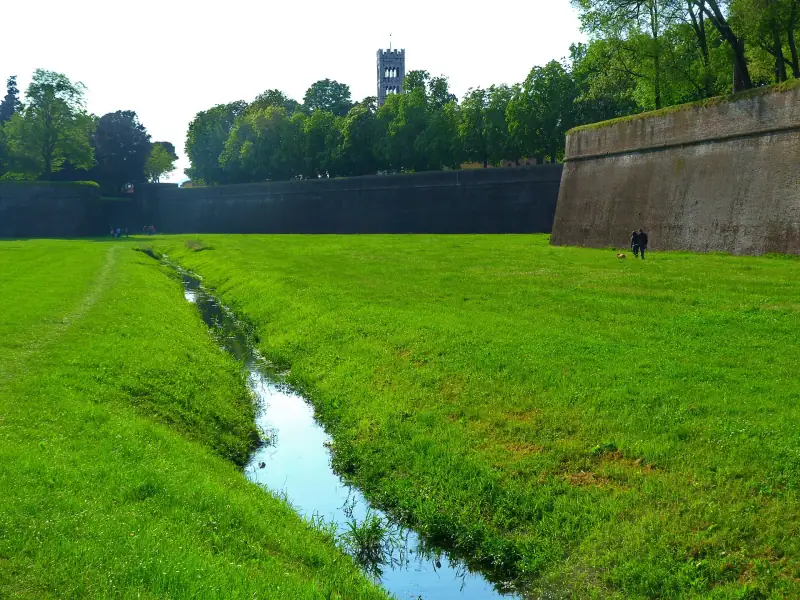
After a short train ride, you arrive in Lucca, whose station is just outside the walls. The city gates are a few minutes’ walk. What strikes you first is the calm: traffic is very limited in the center and the medieval lanes are peaceful.
The walls form a tree-lined promenade of about 4 km (2.5 mi) that goes all the way around the old town. Built between the 16th and 17th centuries, they never served for defense and were turned into a walking space. You can tour them on foot or by bike: several rental shops are near the gates. It is the most pleasant way to discover the city from above, with views over the rooftops and the surrounding hills.
In the center, a few stops worth making:
- Piazza dell’Anfiteatro: an oval square built on the footprint of an ancient Roman amphitheater, whose shape has stayed intact. Surrounded by colorful houses, it is lined with cafés.
- Via Fillungo: the main shopping street, winding and lively, lined with shops and medieval towers.
- Torre Guinigi: a medieval tower crowned with oak trees, which you can climb to admire the city.
- San Martino Cathedral: its marble facade with stacked galleries is one of the fine examples of Tuscan Romanesque art.
Lucca is also the birthplace of the composer Giacomo Puccini: several places pay tribute to him, and concerts are regularly offered in the churches of the center, often in season.
Activities in Lucca
Guided walking tours, bike rides on the walls and day excursions.
An hour-by-hour plan
Here is an indicative schedule, to adapt to your train times and your tower booking slot:
- Early morning: train from Florence to Pisa.
- Late morning: Piazza dei Miracoli, monuments and the tower climb if you booked.
- Early afternoon: lunch in the center of Pisa, then a walk to the station.
- Mid-afternoon: train to Lucca, arriving through the gate near the station.
- Late afternoon: tour of the walls, Piazza dell’Anfiteatro, Via Fillungo.
- Evening: dinner in Lucca if return times allow, then the train to Florence.
If the plan seems packed, do not be afraid to pick and choose: many travelers prefer to spend more time in Lucca, more intimate, even if it means shortening the visit of Pisa’s monuments.
Should you stay overnight?
For an excursion, staying based in Florence remains the most practical solution: trains are frequent and you do not change hotels. Staying in Lucca does have its charm, though: the city empties at the end of the day and regains the feel of a quiet small town, ideal for an unhurried dinner. Pisa, for its part, is easily visited in a few hours, and most travelers do not plan to spend the night there.
Hotels in Lucca
Compare hotels and guesthouses in the historic center, steps from the walls.
When to go
Both cities can be visited all year, but spring and early fall offer the best compromise between pleasant temperatures and reasonable crowds. In summer, Piazza dei Miracoli is very busy and hot: book the first morning slots. In winter, days are short, but the light is beautiful and the sites are quieter. To compare season by season, see our guide to the best time to visit Tuscany.
Summary
Pisa and Lucca complement each other perfectly: one for its emblematic monument, the other for its quiet atmosphere. With an early start, a tower ticket booked in advance and a lighter plan, the day runs without stress and the train brings you back to Florence late in the evening. To extend your stay, continue with Siena and Chianti, covered in our guide visiting Siena in one day.
Sources
- Opera della Primaziale Pisana: figures checked November 2026
Frequently asked questions
Can you visit Pisa and Lucca in a single day?
Yes, provided you leave early and focus on the essentials: Piazza dei Miracoli in Pisa in the morning, then the walls and historic center of Lucca in the afternoon. The two cities are close to each other and linked by a direct train.
How do you get from Florence to Pisa and Lucca?
The train is simplest: allow about an hour between Florence and Pisa, then a little over half an hour between Pisa and Lucca. Timetables change with the seasons, so check them the day before on the Trenitalia website.
Do you need to book to climb the Leaning Tower of Pisa?
Yes, the climb is by time slot and places go fast in high season. Book online before you come, on the official website of Piazza dei Miracoli, to avoid leaving without being able to climb.
Should you rent a car for this excursion?
It is not necessary: the train serves both cities directly and avoids parking worries and limited traffic zones. A car is only useful if you continue to other villages in the region.
Is it better to stay in Lucca rather than Florence?
For a day excursion, staying in Florence is simpler. Staying in Lucca suits you if you want to enjoy the city at a slower pace, once day visitors have left.
More Tuscany guides
Keep reading
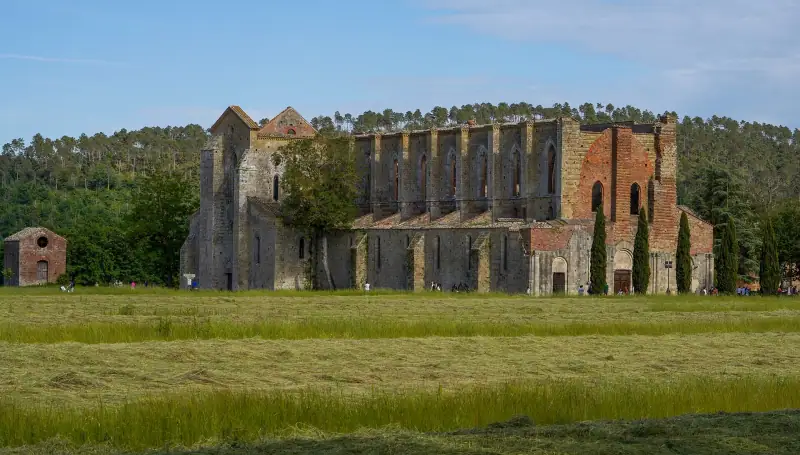
San Galgano Abbey and the Sword in the Stone: Hours, Prices and Access from Siena
Roofless abbey and Montesiepi hermitage near Siena: hours, 2026 rates, getting there without a car, visit length and what you really see.
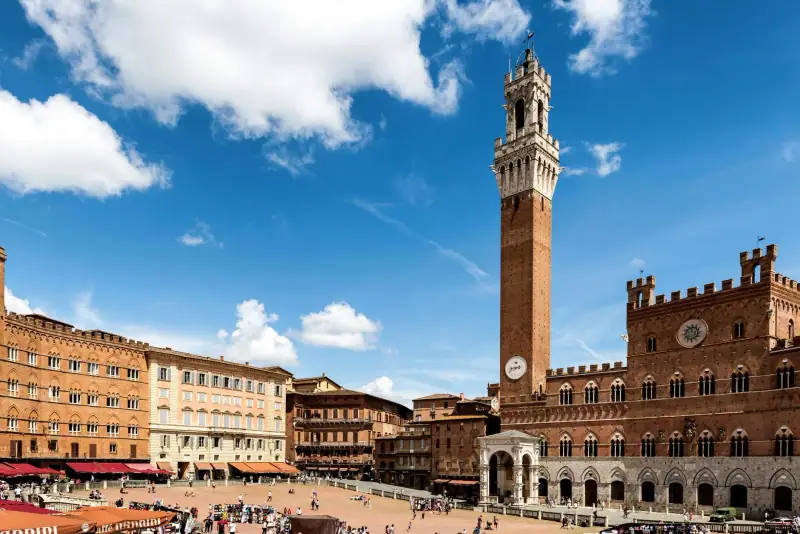
Siena in One Day: Itinerary, Highlights and Tips
What to see in Siena in one day? Piazza del Campo, the cathedral, Palazzo Pubblico, Torre del Mangia and local sweets: a realistic plan and practical tips.
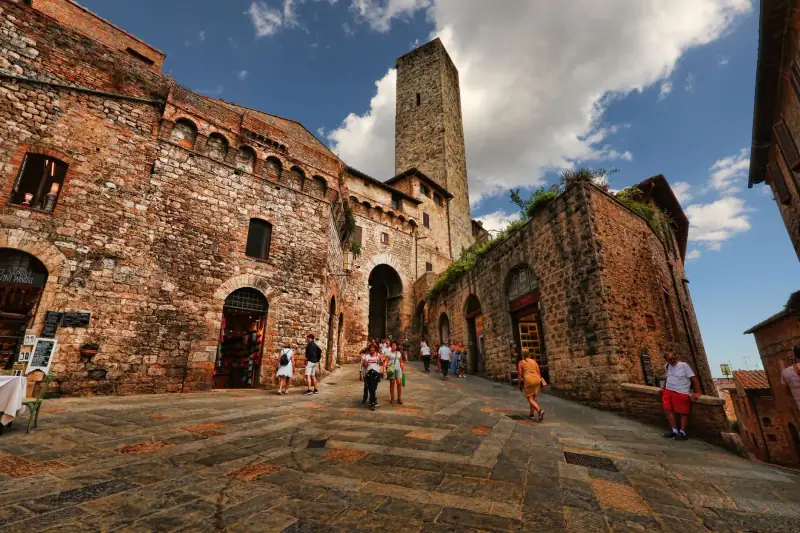
Where to Stay in Siena and San Gimignano: Neighborhoods, Villages and Tips
Where to stay in Siena and San Gimignano? Medieval center, areas by the walls or nearby countryside: pros, limits, parking and tips for choosing well.
Ready-made
Tuscany itineraries
2 days
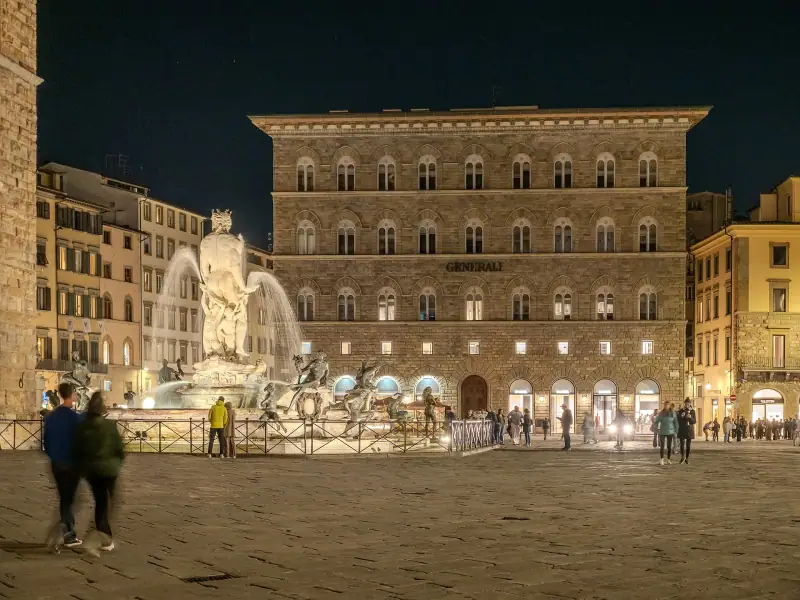
Florence in 2 Days: A Walking Itinerary, Day by Day
Florence in 2 days: Duomo, Uffizi, Accademia, Ponte Vecchio, Oltrarno and Piazzale Michelangelo. A realistic walking itinerary without rushing.
7 days
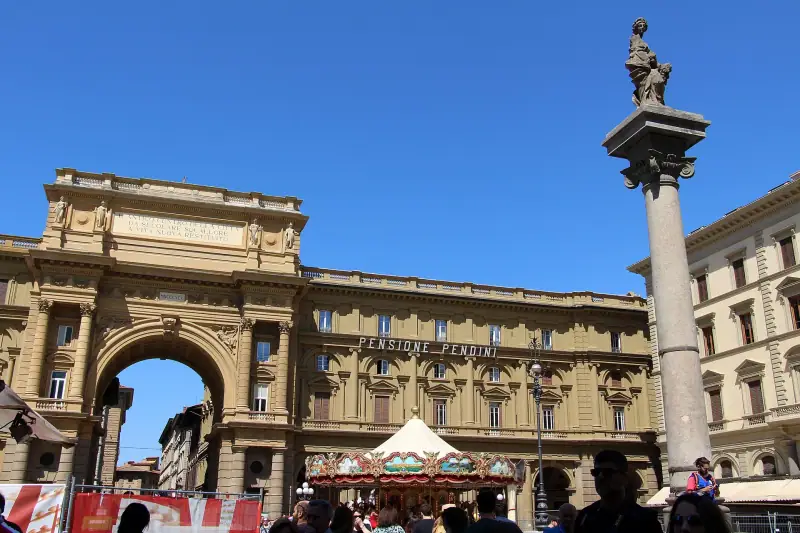
Tuscany in 7 Days: A Road Trip from Florence to the Val d'Orcia
A 7-day Tuscany itinerary: Florence, Pisa, Lucca, Chianti, Siena, San Gimignano and the Val d'Orcia, with realistic drives and practical tips.
2 days
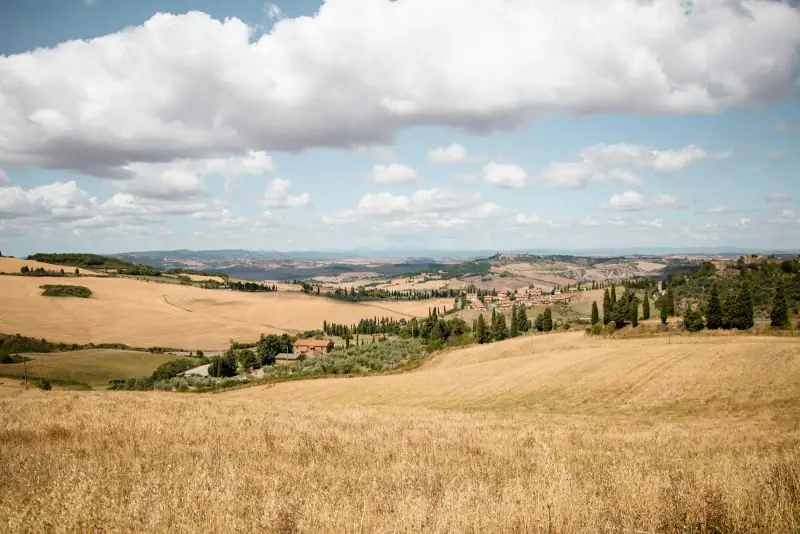
Val d'Orcia Road Trip: Pienza, Montalcino and Montepulciano
A 2-day road trip in the Val d'Orcia: Pienza, Bagno Vignoni, Montalcino and Montepulciano. Route, practical tips, wine and cypress-lined landscapes.