Itineraries
The Balkans in 20 days: a loop from Dubrovnik through Mostar, Albania and Montenegro
We may earn a commission when you book through links on this page, at no extra cost to you. We don't visit or try the places we cover: we summarize published sources. How we work
Day by day
- Days 1-3Dubrovnik: walls, old town, Lokrum island
- Days 4-5Mostar: Stari Most, then Blagaj and Počitelj
- Day 6Long drive to Shkodër, Rozafa Fortress
- Days 7-8Berat: castle, Mangalem, Onufri Museum
- Days 9-10Gjirokastër: Ottoman stone town and kastro
- Days 11-13Sarandë: Blue Eye, Butrint, Ksamil, Corfu option
- Day 14Tirana: Skanderbeg Square, BUNK'ART, Blloku
- Days 15-16Budva: old town, beaches, Sveti Stefan
- Days 17-19Kotor: ramparts, Perast, the bay
- Day 20Drive to Dubrovnik Airport (DBV) and fly home
Where to sleep
- Dubrovnik3 nights
- Mostar2 nights
- Shkodër1 night
- Berat2 nights
- Gjirokastër2 nights
- Sarandë3 nights
- Tirana1 night
- Budva2 nights
- Kotor3 nights
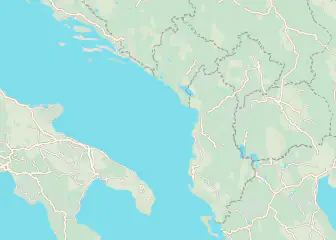
Opens the trip planner with these stops and nights already filled in. Add a stop, drop one or change the nights.
In short
- A 20-day loop by rental car from and back to Dubrovnik Airport (DBV), through Croatia, Bosnia and Herzegovina, Albania and Montenegro, in nine bases.
- The longest drive is Mostar to Shkodër, 5 h 30 plus two borders: leave early. Most other drives run 1 to 4 hours.
- Tell the rental company every country you will enter. Albania is the country most often restricted, so check it before you book.
- Best months are May to June and September to early October. July and August bring heat, crowds and long border queues.
This loop suits travelers who want to see four countries in one trip and are comfortable with a few long driving days. It starts and ends at Dubrovnik Airport (DBV), so there is no international drop-off. Along the way you pass through Croatia, Bosnia and Herzegovina, Albania and Montenegro, with nine bases and a mix of walled towns, UNESCO-listed Ottoman streets, a Roman and Greek site on the Ionian coast, and the Bay of Kotor.
Most drives take one to four hours. Two days are long: Mostar to Shkodër (5 h 30 plus two borders) and Sarandë to Tirana (4 h 05). Four of the five border crossings fall on days when you also drive two and a half hours or more, so the border rules below matter as much as the sights. For deeper detail on each country, our road trip guides cover Croatia, Bosnia and Herzegovina, Albania and Montenegro.
The route at a glance
| Days | Base | Nights | Drive from previous base |
|---|---|---|---|
| 1-3 | Dubrovnik (Croatia) | 3 | From Dubrovnik Airport (DBV): 25 min, 21 km (13 mi) |
| 4-5 | Mostar (Bosnia and Herzegovina) | 2 | From Dubrovnik: 2 h 30, 147 km (91 mi) |
| 6 | Shkodër (Albania) | 1 | From Mostar: 5 h 30, 269 km (167 mi) |
| 7-8 | Berat (Albania) | 2 | From Shkodër: 3 h 20, 197 km (122 mi) |
| 9-10 | Gjirokastër (Albania) | 2 | From Berat: 2 h 40, 147 km (91 mi) |
| 11-13 | Sarandë (Albania) | 3 | From Gjirokastër: 1 h 00, 52 km (32 mi) |
| 14 | Tirana (Albania) | 1 | From Sarandë: 4 h 05, 252 km (156 mi) |
| 15-16 | Budva (Montenegro) | 2 | From Tirana: 3 h 55, 177 km (110 mi) |
| 17-19 | Kotor (Montenegro) | 3 | From Budva: 35 min, 24 km (15 mi) |
| 20 | Dubrovnik Airport (DBV) | - | From Kotor: 1 h 45, 71 km (44 mi) |
Drive times are driving only and do not include border waits.
Compare rental companies in Dubrovnik
When you compare, tick or ask for the cross-border option and list every country: Croatia, Bosnia and Herzegovina, Albania and Montenegro.
Day by day
Days 1-3: Dubrovnik
From Dubrovnik Airport (DBV) the drive to town is 25 min, 21 km (13 mi). Our guide on where to stay in Dubrovnik notes that Čilipi (15 km / 9 mi, near the airport) and Cavtat (17 km / 11 mi) can cut the bill by 30-50%. Search here: Hotels in Dubrovnik.
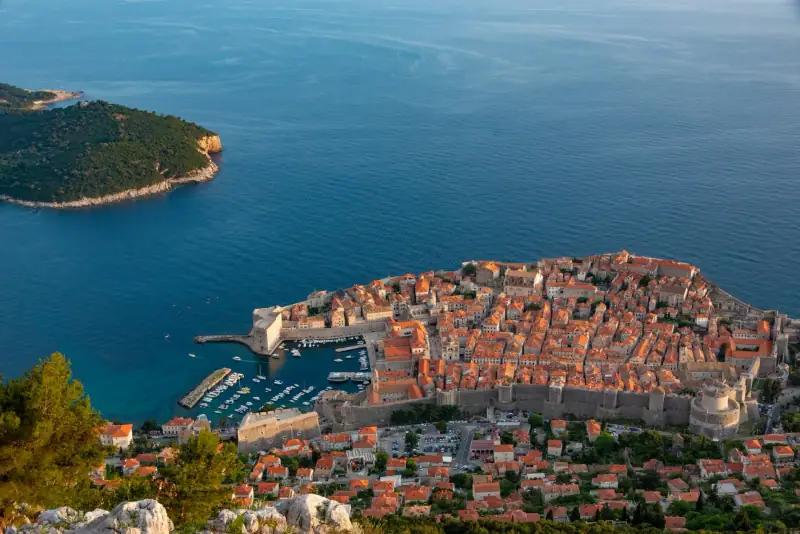
Day 2 is for the top sights. Walk the 2 km (1.2 mi) city walls first: entry is €35 (~$41) in high season and €25 (~$29) in low season, the walls open at 8 am, and by 10 am cruise groups take over. The ticket includes Fort Lovrijenac. Then follow the Stradun, 300 m (985 ft) of polished marble, to Luža Square, the cathedral and the Franciscan monastery with its pharmacy founded in 1317. After 6 pm the cruise buses leave and the old town is calmer.
Day 3 can combine Lokrum Island (a 10 minute boat from the old port, about €30 / ~$35 round trip including the reserve entry) with the cable car up Mount Srđ, best in late afternoon. You can also book guided tours of Dubrovnik.
Days 4-5: Mostar
Day 4 is a 2 h 30 drive, 147 km (91 mi), and your first border: Croatia to Bosnia and Herzegovina. Allow extra time and carry the passports and car papers within reach. Then spend the afternoon in the old town, around the Stari Most, the 1566 Ottoman bridge rebuilt in 2004 and listed by UNESCO. Our Mostar guide covers the Kujundžiluk bazaar, the Koski Mehmed Pasha Mosque (the minaret climb is about 80 narrow steps) and the Bulevar, the former front line. For beds, see where to stay in Mostar or search Hotels in Mostar.
Day 5 is a day trip by car. Blagaj is 12 km (7.5 mi) from Mostar: a 16th-century dervish tekke at the source of the Buna river (about 5 BAM, ~$3; remove your shoes, women cover their heads). Počitelj, about 25 km (15 mi) south, is a fortified Ottoman village with a steep climb to the upper ramparts. The Kravice waterfalls, about 40 km (25 mi) south, are busy on summer weekends. Mostar can reach 35 °C (95 °F) in July and August, so start early.
Day 6: Mostar to Shkodër
This is the longest drive: 5 h 30, 269 km (167 mi), through Montenegro, which means two borders. Leave early and fill the tank before you start. In Shkodër, our Albania road trip guide lists Rozafa Fortress above the confluence of the Drin and Buna, the market (the liveliest in northern Albania) and Lake Shkodër, the largest lake in the Balkans, for sunset. Search Hotels in Shkodër. If you arrive late, keep the fortress for the evening or skip it.
Days 7-8: Berat
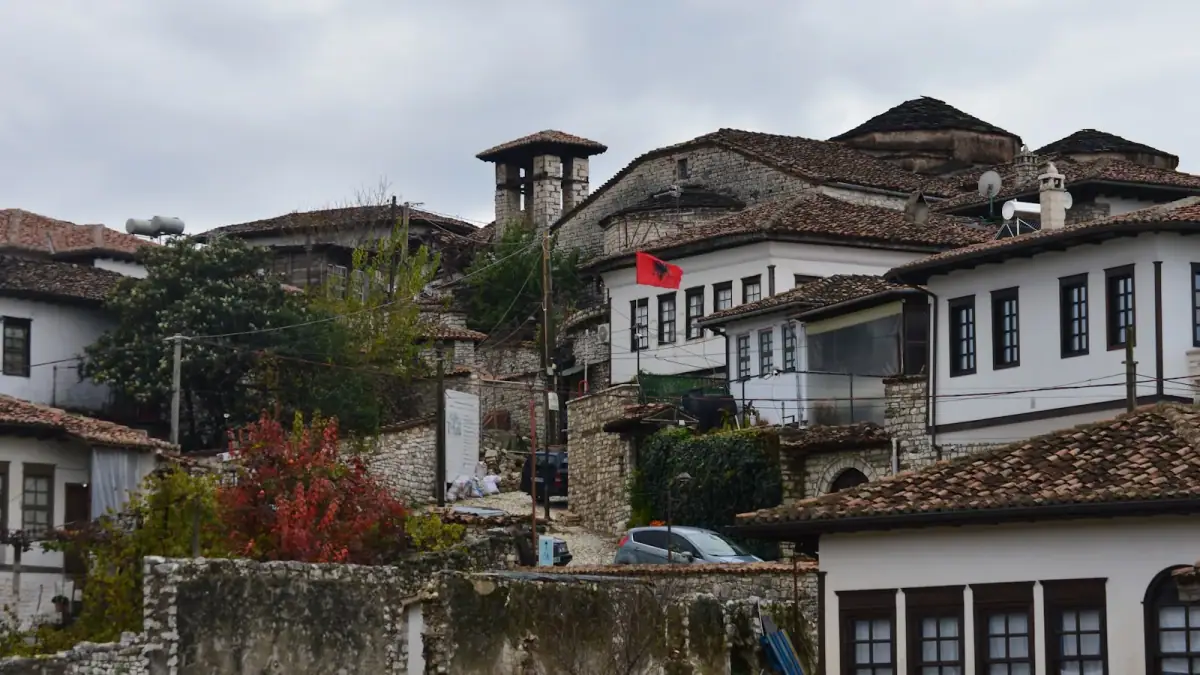
Day 7 is 3 h 20, 197 km (122 mi). Berat is called the city of a thousand windows, and our Berat guide says it deserves two days. Use the first afternoon for the Mangalem quarter and the Gorica bridge, the classic viewpoint over the Mangalem facades. See also things to do in Berat and where to stay in Berat, or search Hotels in Berat.
On day 8 climb to the castle (214 m / 702 ft; 20 to 30 minutes on foot from Mangalem, or a taxi for €3-5, ~$3-6) and allow 2 h to 2 h 30 inside. About twenty families still live within the walls. The Onufri Museum holds icons by the 16th-century painter known for his carmine red: about 200 lek (€2, ~$2), generally 9 am to 5 pm, closed Monday. As an alternative, Apollonia, a Greek and Roman site 55-60 km (34-37 mi) west, needs about 2 h and, according to the guide, is easiest by rental car.
Days 9-10: Gjirokastër
Day 9 is a 2 h 40 drive, 147 km (91 mi). Gjirokastër, the “stone city”, is a UNESCO site of limestone tower houses with slate roofs under an Ottoman kastro. Our guide to where to stay in Gjirokastër explains the choice: the old town (kulla guesthouses, about €25-55 / ~$29-64 a double, hard parking) or the lower town (easy free parking, €35-70 / ~$41-81). Many guesthouses take cash only and ATMs are limited, so bring lek. Search Hotels in Gjirokastër.
Day 10 is for the kastro (with a weapons museum and views over the Drino valley), the restored bazaar, the ethnographic museum and the birthplaces of Hoxha and Kadare. Our guides do not describe Gjirokastër in a separate visit article, so plan on half a day for the old town and a long evening on a guesthouse terrace.
Days 11-13: Sarandë
Day 11 is short: 1 h 00, 52 km (32 mi). Stop at the Blue Eye on the way, a karst spring about 20 km (12 mi) from Sarandë and 30 to 45 minutes by road. Entry is about 50 lek, parking about 300 lek for up to 3 hours, and the walk from the lot is 1.5 to 2 km (0.9 to 1.2 mi); see our Blue Eye guide. Swimming in the spring is banned. Then settle in: Hotels in Sarandë, or compare with Ksamil.
Day 12 is Butrint and Ksamil. Butrint is a UNESCO site 18 km (11 mi) south of Sarandë, with a Greek theater, Roman baths and an early Christian basilica; allow 3 to 4 hours. Ksamil, 14-16 km (9-10 mi) from town, has white sand and three islets; arrive before 9:30 am in July and August. Day 13 can be Lekuresi Castle, a boat trip along the Riviera, or a day in Corfu: hydrofoils take 30 to 45 minutes and a one-way ticket is €20-30 (~$23-35). This is a ferry crossing, not a road, and the car stays in Sarandë; check the entry rules for Greece with your own government first. More in things to do in Sarandë. You can also book activities in Sarandë.
Day 14: Tirana
The drive is 4 h 05, 252 km (156 mi), so you arrive in the afternoon. Our Tirana guide lists Skanderbeg Square, the Et’hem Bey Mosque, the Clock Tower and Blloku, the former communist elite district now full of cafes. BUNK’ART 1 and 2 cost about €9 (~$10) each (2026). The National History Museum has been closed for renovation since March 2024, with reopening announced for around 2028. Mount Dajti’s cable car (about €15, ~$17) is closed on Tuesdays. Search Hotels in Tirana.
Days 15-16: Budva
Day 15 is 3 h 55, 177 km (110 mi), with the Albania to Montenegro border. Cross early. On day 15 or 16, see the Stari Grad, the walled old town on a peninsula, and the citadel for the best view. The beaches in our Budva guide include Mogren (five minutes on foot), Bečići (about 2 km / 1.2 mi of sand) and Sveti Stefan (6 km / 4 mi south; the public beach is to the left of the tombolo). You can also reach Cetinje in about 40 minutes: see visit Cetinje. Beds: where to stay in Budva or Hotels in Budva.
Days 17-19: Kotor
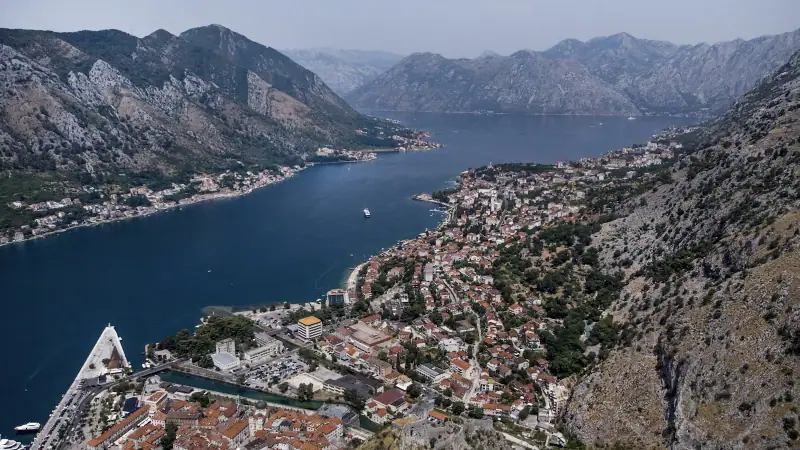
Day 17 is a short coastal drive: 35 min, 24 km (15 mi). Cars are not allowed in the old town, so use a car park outside the walls and arrive early in high season. The Kotor guide covers the Sea Gate, St. Tryphon Cathedral and the climb to San Giovanni Fortress (1,200 to 1,355 steps, 45 min to 1 h 30; ramparts about €8, ~$9 in season; avoid midday in summer). Search Hotels in Kotor or read where to stay in Kotor.
Day 18 can follow the bay circuit in 3 days in the Bay of Kotor: Perast, a boat to Our Lady of the Rocks, and Risan with its Roman mosaics. Day 19 is flexible: kayaking in the Bay of Kotor, the Luštica peninsula (a car is essential) or Herceg Novi. Book activities in Kotor in advance in summer.
Day 20: Kotor to Dubrovnik Airport
The drive is 1 h 45, 71 km (44 mi), plus the Montenegro to Croatia border, the one that can back up most. Leave very early and keep a wide margin before your flight; if you can, avoid a summer weekend. Return the car with the fuel level your contract asks for.
Crossing the borders
The route crosses five borders in this order: Croatia to Bosnia and Herzegovina on day 4; Bosnia and Herzegovina to Montenegro, then Montenegro to Albania, on day 6; Albania to Montenegro on day 15; and Montenegro to Croatia on day 20. Croatia to Bosnia and Croatia to Montenegro are external Schengen borders with passport checks, and so are the borders of Albania. Since 10 April 2026 the EU Entry/Exit System (EES) is fully deployed at Schengen external borders (eu-LISA): non-EU travelers register fingerprints and a photo at the first crossing, which takes longer, and you may have to step out of the car. ETIAS is not in operation as of November 2026; check travel-europe.europa.eu/etias_en before you go. For visas, entry rules and driving licenses or an international driving permit, check the official advice of your own government (travel.state.gov for the US, gov.uk/foreign-travel-advice for the UK, travel.gc.ca for Canada, smartraveller.gov.au for Australia).
Every country must be declared to the rental company when you book. Some companies require a written cross-border permit from the branch for Albania and Montenegro and charge a fee per day or per country; amounts vary, so compare them. Driving into a country that was not authorized voids the rental protections (Sixt published terms, 2026). Albania is the country most often restricted. For insurance, Bosnia and Herzegovina requires foreign-registered cars to carry valid international motor insurance, a paper Green Card (electronic not accepted) unless the plate’s country is covered by the Multilateral Agreement; otherwise border insurance is sold at the crossing (Green Card Bureau of Bosnia and Herzegovina, 2026). Montenegro and Albania sell border insurance when the car’s Green Card does not cover them, so check that the card lists every country of the route. Croatia, Montenegro, Albania and Bosnia have no vignette. Details are in our border section.
Queues are the main risk. The Croatian auto club HAK reported waits of up to 12 hours at the Croatia to Montenegro border on a peak August 2026 day, and weekends are the worst. Cross early in the morning, avoid summer weekends and check HAK’s live border information at hak.hr. Currencies: our Croatia and Montenegro guides quote prices in euros, Bosnia and Herzegovina uses the convertible mark (BAM; €1 is about 1.95 BAM), and Albania’s small entry fees are in lek.
Getting there and away
You arrive and leave at Dubrovnik Airport (DBV), so the rental is a loop with the same pick-up and drop-off. A drop-off in another country is often not offered or comes with a high international one-way fee (no published figure for these countries); a loop is usually much cheaper. Our guides do not describe flights from the US, UK, Canada or Australia, so check current routes with your airline. The other airports of this region are Zagreb (ZAG), Split (SPU), Sarajevo (SJJ), Tivat (TIV), Podgorica (TGD) and Tirana (TIA). If you fly into one of them, treat it as a different trip with a one-way rental to price first.
When to go
May to June and September to early October suit this route best. On the coast, June and September bring a sea at 20-25 °C (68-77 °F) in Croatia, 22 to 24 °C (72 to 75 °F) in Montenegro in June, and far fewer people. July and August bring 35 °C (95 °F) and more in Mostar and on the coast, and Dubrovnik is at its most crowded. Many island hotels and restaurants close from mid-October. Check best time to visit Croatia, Bosnia, Albania and Montenegro.
Budget
Figures come from our regional guides and are per person unless noted. Croatia: €50-70 (~$58-81) a day on a budget, €100-150 (~$116-174) mid-range, €200-350 (~$232-406) comfort, and lodging can triple between May and August. Bosnia and Herzegovina: €25-40 (~$29-46) a day economy and €50-80 (~$58-93) comfort, with a rental car at €25-60 (~$29-70) a day. Albania: about €80-120 (~$93-139) a day, excluding flights. Montenegro: for 3 days in the Bay of Kotor, about €400-500 (~$464-580) on a budget and €700-1,000 (~$812-1,160) in comfort. Car rental for this route is priced separately and depends on the cross-border fees.
Adapt it
To shorten the trip to about 14 days, skip the Albanian leg between Berat and Tirana and go from Mostar back to Dubrovnik, then add Cetinje or Virpazar from Kotor. A 10-day version could keep Dubrovnik, Mostar, Budva and Kotor, which avoids the long Mostar to Shkodër day. To add time, spend a night in Theth from Shkodër or in Virpazar before Budva; both are stops of our wider Balkans planner. You could also continue north to Split, Zadar and Plitvice, but that moves the trip toward a one-way rental.
Frequently asked questions
Do you need to tell the rental company about the countries you will drive into?
Yes. Declare every country when you book (the cross-border option). Some companies want a written permit from the branch for Albania and Montenegro and charge a fee per day or per country. Driving into an unauthorized country voids the rental protections.
Do you need a Green Card for this route?
Bosnia and Herzegovina requires a valid international motor insurance paper (a Green Card; electronic is not accepted) unless the plate's country is covered by the Multilateral Agreement. Ask the rental company for a card that lists Bosnia, Montenegro and Albania, and check it names every country on the route.
Can you drop the car at another airport?
Often not, or only with a high international one-way fee. This route is a loop that returns to the pick-up country, which is usually the cheaper and simpler choice.
What is the hardest driving day?
Day 6, Mostar to Shkodër: 269 km (167 mi), about 5 h 30 plus two borders. Leave early. Day 14 (Sarandë to Tirana, 4 h 05) and day 15 (Tirana to Budva, 3 h 55 with a border) are the next longest.
When is the best time for this trip?
May to June and September to early October give warm weather, a swimmable sea and fewer crowds. July and August are hot (35 °C / 95 °F and more in Mostar and on the coast), busy, and the worst time for border queues.
Ready-made
Balkans road trip itineraries
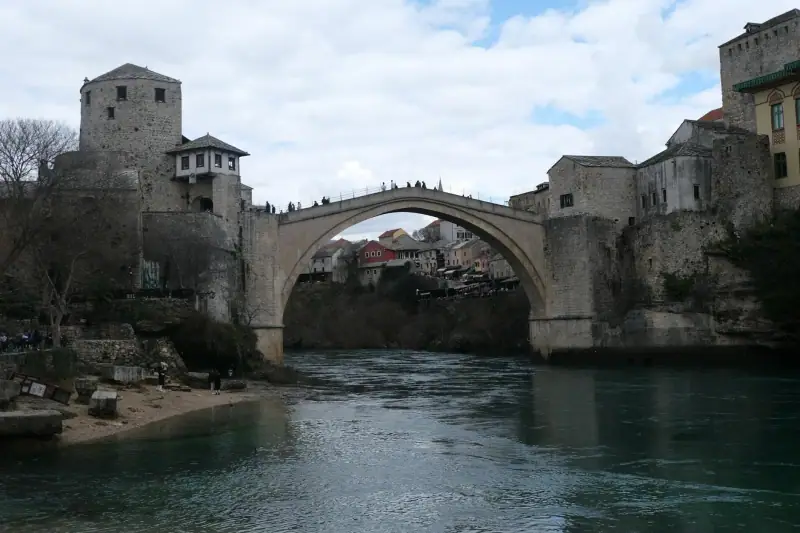
14 days
Dubrovnik loop in 14 days: Bosnia and Herzegovina and Montenegro by car
DubrovnikTrebinjeMostarSarajevoŽabljakKotor
Can be adapted in the planner
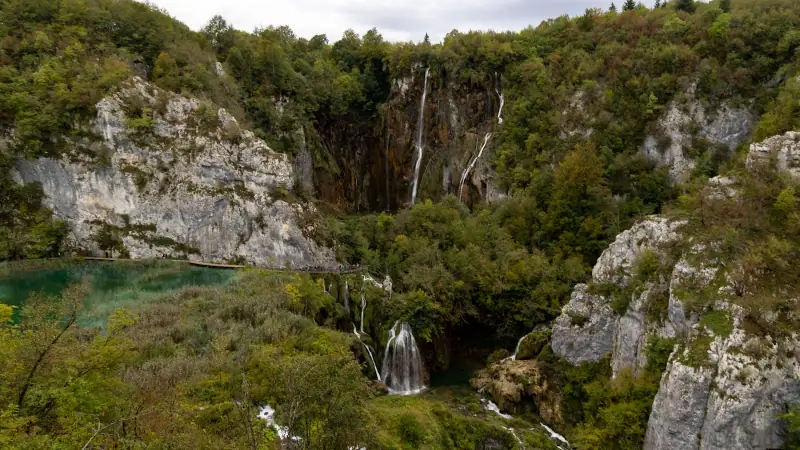
14 days
The Balkans in 14 days: Slovenia, Croatia and Mostar, from Ljubljana to Dubrovnik
BledLjubljanaPlitvice LakesZadarSplitMostarDubrovnik
Can be adapted in the planner