What to see
Visit Blagaj: The Dervish Tekke and the Source of the Buna
We may earn a commission when you book through links on this page, at no extra cost to you. We don't visit or try the places we cover: we summarize published sources. How we work
In short
- Blagaj is only 12 km (7.5 mi) southeast of Mostar. A taxi takes 10 to 15 minutes for about 15 to 20 BAM each way.
- Half a day (3 to 4 hours) covers the tekke, the Buna spring, the old village and a riverside lunch; add a full day for the Stjepan-grad fortress climb (45 to 60 minutes up).
- The tekke costs about 5 BAM (about $3), sometimes quoted up to 10 BAM. Remove your shoes; women cover their heads (scarves are provided).
- Spring has the strongest flow; in July and August arrive before 9:30 am or after 5 pm to avoid tour groups.
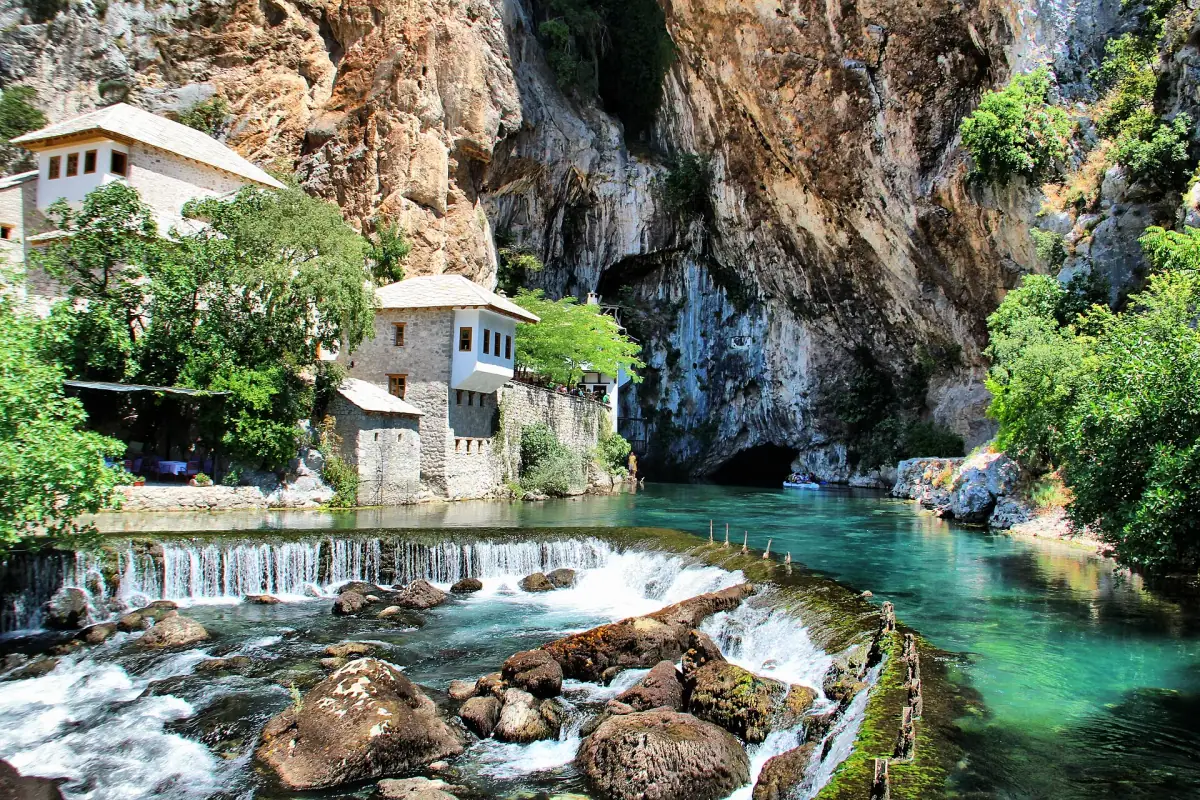
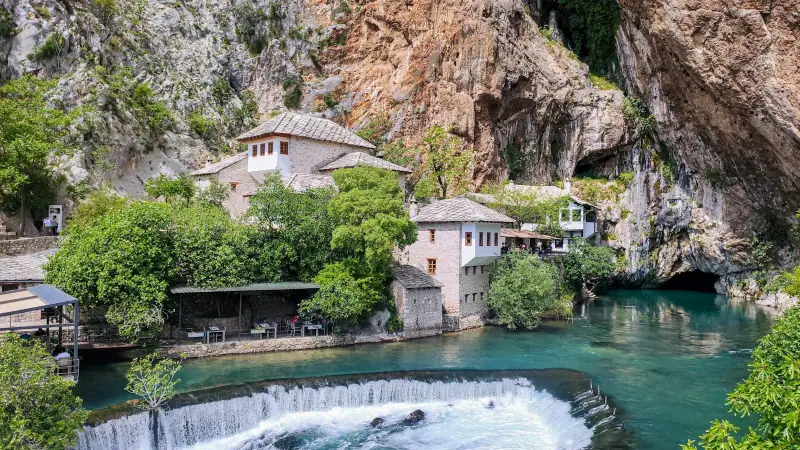
Picture a towering limestone cliff plunging into a river of unreal emerald green, and at the foot of that cliff, an immaculately white 16th-century Ottoman building that seems suspended between rock and water. This is Blagaj, and it is one of the most spellbinding sites in all of Bosnia and Herzegovina. Only 12 kilometers (7.5 mi) from Mostar, this quiet village holds one of the finest Sufi tekkes in the Balkans, the extraordinary spring of the Buna river and the remains of a medieval fortress that overlooks it all from the heights. This guide gives you everything you need to enjoy it fully.
The Blagaj tekke: a jewel of Ottoman architecture
The Blagaj tekke (Blagajska tekija) is undeniably the most photographed feature in Bosnia and Herzegovina after the Stari Most bridge in Mostar. Built in the 16th century, around 1520, during the Ottoman period, it is one of the best-preserved Sufi tekkes in the Balkans. The main building is set against a limestone cliff rising several dozen meters (100 ft or more), an architectural position that is unique and creates a striking visual effect.
History and Sufi spirituality
The tekke belongs to the Bektashi brotherhood, a Sufi order founded in the 13th century in Anatolia by Haji Bektash Veli. The Bektashis stand out from other Islamic brotherhoods by their more syncretic practice, their tolerance and their attachment to music and spiritual poetry. Over the centuries, the Blagaj tekke has been an important pilgrimage site for Muslims across the region.
The main building holds several spaces: the semahane (ceremony hall where the dhikr rituals took place), the turbe (mausoleum) with the tombs of two respected sheikhs, and the cells where dervishes lived on spiritual retreat. The interior decoration combines the sobriety of Islamic art, with painted arabesques and Quranic inscriptions, and the soothing presence of light filtering off the waters of the Buna just outside.
Visiting the tekke
To enter the tekke, you must take off your shoes at the door. Scarves are provided at the entrance for women. The interior is intimate: a few simply decorated rooms where the atmosphere invites reflection. Take time to sit in the semahane and listen to the murmur of the Buna passing under the foundations; there is something almost magical in this dialogue between stone, water and prayer.
Entry: about 5 BAM (about €2.50 / $3); some sources say up to 10 BAM, so check the rate locally. Open daily, hours vary by season (generally 8 am to 8 pm in summer).
Photo tip: The most iconic view of the tekke is from the wooden footbridge along the Buna, about a hundred meters (330 ft) upstream. Early in the morning, before the groups arrive (before 9 am), the low light on the cliff and the light mist on the river make ideal photo conditions.
Mostar and Herzegovina tours
Explore Blagaj, the Stari Most bridge and the wonders of Herzegovina with a passionate local guide.
The Buna spring: an exceptional karst resurgence
Behind the tekke, in a cave at the foot of the cliff, wells up one of the largest karst springs in the Balkans: the Vrelo Bune (the source of the Buna). The water comes straight out of the limestone massif, cold (12 °C / 54 °F year-round), crystal clear and in impressive quantity, with an average flow of about 23 cubic meters per second (about 810 cubic feet per second) in normal conditions, which can exceed 100 cubic meters per second (about 3,500 cubic feet) in spring floods.
The geology of the resurgence
The Buna rises in the Velež and Čvrsnica massifs, where rain and snowmelt seep into the limestone for months or even years before re-emerging here as a powerful spring. This karst phenomenon (dissolution of limestone by slightly acidic water) is typical of Herzegovina, a region that counts among the most beautiful karst areas in Europe.
The blue-green color of the water, almost unreal depending on the light, is due to the water’s extreme purity and constant coolness. The river keeps this crystal clarity for several kilometers downstream, making it a valuable habitat for brown trout.
The cave and exploring it
The cave from which the Buna gushes is partly accessible. At low water, it is possible by boat to venture a few meters inside, in relative darkness, to see the resurgence up close. Local boatmen sometimes offer this short outing from the restaurant terraces. Ask there.
Tip: Even in the heat of summer, the air by the Buna is cool and pleasant, thanks to the 12 °C (54 °F) spring cooling the surrounding air. A light sweater is not too much in the evening.
The medieval fortress of Stjepan-grad
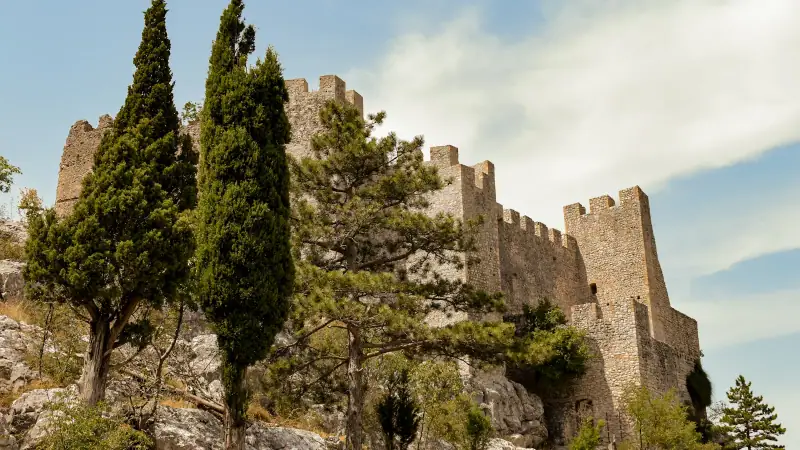
Overlooking Blagaj from a rocky ridge 260 to 266 meters (about 850 to 870 ft) above the spring, the Stjepan-grad fortress (the “castle of Stephen”) is one of the most impressive remains of medieval Bosnia, and one of the least visited, which gives it a certain charm.
The fortress takes its name from Stjepan Vukčić Kosača, a powerful 15th-century Bosnian nobleman who ruled much of Herzegovina (the very word “Herzegovina” comes from herceg, the title Stjepan adopted in 1448 with Ottoman recognition; historians remain uncertain about the exact attribution of this title). The citadel was his main residence and one of the centers of power before the Ottoman conquest of 1465-1466.
The climb to the fortress
Access is from the village of Blagaj by a steep path that climbs in about 45 to 60 minutes depending on your pace. The path is not marked very precisely: ask villagers or restaurant staff by the Buna for directions. Shoes with grippy soles are essential, as the rocks can be slippery after rain.
At the top, the partly collapsed walls and towers give an extraordinary 360° view: the Buna valley and the tekke below, Mostar and its bridge visible on a clear day 12 km (7.5 mi) to the north, and the karst hills of Herzegovina as far as the eye can see.
Warning: The ruins are not secured (no guardrails). Be careful, especially with children, and avoid climbing on unstable ramparts.
Hotels in Mostar: an ideal base for Blagaj
Sleeping in Mostar lets you visit Blagaj in half a day from your hotel, with all the comforts of the tourist center.
Blagaj old village: authentic Ottoman architecture
Apart from the tekke and the spring, the village of Blagaj itself deserves a stroll. The historic center keeps several typical Ottoman houses (called stara bosanska kuća, the traditional Bosnian house): buildings with overhanging upper floors, wooden windows with lattice screens, and inner gardens enclosed by dry-stone walls.
These houses, dating from the 17th to the 19th century, are an intact record of Ottoman domestic architecture in Herzegovina. Many have been restored and belong to families who have lived there for generations. Unlike Mostar, where the old town is heavily touristed, Blagaj remains a living village: residents live alongside visitors far more naturally.
The bazaar and the craftspeople
Near the tekke entrance, a few stalls sell local products: Herzegovina honey (one of the best in Bosnia), olive oil from the Neretva valley, Ottoman filigree jewelry, hand-painted ceramics. Prices are reasonable and the products often of much better quality than in Mostar’s tourist shops.
Food in Blagaj: eating by the Buna
Blagaj is known for its restaurants built literally over the Buna river, on wooden platforms overlooking the transparent water. It is one of the most pleasant dining settings in all of Bosnia.
Specialties to order
- Buna trout (pastrmka): The cold, pure Buna is an exceptional habitat for brown trout. Grilled whole, simply seasoned with olive oil and lemon, it is the Blagaj specialty. Order it as soon as you arrive; there may be a preparation delay.
- Ćevapi with kajmak: Bosnian grilled sausages, served in puffy lepinja bread with kajmak (lightly fermented fresh cream) and raw onions, a must.
- Tripe soup (čorba): Thick, tasty, warming; Bosnian tripe soup is a seasonal dish found in traditional restaurants even in summer.
- Pita borek: Flaky filled pastries with cheese (sirnica), minced meat (mesnica) or spinach (zeljanica), served as a starter or snack.
- Bosnian coffee (bosanska kafa): The ritual of coffee in a copper džezva with rahat lokum sugar is even nicer by the water.
The best places
- Restoran Vrelo: The most iconic place, right at the spring. Terrace on stilts, a superb view of the tekke, trout specialties and grills. Prices slightly higher than elsewhere in Bosnia, but the experience is worth the bill.
- Restaurant Buna: A few dozen meters from the tekke, less well known but often recommended for fresh trout and family welcome (check it is open before going).
- A local konoba in the village: To get away from the tourist terraces, walk up into the village; the konobas (family taverns) serve more rustic food at very low prices.
Meal budget: Allow 20-35 BAM (€10-18 / $12-21) per person for a full meal (trout, sides and a drink) at the restaurants by the Buna.
Car rental in Bosnia and Herzegovina
A car is by far the most practical way to explore Herzegovina: Blagaj, Počitelj, the Kravice waterfalls, everything becomes reachable in a day.
How to fit Blagaj into your itinerary
Blagaj + Mostar as a weekend (2 days)
The classic and perfect pairing. Devote the first day entirely to Mostar: Stari Most bridge, the Ottoman Kujundžiluk quarter, Koski Mehmed Pasha Mosque, sunset from the rocks by the Neretva. On the second day, leave in the morning for Blagaj: tekke, Buna spring, a walk in the village, a trout lunch on a terrace over the river. Return to Mostar in the afternoon, stopping if time allows at Počitelj (about 24 km / 15 mi south-southeast of Blagaj) to see the fortress and Ottoman mosques of this medieval town. See our Mostar weekend guide for more detail.
The Herzegovina circuit in 1 day
From Mostar, a well-organized day can cover the emblematic sights of Herzegovina: Blagaj (morning), Počitelj (early afternoon), Kravice waterfalls (mid-afternoon), back to Mostar. By car, distances are short: Mostar-Blagaj (20 min), Blagaj-Počitelj (25 min), Počitelj-Kravice (30 min). See our article on the Kravice waterfalls to prepare this stop.
In a Bosnia road trip (7 days)
On a one-week circuit, Blagaj fits naturally into the Mostar day, often on the second or third day after Sarajevo. Our Bosnia road trip itinerary includes Blagaj as a half stop in the Mostar and Herzegovina day. The full week in Bosnia gives you a complete day-by-day framework.
When to visit Blagaj
Spring (April-May): Without hesitation the best season. Snowmelt in the massif feeds the Buna spring, which is at maximum flow, and the resurgence is spectacular. The vegetation along the river is intense green, temperatures mild (15-22 °C / 59-72 °F) and tourists still few.
Summer (June-August): Very busy, especially in July-August with tour buses from Mostar. Arrive before 9:30 am or after 5 pm to avoid the crowds at the tekke. The heat is strong (35-40 °C / 95-104 °F in Mostar), but the cool spring air eases the mugginess by the water.
Fall (September-October): An excellent compromise: pleasant temperatures (18-28 °C / 64-82 °F), golden light on the cliffs, and crowds clearly dropping from mid-September. The vegetation starts to turn color in late October.
Winter (November-March): Blagaj is little visited in winter but the spring remains accessible. The tekke may have shorter hours. The Buna in winter flood, with gray, roaring water, is a radically different but impressive version of the site.
Budget and practical logistics
Blagaj is one of the cheapest sites in Bosnia in terms of access and paid visits.
| Item | Indicative price |
|---|---|
| Tekke entry | 5 BAM (€2.50 / ~$3) |
| Taxi Mostar to Blagaj | 15-20 BAM (€7-10 / $8-12) one way |
| Meal (trout and sides) | 20-35 BAM (€10-18 / $12-21) |
| Bosnian coffee | 2-3 BAM |
| Local crafts (local honey) | 10-20 BAM (€5-10 / $6-12) |
Sleeping in Blagaj: A few family guesthouses offer rooms in Blagaj itself, often with a terrace over the Buna, a very intimate experience. Allow 50-90 BAM (€25-45 / $29-52) a night. For more choice and activity, sleep in Mostar and visit Blagaj as an excursion. Our comparison of sleeping in Blagaj or Mostar helps you decide.
For an overall view of your spending in Bosnia, see our Bosnia budget guide.
Flights to Bosnia and Herzegovina
Sarajevo and Mostar are the two main entry airports. Compare flights to prepare your trip to Herzegovina.
How to get to Blagaj
From Mostar (12 km / 7.5 mi): A taxi is the most convenient option: 10 to 15 minutes, 15 to 20 BAM one way. Shared taxis sometimes exist in high season. A local bus also links Mostar to Blagaj, but times should be checked at Mostar bus station, as they are not always suited to tourists. With a rental car (see our guide to driving in Bosnia), the trip is very simple.
From Sarajevo (130 km / 81 mi): About 1 h 45 by car via the M17 through the Neretva valley. Sarajevo-Mostar buses stop at Mostar station, not Blagaj; take a local taxi from Mostar.
From the Kravice waterfalls (30 km / 19 mi): If you string together the Herzegovina circuit by car, Kravice, Počitelj, Blagaj is a natural sequence, which you can do south to north or the reverse depending on your starting point.
Final thoughts
Blagaj is one of those rare places where everything seems perfectly in tune: the whiteness of the tekke on the limestone cliff, the emerald transparency of the Buna’s waters, the murmur of Sufi prayers in the semahane, the scent of Herzegovina’s aromatic herbs on the breeze. The visit takes less than half a day, but the images stay with you. Twelve kilometers (7.5 mi) from Mostar, and often neglected in favor of the Stari Most bridge, Blagaj nonetheless deserves a place on the list of every traveler stopping in Herzegovina, and for many it is the strongest memory of the trip.
Frequently asked questions
How long does it take to visit Blagaj?
Half a day (3 to 4 hours) is enough for the essentials: the dervish tekke, the Buna spring, the Ottoman old village and a meal on a riverside terrace. If you want to climb to the medieval Stjepan-grad fortress, allow a full day.
How do you get to Blagaj from Mostar?
Blagaj is only 12 km (7.5 mi) southeast of Mostar. By taxi from central Mostar, allow 10 to 15 minutes and about 15 to 20 BAM (about €7-10 / $8-12). By car, the road is direct via the M17.4. A local bus also links Mostar to Blagaj, but check times at Mostar bus station; a taxi or rental car is far more practical.
Is there an entry fee for the tekke?
Yes, entry to the Blagaj tekke is paid: about 5 BAM (about €2.50 / $3) per person (some sources say up to 10 BAM, so check the rate locally). You must remove your shoes before entering and women must cover their heads (scarves are provided at the entrance if needed). Access to the area around the spring and to the restaurant terraces is completely free.
Can you visit Blagaj outside the summer season?
Absolutely. The Buna spring is spectacular all year and even stronger in spring during snowmelt. The tekke stays open outside high season, but hours may be shorter. Outside July-August you get a much more peaceful atmosphere, without the tour buses.
Can you visit Blagaj as a day trip from Mostar?
Yes, Blagaj combines perfectly with Mostar in one day. Visit old Mostar in the morning (Stari Most bridge, Ottoman quarter), then head to Blagaj in the afternoon (30 min). You can also add Počitelj (about 24 km / 15 mi south-southeast of Blagaj) for a full-day Herzegovina circuit.
What is a tekke?
A tekke (tekija in Bosnian) is a monastery or gathering place for members of a Sufi (Islamic mystic) order. The one in Blagaj belongs to the Bektashi order, a Sufi brotherhood founded in the 13th century in Anatolia. Dervishes gathered there for prayer, meditation and the practice of dhikr (rhythmic invocation). The Blagaj tekke is one of the best preserved in the Balkans.
More Bosnia and Herzegovina guides
Keep reading
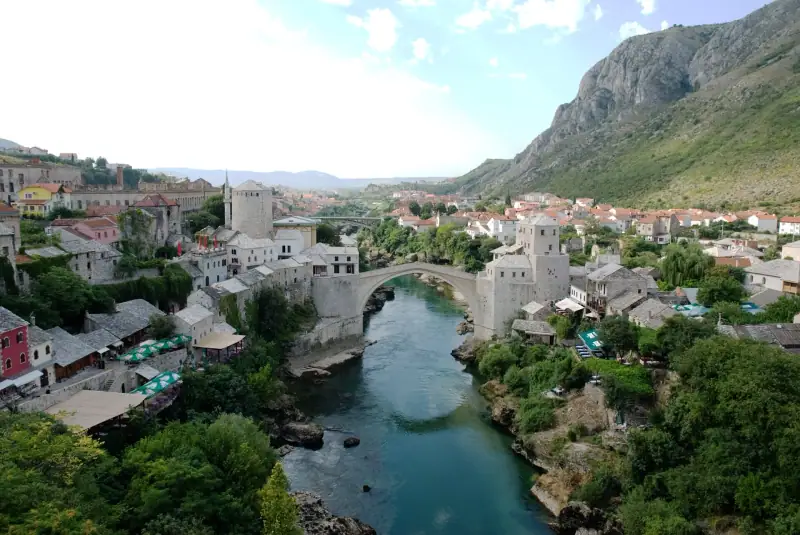
Visit Mostar: Complete Guide to the Pearl of Herzegovina
Everything to visit Mostar: Stari Most, Ottoman old town, day trips to Blagaj and Kravice, where to stay, budget and practical tips. 2026 guide.
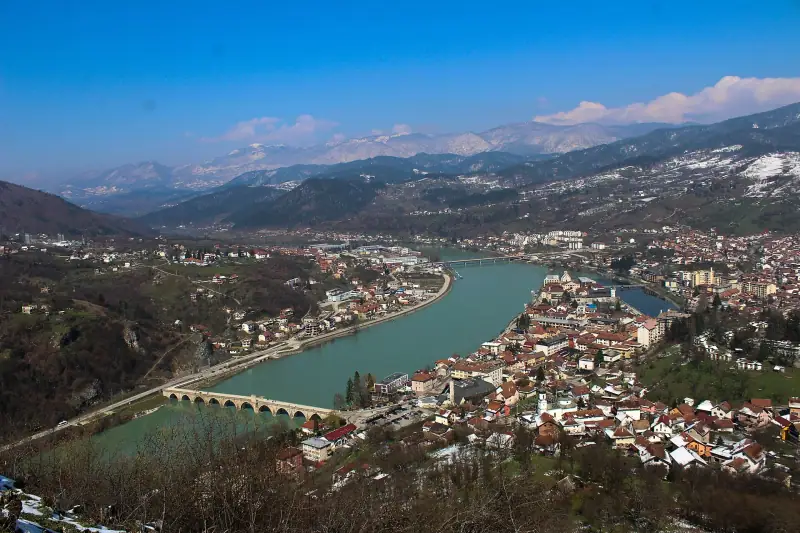
Višegrad: Visiting the Bridge on the Drina from Sarajevo, With or Without a Car
Mehmed Paša Sokolović Bridge in Višegrad: getting there from Sarajevo by car, bus or tour, visit length, free entry, Andrićgrad and practical tips.
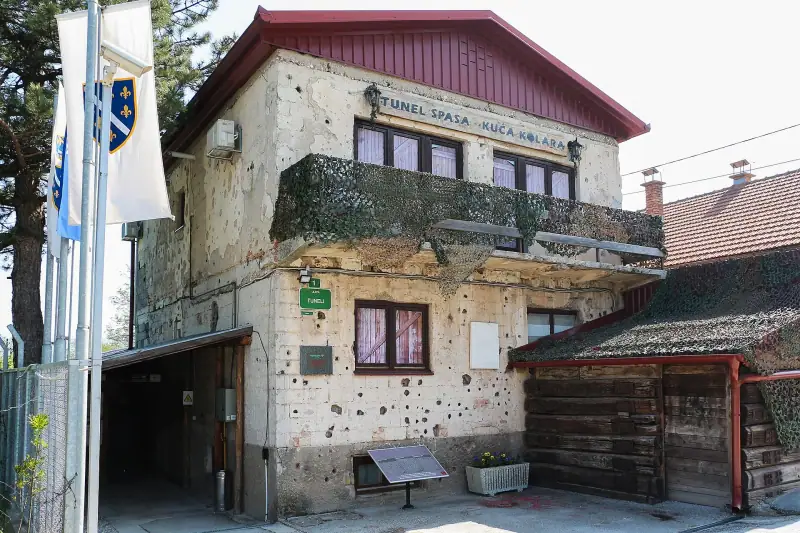
Sarajevo Tunnel of Hope: Hours, Prices and Getting There Without a Car
Visiting the Tunnel of Hope in Sarajevo: summer and winter hours, cash entry price, tram and bus from the center, visit length and tips.
Ready-made
Bosnia and Herzegovina itineraries
3 days
Northwest Bosnia: Banja Luka, Jajce and Una National Park
JajceBanja Luka
5 days
14 days
Bosnia and Herzegovina Road Trip: A 10 to 14 Day Itinerary by Car
Road trip through Bosnia and Herzegovina in 10 to 14 days: Sarajevo, Mostar, the Una, Sutjeska and Trebinje. The full itinerary to see it all.