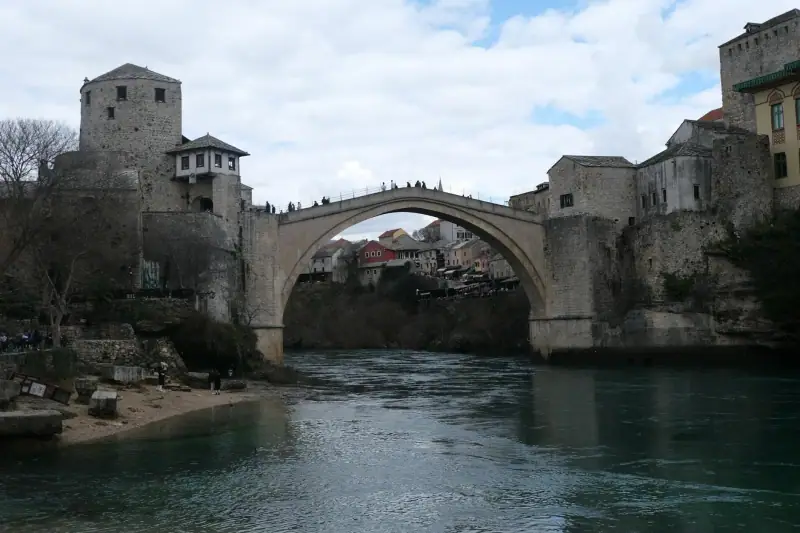
14 days
Dubrovnik loop in 14 days: Bosnia and Herzegovina and Montenegro by car
DubrovnikTrebinjeMostarSarajevoŽabljakKotor
Can be adapted in the planner
Five countries, one road trip
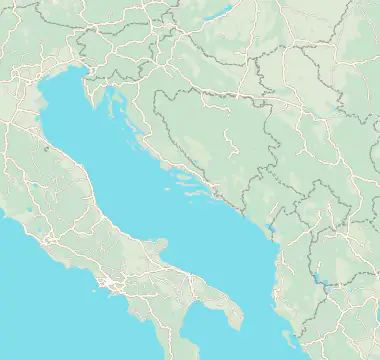
Slovenia, Croatia, Bosnia and Herzegovina, Montenegro and Albania sit within one long drive of each other. This page shows which pairs fit in two or three weeks and what changes at each border.
We may earn a commission when you book through links on this page, at no extra cost to you. We don't visit or try the places we cover: we summarize published sources. How we work
Itineraries
Ready-made routes across several countries, with real drive times, the border crossings and where to sleep.
14 days
DubrovnikTrebinjeMostarSarajevoŽabljakKotor
Can be adapted in the planner
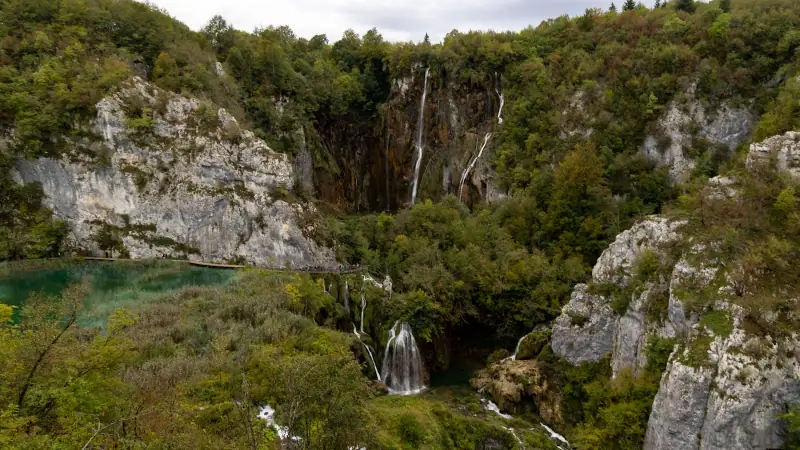
14 days
BledLjubljanaPlitvice LakesZadarSplitMostarDubrovnik
Can be adapted in the planner
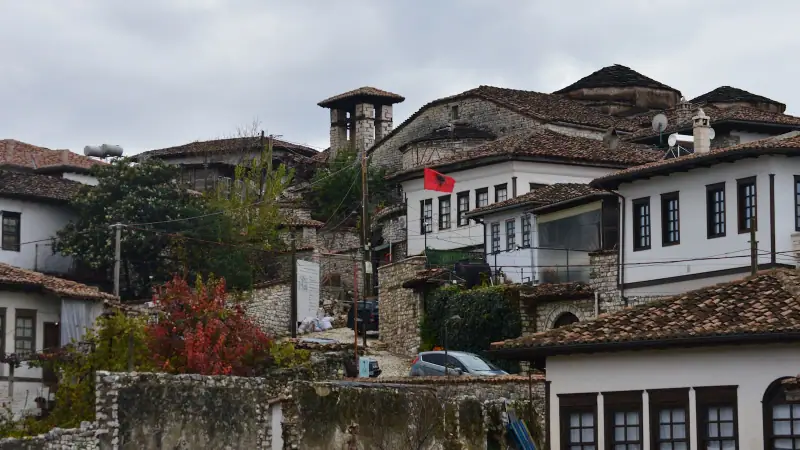
20 days
DubrovnikMostarShkodërBeratGjirokastërSarandëTiranaBudvaKotor
Can be adapted in the planner
The five countries line up along one corridor, so a road trip can start in Slovenia’s Alps and finish on the Albanian coast without doubling back. Each brings a different kind of trip. Slovenia has lakes, caves and Ljubljana. Croatia has Plitvice, the Dalmatian coast and Dubrovnik. Bosnia and Herzegovina adds Mostar and Sarajevo at lower prices. Montenegro packs the Bay of Kotor and the Durmitor mountains into a small area. Albania offers Berat and Gjirokastër, the Ionian coast around Sarandë and the northern Alps.
Distance decides which pairs work. These are the drive times between the main town of each region, without border waits:
Slovenia and Croatia combine easily, and Croatia and Bosnia are close around Mostar. Dubrovnik, Montenegro and Albania form a tight cluster on the southern coast. The Ljubljana to Shkodër figure is why one continuous line through all five countries needs three weeks and a one-way rental. If time is short, skip the long inland legs, such as Zagreb to Sarajevo, and visit Mostar from the coast instead.
10 days: two or three countries. Our 20-day itinerary can be cut to Dubrovnik, Mostar, Budva and Kotor, which avoids its longest day.
14 days: three countries. The Ljubljana to Dubrovnik itinerary links Slovenia and Croatia with a day in Mostar; its longest drive is 3 h 30. The Dubrovnik loop goes through Trebinje, Mostar, Sarajevo, Žabljak and Kotor and returns to Dubrovnik, with its longest drives at 3 h 55 and 3 h 35.
20 days: four countries plus Albania in depth. The Dubrovnik, Montenegro and Albania loop uses nine bases and crosses five borders. Mostar to Shkodër is the longest drive, 5 h 30 plus two borders, so leave early.
Only the 14-day Ljubljana to Dubrovnik itinerary is a one-way trip. The other two end where they start.
May, June and September are the safest months across the tour. Each regional guide says the same about July and August.
Our guides do not price the whole tour, so these figures are per region and should not be added blindly.
Add the cross-border fees of your rental company; they vary and no amount is published here.
Every country you drive into must be declared when you book, using the cross-border option. Some companies require a written cross-border permit from the branch for Albania and Montenegro, and charge a fee per day or per country. Fees vary, so compare companies. Driving into a country that was not authorized voids the rental protections (Sixt published terms, 2026). Albania is the country most often restricted, so check it before you commit to a route that enters it.
Slovenia and Croatia are in the EU, so no Green Card is needed between them. Bosnia and Herzegovina requires foreign-registered cars to carry valid international motor insurance: a paper Green Card (an electronic one is not accepted), unless the plate’s country is recognised under the Multilateral Agreement. Otherwise border insurance is sold at the crossing, not online (Green Card Bureau of Bosnia and Herzegovina, 2026). Montenegro and Albania also sell border insurance when the car’s Green Card does not cover the country. Ask the rental company for a Green Card that lists every country of your route.
Bring your passport, your driving license, the rental contract, the written cross-border permit if the company issued one, and the paper Green Card. Entry rules, visas and the need for an International Driving Permit depend on your nationality, so check your government’s official page (see the last line of this section).
Slovenia to Croatia is an internal Schengen border: Croatia joined Schengen on 1 January 2023, and there are no regular checks. Croatia to Bosnia, Croatia to Montenegro and the borders of Albania are external Schengen borders with passport checks.
The EU Entry/Exit System (EES) has been fully deployed at Schengen external borders since 10 April 2026 (eu-LISA). Non-EU travelers register fingerprints and a photo at their first crossing, which takes longer, and you may have to step out of the car. ETIAS is not in operation as of November 2026; check travel-europe.europa.eu/etias_en before you go.
Summer queues are the main risk. The Croatian auto club HAK reported waits of up to 12 hours at the Croatia-Montenegro border on a peak August 2026 day, and weekends are the worst. Cross early in the morning, avoid summer weekends and check HAK’s live border information at hak.hr.
A drop-off in another country is often not offered, or comes with a high international one-way fee; no figure is published for these countries. A loop back to the pick-up country, or a one-way inside Croatia such as Zagreb to Dubrovnik, is usually much cheaper. Compare before you fix the route. Our Dubrovnik loop and the 20-day loop both start and end at Dubrovnik Airport. The Ljubljana to Dubrovnik trip is the one that needs a Slovenia to Croatia drop-off.
For entry rules and driving licenses, read the official travel advice of your own government: travel.state.gov (US), gov.uk/foreign-travel-advice (UK), travel.gc.ca/destinations (Canada) or smartraveller.gov.au (Australia).
Motorways cover Slovenia and much of Croatia. In Bosnia, our road-trip guide warns that motorways are limited and not continuous, so allow more time than your GPS estimates and avoid mountain roads at night. Montenegro’s mountain roads are slow: 80 km (50 mi) can take 2 hours, and a compact SUV suits them better than a small car. Albania’s main roads are in good condition, but secondary and mountain roads can be narrow and winding, and the guide advises against night driving on small roads because of unmarked livestock. An SUV is recommended for Valbonë, Theth and some Riviera tracks. Slovenia’s Vršič Pass has 50 hairpin bends and is closed in winter.
The road from Split to Dubrovnik crosses about 9 km (5.6 mi) of Bosnia and Herzegovina near Neum, with two border posts. The Pelješac bridge, entirely in Croatia, avoids it; the European Commission estimates the trip time falls from 59 to 22 minutes. Check with your rental company whether it allows the Neum corridor.
Ferries are optional on this tour. From Split, our Croatia guide lists Brač in 50 minutes, Hvar in 1 h to 1 h 30 and Vis in 2 h 15. In northern Albania, the Koman ferry takes 2 h 30. Check schedules before booking.
The tour’s airports are Ljubljana (LJU), Zagreb (ZAG), Split (SPU), Dubrovnik (DBV), Sarajevo (SJJ), Tivat (TIV), Podgorica (TGD) and Tirana (TIA). Our guides do not list flights from the US, UK, Canada or Australia, so check with your airline which of them has service, direct or connecting, from your home airport.
Open-jaw tickets (arrive in one city, leave from another) save backtracking, but they raise the rental problem above. The simplest options are a loop that returns to the arrival airport, or an open-jaw inside Croatia, such as Zagreb in and Dubrovnik out. For a trip that crosses the Slovenia-Croatia border, price the one-way rental first.
After a long flight, book the first night close to the airport and keep the first drive short. Pick up the car after you have slept, not on arrival, if your itinerary allows it. Book a rental car well ahead for July and August.
| Jan | Feb | Mar | Apr | May | Jun | Jul | Aug | Sep | Oct | Nov | Dec | |
|---|---|---|---|---|---|---|---|---|---|---|---|---|
| Ljubljana | ||||||||||||
| High °F (°C) | 373 | 415 | 489 | 5714 | 6619 | 7323 | 7725 | 7725 | 6820 | 5915 | 489 | 373 |
| Low °F (°C) | 25-4 | 25-4 | 320 | 394 | 468 | 5412 | 5714 | 5714 | 5010 | 436 | 362 | 27-3 |
| Rain in (mm) | 2.255 | 2.665 | 2.665 | 3.075 | 3.795 | 3.590 | 3.385 | 3.590 | 4.5115 | 4.5115 | 4.5115 | 3.385 |
| Split | ||||||||||||
| High °F (°C) | 489 | 5010 | 5412 | 6116 | 6820 | 7725 | 8228 | 8429 | 7524 | 6619 | 5915 | 5211 |
| Low °F (°C) | 415 | 415 | 457 | 5010 | 5714 | 6418 | 7021 | 7021 | 6317 | 5714 | 5010 | 436 |
| Rain in (mm) | 3.075 | 3.075 | 2.665 | 2.665 | 2.255 | 2.050 | 1.025 | 1.640 | 3.385 | 3.385 | 4.9125 | 4.3110 |
Normals 1991–2020 at Ljubljana and Split: averages over 30 years, not a forecast. Source: NASA POWER (MERRA-2), grid of about 50 km. Figures computed by us in November 2026.
Or build your own
The Balkans road trip planner works with the main stops of every country: pick your airports, your days and your pace, and it orders the stops with real drive times (border waits not included).
A 14-day example: 13 h 50 of travel in total (947 km / 588 mi).
Open the planner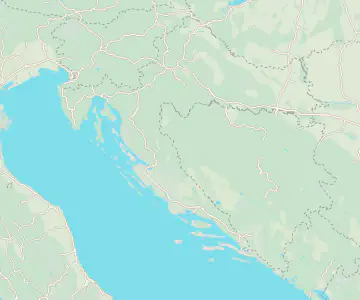
5 destinations
Each country or region of the trip has its own guides, itineraries and, often, its own planner.
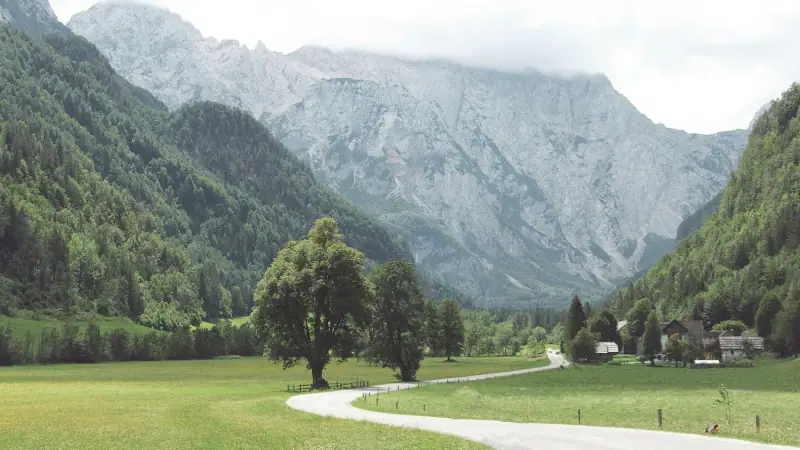
Julian Alps & Lake Bled · Slovenia
Lake Bled, the Julian Alps, karst caves and a short stretch of Adriatic coast, in a country small enough to cross in a day.
18 guides3 itinerariesTrip planner
Alpine lakes, Ljubljana and a short coast. Crossed in three hours, and the natural start of a trip heading south.
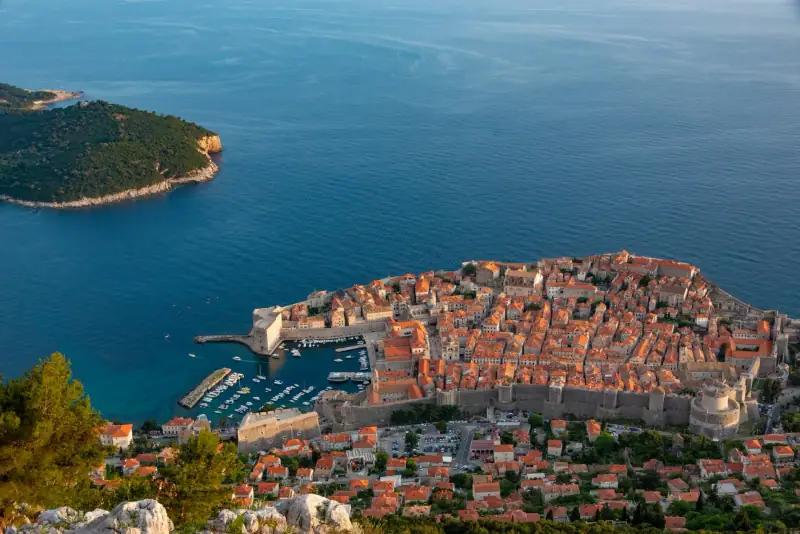
Adriatic coast · Croatia
Walled towns on the Adriatic, island ferries and the lakes of Plitvice, from Istria down to Dubrovnik.
18 guides3 itinerariesTrip planner
The hub of the tour: Plitvice, the Dalmatian coast and Dubrovnik, with the airports and motorway that link the other countries.
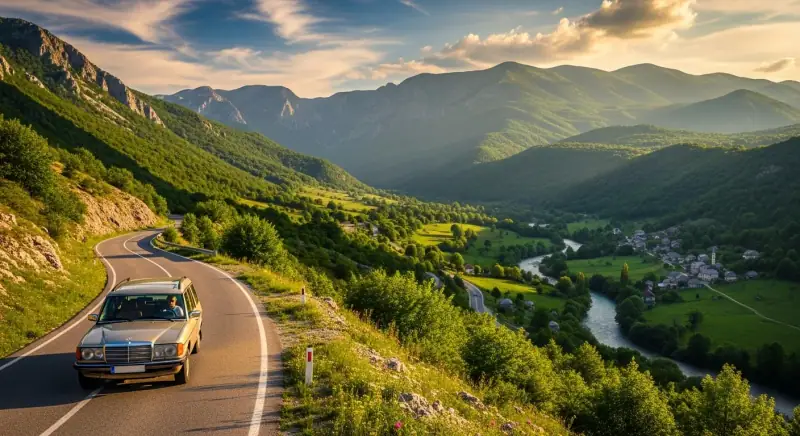
Balkans · Bosnia and Herzegovina
Sarajevo's bazaar, Mostar's bridge and the waterfalls and canyons of Herzegovina, at the crossroads of the Balkans.
18 guides3 itinerariesTrip planner
Mostar's Old Bridge, Sarajevo and river canyons, at lower prices than the coast and a short drive from Dubrovnik.
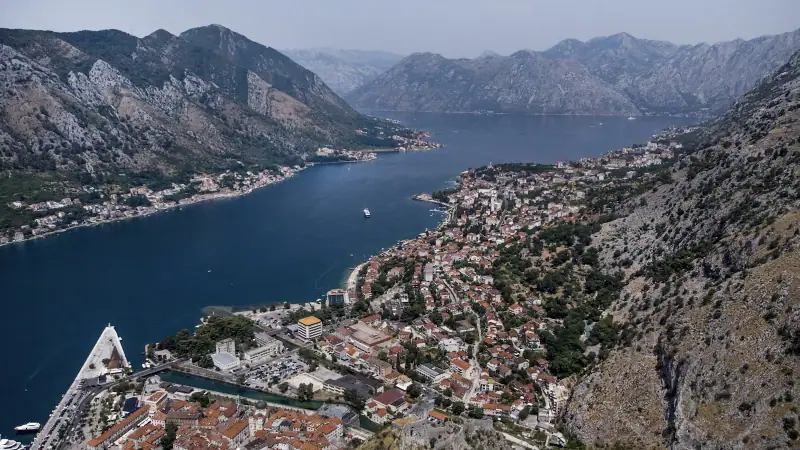
Bay of Kotor & mountains · Montenegro
The Bay of Kotor, the old towns of the coast and the canyons of Durmitor, all within a few hours' drive.
18 guides3 itinerariesTrip planner
The Bay of Kotor, Budva and the Durmitor mountains, compact enough to combine with Dubrovnik or to link Croatia with Albania.
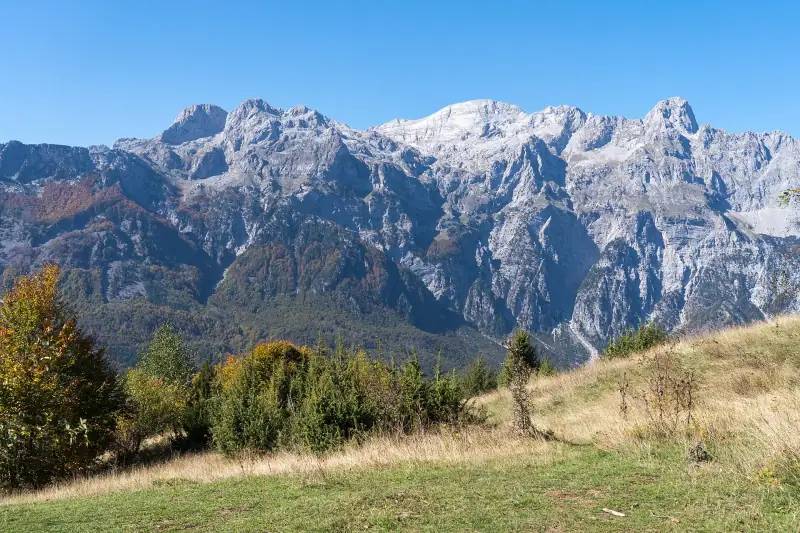
Balkans · Albania
Ottoman-era towns, the beaches of the Riviera and the mountain valleys of the north, in a single loop.
20 guides5 itinerariesTrip planner
UNESCO towns (Berat, Gjirokastër), the Ionian coast around Sarandë and the northern Alps. The longest legs and the most rental restrictions.
Often yes, but only if the rental company authorizes each country at booking. Some require a written cross-border permit from the branch for Albania and Montenegro and charge a fee per day or per country. Albania is the most often restricted. Driving into an unauthorized country voids the rental protections (2026).
Not between Slovenia and Croatia, which are both in the EU. Bosnia and Herzegovina requires foreign-registered cars to carry a paper Green Card unless the plate's country is covered by the Multilateral Agreement; otherwise border insurance is sold at the crossing. Ask the rental company for a card that lists every country of your route (2026).
The Slovenia-Croatia border has no regular checks. Croatia-Bosnia, Croatia-Montenegro and the Albanian borders are external Schengen borders with passport checks. The Croatian auto club HAK reported waits of up to 12 hours at the Croatia-Montenegro border on a peak August 2026 day. Cross early and avoid weekends.
Sometimes, but a drop-off in another country is often not offered or carries a high international one-way fee. No figure is published for these countries. A loop back to the pick-up city, or a one-way inside Croatia such as Zagreb to Dubrovnik, is usually much cheaper. Compare quotes before fixing the route.
Slovenia requires an e-vignette for motorways, sold on the official DARS site: €16 (~$19) for 7 days or €32 (~$37) for one month (2026). Croatia has no vignette; the Zagreb to Split motorway costs €26.40 (~$31) for a car (2026). Bosnia and Albania have no vignette.
May, June and September suit every country of the tour. July and August bring heat, crowds, peak prices and the longest border queues. From mid-October many coastal and island hotels and restaurants close.
Probably for your first crossing. The EU Entry/Exit System has been fully deployed at Schengen external borders since 10 April 2026: non-EU travelers register fingerprints and a photo, and may have to step out of the car. ETIAS is not in operation as of November 2026.