What to see
What to see in Bavaria: Munich, castles, the Alps and medieval towns
We may earn a commission when you book through links on this page, at no extra cost to you. We don't visit or try the places we cover: we summarize published sources. How we work
In short
- Top picks: Munich for its old town and museums, Neuschwanstein near Füssen, the medieval towns of the Romantic Road such as Rothenburg ob der Tauber, and the Bavarian Alps around Garmisch-Partenkirchen and Berchtesgaden.
- Plan one week for a balanced first trip: three days in Munich and around, two in the Alps and castle country, two in Franconia (Nuremberg, Bamberg, Rothenburg).
- Trains link the big cities well; a car is useful for the Romantic Road, small villages, lakes and Alpine valleys.
- May to September suits hiking, lakes and beer gardens; December suits Christmas markets, with short days and snow in the Alps.
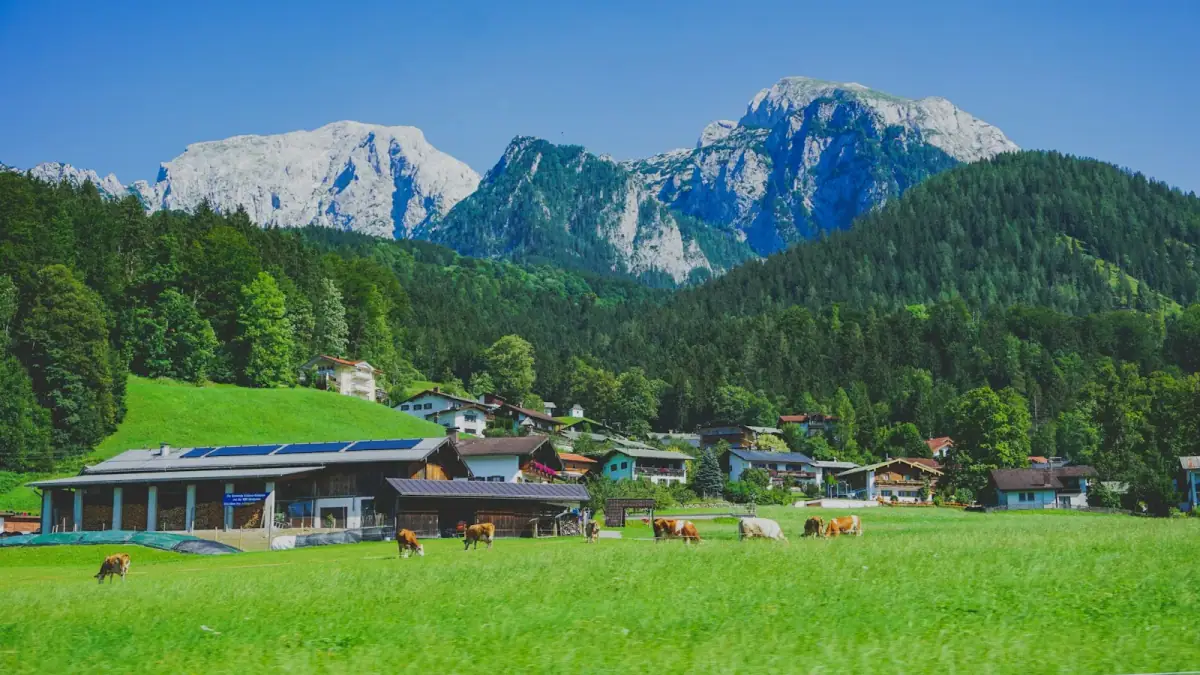
When you picture the Germany of postcards, it is almost always Bavaria that comes to mind: a white castle perched on a rocky spur, green meadows at the foot of the Alps, a big beer hall, half-timbered houses on a riverbank. The country’s largest state by area does hold a large share of what travelers come to Germany for: cities rich in history, a strongly assertive regional culture, mountain landscapes and generous food.
The difficulty is choosing. Bavaria is not a single place but a set of regions with different identities: Upper Bavaria around Munich and the Alps, Franconia in the north with Nuremberg, Bamberg and Würzburg, Bavarian Swabia in the west, and Eastern Bavaria along the Danube. This article helps you see clearly: what is really worth the detour, how to group the stops and in what order to visit them. For a first overview of the country, also read our complete guide to Germany.
Understanding Bavaria before you go
Bavaria is a former kingdom, then a free state, and it has kept a strong sense of belonging. People speak German there, with their own accent and expressions, and often greet each other with “Grüß Gott” rather than “Guten Tag”. Catholicism has historically been very present, which shows in the Baroque churches, the wayside crosses and the many religious festivals.
To organize a trip, it is useful to divide the region into four main areas:
- Upper Bavaria: Munich, the lakes, the Alps, the castles of Ludwig II. This is the most touristy part, the one with the emblematic landscapes.
- Franconia: Nuremberg, Bamberg, Würzburg and Rothenburg ob der Tauber. The towns are smaller and medieval, often quieter.
- Eastern Bavaria: Regensburg and Passau, along the Danube, at the gates of the Bavarian Forest.
- Bavarian Swabia: Augsburg and the southwest, toward Lake Constance, often overlooked but pleasant.
Distances are reasonable but not negligible: the fast train links Munich to Nuremberg in a little over an hour, while you need to allow several hours to reach some Alpine valleys. So avoid changing base every day.
Munich: the Bavarian capital
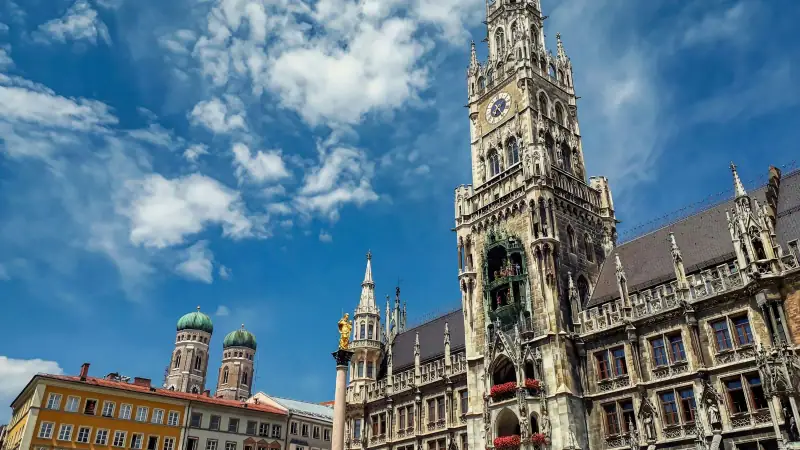
Munich is the natural gateway to Bavaria: its airport is the largest in the region, its station serves the whole state, and the city itself deserves several days. The historic heart is organized around Marienplatz, dominated by the neo-Gothic new town hall and its carillon, which entertains the square several times a day. Around it, the Frauenkirche with its two onion-domed towers, the Viktualienmarkt and the pedestrian lanes form an area pleasant to explore on foot.
The city is also a capital of museums. The Pinakothek groups several major painting collections in the museum district, the Deutsches Museum is one of the largest science and technology museums in the world, and the Residenz, the former palace of the Bavarian rulers, gives an idea of the wealth of the Wittelsbach dynasty. To the west, Nymphenburg Palace, with its huge park, is easily visited by tram.
To catch your breath, the Englischer Garten is one of the largest urban parks in Europe: you meet walkers, joggers, surfers on a river wave and, in summer, beer gardens under the chestnut trees. As for Oktoberfest, it is held every year from mid-September to early October: if you go, book your lodging very far in advance, because prices climb sharply.
Our 3-day Munich itinerary details a step-by-step program, and our guide to where to stay in Munich compares neighborhoods to choose your base.
Where to stay in Munich: the city is an excellent base for exploring all of Upper Bavaria by train. Compare lodging for your dates, in particular if your stay falls during Oktoberfest, trade fairs or the Christmas markets.
Neuschwanstein and the castle country of Ludwig II
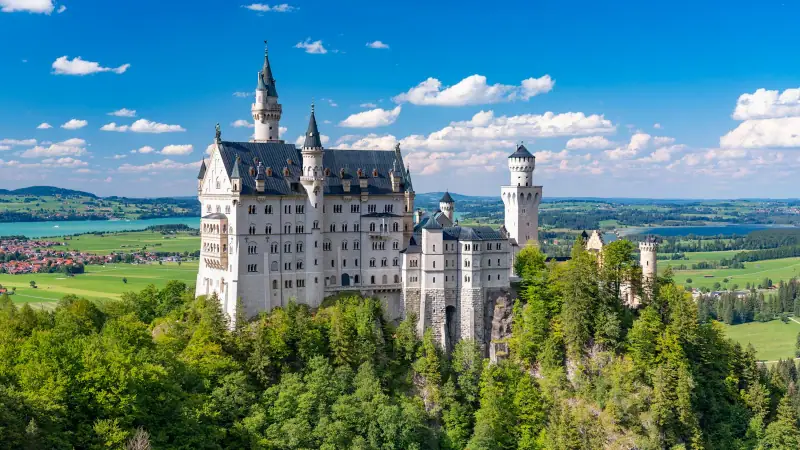
King Ludwig II of Bavaria, nicknamed the “Mad King” or the “Fairy-Tale King”, left three great castles that are among the most visited sites in Germany. The most famous is Neuschwanstein, near Füssen, whose silhouette has inspired the imagery of fairy-tale castles. Built in the 19th century, it was left unfinished at the king’s death, which does not stop its rooms, decorated with scenes inspired by Germanic legends, from being visited. The visit is only possible at a set time slot: the organization is detailed in our article on visiting Neuschwanstein and Füssen.
Nearby, Hohenschwangau Castle, where Ludwig II spent part of his childhood, and Lake Alpsee let you extend the day with a walk. Farther east, Linderhof Palace, smaller and surrounded by a park with fountains, is the only one of the three that the king saw completed. On an island in Lake Chiemsee, Herrenchiemsee Palace is inspired by Versailles.
A tip: do not try to see all three in one day. Neuschwanstein and Hohenschwangau make half a day to a full day; Linderhof and Herrenchiemsee each need a separate outing. If you want to sleep near the castles, our guide to where to stay in Füssen will help you choose.
In the same area, the Wies pilgrimage church, a UNESCO site, is a masterpiece of late Baroque with a surprisingly bright interior, often combined with the castle visits.
The Bavarian Alps: Garmisch-Partenkirchen and the Zugspitze
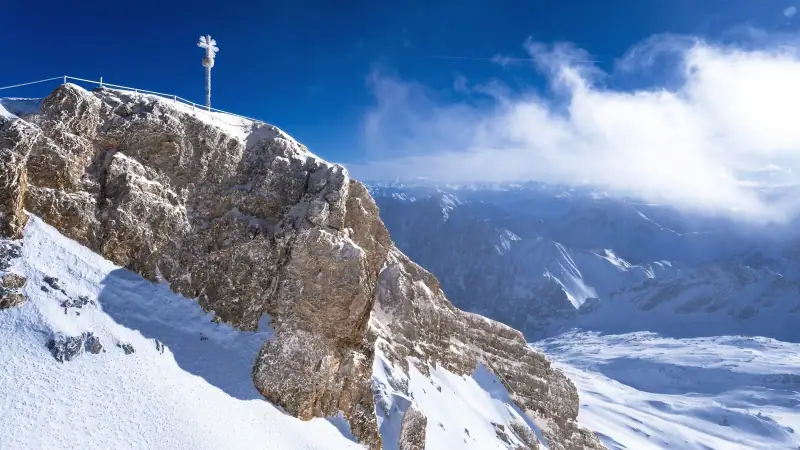
South of Munich, the Bavarian Alps offer accessible mountain scenery, with valleys of flowering meadows, villages with painted facades and very clear lakes. Garmisch-Partenkirchen, a resort known in summer and winter alike, is the starting point for the Zugspitze, the highest peak in Germany, which rises to nearly 3,000 m (9,840 ft). You go up by cog railways and cable cars, which lets you enjoy the view without being a mountaineer, even though the weather changes quickly and you need to dress accordingly.
Hikers will find routes for every level. The Partnachklamm gorge, near Garmisch, is a short and spectacular walk in a canyon cut by a torrent; check the season and the state of the paths (price, hours and access in our guide to the Partnachklamm). Quieter, the Lake Eibsee area, at the foot of the Zugspitze, lets you walk around the lake.
Not far away, the village of Oberammergau is known for its houses decorated with frescoes and for its woodcarving tradition. Its famous Passion Play is held only every ten years, which makes it an exceptional event; outside those years, the village remains pleasant to visit in passing.
For a more ambitious hike or a winter stay, always check local conditions and the opening of the lifts, which vary by season; our tips for skiing in Garmisch-Partenkirchen and the Zugspitze detail the 2026-2027 passes.
Berchtesgaden and the Königssee
In the far southeast of Bavaria, in a corner of territory almost surrounded by Austria, the Berchtesgaden region has one of the most impressive landscapes in the country. The Königssee, a long, narrow lake set between rock walls, is discovered by electric boat. During the crossing, the pilot sometimes stops to make an echo ring against the cliff, a tradition much appreciated by visitors. On the lakeshore, the small St. Bartholomew’s chapel with its red domes is one of the best-known images of Bavaria.
The region is also a national park, with hiking trails, alpine pastures and rocky peaks. The town of Berchtesgaden itself has a former salt mine you can visit, with a fun underground route. On the heights, the historic site of the Obersalzberg, linked to the Nazi period, has a documentation center that presents this history in a sober and critical way.
This area is close to Salzburg, in Austria, which makes it easy to combine the two countries.
Excursions in the Bavarian Alps: if you do not have a car, compare day trips from Munich to the castles, the Zugspitze or the Königssee. Check the meeting point, the guide's language, the duration and what is included before you book.
Nuremberg and Franconia
In the north of the state, Franconia offers a very different face from Upper Bavaria. Nuremberg is its big city: its imperial castle overlooks a walled old town, rebuilt after the destruction of World War II. The city is famous for its Christmas market, its small grilled sausages and its gingerbread, but also for a darker historical side, with the site of the former Nazi rally grounds and the Palace of Justice where the postwar trials were held. Our article on visiting Nuremberg details these places, and our guide to where to stay in Nuremberg helps you choose a neighborhood.
A short distance away, Bamberg is one of the finest surprises of the region. Its UNESCO World Heritage old town stretches between hills and the Regnitz river, with the old town hall built on an island in the middle of the stream. It is also a beer town: smoked beer (Rauchbier) is its specialty, with a very particular taste that divides enthusiasts.
Würzburg, farther northwest, has the Residenz, a great Baroque palace also listed by UNESCO, with a monumental staircase and a famous fresco. The city is surrounded by vineyards: Franconia produces dry white wines, sold in their typical round flask, the Bocksbeutel.
The Romantic Road and Rothenburg ob der Tauber
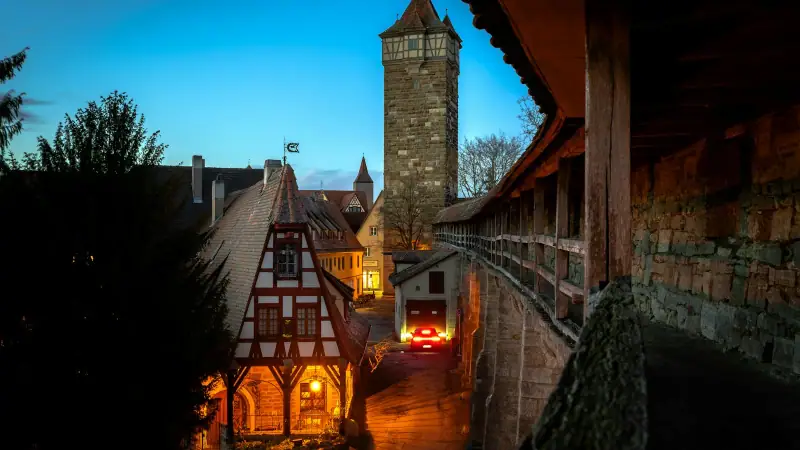
The Romantic Road is a signposted tourist route linking Würzburg, in the north, to Füssen, in the south, through medieval villages and small towns. Its total length is about 400 km (250 mi). You can drive it, stopping wherever you like, or combine train and bus for some stages. Covering it all in one go has little point: it is better to choose three or four stops.
The jewel of the route is Rothenburg ob der Tauber, a walled town of half-timbered houses, cobbled lanes and ramparts you can walk. It is very busy during the day, but regains its calm in the evening and early in the morning if you sleep there. Other stops are worth a detour: Dinkelsbühl, a small, well-preserved medieval town, Nördlingen, built inside an ancient meteorite crater, or Augsburg, one of the oldest cities in Germany.
This route suits a car very well. You can compare rental companies to pick up a vehicle in Munich or Frankfurt and return it at the other end of the route. Check the one-way drop-off fees in another city before you book.
Regensburg and Passau: the Danube towns
East of Munich, the Danube runs through two remarkable towns, often forgotten by the classic circuits. Regensburg has kept a medieval center of rare consistency, listed by UNESCO, with its 12th-century stone bridge, its Gothic cathedral and its patrician towers. The city is lively and full of students, with many riverside terraces, and is easily visited on foot in a day.
Passau, very close to the Austrian border, is nicknamed the “city of three rivers”, because the Danube, the Inn and the Ilz meet there. The waters of different colors mingle at the tip of the old town, which stands on a narrow peninsula. St. Stephen’s Cathedral holds one of the largest church organs in the world, and concerts are held there regularly; check the program before you come.
These two towns are also practical stops if you arrive from Austria or the Czech Republic along the Danube, or if you want to continue toward the Bavarian Forest, a vast wooded massif along the Czech border.
The Bavarian lakes and wild Bavaria
Beyond the big stops, Bavaria holds more discreet places. Lake Tegernsee and Lake Starnberg, south of Munich, are lakes where Munich residents come to swim and sail in summer. The larger Chiemsee is nicknamed the “Bavarian sea” and can be toured by boat from island to island. In the west, the Allgäu region mixes hills, cheese dairies and mountain villages, perfect for gentle hiking and farm stays.
The southwest of Bavaria also touches Lake Constance, where the small island town of Lindau deserves a stop. It shares these shores with Austria and Switzerland.
Finally, the Bavarian Forest, with its national park, offers very quiet trails for anyone seeking calm and nature away from the tourist circuits.
What to taste in Bavaria
Bavarian cooking is generous. At breakfast or mid-morning, white sausage (Weißwurst) is eaten with sweet mustard and a pretzel, traditionally before noon. Roast pork knuckle, the Schweinshaxe, and bread dumplings are beer hall dishes. In the Alps you will find cheese Spätzle, those small fresh noodles baked with cheese, or dishes from alpine dairies.
Beer holds a place of its own. Munich has several large historic breweries, and beer gardens, where you can bring your own picnic, are an institution. In Franconia the brewing culture is even denser, with small village breweries. For a wider overview, read our guide to German food specialties.
Getting around Bavaria
The rail network links the big cities well: Munich, Nuremberg, Augsburg, Regensburg and Würzburg are served by fast or regional trains. For short trips, the regional company offers day tickets valid for several people, very advantageous for groups; check the conditions and current fares on the official website before you go.
A car is ideal for the Romantic Road, the lakes and the mountain valleys, where public transport is less frequent. The roads are good and the signage is clear. In winter, check the vehicle’s equipment and the state of the mountain roads. To cover medical mishaps, cancellations or ski accidents, consider travel insurance. Entry rules depend on your passport. Check the official travel advice of your government before you book: travel.state.gov (US), GOV.UK (UK), travel.gc.ca (Canada), Smartraveller (Australia) (checked November 2026). Our entry requirements for Germany detail the points to check.
When to go to Bavaria
For hiking, lakes and beer gardens, the period from May to September is ideal. July and August are the busiest months, notably around the castles; September and early October combine mild temperatures, golden light and beer festivals. In December, the Christmas markets of Nuremberg and Munich are among the most famous in Germany, but it is cold and night falls early. The Alpine resorts operate from December to March depending on snow. To compare the seasons across the country, see our article on when to go to Germany.
Itinerary ideas for a week in Bavaria
For seven days without rushing, here is a logical sequence. Spend three nights in Munich for the city, with an outing to Nymphenburg or a lake. Then take the train or the car to Füssen for two nights: Neuschwanstein, Hohenschwangau and the Wies. Finally head back up to Franconia for two nights in Nuremberg, with a day in Bamberg or Rothenburg.
For ten days, add a two-night stay in Garmisch-Partenkirchen or Berchtesgaden, and a stop in Regensburg on the way. For a long weekend, stay in Munich and add a single excursion: either the castles, the Alps, or Salzburg in Austria.
If you are making a wider trip, Bavaria combines easily with Austria, Switzerland or, to the north, with Saxony, of which our 2-day Dresden itinerary gives a preview. For the budget, our guide to the budget for Germany details the main spending items.
Who is Bavaria for?
Bavaria suits almost every profile: history lovers find medieval towns, Baroque palaces and memorial sites; hikers, accessible Alps; food lovers, regional cooking and a strong beer culture ; families, fairy-tale castles and lakes. Its main flaw is its success: Neuschwanstein and Rothenburg are very busy in summer, and prices rise during Oktoberfest. The workaround is simple: travel off season, set out early in the morning, and add lesser-known stops like Bamberg, Regensburg or the Königssee. With a week well divided between city, mountains and countryside, Bavaria largely keeps its promises.
Frequently asked questions
What should you see first in Bavaria?
Munich for its old town and museums, Neuschwanstein Castle near Füssen, the medieval towns of the Romantic Road such as Rothenburg ob der Tauber, and the Bavarian Alps around Garmisch-Partenkirchen and Berchtesgaden. Nuremberg, Bamberg and Regensburg round out a longer stay.
How many days do you need to visit Bavaria?
Plan one week for a balanced first trip: three days in Munich and around, two days in the Alps and castle country, two days in Franconia (Nuremberg, Bamberg, Rothenburg). With ten days, you add Regensburg, Passau or the Berchtesgaden region without rushing.
Do you need a car to visit Bavaria?
Not for the big cities, which are well linked by train. A car becomes useful for the Romantic Road, small villages, lakes and Alpine valleys. You can also combine the two: train between cities, a rental car for a few days for the countryside and the mountains.
What is the best time to go to Bavaria?
From May to September for hiking, lakes and beer gardens. September is pleasant, with fewer people and mild temperatures. December suits the Christmas markets, notably in Nuremberg and Munich, but the days are short and the Alps are snowy.
Is Neuschwanstein Castle easy to visit from Munich?
Yes, it is a classic day trip, by train to Füssen or by car. The castle is visited at a set time slot: book ahead in high season and check the conditions on the official website before you go.
What should you taste in Bavaria?
The morning white sausage (Weißwurst) with sweet mustard and a pretzel, roast pork knuckle (Schweinshaxe), cheese Spätzle in the Alps, Nuremberg's grilled sausages and beer, the center of a regional culture that runs from Munich to Franconia.
Can you combine Bavaria with Austria?
Yes, the border is close: Salzburg lies right next to the Berchtesgaden region, and Innsbruck is reachable from the Bavarian Alps.
More Germany guides
Keep reading
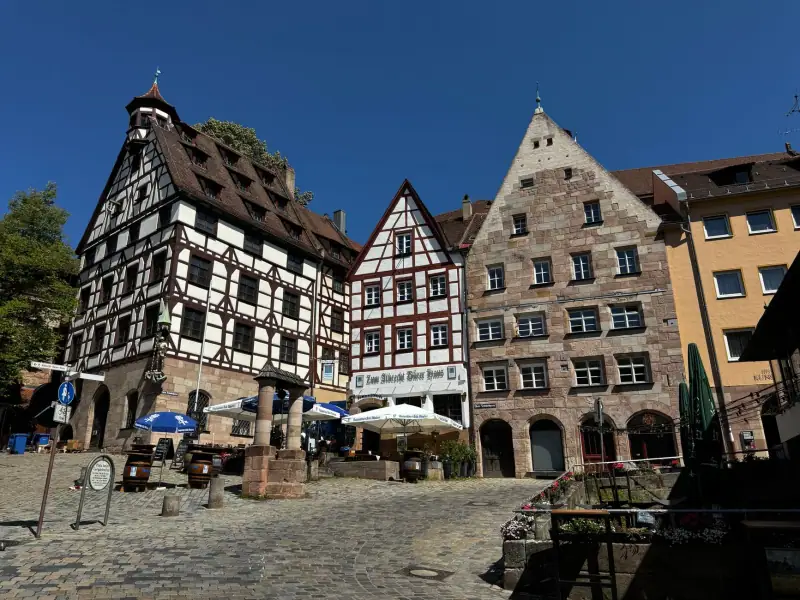
Visiting Nuremberg: what to see and do in 1 or 2 days
What to see in Nuremberg: Kaiserburg, old town, Dürer's house, Christmas market, Reichsparteitagsgelände documentation center and Bratwurst.
What to see in Berlin and Brandenburg: Potsdam, the Spreewald and nature escapes
What to see around Berlin: Potsdam and its palaces, the Spreewald by boat, the Rheinsberg lakes, the Schorfheide and Brandenburg's memorial sites.
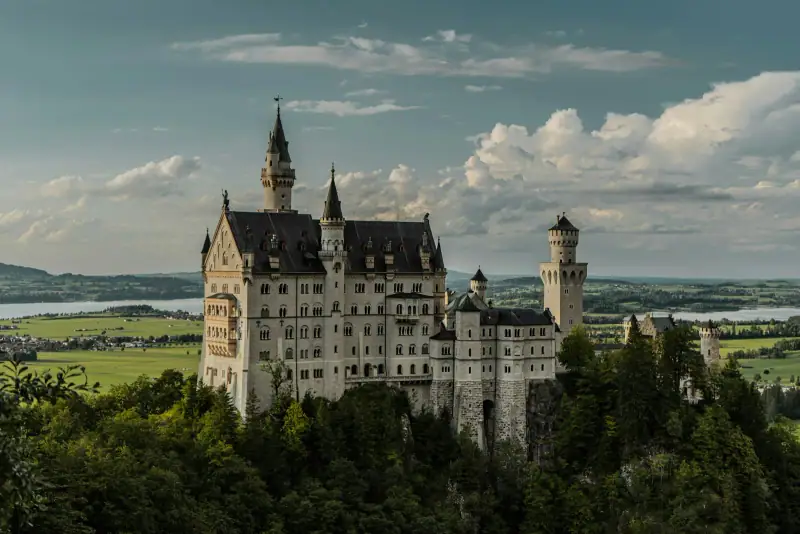
Complete guide to visiting Germany: cities, regions, budget and tips
Visiting Germany: regions, must-see cities, when to go, how to get there and around, where to stay and budget. The main guide for planning your trip.
Ready-made
Germany itineraries
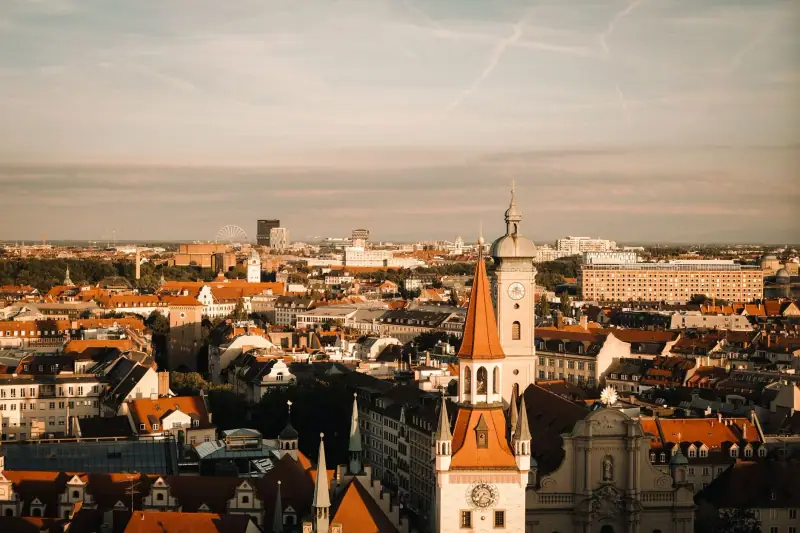
3 days
Munich in 3 days: an itinerary through the old town, museums and parks
What to do in Munich in 3 days? Marienplatz, Residenz, Englischer Garten, Nymphenburg, museums and beer halls: a day-by-day itinerary with practical tips.
3 days
Berlin in 3 days: a day-by-day itinerary
What to see in Berlin in 3 days: Brandenburg Gate, Reichstag, Museum Island, Wall memorial, Potsdam and neighborhoods. A clear day-by-day itinerary.
3 days
Black Forest in 3 days: a road trip itinerary from Baden-Baden to Freiburg
A 3-day Black Forest itinerary: Baden-Baden, Triberg, Gutach, Freiburg im Breisgau, Titisee and Feldberg. Stops, drives, tips and where to stay.