Where to stay
Where to stay in Nuremberg: neighborhoods and types of lodging
We may earn a commission when you book through links on this page, at no extra cost to you. We don't visit or try the places we cover: we summarize published sources. How we work
In short
- The Altstadt, the walled old town, is the simplest choice for a first stay: the imperial castle, the market square, the churches and Dürer's house are all on foot.
- The area around the main station is a practical and often cheaper alternative, a few minutes' walk from the old town.
- During the Advent Christkindlesmarkt, book as early as possible with free cancellation; trade fairs at the exhibition grounds also push prices up.
- Two nights are enough for the essentials; a third night allows the documentation center, museums or a trip to Bamberg or Regensburg.
Nuremberg is the big city of Franconia, in northern Bavaria: an imperial castle overlooking a fortified old town, half-timbered houses, Gothic churches, a famous Christmas market and, more recently, alternative and student neighborhoods. The city is compact, but the choice of neighborhood changes a lot about the comfort of the stay, how easy it is to get around and the budget.
This guide presents the main areas for sleeping, the types of lodging (hotels, hostels, apartments, guesthouses) and the points to check before booking. To plan your days, see our guide to visiting Nuremberg.
Getting your bearings in Nuremberg

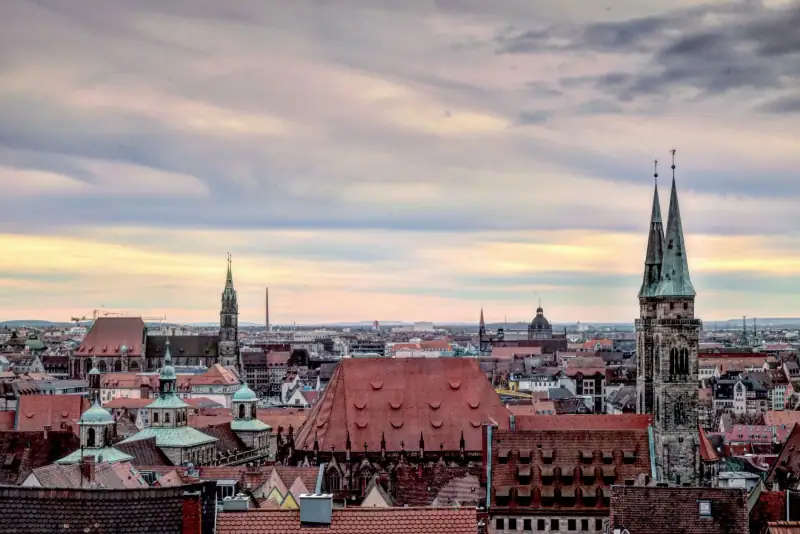
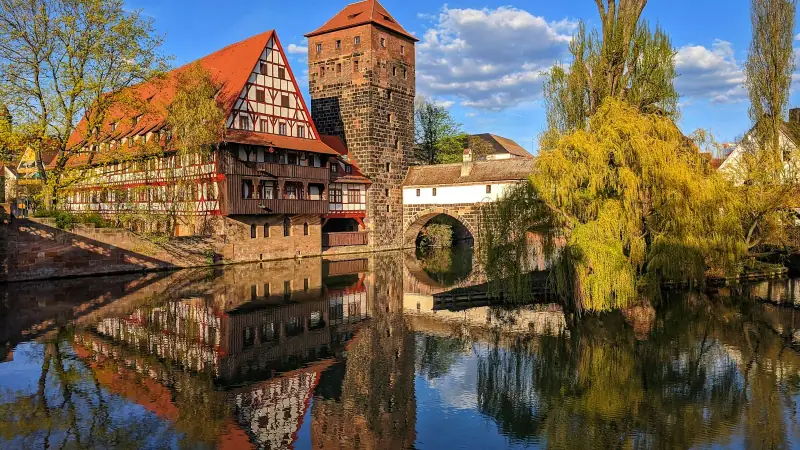
The Pegnitz river crosses the old town from east to west and divides it into two halves: the Sebald side to the north, which climbs toward the imperial castle, and the Lorenz side to the south, around St. Lawrence’s Church. The whole is enclosed by medieval walls, largely preserved, and by a moat now planted with trees. This perimeter is what is called the Altstadt.
Around the old town, several neighborhoods follow one another. The main station sits just southeast of the walls. To the west, Gostenhof and Sankt Johannis offer two very different atmospheres. South of the station stretches the densely populated Südstadt, and to the east the Wöhrder Wiese and Nordstadt area is more residential. The U-Bahn, trams and buses link all these areas to the center in a few minutes.
The key point: the old town can be covered entirely on foot, but the cobblestones, the slopes toward the castle and the stairs in some old buildings quickly weigh on you with luggage. Think about this before choosing lodging perched on a hill or without an elevator.
Compare lodging in Nuremberg: rates vary a lot with the neighborhood, the season and the trade fair calendar. Compare availability for your dates and check the distance to the nearest U-Bahn or tram station.
The Altstadt: sleeping in the old town
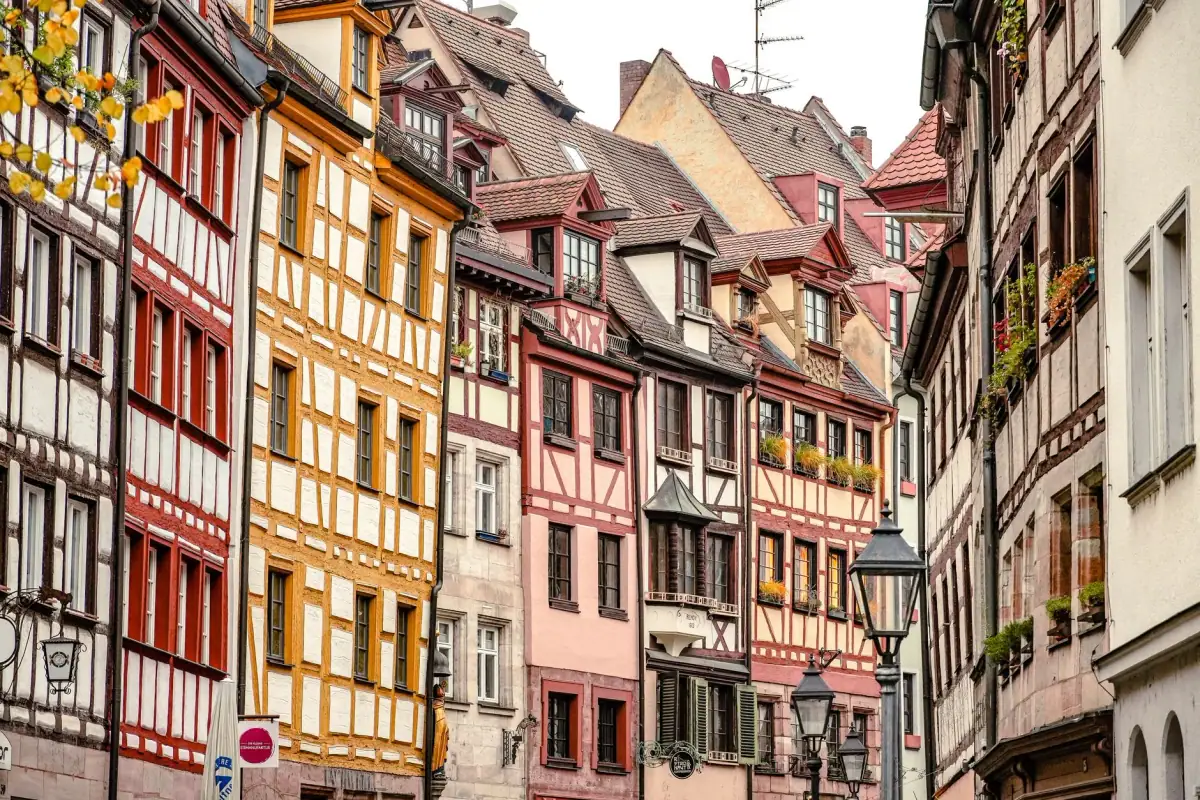
The Altstadt is the natural choice for a first stay. Here you find the market square (Hauptmarkt), the churches of St. Sebald and St. Lawrence, Albrecht Dürer’s house, the lanes of Weissgerbergasse and the climb to the imperial castle. Everything is done on foot, and you can go back to the hotel for a break in the middle of the day.
The advantage is proximity and atmosphere: you sleep among old facades, beer halls and terraces, and in the evening the city regains a certain calm once the visitor groups have left. The drawbacks are the usual ones: rates generally higher than elsewhere, rooms sometimes small in old houses, stairs with no elevator, and noise around the lively squares on weekends.
The Sebald side, north of the Pegnitz
At the foot of the castle, the area is picturesque and sloping. It suits those who want to wake up in the most beautiful setting in the city and are not afraid of cobblestones. It is the ideal area for couples and short stays, but less convenient with heavy luggage.
The Lorenz side, south of the Pegnitz
Flatter, more commercial and closer to the station, the Lorenz side is a good compromise. The pedestrian streets are lively during the day and you can walk to the station easily. Chain and mid-range hotels are plentiful here.
If you are aiming for the Altstadt, look first at the side streets rather than the big squares, and ask for a room on the courtyard side. This area suits couples, stays of one or two nights and visitors who want to do everything on foot. It is less suited to a tight budget.
Around the main station
Nuremberg station is one of the big rail hubs of Bavaria: regional trains, fast connections to Munich and the other big German cities, and a direct link to the U-Bahn. Staying nearby makes arrivals and departures with luggage easier, and it is a logical choice if you plan train trips in the region.
The area concentrates practical hotels, often cheaper than those in the historic heart, and the old town is reached on foot in a few minutes through the Königstor, the old city gate. In return, the atmosphere is more urban, with heavy traffic and some streets less pleasant in the evening.
Look at recent reviews, photos of the exact street and the precise distance to the station before booking. This area is a good choice if efficiency matters more than the setting, or if your budget is limited.
Practical lodging near the station: compare hotels around the main station and the old town, and read recent reviews on how quiet the rooms are.
Gostenhof: the alternative, multicultural neighborhood
West of the old town, Gostenhof, nicknamed “GoHo” by locals, is a district of old buildings, cafés, bars, small shops and businesses from around the world. It is not a postcard neighborhood, but it is one of the liveliest in the city, with a young, student population.
Sleeping in Gostenhof means choosing neighborhood life over the historic setting. You mostly find apartments, hostels, small hotels and private rooms, at prices often lower than in the center. The old town can be reached on foot or in a few U-Bahn or tram stops.
The neighborhood suits curious travelers, young people and stays of several nights. It is less suited to those looking for absolute quiet: some streets are lively in the evening. Check the exact street and the orientation of the room.
Sankt Johannis: a residential and green neighborhood
Northwest of the Altstadt, Sankt Johannis is a former suburb turned residential neighborhood, with old houses, a historic cemetery where Albrecht Dürer’s grave is located, and a calm, almost village-like atmosphere. The walls and the castle are reached on foot in about twenty minutes, or in a few tram or bus stops.
You mostly find small hotels, guesthouses and apartments. It is a pleasant choice for couples, relaxed stays of several nights and travelers who like to walk. The choice is more limited than in the center: book early in high season.
The Südstadt and the neighborhoods south of the station
South of the tracks, the Südstadt is a large working-class, cosmopolitan district, dense, with its shops, restaurants of every origin and 20th-century buildings. It is linked to the center by the U-Bahn and tram and lies a short distance from the station.
It is a good area for lower rates and apartments for families or groups. In return, there are few monuments, and the atmosphere is above all residential. Check how often the transport runs and the last departure in the evening.
Other areas: Wöhrder See, the exhibition grounds and Fürth
East of the center, the Wöhrder Wiese and Wöhrder See form a green area much appreciated by locals for walks. Lodging there is scarce but quiet. The exhibition grounds and the Reichsparteitagsgelände site, to the southeast, host chain hotels aimed at trade fair visitors: the documentation center on Nazi history is located there, but this area is far from the old town.
Finally, the neighboring city of Fürth is linked by the U-Bahn and sometimes offers lower rates on trade fair dates. Allow for a daily commute and check the last U-Bahn times before booking.
Types of lodging in Nuremberg
Hotels
Nuremberg offers a full range: charming hotels in old houses of the Altstadt, chain properties near the station and the main roads, and small family-run places in the residential neighborhoods. Check what is included in the rate, especially breakfast, which varies a lot, and the cancellation conditions, usually better with a flexible rate.
Hostels and budget lodging
For small budgets and solo travelers, hostels offer dorm beds or private rooms. The city even has a youth hostel set in the outbuildings of the imperial castle, a surprising setting to sleep in. Read recent reviews on cleanliness and noise, and see whether a locker is provided.
Apartments and short-term rentals
For a stay of several days, with family or in a group, an apartment brings space and a kitchen, especially in Gostenhof, Sankt Johannis or the Südstadt. Local regulations may govern short-term rentals: choose clear listings with recent reviews, and read the cancellation conditions carefully.
Guesthouses and private rooms
In the residential neighborhoods and in the surrounding Franconian countryside, guesthouses (Pension, Gasthof) offer a more personal welcome and often a homemade breakfast. Compare reviews and check the distance to the nearest transport stop.
Which neighborhood for your profile?
- First short stay, everything on foot: the Altstadt, Lorenz side for ease, Sebald side for charm.
- Arriving by train, quick stopover or day trips: the area around the station.
- Neighborhood atmosphere, bars and a gentle budget: Gostenhof.
- Calm, walks and a relaxed stay: Sankt Johannis.
- Families, groups, lower rates: the Südstadt or apartments well connected by the U-Bahn.
- Visiting the Reichsparteitagsgelände site or a trade fair: the exhibition grounds area, knowing that it is far from the center.
If your budget is limited, widen the search around the U-Bahn stations of the neighboring districts: lodging a little farther out but well connected often costs less than an address in the Altstadt. Our guide to the budget for Germany will help you set a realistic ceiling for lodging.
When to book: seasons, the Christmas market and trade fairs
Nuremberg attracts visitors all year, but several periods are particularly busy. The high season, from spring to fall, draws travelers on a Bavaria circuit. Advent, with the famous Christkindlesmarkt on the market square, is the most in-demand period: book early, with free cancellation, and expect prices clearly above normal. The dates and hours of the market are in our guide to the Nuremberg Christkindlesmarkt 2026.
The big trade fairs at the exhibition grounds, including the toy fair early in the year, can also push rates up and cut availability sharply, even far from the center. Conversely, late winter outside the fairs often offers better prices, with calmer streets. Our guide on when to go to Germany details the seasons.
Guided tours in Nuremberg: a walking tour of the old town or the castle helps you understand the history of the city. Compare durations, languages and departure points before you book.
Tips for booking well
Always check three points: the walking distance to a U-Bahn or tram station, the cancellation conditions and recent reviews. Also read what is included in the rate, and see whether a tourist tax is added at booking, which can vary from one property to another. In the old town, ask whether the building has an elevator and whether the room faces a lively square.
For arrival, most visitors come by train from Munich or other big German cities, or by plane: the airport is linked to the station by the U-Bahn. Check the journey time and schedules before you leave. A car only makes sense if you plan several stops outside the city, for example in Franconia or on the Romantic Road: you can then compare rental companies.
Rent a car to explore Franconia: useful for reaching the small towns and villages of the region at your own pace. Compare rental companies for your dates and check the pick-up conditions.
Finally, consider travel insurance to cover mishaps before departure, and see our entry requirements for Germany for your documents. Entry rules depend on your passport; check the official travel advice of your government before you book.
Combining Nuremberg with other stops
Nuremberg fits naturally into a Bavaria circuit. To the south, Munich is the most obvious stop: our guide to where to stay in Munich will help you plan what comes next, and our 3-day Munich itinerary details the visits. To the west, Heidelberg rounds out a trip in southern Germany well: see where to stay in Heidelberg.
Frequently asked questions
What is the best neighborhood to stay in Nuremberg the first time?
The Altstadt, the old town surrounded by walls, is the simplest choice: the imperial castle, the market square, the churches of St. Sebald and St. Lawrence and Dürer's house are all on foot. The area around the station, right next to it, offers a more practical and often cheaper alternative.
Is it practical to stay near Nuremberg station?
Yes. The main station (Hauptbahnhof) sits at the edge of the old town, a few minutes' walk from the historic center. The area is ideal for arriving by train with luggage or leaving early, but the atmosphere is more urban than picturesque: read recent reviews on noise and the exact street.
Where should you stay in Nuremberg during the Christmas market?
Book as early as possible: the Christkindlesmarkt draws visitors from all over Europe during Advent and Altstadt lodging is snapped up. If the center is full or too expensive, choose a neighborhood well connected by U-Bahn, tram or train, such as Gostenhof or the Südstadt, with free cancellation.
Do prices vary with trade fairs?
Yes. Nuremberg hosts large fairs at the exhibition grounds, such as the toy fair early in the year, and hotel prices can climb sharply on those days, even on weekdays and even far from the center. Compare several dates or several neighborhoods before settling on your stay.
Do you need a car to stay in Nuremberg?
No. The old town is walkable, and the U-Bahn, trams and buses serve the other neighborhoods. Parking in the center is limited and paid: if you come by car, check that your lodging has parking or that there is a public car park nearby.
How many nights should you plan in Nuremberg?
Two nights are enough to see the essentials of the city. An extra night lets you add the documentation center at the Reichsparteitagsgelände site, the museums or a trip in the region, in Franconia or to Bamberg and Regensburg, for example.
Is Nuremberg a good base for visiting Bavaria?
Yes, the city is an important rail hub of Franconia, with connections to Munich, Bamberg, Würzburg or Regensburg. Check the schedules and journey time on the rail company's website before finalizing your plans.
More Germany guides
Keep reading
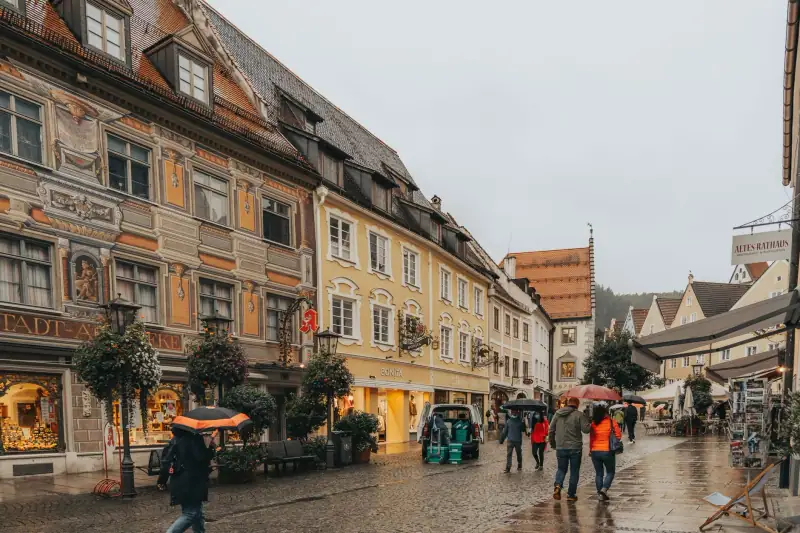
Where to stay in Füssen: areas and types of lodging
Where to stay in Füssen, near Neuschwanstein? Old town, station, Hohenschwangau, Schwangau, lakes: atmospheres, lodging types and tips for booking well.
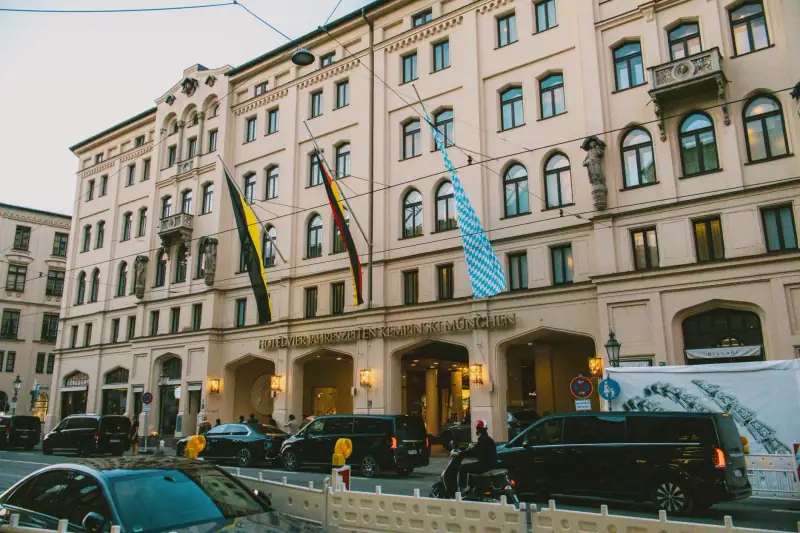
Where to stay in Munich: neighborhoods and types of lodging
Which neighborhood to pick in Munich? Altstadt, Maxvorstadt, Glockenbach, Haidhausen, Schwabing: atmospheres, transport, lodging types and booking tips.
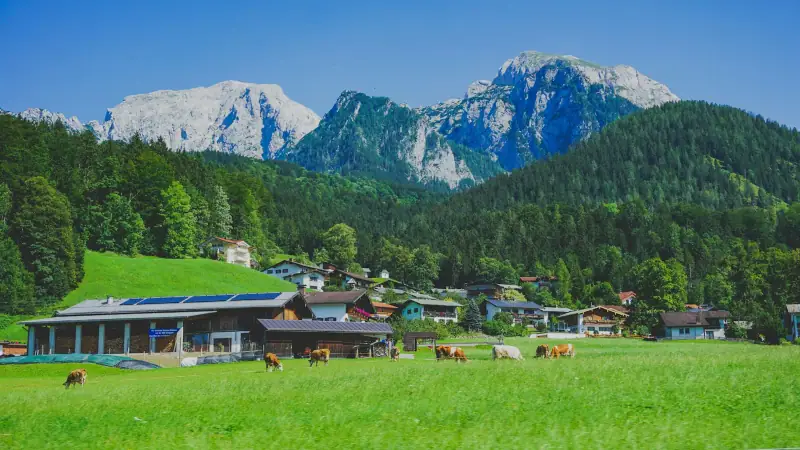
What to see in Bavaria: Munich, castles, the Alps and medieval towns
What to see in Bavaria: Munich, Neuschwanstein, the Romantic Road, Bamberg, Regensburg, Berchtesgaden and the Alps. Tips for planning your trip.
Ready-made
Germany itineraries
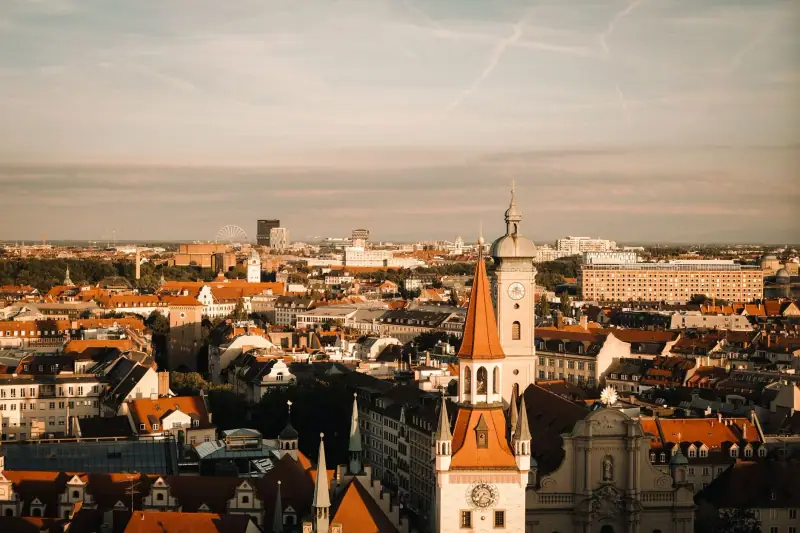
3 days
Munich in 3 days: an itinerary through the old town, museums and parks
What to do in Munich in 3 days? Marienplatz, Residenz, Englischer Garten, Nymphenburg, museums and beer halls: a day-by-day itinerary with practical tips.
3 days
Berlin in 3 days: a day-by-day itinerary
What to see in Berlin in 3 days: Brandenburg Gate, Reichstag, Museum Island, Wall memorial, Potsdam and neighborhoods. A clear day-by-day itinerary.
3 days
Black Forest in 3 days: a road trip itinerary from Baden-Baden to Freiburg
A 3-day Black Forest itinerary: Baden-Baden, Triberg, Gutach, Freiburg im Breisgau, Titisee and Feldberg. Stops, drives, tips and where to stay.