What to see
What to see in Berlin and Brandenburg: Potsdam, the Spreewald and nature escapes
We may earn a commission when you book through links on this page, at no extra cost to you. We don't visit or try the places we cover: we summarize published sources. How we work
In short
- Potsdam is the classic day trip from Berlin (about half an hour by regional train or S-Bahn): Sanssouci park and palace, the historic center and Cecilienhof. It sits in fare zone C.
- The Spreewald, reached from Berlin by regional train to Lübbenau or Lübben in a little over an hour, is explored by traditional boat, canoe or bike.
- For quieter lakes and forests, look at Rheinsberg and the Schorfheide; public transport is less frequent there, so a car or careful train planning helps.
- A four-day stay balances two days in Berlin, a day in Potsdam and a day in the Spreewald, without changing hotels.
When you think of Berlin, you think of the Brandenburg Gate, the Wall and nightlife. You often forget that the capital is entirely surrounded by another state, Brandenburg, which spreads over vast plains, big pine forests and a string of lakes and rivers. It is no accident that Berliners escape there as soon as the weather allows: within an hour or two of the center, you go from a metropolis to a landscape of canals lined with alders, brick villages and castle parks.
This region combines the history of Prussia, the palaces of Frederick II in Potsdam, the memorial sites of the 20th century and surprisingly wild nature. It suits day trips from Berlin as well as a slower stay of several nights. This article helps you choose: the must-sees, the nature outings, the memorial sites, what to eat and how to get organized. For the capital itself, read our 3-day Berlin itinerary first, and to place the region in the whole country, our complete guide to Germany.
Berlin and Brandenburg: understanding the region
Berlin is a city-state: it forms a state on its own, enclaved in the heart of Brandenburg. The state of Brandenburg has Potsdam as its capital, a few kilometers southwest of Berlin, and extends to the Polish border in the east, along the Oder. The terrain is flat, dotted with glacial lakes, marshes and forests. The rivers and canals (the Spree, the Havel) shaped the landscapes and the history: it is along these waterways that villages, castles and trading towns settled.
There are two ways to approach the region. The first is to stay in Berlin and make day trips by regional train: it is the simplest and cheapest option, because connections are frequent to Potsdam and several other towns. The second is to sleep there for one or two nights, in a Spreewald village or in a lake town, to enjoy the calm hours of morning and evening. The two combine very well. To choose your starting neighborhood in Berlin, see our guide on where to stay in Berlin.
Potsdam: palaces, parks and Prussian history
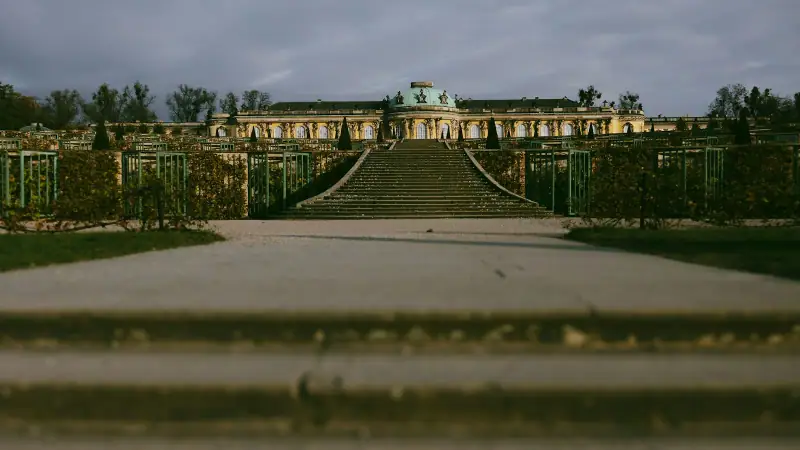
Potsdam is the top excursion from Berlin, and rightly so. The city was the residence of the kings of Prussia and the German emperors, and it has kept an exceptional set of palaces, gardens and lakes, listed as a UNESCO World Heritage site. You come for Sanssouci park, but the city deserves more than a quick stop.
Sanssouci park and palace
Sanssouci Palace was built in the 18th century for Frederick II, known as Frederick the Great, who wanted a place of rest far from court life: its name comes from the French “sans souci”. It is a rococo summer palace, single-story, overlooking stepped vineyard terraces. The interior is generally visited at a set time slot, especially in high season, which is a reason to book or arrive early. Check the ticketing conditions and closing days on the official website of the Prussian palaces foundation before you come.
The park is huge and free to walk through for the most part. It holds several other buildings: the New Palace (Neues Palais), more imposing and later, the picture gallery, the orangery and various pavilions. Rather than seeing everything, it is better to choose one or two interiors and devote the rest of the time to the walk, because distances between the points of interest are longer than they look on the map.
The historic center and the Dutch Quarter
The center of Potsdam deserves a stroll. Potsdam’s Brandenburg Gate, a triumphal arch, is not to be confused with the one in Berlin. The Dutch Quarter (Holländisches Viertel) lines up red-brick houses built for craftsmen who came from the Netherlands in the 18th century; today you find cafés, galleries and small shops there. The Russian quarter of Alexandrowka, with its wooden houses, recalls the ties between Prussia and Russia in the Napoleonic era.
Cecilienhof and the Potsdam Conference
Cecilienhof Palace, built in the early 20th century in the style of English half-timbered manors, is known for having hosted the Potsdam Conference in 1945, where the Allied leaders met to decide the future of Germany after the war. The visit lets you see the negotiating room and a historical exhibition. The palace is in the New Garden, on the shore of the Heiliger See, and is also worth it for the walk by the water.
Babelsberg and the cinema
The Babelsberg district holds the oldest large-scale film studios in Europe, where famous silent films were shot as well as more recent international productions. The neighboring Babelsberg park is a landscape garden with a small neo-Gothic castle on the Havel. If you are not a film fan, the park is more than enough.
Where to stay in Berlin or Potsdam: to explore the region, a room in Berlin near a well-served station is enough, but a night in Potsdam lets you enjoy the parks without the midday crowd. Compare lodging for your dates, because summer weekends are in high demand.
The Spreewald: the green Venice of Brandenburg
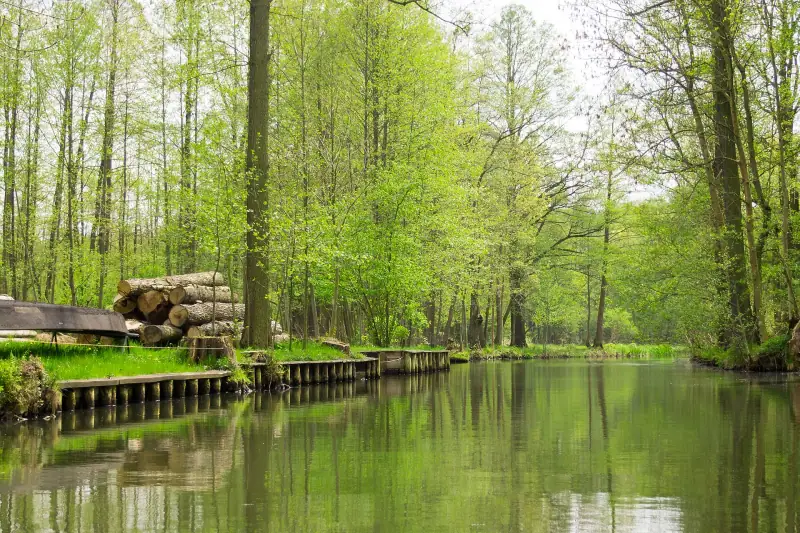
Southeast of Berlin, the Spree splits into a network of hundreds of small waterways that wind between meadows, alder groves and villages. This is the Spreewald, a UNESCO biosphere reserve and one of the most unusual landscapes in Germany. Here, much travel is traditionally done by flat-bottomed boat, the Kahn, poled by a boatman. Farms are sometimes reachable only by water, and even the mail carrier long did his rounds by boat.
Lübbenau and Lübben: the gates of the Spreewald
The two main towns for setting off are Lübbenau and Lübben, both reachable from Berlin by regional trains in a little over an hour, depending on the connection. In Lübbenau, a small river port groups the boat departures and the canoe rentals. In Lübben, the old town is more compact and quieter, with its bridges and terraces. Both towns are good bases for the stay.
A boat ride, canoe or bike
The Spreewald is discovered at the pace of the water. You have three main options:
- The traditional boat with a boatman: the most authentic, with commentary on nature and local life. Several durations exist, from a few hours to the full day.
- Canoe or kayak: more sporty and freer, because you choose your pace and your route among the marked canals.
- Bike: a network of flat bike paths runs along the canals and crosses the meadows, suited to families and beginners.
The Spreewald is also a place of Sorbian culture: this Slavic minority of the region keeps its language, costumes and traditions, visible at local festivals. You will come across bilingual German-Sorbian signs. Depending on the season, farms offer tastings or workshops.
What to taste in the Spreewald
The region is famous for its pickles, sold in jars, in barrels or at market stalls, and for its potato dishes served with quark and linseed oil. Freshwater fish is also common. For an overview of German cooking, see our guide to German food specialties.
Spreewald excursion: if you do not want to organize the trains and the boat yourself, compare day excursions from Berlin. Check the departure point, the language of the tour, the duration and what is included before you book.
Rheinsberg and the lakes of northern Brandenburg
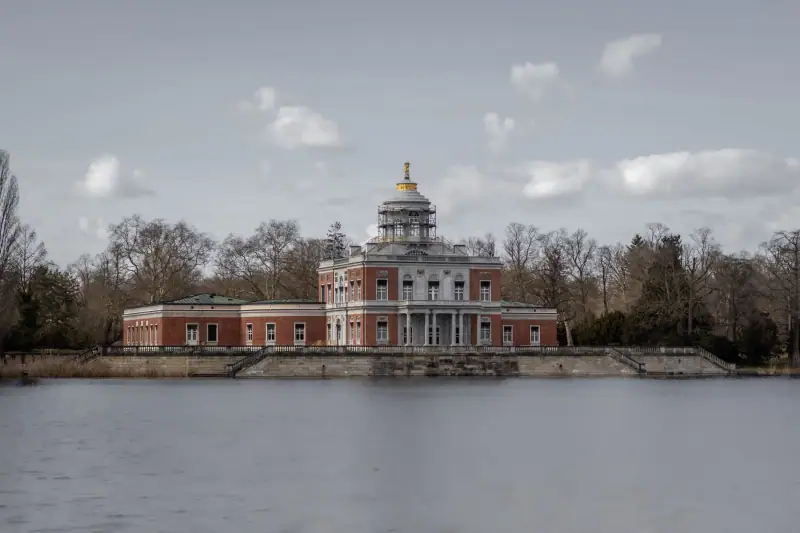
North of Berlin spreads a region of lakes and forests less visited than Potsdam. Rheinsberg, a small town on a lake, is best known for its castle, where Frederick II spent part of his youth when he was still crown prince. The Baroque castle is reflected in the water and its park, with its paths and pavilions, suits a quiet walk. The town is also linked to the writer Kurt Tucholsky, who devoted a famous little book to it.
It is a good place for a calm stay: you canoe, swim in summer in the lakes and hike or cycle in the forest. Since public transport is less frequent than between Berlin and Potsdam, a car or careful preparation of train schedules is useful. You can compare rental companies if you want to explore the north and east of the region freely.
The Schorfheide and Chorin Abbey
Northeast of the capital, the Schorfheide is a vast area of forests, heath and lakes, protected as a biosphere reserve. Oaks and beeches alternate with pines, and the forest paths invite hiking or cycling. It is a good place to watch wildlife and rest, as long as you do not expect peaks: the terrain stays gentle.
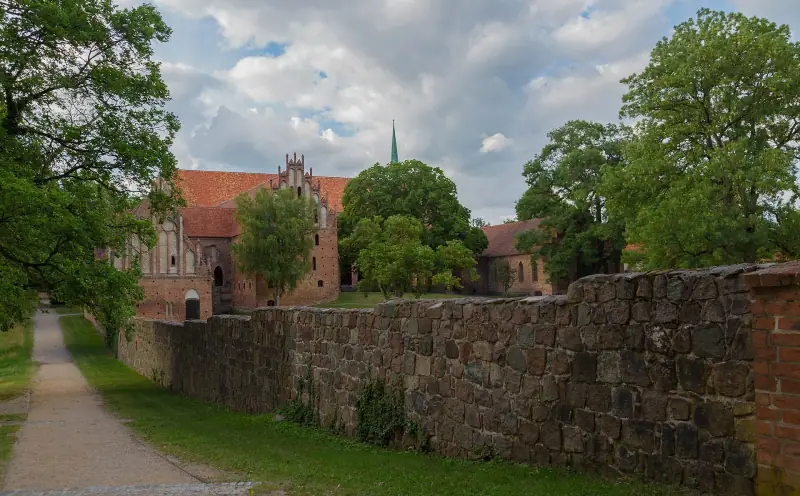
Close by, the former Cistercian monastery of Chorin, a large Gothic brick complex, is one of the finest witnesses of monastic architecture in the region. Its ruins and church are discovered in a peaceful setting on the shore of a lake. Summer concerts are sometimes held there; find out before you come.
Brandenburg’s memorial sites
Brandenburg also holds important memorial sites, which complement the visit to Berlin. The Sachsenhausen memorial and museum, in Oranienburg, north of the capital, stands on the site of a former Nazi concentration camp. It is reachable by regional train from Berlin and offers a documentary exhibition and walking routes on the site . The visit is hard but important for anyone interested in 20th-century history; allow several hours and clothing suited to walking outdoors.
To go deeper into another part of the city’s history, see also our article on the Reichstag dome in Berlin, which explains how to visit the Federal Parliament. These places, in Berlin as in Brandenburg, complement each other well in a week-long stay.
Cottbus, Branitz Park and the south of the state
In the south of Brandenburg, near the border with Saxony, the city of Cottbus holds Branitz Park, a landscape garden created in the 19th century by Prince Hermann von Pückler-Muskau, a great garden designer. It features earth pyramids set in ponds, a small castle and a very large park. It is an interesting stop for garden lovers on the road to Saxony: our 2-day Dresden itinerary lets you extend the trip to the southeast.
Brandenburg an der Havel, Werder and the water towns
West of Potsdam, the town of Brandenburg an der Havel, which gave its name to the region, is one of the oldest towns in the area. It has a Gothic brick cathedral, an old town surrounded by water and a set of lakes. It remains little visited by foreign tourists, which makes it a quiet stop.
Closer to Berlin, Werder (Havel) is known for its orchards and its fruit-tree blossom festival in spring. The town spreads over an island in the Havel and offers waterfront terraces, ideal for a break at the end of the day.
Frankfurt (Oder) and the Polish border
In the far east of the state, Frankfurt (Oder), not to be confused with Frankfurt am Main, lies on the border with Poland. Across the bridge, the Polish town of Słubice forms with it a cross-border urban area.
Getting around the region
Berlin and Brandenburg are well served by rail. The S-Bahn and regional trains (Regional-Express) link the capital to Potsdam, Oranienburg, Lübbenau and many other towns. The fare network is divided into zones A, B and C, and Potsdam is in zone C. Long-distance tickets are booked in advance, but for these regional trips, a public transport ticket is enough, to validate or to buy through the operator’s app. Always check fares and schedules on the official websites before you leave, because they change regularly.
For more remote destinations, such as Rheinsberg, the Schorfheide or the Spreewald villages, a car offers freedom, but cycling is a good alternative: the region is flat, there are many bike paths, and regional trains generally accept bikes with a supplement or a specific ticket. Consider travel insurance to cover medical mishaps or cancellations. For the overall budget, our guide to the budget for Germany details the main spending items. Entry rules depend on your passport. Check the official travel advice of your government before you book: travel.state.gov (US), GOV.UK (UK), travel.gc.ca (Canada), Smartraveller (Australia) (checked November 2026). Our entry requirements for Germany specify the documents needed.
When to go
Brandenburg is mostly visited from spring to fall. Spring brings orchard blossoms and the first boat rides; summer is ideal for swimming in the lakes, but the Potsdam palaces and the Spreewald are then busier. Fall, with its colors and mild temperatures, is a very good time for forest hikes and parks. Winter is calmer, with short days and water activities at a standstill, but Berlin and its museums remain an excellent base. To compare the seasons across the country, see our article on when to go to Germany.
Itinerary ideas for a stay of 4 to 7 days
For four days, devote two days to Berlin, one day to Potsdam, and one day to the Spreewald by train. It is the simplest balance between city, heritage and nature, without changing hotels.
For five to seven days, keep the capital as your base and add a day in the Rheinsberg or Schorfheide area, or an afternoon of remembrance at the Sachsenhausen memorial. If you like cycling trips, a two-day loop in the Spreewald, with a night there, is a lovely alternative to day trips.
For a wider circuit, Berlin and Brandenburg link well with Saxony: Dresden is linked to Berlin by direct trains and can be visited in two days. Beyond that, train travelers can continue to Bavaria or reach other neighboring countries.
Visit Potsdam with a guide: to understand Prussian history and enjoy the palaces without rushing, compare guided tours from Berlin. Check the duration, the language and the entries included before you book.
Who is this region for?
Berlin and Brandenburg suit travelers who like to alternate city and nature, history and wide-open spaces. Potsdam is a highlight for heritage and architecture lovers, the Spreewald appeals to those who want to slow down along the water, and the northern lakes offer respite far from the noise. The region is less known than Bavaria or the Rhine valley, which is precisely its asset: you meet fewer crowds, and discover a more discreet Germany, made of brick, water and forests. In three to five days around the capital, it turns a simple city break into a real trip.
Frequently asked questions
What should you see first in the Berlin and Brandenburg region?
Berlin for its museums and history, Potsdam for the park and palace of Sanssouci, and the Spreewald for a boat ride in a maze of canals. If you have more time, add the Rheinsberg area, the Schorfheide forest or a memorial site such as the Sachsenhausen memorial.
How much time do you need to visit Potsdam from Berlin?
A full day lets you see Sanssouci park, one or two palaces and the historic center. Potsdam is linked to Berlin by regional trains and S-Bahn, for a trip of about half an hour depending on your starting point.
Do you need a car to visit Brandenburg?
Not for Potsdam, which is very well served by Berlin transport. For the Spreewald, a car is not essential because regional trains serve Lübbenau and Lübben, but it becomes useful for lakes, forests and small villages. Check the schedules, because connections are less frequent off the main routes.
Which transit ticket do you need to go to Potsdam?
The Berlin network is divided into fare zones A, B and C. Potsdam is in zone C: choose a ticket that covers zones A, B and C, or an equivalent subscription or day pass. Check current fares on the operator's website before you leave.
What is the best time to visit Brandenburg?
From spring to early fall, for the parks, the lakes and boat rides in the Spreewald. Summer is the busiest season. Fall brings lovely colors in the forests, while winter is quieter and some water activities stop.
What should you taste in the Spreewald?
The region is famous for its Spreewald pickles, sold at markets and in local shops. You also eat freshwater fish and dishes based on potatoes and flax, notably linseed oil served with potatoes and quark.
Can you combine Berlin and Brandenburg with Poland?
Yes, the Polish border is close to eastern Brandenburg, notably at Frankfurt (Oder).
More Germany guides
Keep reading
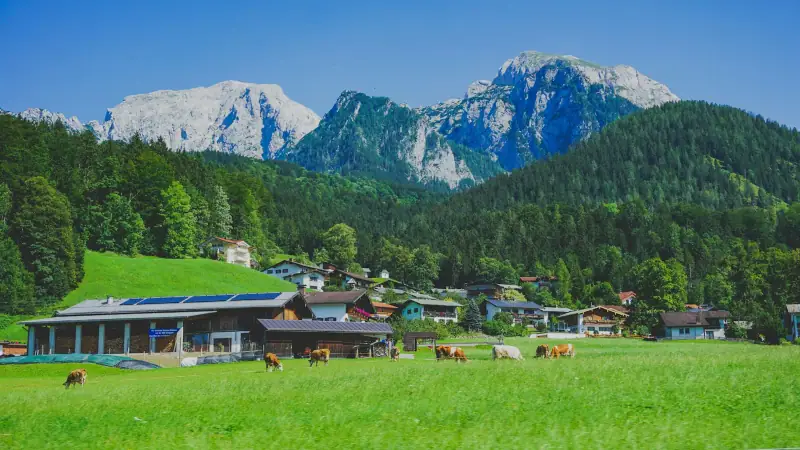
What to see in Bavaria: Munich, castles, the Alps and medieval towns
What to see in Bavaria: Munich, Neuschwanstein, the Romantic Road, Bamberg, Regensburg, Berchtesgaden and the Alps. Tips for planning your trip.
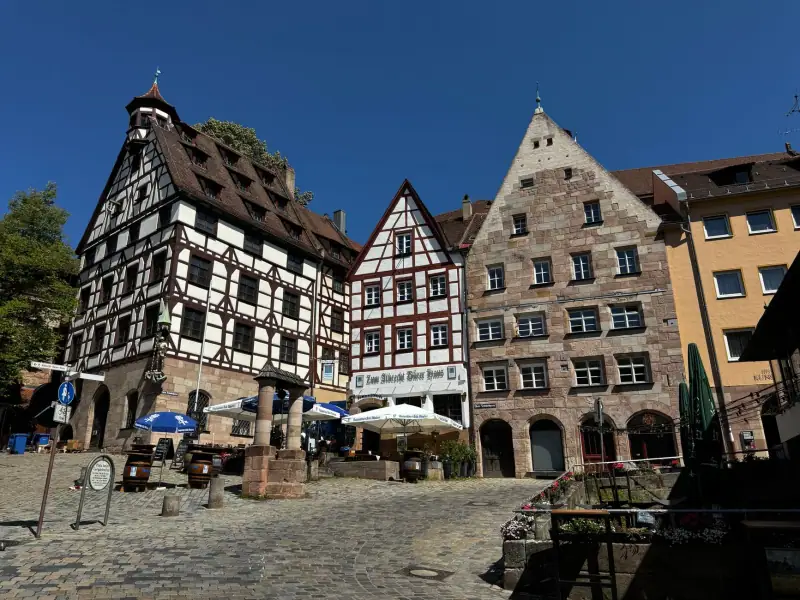
Visiting Nuremberg: what to see and do in 1 or 2 days
What to see in Nuremberg: Kaiserburg, old town, Dürer's house, Christmas market, Reichsparteitagsgelände documentation center and Bratwurst.
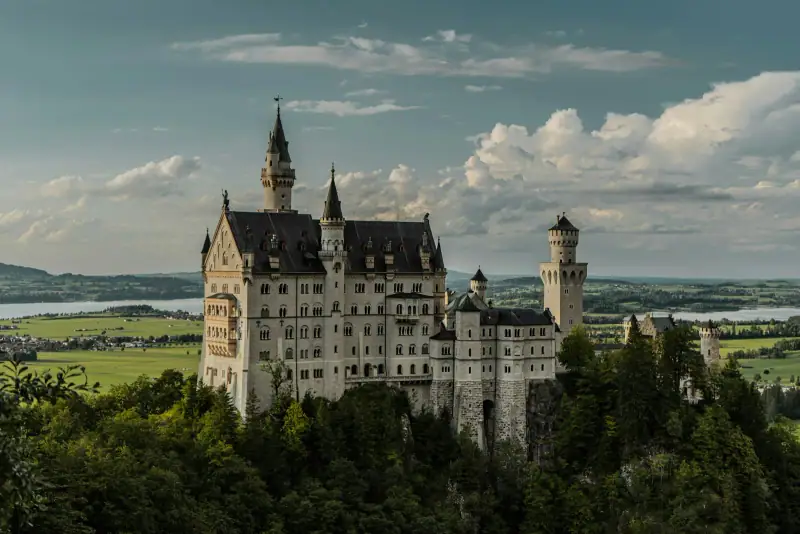
Complete guide to visiting Germany: cities, regions, budget and tips
Visiting Germany: regions, must-see cities, when to go, how to get there and around, where to stay and budget. The main guide for planning your trip.
Ready-made
Germany itineraries
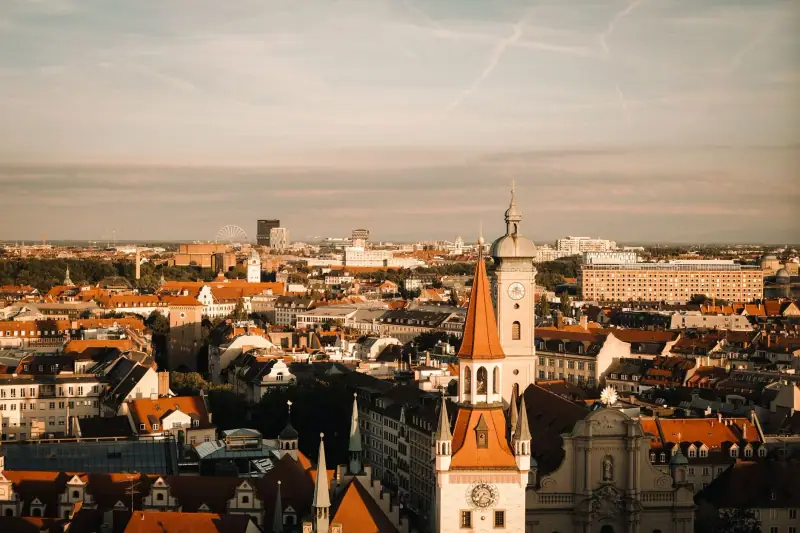
3 days
Munich in 3 days: an itinerary through the old town, museums and parks
What to do in Munich in 3 days? Marienplatz, Residenz, Englischer Garten, Nymphenburg, museums and beer halls: a day-by-day itinerary with practical tips.
3 days
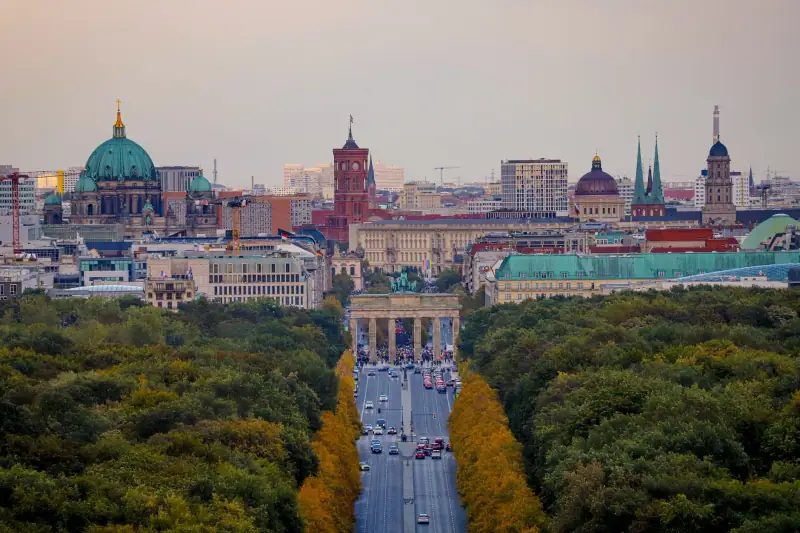
Berlin in 3 days: a day-by-day itinerary
What to see in Berlin in 3 days: Brandenburg Gate, Reichstag, Museum Island, Wall memorial, Potsdam and neighborhoods. A clear day-by-day itinerary.
3 days
Black Forest in 3 days: a road trip itinerary from Baden-Baden to Freiburg
A 3-day Black Forest itinerary: Baden-Baden, Triberg, Gutach, Freiburg im Breisgau, Titisee and Feldberg. Stops, drives, tips and where to stay.