Itineraries
Berlin in 3 days: a day-by-day itinerary
We may earn a commission when you book through links on this page, at no extra cost to you. We don't visit or try the places we cover: we summarize published sources. How we work
Day by day
- Day 1Brandenburg Gate, Reichstag, Holocaust Memorial, Museum Island
- Day 2Berlin Wall Memorial, East Side Gallery, Kreuzberg or Friedrichshain
- Day 3Potsdam and Sanssouci, or Charlottenburg; Alexanderplatz in the evening
Weather through the year on this route
| Jan | Feb | Mar | Apr | May | Jun | Jul | Aug | Sep | Oct | Nov | Dec | |
|---|---|---|---|---|---|---|---|---|---|---|---|---|
| High °F (°C) | 362 | 394 | 479 | 5614 | 6418 | 7122 | 7524 | 7524 | 6619 | 5714 | 457 | 373 |
| Low °F (°C) | 25-4 | 26-3 | 310 | 373 | 468 | 5211 | 5513 | 5513 | 489 | 415 | 331 | 28-2 |
| Rain in (mm) | 2.460 | 2.050 | 2.665 | 2.255 | 3.795 | 4.0105 | 4.3110 | 3.9100 | 2.975 | 2.770 | 2.565 | 2.665 |
Normals 1991–2020 at Munich and Rothenburg ob der Tauber: averages over 30 years, not a forecast. Source: NASA POWER (MERRA-2), grid of about 50 km. Figures computed by us in November 2026.
In short
- Three days cover the classics: Brandenburg Gate, Reichstag, Museum Island, traces of the Wall, and a day in Potsdam or Charlottenburg.
- The U-Bahn, S-Bahn, trams and buses form a dense network; check the fare zone, notably for Potsdam, and validate your ticket before boarding.
- The Reichstag dome can only be visited with advance registration on the official Bundestag website; book before you arrive.
- Mitte is closest to the sights; Prenzlauer Berg is calm, and Kreuzberg and Friedrichshain are livelier in the evening.
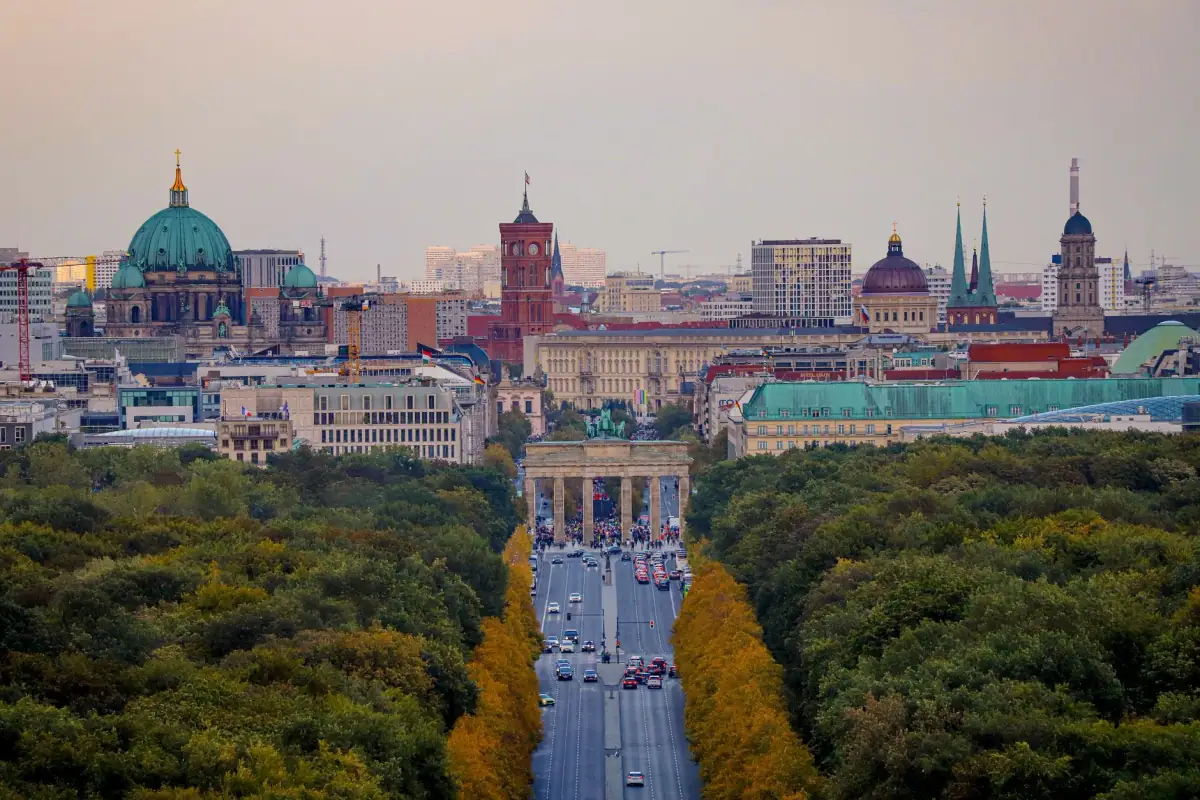
Berlin is not a city you discover by following a simple list of monuments. It is a sprawling capital marked by a dense history, where eras overlap on every street corner: the Prussia of kings, the grand imperial avenues, the ruins of the war, the Wall, then a cultural renaissance that made it one of the most creative cities in Europe.
This guide offers a three-day itinerary that groups the sights by area to limit travel, with breathing room to enjoy the atmosphere of the neighborhoods. It suits a first visit, as a couple, with friends or with family.
Before you go: transport and choosing a neighborhood
Berlin has two main areas of interest: the historic center around Mitte, and the more residential outlying neighborhoods. Distances between sights are longer than you might imagine, and you save precious time by organizing each day by area.
To get around, the subway (U-Bahn), the city train (S-Bahn), trams and buses form a very complete network. A multi-day transit pass is generally cheaper than single tickets if you plan to move around a lot. Compare the options sold there, as some include discounts on visits, and check the fare zone for Potsdam.
For sleeping, Mitte offers immediate proximity to the monuments. Prenzlauer Berg is appreciated for its calm streets and cafés, Kreuzberg and Friedrichshain for their nightlife. Book early if you come during school holidays, at Christmas or during the city’s big events.
Where to stay in Berlin: choosing your neighborhood according to your pace changes the experience a lot. Compare the lodging available for your dates and check the proximity of a U-Bahn or S-Bahn station.
Day 1: historic Berlin around the Brandenburg Gate
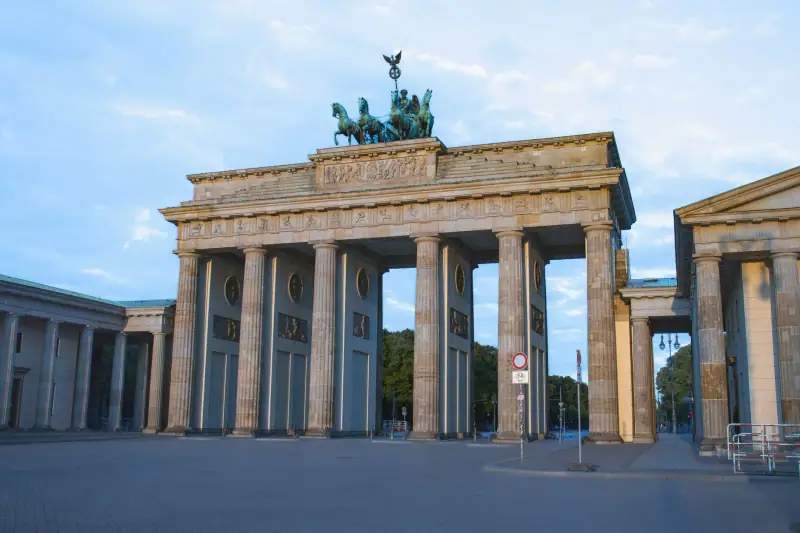
Start the day with the symbol of the city: the Brandenburg Gate, topped by its Quadriga. Built in the late 18th century, it found itself stuck in the border zone during the division of the city, before becoming, in 1989, the emblem of reunification. Arrive early in the morning: the square is calmer and the light is better for photos.
A few minutes’ walk away, the Reichstag houses the German parliament. Its glass dome offers a view of the government district, but the visit requires advance registration. Book online on the official website before you arrive, rather than counting on a last-minute spot.
Nearby, the Memorial to the Murdered Jews of Europe spreads its concrete stelae of varying heights over gently sloping ground. Allow time to walk through it in silence, and for the underground information center if you want to know more.
In the afternoon, head back east along the avenue Unter den Linden, past several historic buildings, to Museum Island. A UNESCO World Heritage site, it brings together several major museums. No need to see everything: choose a single museum according to your tastes and give yourself time to stroll around, in the area of the cathedral and the Spree.
In the evening, have dinner in the Mitte area, where the choice is wide, from German cooking to addresses from around the world.
Day 2: the Wall, remembrance and alternative neighborhoods
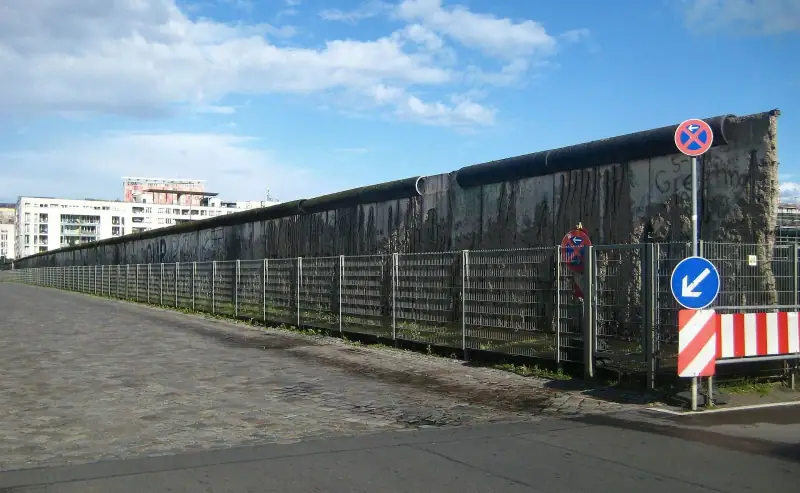
The second day is devoted to the history of the city’s division. The Berlin Wall Memorial, along Bernauer Straße, is one of the best places to understand what the border was: you see a preserved section with its control zone, as well as a documentation center and a viewpoint at height. It is a sober but very telling place, which can be visited outdoors for free.
Continue with the East Side Gallery, a long section of the Wall on which artists painted murals after its fall. It is explored on foot, along the Spree, and you can linger or pass through quickly depending on the crowds. As at all very popular sites, the morning is quieter.
In the afternoon, change atmosphere and dive into Kreuzberg or Friedrichshain. These neighborhoods are known for their lively streets, independent shops and street food. It is the chance to taste a döner, a specialty that has become emblematic of Berlin, or a currywurst, a sausage served with a curry sauce, another local classic.
Guided tours in Berlin: to better understand the history of the city's division, a tour with a guide provides valuable insight. Compare the options, durations and departure points before you book.
Day 3: Potsdam or Charlottenburg, depending on your tastes
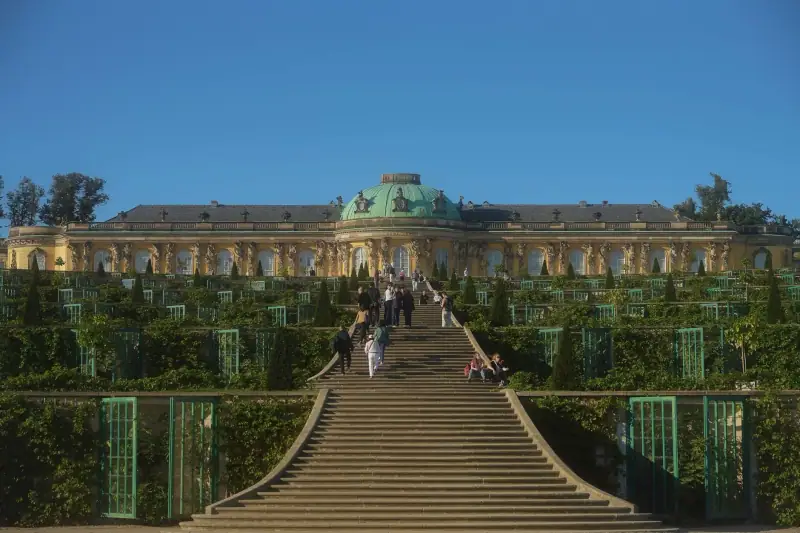
On the third day, two options are open to you depending on your tastes. The first is an excursion to Potsdam, the former residence of the kings of Prussia, at the gates of Berlin. The park and palace of Sanssouci, a UNESCO site, are the main attraction: you come for the gardens, the terraces and the royal countryside atmosphere. Potsdam is reached by regional train or S-Bahn from the center in about half an hour to forty minutes.
The second option is to stay in the capital and discover the west, around Charlottenburg Palace, a former royal residence surrounded by a large garden. The surrounding area is calmer, with its bourgeois avenues, cafés and shops. It is a good choice if you have already walked a lot on the first two days.
For lovers of open spaces, the former Tempelhof airport has been turned into an immense park, where Berliners come to walk, cycle or picnic on the old runways. It is an original way to end the stay.
Whichever option you choose, keep an evening for Alexanderplatz and its television tower, visible from afar, which serves as a landmark across the city.
Practical tips for a successful stay
Dress according to the season: winters are cold and summers can be hot, but the weather stays changeable. Bring good shoes, because you will walk a lot. Also keep in mind that cash payment remains common in some shops and restaurants: bring a few euros in addition to your card.
Book in advance the few visits that require it, like the Reichstag dome, and avoid filling your days to the maximum. Berlin is also savored by strolling: a coffee, a park, a walk by the water count as much as a museum.
If you want to extend your trip in Germany, Bavaria is a natural next step: discover Neuschwanstein Castle in our guide to visiting Neuschwanstein and Füssen.
Who this itinerary is for
This itinerary is for travelers discovering Berlin who want to see the essentials without rushing. It gives pride of place to history, but also leaves room for lively neighborhoods and local life. If you have more time, add a day to go deeper into a museum or explore another neighborhood.
Sources
- German Bundestag: figures checked November 2026
Frequently asked questions
Is three days enough to visit Berlin?
Three days let you see the big classics: Brandenburg Gate, Reichstag, Museum Island, traces of the Wall and one or two neighborhoods. Berlin is a very spread-out city, so you will have to make choices, but it is a perfectly reasonable length for a first visit.
How do you get around Berlin?
The S-Bahn, U-Bahn, tram and bus network is dense and covers most sights. The city is divided into fare zones: check the zone that matches your trip, notably for Potsdam, and validate your ticket before boarding.
Do you need to book for the Reichstag dome?
Yes. Visiting the dome requires advance registration, to be done on the official Bundestag website, several days ahead in high season. An ID may be requested at the entrance.
Which neighborhood should you choose to stay in Berlin?
Mitte is practical for the monuments, Prenzlauer Berg is calm and pleasant, Kreuzberg and Friedrichshain are livelier in the evening. Charlottenburg suits those who prefer a more classic atmosphere, in the west.
Can you combine Berlin and Potsdam?
Yes, Potsdam is easily reached by regional train or S-Bahn from central Berlin, in about half an hour to forty minutes depending on the starting point. It fits well into a dedicated day.
More Germany guides
Keep reading
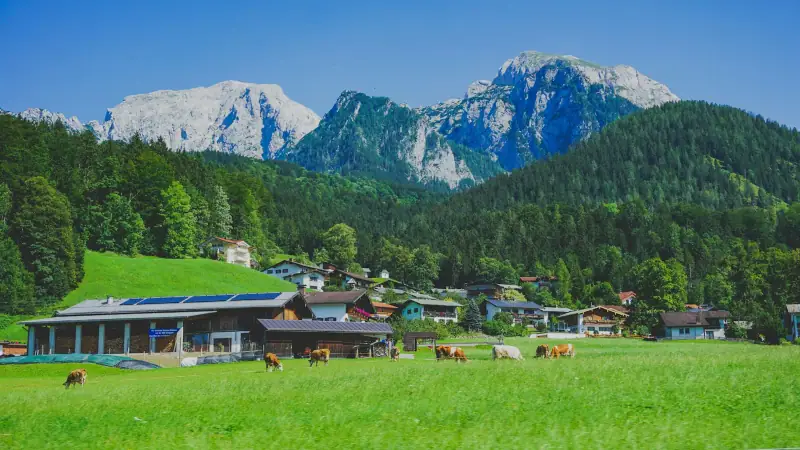
What to see in Bavaria: Munich, castles, the Alps and medieval towns
What to see in Bavaria: Munich, Neuschwanstein, the Romantic Road, Bamberg, Regensburg, Berchtesgaden and the Alps. Tips for planning your trip.
Budget for a trip to Germany: real costs and 3 costed profiles
How much does a trip to Germany cost? Lodging, transport, meals, activities: prices by item, three daily budgets with figures and tips to pay less.

When to go to Germany: seasons, weather and events
What is the best time to visit Germany? Climate by season, Oktoberfest, Christmas markets, vineyards and tips for choosing your travel dates.
Ready-made
Germany itineraries
3 days
Munich in 3 days: an itinerary through the old town, museums and parks
What to do in Munich in 3 days? Marienplatz, Residenz, Englischer Garten, Nymphenburg, museums and beer halls: a day-by-day itinerary with practical tips.
3 days
Black Forest in 3 days: a road trip itinerary from Baden-Baden to Freiburg
A 3-day Black Forest itinerary: Baden-Baden, Triberg, Gutach, Freiburg im Breisgau, Titisee and Feldberg. Stops, drives, tips and where to stay.
2 days
Dresden in 2 days: Frauenkirche, Zwinger and Neustadt
What to do in Dresden in 2 days? Frauenkirche, Zwinger, Semperoper, Fürstenzug, Brühl's Terrace and the Neustadt: a day-by-day walking itinerary.