Things to do
Skiing in Bavaria: Garmisch-Partenkirchen, the Zugspitze and German ski resorts
We may earn a commission when you book through links on this page, at no extra cost to you. We don't visit or try the places we cover: we summarize published sources. How we work
In short
- The Zugspitze (about 20 km / 12 mi of slopes at around 2,600 m / 8,530 ft) is the safe bet for natural snow; Garmisch-Classic (about 40 km / 25 mi) offers variety and suits families.
- 2026-2027 adult day passes: €70.50 (about $82) online at the Zugspitze and €69 (about $80) at Garmisch-Classic, slightly more at the ticket office. Winter rates apply from November 27, 2026.
- Munich is about 1 h 30 by train from Garmisch-Partenkirchen, so no car is needed. Opening dates depend on snow: check before booking.
- Not skiing? The one-way or round-trip pedestrian ticket takes you to the top, and the area also offers sledding, snowshoeing, cross-country skiing and winter hiking.
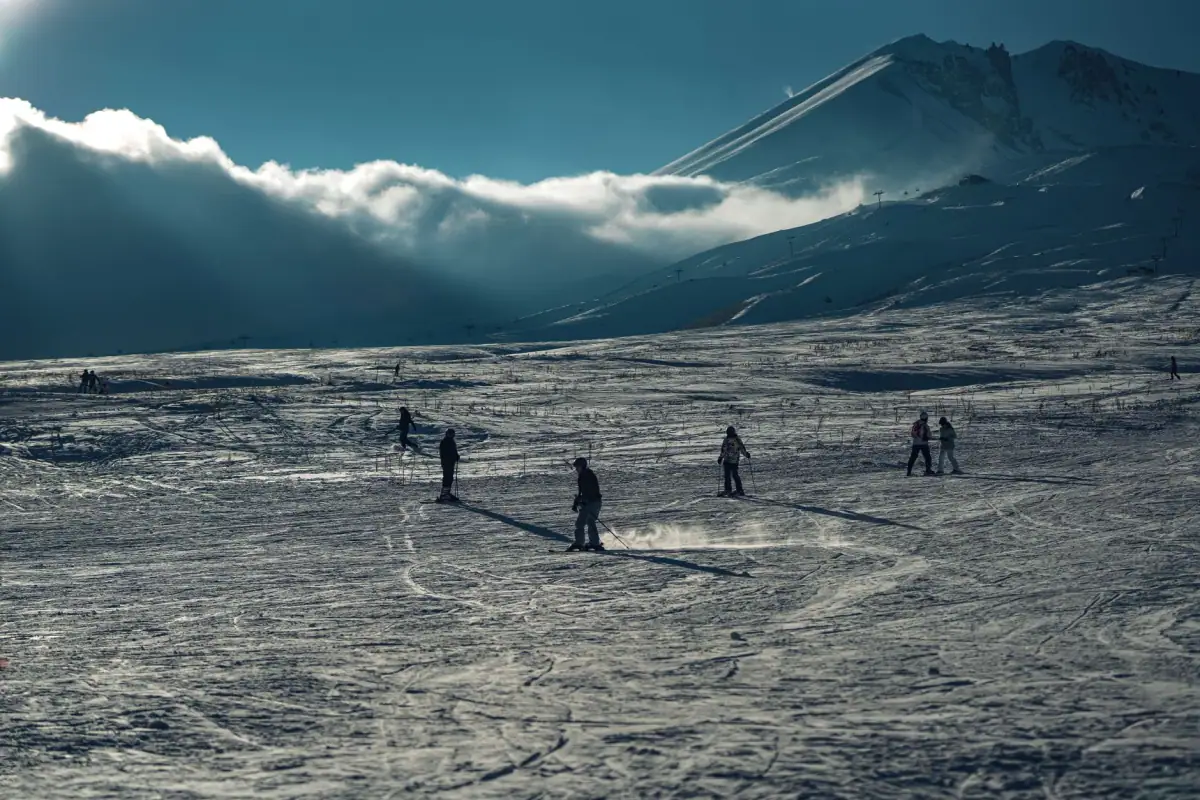
To ski in Bavaria, the most practical base is Garmisch-Partenkirchen, at the foot of the Zugspitze, the highest peak in Germany. Two areas share the season there: the high-altitude Zugspitze area and Garmisch-Classic, closer to town. For winter 2026-2027, adult day passes range from €69 to €78 (about $80 to $90) depending on the area and how you buy, with rates valid from November 27, 2026.
In short: the Zugspitze (about 20 km / 12 mi of slopes at around 2,600 m / 8,530 ft) is the safe bet for natural snow, Garmisch-Classic (about 40 km / 25 mi) for variety and families. The adult day pass costs €70.50 (about $82) at the Zugspitze or €69 (about $80) at Garmisch-Classic online, a little more at the ticket office. Munich is about 1 h 30 away by train. Opening dates depend on snow: check them before booking.
German resorts do not have the altitude of the big Alpine areas. In return, they offer authentic villages, easy access by train from a big city, and reasonable prices. This guide covers the two Garmisch areas, the other Bavarian destinations, what to know about passes, and the activities to plan when you do not ski.
Garmisch-Partenkirchen: why make it your winter base
Garmisch-Partenkirchen is a Bavarian mountain town born from the merger of two towns, Garmisch and Partenkirchen. It has a train station, shops open all year, hotels at every price and, above all, direct access to the two ski areas run by the Bayerische Zugspitzbahn. You can arrive from Munich in the morning, ski, and go back in the evening without driving.
The second asset is variety. A single stay can mix downhill skiing, sledding, snowshoeing, cross-country skiing, winter hiking and a visit to the Partnachklamm gorge, which we detail in our article on the Partnachklamm in Garmisch. According to the local tourist office, the town offers in particular skiing, winter hiking (for example toward the Eckbauer), cross-country skiing, sledding and skating, snowshoeing and ski touring. For a family where not everyone skis, this is valuable.
The flip side: on weekends and during Bavarian school holidays, parking lots, trains and lifts are busy. If you have the choice, favor midweek, or arrive early.
The Zugspitze area: snow at altitude
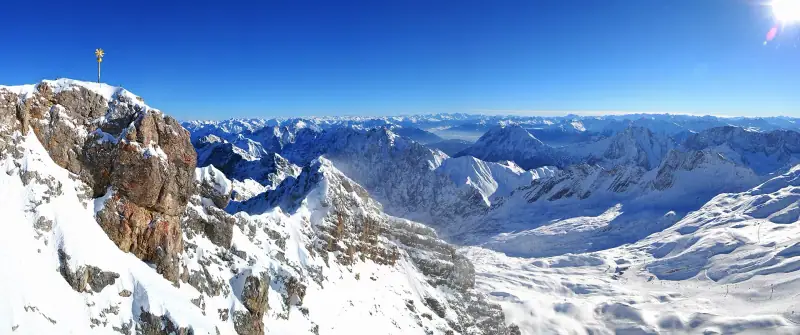
The Zugspitze area is for skiers who want snow, even when the valley is green. According to the official website, the slopes extend over the Zugspitze plateau, at around 2,600 m (8,530 ft), between the Schneefernerkopf (2,874 m / 9,430 ft), the Wetterwandeck (2,698 m / 8,852 ft) and the summit of the Zugspitze (2,962 m / 9,718 ft). The area advertises about 20 km (12 mi) of slopes and relies on well-groomed natural snow, which altitude guarantees better than in the valley.
According to the official website, the season runs from early December to about early May, depending on snow. The Zugspitze lifts usually open before those of Garmisch-Classic, but nothing is guaranteed from one year to the next: check the Zugspitze opening hours page before booking your lodging.
You reach the plateau by the cog railway from Garmisch-Partenkirchen, which is included in the “Zugspitze round trip” ticket: it can also be used for the tour via the cog railway and the other cable cars. On the plateau, several mountain huts with terraces dot the area; the official website mentions in particular the Sonnalpin, the Gletscher 2600 and the Panorama 2962. The menu and meal hours change with the season: check the website before planning a precise lunch break.
According to the official website, the area suits skiers of all levels: slopes for beginners, advanced and top-level skiers, with group or private lessons for children and adults and equipment rental at several locations.
Garmisch-Classic: three mountains close to town
Garmisch-Classic is the “town” area: about 40 km (25 mi) of slopes according to the official website, spread over three mountains, the Hausberg (1,310 m / 4,298 ft), the Kreuzeck (1,651 m / 5,417 ft) and the Alpspitze (2,628 m / 8,622 ft). It is organized in three sectors: Hausberg, Kreuzeck and Alpspitz.
The highlights of Garmisch-Classic:
- Levels for everyone: slopes for beginners, intermediate and advanced skiers, according to the official website.
- A children’s area: the Ixis zone offers a learning slope, cones and tunnels, for a first stress-free day.
- A legendary run: the Kandahar, described as the famous FIS racing course, intended for experienced skiers.
- Mountain huts: the Drehmöser 9 and the Garmischer Haus on the Hausberg, the Kandahar 2 at the Kreuzeck departure station, the Osterfelder 2000 at the arrival station of the Alpspitzbahn.
At the start of the season, not everything is accessible at once. For winter 2025-2026, for example, the Bayerische Zugspitzbahn opened Garmisch-Classic on December 13, 2025 with two valley runs (the Kochelberg on the Hausberg and the Olympia on the Kreuzeck), while the Alpspitz sector stayed closed at first. For 2026-2027, the official website announces a season “probably from mid-December to March 29, 2027”, subject to conditions: these are provisional dates.
Where to stay in Garmisch-Partenkirchen: a night in town avoids leaving Munich at dawn and riding the crowded evening trains. Compare lodging for your dates, taking Bavarian school holidays into account.
2026-2027 passes: the official rates to know
The Bayerische Zugspitzbahn winter rates are valid from November 27, 2026, and online ticketing opens in mid-November. Here are the day passes (valid until May 2027) published on the official website at the time of writing:
| Day pass | Online | Ticket office |
|---|---|---|
| Zugspitze, adult | €70.50 (~$82) | €78.00 (~$90) |
| Zugspitze, youth (16-18) | €56.50 (~$66) | €62.50 (~$73) |
| Zugspitze, child (6-15) | €35.50 (~$41) | €39.00 (~$45) |
| Garmisch-Classic, adult | €69.00 (~$80) | €72.00 (~$84) |
| Garmisch-Classic, youth (16-18) | €55.00 (~$64) | €57.50 (~$67) |
| Garmisch-Classic, child (6-15) | €34.50 (~$40) | €36.00 (~$42) |
The same site also publishes “family” rates, a half-day pass for Garmisch-Classic (€55.50, about $64, for an adult in the morning until 1 pm or the afternoon from noon, with online purchase of the morning pass not offered from December 24, 2026 to January 10, 2027 or from February 6 to 14, 2027) and a one-way ticket for the Zugspitze (€46, about $53, for an adult). The “Skipass Zugspitze” ticket includes the ride up and down by lift; the “pedestrian round trip” ticket is the same price, which lets a non-skier go up to the summit.
A few pointers:
- Buy online: the saving is €3 (about $3.50) at Garmisch-Classic and €7.50 (about $9) at the Zugspitze for an adult. For a family of four, it adds up.
- Choose the right area: if you only have one day and want guaranteed snow, the Zugspitze; for several days, the variety of Garmisch-Classic avoids boredom.
- Check the validity date: a pass bought before opening is only useful if the slopes actually open that day. Keep some flexibility on your dates.
These prices change from one season to the next: the local press reported a day pass at €66 (about $77) for winter 2024-2025. To budget the whole stay, see our budget for Germany.
Getting there from Munich and getting around
No car needed. A regional train links Munich Hauptbahnhof to Garmisch-Partenkirchen in about 1 h 30, as we explain in the article on the Partnachklamm gorge. The lifts leave from town: the cog railway for the Zugspitze, the cable cars of the Hausberg, the Kreuzeck and the Alpspitze for Garmisch-Classic.
By car, take the A95 from Munich. The parking lot near the lifts can be full on snowy weekends, and winter calls for suitable tires and sometimes chains: ask the rental company. If you plan to combine Garmisch and other resorts, the car is justified.
Rent a car: useful for linking several Bavarian resorts or leaving Munich with your skis. Compare rental companies and check the winter equipment included.
If you travel by train with skis, a rigid or padded bag makes it easier to carry them in the narrow aisles of regional trains, and equipment can be rented in the resorts anyway. To build a wider stay, our 3-day Munich itinerary combines well with a day in the snow.
Other German ski resorts
Germany is not only Garmisch. The Bavarian Alps have other well-known destinations, which we mention without detailing their passes, for lack of verified 2026-2027 price lists:
- Oberstdorf, in the Allgäu: a well-known resort with the Nebelhorn area, in southwest Bavaria. The lifts are run by the Oberstdorf-Kleinwalsertal Bergbahnen (ok-bergbahnen.com).
- Berchtesgaden: in the far southeast of Bavaria, near the Austrian border, with family-oriented areas around the national park.
- Resorts near Munich: several mid-mountain areas, such as the Spitzingsee or the Brauneck, can be reached from the Bavarian capital as a day trip.
- Outside Bavaria: the Harz, the Sauerland or the Black Forest offer small areas, but snow cover there is less reliable.
For each of these resorts, rates, opening dates and slope conditions should be checked on the resort’s website when you book. Snow cover at mid-altitude varies a lot from one winter to the next. Our guide to Bavaria helps you place these stops on the map.
Beyond skiing: sledding, snowshoeing, cross-country skiing and hiking
Even if you ski little, a winter stay in Garmisch fills up easily. The Garmisch-Partenkirchen tourist office has an entire section devoted to winter sports:
- Sledding: the town highlights sledding at the Wank, with the possibility of skating. Sled runs are open to families; ask the tourist office about opening and sled rental.
- Snowshoeing: the tourist office offers routes and outings, notably around the Kochelberg. A snowshoe hike takes little technique, just good shoes and warm clothes.
- Cross-country skiing: the region has a network of cross-country trails, to check depending on snow.
- Winter hiking: for example toward the Eckbauer, on cleared paths.
- Ski touring: reserved for equipped and trained practitioners, with the usual mountain precautions.
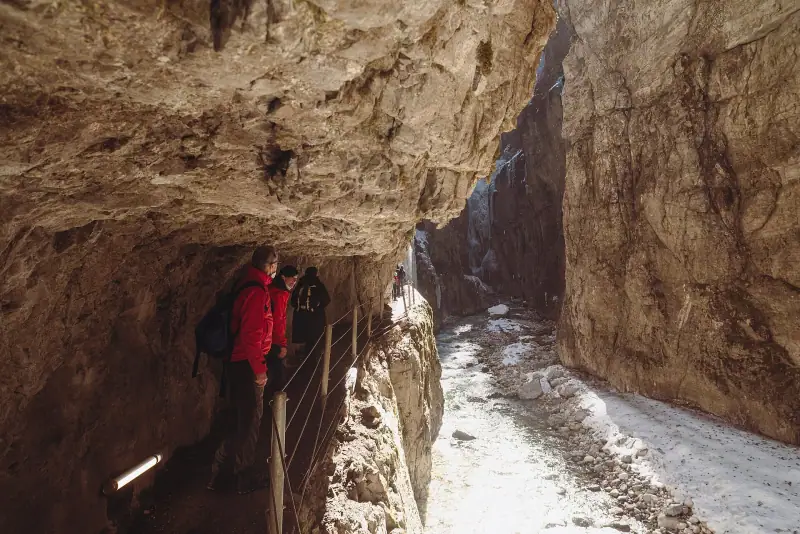
- The Partnachklamm gorge: it stays open in winter, from 8 am to 6 pm from October to May, with walls sometimes covered in ice. Hours and trail closures are detailed in our dedicated article.
Winter excursions in the Bavarian Alps: if you do not want to organize the transport yourself, compare day excursions from Munich to Garmisch and the Zugspitze. Check the program, the language and what is included.
Preparing your stay: clothing, equipment and safety
The weather changes quickly at altitude. At the top of the Zugspitze, it is clearly colder than in Garmisch, and wind can add a strong chill. Plan three layers: a breathable base layer, a warm layer and a waterproof, windproof jacket, plus gloves, a hat, a neck gaiter and goggles or a mask. Do not forget sunscreen: snow reflects strongly.
For ski equipment, renting there saves you from carrying skis: the Zugspitze website indicates that rental is possible at several locations. Beginners will benefit from booking a lesson, group or private, rather than starting alone on high-altitude slopes.
For safety, respect the slope markings, do not leave the secured zones without equipment or knowledge of avalanche risk, and check the snow report before any off-piste outing. Travel insurance that covers rescue costs and repatriation is useful in the mountains: check on the policy sheet that skiing is included. Entry rules depend on your passport. Check the official travel advice of your government before you book: travel.state.gov (US), GOV.UK (UK), travel.gc.ca (Canada), Smartraveller (Australia) (checked November 2026). See our entry requirements for Germany for identity documents. For the general list of what to pack, see our accessories for Germany.
When to go and how to organize your stay
The core of the season runs from January to mid-February, when snow is most reliable at mid-altitude; at altitude, at the Zugspitze, skiing is possible from the start of the season until spring. Bavarian school holidays and weekends concentrate the crowds, and therefore lodging prices. Early December and March are calmer, but slope conditions are less certain in the valley. To place winter among the other seasons, see our guide on when to go to Germany.
If you are traveling with children, our article on Germany with kids complements these tips with other ideas. And if your stay falls in December, consider pairing the snow with a Christmas market: see our guide to the Nuremberg Christkindlesmarkt.
An example of a three-day stay in Garmisch: a first day on Garmisch-Classic to get your bearings, a second day at the Zugspitze if snow is good, and a third day devoted to the Partnachklamm, sledding or snowshoeing to rest your legs. Book tickets online a few days ahead, when the weather is reliable.
In summary
Skiing in Bavaria mostly means skiing in Garmisch-Partenkirchen: the Zugspitze for altitude snow (about 20 km / 12 mi of slopes at around 2,600 m / 8,530 ft), Garmisch-Classic for variety and families (about 40 km / 25 mi over three mountains). In 2026-2027, adult day passes cost €70.50 (about $82) at the Zugspitze and €69 (about $80) at Garmisch-Classic online, a little more at the ticket office. Munich is about 1 h 30 away by train. Opening dates remain provisional: check the Zugspitze website before booking, and keep some margin.
Sources
Frequently asked questions
How much does a Zugspitze ski pass cost in 2026-2027?
According to the official Bayerische Zugspitzbahn price list, valid from November 27, 2026, the adult day pass for the Zugspitze ski area costs €70.50 (about $82) online and €78 (about $90) at the ticket office. The child rate (ages 6 to 15) is €35.50 (about $41) online and €39 (about $45) at the ticket office. Check the official page before buying.
When does the ski season open in Garmisch-Partenkirchen?
The 2026-2027 winter rates are valid from November 27, 2026. The high-altitude Zugspitze area generally opens at the start of the season, depending on snow; Garmisch-Classic is announced as open from mid-December to March 29, 2027, subject to conditions. Exact dates are announced on the Zugspitze website: check before booking.
What is the difference between the Zugspitze and Garmisch-Classic?
The Zugspitze area is on the high plateau, at around 2,600 m (8,530 ft), with about 20 km (12 mi) of slopes and natural snow. Garmisch-Classic groups three mountains (Hausberg, Kreuzeck, Alpspitze) and about 40 km (25 mi) of slopes, with the slope starts closest to town.
Can you ski in Garmisch-Partenkirchen from Munich without a car?
Yes. A regional train links Munich to Garmisch-Partenkirchen in about 1 h 30, and the lifts are reachable from town by the cog railways and cable cars of the Bayerische Zugspitzbahn. Equipment can be rented there.
Do you need to be a skier to enjoy the Zugspitze in winter?
No. The pedestrian round-trip ticket (€70.50, about $82, online for an adult) lets you go up to the summit without skiing, and the region also offers sledding, snowshoeing, cross-country skiing and winter hiking.
Is Bavaria suitable for beginners and families?
Yes, Garmisch-Classic has a children's area (Ixis) with a learning slope, and ski lessons are offered for children and adults. Children aged 6 to 15 get a reduced rate on passes.
Are passes cheaper online?
Yes, according to the 2026-2027 price list: about €3 (about $3.50) difference at Garmisch-Classic (€69 online versus €72 at the ticket office) and €7.50 (about $9) at the Zugspitze (€70.50 versus €78). Winter tickets go on sale in the online shop from mid-November.
More Germany guides
Keep reading
Partnachklamm gorge in Garmisch: prices, hours and access from Munich
Partnachklamm gorge: €10 entry, open 8 am-6 pm from October to May, on foot from the Olympic ski stadium. Tickets, bus, train and tips.
Germany with kids: trip ideas and activities for children
Theme parks, interactive museums, Hamburg, Munich, Nuremberg, the Black Forest: a guide to planning a trip to Germany with children, step by step.
What to see in Bavaria: Munich, castles, the Alps and medieval towns
What to see in Bavaria: Munich, Neuschwanstein, the Romantic Road, Bamberg, Regensburg, Berchtesgaden and the Alps. Tips for planning your trip.
Ready-made
Germany itineraries
3 days
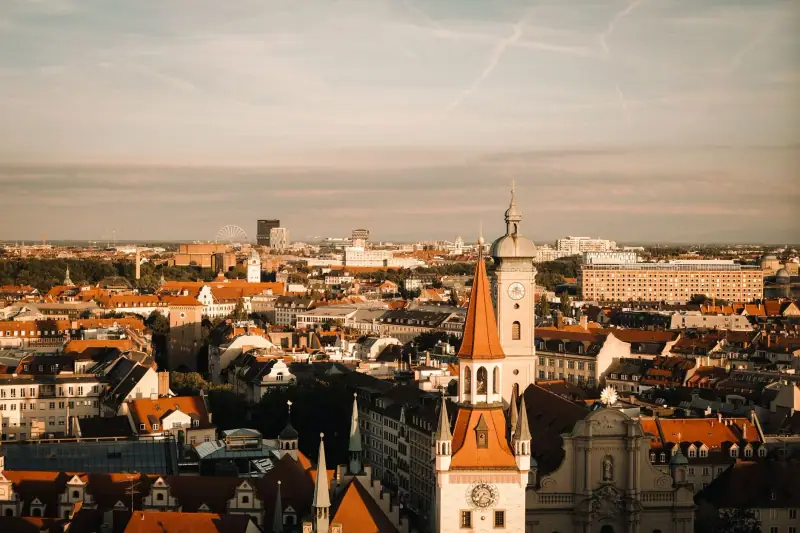
Munich in 3 days: an itinerary through the old town, museums and parks
What to do in Munich in 3 days? Marienplatz, Residenz, Englischer Garten, Nymphenburg, museums and beer halls: a day-by-day itinerary with practical tips.
3 days
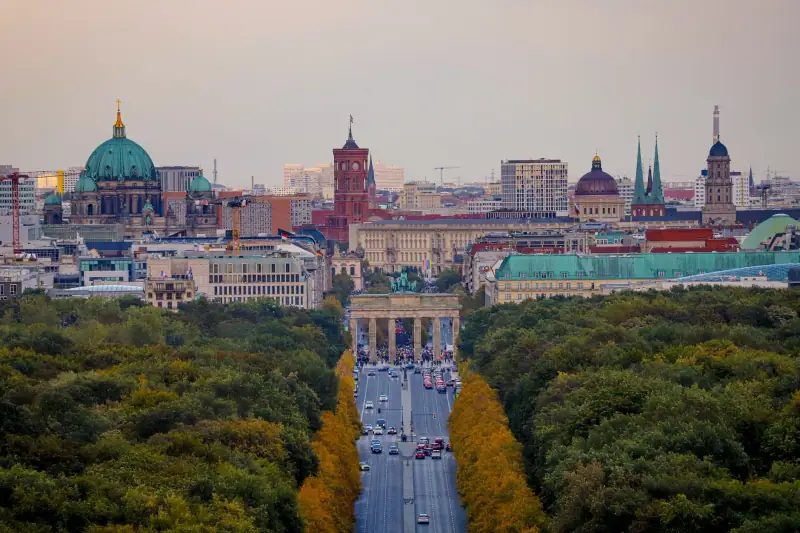
Berlin in 3 days: a day-by-day itinerary
What to see in Berlin in 3 days: Brandenburg Gate, Reichstag, Museum Island, Wall memorial, Potsdam and neighborhoods. A clear day-by-day itinerary.
3 days
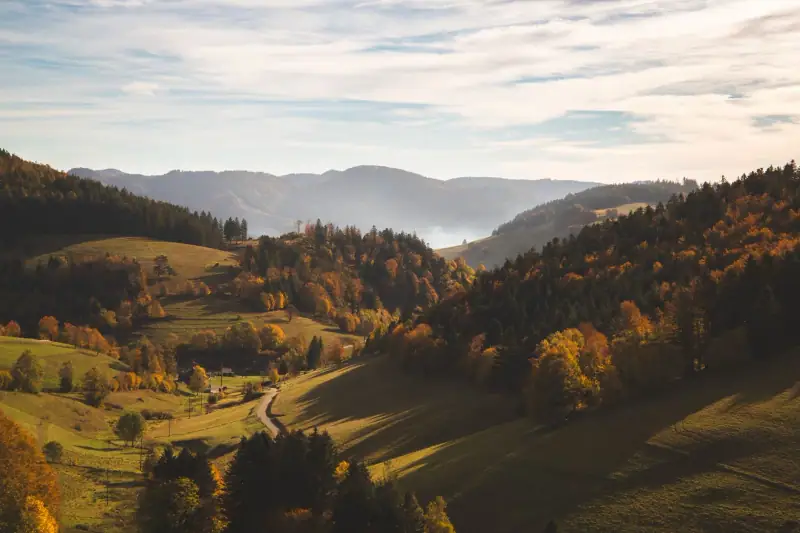
Black Forest in 3 days: a road trip itinerary from Baden-Baden to Freiburg
A 3-day Black Forest itinerary: Baden-Baden, Triberg, Gutach, Freiburg im Breisgau, Titisee and Feldberg. Stops, drives, tips and where to stay.