Itineraries
Seoul, Jeonju and Busan in 7 days without a car: a realistic train itinerary
We may earn a commission when you book through links on this page, at no extra cost to you. We don't visit or try the places we cover: we summarize published sources. How we work
Day by day
- Days 1-3Seoul: palaces, Bukchon, Insadong, a market evening
- Day 4KTX to Jeonju, hanok village, bibimbap, night in a hanok
- Day 5Jeonju morning, then express bus to Busan
- Day 6Busan: Gamcheon, Jagalchi market, Nampo, Gwangalli sunset
- Day 7Last morning in Busan, then return flight or KTX
Where to sleep
- Seoul3 nights
- Jeonju1 night
- Busan2 nights
In short
- The Seoul, Jeonju and Busan triangle works in 7 days without a car: 3 nights in Seoul, 1 in Jeonju and 2 in Busan.
- Seoul to Jeonju: about 200 km (124 mi), 2 h 15 by KTX. Jeonju to Busan: about 300 km (186 mi), 3 h to 3 h 30 by express bus.
- The Jeonju to Busan transfer is the trickiest link: the express bus is the simplest option, and rail connections change from year to year.
- Book KTX tickets a few days ahead for weekends and public holidays; they fill up fast.
Many travelers reach the same conclusion when planning a first week in South Korea: Seoul and Busan are obvious, but how do you fit in one more city without spending your days in transit? Jeonju, in the southwest, is one of the best candidates: a village of traditional houses, the bibimbap capital, and a much calmer atmosphere than the capital.
Good news: the Seoul – Jeonju – Busan triangle fits into 7 days, without a car, as long as you split the nights well and accept that two of your days are partly spent traveling. Here is a realistic itinerary, with the distances and durations to expect.
The route at a glance
| Stage | Approximate distance | Travel time | Nights |
|---|---|---|---|
| Seoul | n/a | n/a | 3 |
| Seoul → Jeonju | about 200 km (124 mi) | 2 h 15 by KTX | 1 |
| Jeonju → Busan | about 300 km (186 mi) | about 3 h to 3 h 30 by express bus | 2 |
| Busan → Seoul (return flight or train) | about 400 km (249 mi) by road (417 km / 259 mi of rail) | 2 h 15 to 3 h by KTX | n/a |
The durations are approximate: they depend on the train you choose, traffic and the season. Always check the schedules on the day on Korail or with the app of your choice.
The principle is simple: Seoul for the capital and its palaces (days 1 to 3), Jeonju for a traditional interlude (days 4 and 5), then Busan for the sea (days 5 to 7, two nights). If you land at Incheon, allow one to one and a half hours to reach central Seoul.
Days 1 to 3: Seoul without rushing
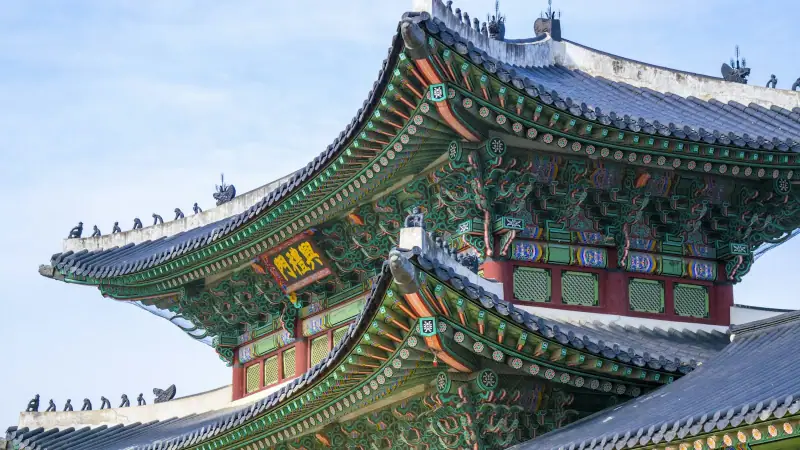
Three nights in Seoul are enough for the essentials: Gyeongbokgung Palace, the Bukchon and Insadong neighborhoods, an evening at a market, and a looser day for cafés, museums or the modern districts. Our 3-day Seoul itinerary details each day hour by hour, so there is no need to repeat it here.
Two tips specific to this 7-day format:
- Do not overload day 1. After a long-haul flight, the time difference is 7 to 8 hours depending on the season. One palace and dinner in a lively neighborhood are enough.
- Keep day 3 light and finish early. The next day you take the train to Jeonju: waking up before 8 am with your bags already packed avoids stress.
To choose where to sleep, see our guide to where to stay in Seoul, neighborhood by neighborhood. For this route, favor a hotel near a major subway line. Mind the stations: the KTX to Jeonju usually leaves from Yongsan Station, the one to Busan from Seoul Station.
Hotels in Seoul
Near a major subway line, to easily reach the departure stations for Jeonju and Busan.
Day 4: Seoul → Jeonju by KTX and a first evening among the hanoks
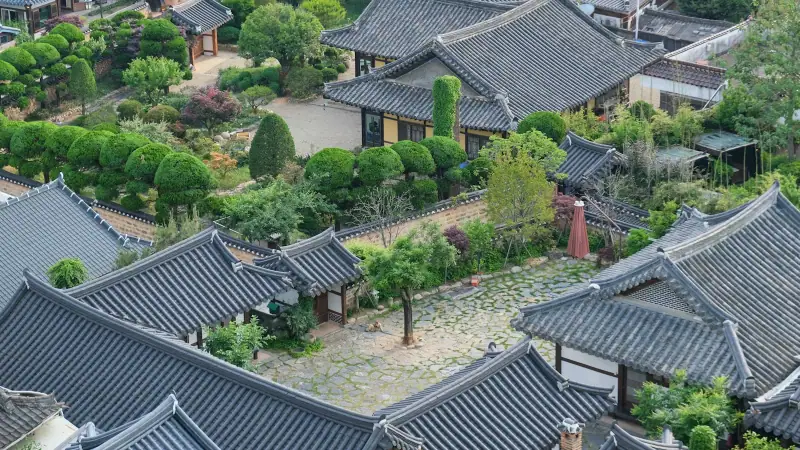
The trip. Take a KTX in mid-morning (it usually leaves from Yongsan Station): about 2 h 15 to cover the roughly 200 km (124 mi) between the two cities. The classic Mugunghwa train is cheaper but takes over 3 hours: avoid it if you want to save time. The express bus is a common alternative, about 3 hours, with frequent departures. To understand the differences between trains, tickets and passes, read our guide to transport in South Korea.
The afternoon: Jeonju’s hanok village. The traditional district gathers several hundred low houses with tiled roofs. You can see it on foot in half a day: alleys, cafés, small shops, galleries and the Gyeonggijeon shrine. Renting a traditional costume (hanbok) for a few hours is a common activity, popular with travelers and Koreans alike.
The evening: bibimbap and local specialties. Jeonju is known throughout the country for its food: bibimbap, bean sprout soup, night markets. Our guide to Korean cuisine and typical dishes will help you read menus.
For the night, sleeping in a hanok is the point of the stop. Our article on sleeping in a hanok explains what the comfort is really like (heated floor, bedding laid on the floor) and what to know before booking.
Where to sleep in Jeonju
Hanoks in the traditional district or hotels near the station: compare by your dates and the comfort you want.
Day 5: a morning in Jeonju, then on to Busan
Enjoy the morning: the village is much nicer early, before the groups arrive. Breakfast in a hanok café, a walk through Nambu Market or a stroll up to the heights lets you leave town around noon.
The Jeonju → Busan transfer is the trickiest part of the itinerary. There is no obvious direct high-speed line: the express bus remains the simplest option, with about 3 hours to 3 h 30 for about 300 km (186 mi). Some rail connections exist, sometimes with a transfer; what is on offer changes from year to year, so check on Korail before deciding. In any case, do not plan anything ambitious for the afternoon: you will arrive in Busan late in the day.
This transfer is why we do not suggest two nights in Jeonju on a 7-day trip: you would gain a day there but lose the evening in Busan.
The evening: a first walk at Haeundae or Gwangalli. Drop your bags, then have dinner facing the sea. To choose your neighborhood, our guide to where to stay in Busan compares Haeundae, Seomyeon and Nampo.
Day 6: Busan, the big day
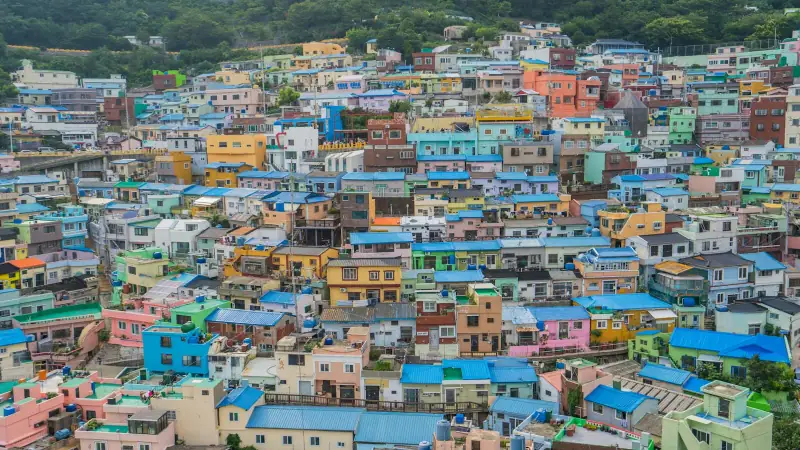
This day covers the port classics: Gamcheon village in the morning, Jagalchi Market for lunch, the Nampo district in the afternoon, then sunset over Gwangalli Bay. Details, walking times and options (Haedong Yonggungsa Temple in particular) are in our Busan highlights.
For travelers who want a more guided experience, a guided activity can save time on the ground.
Tours and excursions in Busan
Guided tours, food tours and day trips: compare the activities available on your dates.
Day 7: last morning and the return
Depending on your flight, two scenarios arise:
- Return flight from Busan (or a domestic flight to Seoul): keep the morning for a light visit, such as Beomeosa Temple or one last market, then head to the airport with a comfortable safety margin.
- Return flight from Seoul-Incheon: take the KTX Busan → Seoul (about 2 h 15 to 3 h depending on the train, for about 400 km / 249 mi), and if the flight leaves early the next day, plan an extra night near the airport (not counted in the itinerary’s 6 nights). Our article on sleeping near Incheon Airport will help you choose.
A smoother variant is to book an open-jaw flight: arrive in Seoul, depart from Busan. You avoid the train ride back, but check the fare and which airlines serve Busan.
Flights to South Korea
Compare flights on your dates, including tickets arriving in Seoul and returning from Busan.
What this itinerary leaves out
Let’s be clear: 7 days force you to make choices.
- Gyeongju is not included. If you want the Silla burial mounds and temples, add two days and follow our Busan and Gyeongju 4-day itinerary.
- Jeju, Seoraksan and the DMZ each need at least one extra day. The 10-day route shows how to fit them in.
- The area around Jeonju (mountains, temples, small towns) is easier to explore with a bit more time; it has no place in this week.
Booking, paying, staying connected: practical points
Tickets. KTX tickets can be booked online or at the station. For weekends and public holidays, book several days ahead. Express buses generally do not require booking long in advance, but late-day departures can be full.
Connectivity. To check schedules, maps and transport apps, a mobile connection is valuable. Check your carrier’s international plan or use a travel eSIM; our guide to SIM cards and eSIMs in South Korea compares the options.
Sockets. Check that your chargers and devices work with South Korea’s sockets and voltage before you go.
Entry rules. Entry rules depend on your passport. Check the official travel advice of your government before you book: travel.state.gov (US), GOV.UK (UK), travel.gc.ca (Canada), Smartraveller (Australia) (checked November 2026). Our article on South Korea entry requirements gives an overview.
Budget: what to expect
For a week without a car, the main costs are trains and buses (about three long trips), accommodation (3 nights in Seoul, 1 in Jeonju, 2 in Busan) and meals. Jeonju is generally cheaper than Seoul for meals; Busan can get pricier in summer by the sea. For up-to-date amounts, see our South Korea budget: prices change regularly.
Final word
Seoul, Jeonju and Busan in 7 days without a car is a realistic route provided you respect two rules: do not ask too much on transfer days, and do not stack the nights in a single city. With three nights in Seoul, one in Jeonju and two in Busan, you see the capital, tradition and the sea without spending more than a few hours on trains. For the season, see when to go to South Korea: spring and fall are the most pleasant.
Frequently asked questions
Can you do Seoul, Jeonju and Busan in 7 days without a car?
Yes. The three cities are linked by high-speed rail (Seoul-Jeonju and Seoul-Busan) and by frequent express buses. Plan three nights in Seoul, one in Jeonju and two in Busan: you lose about half a day per transfer, which is reasonable.
How long does it take to get from Seoul to Jeonju?
About 2 h 15 by KTX, a little over 3 hours by the slower Mugunghwa train, and roughly 3 hours by express bus depending on traffic. Jeonju is about 200 km (124 mi) south of Seoul. Check the schedules on Korail before booking; they vary by day.
How do you get from Jeonju to Busan?
This is the least obvious link. The simplest option is the direct express bus, about 3 to 3 h 30. Rail connections change from year to year and sometimes involve a transfer: check the Korail site or ask there before choosing the train.
Do you need to book train tickets in advance?
For weekends, public holidays and late-day departures, yes: KTX trains fill up quickly. On weekdays you can often buy a ticket the same day, but booking a few days ahead avoids losing a slot in your day.
Is one night in Jeonju enough?
Yes for a 7-day trip. One night lets you see the hanok village in the late afternoon and evening, try the local bibimbap and leave the next day in the early afternoon. With one more day, add the surroundings, such as the nearby mountains and temples.
What is the best season for this route?
Spring (April-May) and fall (October-early November) are the most pleasant: mild temperatures, clear skies and fall foliage. Summer is hot and humid, with heavy rain. Winter is cold in Seoul but quiet and cheaper.
More South Korea guides
Keep reading
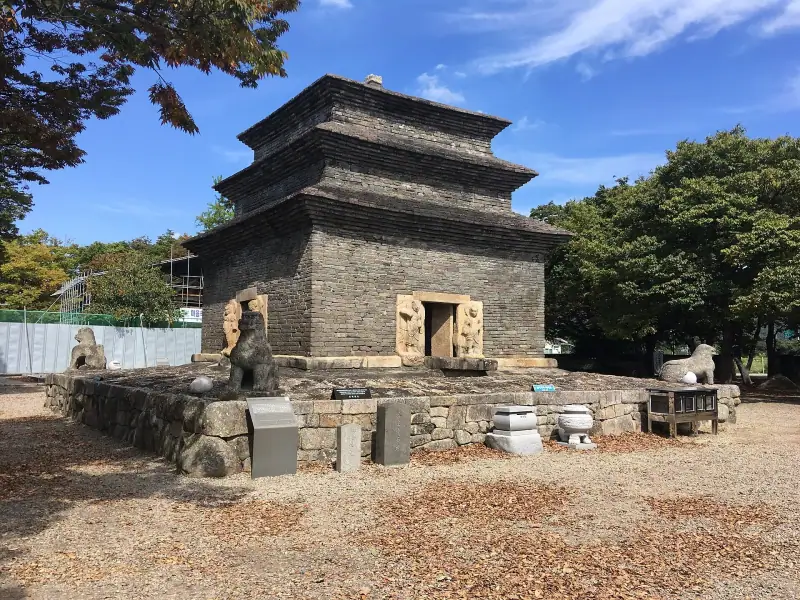
Visiting Gyeongju: the highlights of the Silla capital
Visiting Gyeongju, South Korea: Bulguksa Temple, Seokguram Grotto, Daereungwon mounds, Wolji Pond, Yangdong village. Tips, transport and planning.
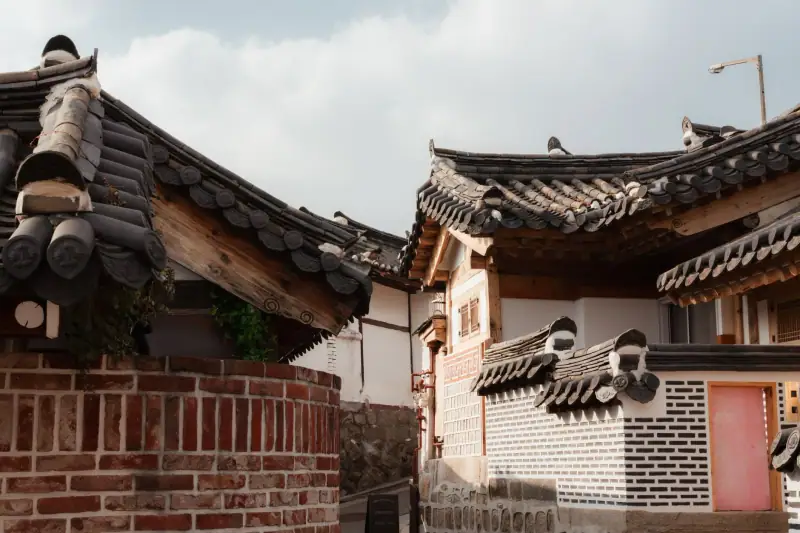
Sleeping in a hanok in South Korea: a guide to Jeonju, Seoul and Gyeongju
Spending a night in a hanok in South Korea: where to stay in Jeonju, Seoul and Gyeongju, comfort, ondol, budget, etiquette and booking tips.
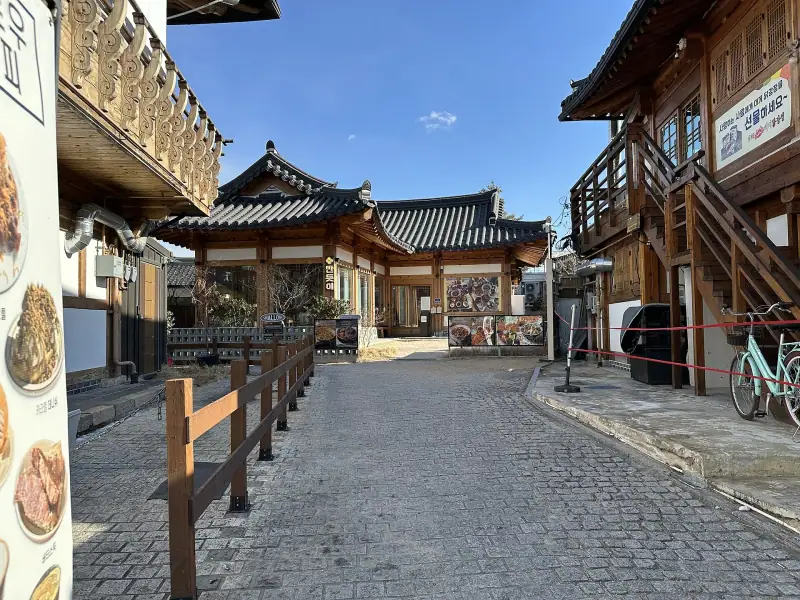
Where to stay in Gyeongju without a car: Hwangnidan-gil or Bomun?
Hwangnidan-gil or Bomun for a car-free stay in Gyeongju? Comparison of the two areas: access to sights, buses, hanok or lakeside hotel, booking tips.
Ready-made
South Korea itineraries
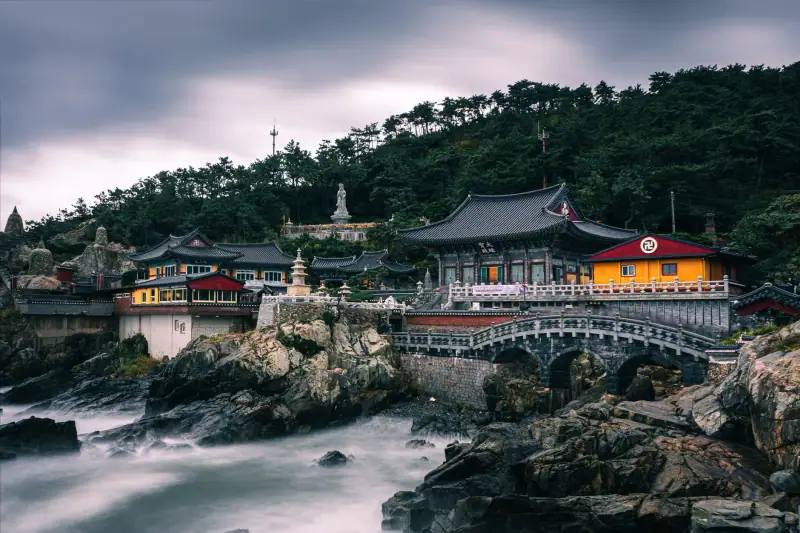
4 days
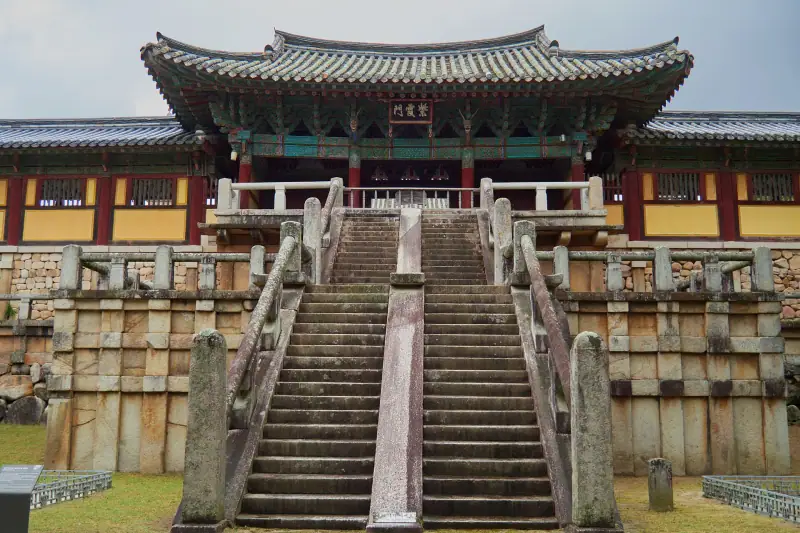
10 days
South Korea in 10 days: an itinerary through Seoul, Gyeongju, Busan and Jeju
SeoulGyeongjuBusanJeju
3 days
Seoul in 3 days: a day-by-day itinerary to see it all
Seoul in 3 days: palaces, hanok districts, markets, Namsan, Hongdae and the DMZ. A day-by-day itinerary with transport, tips and neighborhood picks.