Where to stay
Where to stay in Gyeongju without a car: Hwangnidan-gil or Bomun?
We may earn a commission when you book through links on this page, at no extra cost to you. We don't visit or try the places we cover: we summarize published sources. How we work
In short
- Without a car, stay in Hwangnidan-gil, next to the burial mounds: the main central sights, restaurants and cafés are reachable on foot or by bike.
- Choose Bomun only for a lakeside hotel with a pool or spa, and accept a bus or taxi for almost every outing.
- Neither area is within walking distance of Bulguksa; a bus or taxi is needed from both.
- Two nights let you see the center, illuminated Wolji Pond and Bulguksa without rushing.
In short: without a car, stay in Hwangnidan-gil, near the burial mounds: the major central sights, restaurants and cafés are reachable on foot or by bike. Choose Bomun only if you want a lakeside hotel with a pool or spa, and accept taking a bus or taxi for every outing.
Gyeongju is a small city, but its two lodging areas have nothing in common. On one side, a flat historic center where everything is done on foot. On the other, a large resort complex around a lake, a few kilometers to the east, designed for travelers with cars and for groups.
This guide compares the two areas for people traveling by train and bus. It complements our article on Gyeongju’s highlights, which details the sights to see.
Hwangnidan-gil or Bomun: the criterion that matters without a car
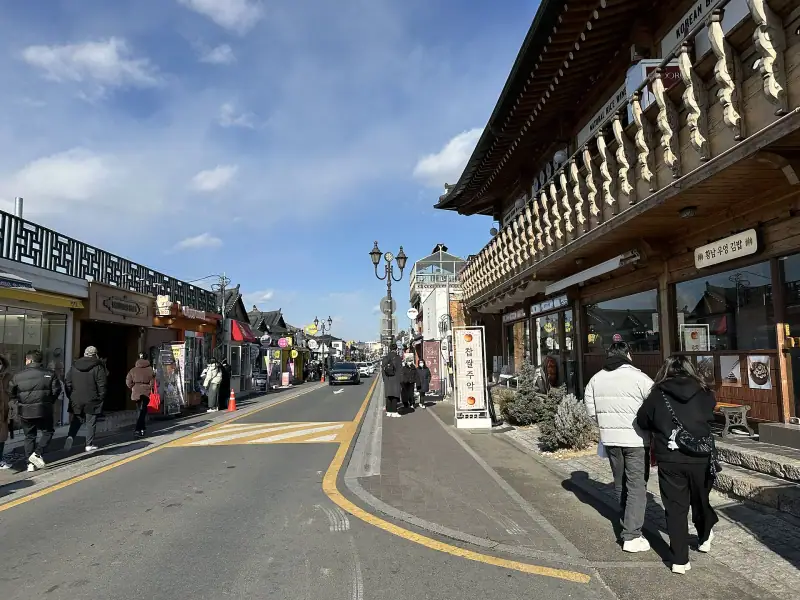
Without a car, the deciding criterion is the time lost in transport each day. Gyeongju’s sights (burial mounds, Cheomseongdae Observatory, Wolji Pond, the museum) are grouped in the center. Lodging nearby saves you several round trips, and above all the evening visit, when the monuments are lit up.
Another point to keep in mind: access from the station. The Singyeongju KTX station is away from the center, as our highlights guide points out. In every case you will take a city bus or a taxi on arrival. For trips between cities, see our guide to transport in South Korea.
Hotels in Gyeongju
Compare lodging in the historic center and by the lake on your dates.
Sleeping in Hwangnidan-gil without a car: the simplest choice
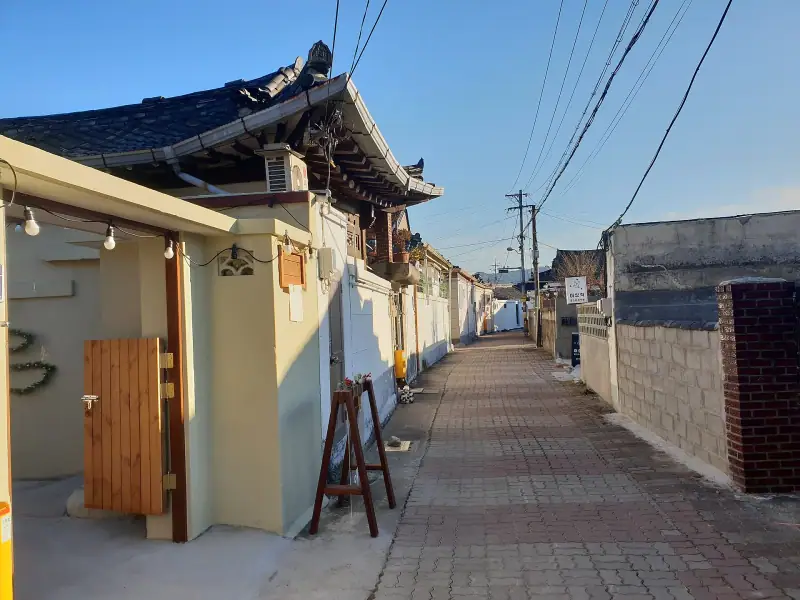
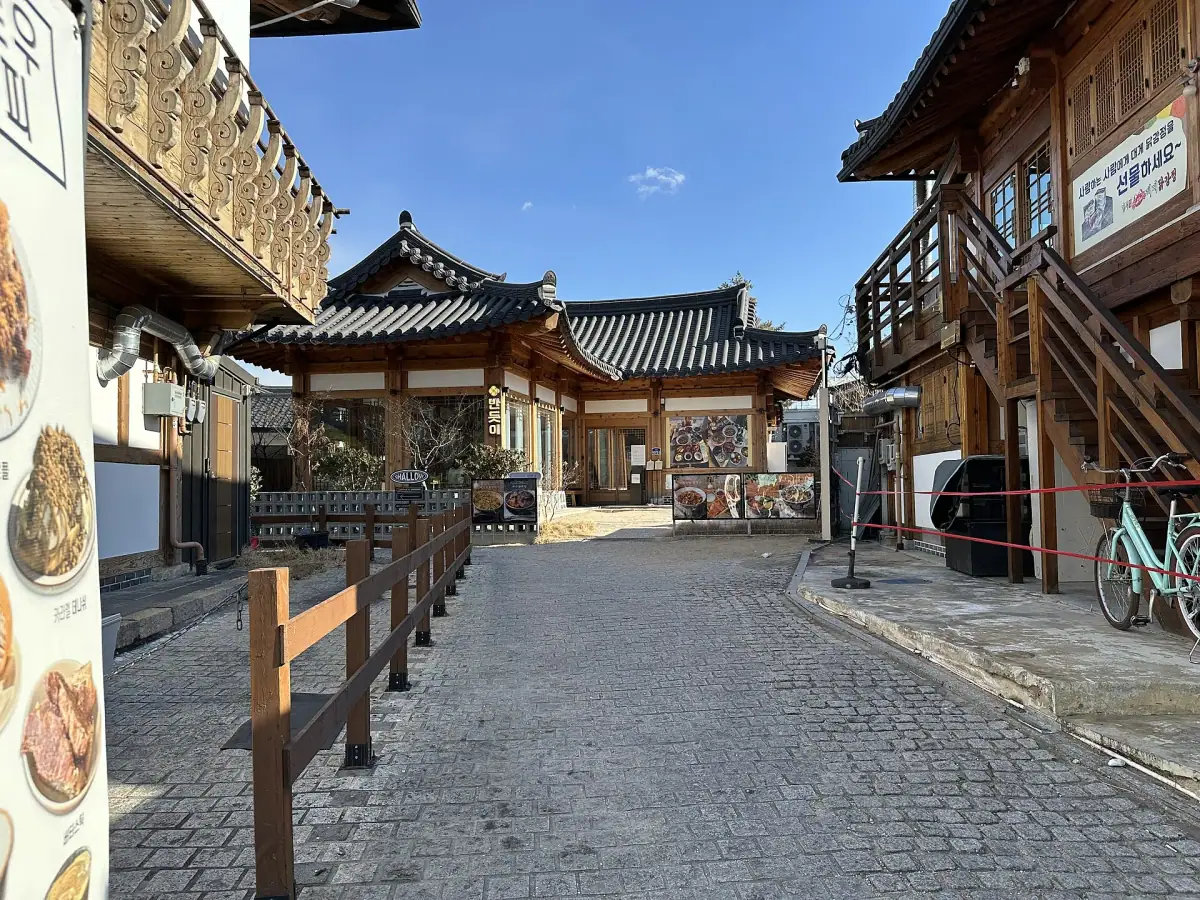
Hwangnidan-gil street and the neighboring alleys form the trendy district of the city: low traditional-style houses, cafés, shops and restaurants. Daereungwon burial mound park is right next door, and Cheomseongdae is only a few minutes’ walk away.
What you gain:
- the major central sights on foot or by bike, with the chance to see them early in the morning before the crowds;
- meals and cafés without transport, including late at night;
- a varied offer of small hotels, guesthouses and hanok-style houses.
What to know: the area is very busy on weekends and in high season, which raises prices and street noise. Hanok rooms have charm but a particular kind of comfort (mattress on the floor, thin walls). To understand what to expect, read our guide to sleeping in a hanok.
Who is it for? Anyone traveling without a car, couples, solo travelers and those staying only one or two nights.
Sleeping in Bomun: the lake, but with the bus
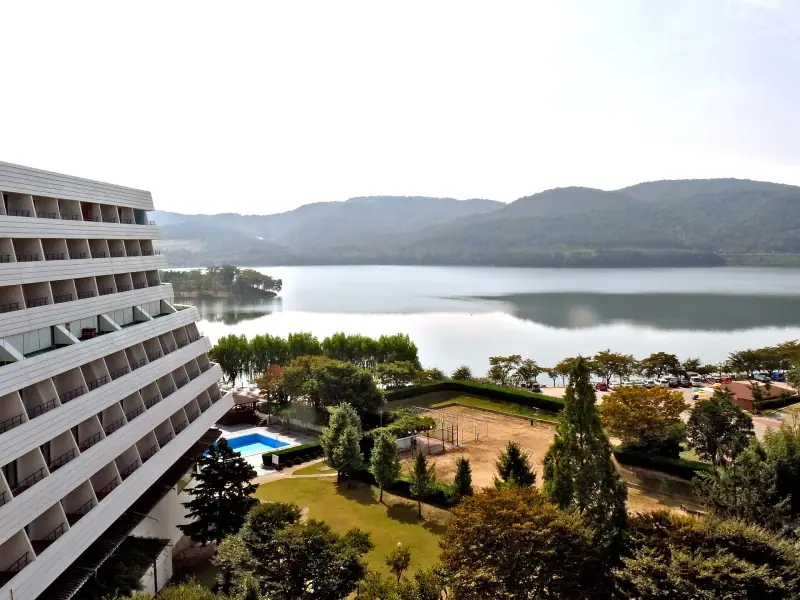
The Bomun resort complex is organized around an artificial lake, east of the center, in the direction of Bulguksa. The city tourist office presents it as one of Gyeongju’s major tourist zones. It consists mostly of large hotels, condominium-style residences and guesthouses, often more spacious than in the center.
What you gain:
- larger rooms, leisure facilities and a quiet setting by the water;
- slightly shorter access to Bulguksa than from the center;
- walks around the lake, pleasant in spring and fall.
What to know: without a car, every outing to the burial mounds or Wolji Pond goes through a city bus or a taxi. Bus lines exist, but their frequency varies: check the schedules on the spot, especially for the last bus in the evening. Restaurants are often concentrated in the hotels or on a few streets of the complex, with less choice than in the center.
Who is it for? Families who want space or a pool, travelers on a relaxing stay, and those planning mostly Bulguksa and some rest.
What about near the station or the bus terminal?
Two other anchor points exist. Near the bus terminal and the old station, you are within reasonable walking distance of the center, with simple business hotels and lower prices. It is a fallback when the center is full.
Near Singyeongju KTX station, the offer is functional but isolated. Choose it only for a late arrival or a dawn departure. For similar logic at Incheon, see our article on sleeping near Incheon Airport.
Tours and excursions in Gyeongju
A guided tour saves you from sorting out the buses to Bulguksa and the distant sights.
Quick comparison: center or lake
| Criterion | Hwangnidan-gil | Bomun |
|---|---|---|
| Central sights on foot | Yes | No, bus or taxi |
| Restaurants and cafés | Plenty | Mostly in hotels |
| Bulguksa | Bus or taxi | Bus or taxi, shorter trip |
| Room size | Rather compact | Often more spacious |
| Atmosphere | Lively, touristy | Quiet, vacation-style |
| Ideal without a car | Yes | With constraints |
Getting around from each area
From the center, a bicycle is your best ally: the city is flat and rental is widespread, as we explain in our highlights guide. Keep the bus or taxi for Bulguksa and Seokguram.
From Bomun, count on a city bus or a taxi for everything else. A rechargeable transit card simplifies trips: see our guide to transport in South Korea. Also keep a mobile connection for map apps: check your carrier’s international plan or use a travel eSIM; our article on SIM cards and eSIMs helps you choose.
Booking tips
- Read recent reviews on noise and bedding, especially for a hanok.
- Check the walking distance to the burial mounds (Hwangnidan-gil) or the nearest bus stop (Bomun).
- Book early for weekends and for blossom or red-foliage periods, when the city fills up.
- Check the cancellation terms if your dates may change.
- Consider travel insurance before you leave.
If Gyeongju fits into a route with Busan, our Busan and Gyeongju 4-day itinerary shows how to split the nights, and our guide to where to stay in Busan completes the coastal stop.
Our recommendation
- Trip without a car, 1 to 2 nights: Hwangnidan-gil, without hesitation.
- Family with luggage and a wish for a pool: Bomun, accepting the bus or taxi.
- Tight budget: the simple hotels near the bus terminal.
- Late arrival or dawn departure by KTX: a night near Singyeongju.
Sources
Frequently asked questions
Where should you stay in Gyeongju without a car?
The Hwangnidan-gil area, around the Daereungwon burial mounds, is the simplest: the main sights, restaurants and cafés are reachable on foot or by bike. Bomun is pleasant but needs a bus or taxi for almost every outing.
Is Bomun too far from the center without a car?
It is not impossible: city buses link the lake area to the center and the bus terminal. But each round trip involves a ride and a wait, which weighs on a short stay. Check the lines and schedules on the spot or with the tourist office.
Should you stay near Singyeongju Station?
Rarely. The Singyeongju KTX station is away from the historic center and the area lacks the charm of the burial mounds. It only makes sense for a stopover night with a very early train the next morning.
Is a hanok a good idea in Hwangnidan-gil?
Yes if you like the atmosphere, but know that you often sleep on a mattress laid on a heated floor, and that sound insulation is weaker than in a hotel. Read recent reviews before choosing. Our hanok guide details what to expect.
How many nights do you need in Gyeongju?
Two nights let you see the center, illuminated Wolji Pond and Bulguksa without rushing. A single night is enough for an excursion from Busan, but you will miss the evening visit.
Where should you stay to get to Bulguksa without a car?
Neither area is within walking distance of Bulguksa. From Bomun the trip is a little shorter; from the center a bus or taxi is still needed. Choose the area based on the rest of your stay.
More South Korea guides
Keep reading
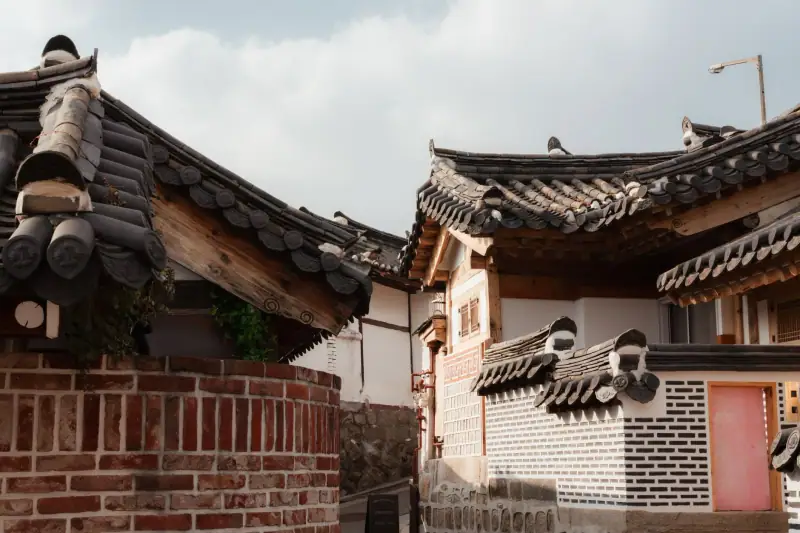
Sleeping in a hanok in South Korea: a guide to Jeonju, Seoul and Gyeongju
Spending a night in a hanok in South Korea: where to stay in Jeonju, Seoul and Gyeongju, comfort, ondol, budget, etiquette and booking tips.
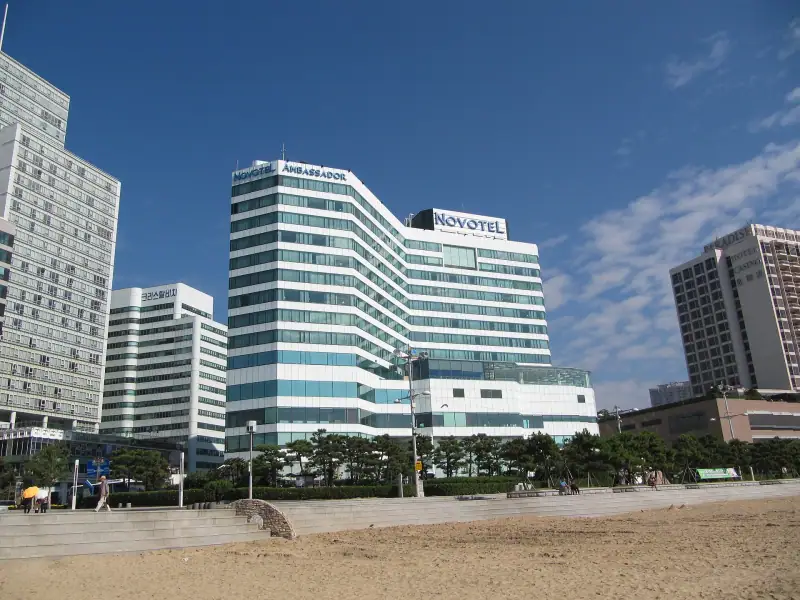
Where to stay in Busan: the best neighborhoods for your trip
Where to stay in Busan? Haeundae, Gwangalli, Seomyeon, Nampo, Busan Station: neighborhoods compared by traveler type, with subway access and booking tips.
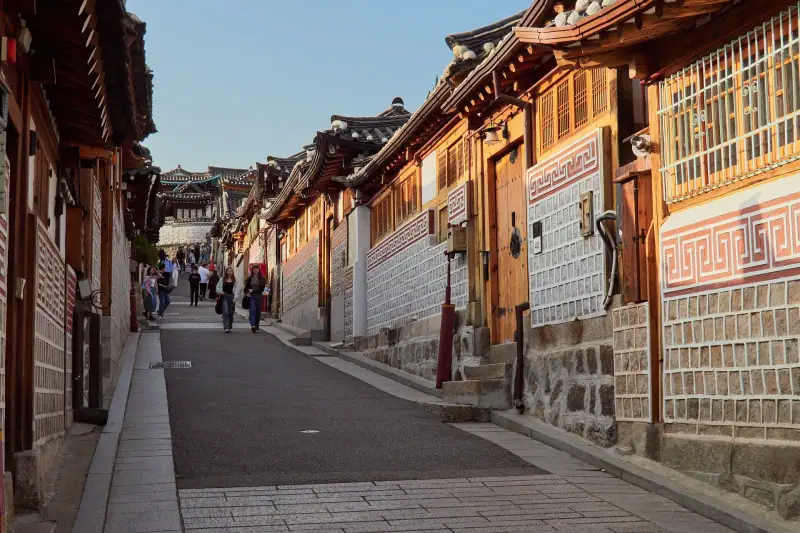
Where to stay in Seoul: the best neighborhoods for your trip
Where to stay in Seoul? Myeongdong, Jongno, Hongdae, Gangnam, Itaewon, Seongsu: neighborhoods compared by traveler profile, with subway access and tips.
Ready-made
South Korea itineraries
7 days
4 days
10 days
South Korea in 10 days: an itinerary through Seoul, Gyeongju, Busan and Jeju
SeoulGyeongjuBusanJeju