What to see
Visiting Busan: the 8 highlights of the big port city
We may earn a commission when you book through links on this page, at no extra cost to you. We don't visit or try the places we cover: we summarize published sources. How we work
In short
- Two full days cover the classics: the seaside temple, Gamcheon village, Jagalchi Market and a beach; with three days, add the coastal parks and Beomeosa Temple.
- The KTX high-speed train links Seoul and Busan in about 2 h 30 to 3 h, city center to city center.
- Haeundae and Gwangalli beaches are supervised in summer, generally July to August; off-season, swimming is not organized.
- A car is not needed: the subway, buses and taxis serve most sights, and parking in the center is complicated.
Visiting Busan means discovering another South Korea. The country’s second city, set on the southeast coast facing the Korea Strait, mixes a commercial port, urban beaches, hills covered in colorful houses and temples set at the water’s edge. The mood is more relaxed than in Seoul, and seafood takes center stage.
This guide presents the eight sites not to miss, with tips for getting organized. If you arrive from the capital, our 3-day Seoul itinerary is a good starting point before taking the train south.
How to organize your visit to Busan
Busan is a sprawling city, stretching along the coast between hills and bays. It is better to group visits by area rather than crossing the city several times.
- Coming from Seoul: the KTX high-speed train links the two cities in about 2 h 30 to 3 h depending on the train. It is the simplest solution, with arrival in the city center.
- Getting around: the subway serves most sights, complemented by buses and taxis, which are plentiful and affordable. A rechargeable transit card, T-money type, saves looking for change on every ride.
- Ideal length: two full days for the big classics, three days if you like to take your time or want to add a hike.
- Best period: spring and fall offer a pleasant climate. Summer is hot, humid and very crowded on the beaches. To refine your choice, see our guide on when to go to South Korea.
Haedong Yonggungsa: the temple by the sea
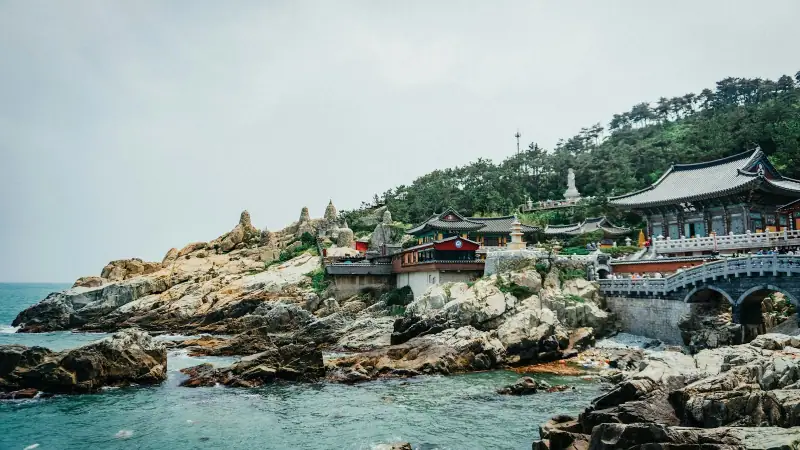
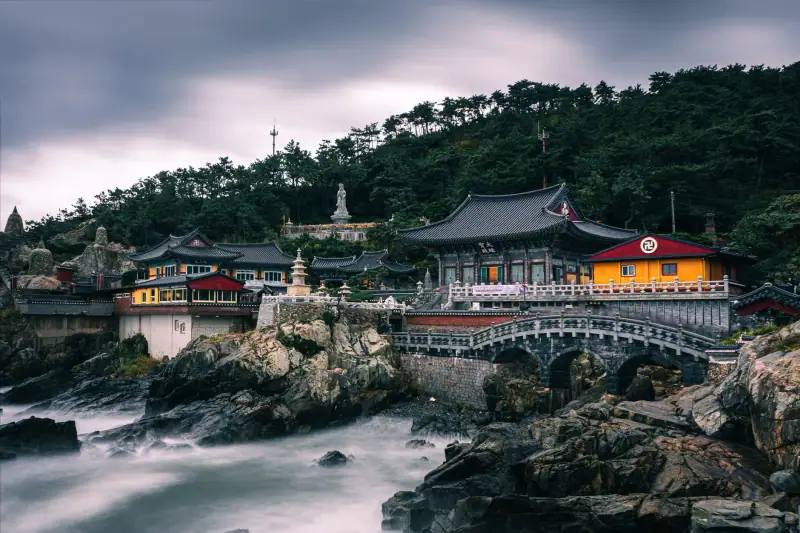
Haedong Yonggungsa Temple is Busan’s most famous image. Unlike most Korean Buddhist temples, built in the mountains, this one clings to the coastal rocks, east of the city. Its pavilions, staircases and statues are seen with the sea as a backdrop.
The site dates back to the 14th century, although several buildings have been rebuilt since. You reach it by a path lined with shops, then by a staircase going down to the main pavilions. Allow about an hour and a half for the visit, more if you like to take photos.
Tips: arrive as early as possible. Late in the morning, groups flood in and the narrow passages fill up. Wear comfortable shoes: there are many steps. Respect the silence rules near prayer areas.
Hotels in Busan
Compare lodging in Haeundae, Seomyeon or Nampo-dong according to your dates and budget.
Gamcheon Culture Village: colorful houses on the hill
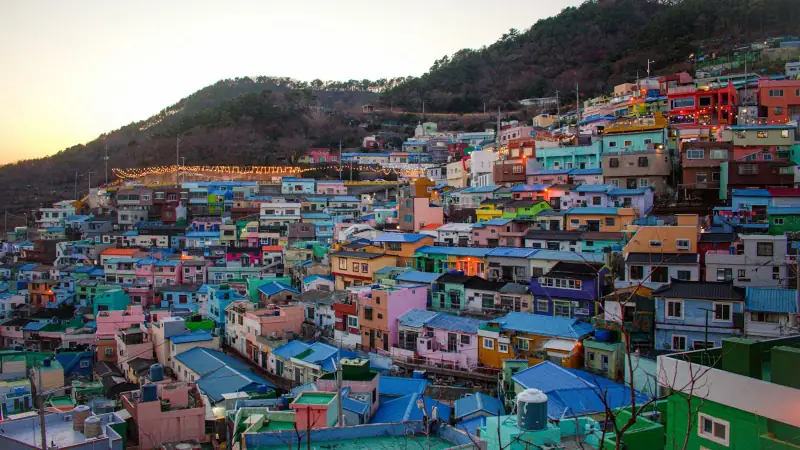
Sometimes nicknamed the “Machu Picchu of Busan,” Gamcheon village rises up a hillside, with its brightly colored houses packed side by side. The neighborhood developed in the 20th century, notably with the settling of refugees during the Korean War, before being turned into an art space.
Today you wander from alley to alley, following the murals, installations and small workshops. Several viewpoints let you admire the whole village. A map is generally available at the entrance to follow a route.
Tips: the village is steeply sloped, so good shoes are needed. It is a lived-in neighborhood: speak quietly, do not enter private courtyards and respect residents’ peace. In the morning or late afternoon, the light is softer and crowds thinner.
Jagalchi Market: the heart of the sea in Busan
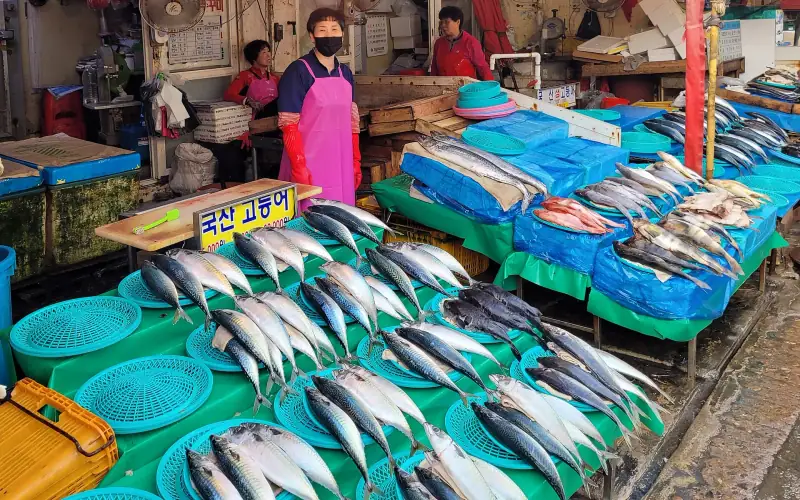
Jagalchi Market is considered the country’s largest fish market. It sits by the port, in the Nampo-dong district. Fish, crustaceans, shellfish, seaweed and dried fish are sold by merchants, many of them women, the famous ajumma, who have run the stalls for generations.
The interest of the visit lies as much in the atmosphere as in the tasting. In the main building, restaurants serve raw or grilled fish prepared from what you choose at the stalls. If you do not speak Korean, pointing at what tempts you remains the best technique.
Tips: floors are wet, avoid fragile sandals. Ask the price before ordering, and favor stalls with many local customers. To better understand what you eat, read our guide to Korean cuisine and its typical dishes.
Nampo-dong and BIFF Square: the port’s historic center
A stone’s throw from the market, Nampo-dong is the neighborhood of shopping and strolls. Its pedestrian streets are lined with shops, cafés and street-food stands. BIFF Square, named after the Busan International Film Festival, held every year in the fall, is known for its snack stalls.
This is where you can try hotteok, a sweet pancake filled with seeds and sugar, along with other street specialties. In the evening, the neighborhood lights up and the mood turns festive.
Tips: Nampo-dong is covered on foot. Pair it with Jagalchi for a full half day, and keep your appetite: opportunities to snack abound.
Guided tours in Busan
Food tours, city tours and excursions: compare the activities offered in Busan.
Haeundae Beach: the big urban beach
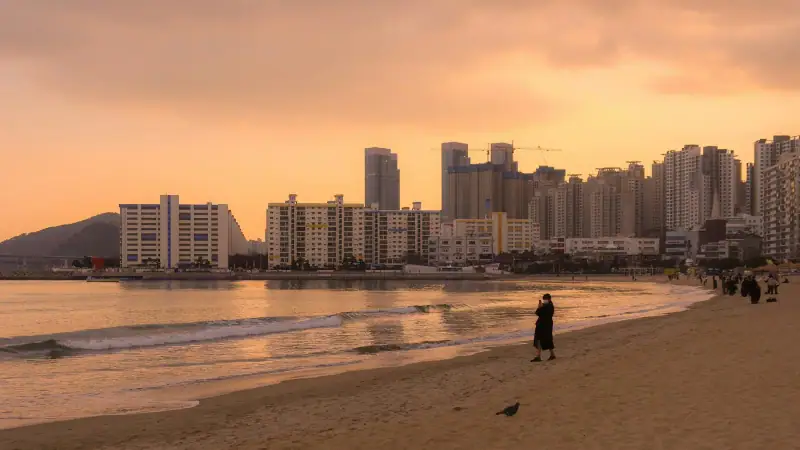
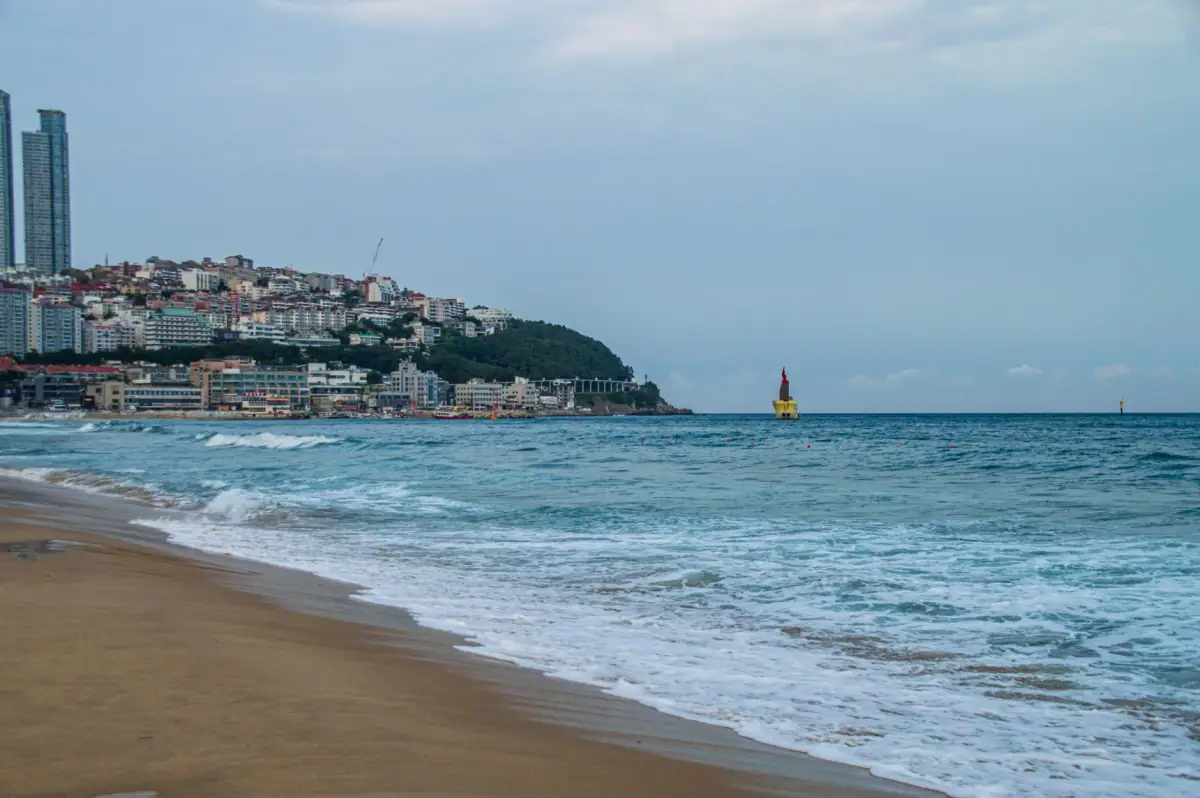
Haeundae Beach is the most famous in South Korea. A long stretch of fine sand lined with skyscrapers, hotels and restaurants, it draws crowds in summer, but stays pleasant all year for a walk at sunrise or sunset.
From the beach, you can walk to the Dongbaekseom promenade, a pine-shaded coastal path that circles a small rocky point. The path offers fine views of the bay and the city’s towers.
Further east, Blue Line Park runs along a former coastal railway, with small trains and suspended capsules that let you discover the shoreline effortlessly. Ask there about tickets, which often need to be booked ahead in high season.
Tips: in July and August, the beach is supervised, but very busy. Come early if you want calm. Off-season, swimming is not organized.
Gwangalli Beach and its lit-up bridge
Calmer and more intimate than Haeundae, Gwangalli Beach is famous for its panorama: opposite, the long Gwangan Bridge stands out on the horizon and lights up at nightfall. The beach is lined with cafés and outdoor seating, much loved by locals for an evening by the water.
It is an excellent place to end a day of sightseeing, with a drink or dinner facing the bay. The promenade runs along the beach and is pleasant on foot.
Tips: book for the evening if you want a table with a view, especially on weekends. The subway serves the area, but expect a bit of walking from the station.
Taejongdae Park: cliffs and lighthouse
At the southern tip of Yeongdo Island, Taejongdae Park offers one of the city’s most spectacular landscapes. Cliffs plunge straight into the sea, a forest covers the top of the park and a lighthouse stands at the edge of the void. A looping walking path lets you tour the viewpoints.
A small tourist train runs through the site for those who do not want to walk. The park is ideal in good weather, to enjoy the clear horizon over the strait.
Tips: bring water and a windbreaker, as wind often blows on the coast. The park can be visited in an easy half day, longer if you take the path on foot.
Beomeosa Temple: mountain calm
For a change of atmosphere, head to Beomeosa Temple, on the slopes of Mount Geumjeongsan, north of the city. According to tradition, it was founded in the 7th century. The site is one of the region’s great Buddhist temples, surrounded by forest and a peaceful atmosphere, far from the noise of the center.
Walking fans can extend the visit with a hike on the mountain, accessible from the temple. The path offers views over the city and the sea in clear weather.
Tips: this place is still in religious use. Dress discreetly, avoid bare shoulders and knees, and speak quietly. The subway followed by a short bus or taxi ride gets you there.
Sleeping near Haeundae Beach
Seaside hotels, apartments and rooms with a view: compare the offers in the Haeundae area.
Where to stay in Busan
The choice of neighborhood depends on your travel style:
- Haeundae: for the beach, seaside hotels and bay views. Practical in summer, a bit far from the historic center.
- Seomyeon: a big subway crossroads, very convenient and full of restaurants. A good base if you want to explore the whole city.
- Nampo-dong: in the heart of the old port, a stone’s throw from Jagalchi, ideal for market and street-food fans.
- Gwangalli: calmer, with cafés facing the lit-up bridge.
For advice on selecting a neighborhood in the capital, you can also see our guide to sleeping in Seoul: the selection criteria (subway, noise, room size) are the same.
What to eat in Busan
As a port, the city is known for its seafood: sashimi, grilled fish, fish cakes (eomuk) sold on skewers in the street. Two local specialties are worth the detour:
- Dwaeji gukbap: a pork soup with a milky broth, served with rice, a comforting dish strongly associated with Busan.
- Milmyeon: wheat noodles served cold in an icy broth, popular in summer.
Neighborhood restaurants and market stalls are often the best addresses. Trust local crowds rather than online reviews.
A sample two-day itinerary
To organize your visits without rushing, here is a simple proposal:
- Day 1: in the morning, Haedong Yonggungsa Temple; in the afternoon, Haeundae Beach and the Dongbaekseom promenade; in the evening, Gwangalli Beach and the lit-up bridge.
- Day 2: in the morning, Gamcheon village; early afternoon, Jagalchi Market and Nampo-dong; late in the day, a walk or Taejongdae Park if the weather allows.
Beomeosa Temple is easily added to a third day, with a mountain walk.
Frequently asked questions
How long do you need to visit Busan?
Two full days are enough to see the big classics: the seaside temple, Gamcheon village, Jagalchi Market and a beach. With three days, you can add the coastal parks, Beomeosa Temple and take time to stroll.
How do you get from Seoul to Busan?
The KTX high-speed train is the simplest way: the trip takes about 2 h 30 to 3 h depending on the train, city center to city center. Express buses and domestic flights also exist, but the train remains the most comfortable and reliable.
What is the best neighborhood to stay in Busan?
Haeundae is ideal for the beach and seaside hotels. Seomyeon is very well placed for the subway and restaurants. Nampo-dong is better for Jagalchi Market and the port's historic center.
Can you swim in Busan?
Yes, the beaches of Haeundae and Gwangalli are supervised in summer, generally from July to August. Outside this period, swimming is not organized and the water is cool. The beaches remain very pleasant for walking all year.
Do you need to rent a car in Busan?
It is not necessary. The subway, buses and taxis serve most sights. Traffic is dense and parking complicated in the center: public transport is more practical for a stay of a few days.
More South Korea guides
Keep reading
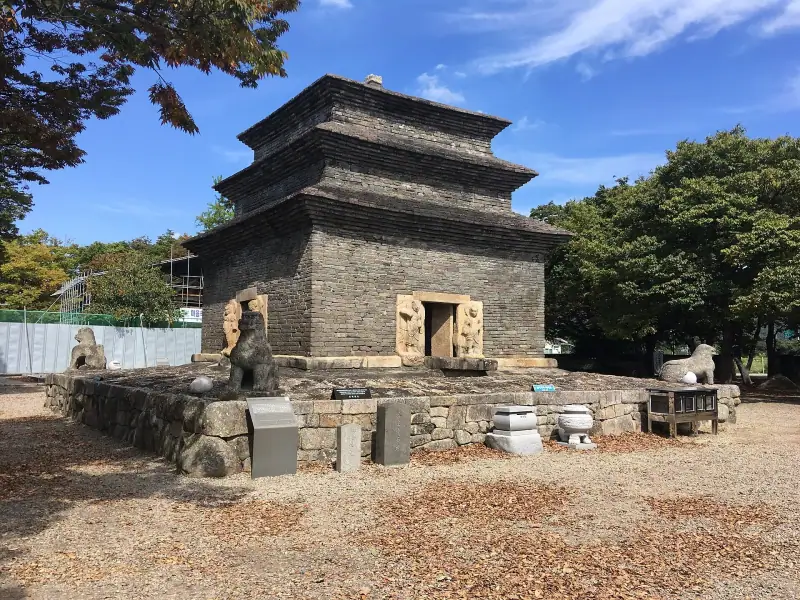
Visiting Gyeongju: the highlights of the Silla capital
Visiting Gyeongju, South Korea: Bulguksa Temple, Seokguram Grotto, Daereungwon mounds, Wolji Pond, Yangdong village. Tips, transport and planning.
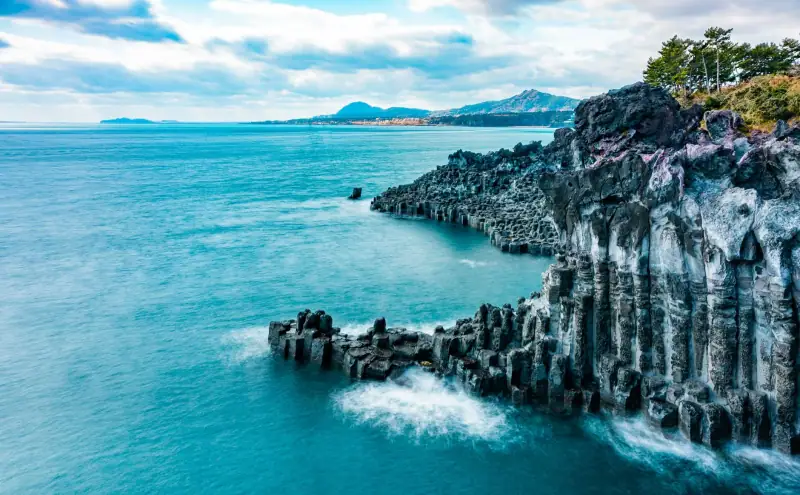
Visiting Jeju Island: the highlights of the volcanic island
What to see on Jeju: Hallasan volcano, Seongsan Ilchulbong cone, lava tube, Udo island, basalt cliffs and beaches. Tips for planning your stay.
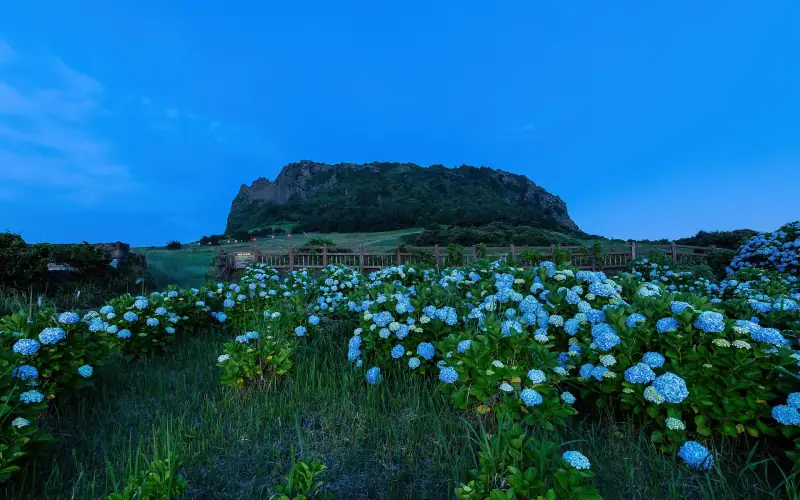
Complete guide to visiting South Korea: regions, highlights and tips
Plan your trip to South Korea: regions, cities, highlights, when to go, transport, lodging and budget, with all our detailed guides.
Ready-made
South Korea itineraries
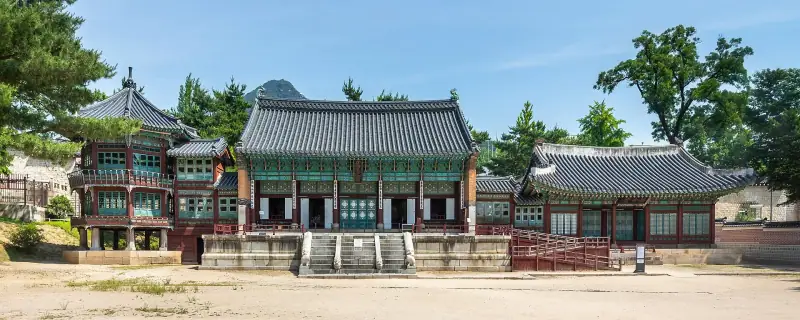
7 days
4 days
10 days
South Korea in 10 days: an itinerary through Seoul, Gyeongju, Busan and Jeju
SeoulGyeongjuBusanJeju