Plan your trip
Getting around South Korea: KTX, buses, subway and T-money
We may earn a commission when you book through links on this page, at no extra cost to you. We don't visit or try the places we cover: we summarize published sources. How we work
In short
- A T-money rechargeable card covers the subway, buses and many taxis; tap it when getting off as well as on, to get the right fare and transfer discount.
- The KTX links Seoul and Busan in a little under three hours; book ahead for weekends and public holidays.
- The express intercity bus is the usual way to Sokcho and Seoraksan, and the plane is the simplest way to Jeju (about one hour from Seoul).
- A car is useful mainly on Jeju; the local apps Naver Map or Kakao Map are more precise than Google Maps.
Getting around South Korea is one of the great pleasures of the trip: the country is compact, very well equipped and its transport is clean, punctual and easy to use, even without a word of Korean. Between the Seoul subway, high-speed trains and express buses that crisscross the territory, you reach almost every site effortlessly.
This guide helps you choose the right means of transport for your itinerary: how to arrive from the airport, how to pay for your trips in town, how to link the main stops and when a car is useful. To settle your dates, also see our guide to choosing when to go to South Korea.
Arriving at Incheon Airport and reaching Seoul
Most travelers land at Incheon International Airport, west of the capital, on the coast. It is linked to central Seoul by several options, all easy to find thanks to bilingual signage.
- The AREX express train reaches Seoul Station with no intermediate stop, for a trip clearly shorter than the all-stop train.
- The AREX all-stop train stops at many stations and lets you reach some neighborhoods directly, like Hongdae, with a connection to the subway. Allow about an hour to Seoul Station.
- Airport buses serve many hotels and neighborhoods, which avoids transfers with luggage. The trip depends a lot on traffic.
- Taxis are practical for a late arrival or a group, but the trip can be long at rush hour.
A second airport, Gimpo, closer to the center, mostly handles domestic flights, notably to Jeju Island. If you plan to chain a long-haul flight and a domestic link, check the airport of each ticket carefully.
Flights to South Korea
Flights to Seoul are plentiful, with large price gaps by season. Compare offers and airlines before booking.
Seoul: subway, buses and the T-money card
The Seoul subway is one of the densest and most pleasant to use in the world. Lines are identified by a number and a color, stations by a multi-digit number, and announcements are made in Korean and English. The capital’s major sights, from the palaces of Jongno to the student districts of Hongdae, are almost all reached in a few stations.
The T-money card, essential
As soon as you arrive, get a rechargeable T-money-type card. Sold at convenience stores and some machines, it is topped up with cash and works on the subway, on buses, in many taxis and in some convenience shops. The fare is calculated by distance traveled, and transfers between the subway and the bus are advantageous when you tap properly each time you board and each time you get off.
Be sure to tap the card on the reader when getting off the bus and when exiting the subway gates: this is what lets the right fare be calculated and the transfer discount applied. At the end of the stay, you can generally recover the remaining balance at certain points of sale; ask at the time of purchase.
City buses and taxis
Seoul’s buses are distinguished by colors according to line type. They are very efficient, but reading them is less intuitive than the subway for a passing traveler. For a specific trip, a local map app gives the bus number, the stop and the waiting time.
Taxis remain affordable in Seoul for short rides. Keep the name of your destination written in Korean script, or show the address on your phone: not all drivers speak English. To organize your days in the capital, our 3-day Seoul itinerary groups the stops by area to limit trips.
The KTX: linking Seoul to Busan and the big cities
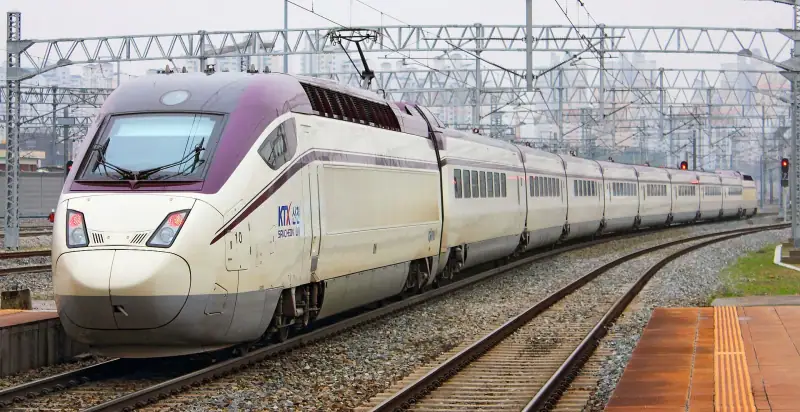
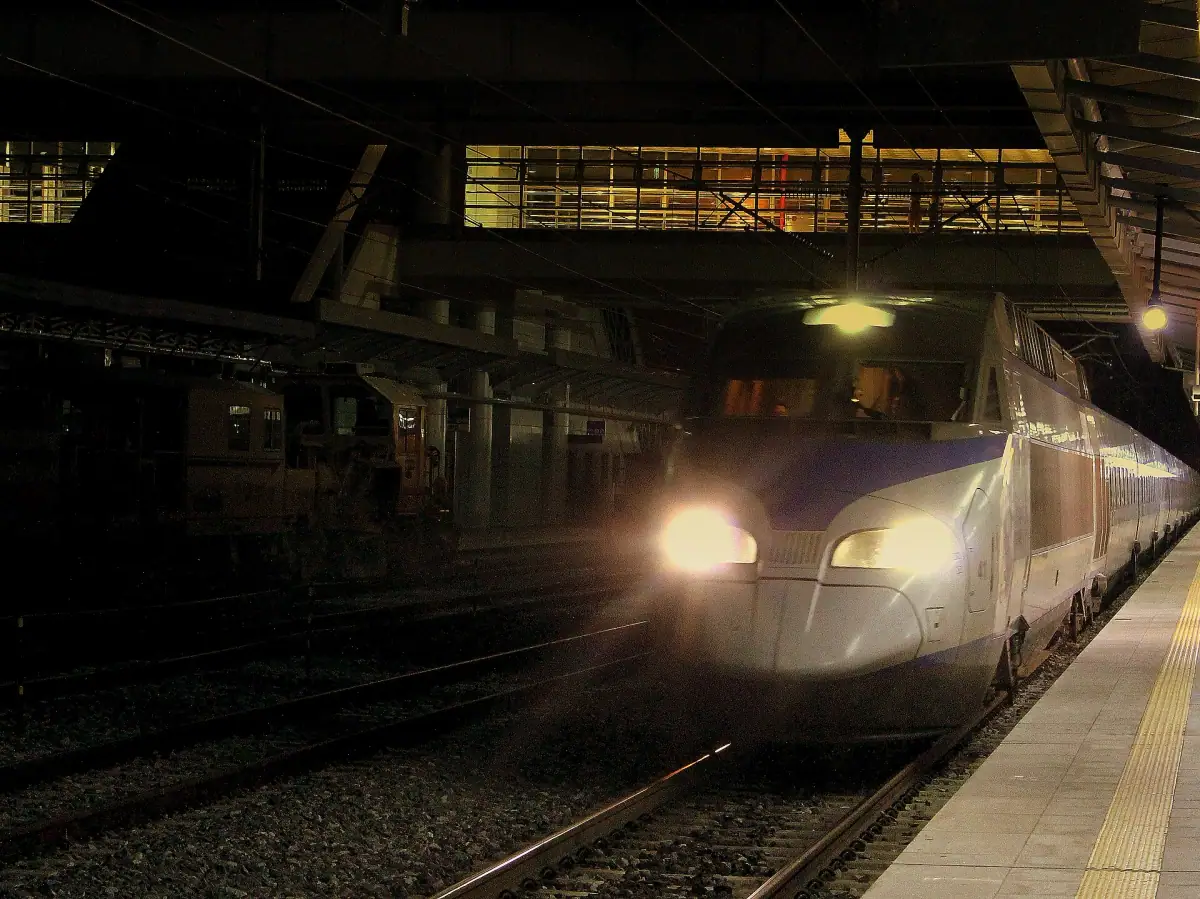
The South Korean rail network is dominated by the KTX, the high-speed train operated by Korail. It links Seoul to many cities in the country, including Busan, on the southeast coast. The trip between the two cities takes a little under three hours, making it the most comfortable solution for a first crossing of the country.
A second high-speed line, the SRT, links the south of Seoul to several cities, with a more limited number of stops. Depending on your hotel and destination, one station or the other may be more practical: compare schedules and departure stations.
Booking tickets
- In advance: in high season, on weekends and public holidays, trains fill up fast. Book as soon as your dates are set, via the operator’s site or app, or at station ticket counters.
- Tourist passes: a rail pass for foreign travelers exists, valid for a few days. It only pays off if you chain several long trips: work out your itinerary before buying it, and check current conditions on the official site.
- Classes: trains generally offer a standard class and a more spacious upper class. Standard class is very comfortable for most travelers.
In Busan, the main station is in the city, and the subway lets you reach the major sights. Our guide to visiting Busan details the stops not to miss once there.
Hotels near stations and the subway
Sleeping near a subway station or a train station saves precious time, especially if you chain several cities. Compare lodging on your dates.
Gyeongju: train, bus and taxi for the historic sites

Gyeongju, the former capital of the Silla kingdom, is reached by train or bus from Seoul or Busan. Depending on the line, the high-speed train station may be away from the city center: so allow for a bus or taxi connection to reach the historic heart.
Once there, the main sights are spread around the center, the lake and the hills. Walking and cycling suit nearby sites well, while local buses and taxis ease trips to the temples and grottoes on the outskirts. Our guide to visiting Gyeongju helps you spread the stops across the day. For an excursion by KTX-Eum to Andong, see our guide to Hahoe village from Seoul.
Sokcho and Seoraksan: the express bus from Seoul
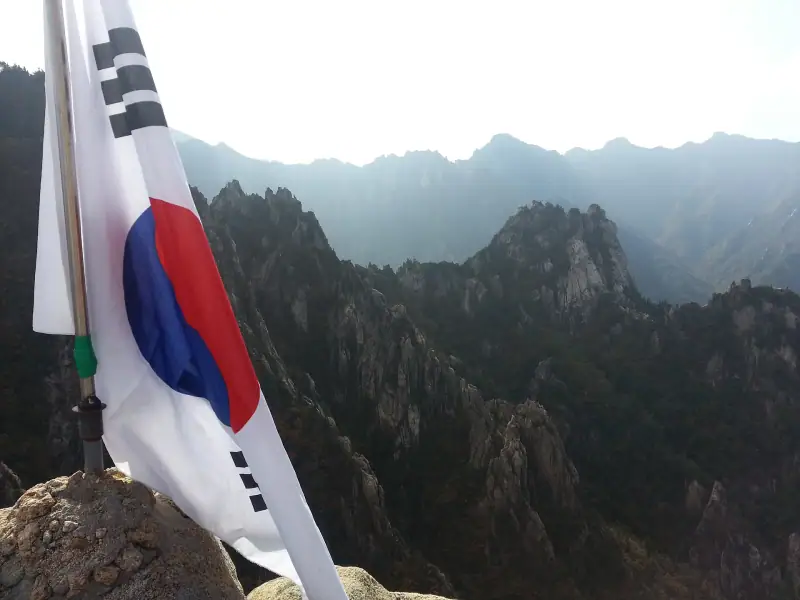
Not every destination is served by high-speed rail. To reach the east coast and Seoraksan National Park, the intercity express bus is the most common option. Buses leave from dedicated terminals in Seoul and reach Sokcho in several hours, depending on traffic, especially on weekends and during foliage season.
Express buses are comfortable, with wide reclining seats, and run at regular intervals. In terminals, you can buy your ticket at machines or a counter, and online booking is possible for some lines. Once in Sokcho, local buses serve the park entrance. To prepare this stop, see our guide to visiting Seoraksan and Sokcho.
Jeju: plane, bus and rental car
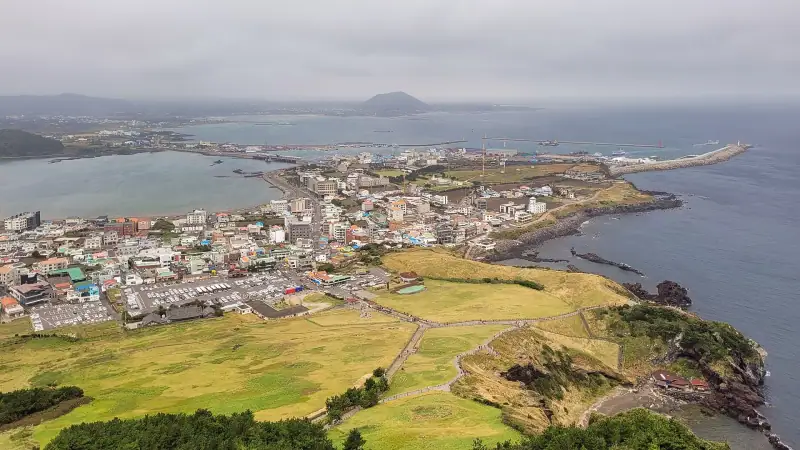
Jeju Island, south of the peninsula, is reached by plane from Seoul and other cities in the country: the link from Seoul is among the busiest in the world, with very regular departures and a duration of about an hour. Book early in high season, as prices rise and seats become scarce during vacations.
Once on the island, public transport exists, but it is less practical for linking sights spread around the perimeter and inland. Many travelers therefore rent a car. A few points to check:
- License: check the driving-license requirements for your country with the rental company and official sources before leaving.
- Driving: you drive on the right. Roads are well maintained, but signs and speed limits, heavily enforced by cameras, demand attention.
- Navigation: use a local map app, more reliable than international apps for driving.
For the rental, we do not provide a direct link here: compare rental companies’ offers before booking and read the insurance conditions carefully. Our guide to visiting Jeju Island details the sights to organize around your vehicle.
Excursions and guided tours
For poorly served sites, an excursion with transport included saves you from handling connections. Compare tours and activities.
Apps and tips for stress-free travel
A few reflexes simplify your trips in South Korea.
- Naver Map or Kakao Map: these local apps give subway and bus schedules, waiting times and walking routes much more precisely than international apps. They offer an English interface.
- A mobile connection: check your carrier’s international plan or use a travel eSIM, which saves you from looking for Wi-Fi to check routes on the go. Set it up before departure or at the airport.
- Rush hours: the subway in big cities is very busy in the morning and at the end of the day on weekdays. Avoid these slots with big luggage.
- Etiquette: on the subway and buses, seats reserved for the elderly, pregnant women and people with reduced mobility are left free. Avoid talking loudly on the phone too.
- Luggage: in stations, automatic lockers let you leave your things for a visit. Some hotels also agree to keep suitcases before check-in.
Finally, keep in mind that schedules and fares change: check them on the operators’ sites when booking.
Which means of transport to choose for your trip?
The right choice depends mostly on your itinerary and the length of your stay.
- A stay centered on Seoul: the subway, the T-money card and walking are more than enough. No car is needed, and driving in the capital is discouraged for visitors.
- A Seoul, Gyeongju and Busan route: combine the high-speed train for the long legs and buses or taxis for local trips. It is the simplest scheme for a first trip.
- A stay on Jeju: fly round trip and consider a rental car to explore the island at your own pace.
- A nature escape to Seoraksan: the express bus from Seoul is the most direct option, with a night there to enjoy the park without rushing.
Finally, choose well-located lodging: in a big city, sleeping near a subway station changes the comfort of the stay. Our guide to choosing where to stay in Seoul compares neighborhoods by travel style.
Key takeaways
Getting around South Korea is simple, fast and comfortable. A T-money card for urban trips, the high-speed train to cross the country, the express bus for destinations not served by rail, the plane for Jeju and, if needed, a car on the island: these few tools are enough to compose a smooth itinerary. Prepare your train and flight bookings ahead in high season, download a local map app, and let yourself be carried along.
Frequently asked questions
Do you need to rent a car to visit South Korea?
It is not necessary for a first stay. The high-speed train, express buses and subway serve the big cities and most major sights. A car becomes useful on Jeju Island, where public transport is less practical for reaching distant sites. Check the driving-license requirements for your country with the rental company and official sources before leaving.
Does the T-money card work everywhere in the country?
The T-money card is accepted on the subway and buses of Seoul and most big cities, as well as in many taxis and some convenience shops. It cannot, however, be used to pay for the high-speed train or intercity express buses, which are booked separately. It is topped up at convenience stores and at station machines.
How long does the train trip between Seoul and Busan take?
The KTX links Seoul and Busan in a little under three hours, depending on the train and the number of stops. It is the most comfortable way to link the two cities, much faster and more restful than the road. Book ahead for weekends and public holidays, when trains fill up fast.
Does Google Maps work in South Korea?
Google Maps shows places and public transit routes, but its directions remain limited, notably for walking and driving. Local apps like Naver Map or Kakao Map are much more precise and offer an English interface. Download one before leaving.
How do you get to Jeju Island from the mainland?
The simplest is the plane: flights from Seoul and other cities in the country are very frequent and take about an hour. Ferry crossings also exist from some southern ports, but they are longer and less practical for a short stay. Book early in high season.
Is public transport accessible without speaking Korean?
Yes, overall. The subway in big cities is signed and announced in English, and ticket machines offer a foreign language. It is useful to keep the name of your destination written in Korean script, notably for taxis and local buses.
More South Korea guides
Keep reading
When to go to South Korea? Seasons, weather and best months
When to go to South Korea? Cherry blossoms, monsoon, typhoons, fall foliage, freezing winter: a season-by-season guide to choosing the right time.
South Korea budget: real costs and 3 traveler profiles
What budget for South Korea? Costs by item (lodging, transport, meals, sights), three priced profiles and tips to spend less.
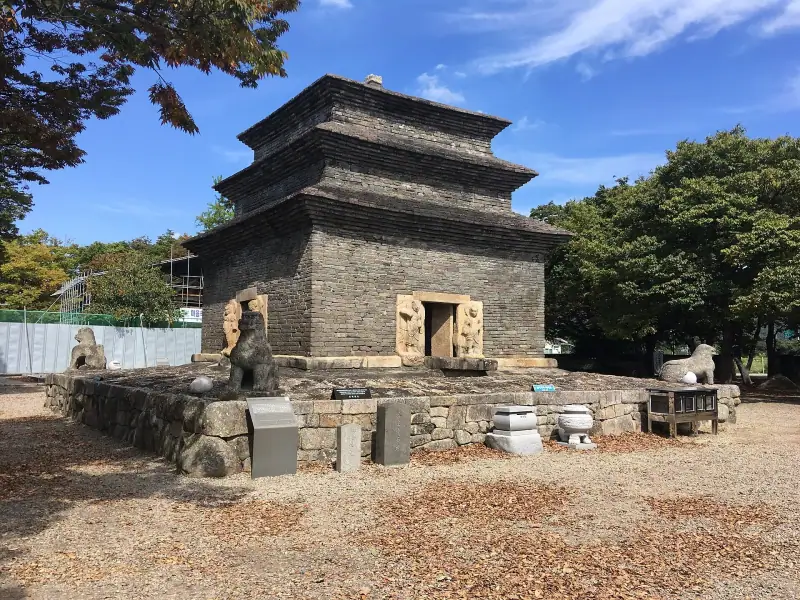
Visiting Gyeongju: the highlights of the Silla capital
Visiting Gyeongju, South Korea: Bulguksa Temple, Seokguram Grotto, Daereungwon mounds, Wolji Pond, Yangdong village. Tips, transport and planning.
Ready-made
South Korea itineraries
7 days
4 days
10 days
South Korea in 10 days: an itinerary through Seoul, Gyeongju, Busan and Jeju
SeoulGyeongjuBusanJeju