Where to stay
Sleeping in a hanok in South Korea: a guide to Jeonju, Seoul and Gyeongju
We may earn a commission when you book through links on this page, at no extra cost to you. We don't visit or try the places we cover: we summarize published sources. How we work
In short
- Jeonju has the largest concentration of hanok open to visitors; Seoul's main areas are Bukchon and Ikseon-dong, and Gyeongju has hanok near its royal burial mounds.
- You generally sleep on a thin mattress (yo) on a heated floor (ondol); walls are thin and soundproofing is weak.
- A hanok is generally pricier than an equivalent hotel; it suits one or two nights of immersion rather than a whole stay.
- Book several weeks ahead, especially for weekends, spring and fall, as houses have few rooms.
Sleeping in a hanok is one of South Korea’s most typical lodging experiences. After several nights in compact business hotels and glass towers, finding a wooden house, an inner courtyard and a heated floor completely changes the rhythm of a trip. But a hanok is not a hotel: you need to know where to choose it, what to expect and how to book it so the night keeps its promises.
This guide compares the three main areas to stay in a hanok (Jeonju, Seoul and Gyeongju), details the comfort level, the etiquette and the budget, and helps you decide between a hanok and a standard hotel. For the capital’s neighborhoods in general, also see our guide to sleeping in Seoul.
What is a hanok?
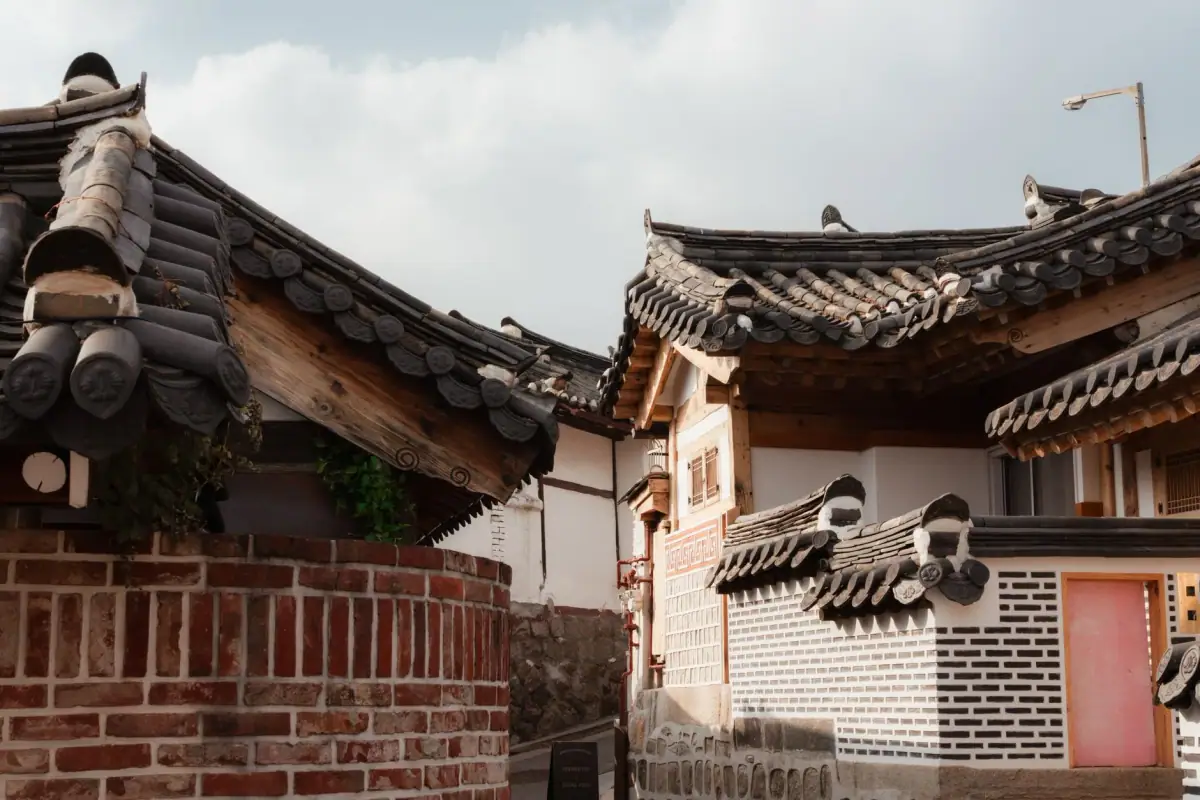
The word hanok designates traditional Korean housing, as it developed under the Joseon dynasty. Its principles come down to a few simple elements:
- A wooden structure and earth walls, with sliding doors covered in paper that let light filter through.
- A tiled roof with curved lines, often the first thing you notice when flying over old districts.
- An inner courtyard (madang), around which the rooms are organized.
- Underfloor heating (ondol): heat circulates under the floor, which explains why people live and sleep at floor level.
- A wooden floor (maru), a kind of open room that served as a summer living room.
In practice, the hanok offered to travelers are of three types: restored old houses, recent buildings built with traditional techniques, and hybrid buildings where the rooms have been modernized (private bathroom, air conditioning, improved bedding). This last category offers the best compromise for a first experience.
Jeonju: the biggest concentration of hanok
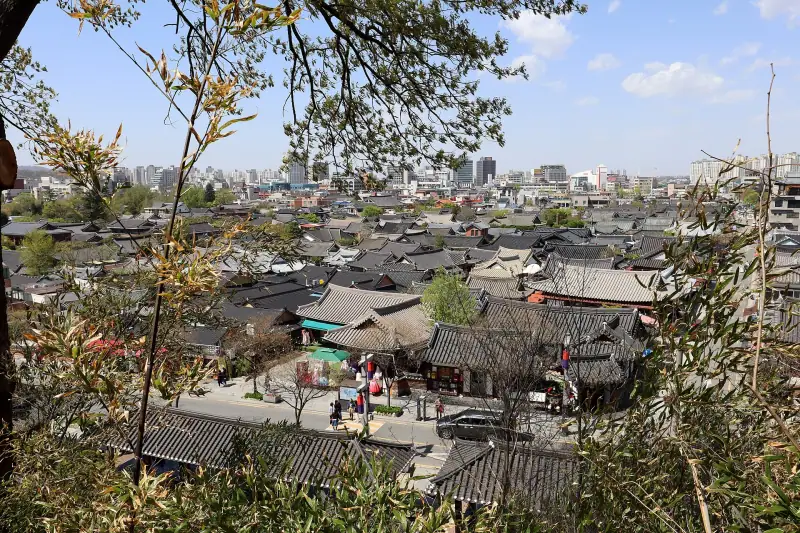
If you only do one night in a hanok, Jeonju is the most logical choice. This city in the southwest of the country, known for its food, is home to the country’s largest hanok village, which counts several hundred houses. Unlike some Seoul neighborhoods where only a few houses survived, here you walk through a coherent ensemble of alleys lined with tiled roofs.
Why sleep there
The town is very lively by day, with visitors strolling the alleys, often in traditional dress rented for the day. Sleeping there lets you enjoy the alleys early in the morning or in the evening, when the groups have left and the mood becomes much calmer. It is also a chance to try local specialties: Jeonju’s cooking is famous, notably for bibimbap. Our guide to typical dishes of Korean cuisine will help you choose what to order.
What you find
Guesthouses there range from a simple room to an entire house for a group. Prices are generally lower than in Seoul. Many establishments offer family rooms for three or four people, an interesting option for families. Some houses offer breakfast or cultural activities (tea, calligraphy), to check at the time of booking.
Getting there from Seoul
Jeonju is reached from Seoul by train or bus. The trip takes, depending on the mode of transport and the connection, between about an hour and a half and three hours: see our guide to transport in South Korea to choose between fast train and express bus. One night there is a minimum, two nights let you visit the city at ease.
Hanok and lodging in Jeonju
Compare the guesthouses of the hanok village on your dates and budget.
Seoul: Bukchon and Ikseon-dong
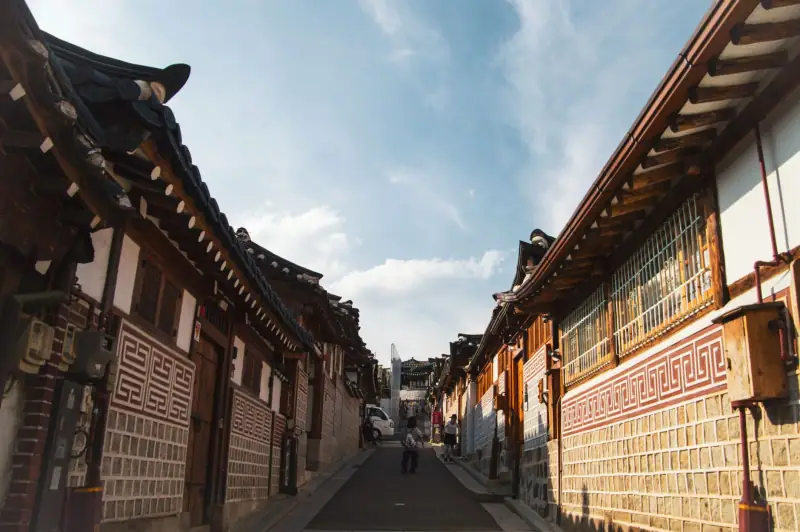
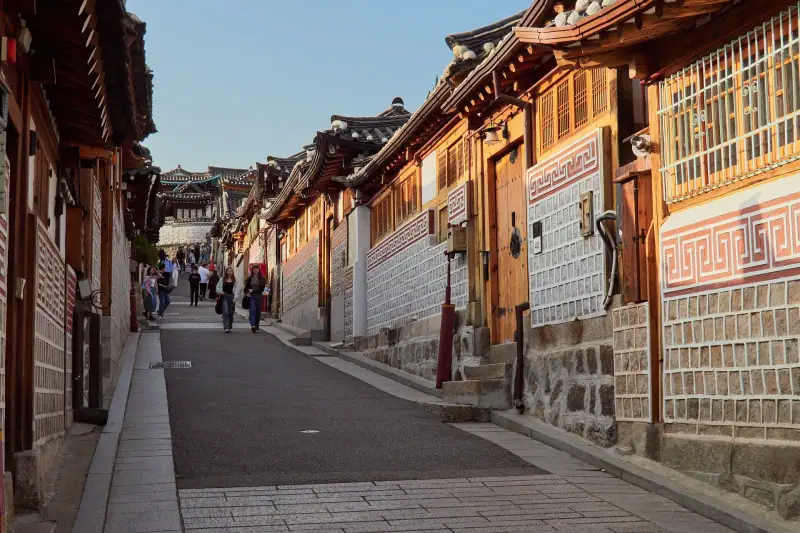
In Seoul, hanok survive mostly in a few neighborhoods of the historic center, north of the Han River. Two areas stand out for travelers.
Bukchon
Bukchon is the capital’s best-known hanok district, nestled between the great royal palaces. Its sloping alleys offer fine views of the tiled roofs, with the modern city as a backdrop. It is a residential neighborhood: people still live there, and local authorities regularly remind visitors to respect the calm of the place. Sleeping here has the advantage of strolling in the morning before the groups arrive.
Ikseon-dong
Ikseon-dong is a small neighborhood of narrow alleys where old low houses have been converted into cafés, shops and restaurants. The mood is livelier in the evening than in Bukchon, and a few guesthouses there offer rooms. It is a good choice for those who want to combine a hanok and neighborhood life.
What to know in Seoul
- The offer is more limited and generally pricier than in Jeonju.
- The alleys are sloping and sometimes narrow: a soft carry-on bag is preferable.
- The subway is close, but allow a few minutes’ walk uphill.
- The neighborhood is central: palaces, markets and restaurants are reachable on foot or by subway.
To organize your stay in the capital, our 3-day Seoul itinerary builds on these central neighborhoods.
Staying in Bukchon
Hanok rooms and hotels in Seoul's historic center: compare the offers.
Gyeongju: sleeping in the former capital
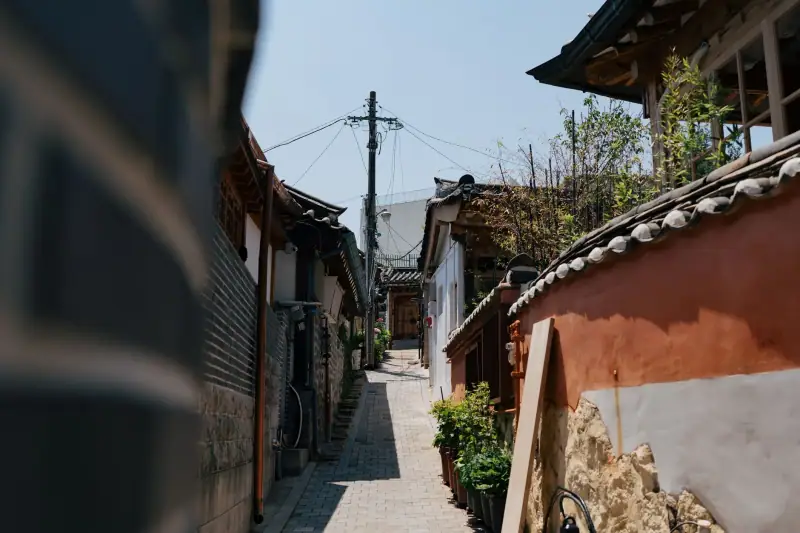
Gyeongju, capital of the Silla kingdom for nearly a thousand years, is a less sprawling and calmer city than Seoul. Its center is easily visited on foot or by bike, and several hanok guesthouses are near the major historic sites and the royal burial mounds. The mood there differs from Jeonju: fewer crowds, more serenity, with fine lighting on the monuments in the evening.
Sleeping in a hanok in Gyeongju lets you extend the immersion in the city’s history. In the morning, you can walk to some sites before they open to the crowds. To prepare the visit, see our guide to Gyeongju’s highlights. To choose between the center and Bomun Lake, see our comparison on where to stay in Gyeongju without a car.
Gyeongju combines easily with Busan on a route: the city is a classic of an itinerary of more than a week, like our 10 days in South Korea.
What a night in a hanok is like
Before booking, it helps to know what to expect when you get there. Here are the particularities that surprise most.
Bedding
You generally sleep on a yo, a thin mattress laid on the floor, with a duvet. Some houses offer Western beds in renovated rooms: specify it in your search if your back is sensitive. The Korean mattress is firmer than a typical Western mattress, which suits many travelers.
Floor heating
The ondol is one of the great pleasures of the hanok in fall and winter: heat rises from the floor and envelops the room. In summer, air conditioning takes over in renovated rooms, but some older houses stay hot: check the equipment and recent reviews before booking for July or August.
Noise and privacy
Partitions are thin, sometimes paper, and wood carries sound. The walls block neither conversations nor footsteps. If you are a light sleeper, bring earplugs. In very busy villages like Jeonju, some alleys are noisy in the evening, which argues for a courtyard-side room.
The bathroom
In renovated houses, the bathroom is generally private and modern. In others, it can be separate from the room, sometimes across the courtyard. The photos and descriptions in listings normally specify this point: read them carefully.
Thresholds and stairs
Doors are low, thresholds raised and courtyards paved. Bring a flashlight or use your phone’s flash for night movements. If you travel with a stroller or a heavy suitcase, check access before booking. For choosing your luggage and accessories, see our guide to useful accessories in South Korea.
Etiquette in a hanok
Guesthouses are often run by families, and respecting a few rules is appreciated.
- Take off your shoes from the entrance: shoes stay on the threshold or in a locker.
- Do not walk on the mattress with dirty or wet socks.
- Keep quiet in the evening: the walls are thin and neighbors close.
- Do not smoke indoors: the wooden structures are flammable.
- Respect residents’ space in residential neighborhoods, notably in Bukchon: avoid photographing private houses too closely and making noise in the alleys.
- Do not move the furniture without the host’s agreement.
How much does a night in a hanok cost?
Rates depend on the city, the season and the level of renovation, and they vary a lot from year to year: it is impossible to give a reliable fixed price. A few trends can however be kept in mind:
- Jeonju: the widest offer and generally the most accessible prices, with double rooms as well as family rooms.
- Seoul: pricier, because demand is strong and houses are rare.
- Gyeongju: intermediate prices, with a more modest offer.
- Weekends and peak seasons: in spring (cherry blossoms) and fall (foliage), rates rise and availability shrinks.
To place lodging within your overall spending, our guide to the budget in South Korea details the main items. A hanok is generally pricier than an equivalent hotel: it is chosen for the experience, one or two nights, rather than for a whole stay.
Flights to South Korea
Compare flights to Seoul on your dates, with or without a stopover.
Which season for sleeping in a hanok?
The hanok is experienced differently by season. Fall is probably the ideal period: days are cool and clear, foliage colors the courtyards, and the ondol begins to warm the evenings. Spring is just as charming, with cherry blossoms, but much busier. Winter is perfect for appreciating the warmth of the floor, but some houses have outdoor corridors or bathrooms that are poorly heated. Summer is the trickiest season: heat and humidity are pronounced, and comfort depends largely on air conditioning. Our guide on when to go to South Korea details the climate month by month.
Hanok or hotel: how to choose?
| Criterion | Hanok | Standard hotel |
|---|---|---|
| Atmosphere | Traditional, courtyard, wood | Modern, standardized |
| Bedding | Mattress on the floor, often | Western bed |
| Soundproofing | Weak | Fair to good |
| Number of rooms | Very limited | Large |
| Accessibility | Steps, alleys | Elevators |
| Price | Often higher | Wider choice |
| Ideal for | 1 to 2 nights of immersion | Long stays, stopovers |
Our recommendation: combine the two. Spend one or two nights in a hanok for the experience, and the rest of the stay in a hotel near a subway station, more practical for getting around. It is the formula that suits the great majority of travelers.
Alternatives to the hanok
If the hanok does not suit you or is full, other lodging offers cultural immersion:
- Temple stay (templestay): you sleep in a monastery, follow the monks’ life and share their meals. Our guide to templestay in South Korea explains how to book.
- Hotels with traditional rooms: some brands offer rooms with a floor mattress and ondol, without the discomfort of an old house.
- Guesthouses: more modest guesthouses, often run by young travelers, for small budgets.
Tips for booking well
- Read recent reviews: they tell you about soundproofing, cleanliness, heating and welcome.
- Check the bathroom: private or shared, attached or outside.
- Ask about the type of bedding: floor mattress or bed.
- Check access: steps, alleys, walking distance from the station or bus stop.
- Tell the host your arrival time: hosts are often alone and have no reception open all the time.
- Choose flexible cancellation terms if your dates may move.
- Consider travel insurance: it covers cancellation and health emergencies.
Cooking classes and tastings in Korea
Korean cooking classes, food tours and cultural activities: discover the offers available.
Sample sequence: a night in a hanok within a trip
Here is a simple way to fit the hanok in without disrupting your route.
- Start of the stay in Seoul: two or three nights in a hotel near the subway, to recover from jet lag and get your bearings.
- One night in a hanok in Bukchon or Ikseon-dong: for a quick immersion, before or after visiting the palaces.
- Detour via Jeonju: one to two nights in the hanok village, with a dinner of local specialties.
- End of the stay on the southeast coast: Gyeongju then Busan, with a hotel practical for trains.
This scheme is a base: adjust it to your length and interests, and keep in mind that trips between cities take time.
Our recommendation
- For a single night in a hanok: Jeonju, for the most coherent ensemble and the most reasonable prices.
- For a short stay in Seoul: a night in Bukchon or Ikseon-dong, accepting the sloping alleys.
- For history and calm: Gyeongju, to combine with discovering the royal sites.
- For families: favor family rooms in Jeonju and check access to steps.
- For comfort above all: book a hotel and save the hanok for an evening, or simply visit the neighborhoods during the day.
Sleeping in a hanok is not the most practical solution, but it is one of the most memorable. One night is often enough to understand why travelers keep a strong memory of it: the silence of the courtyard in the early morning, the scent of wood, the warmth of the floor under the mattress.
Frequently asked questions
What exactly is a hanok?
The hanok is the traditional Korean house: wooden frame, earth and paper walls, curved tiled roof and a floor heated from below (ondol). Many old or rebuilt hanok are now converted into guesthouses.
Where can you sleep in a hanok in South Korea?
The three most practical areas for travelers are Jeonju's hanok village, the Bukchon and Ikseon-dong districts in Seoul, and the historic alleys of Gyeongju. Jeonju offers the biggest concentration of houses open to visitors.
Is it comfortable to sleep in a hanok?
Yes, as long as you know the particularities: you generally sleep on a mattress laid on the floor (yo), the partitions are thin, and the bathroom is sometimes separate from the room. In return, the heated floor is very pleasant in fall and winter.
Is a hanok more expensive than a hotel?
Generally yes for equivalent quality, because capacities are limited. Rates vary strongly by city, season and level of renovation: Jeonju is often more affordable than Seoul. Always compare several dates before booking.
Do you have to take off your shoes in a hanok?
Yes, it is the absolute rule. You leave your shoes at the entrance, move about in socks or slippers, and do not walk on the mattress with shoes. Bring shoes that are easy to slip on.
Are hanok suitable for children or people with reduced mobility?
Families are welcome, notably in rooms for three or four people, but steps, thresholds and sloping alleys are poorly suited to strollers and wheelchairs. Tell your host your needs before booking.
When should you book a hanok?
Book several weeks ahead, especially for weekends, spring and fall, when rooms go fast because houses have few rooms.
More South Korea guides
Keep reading
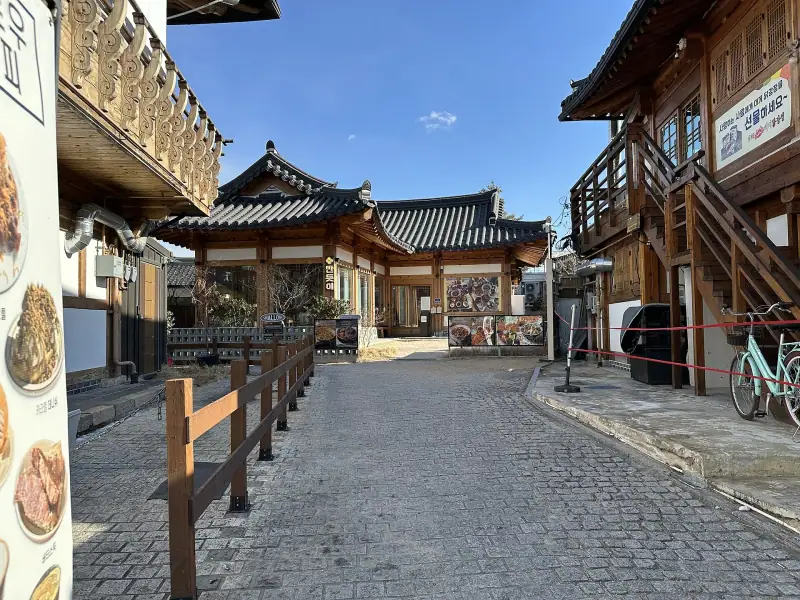
Where to stay in Gyeongju without a car: Hwangnidan-gil or Bomun?
Hwangnidan-gil or Bomun for a car-free stay in Gyeongju? Comparison of the two areas: access to sights, buses, hanok or lakeside hotel, booking tips.
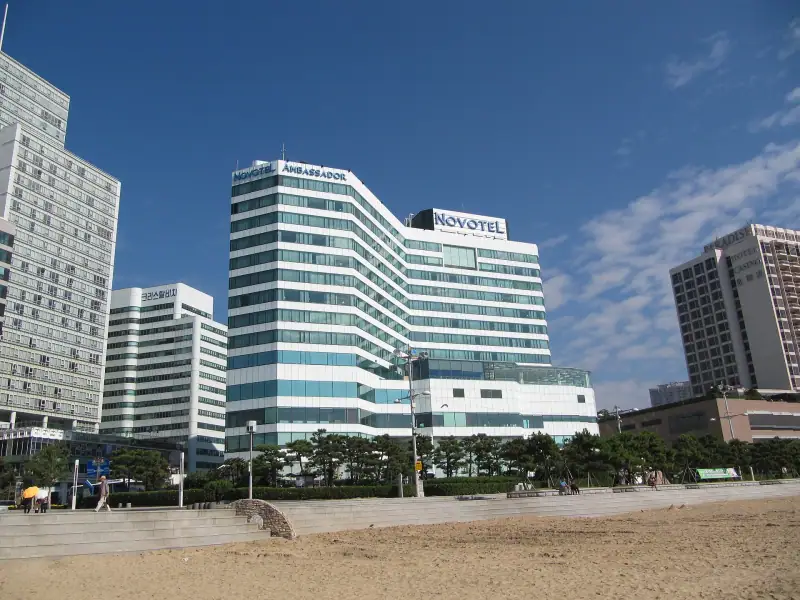
Where to stay in Busan: the best neighborhoods for your trip
Where to stay in Busan? Haeundae, Gwangalli, Seomyeon, Nampo, Busan Station: neighborhoods compared by traveler type, with subway access and booking tips.
Where to stay in Seoul: the best neighborhoods for your trip
Where to stay in Seoul? Myeongdong, Jongno, Hongdae, Gangnam, Itaewon, Seongsu: neighborhoods compared by traveler profile, with subway access and tips.
Ready-made
South Korea itineraries
7 days
4 days
10 days
South Korea in 10 days: an itinerary through Seoul, Gyeongju, Busan and Jeju
SeoulGyeongjuBusanJeju