Where to stay
Where to stay in Busan: the best neighborhoods for your trip
We may earn a commission when you book through links on this page, at no extra cost to you. We don't visit or try the places we cover: we summarize published sources. How we work
In short
- Haeundae is the simplest choice for a first stay: beach, subway, a wide choice of hotels and restaurants.
- Seomyeon is the central, practical base, where two subway lines cross, often more affordable than the beach areas.
- Gwangalli is more intimate and trendy, facing the lit-up bridge; Nampo suits food and market lovers.
- Two to three nights cover Busan's highlights; add one if you combine it with a Gyeongju excursion.
Where to stay in Busan? South Korea’s second city stretches along the coast, between mountains, bays and beaches, and its neighborhoods each have a very different personality. Choosing the right base changes how you experience the city: you can wake up facing the sea in Haeundae, in the heart of a market in Nampo or in the center of the action in Seomyeon.
Unlike Seoul, where the sights are concentrated around a few areas, Busan is an elongated seaside city: travel times matter. This guide compares the main neighborhoods by traveler profile. To then pick out places to visit, our guide to Busan’s highlights builds on the same areas.
How to choose your neighborhood in Busan
A few criteria help you decide before comparing rooms.
- Proximity to a subway station: this is the deciding criterion. The subway links most tourist neighborhoods and avoids the traffic jams of the coastal roads.
- Sea or city: beach neighborhoods are airier and more vacation-like, but more out of the way. Central neighborhoods are more urban and better connected.
- Season: in summer, the beaches attract a lot of people and hotels near the sand are pricier. The rest of the year, the beach matters less in the choice.
- Type of stay: relaxation, food, shopping, nightlife, or just a stopover on a route across the country.
- Luggage and arrival: if you arrive by train or plane with big suitcases, a hotel near a direct station will save you time.
For the best time to travel, which strongly influences prices, see our guide on when to go to South Korea.
Hotels in Busan
Compare lodging by neighborhood, on your dates and budget.
Haeundae: the beach and the seaside atmosphere
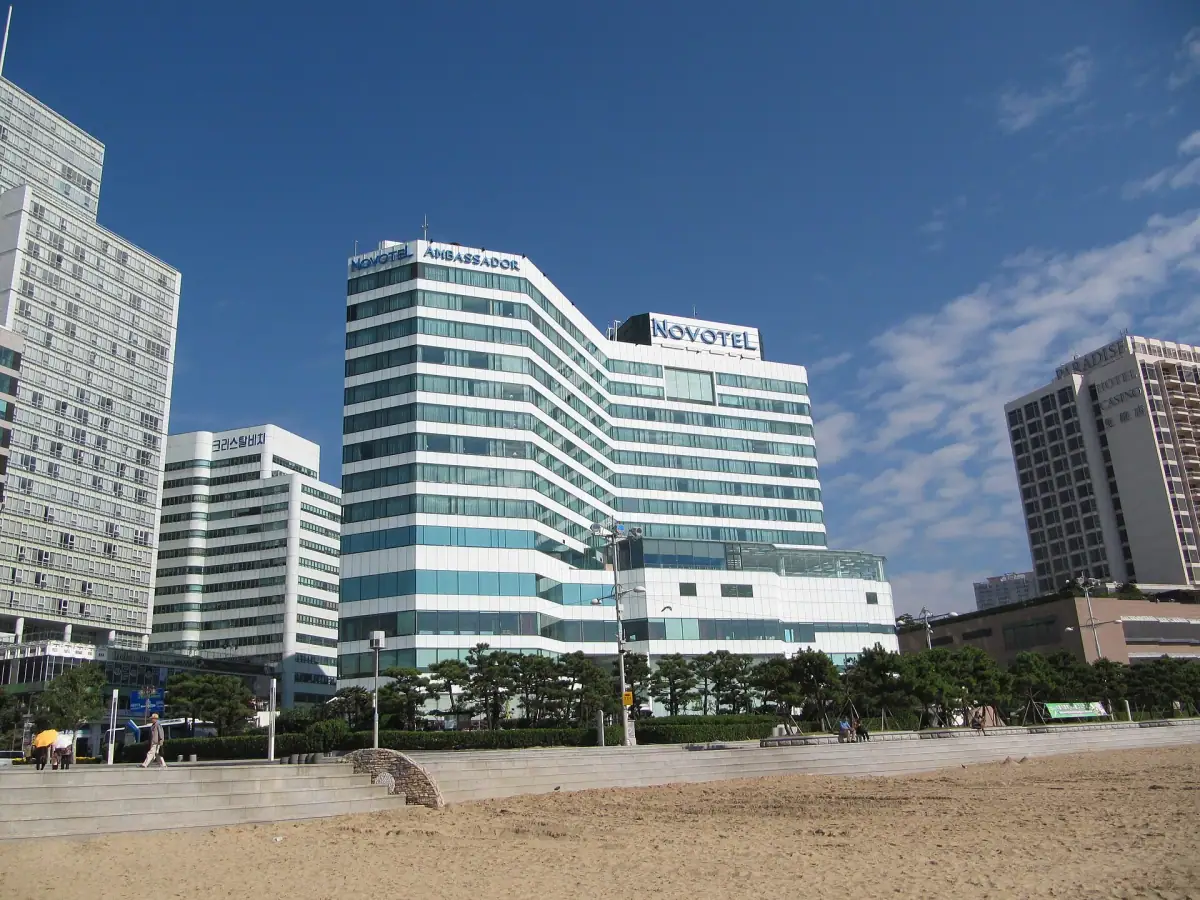
Haeundae is Busan’s best-known neighborhood. Its large urban beach, lined with hotel towers and restaurants, makes it the country’s busiest seaside destination in summer. The neighborhood is served by the subway, and the lodging offer is very wide: chain hotels, residences with kitchens, budget places and luxury addresses.
The waterfront offers pleasant walks in every season, with cafés, seafood restaurants and markets nearby. It is also a good starting point for the temples and coastal paths in the east of the city.
Who is it for? Families, couples, travelers looking to relax and those visiting Busan in summer.
Worth knowing: crowds are heavy in high season and prices follow. The neighborhood is relatively far from the historic center and the station: allow about half an hour to three quarters of an hour by subway depending on the destination.
Gwangalli: the bridge view and seaside evenings
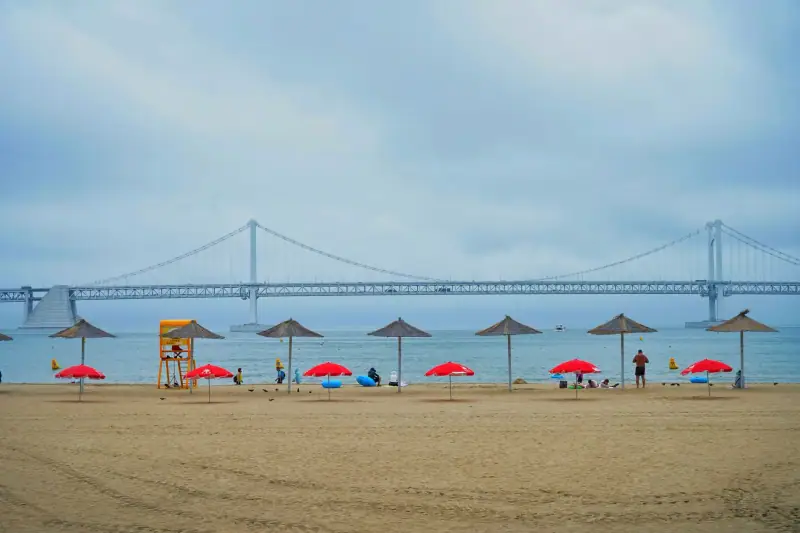
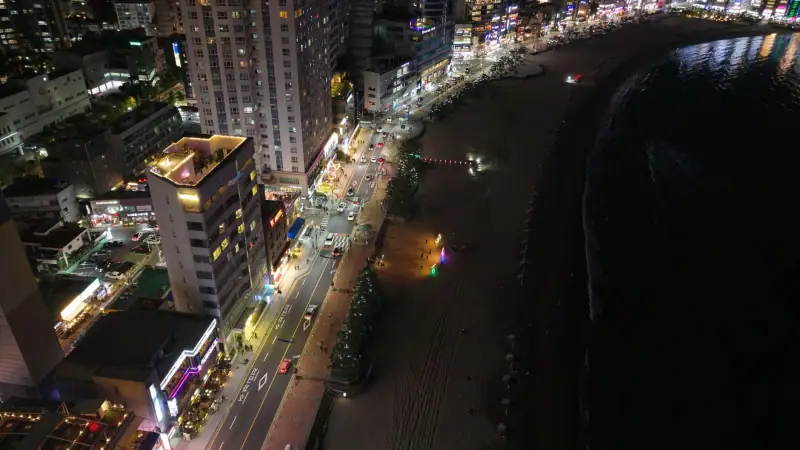
Gwangalli is more intimate and trendier than Haeundae. Its beach faces Busan’s big suspension bridge, lit up in the evening, which offers one of the city’s finest night settings. The street running along the beach is lined with bars, cafés and restaurants with outdoor seating.
The mood is younger, more relaxed, with a clientele that is often local. Rooms with a bay view are in high demand: better to book them early.
Who is it for? Couples, travelers who like outdoor cafés and lively evenings, and those who want a seaside setting less touristy than Haeundae.
Worth knowing: the nearest subway station is not always a short walk from the waterfront. Check the walking distance before booking, especially with luggage.
Hotels in Haeundae
A room near the beach and the subway station: compare the neighborhood's offers.
Seomyeon: the practical, lively center
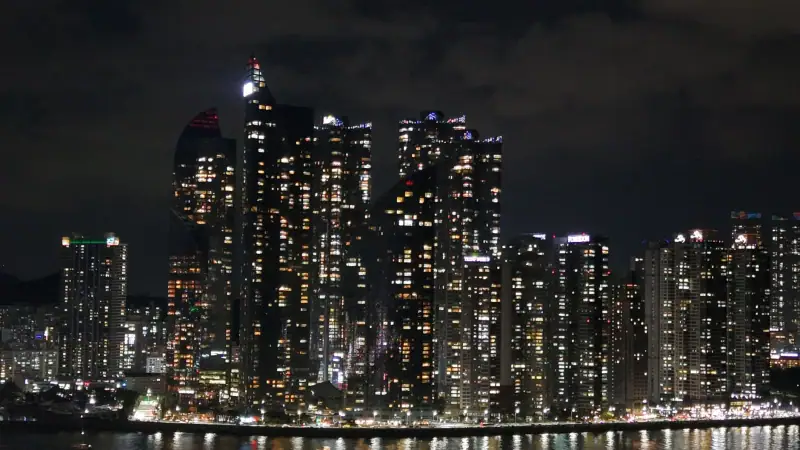
Seomyeon is Busan’s big crossroads, where two subway lines meet. It is an urban neighborhood, with shopping centers, restaurants, bars and streets busy until late. Its main asset is its location: you easily reach the beaches, the historic center and the station.
The hotel offer is varied and often more affordable than in the beach neighborhoods. For a stay of several days with excursions, it is a logical base.
Who is it for? Travelers who want good value, moderate budgets, and those who make many subway trips.
Worth knowing: the neighborhood is noisy and very commercial, without the charm of the sea. Ask for an upper-floor room if you are a light sleeper.
Nampo and Jagalchi: popular, food-loving Busan
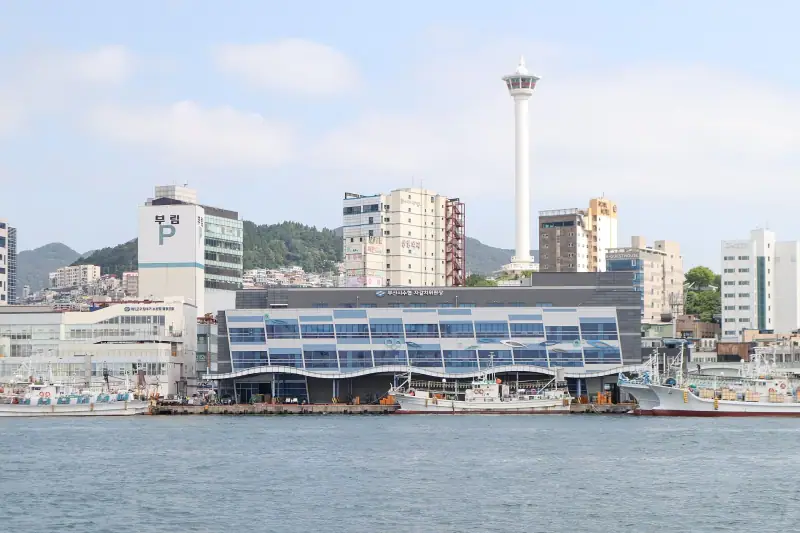
South of the center, Nampo concentrates markets, shopping lanes, shops and street-food stalls. Nearby is the big Jagalchi fish market, one of the city’s emblematic addresses. It is the neighborhood where you best sense Busan’s port soul.
The old town is also the area from which several walks set off toward the Gamcheon district and other popular places. Lodging there is often more modest: small hotels, hostels, guesthouses.
Who is it for? Food lovers, the curious, travelers on a tight budget, market fans.
Worth knowing: streets are narrow, sometimes sloping, and some establishments are old. The beaches are several subway stations away.
Flights to Busan
Compare flights on your dates, with or without a stopover in Seoul.
Busan Station and Choryang: practical for trains
The Busan Station area is the city’s gateway for those arriving by high-speed train from Seoul: the trip takes about two and a half to three hours depending on the train. Hotels there are plentiful and practical, especially for a stopover night.
Next to it, the Choryang district houses a street with a Chinese and Russian character, a legacy of the city’s port history. There you find restaurants, shops and an atmosphere very different from the seaside neighborhoods.
Who is it for? Travelers in transit, those chaining Seoul, Busan then Gyeongju, those leaving early in the morning.
Worth knowing: the area is more functional than charming. It suits a stopover better than a long stay. To plan your trips between cities, see our guide to transport in South Korea.
Quick comparison of neighborhoods
| Neighborhood | Atmosphere | Ideal for | Watch out for |
|---|---|---|---|
| Haeundae | Seaside, family | Summer, relaxation | High prices in high season |
| Gwangalli | Trendy, nightlife | Couples, evenings | Subway sometimes far |
| Seomyeon | Urban, central | Budget, logistics | Noisy |
| Nampo | Popular, food-loving | Markets, culture | Steep streets, modest hotels |
| Busan Station | Functional | Stopover, train | Little charm |
Which type of lodging to choose in Busan?
The offer is varied and matches every budget.
- Chain and luxury hotels: concentrated in Haeundae and Seomyeon, they generally offer good comfort, sometimes a sea view.
- Business hotels and small hotels: plentiful around stations and Seomyeon, with compact but well-equipped rooms.
- Hostels and guesthouses: mostly in Nampo, near the station and in Haeundae, for small budgets and solo travelers.
- Residences and apartments: practical for families or long stays, with a kitchen or washing machine.
- Rooms with a heated floor: some traditional rooms offer a mattress on a heated floor, a typically Korean experience.
To estimate your overall spending, including lodging, read our guide to the budget in South Korea.
From the airport or station: reaching your neighborhood
Gimhae Airport is west of the city. It is linked to the subway network by a light rail line, with a connection to reach Seomyeon, then the other neighborhoods. The trip depends on your destination and the time: generally allow about an hour for the beach neighborhoods, a bit less for Seomyeon. A taxi remains a comfortable option if you travel in a group or with heavy luggage.
From Busan Station, subway line 1 serves the center and Nampo. For Haeundae, you must change lines, which lengthens the trip: if you arrive loaded down, a taxi or a hotel near the station for the first night may be simpler. A rechargeable transit card saves buying a ticket for each ride, and also works in other cities of the country.
Staying in Busan by season
The season strongly changes the appeal of each neighborhood. From June to September, the beach is at the heart of the stay: Haeundae and Gwangalli are then the liveliest, but also the priciest and busiest. On summer weekends, crowds on the sand are very heavy, and booking ahead becomes essential.
In spring and fall, the climate is mild and suits coastal walks, temple visits and markets. Prices are more reasonable, and you can choose a central neighborhood without missing the beach. In winter, the sea air is fresh and windy: a comfortable hotel with underfloor heating near the subway counts more than a sea view.
Big events, such as film or fireworks festivals, raise demand on specific dates. If your trip coincides with one, check the dates on the event’s official site and book early.
Booking tips
- Book ahead for summer and festivals: rooms near the beach go fast in high season.
- Check the distance to the subway: shown in walking minutes on most platforms, it matters as much as the price.
- Read recent reviews: they give a good idea of cleanliness, noise and insulation.
- Check the cancellation terms: a flexible option is useful if your travel plans may change.
- Consider travel insurance: it covers cancellation and health emergencies.
Excursions around Busan
Guided tours and activities in Busan: discover the offers available on your dates.
Combining Busan with the rest of the trip
Busan fits easily into a route. Many travelers arrive from Seoul by train, spend two or three nights on the coast, then continue to Gyeongju, the former royal capital, described in our guide to Gyeongju’s highlights. For a complete thread, see the 10-day South Korea itinerary.
If you come from Seoul, our guide to sleeping in Seoul helps you choose the first stop before heading south.
Our recommendation by profile
- First stay, in summer: Haeundae for the beach and simplicity.
- As a couple, for the evening atmosphere: Gwangalli, with a bridge view.
- Budget and logistics: Seomyeon, at the crossroads of the subway lines.
- Food lover and curious: Nampo, near the markets.
- Train stopover: the Busan Station area.
Whatever your choice, keep in mind that the subway links most areas well: do not spend hours looking for the perfect location, a hotel near a station will do very well.
Frequently asked questions
What is the best neighborhood to stay in Busan for a first visit?
Haeundae is the simplest choice for a first stay: beach, subway, a wide choice of hotels and restaurants. Seomyeon is better if you want a central base, equidistant from the beaches and the historic center.
Should you stay near the beach in Busan?
It is not mandatory. The beaches of Haeundae and Gwangalli are pleasant mainly from May to September. The rest of the year, a central neighborhood like Seomyeon or Nampo is more practical, with the subway close at hand.
Where should you stay in Busan to be near the station?
The Busan Station area is ideal if you arrive by high-speed train from Seoul or leave early. It is served by subway line 1 and is close to the Choryang district.
Is Busan well served by the subway?
Yes, the city has several subway lines linking the main neighborhoods. Trips between Haeundae, Seomyeon and the station generally take between half an hour and three quarters of an hour. A rechargeable transit card simplifies getting around.
How many nights do you need in Busan?
Two to three nights are enough for the highlights: beaches, seaside temples, markets and colorful neighborhoods. Add one night if you want to combine Busan with a Gyeongju excursion.
When should you book a hotel in Busan?
In summer and during big festivals, hotels near the beach fill up fast: book several weeks ahead. Off-season, prices are lower and availability wider.
More South Korea guides
Keep reading
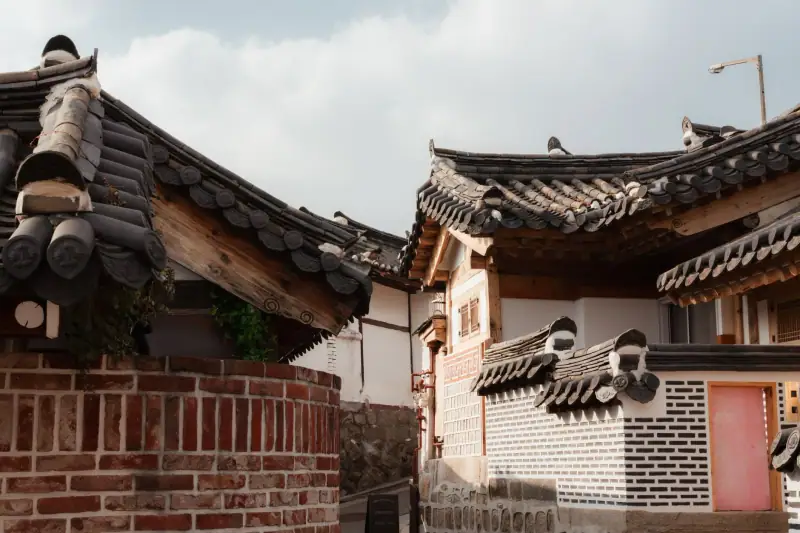
Sleeping in a hanok in South Korea: a guide to Jeonju, Seoul and Gyeongju
Spending a night in a hanok in South Korea: where to stay in Jeonju, Seoul and Gyeongju, comfort, ondol, budget, etiquette and booking tips.
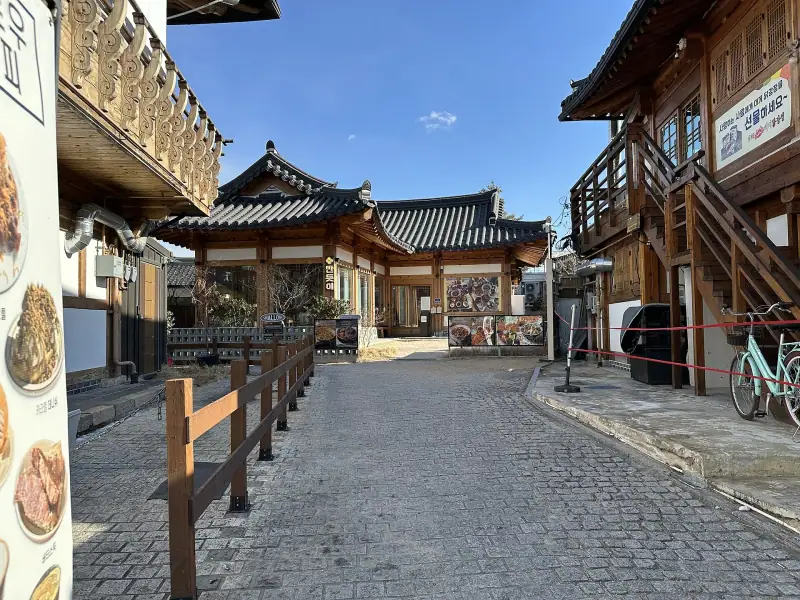
Where to stay in Gyeongju without a car: Hwangnidan-gil or Bomun?
Hwangnidan-gil or Bomun for a car-free stay in Gyeongju? Comparison of the two areas: access to sights, buses, hanok or lakeside hotel, booking tips.
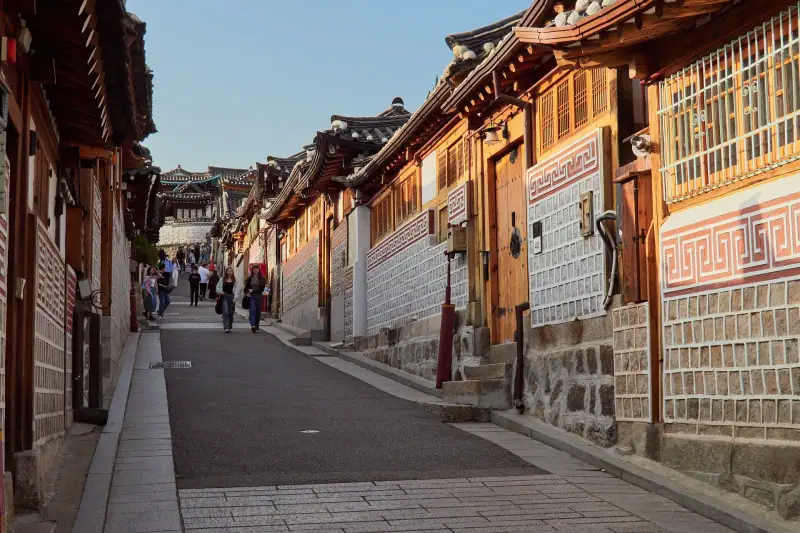
Where to stay in Seoul: the best neighborhoods for your trip
Where to stay in Seoul? Myeongdong, Jongno, Hongdae, Gangnam, Itaewon, Seongsu: neighborhoods compared by traveler profile, with subway access and tips.
Ready-made
South Korea itineraries
7 days
4 days
10 days
South Korea in 10 days: an itinerary through Seoul, Gyeongju, Busan and Jeju
SeoulGyeongjuBusanJeju