What to see
Visiting Gyeongju: the highlights of the Silla capital
We may earn a commission when you book through links on this page, at no extra cost to you. We don't visit or try the places we cover: we summarize published sources. How we work
In short
- Two full days cover the essentials: one for Bulguksa and Seokguram, one for the historic center (mounds, observatory, Wolji Pond, National Museum).
- The KTX takes about two hours from Seoul to Singyeongju station, away from the center (bus or taxi needed). From Busan, train or bus takes a little over an hour.
- The center is flat and bike rental is widespread; Bulguksa and Seokguram are better reached by bus or taxi.
- Wolji Pond is best in the evening, when it is lit up; check the evening opening hours, which vary by season.
Visiting Gyeongju means going back to the time of the Silla kingdom, which made this city its capital for nearly a thousand years. It has often been nicknamed “the museum without walls”: grassy burial mounds loom over the streets, Buddhist temples hide in the hills and an artificial lake lights up at nightfall. Four words sum up the city: calm, history, nature and bicycles.
Here there are no skyscrapers or packed subway as in Seoul. Gyeongju is a modest-sized city, easy to get around, that perfectly complements a stay in the country. If you are planning a broader trip, also see our guide to choosing when to go to South Korea and our article on Busan and its highlights, the big neighboring port city.
How to organize your visit to Gyeongju
Gyeongju is in the southeast of the country, in the Gyeongsang region. The city is linked to Seoul by the KTX high-speed train: the trip takes about two hours to Singyeongju station. This station is away from the center, and a bus or taxi is needed to reach the historic heart. From Busan, the link by train or bus takes a little over an hour.
A few practical landmarks:
- Ideal length: two full days let you see the essentials without rushing. A single day is possible, at the cost of difficult choices.
- Getting around: the center is flat, and bike rental is widespread. For sights away from the center, like Bulguksa, favor the bus or taxi.
- Where to sleep: the area near the burial mounds and Hwangnidan-gil street is the most pleasant for a stay, with restaurants and cafés on foot. Some places offer hanok-style rooms, the traditional Korean house.
- Hours and fares: they change with the season and the years. Check them on official sites before leaving rather than relying on an old figure.
Well-placed lodging makes each day easier, since the center is covered on foot or by bike; our comparison of where to stay in Gyeongju without a car details the choice between Hwangnidan-gil and Bomun.
Hotels in Gyeongju
Sleeping near the burial mounds and the historic center lets you do everything on foot or by bike. Compare lodging on your dates.
Bulguksa Temple: the jewel of Silla Buddhist art
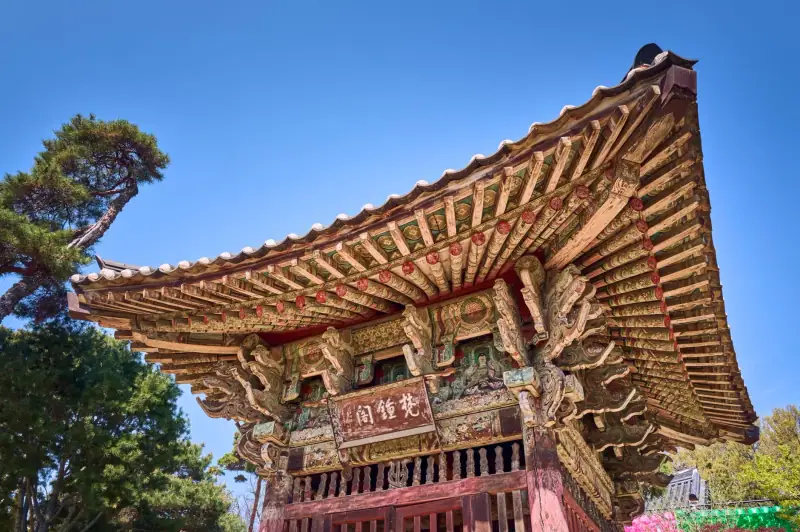
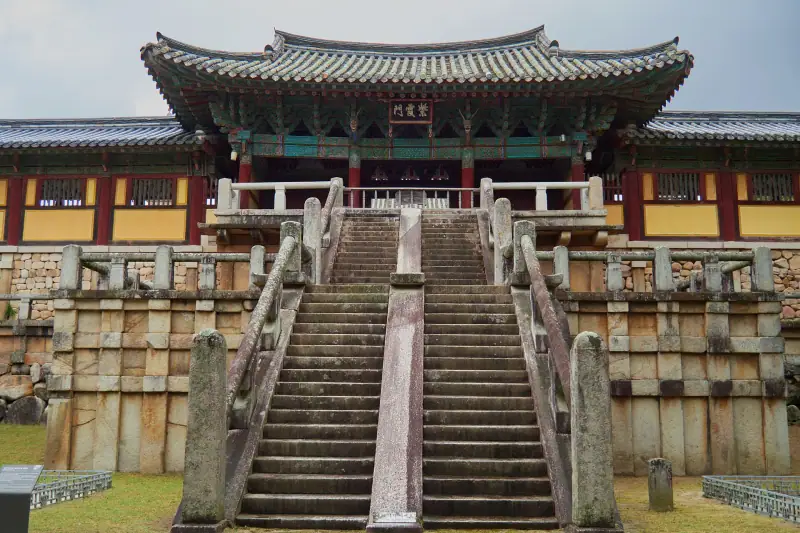
Bulguksa Temple is one of the country’s most famous sites. Built on the slopes of Mount Toham, east of the city, it dates mostly from the 8th century, before being destroyed and restored over the centuries. It has been a UNESCO World Heritage site, together with Seokguram Grotto, since 1995.
What strikes you first are the stone terraces and the staircases leading to the main pavilions, all in the bright colors of painted woodwork. Two stone pagodas face each other in the central courtyard, masterpieces of balance and sobriety. Allow an hour and a half to two hours to visit the site without hurrying, and arrive early in the morning to enjoy the calm before school groups.
Seokguram Grotto: a stone Buddha facing the sea
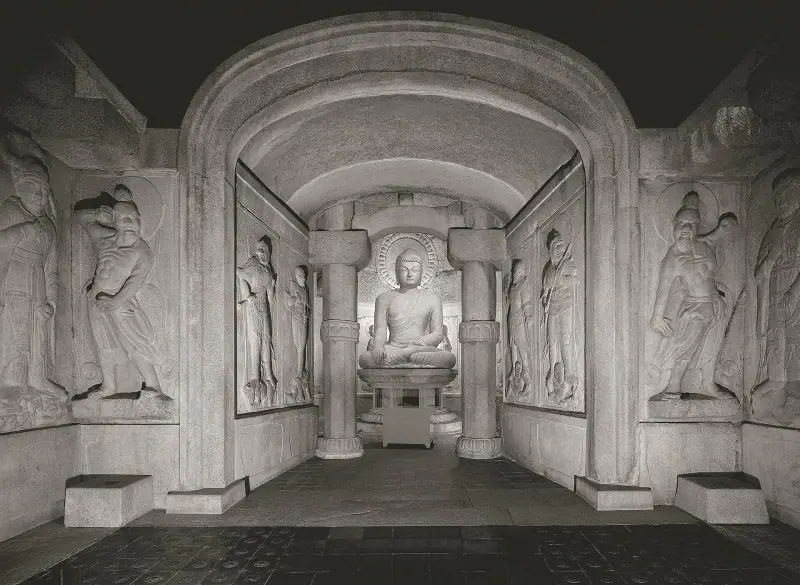
A few kilometers above Bulguksa, Seokguram Grotto houses a large granite Buddha statue in a chamber built of stone on the heights of the mountain. You do not see the statue up close: it is protected behind glass, to preserve the balance of the place. The statue’s gaze is turned east, toward the sea.
Access is by bus from the Bulguksa parking lot or on foot by a forest hiking path, especially beautiful in fall. The site is considered a summit of Buddhist art in East Asia. Bring walking shoes if you choose to walk.
Daereungwon burial mound park: the Silla kings under the hills
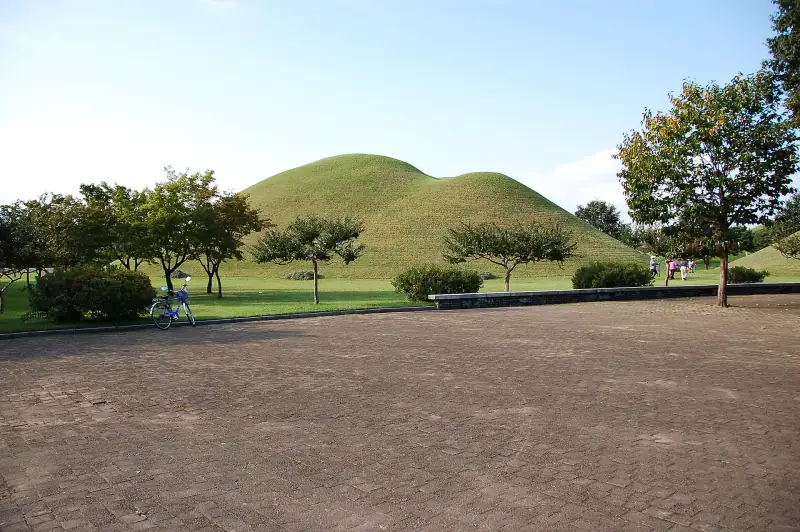
In the heart of the city, Daereungwon Park gathers large round burial mounds, the tombs of Silla’s rulers and nobles. The grassy hills, rounded like gentle green domes, create a unique landscape, especially photogenic at sunrise or sunset.
You can enter one of the mounds, Cheonmachong, turned into a museum: the interior reconstructs the burial chamber and presents objects from the excavations, including gold crowns, a symbol of the refinement of Silla craftsmen. The park can be visited in about an hour, but it is pleasant to linger, particularly at the end of the afternoon.
Activities and excursions around Gyeongju
Guided tours, excursions from Busan or Seoul, bike rides: compare the activities available on your dates.
Cheomseongdae: one of Asia’s oldest observatories
A few minutes’ walk from the mounds, Cheomseongdae is a small bottle-shaped stone tower, about nine meters (30 ft) high. It was built in the 7th century, under Queen Seondeok, and is generally presented as one of the oldest standing astronomical observatories in East Asia.
The monument is modest in size, but its history and silhouette are striking. Around it spreads a large field, covered with rapeseed flowers in spring and cosmos in fall, a setting much appreciated by visitors. The visit is short, but the place is ideal for a photo break between two sights.
Donggung Palace and Wolji Pond: the lit-up city
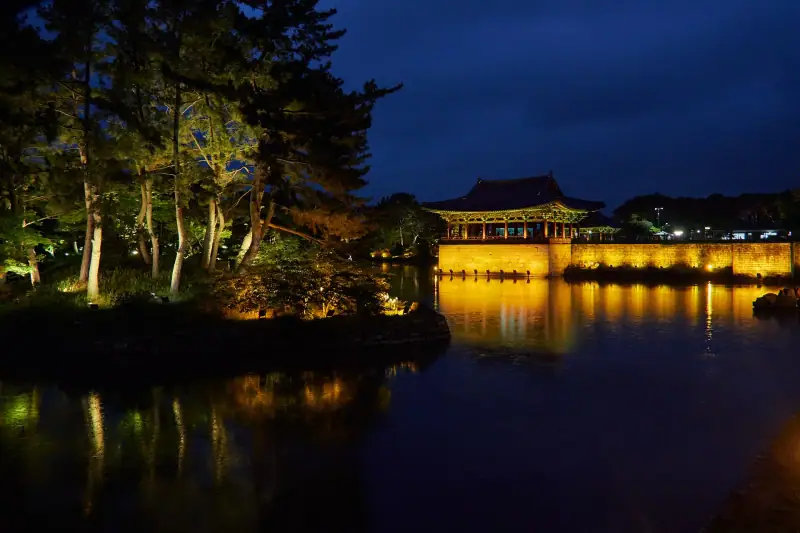
Donggung Palace and Wolji Pond, long known as Anapji, were once the pleasure gardens and royal pavilions of Silla. The man-made lake is dotted with small islets and bordered by reconstructed pavilions, whose reflections on the water make a very photogenic picture.
The best time to visit is the evening: the site is lit up, and the pavilions are reflected in the lake. Visitors come as much for the walk as for night photos. Check the evening opening hours before coming, as they vary by season.
Gyeongju National Museum: the memory of the Silla kingdom
The Gyeongju National Museum, located not far from Wolji Pond, is the ideal place to understand the city’s history. It presents collections of objects from the region’s excavations: jewelry, pottery, Buddhist sculptures and ritual objects. There you will notably see King Seongdeok’s great bronze bell, famous for its size and the fineness of its decoration.
The museum is all the more useful as it gives the context of the sites visited outside. It is also a good option on rainy days. Allow an hour and a half for a pleasant visit.
Hwangnidan-gil: cafés and alleys in traditional houses
Hwangnidan-gil street, next to the mounds, is Gyeongju’s trendy neighborhood. Low traditional-style houses now host cafés, designer shops and restaurants. The stroll is easy, especially in the late afternoon, after visiting Daereungwon Park.
It is a good place to try local cuisine or enjoy a coffee break. Our guide to Korean cuisine and typical dishes will help you choose your dishes. Preferences and addresses change fast in this trendy district, so it is better to rely on what you see when you get there.
Flights to South Korea
To reach Seoul or Busan, compare flights on your dates before booking, especially in cherry blossom season and fall.
Yangdong village: a village of traditional lineages
Outside the city, to the northeast, Yangdong village is one of the best-preserved traditional villages in the country. It has been a UNESCO site since 2010, together with Hahoe village, in the category of Korean historic villages (for Hahoe, see our guide to getting to Hahoe village from Seoul). Its tile- and thatch-roofed houses, built on gentle slopes, were occupied for centuries by great families of scholars.
The village is still inhabited, and the visit is done by walking its alleys, respecting residents’ lives. Allow half a day with the trip. Access by public transport is less direct than for the sights of the center: ask about buses or plan on a taxi.
Mount Namsan: hiking and Buddhas in nature
Gyeongju’s Mount Namsan (not to be confused with Seoul’s Namsan Tower) is a mountain dotted with Buddhist remains: statues carved in rock, stone pagodas and traces of temples. The whole is part of Gyeongju’s UNESCO-listed historic areas.
Several trails of varying difficulty let you cover it, from an easy walk to a hike of several hours. Bring water and good shoes, and avoid the hot hours in summer. A guide or a detailed map is useful to find the sculptures, which are sometimes off the main paths.
A sample two-day itinerary
Here is a simple proposal to organize your stay:
- Day 1: the historic center. Morning at Daereungwon Park and Cheomseongdae, lunch at Hwangnidan-gil, afternoon at the National Museum, then an evening at Wolji Pond.
- Day 2: the temples. Early start for Bulguksa, then the climb to Seokguram. If the weather allows, finish with a walk on Mount Namsan or a visit to Yangdong village.
If you have only one day, focus on Bulguksa, Daereungwon and Wolji Pond at sunset. To continue your trip, see our three-day Seoul itinerary.
Where to stay in Gyeongju
For a first stay, two areas stand out. The center, near the mounds and Hwangnidan-gil, is ideal for travelers who want to do everything on foot or by bike and enjoy the restaurants in the evening. The Bomun Lake area, to the east, more oriented toward big hotels and leisure, better suits families and those with a vehicle.
Book ahead in cherry blossom season (early April in general) and in fall, as lodging fills up fast. A night in a hanok, with a heated floor and bedding on the floor, is a typical experience to try at least once.
Sleeping in a hanok or near the center
From modern hotels to traditional houses, compare Gyeongju's offers and book early in high season.
When to visit Gyeongju?
Spring (late March to April) is the most famous season, with avenues of cherry trees in bloom around Bomun Lake and in the center. Fall, from October to November, offers red and golden foliage, notably around the temples. Summer is hot and humid, and winter is cold but very calm, perfect for visiting without crowds.
Final word
Gyeongju is a stop that brings a valuable counterpoint to Korea’s big cities: a slower rhythm, exceptional heritage and landscapes where history can be read in the terrain. Two days are enough to fall under its spell, and the train makes the stop easy from Seoul as well as from Busan.
Frequently asked questions
How long do you need to visit Gyeongju?
Two days let you see the main sights: one day for Bulguksa and Seokguram, one day for the historic center (burial mounds, observatory, Wolji Pond, National Museum). A day trip from Busan is possible but forces choices.
How do you get from Seoul to Gyeongju?
The KTX high-speed train links Seoul to Singyeongju station in about two hours. This station is away from the center: a bus or taxi is needed to reach the city. Long-distance express buses also run, but they are slower.
Is Gyeongju accessible from Busan?
Yes, the link is by train or bus, generally a little over an hour depending on the mode of transport. It is a natural stop between Busan and the rest of the country.
Should you rent a bike to visit the center?
It is a much-appreciated option: the center is flat and the sights are close to each other. Rental shops are plentiful around the main sights. Conversely, Bulguksa and Seokguram are farther away and are better reached by bus or taxi.
What is the best time to visit Gyeongju?
Spring, with cherry blossoms, and fall, with its foliage, are the most pleasant. Summer is hot and humid, winter cold but calm. Our guide on the seasons details the advantages of each period.
More South Korea guides
Keep reading
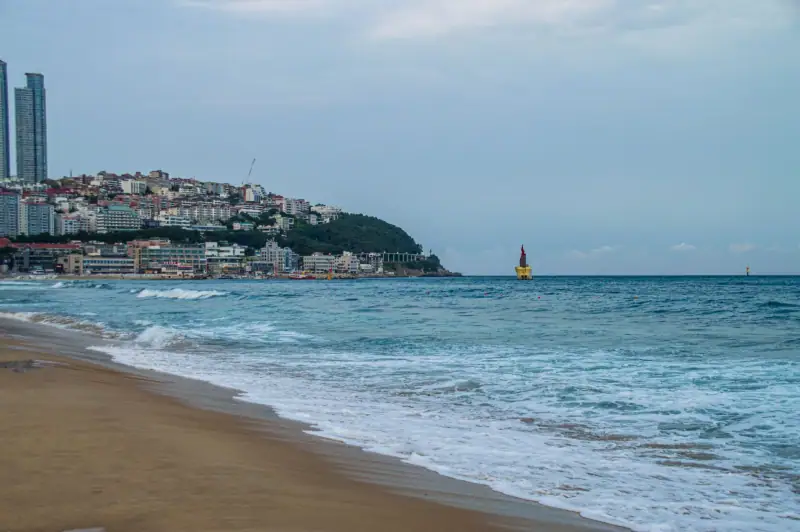
Visiting Busan: the 8 highlights of the big port city
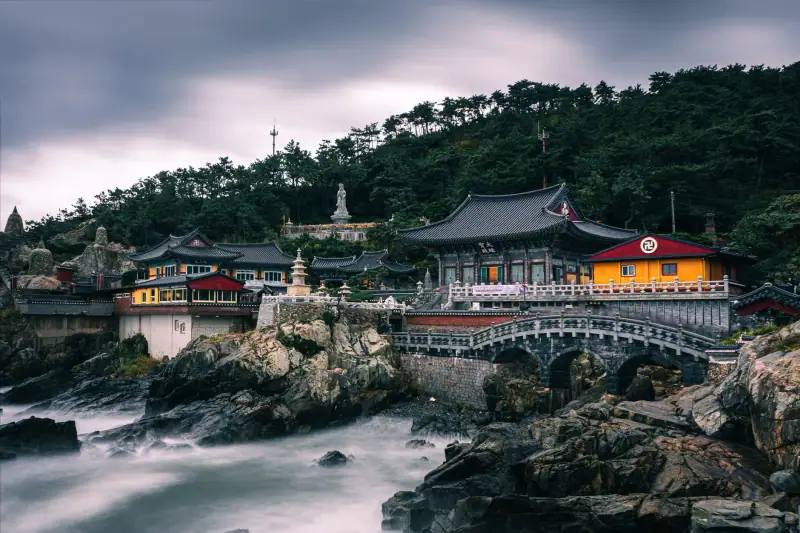
What to see in Busan? Haedong Yonggungsa Temple, Gamcheon village, Jagalchi Market, Haeundae Beach: highlights, transport tips and where to stay.
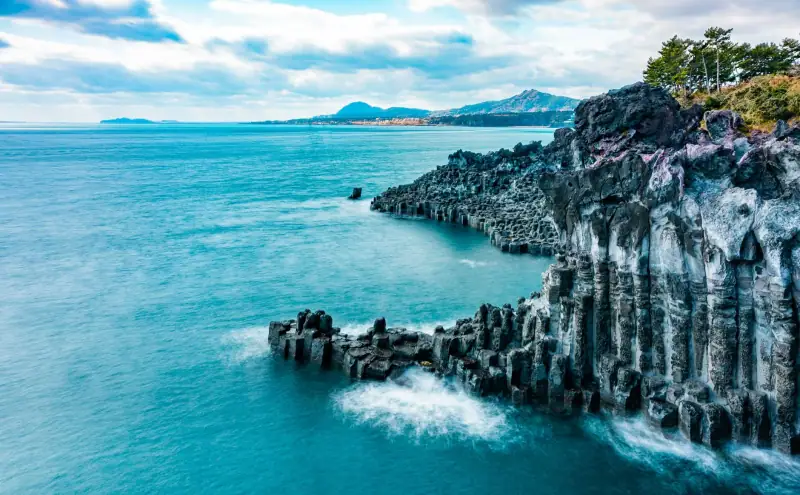
Visiting Jeju Island: the highlights of the volcanic island
What to see on Jeju: Hallasan volcano, Seongsan Ilchulbong cone, lava tube, Udo island, basalt cliffs and beaches. Tips for planning your stay.
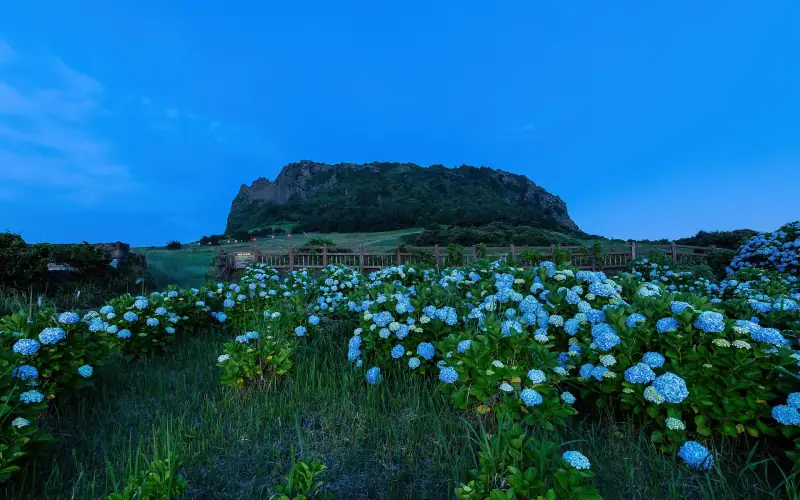
Complete guide to visiting South Korea: regions, highlights and tips
Plan your trip to South Korea: regions, cities, highlights, when to go, transport, lodging and budget, with all our detailed guides.
Ready-made
South Korea itineraries
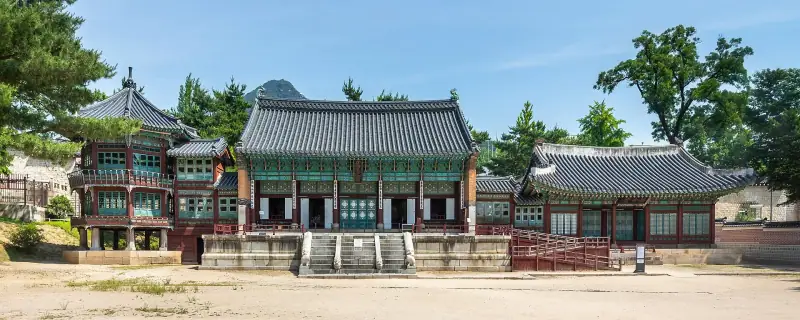
7 days
4 days
10 days
South Korea in 10 days: an itinerary through Seoul, Gyeongju, Busan and Jeju
SeoulGyeongjuBusanJeju