Plan your trip
Nepal Travel Budget: Real Costs, 3 Profiles and Ways to Save
We may earn a commission when you book through links on this page, at no extra cost to you. We don't visit or try the places we cover: we summarize published sources. How we work
In short
- Rough daily budgets without the international flight: about €25 to 40 (~$29 to 46) for a backpacker, €60 to 100 (~$70 to 115) for comfort, from €150 (~$175) for premium.
- Entrance fees, trek permits, domestic flights and guides often double the bill compared with what people imagine.
- Kathmandu to Pokhara by tourist bus costs about 15 to 20 USD for 7 to 8 hours; the Lukla flight is the most expensive transport item in the country.
- Cash in rupees is needed in villages and on treks; withdraw in Kathmandu or Pokhara before going up.
Nepal has the reputation of a cheap destination, and that is partly true: a plate of rice and lentils, a simple room or a local bus ride cost very little. But a real trip is not limited to these items. Site entrance fees, trek permits, domestic flights and guiding often double the bill compared with what you imagined.
This guide details costs item by item, offers three budget profiles with figures and ends with the tips that really save money. The amounts come from cross-checking several travel sources and official fees consulted in 2026; they are rounded and indicative (prices in dollars and Nepali rupees, NPR, change, and conversion to euros varies with the exchange rate). Check regulated fees before departure.
The international flight: the first big expense
Before even talking about spending on the ground, you have to count the plane ticket. Flights to Nepal generally involve a stopover (Gulf, Turkey, India or another hub). The price varies strongly with the season. October-November and March-April, the two big trekking windows, are the most expensive; the monsoon and early winter offer lower fares. See our guide to the best time to go to Nepal to weigh weather against price.
To limit the bill, compare several departure airports, stay flexible by a few days on the dates and book several months ahead for autumn.
Compare flights to Kathmandu
Fares vary a lot with the stopover and the season: compare several dates before booking.
Visa and formalities: a fixed cost to plan for
The tourist visa on arrival is listed at about 30 USD for 15 days, 50 USD for 30 days and 125 USD for 90 days. For a classic stay of two to three weeks, plan on the 30-day fee. An online form is available before departure and speeds up the airport process. Entry rules depend on your passport: check the official travel advice of your government before you book: travel.state.gov (US), GOV.UK (UK), travel.gc.ca (Canada), Smartraveller (Australia) (checked November 2026).
Add travel insurance that includes evacuation at altitude if you plan a trek: it is an item people are tempted to neglect, yet a rescue helicopter costs thousands of euros. Check that your policy covers the altitude you intend to reach (often a default ceiling of 4,000 or 4,500 m / 13,100 or 14,800 ft).
Lodging: from a few euros to several hundred
Lodging is the most flexible item.
- Dorm beds and simple guesthouses: about 5 to 15 USD a night depending on comfort, a little more in tourist districts.
- Mid-range private rooms: often between 25 and 70 USD, with breakfast at the best places.
- Boutique hotels and high-end properties: from around €100 (~$115) and up to several hundred euros for the most luxurious places, notably safari lodges and boutique hotels in the valley.
The Thamel district in Kathmandu and Lakeside in Pokhara concentrate the offer but also inflated prices. Moving a few streets away, or staying in a more residential area, often buys more comfort for the same price. To choose your area in the capital, read our guide where to stay in Kathmandu.
On treks, lodges (teahouses) charge very low prices for the room, sometimes a few euros, on the understanding that you eat there: food, for its part, costs more as you climb, because everything is carried by porters or mules.
Stays in Kathmandu and Pokhara
Filter by price, rating and free cancellation to compare dorms, guesthouses and hotels.
Meals: one of the cheapest items
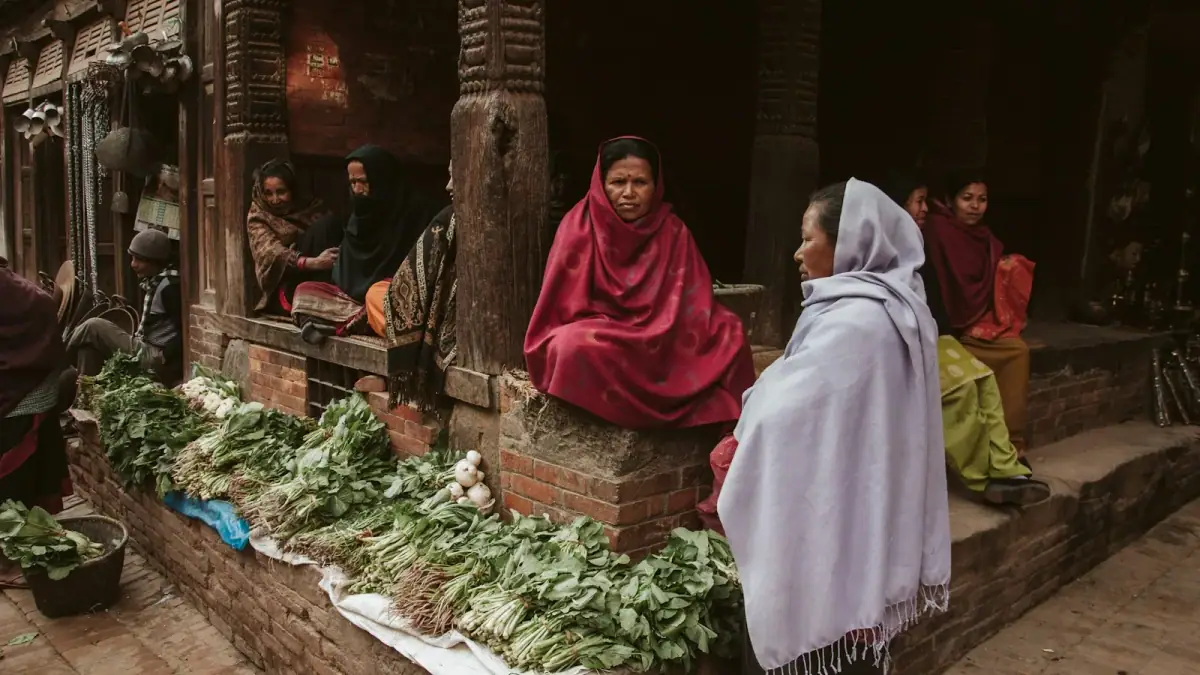
Eating in Nepal costs little if you eat like the locals. Dal bhat (rice, lentils, vegetables, often refilled at will) is found in ordinary restaurants for about 2 to 5 USD, or roughly 200 to 500 NPR depending on the place. Momos (dumplings), thukpa (noodle soup) and street food also remain very affordable. To know what to taste, see our article on Nepali cuisine and its specialties.
By contrast, a Western meal (pizza, burger, steak) in a tourist restaurant in Thamel or Lakeside comes to more like 8 to 10 USD, or more with drinks. Beer and imported wine quickly lift the bill.
On treks, prices rise with altitude. A dish can cost two to three times more above 4,000 m (13,100 ft) than in the valley. Bottled water is expensive there: filtered or tablet-treated water is preferred, cheaper and less polluting.
Transport: buses, taxis and domestic flights
Getting around ranges from nearly free to expensive.
- In town: minibuses and local buses cost a few dozen rupees; taxis and ride-hailing apps are pricier but remain reasonable. Negotiate the fare before getting in if the taxi has no meter.
- Kathmandu-Pokhara by tourist bus: sources indicate about 15 USD on a deluxe bus and up to 20 USD on a luxury bus, around 7 to 8 hours on the road. Public buses are cheaper but slower and less comfortable.
- Kathmandu-Pokhara flight: a considerable time saving, but at a clearly higher fare than the bus. It is mostly justified if your stay is short.
- Kathmandu-Lukla flight (Everest): the most expensive transport item in the country. Fares found range, depending on the source, from about 240 USD one way to several hundred dollars round trip. Check the exact price with an agency, because it depends on the airline, the season and the departure airport (in high season, flights sometimes leave from Ramechhap rather than Kathmandu).
For a car rental with a driver, expect a daily rate clearly above the bus; it is only really worthwhile for a group.
Sightseeing and entrance fees: the culture budget trap
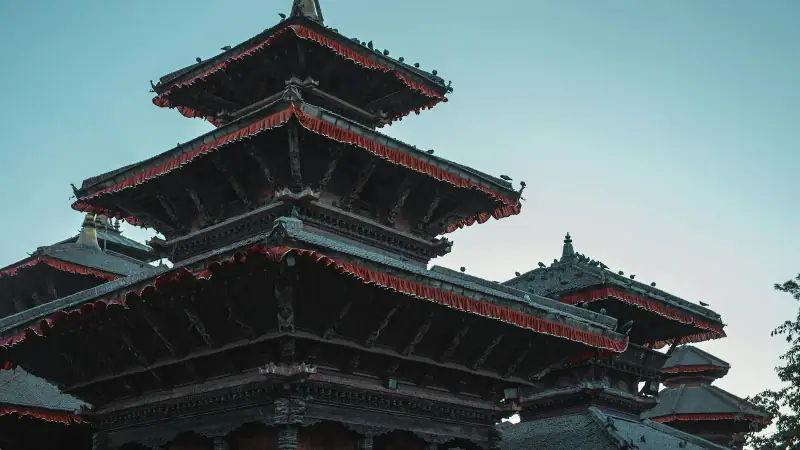
Many travelers underestimate entrance fees. Rates for foreigners from outside South Asia (SAARC) are in no way comparable to those charged to Nepalis. From the fees published in 2026, you can keep the following orders of magnitude:
- Kathmandu Durbar Square: about 10 USD (1,000 NPR);
- Patan Durbar Square: about 10 USD;
- Bhaktapur Durbar Square: about 18 USD, depending on the source;
- Swayambhunath: about 2 USD;
- Boudhanath: about 3 USD;
- Pashupatinath: about 10 USD;
- Chitwan National Park: about 15 USD per day of entry.
Sources differ slightly from one site to the next (ticket in rupees or dollars, recent update or not), so treat these figures as ranges. A day of sightseeing in the Kathmandu Valley can thus mean 30 to 50 USD in entrance fees alone. To optimize your route, see our guide to Bhaktapur and Patan to group sites by day.
Guided tours in the Kathmandu Valley
A local guide often pays for itself by saving you time and helping you avoid scams.
Treks and permits: the real heavy item
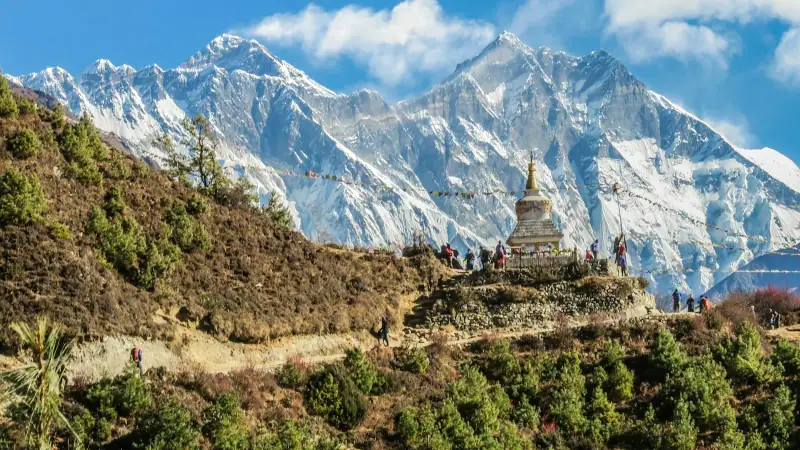
This is where the budget can tip. On top of lodging and meals at lodges, a trek requires permits whose fees, revised regularly, must be confirmed before departure.
- Annapurnas: the conservation area permit (ACAP) is listed at about 3,000 NPR, and the TIMS card at about 2,000 NPR (1,000 NPR through an agency). In total, expect about 35 to 38 USD for permits. To compare circuits, read the Annapurna treks.
- Everest (Khumbu): the Sagarmatha National Park permit is about 3,000 NPR, and the Khumbu Pasang Lhamu municipal permit is announced at 3,000 NPR since 2026 (versus 2,000 before). An additional permit may apply depending on the starting point. All the steps are detailed in our article on the Everest Base Camp trek.
On top of that, depending on your formula:
- a guide or porter, paid by the day, with his meals and lodging at your expense;
- gear rental (warm sleeping bag, down jacket) in Kathmandu if you do not want to buy, at a few dollars a day;
- hot drinks, device charging and hot showers, often charged at altitude.
A two-week trek toward Everest, flight included, quickly falls into the category of trips costing several thousand euros with an agency, against a far more modest budget for an independent trek in the Annapurnas.
Three budget profiles with figures
Here are three profiles for a stay of 14 days on the ground, per person, excluding the international flight. The amounts are orders of magnitude drawn from the ranges above, with rounded conversions.
Backpacker profile: about €25 to 40 (~$29 to 46) per day
- Lodging: dorms, simple guesthouses, trek lodges.
- Meals: dal bhat, momos, local canteens.
- Transport: local and tourist buses, no domestic flight.
- Activities: one or two paid sites a day at most, independent trek in the Annapurnas.
Budget over 14 days: about €400 to 650 (~$465 to 755), trek permits included, excluding the international flight.
Comfort profile: about €60 to 100 (~$70 to 115) per day
- Lodging: mid-range private rooms with breakfast.
- Meals: a mix of local food and more comfortable restaurants.
- Transport: tourist buses, taxis, possibly a domestic flight.
- Activities: guided tours, a Chitwan safari (see the Chitwan safari guide), a short trek with a guide.
Budget over 14 days: about €900 to 1,500 (~$1,045 to 1,740), excluding the international flight.
Premium profile: from €150 (~$175) per day
- Lodging: boutique hotels, high-end safari lodges.
- Meals: good restaurants, drinks included.
- Transport: private driver, domestic flights, possibly a helicopter.
- Activities: private guide, trek organized by an agency with porters.
Budget over 14 days: about €2,100 to 3,500 (~$2,435 to 4,060), or more with an all-inclusive Everest trek.
To structure your itinerary around these budgets, see our proposed two-week itinerary in Nepal.
Tips to spend less without giving anything up
- Travel outside the two peaks. Going in February, early March or December generally lowers lodging and flight prices compared with autumn.
- Eat dal bhat. It is the cheapest dish, hearty, and often refilled. It is your base on treks as in town.
- Take the bus rather than the plane for trips between Kathmandu, Pokhara and Chitwan, accepting a longer travel time.
- Avoid Western meals and alcohol on treks, which inflate the bill at altitude.
- Bargain calmly for taxis without a meter, off-season rooms and souvenirs, with a smile.
- Go through a licensed local agency rather than a Western tour operator for a guided trek: rates are often clearly lower, provided you compare several written quotes and check the license.
- Travel in a group. Taxis, driver and guide can be shared, which sharply cuts the cost per person.
- Bring a filtering bottle: bottled water adds up quickly on a trek budget.
- Withdraw money in Kathmandu or Pokhara before heading into the mountains, and keep small bills.
- Rent gear in Kathmandu if you only trek once.
Cash or bank card?
ATMs are common in Kathmandu and Pokhara, but they often apply per-transaction withdrawal limits and fixed fees: better to withdraw larger amounts, less often. Cards are accepted in mid-range and high-end hotels and some restaurants, sometimes with a fee. On treks and in villages, everything is paid in cash. Also keep a few dollars or euros in good-condition bills in case of need.
Tips and small costs not to forget
Tips are not mandatory but are the norm for guides and porters, who depend largely on this additional pay. Also plan for the cost of a local SIM card, device charging on treks, laundry and the pharmacy.
How much to plan in total?
To sum up, a two-week stay in Nepal falls roughly as follows, excluding the international flight:
| Profile | Per day | 14 days |
|---|---|---|
| Backpacker | about €25 to 40 (~$29 to 46) | about €400 to 650 (~$465 to 755) |
| Comfort | about €60 to 100 (~$70 to 115) | about €900 to 1,500 (~$1,045 to 1,740) |
| Premium | from €150 (~$175) | about €2,100 to 3,500 (~$2,435 to 4,060) |
Add to these figures the international flight, which often makes up a large share of the total budget on its own, as well as the visa and insurance. Finally, plan a margin of about 10 to 15% for the unexpected: flight delays to the mountains, an extra night in Kathmandu or a change of plan.
Sources
- Nepal Tourism Board: prices checked November 2026
- Nepal Tourism Board: figures checked November 2026
- Nepal Tourism Board: figures checked November 2026
- Nepal Tourism Board: figures checked November 2026
Frequently asked questions
What daily budget should you plan in Nepal?
Travel sources agree on about €25 to 45 (~$29 to 52) per day for a low-budget trip (dorm or simple room, dal bhat, local buses), €50 to 100 (~$58 to 115) per day for mid-range comfort, and clearly more for a high-end stay. These figures exclude the international flight and big items such as the flight to Lukla.
How much does the Nepal visa cost?
The tourist visa on arrival is listed at about 30 USD for 15 days, 50 USD for 30 days and 125 USD for 90 days. Fees can be revised: check them on the official website of the immigration department or with the embassy before leaving. Payment is generally in cash, in foreign currency, or by card at kiosks at the main entry points. Entry rules depend on your passport: check your government's official travel advice.
Is Nepal a cheap country?
Yes for food, local transport and simple lodging, which remain very affordable. No for site entrance fees, trek permits, domestic flights to the mountains and organized activities, whose cost quickly weighs on the overall budget.
Do you need a guide to trek, and how much does it cost?
Some areas now require a licensed guide or a permit issued by an agency; others, such as the Annapurnas, remain more flexible. A guide or porter is a notable daily expense, but brings safety, logistics and local income. Ask several licensed agencies for written quotes and check the current rules before booking.
Can you pay by bank card in Nepal?
In mid-range and high-end hotels and some restaurants in Kathmandu and Pokhara, yes, sometimes with a fee. In villages, trek lodges and small restaurants, you need rupees in cash. Withdraw at an ATM in town before heading into the mountains, because ATMs there are rare.
What is the heaviest expense?
For a stay without a trek, flights (international, then domestic) and lodging. For a trek toward Everest, the Kathmandu-Lukla flight, permits and the guide dominate the budget, well ahead of food.
More Nepal guides
Keep reading
When to Go to Nepal: Seasons, Monsoon and Best Months for Trekking
When to go to Nepal? Monsoon, trekking seasons, festivals, weather in Kathmandu, Pokhara, the Annapurnas and Everest: a month-by-month guide.
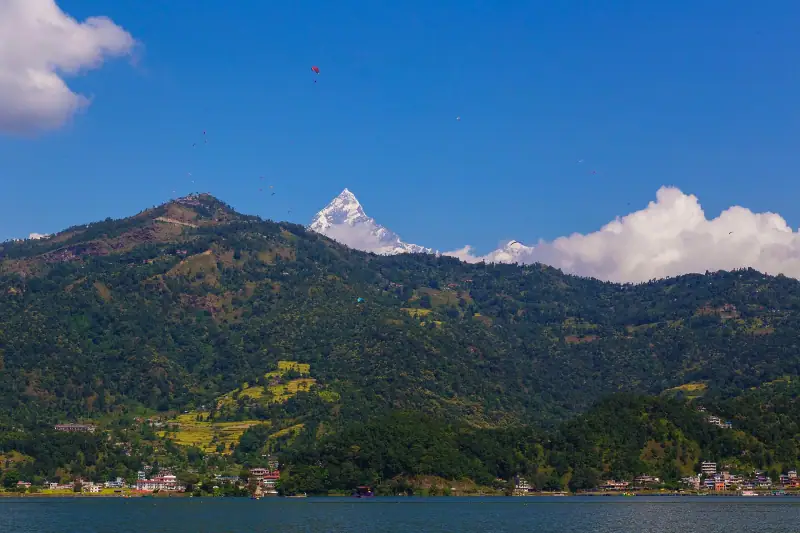
Paragliding in Pokhara: Prices, Booking Ahead or on Site, Season and Requirements
Tandem paragliding in Pokhara: rough budget, booking the day before or online, best months, Sarangkot takeoff, age, weight and insurance to check.
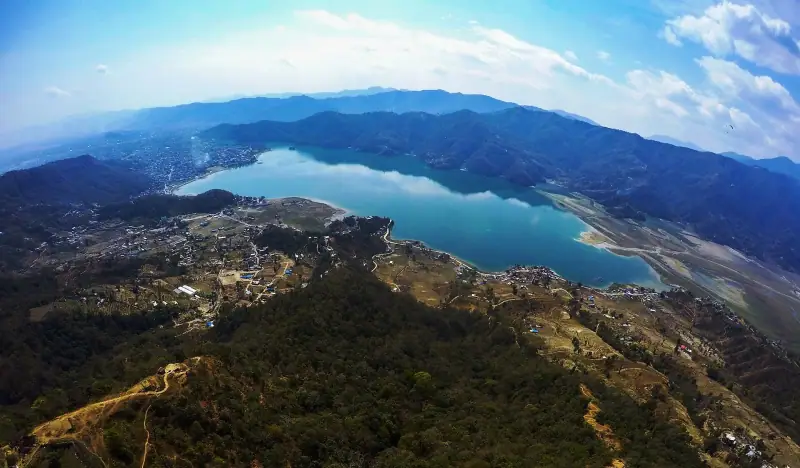
Things to Do in Pokhara: Lake, Peace Pagoda and Himalayan Views
What to do in Pokhara? Phewa Lake, Peace Pagoda, Sarangkot, paragliding, caves and the Mountain Museum: ideas for 2 to 4 days.
Ready-made
Nepal itineraries
3 days
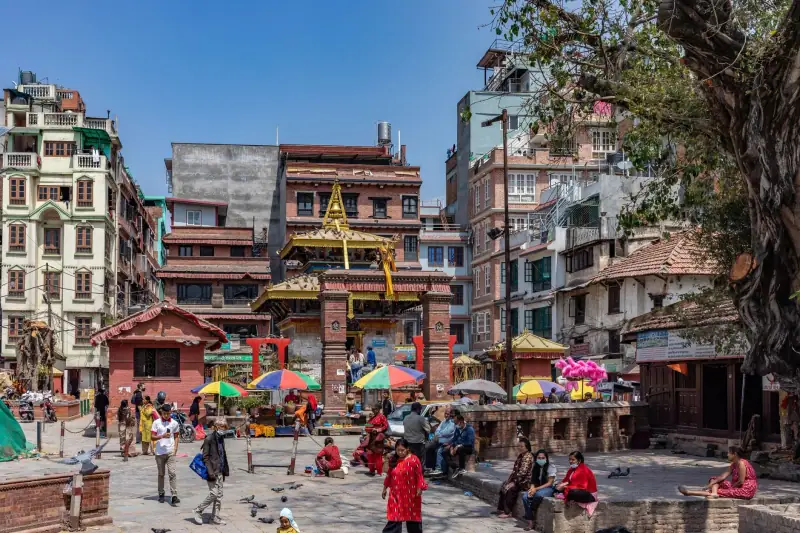
Kathmandu in 3 Days: Day-by-Day Itinerary, Temples, Newar Cities and Tips
A 3-day itinerary for Kathmandu and its valley: Durbar Square, Swayambhunath, Pashupatinath, Boudhanath, Patan and Bhaktapur, with transport and tips.
10 days
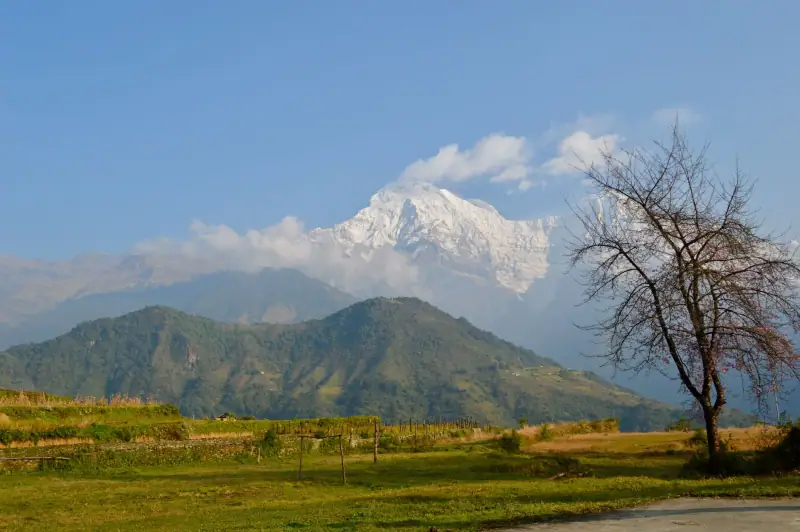
Nepal in 10 Days: Kathmandu, Pokhara and the Poon Hill Trek
A 10-day Nepal itinerary: Kathmandu temples, Pokhara's lake and a short 4-day Poon Hill trek, with tips, permits and a rough budget.
12 days
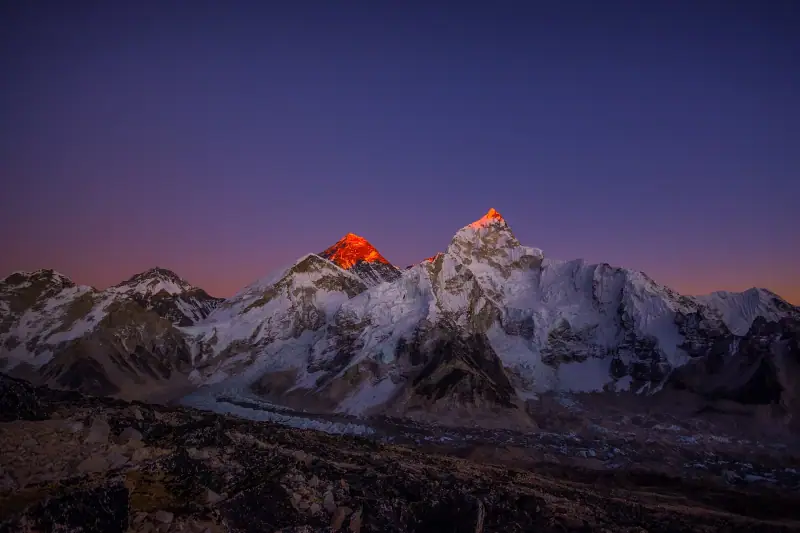
Nepal with Kids: A 12-Day Family Itinerary with Gentle Stages and Tips
KathmanduPokharaBandipurChitwan