Things to do
Paragliding in Pokhara: Prices, Booking Ahead or on Site, Season and Requirements
We may earn a commission when you book through links on this page, at no extra cost to you. We don't visit or try the places we cover: we summarize published sources. How we work
In short
- Paragliding in Pokhara is tandem, with no experience needed, from Sarangkot (about 1,592 m / 5,223 ft) down to the lakeshore.
- Booking the day before in Lakeside is common, a bit earlier in high season; flights are suspended in the monsoon, roughly June to August.
- Indicative prices quoted online: about 70 to 100 dollars for a standard tandem flight, 150 to 200 dollars for a one-hour flight. These are not official figures.
- Operators set their own age and weight limits, and many travel insurance policies treat paragliding as a risk activity: check both before paying.
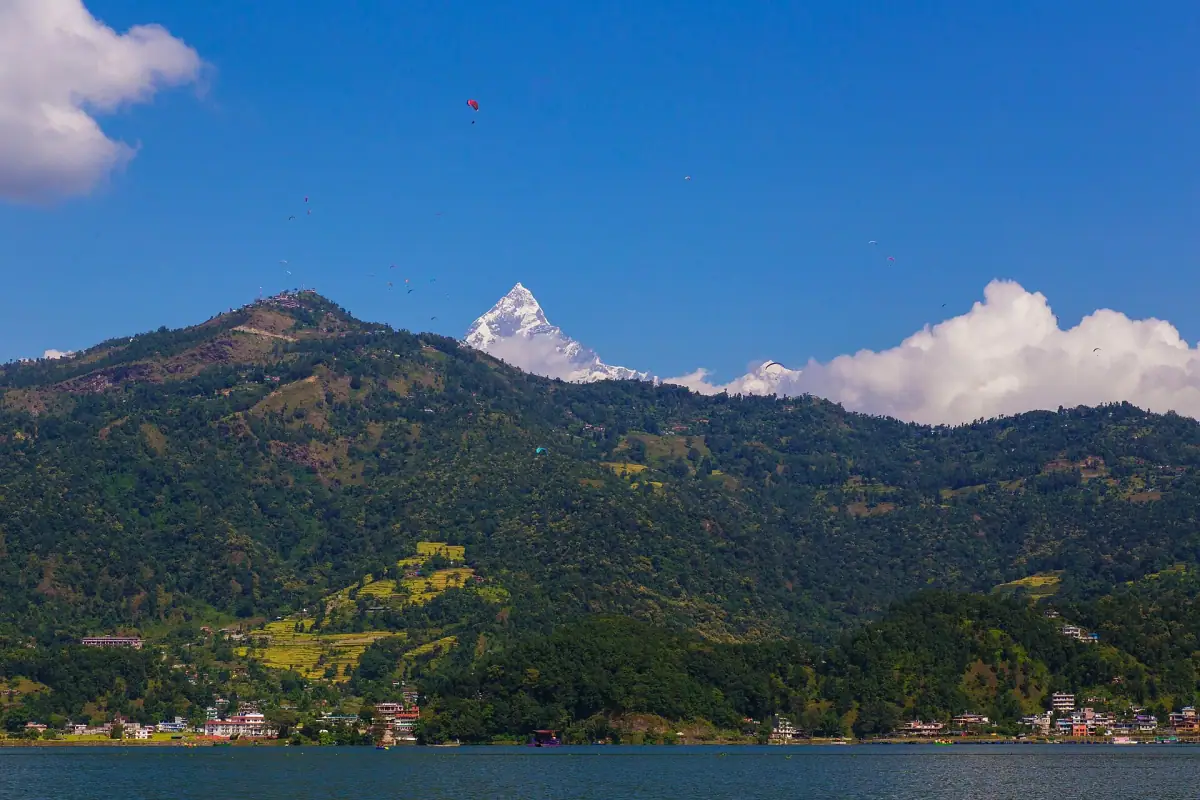
Flying over Phewa Lake with the Annapurnas as a backdrop is one of Pokhara’s most popular experiences, and one of the easiest to arrange. This page answers the practical questions: how much to plan, whether to book, when to fly and what to know before taking off.
In short: paragliding in Pokhara is done in tandem, with no experience, from Sarangkot (about 1,592 m / 5,223 ft) to the lakeshore. People readily book the day before in Lakeside, a bit earlier in high season. Flights are suspended during the monsoon, from June to August, and always depend on the day’s weather.
Where and how the flight goes
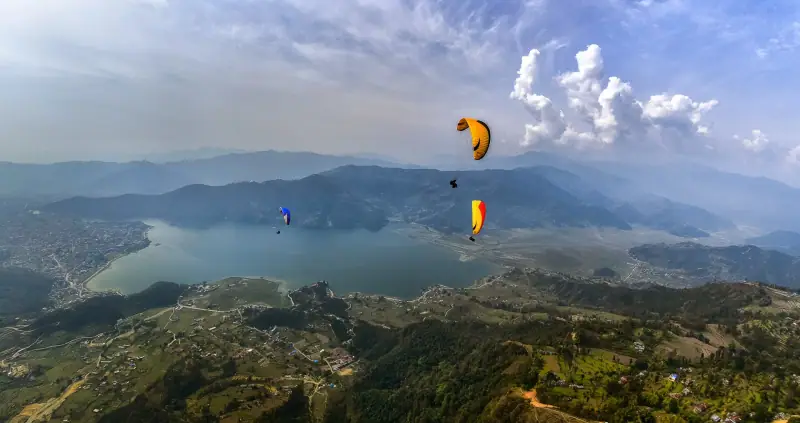
Paragliders take off from Sarangkot, a ridge at about 1,592 m (5,223 ft) above Lakeside, according to the Nepal Tourism Board. The pilot uses rising currents to circle above the valley, then lands you near Phewa Lake. The trip to the takeoff is by minibus or taxi, generally included in the agencies’ package: check it.
A standard flight lasts twenty to forty minutes depending on conditions. Longer packages, of about an hour, go off to explore the Annapurna range. Once there, the views change a lot from one day to the next: some mornings the summits are sharp, other days haze hides them. To place Sarangkot and the other viewpoints, see our guide what to do in Pokhara.
Paragliding in Pokhara for a complete beginner
No level is required. The pilot fits you with a harness and a helmet, explains the moves to make, then asks you to run a few steps toward the void at takeoff. After that, you are seated and there is nothing left to do.
What matters for a beginner:
- Motion sickness: spirals and tight turns shake some passengers. Tell the pilot before taking off; he can fly more gently.
- Clothing: closed shoes that hold the foot well, pants or leggings, a warm layer for the cool air at altitude, sunglasses securely attached.
- Fitness: no sustained physical effort, but you must be able to run a few meters.
- The pilot: ask whether he is experienced and whether the agency is registered with the local authorities of the country.
Paragliding with children or seniors
Agencies set their own age and weight limits, because the wing and harness are sized for passengers of ordinary build. There is no single rule: call or write before booking, and get the answer in writing if your child’s age is close to the limit. For a stay with younger children, our Nepal family itinerary offers gentler activities.
For seniors, the question is mostly physical condition: back, joint or heart problems to report to the agency before booking.
How much to plan: indicative prices
Rates change with the season, the flight length and the number of options. As a guide, booking sites and online guides quote for a standard tandem flight a range of about 70 to 100 dollars, and more like 150 to 200 dollars for a one-hour flight. These figures are not official, and may have changed: do not take them as a promise.
Here is what makes the price vary:
| Item | What to check |
|---|---|
| Flight length | Short flight (20-30 min) or long (about 1 h) |
| Transport | To Sarangkot and back, often included |
| Photos and video | Often optional, to confirm before the flight |
| Operator’s insurance | To ask about, and to compare with your own policy |
| Payment | Rupees, dollars or card: ask about any fees |
To place this expense within your stay, see our budget for Nepal.
Paragliding and activities in Pokhara
Compare tandem paragliding flights and other excursions around Pokhara, with the cancellation terms shown before paying.
Booking ahead or on the spot
In the streets of Lakeside, paragliding agencies are numerous and comparing them takes little time. Two strategies hold up.
Booking on the spot, the day before. It is flexible: you wait to see the weather and choose the agency after comparing a few offers. The risk is a full slot in peak season.
Booking online or by message, a few days before. This suits you if your stay in Pokhara is short, or if you want a precise morning time. Always keep a spare day, because a flight canceled for wind cannot always be made up.
Whatever the formula, ask these five questions before paying: what is included (transport, photos), the real flight length, the policy for weather cancellation, the weight or age limit, and the name of the agency or pilot.
When to fly: season and time of day
According to operators, flights are rare or suspended during the monsoon, from roughly June to August, because of clouds and rain. The most pleasant periods remain autumn (October-November) and late winter into spring (roughly February to April), when the air is clear and the mountains clearly visible. To compare seasons across the country, read when to go to Nepal.
As for time, morning is the most sought-after slot for visibility, but the afternoon often offers more thermals, so sometimes longer flights. If you want fine scenery, morning is a good choice. If you want a longer flight, ask the pilot for advice.
Sleep in Pokhara
Lakeside lets you walk to the paragliding agencies and leave early in the morning: compare lodgings and their reviews.
To choose the right neighborhood, see where to stay in Pokhara.
Safety and insurance: what to check
Paragliding remains an aerial activity, with real risks even in tandem. A few simple habits reduce these risks:
- Refuse to fly in bad weather: if the pilot hesitates, do not push him.
- Look at the equipment: clean wing, harness and helmet in good condition.
- Choose a recognized agency rather than the lowest price.
- Read your insurance contract: look for the mention of paragliding among covered or excluded activities. If you are looking at a travel assistance plan, read closely the list of activities guaranteed.
Before leaving, also read the travel advice of your government: travel.state.gov (US), GOV.UK (UK), travel.gc.ca (Canada), Smartraveller (Australia) (checked November 2026), and our formalities for Nepal.
If the flight is canceled: plan B in Pokhara
On a day of wind or low clouds, the flight is off. Keep a few alternatives in mind: a boat ride on Phewa Lake, the walk up to the Peace Pagoda, or a first walk in the hills. Those who prefer to stay on the ground can also see the Annapurnas on a short hike: see our comparison of Annapurna treks.
Sources
Frequently asked questions
Do you need experience to paraglide in Pokhara?
No. The flight is tandem, attached to a professional pilot who handles takeoff, trajectory and landing. You are mostly asked to run a few steps at takeoff, then let yourself be carried.
Should you book in advance or on the spot?
Both work. Outside peak periods, people often book the day before with a Lakeside agency, which lets you choose according to the weather. In October-November, or if you have only one free day, booking a few days ahead avoids ending up without a slot.
What is the best time of year to fly?
Autumn (October-November) and late winter into spring generally offer clear skies and clear views of the summits. Flights stop during the monsoon, from roughly June to August. Morning is the most sought-after time, because the air is clearer.
What happens if the weather cancels the flight?
The flight is postponed, because the pilot decides based on wind and visibility. Before paying, ask how the agency handles rescheduling or refunds, and keep a spare day in your program.
Is there an age or weight limit?
Yes, each operator sets its own age and weight limits for safety reasons. They vary from one agency to another: ask when booking, especially for a child or a person of large build.
Does my travel insurance cover paragliding?
Not always. Many policies class paragliding among risk activities, sometimes excluded or subject to conditions. Read the list of covered activities before leaving and, if needed, choose a plan that includes it.
More Nepal guides
Keep reading
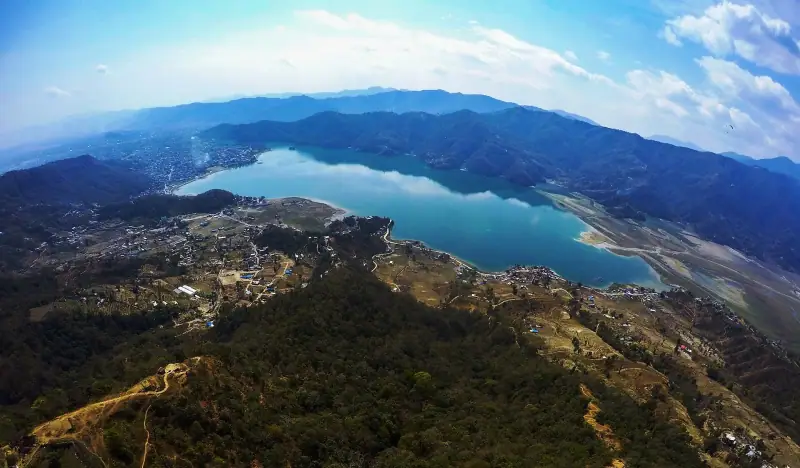
Things to Do in Pokhara: Lake, Peace Pagoda and Himalayan Views
What to do in Pokhara? Phewa Lake, Peace Pagoda, Sarangkot, paragliding, caves and the Mountain Museum: ideas for 2 to 4 days.
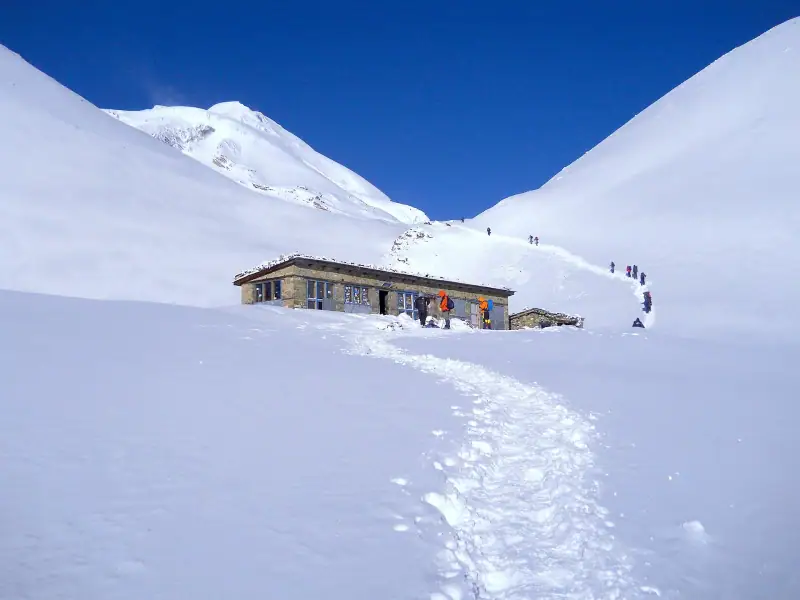
Annapurna Treks: Which Circuit to Choose (Poon Hill, Sanctuary, Circuit)
Annapurna treks: compare Poon Hill, Annapurna Base Camp and the Annapurna Circuit. Length, difficulty, altitude, season and permits to choose well.
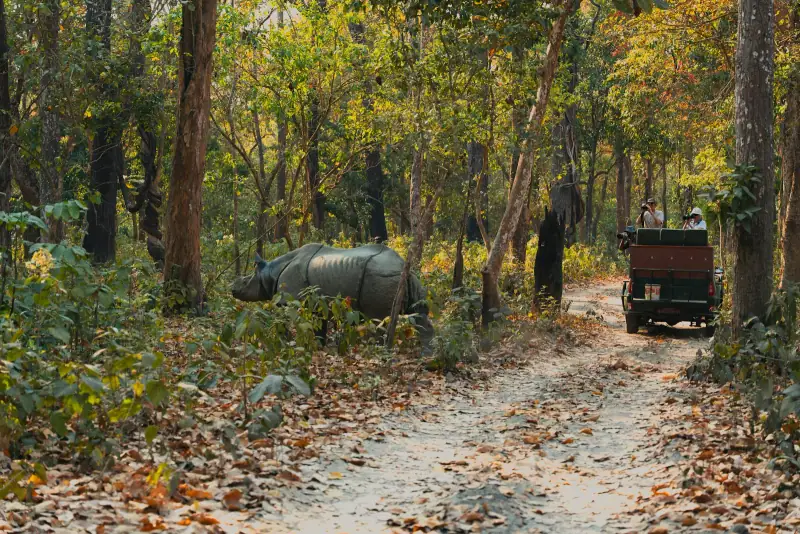
Chitwan Safari: A Guide to the National Park, from Sauraha to the Rhinos
Planning a safari in Chitwan National Park: rhinos, gharials, jeep, forest walk, canoe, best season and access from Kathmandu or Pokhara.
Ready-made
Nepal itineraries
3 days
Kathmandu in 3 Days: Day-by-Day Itinerary, Temples, Newar Cities and Tips
A 3-day itinerary for Kathmandu and its valley: Durbar Square, Swayambhunath, Pashupatinath, Boudhanath, Patan and Bhaktapur, with transport and tips.
10 days
Nepal in 10 Days: Kathmandu, Pokhara and the Poon Hill Trek
A 10-day Nepal itinerary: Kathmandu temples, Pokhara's lake and a short 4-day Poon Hill trek, with tips, permits and a rough budget.
12 days
Nepal with Kids: A 12-Day Family Itinerary with Gentle Stages and Tips
KathmanduPokharaBandipurChitwan