What to see
Visiting Bhaktapur and Patan: The Newar Cities of the Kathmandu Valley
We may earn a commission when you book through links on this page, at no extra cost to you. We don't visit or try the places we cover: we summarize published sources. How we work
In short
- Patan is only a few kilometers from Kathmandu; Bhaktapur is about 12 km (7.5 mi) east, and traffic can lengthen both trips noticeably.
- Ideally allow half a day to a day per city; Bhaktapur deserves a full day, or a night to enjoy the streets after the groups leave.
- Foreign visitors generally pay an entrance fee for the Durbar Squares; amounts change, so check locally.
- Highlights: Bhaktapur's Golden Gate and Nyatapola temple, the potters' square, juju dhau, Patan's museum and Golden Temple.
A few kilometers from the capital, the Kathmandu Valley hides two cities that have kept the soul of the old Newar kingdom: Bhaktapur and Patan. Red brick, carved wooden facades, tiered temples, hidden courtyards and artisans’ workshops: you see a slower, older Nepal than in the noisy streets of the capital. These two cities, with Kathmandu, form the core of the valley’s cultural heritage, listed by UNESCO.
Here is how to visit them, what not to miss and how to fit them into your stay.
The Newars and the valley’s three kingdoms
Before strolling the streets, a bit of context helps to understand what you see. The Kathmandu Valley is the historic territory of the Newars, a people of artisans, merchants and farmers who developed a very refined urban culture. For several centuries, the valley was divided into rival kingdoms centered on Kathmandu, Patan and Bhaktapur. Each tried to outdo the others in the beauty of its palace and temples.
This rivalry explains the richness of the Durbar Squares, those large royal squares where palaces, sanctuaries, ponds and columns are concentrated. Hinduism and Buddhism blend there naturally: it is not rare to see a Shiva temple next to a Buddhist monastery, with the same offerings of flowers and colors.
The April 2015 earthquake hit the valley hard. Several buildings have been rebuilt or restored, and scaffolding sometimes remains. It is part of the current landscape, and the visit remains rich. To complete this overview, our guide on what to do in Kathmandu details the capital and its most famous sites.
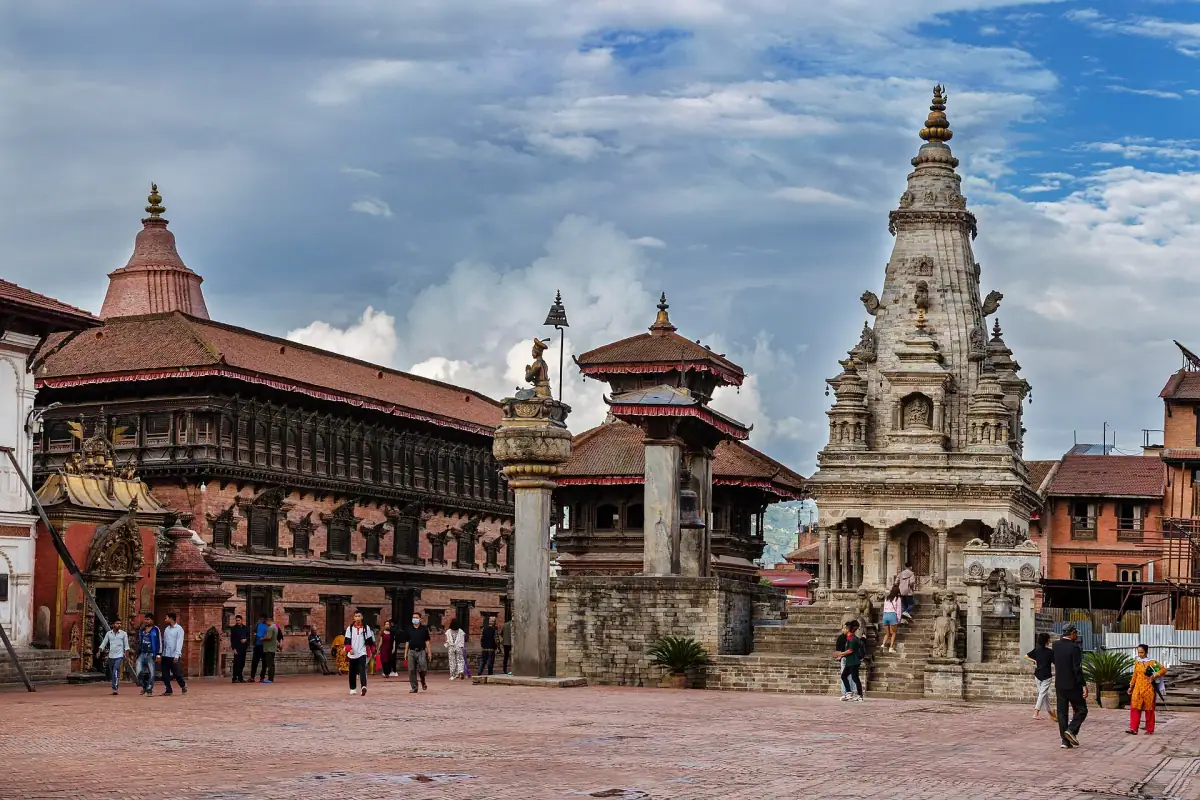
Bhaktapur’s Durbar Square: an open-air museum
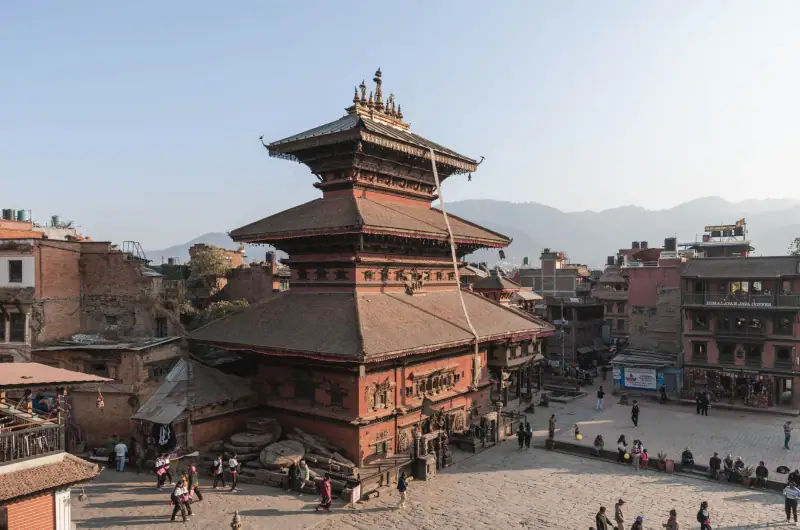
Bhaktapur lies about a dozen kilometers (7.5 mi) east of Kathmandu. Smaller and quieter, the city has kept a very homogeneous urban fabric, with brick-paved streets and little traffic in the historic center. It is often the one travelers prefer.
The Durbar Square is the natural starting point. It gathers the former royal palace, with its famous Golden Gate, a masterpiece of repoussé metal, as well as the 55-Window Palace, known for its finely carved wooden balconies. Around it, temples of various sizes rise on stepped platforms, with their stacked roofs and beams decorated with deities.
Take the time to look up: the details of the windows, capitals and wooden struts are often more fascinating than the big monuments themselves. Visiting early in the morning, you will enjoy soft light and fewer people on the square.
Sleep in Bhaktapur or Patan
A night in a restored Newar house lets you discover the cities in the morning and evening, when the groups have left: compare lodgings and reviews.
Taumadhi and the Nyatapola temple
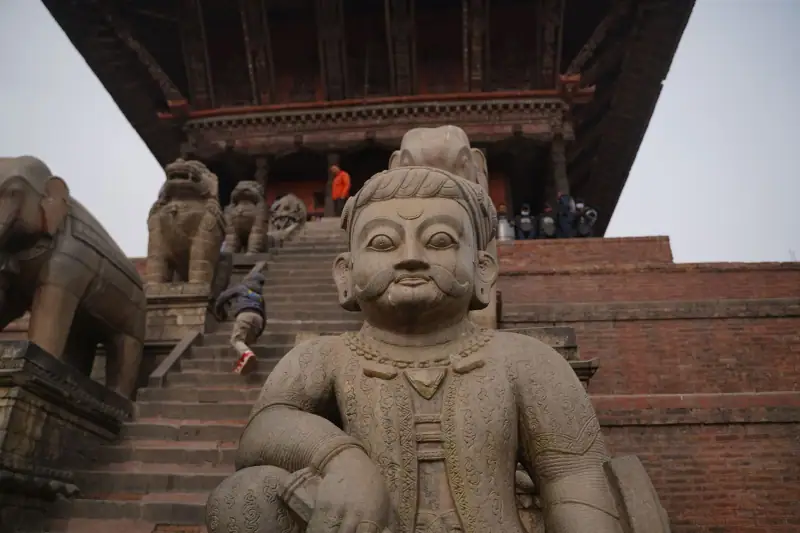
A few steps from the main square, Taumadhi Square is home to the Nyatapola, a five-story temple among the tallest and most elegant in the country. Built in the early 18th century, it is distinctive for rising on five terraces, each guarded by a pair of carved figures: wrestlers, elephants, lions, griffins and goddesses, more and more powerful as you climb.
The temple is dedicated to a tantric deity, and its sanctuary is not open to the public. But its staircase and terraces serve as a natural viewing platform: sitting for a few moments to watch life on the square, with the merchants, pigeons and children, is a pleasure. The cafes on the neighboring terraces offer views of the whole.
Nearby stands the Bhairabnath temple, dedicated to a terrible form of Shiva. Local festivals particularly animate these squares: in April, the Bisket Jatra, which marks the Nepali New Year, gathers processions and chariots.
The Potters’ Square and the craft lanes
One of the nicest atmospheres in Bhaktapur is found at the Potters’ Square. Rows of terracotta pottery dry in the sun on the ground, while artisans shape vases, pots and decorative objects on traditional wheels. You can watch the work, or even try turning for a few minutes with a potter’s help.
In the neighboring lanes, many workshops work wood, cloth and masks. Wandering without a set route lets you stumble on inner courtyards, stone fountains, small shrines and shops selling thangkas, those Buddhist paintings on cloth. If you buy, compare several shops and ask how the object was made: authentic craft is far more interesting than industrial copies.
Tasting juju dhau, the “king of yogurts”
Bhaktapur is known for its juju dhau, a creamy yogurt traditionally served in small terracotta pots. Its thick texture and slightly sweet taste make it a dessert much appreciated by locals and visitors alike. It is found in many shops and restaurants in the center, often near Taumadhi Square.
Take the chance to try other Newar specialties if you are curious: dishes made with beaten rice, fritters, spiced meats, local drinks. To better understand the country’s cuisine before diving in, ask your host, who will know where to point you to trustworthy places.
Guided tours of the Kathmandu Valley
A local guide helps decode the architecture, rites and history of the Newar cities: discover the visits and excursions offered from Kathmandu.
Patan: the Durbar Square and the museum
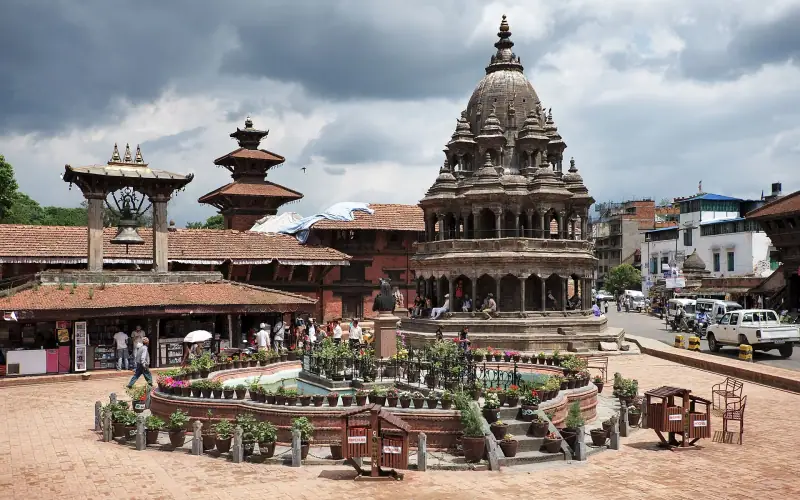
Patan, also called Lalitpur, lies just south of Kathmandu, across the Bagmati River. More urban than Bhaktapur, the city has partly merged into the capital’s urban area, but its old center has kept a strong identity. It is known for its artisans, in particular the metalworkers who cast bronze statues using the lost-wax technique.
Patan’s Durbar Square is one of the most harmonious in the valley. You find the former royal palace, stone and brick temples, columns topped with statues and many ponds. The Krishna temple, entirely of stone, stands out with its levels of small pavilions and its style inspired by Indian influences.
Part of the former palace now houses the Patan Museum, often hailed as one of the finest art museums in the country. It presents statues, religious objects and metal pieces in a carefully restored setting. Its inner courtyard and cafe make you want to linger. Allow about one to two hours for the visit.
The Golden Temple and the Buddhist courtyards
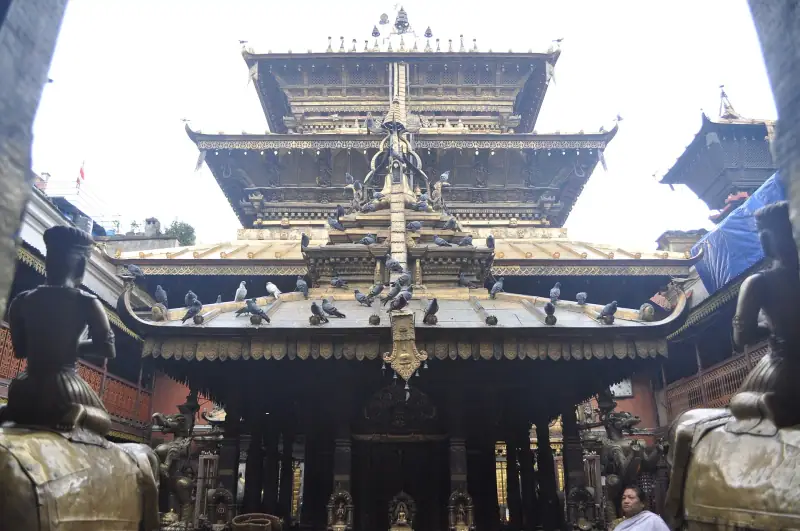
A few minutes’ walk from the Durbar Square, the Golden Temple (Hiranya Varna Mahavihar) is a Buddhist monastery whose facade and roof are covered in gilded metal. It is organized around a courtyard with sanctuaries, worshippers spinning prayer wheels and offerings that recall the fervor of the place. The atmosphere is both lively and contemplative.
In the surrounding lanes, you come across other bahals, those inner monastery courtyards typical of Newar architecture, with their ponds, sculptures and galleries. Discovery happens at random through vaulted passages. Follow the usual rules: take off your shoes when asked, do not photograph rites without permission, and do not point at statues with your finger.
The markets and shopping streets of the old city are also a good way to soak up daily life: vegetables, spices, ritual objects, copper tools, colorful fabrics. Nothing obliges you to buy, but watching is already worth the detour.
How to organize: one day or two?
Patan and Bhaktapur are easily visited from Kathmandu, by taxi, vehicle with a driver or local transport. Patan is only a few kilometers from the capital, while Bhaktapur is about a dozen kilometers (7.5 mi) east; traffic can noticeably lengthen the trips, especially at rush hour.
Here are two simple ways to organize:
- An express day: Patan in the morning (Durbar Square, museum, Golden Temple), then Bhaktapur in the afternoon (Durbar and Taumadhi squares). It is possible, but a bit quick.
- Two more relaxed days: one day for Patan, one for Bhaktapur, possibly with a night there to enjoy the evening and early-morning atmosphere. To extend toward the hills and a Himalayan sunrise, compare Nagarkot and Dhulikhel.
If you have a little time, you can extend the outing to other sites in the valley, but these two cities are more than enough to fill a good day. For the rest of the trip, see our guide to the best time to go to Nepal to choose the most pleasant season for walking the old streets.
Flights to Kathmandu
Most flights to Nepal involve a stopover: compare routes and durations before booking, then reach Patan and Bhaktapur from the capital.
Practical tips
- Entrance fees: the Durbar Squares generally charge foreign visitors. Keep your ticket on you, it may be checked. Fees change, so check them locally.
- Time of day: in the morning, the light is beautiful and the squares are calmer. At the end of the day, the atmosphere becomes very pleasant, especially in Bhaktapur.
- Season: autumn and spring offer the clearest skies. In the monsoon, brick lanes can be slippery; bring good shoes and a waterproof jacket.
- Dress: shoulders and knees covered in places of worship, and shoes to remove at the entrance of some sanctuaries.
- Guides: an official local guide is useful to understand the iconography, symbols and festivals. Agree on the fee before leaving.
- Respect for rites: the direction around temples and stupas is generally clockwise; watch the locals and imitate them.
- If you continue west: Pokhara is a fine next stage after a few days in the valley.
Between the red bricks of Bhaktapur and the golden courtyards of Patan, these two cities offer a dive into Newar history found nowhere else. A few hours of unhurried walking are enough to understand why the Kathmandu Valley fascinates travelers so much.
Frequently asked questions
Do you need a full day for Bhaktapur and Patan?
Ideally, half a day to a day per city. Patan, very close to Kathmandu, is easily visited in a morning or an afternoon. Bhaktapur, larger and calmer, deserves a full day, or even a night there to enjoy the streets after the groups leave.
How do you get from Kathmandu to Bhaktapur and Patan?
Patan is only a few kilometers from Kathmandu: a taxi or private vehicle is enough. Bhaktapur is about a dozen kilometers (7.5 mi) east, but traffic can noticeably lengthen the trip. Taxis, vehicles with a driver and local minibuses are the most common solutions.
Is an entrance fee charged to visit the Durbar Squares?
Yes, foreign visitors generally have to pay an entrance fee to access the Durbar Squares, particularly in Bhaktapur and Patan. The amount and terms change: ask locally or with your accommodation before the visit.
Did the 2015 earthquakes leave traces?
The April 2015 earthquake badly damaged several monuments in the valley, including temples on the Durbar Squares. Many have been restored or are still being restored. You may see scaffolding on some buildings, without it spoiling the visit of the ensembles.
Can you sleep in Bhaktapur rather than Kathmandu?
Yes, and it is a good choice for a quieter atmosphere. The streets empty at the end of the day, which lets you discover the town at sunrise. Lodgings are generally in restored traditional houses or small guesthouses, with a more limited offer than in Kathmandu.
More Nepal guides
Keep reading
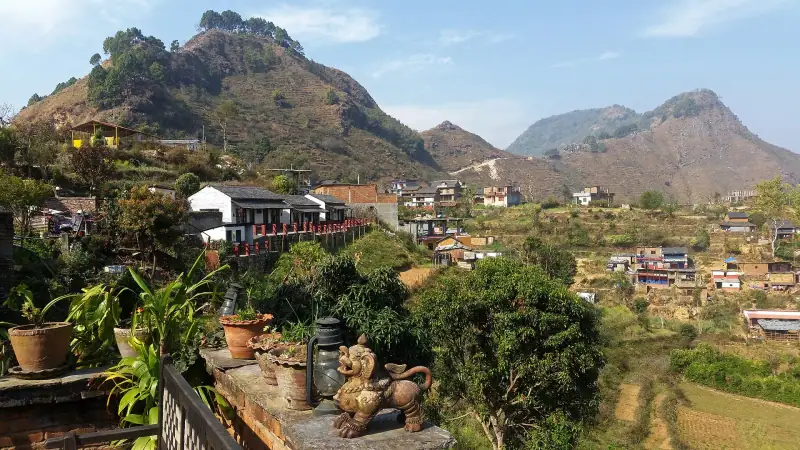
Bandipur, Nepal: Is It Worth the Detour Between Kathmandu and Pokhara?
Bandipur, a car-free Newar village between Kathmandu and Pokhara: access via Dumre, one night or half a day, Siddha Cave, Thani Mai and Tundikhel.
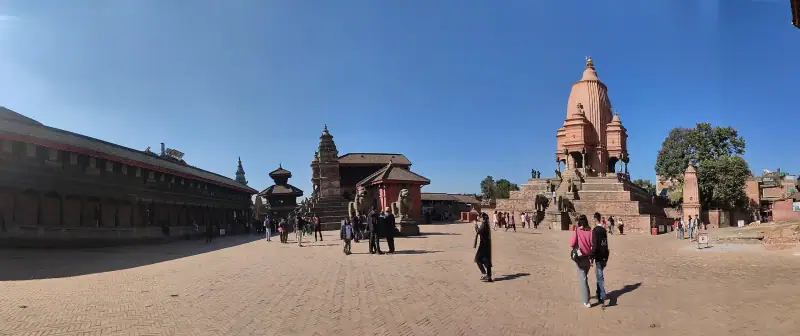
Complete Guide to Visiting Nepal: Regions, Highlights and Tips
Visiting Nepal: regions, cities, highlights, when to go, transport, where to stay and budget. The pillar guide to prepare your trip.
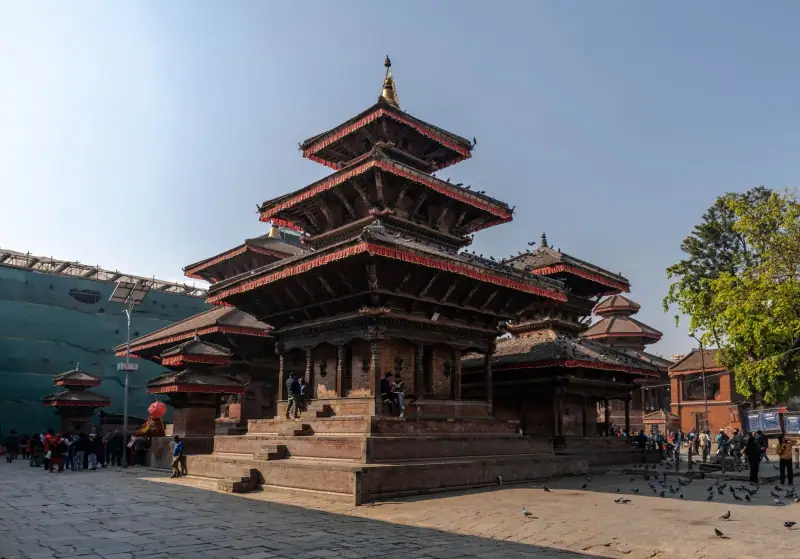
Things to Do in Kathmandu: The Capital's Must-Do Visits
What to do in Kathmandu? Durbar Square, Swayambhunath, Boudhanath, Pashupatinath, Thamel: the essential visits, practical tips and ideas for your days.
Ready-made
Nepal itineraries
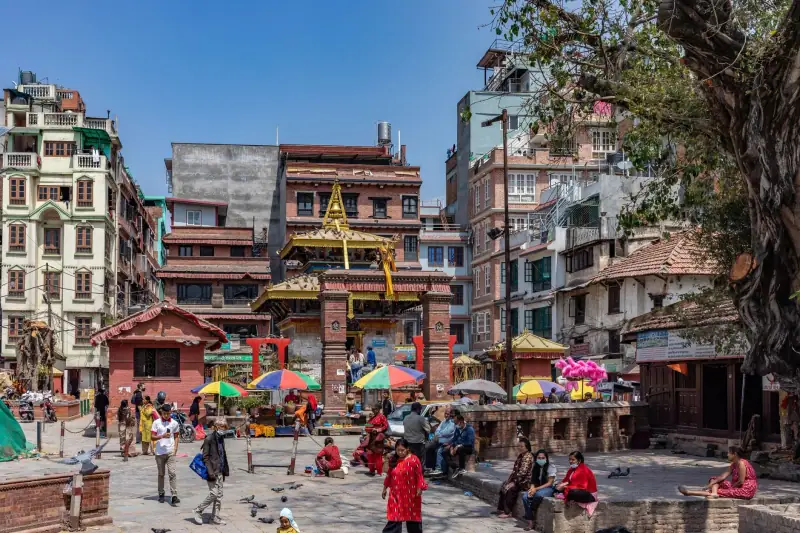
3 days
Kathmandu in 3 Days: Day-by-Day Itinerary, Temples, Newar Cities and Tips
A 3-day itinerary for Kathmandu and its valley: Durbar Square, Swayambhunath, Pashupatinath, Boudhanath, Patan and Bhaktapur, with transport and tips.
10 days
Nepal in 10 Days: Kathmandu, Pokhara and the Poon Hill Trek
A 10-day Nepal itinerary: Kathmandu temples, Pokhara's lake and a short 4-day Poon Hill trek, with tips, permits and a rough budget.
12 days
Nepal with Kids: A 12-Day Family Itinerary with Gentle Stages and Tips
KathmanduPokharaBandipurChitwan