Things to do
Everest Base Camp Trek: Itinerary, Altitude and Tips
We may earn a commission when you book through links on this page, at no extra cost to you. We don't visit or try the places we cover: we summarize published sources. How we work
In short
- The classic route runs from Lukla (2,800 m) to base camp (about 5,300 m / 17,390 ft) and Kala Patthar (about 5,500 m); allow 12 to 14 days round trip.
- The trek is not technical: well-marked trails and lodges at each stage. The difficulty comes from altitude, cold and duration.
- The two classic windows are March to May and October-November; avoid the monsoon and midwinter.
- Lukla flights depend on weather: keep two to three spare days before your international flight. Insurance must cover trekking above 5,000 m and helicopter evacuation.
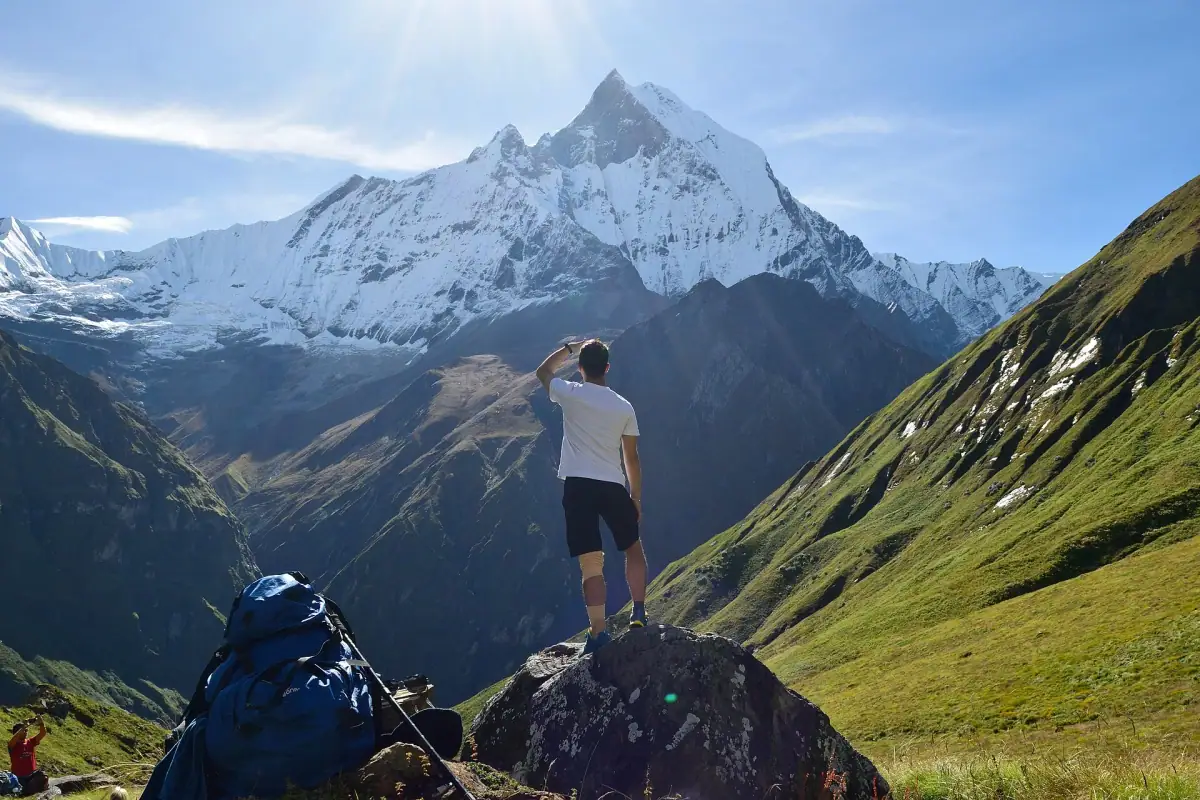
Walking to the foot of the highest mountain in the world, about 8,850 m (29,035 ft), is the dream of many hikers. The Everest Base Camp trek, in the Khumbu valley, requires no mountaineering technique: what makes it demanding is altitude, cold and duration. Well prepared, it remains accessible to regular walkers in good shape.
This guide details the classic route, the best season, permits, flight logistics and gear. If you hesitate with another region, compare with our guide to the Annapurna treks.
The classic route at a glance
The most common route starts from Lukla and follows the Dudh Koshi valley northeast, to the foot of the Khumbu glacier. The altitudes below are approximate values:
| Stage | Approximate altitude |
|---|---|
| Lukla | 2,800 m (9,200 ft) |
| Namche Bazaar | 3,400 m (11,150 ft) |
| Tengboche | 3,900 m (12,800 ft) |
| Dingboche | 4,400 m (14,435 ft) |
| Lobuche | 4,900 m (16,075 ft) |
| Gorak Shep | 5,200 m (17,060 ft) |
| Base camp | 5,300 m (17,390 ft) |
| Kala Patthar | 5,500 m (18,045 ft) |
Allow 12 to 14 days in total, round trip. The descent is much faster: you get back to Lukla in about three to four days.
Stages are short, generally three to six hours of walking, because the goal is not performance but slow progress.
Lukla: starting by plane
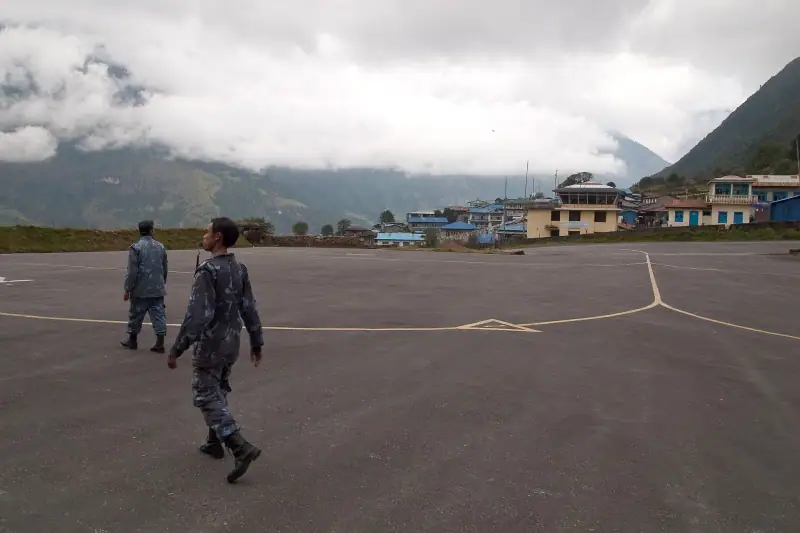
Lukla is the classic entry point of the trek. You arrive by small plane from Kathmandu, a flight of about thirty minutes, known for its short sloping runway and its panoramas of the Himalaya. It is also the fragile link of the organization: weather, fog or wind can ground planes for hours, even days.
Depending on the season and the airlines’ organization, some high-season flights may leave from an airport other than Kathmandu, which adds a road transfer of several hours. Confirm this point with your agency or accommodation when booking.
A few habits to adopt:
- Keep two to three spare days at the end of the stay before your international flight.
- Take the morning flight: it is the one that most often leaves, before the clouds rise.
- Travel with light luggage: airlines impose a strict weight limit on bags.
- Some hikers choose to walk from a lower starting point, by road then on foot: it adds several days, but avoids the flight.
Before departure, one or two nights in Kathmandu let you settle permits, gear rental and last shopping. To choose a neighborhood, see our guide where to stay in Kathmandu.
Sleep in Kathmandu before and after the trek
Leave your bulky belongings at the hotel, rest before departure and keep a room for the return, in case flights are shifted.
Namche Bazaar: the gateway to the Khumbu
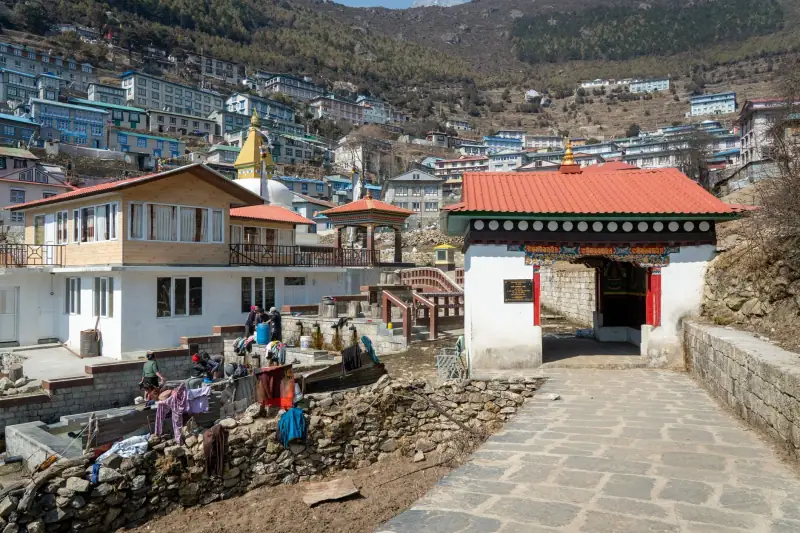
The first two days of walking go down and up the valley, crossing suspension bridges and Sherpa villages. The climb to Namche Bazaar, an amphitheater village at about 3,400 m (11,150 ft), is the first real test: sustained elevation gain ending with a final steep rise.
Namche is the region’s hub: it has bakeries, gear shops, ATMs and a weekly market.
Beyond Namche, the trail gains solitude. Along the ridge, you glimpse Everest for the first time, often behind the Nuptse ridge, then Lhotse. Prayer flags, mani walls and chortens line the way: always pass them keeping them on your right, so clockwise.
Tengboche and Dingboche: monastery and the Imja valley
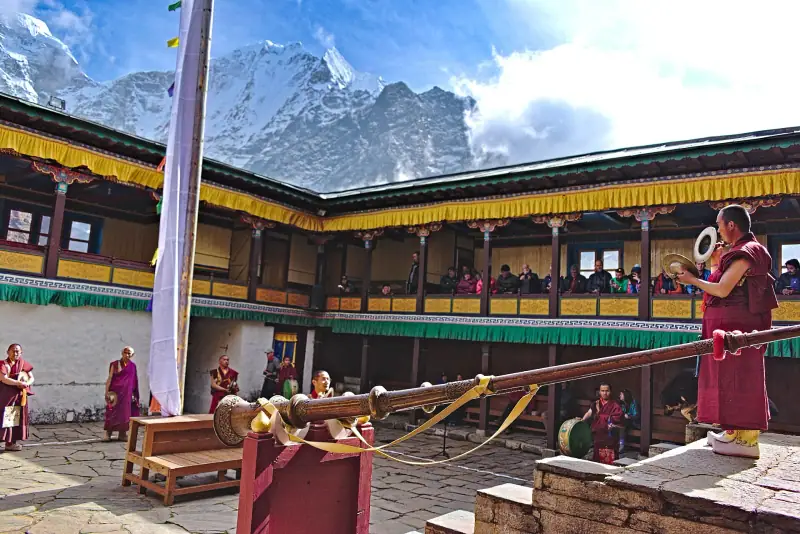
After Namche, the path descends to the river then climbs to Tengboche, at about 3,900 m (12,800 ft), famous for its Buddhist monastery surrounded by rhododendron and fir forests. If your schedule allows, attending a ceremony at the end of the day is a strong moment, provided you stay discreet and follow the instructions there.
Higher up, vegetation thins. You enter the Imja valley up to Dingboche, a village of fields bordered by stone walls, at about 4,400 m (14,435 ft).
From here, you go beyond the tree line. Nights become very cold, sometimes well below zero, and the slightest effort leaves you breathless. Listen to your guide.
Treks and activities from Kathmandu
Compare offers from local agencies, guides and excursions to prepare your stay before or after the trek.
Gorak Shep, base camp and Kala Patthar: the trek’s summit
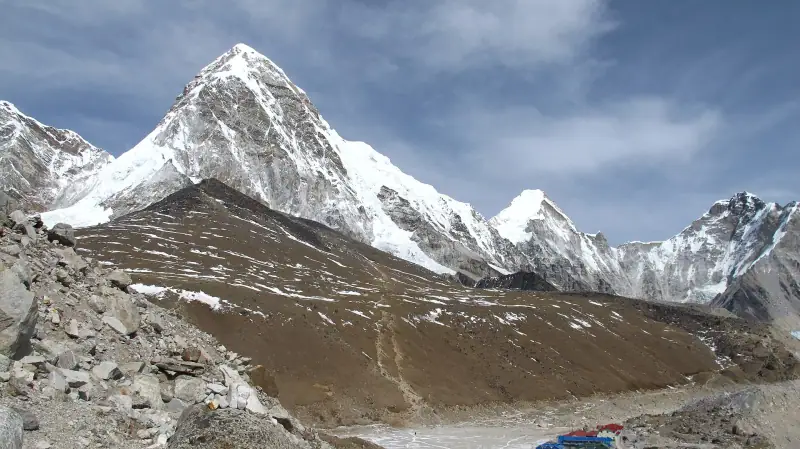
The last part follows Lobuche, at about 4,900 m (16,075 ft), then runs along the moraine of the Khumbu glacier to Gorak Shep, a hamlet of lodges at about 5,200 m (17,060 ft). At this altitude, the air contains about half the oxygen of sea level: every gesture takes more effort.
Base camp, at about 5,300 m (17,390 ft), is reached from Gorak Shep by a trail on the moraine. It is paradoxically disappointing in terms of panorama: Everest itself is not visible there, hidden by neighboring shoulders. In expedition season, colorful climbers’ tents occupy the glacier, which gives the place its full meaning.
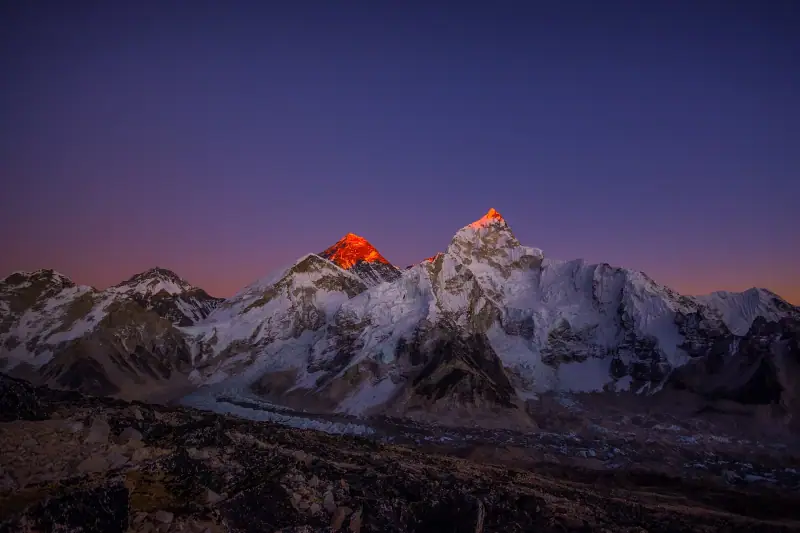
The best view of Everest is from Kala Patthar, a rocky hill at about 5,500 m (18,045 ft). The climb is done at dawn or sunset, with a headlamp, thick gloves and several layers. Many hikers keep this moment as the most striking of their trip.
When to go and what climate to expect
The two favorable windows are March to May and October-November. Autumn generally offers crisp air and stable days, but it is also the busiest period, with lodges sometimes full. In spring, temperatures are a little less harsh at mid-altitude and rhododendrons bloom, but views can be hazier.
Avoid the monsoon, from June to September: clouds, rain, leeches in the lower valleys and Lukla flights often disrupted. Midwinter is very cold and some lodges close at high altitude. For an overview, see our guide when to go to Nepal.
Permits, guide and formalities
The trek takes place in Sagarmatha National Park, a UNESCO World Heritage site. You must pay park entrance fees and a local permit from the Khumbu rural municipality. Rules and fees change regularly: check current conditions with a licensed agency or the official services before departure.
Trails are busy, but using a guide or porter-guide is increasingly encouraged, and may become mandatory depending on current regulations. It brings safety in case of altitude trouble, eases logistics and supports the local economy. If you travel with a porter, check that he is properly equipped, fed and insured.
Entry rules depend on your passport. Check the official travel advice of your government before you book: travel.state.gov (US), GOV.UK (UK), travel.gc.ca (Canada), Smartraveller (Australia) (checked November 2026). Also check the duration and fee on the official Nepali immigration website: they can change.
Lodges, meals and budget
Lodges, called “teahouses”, offer simple rooms, often unheated, and a common room heated in the evening. The higher you go, the more prices rise, because everything is carried in on foot or by animal. Meals consist mainly of dal bhat, pasta, soups, fried rice and eggs. See our guide to Nepali cuisine to know what to taste before and after the trek.
A few practical rules:
- Favor vegetarian meals: at high altitude, meat is less fresh because it is brought in over several days.
- Bring cash in Nepali rupees: ATMs are rare beyond Namche and card payments nonexistent in lodges.
- Device charging, hot showers and wifi are generally paid and become more expensive with altitude.
The budget varies strongly depending on whether you go with an agency or independently, with or without a guide, and on the price of the Lukla flight. Ask for several detailed quotes to compare what is really included.
Physical preparation, gear and health
Start training two to three months ahead: hiking with elevation gain, stairs, running or cycling. The goal is to chain several days of four to six hours of walking with a light pack.
Essential gear:
- High-top hiking shoes, already broken in before departure.
- Three-layer system: technical underwear, warm fleece and a waterproof windbreaker.
- Extreme-cold sleeping bag: it can be rented in Kathmandu.
- High-protection sunglasses, sunscreen and a headlamp with spare batteries.
- Trekking poles, useful on long descents.
- Water bottle and purification tablets to limit plastic waste.
Insurance covering hiking above 5,000 m and helicopter evacuation is essential.
Flights to Kathmandu
Compare flights with a stopover to Kathmandu and plan a margin of a few days before your return to absorb possible delays at Lukla.
Variants and alternatives
If you want more solitude or challenge, other routes exist in the same massif: the Gokyo valley with its high-altitude lakes, or the big Three Passes loop, clearly more demanding. For a lower and shorter trek, the Annapurnas or Langtang are good options.
Many travelers combine the trek with the Kathmandu Valley and a few rest days. Our two-week itinerary in Nepal shows how to organize a shorter stay, and our guide what to do in Kathmandu will help you fill your days before departure or while waiting for flights.
Key takeaways
The Everest Base Camp trek is an adventure accessible to hikers in good shape, provided you plan margin in your calendar and equip yourself seriously. Choose your season carefully, check current formalities and leave with suitable insurance: the rest is a matter of rhythm, patience and wonder.
Frequently asked questions
How many days do you need for the Everest Base Camp trek?
Generally allow 12 to 14 days from Lukla, round trip. Also plan a few spare days for flight delays, which are frequent in this region.
Is the Everest Base Camp trek hard?
It is not technical: no mountaineering gear, well-marked trails and lodges at each stage. The difficulty comes from altitude, cold and duration. Good physical condition is needed.
At what altitude is Everest Base Camp?
The Nepali-side base camp is at about 5,300 m (17,390 ft). Most hikers sleep at Gorak Shep, a little lower, and climb Kala Patthar, at about 5,500 m (18,045 ft), for the best view of Everest.
What is the best time for Everest Base Camp?
The two classic windows are March-May and October-November. Autumn generally offers clearer skies, spring slightly milder temperatures and rhododendrons in bloom at mid-altitude. The monsoon and midwinter are not recommended.
Do you need a guide to go to Everest Base Camp?
Trails are busy and marked, but access rules change and a local guide brings safety. Ask a licensed agency before departure about the current obligations and the permits needed.
What insurance should you plan for a high-altitude trek?
Choose a policy that explicitly covers hiking above 5,000 m and helicopter evacuation. Check the altitude ceilings in the conditions: many standard policies exclude this type of trek.
More Nepal guides
Keep reading
Paragliding in Pokhara: Prices, Booking Ahead or on Site, Season and Requirements
Tandem paragliding in Pokhara: rough budget, booking the day before or online, best months, Sarangkot takeoff, age, weight and insurance to check.
Things to Do in Pokhara: Lake, Peace Pagoda and Himalayan Views
What to do in Pokhara? Phewa Lake, Peace Pagoda, Sarangkot, paragliding, caves and the Mountain Museum: ideas for 2 to 4 days.
Annapurna Treks: Which Circuit to Choose (Poon Hill, Sanctuary, Circuit)
Annapurna treks: compare Poon Hill, Annapurna Base Camp and the Annapurna Circuit. Length, difficulty, altitude, season and permits to choose well.
Ready-made
Nepal itineraries
3 days
Kathmandu in 3 Days: Day-by-Day Itinerary, Temples, Newar Cities and Tips
A 3-day itinerary for Kathmandu and its valley: Durbar Square, Swayambhunath, Pashupatinath, Boudhanath, Patan and Bhaktapur, with transport and tips.
10 days
Nepal in 10 Days: Kathmandu, Pokhara and the Poon Hill Trek
A 10-day Nepal itinerary: Kathmandu temples, Pokhara's lake and a short 4-day Poon Hill trek, with tips, permits and a rough budget.
12 days
Nepal with Kids: A 12-Day Family Itinerary with Gentle Stages and Tips
KathmanduPokharaBandipurChitwan