Itineraries
Nepal in 10 Days: Kathmandu, Pokhara and the Poon Hill Trek
We may earn a commission when you book through links on this page, at no extra cost to you. We don't visit or try the places we cover: we summarize published sources. How we work
Day by day
- Days 1-3Kathmandu: Thamel, Durbar Square, stupas, Patan and Bhaktapur
- Day 4Kathmandu to Pokhara by plane or road
- Days 5-8Poon Hill trek with village lodges, sunrise at Poon Hill
- Day 9Back in Pokhara: rest day by the lake
- Day 10Return to Kathmandu and international flight
In short
- Ten days cover Kathmandu (days 1 to 3), the move to Pokhara (day 4), the Poon Hill trek (days 5 to 8), a rest day in Pokhara and the return.
- Kathmandu to Pokhara is a bit over 200 km (125 mi): about half an hour by plane, usually 6 to 8 hours by road.
- Poon Hill is a viewpoint at around 3,200 m (10,500 ft); the Annapurna region requires permits, and the rules and fees change, so check before leaving.
- Spring (March to May) and autumn (October and November) generally offer the best visibility and temperatures.
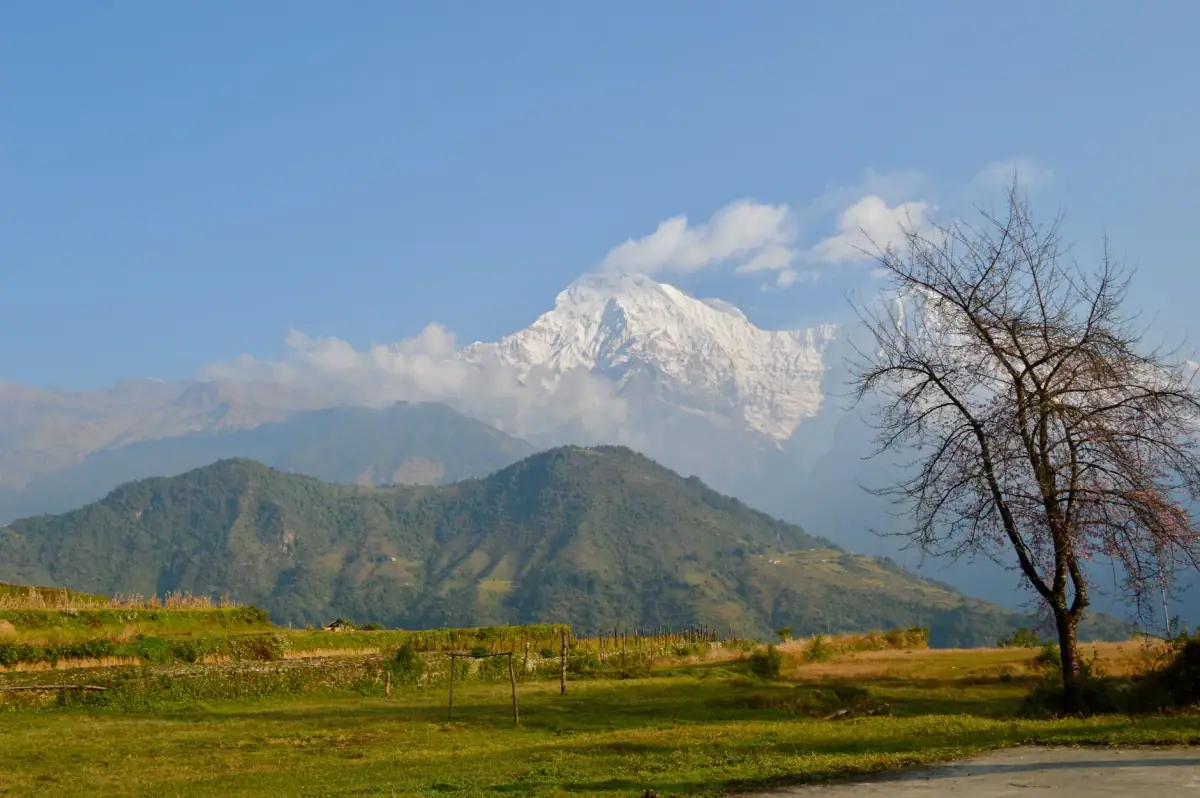
Ten days is short for a country whose landscape includes some of the highest peaks on the planet. It is nonetheless the length of many trips, and it can hold the essentials of a first visit: the temples and squares of the Kathmandu Valley, the relaxed atmosphere of Pokhara and four days of walking toward Poon Hill, a viewpoint famous for its panoramas of the Annapurnas and Dhaulagiri.
This itinerary is for travelers who want to get a taste of the mountains without committing to a big trek of two weeks. It suits occasional walkers, provided they accept full days on the trail. If you have more time, our two-week itinerary adds Bandipur and Chitwan National Park. To compare the other hikes in the region, see our guide to the Annapurna treks.
The 10 days at a glance
Here is the general plan, which we detail below:
- Days 1 to 3: arrival in Kathmandu, visits to the old town, the temples and the valley.
- Day 4: travel to Pokhara, settling in by the lake.
- Day 5: departure for the trailhead, first stage of walking.
- Days 5 to 8: Poon Hill trek, with nights in village lodges.
- Day 9: back to Pokhara, rest and a last evening by the lake.
- Day 10: return to Kathmandu and international flight.
The weak point of this plan is the safety margin: a canceled domestic flight or a landslide in the wet season can push everything back. Do not book an international flight on day 10 without a wide margin, or add a buffer night in Kathmandu if your schedule allows.
Days 1 to 3: Kathmandu and its valley
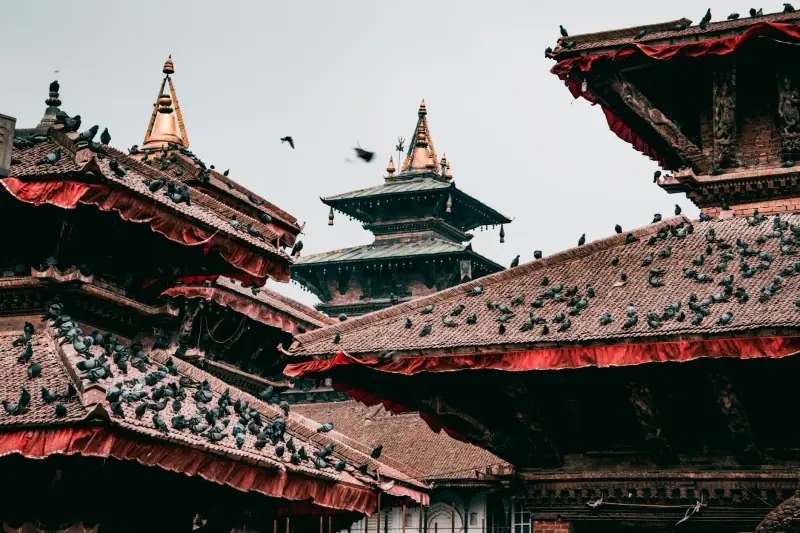
The first contact with Kathmandu is often disorienting: dense traffic, horns, dust, narrow lanes, colors and smells. Give yourself time to adjust. The first day is for recovering from the flight and strolling around Thamel, where most guesthouses, trek agencies and gear shops are. To choose your neighborhood, read our article on where to stay in Kathmandu.
Day 2: the old town
Kathmandu’s Durbar Square gathers former royal palaces and many Newar-style temples. Part of the heritage was damaged in the 2015 earthquake, and restoration is still under way: some monuments are still surrounded by scaffolding. From there, you can walk to the lanes of the old center and its small neighborhood shrines. For a detailed program, see our article on what to do in Kathmandu.
Day 3: stupas and Newar cities
Two other essential sites are UNESCO World Heritage listed: the Boudhanath stupa, the center of the Tibetan Buddhist community, and Swayambhunath, the “monkey temple”, perched on a hill. If you would rather devote half a day to the neighboring cities, Patan and Bhaktapur are close to the capital and keep a calmer atmosphere, as our article on visiting Bhaktapur and Patan explains. You will not see everything in three days: pick two or three sites rather than rushing.
Hotels in Kathmandu
Compare the capital's guesthouses and hotels, their reviews and location, before booking your first nights.
Day 4: from Kathmandu to Pokhara
You have two options. The plane is the fastest: the flight takes about half an hour, but it depends on the weather and can be delayed. The road, a bit over 200 km (125 mi), crosses valleys and follows rivers, but it generally takes 6 to 8 hours depending on traffic, roadworks and the season. Tourist buses and private vehicles with a driver are the most common solutions.
Suggestion: take the road on the way out if you like scenery, or the plane if you want to save half a day for the trek. In the rainy season, landslides are possible: ask your accommodation about the state of the road.
In Pokhara, settle in the lake area, called Lakeside. The city is more relaxed than the capital: cafes, restaurants, gear shops and a view of the Annapurna range in clear weather. If you arrive in the early afternoon, use the time to prepare your trek: rent or buy what you are missing, withdraw cash (ATMs are rare on the trails), leave unneeded belongings in storage and check your permits. Our article on the gear list will help you forget nothing.
Flights to Kathmandu
Flights to Nepal generally involve one or more stopovers: compare durations and schedules before booking.
Days 5 to 8: the Poon Hill trek
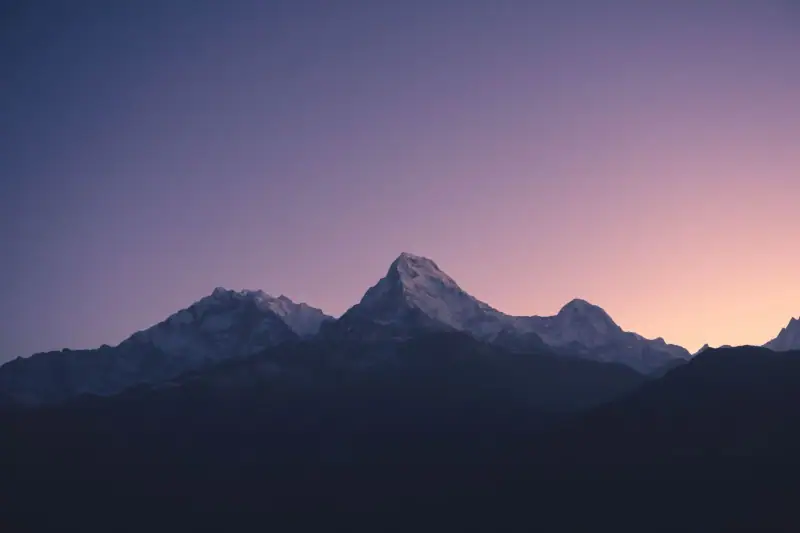
The Ghorepani – Poon Hill trek is one of the most popular hikes in Nepal because it is short, well served by lodges and offers spectacular views in just a few days. Poon Hill is a viewpoint at around 3,200 meters (10,500 ft), much lower than the country’s big passes. The trek is generally done in four days, but several variants exist.
Safety: if in doubt on the trail, ask your guide or lodge for advice.
Permits and organization
The Annapurnas lie in a conservation area that requires permits, generally obtained in Kathmandu or Pokhara from authorized bodies. The rules, the fees and the possible obligation to be accompanied by a guide have changed in recent years: check the current situation before leaving, with your agency or an official office. Bring ID photos and copies of your passport.
You can organize the trek yourself, booking lodges day by day, or go through a local agency, which handles permits, transport and the guide. The second option is simpler and more reassuring for a first mountain experience.
Stage 1: toward Ghorepani
The road from Pokhara leads in a few hours to the start of the trail. The first stage is the most demanding: the climb crosses villages, terraced rice fields and rhododendron forests, with a great many stone steps. Plan to start early and walk at your own pace. The night is spent in a village lodge, with simple, often unheated rooms.
Stage 2: sunrise at Poon Hill
This is the highlight of the trek. The climb to Poon Hill is made before dawn, by headlamp, to watch the sun rise over the Himalayan range. Bring warm clothes: it can be very cold at dawn, and the summit is exposed to wind. After sunrise, return to the lodge for breakfast, then set off for the next stage.
Stages 3 and 4: back down through the villages
The rest of the circuit depends on the variant chosen: some walkers descend through a village known for its traditional stone architecture and mountain views, others head straight back to the road. The trails are well traveled, but downhill steps are hard on the knees: trekking poles are a big help.
For an overview of the other treks in the region, from the full circuit to the Annapurna Sanctuary, read our comparison of the Annapurna circuits.
Treks and hikes around Pokhara
Guided treks, day excursions and activities around Pokhara, with free cancellation on most offers.
Day 9: back in Pokhara and rest
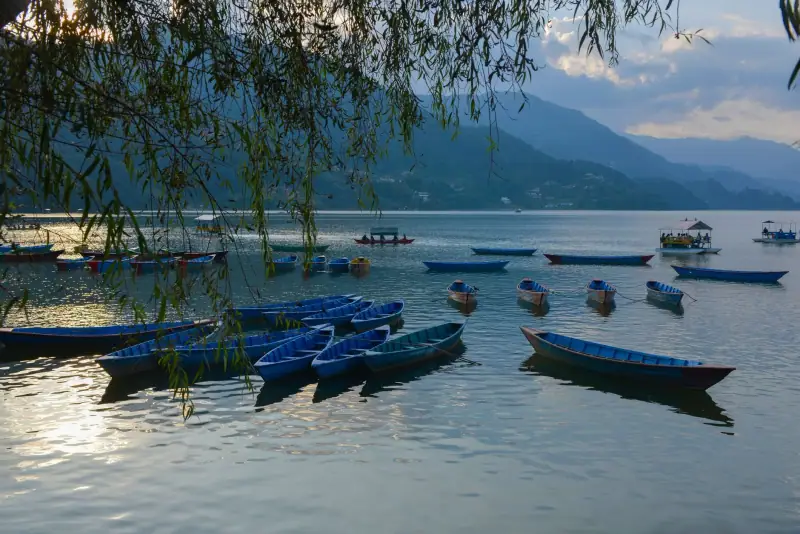
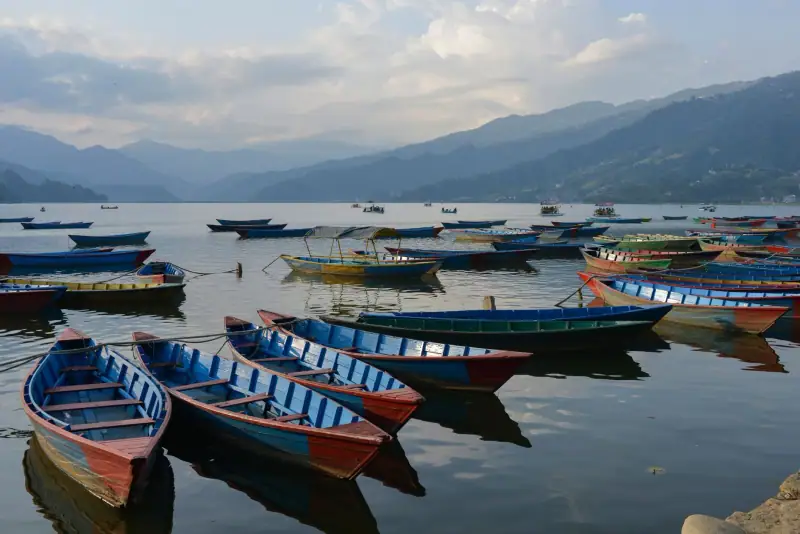
After four days of walking, a quiet day is called for. Pokhara is the ideal place: a massage, a boat ride on Phewa Lake, a coffee with a view of the mountains. If the weather is clear, you can also go up to a viewpoint or to the World Peace Pagoda for a last overview of the valley. You will find more ideas in our article on what to do in Pokhara.
This is also the time to return any rented gear, pick up your belongings from storage and have dinner at one of the many restaurants in the lake area. Local food is excellent after a trek: a hearty dal bhat or momos will do. Our article on Nepali cuisine details the dishes to try.
Day 10: back to Kathmandu
The last day is the riskiest: a delayed domestic flight or a blocked road can jeopardize your connection. Take the morning flight if you leave in the evening, or keep an extra night in Kathmandu before your international flight. If you took the road on the way out, the plane on the way back is a good solution.
What budget to plan?
Nepal remains a destination where you can travel at reasonable prices, but the trek, permits, domestic flights and lodging push the bill up. The orders of magnitude change every year: see our article on the budget in Nepal for up-to-date benchmarks. The main items are:
- The international flight, which weighs the most depending on the season.
- The trek: permits, transport, a possible guide, lodges and meals.
- Domestic flights or buses between Kathmandu and Pokhara.
- Sightseeing: the sites of the Kathmandu Valley generally charge foreigners an entrance fee.
Travel insurance covering mountain hiking and medical evacuation is strongly recommended: check carefully the maximum altitude covered by your policy.
Tips for making this trip work
- Go in the right season. Spring and autumn are the most favorable. See when to go to Nepal.
- Check your formalities. Visa and passport must be ready before departure: see our formalities for Nepal. Entry rules depend on your passport: check the official travel advice of your government before you book: travel.state.gov (US), GOV.UK (UK), travel.gc.ca (Canada), Smartraveller (Australia) (checked November 2026).
- Travel light. On a trek every kilo counts, and domestic flights limit baggage weight.
- Treat the water before drinking it.
- Keep some slack in your schedule for delays.
- Respect local culture: dress appropriately in temples and ask before photographing people.
For an overview of the destination, see our complete guide to Nepal.
Variations by profile
If you are not a walker, replace the trek with two days in Pokhara and a day excursion: mountain views are reachable without a long walk. If you love nature, you can instead drop a day in Kathmandu to add a night in a lodge. Finally, if you travel as a family with young children, it is better to shorten the trek stage or replace it with a day hike.
Wrapping up
Ten days in Nepal make a dense but feasible trip: the culture of the Kathmandu Valley, the atmosphere of Pokhara and a mountain immersion on the Poon Hill trail. The key is not to try to see everything, to keep some margin and to prepare your gear and permits carefully. The rest is lived day by day, at the pace of the villages and the peaks.
Sources
- Nepal Tourism Board: figures checked November 2026
Frequently asked questions
Is 10 days enough to visit Nepal?
Ten days let you see the essentials of a first visit: the Kathmandu Valley, Pokhara and a short trek in the Annapurnas. You need to accept making choices, because roads are slow and domestic flights are sometimes delayed. The Terai parks such as Chitwan or the big Everest treks need more time.
Do you need to be athletic for the Poon Hill trek?
No, it is one of the most accessible treks in the country, but it is still a real hike: several hours of walking a day and hundreds of stone steps, especially the climb to Ghorepani. A good basic fitness level is enough, and broken-in shoes are essential.
What permit do you need for the Poon Hill trek?
The Annapurna region requires permits (a conservation area permit and a trekkers' registration card), generally obtained in Kathmandu or Pokhara. Rules and fees change: check them with an official office or your agency before leaving.
Do you need a guide for Poon Hill?
The trail is well marked and busy, so many travelers do it without a guide. As these rules have changed in recent years, find out what is currently required before departure. A guide is still useful for safety, for lodging in high season and for understanding the local culture.
What is the best time of year for this itinerary?
Spring (March to May) and autumn (October and November) generally offer the best visibility and temperatures. The monsoon, from about June to September, makes trails muddy and views rarer. Winter is possible but cold at altitude.
Should you fly or take the road between Kathmandu and Pokhara?
The flight takes about half an hour but depends on the weather and can be delayed or canceled. The road is a bit over 200 km (125 mi) and generally takes 6 to 8 hours depending on traffic. Many travelers take the bus or a private vehicle on the way out to see the landscape, and the plane on the way back to save time.
More Nepal guides
Keep reading
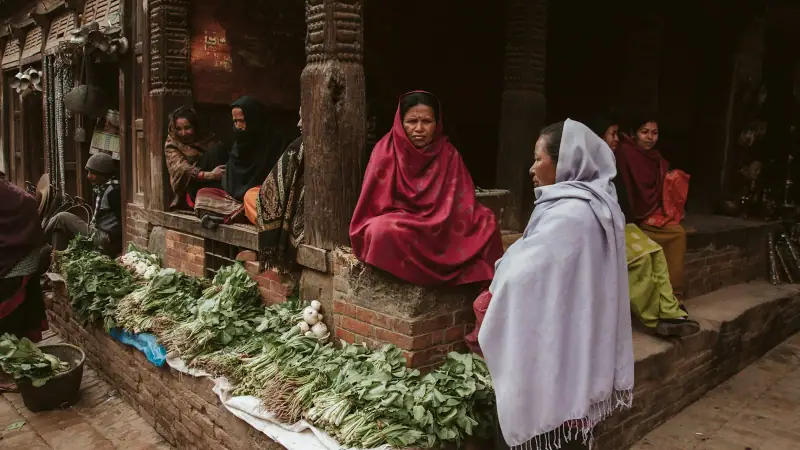
Nepal Travel Budget: Real Costs, 3 Profiles and Ways to Save
What budget for Nepal? Costs by item (lodging, transport, food, activities, permits), three budget profiles and tips to spend less.
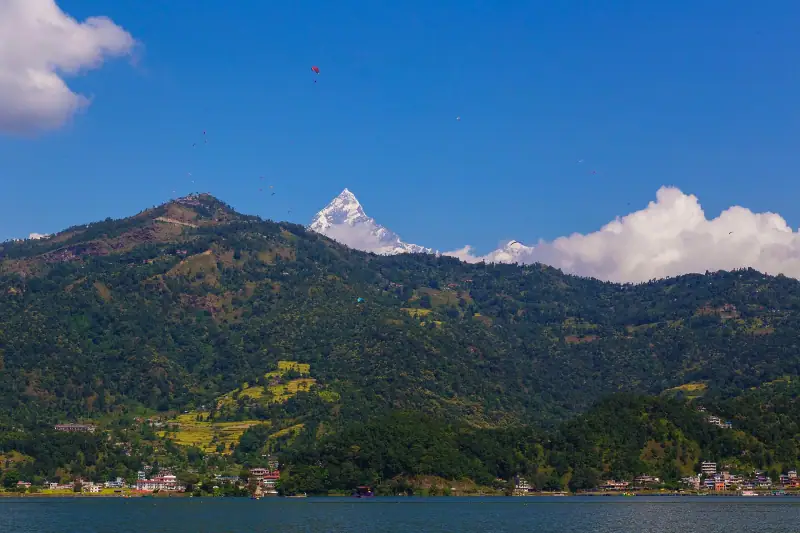
Paragliding in Pokhara: Prices, Booking Ahead or on Site, Season and Requirements
Tandem paragliding in Pokhara: rough budget, booking the day before or online, best months, Sarangkot takeoff, age, weight and insurance to check.
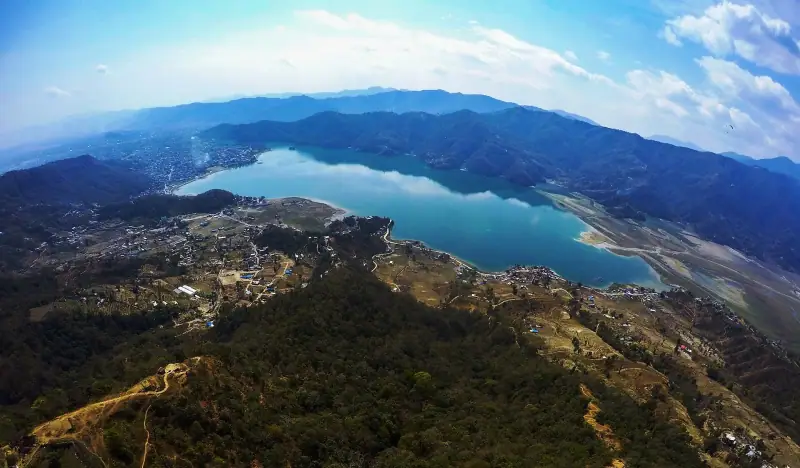
Things to Do in Pokhara: Lake, Peace Pagoda and Himalayan Views
What to do in Pokhara? Phewa Lake, Peace Pagoda, Sarangkot, paragliding, caves and the Mountain Museum: ideas for 2 to 4 days.
Ready-made
Nepal itineraries
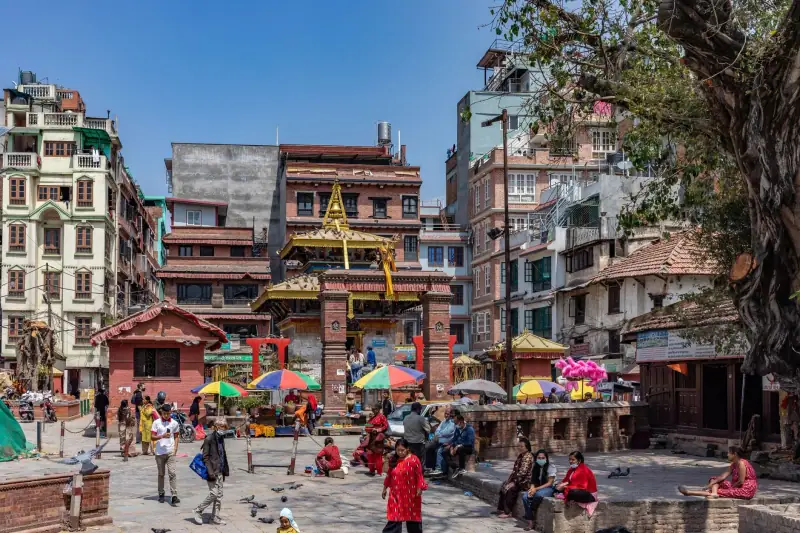
3 days
Kathmandu in 3 Days: Day-by-Day Itinerary, Temples, Newar Cities and Tips
A 3-day itinerary for Kathmandu and its valley: Durbar Square, Swayambhunath, Pashupatinath, Boudhanath, Patan and Bhaktapur, with transport and tips.
12 days
Nepal with Kids: A 12-Day Family Itinerary with Gentle Stages and Tips
KathmanduPokharaBandipurChitwan
14 days
Nepal in 2 Weeks: Day-by-Day Itinerary from Kathmandu to Chitwan
KathmanduBandipurPokharaChitwan National Park