What to see
Complete Guide to Visiting Nepal: Regions, Highlights and Tips
We may earn a commission when you book through links on this page, at no extra cost to you. We don't visit or try the places we cover: we summarize published sources. How we work
In short
- Plan two weeks for a balanced first trip across the Kathmandu Valley, Pokhara and Chitwan National Park; with one week, focus on Kathmandu and Pokhara.
- Distances look short on the map but journeys are long, because roads wind through the mountains. Domestic flights depend on the weather, so keep a margin.
- The monsoon runs roughly from June to September; October-November and March to May are the most sought-after periods.
- The international flight is the biggest expense; on the ground, lodging, meals and local transport cost little. Permits, domestic flights and guides come on top.
Nepal fits in a narrow rectangle squeezed between India and China (Tibet), yet it packs rare contrasts: the Terai jungle at a few hundred meters above sea level, the green hills of the center, then the highest mountain barrier in the world, where eight of the fourteen peaks above 8,000 meters (26,250 ft) stand, including Everest. Add a thousand-year-old culture mixing Hinduism and Buddhism, and you get a destination that suits temple lovers as much as hikers or nature fans.
This guide is the starting point for preparing your trip. It presents the country, its main regions and cities, the highlights, then the practical questions: when to go, how to get there and around, where to stay, what budget to plan. At each step, you will find a link to a detailed article on the site.
Nepal in brief: what to know before you go
The country stretches from east to west for about 800 kilometers (500 mi), but its width barely exceeds 200 kilometers (125 mi). This geography of parallel bands explains everything: from south to north, you go from the subtropical plain to glaciers in a few days. The terrain also has a very concrete consequence for travelers: distances are short on the map, but journeys are long, because the roads wind through the mountains.
A few useful benchmarks:
- Capital: Kathmandu, in a valley at around 1,400 m (4,590 ft).
- Languages: Nepali is the official language; English is commonly spoken in tourist places.
- Currency: the Nepali rupee. Bring cash for villages and treks, where ATMs and bank cards are rare.
- Religions: Hinduism is the majority religion, Buddhism is important, with many places where the two traditions sit side by side.
- Time difference: Nepal uses a UTC+5:45 time zone, a peculiarity that often surprises travelers.
The country has experienced major earthquakes, notably in 2015, which damaged part of the heritage of the Kathmandu Valley. Many monuments have since been restored, but some works may still be in progress during your visit.
The main regions of Nepal
To build an itinerary, it is simpler to think in broad zones. Here are the six regions that structure travel in Nepal.
The Kathmandu Valley
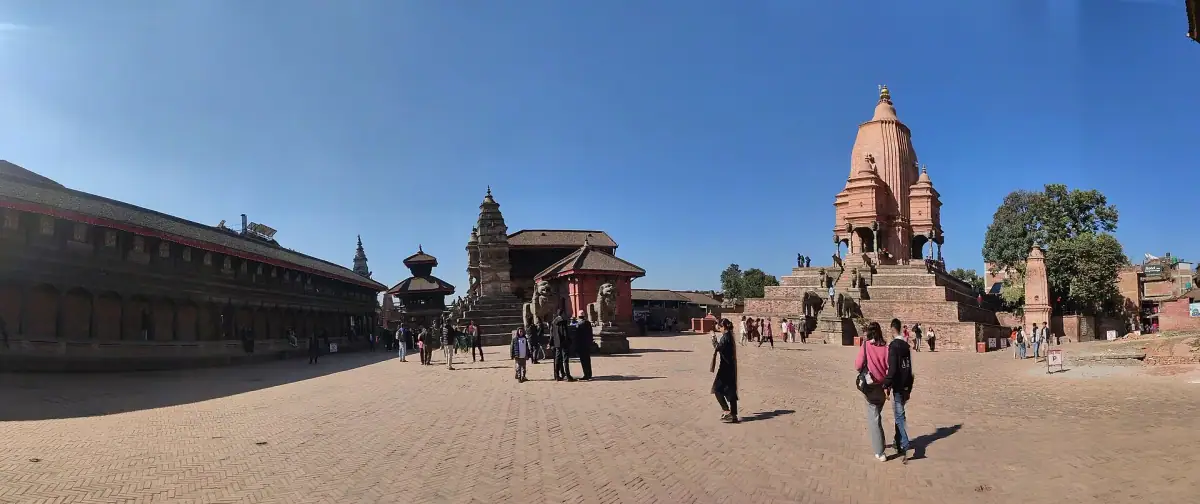
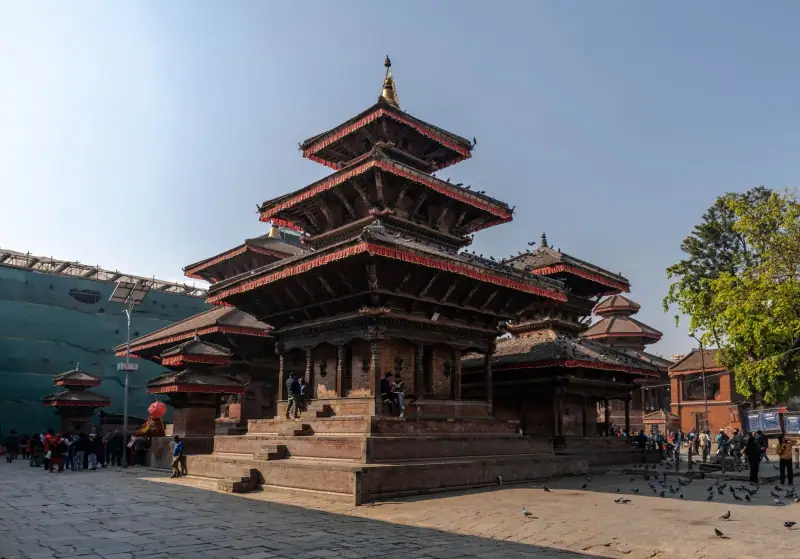
This is the cultural heart of the country and the gateway for most travelers. Kathmandu, Patan and Bhaktapur, former Newar city-kingdoms, each have monumental squares lined with temples of brick and carved wood. Major sacred sites such as Swayambhunath, Pashupatinath and the Boudhanath stupa add to them. This region can be visited very well in three to five days.
The Annapurnas and Pokhara
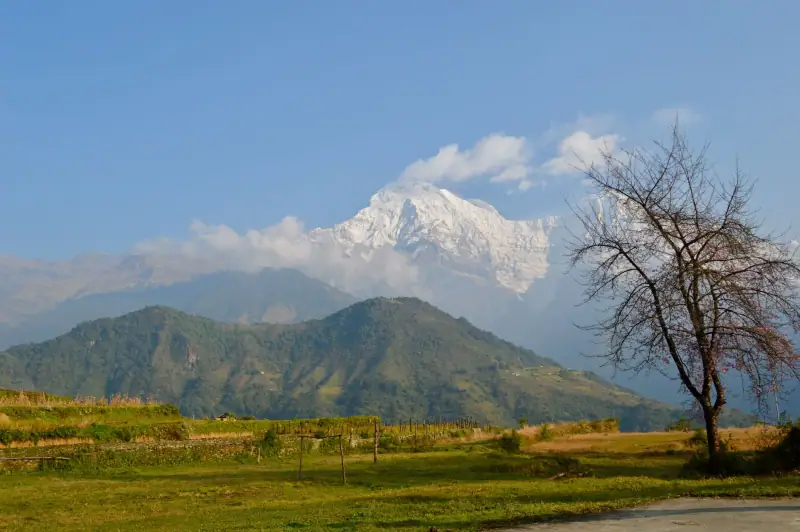
West of the capital, Pokhara is the base for all adventures: a lakeside setting, a relaxed atmosphere and a view of the Annapurna summits. It is also the starting point of several of the finest treks in the country, from the short Poon Hill to the big circuits of several weeks.
The Khumbu (Everest)
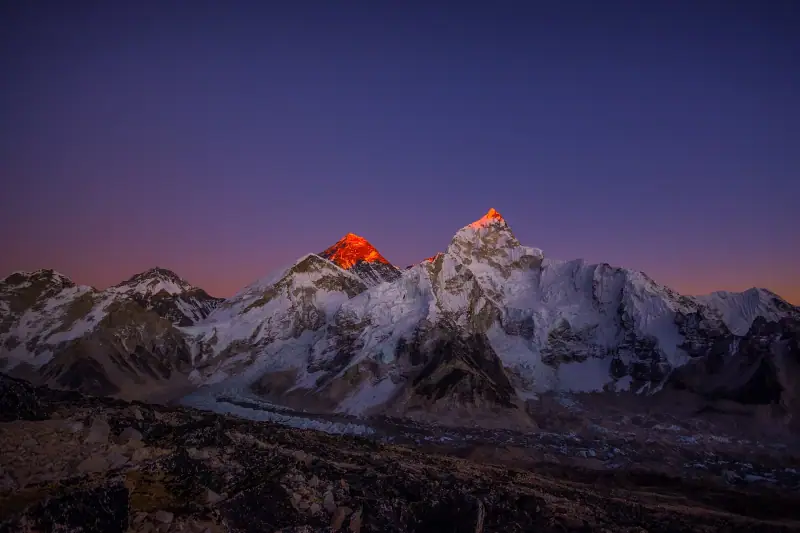
In the northeast, the Khumbu is Sherpa country and home of Everest. The base camp trek is one of the most famous in the world: it is demanding because of the altitude, with slow progress and spare days in the schedule.
The Langtang
North of Kathmandu, this valley offers a trek reputed to be easier to reach from the capital. It suits those who want to head into the mountains without taking a domestic flight.
The Terai
This hot, humid plain in the south is home to Chitwan National Park, known for its Indian rhinoceroses and elephants, as well as Lumbini, the traditional birthplace of the Buddha. It is a completely different Nepal, closer to India in climate and landscape.
Mustang
North of the Annapurna range, this arid high plateau with Tibetan landscapes remains a region apart. Upper Mustang requires an expensive special permit: it is for travelers who already have experience and a suitable budget.
Cities to know
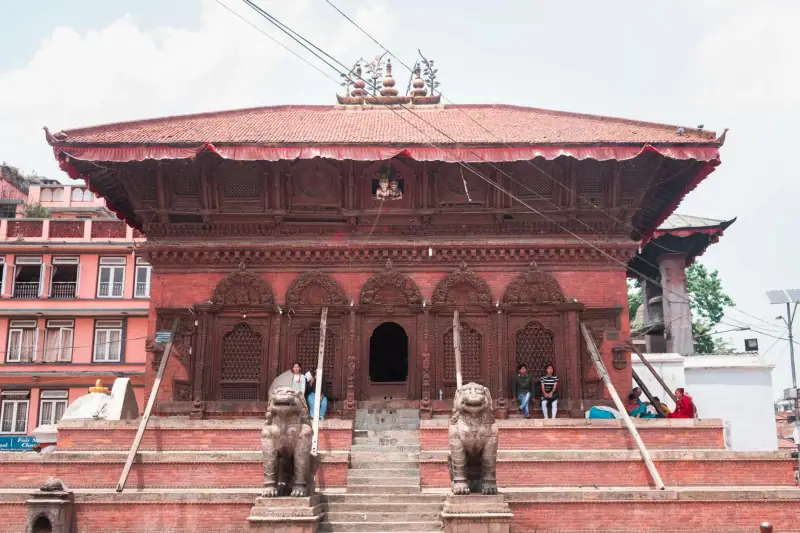
Nepal has few large tourist cities, which simplifies choices.
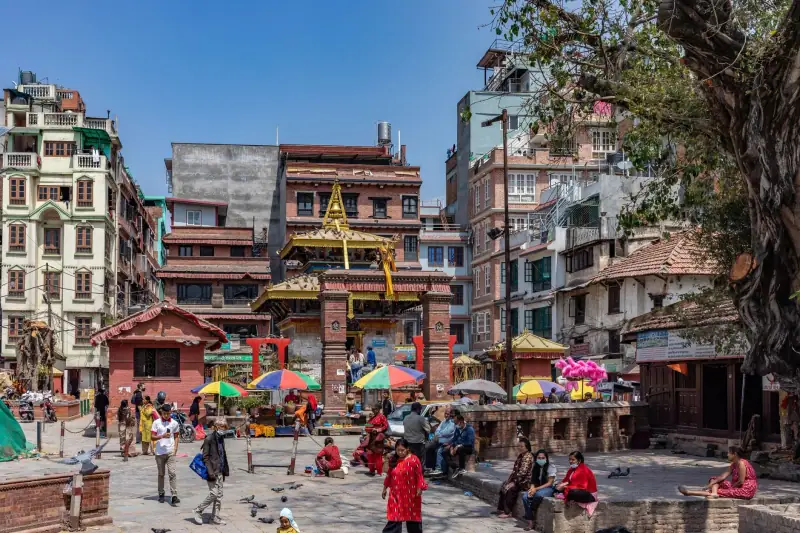
- Kathmandu: a lively, noisy and fascinating capital. The Thamel district concentrates guesthouses, agencies and restaurants, while the old town around Durbar Square keeps a medieval character.
- Patan (Lalitpur): known for its metalwork craft and its royal square, calmer than the capital.
- Bhaktapur: the best-preserved Newar city, known for its pottery, its curd cheese (juju dhau) and its pedestrian lanes.
- Pokhara: a resort on the shore of Phewa Lake, perfect for recovering between two treks.
- Bandipur: a Newar ridge village, appreciated for its pedestrian main street and peaceful atmosphere.
- Lumbini: a Buddhist pilgrimage site in the Terai, with a large park of monasteries.
Highlights of a trip to Nepal
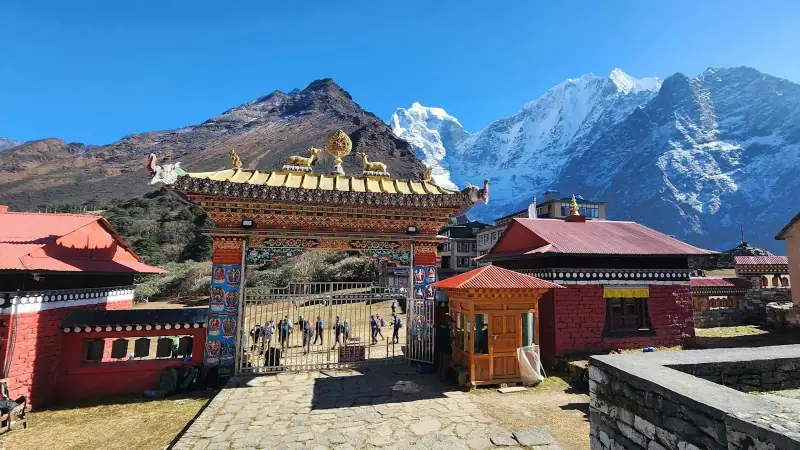
If you could keep only a few experiences, these would be the ones.
Dive into the capital
Kathmandu is disorienting from the first hours: horns, narrow lanes, offerings left in front of temples, spice sellers. The main sites are Durbar Square, Swayambhunath (the “monkey temple”), Boudhanath and Pashupatinath, on the banks of the Bagmati River. Take the time to wander rather than tick off a list. Our article on what to do in Kathmandu details the visits and ways to link them without exhausting yourself.
Travel through time in Patan and Bhaktapur
Less than an hour by road from the capital, these two cities show another face of Newar culture, with pagodas, inner courtyards and artisans. Bhaktapur is best visited early in the morning or late in the afternoon, when the groups have left. Find our tips in the article on Bhaktapur and Patan.
Gaze at the Annapurnas from Pokhara
At dawn, mist lifts over Phewa Lake and the summits turn pink. Pokhara is also the ideal place for a boat ride, a visit to the Peace Pagoda or a paragliding session for those who like thrills. Everything is detailed in our guide to what to do in Pokhara.
Tours and excursions in Kathmandu
Guided temple visits, cooking classes, day excursions: compare the available activities and their reviews before booking.
Walk in the Himalaya
Trekking is the country’s great attraction, but there are treks for every level, from a three-day hike to a three-week expedition. Two great classics dominate:
- The Annapurnas, with a wide variety of circuits: Poon Hill for a first experience, the Sanctuary for its amphitheater of glaciers, the full circuit for seasoned walkers. Our comparison of the Annapurna circuits helps you choose.
- Everest Base Camp, a high-altitude adventure that requires preparation. Everything is explained in our article on the Everest Base Camp trek.
Watch wildlife in Chitwan
Chitwan National Park lets you get close to Indian rhinoceroses, deer and, with luck, Bengal tigers, although the latter are very discreet. Activities are done by jeep, on foot with a guide or by dugout canoe. To organize your stay, see our guide to the Chitwan safari.
Taste Nepali food
Dal bhat (lentils, rice, vegetables) is the everyday dish, but Nepali cuisine does not stop there: momos, Newar dishes, spiced milk tea… Discover the specialties to try in our article on Nepali cuisine.
When to go to Nepal
The calendar depends above all on the monsoon, which runs roughly from June to September. The most sought-after periods are October-November, with crisp air and clear views, and March to May, the rhododendron season. Winter is ideal for cultural visits and the jungle, but cold at altitude. The monsoon suits travelers ready to deal with rain, leeches and possible transport disruptions.
Note that the big festivals such as Dashain and Tihar follow the lunar calendar and change dates every year. They are a cultural asset, but they also fill buses and lodgings. See our detailed article on the best time to go to Nepal for a month-by-month table and tips by region.
How to get to Nepal
The vast majority of travelers arrive through Tribhuvan International Airport in Kathmandu. Routes to Nepal generally involve a stopover, often in a major hub in the Middle East or South Asia. The total duration varies a lot with the connection. Compare airlines, favor reasonable stopovers and keep a margin if your trek or domestic flight starts right after arrival.
Flights to Kathmandu
Compare itineraries with a stopover, connection times and included baggage before booking.
Visa and formalities
Entry rules depend on your passport. Check the official travel advice of your government before you book: travel.state.gov (US), GOV.UK (UK), travel.gc.ca (Canada), Smartraveller (Australia) (checked November 2026). Also check the up-to-date conditions on the official Nepali immigration website: amounts, payment and documents can change. Keep your passport valid well beyond your return date and bring a few ID photos. Travel insurance with repatriation is essential, and should cover altitude if you trek.
Health
On the ground, drink filtered or purified water and wash your hands regularly. Carry a small first-aid kit.
Getting around Nepal
Nepali transport is one of the things that feels most foreign. It is also the key to estimating the time needed for each stage properly.
- Tourist buses: between Kathmandu, Pokhara and Chitwan, so-called tourist buses, more comfortable than local buses, serve the main destinations. Journeys are long and can be slowed by traffic or roadworks.
- Local buses and minibuses: very cheap and authentic, but crowded and uncomfortable over long distances.
- Domestic flights: flights link Kathmandu to Pokhara and to mountain airstrips such as Lukla, the starting point of the Everest trek. They are fast but sensitive to weather: allow a margin in your schedule.
- Taxis and cars with a driver: handy for day excursions or trips between cities. Negotiate the fare before leaving, or use a meter or an app when possible.
- Walking: in the historic cities, it remains the best way to discover the lanes.
Driving yourself in Nepal is demanding: dense traffic, mountain roads and rules that are little followed. Most travelers therefore opt for a driver or shared transport.
To plan your stages in practice, our two-week itinerary in Nepal links Kathmandu, the valley, Bandipur, Pokhara and Chitwan with the travel times to expect.
Where to stay in Nepal
Accommodation is one of the country’s strong points: the range goes from the simple family guesthouse to the boutique hotel, via trek lodges and Chitwan eco-lodges.
- In Kathmandu, the choice of neighborhood changes everything. Thamel is practical and lively, but noisy; Patan and Boudhanath offer more calm and authenticity. All the details are in our guide where to stay in Kathmandu.
- In Pokhara, the Lakeside district concentrates the offer, with rooms facing the lake or the summits.
- In Bhaktapur and Nagarkot, small places with character let you sleep away from the noise of the capital and enjoy sunrises over the Himalaya.
- During a trek, mountain lodges (teahouses) offer simple rooms and meals. Comfort decreases with altitude: cold nights, limited showers, electricity sometimes charged.
- In Chitwan, the lodges around Sauraha are often offered as packages including activities and meals.
Hotels in Kathmandu
Compare neighborhoods, reviews and free cancellations to find the right place before you leave.
In high season, notably in October-November and during the big festivals, book ahead in the large cities. In trek villages, rooms are generally not booked ahead, but crowds can make finding one difficult at the busiest stages.
Budget: how much does a trip to Nepal cost?
Nepal remains one of the most affordable destinations in Asia once you are there, but the overall budget depends heavily on your travel style. Rather than give fixed prices, which change quickly, here are the items to consider.
- The international flight: generally the biggest expense. Prices vary strongly with the season and how early you book.
- Lodging: very modest in a guesthouse, higher in a boutique hotel or safari lodge. Outside the large cities, trek rooms are cheap, but the cost of meals rises with altitude because everything is carried in on foot or by animal.
- Food: dal bhat and momos are cheap and filling. Restaurants aimed at tourists are pricier but remain affordable.
- Transport: buses are cheap, domestic flights and taxis represent a bigger budget.
- Entrance fees and permits: the historic sites of the Kathmandu Valley charge foreigners entrance fees, and treks require permits whose rules and fees change. Check with an authorized agency.
- Guides, porters and agencies: if you trek with an agency, the price generally includes guide, permits and lodging; compare what is included, not just the price.
Keep one simple principle: on the ground you spend little, but you need to keep a margin for the unexpected (canceled flight, extra night, medical evacuation). Always keep a cash reserve in rupees, because mountain ATMs can be empty or out of order.
Sample itineraries by length of stay
Here are some ideas to structure your trip, which you can refine with our dedicated articles.
- 7 days: Kathmandu (3 days), Bhaktapur and Patan (1 day), Pokhara (3 days). A short but dense stay, without a trek.
- 10 to 14 days: add Bandipur and Chitwan National Park. This is the format detailed in our two-week itinerary.
- 3 weeks: you can fit in a short trek in the Annapurnas (Poon Hill type) or a short version of the Langtang, before or after the cultural part.
- 4 weeks and more: Everest Base Camp or a big Annapurna circuit becomes possible, with the spare days it needs.
If you travel as a family, favor Kathmandu, Pokhara and Chitwan, which offer accessible activities, and keep high-altitude treks for later.
Practical tips for traveling well
A few simple habits greatly improve the experience on the ground.
- Respect sacred places: take off your shoes at temple entrances, dress with covered shoulders and knees, and walk around stupas clockwise. Ask before photographing a person or a ceremony.
- Get used to the pollution: Kathmandu’s air can be heavy, especially in the dry season. A mask or scarf can be useful for sensitive city visitors.
- Plan for flexibility: delays are frequent, and a spare day before an international flight is good insurance.
- Stay connected: local SIM cards are cheap and easy to get on arrival, with a passport. Coverage becomes patchy in the mountains. Alternatively, check your carrier’s international plan or use a travel eSIM.
- Electricity: bring a universal adapter and a power bank, because outages and charged sockets on treks are common.
- Travel responsibly: favor local agencies, avoid single-use plastics, and carry your waste out on treks.
Preparing your trip: where to start?
If you do not know where to start, follow this order: choose the season with our article on the best time to go, settle the duration and regions with the two-week itinerary, book the flight and then the first nights in Kathmandu, and finally refine the rest according to your wishes: the capital’s temples, Pokhara, a Chitwan safari or a trek. Also browse our article on Nepali cuisine to know what to taste.
Nepal rewards travelers who take their time: a less tight pace, more margin, and the country shows its best.
Frequently asked questions
How long do you need to visit Nepal?
Plan two weeks for a balanced first trip between the Kathmandu Valley, Pokhara and Chitwan National Park. With one week, focus on Kathmandu and Pokhara. A multi-day trek (Annapurna, Everest) means adding one to two weeks, with spare days for the unpredictability of domestic flights.
Do you need a visa to go to Nepal?
Entry rules depend on your passport. Check the official travel advice of your government before you book: travel.state.gov (US), GOV.UK (UK), travel.gc.ca (Canada), Smartraveller (Australia) (checked November 2026). Conditions and amounts change, so also check the official Nepali immigration website before leaving. Your passport should stay valid for several months after your return date.
Is Nepal suitable for a first trip to Asia?
Yes, as long as you accept a slower pace than planned: winding roads, long journeys, possible power cuts or delayed domestic flights. Nepalis have a reputation for hospitality, English is widely spoken in tourist areas and the visitor infrastructure (guesthouses, agencies, restaurants) is well established.
Can you see the Himalaya without trekking?
Yes. From Pokhara, the Annapurna range is revealed at sunrise, and viewpoints near Kathmandu offer views of the range in clear weather. A scenic flight or a short two-to-three-day hike completes the experience without a major physical commitment.
What budget should you plan for a trip to Nepal?
Nepal remains an affordable destination once you are there: lodging, meals and local transport cost little compared with Europe. The main expense is the international flight, followed by trek permits, domestic flights and guides. Prices vary a lot with the season and comfort level: build your budget from recent quotes.
Do you need a guide to trek in Nepal?
It depends on the route. The rules on the obligation to be accompanied have changed in recent years and vary by area: ask an authorized agency before booking. In any case, a guide or porter brings safety, knowledge of the terrain and support for the local economy.
What about health and insurance for Nepal?
Take out insurance covering repatriation, and altitude if you trek. For vaccines and health precautions, ask your doctor or a travel clinic and see the official travel health pages (CDC in the US, TravelHealthPro in the UK).
More Nepal guides
Keep reading
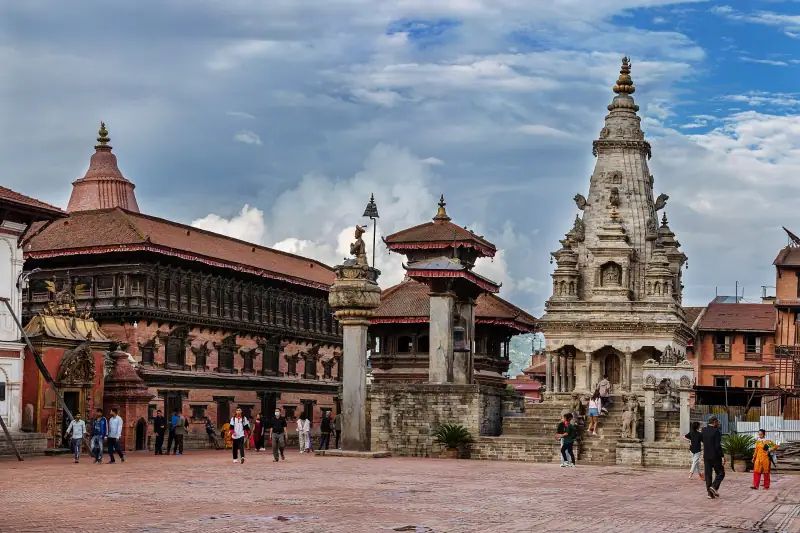
Visiting Bhaktapur and Patan: The Newar Cities of the Kathmandu Valley
Visiting Bhaktapur and Patan: Durbar Squares, Newar temples, Nyatapola, Golden Temple, crafts and tips to plan one or two days from Kathmandu.
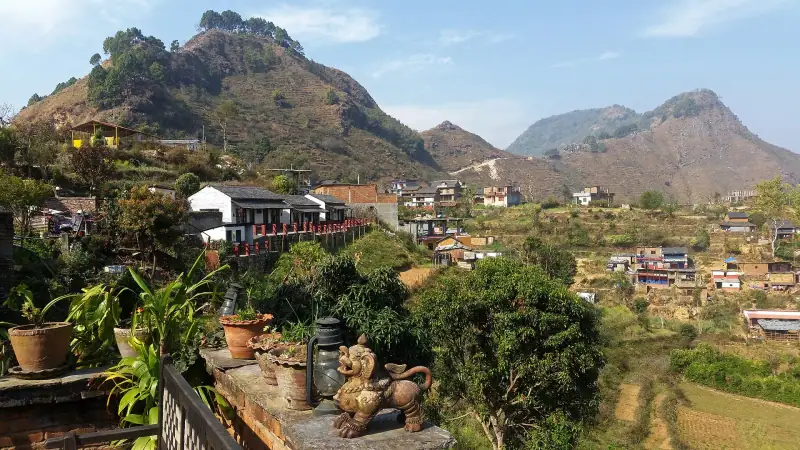
Bandipur, Nepal: Is It Worth the Detour Between Kathmandu and Pokhara?
Bandipur, a car-free Newar village between Kathmandu and Pokhara: access via Dumre, one night or half a day, Siddha Cave, Thani Mai and Tundikhel.
Things to Do in Kathmandu: The Capital's Must-Do Visits
What to do in Kathmandu? Durbar Square, Swayambhunath, Boudhanath, Pashupatinath, Thamel: the essential visits, practical tips and ideas for your days.
Ready-made
Nepal itineraries
3 days
Kathmandu in 3 Days: Day-by-Day Itinerary, Temples, Newar Cities and Tips
A 3-day itinerary for Kathmandu and its valley: Durbar Square, Swayambhunath, Pashupatinath, Boudhanath, Patan and Bhaktapur, with transport and tips.
10 days
Nepal in 10 Days: Kathmandu, Pokhara and the Poon Hill Trek
A 10-day Nepal itinerary: Kathmandu temples, Pokhara's lake and a short 4-day Poon Hill trek, with tips, permits and a rough budget.
12 days
Nepal with Kids: A 12-Day Family Itinerary with Gentle Stages and Tips
KathmanduPokharaBandipurChitwan