What to see
Things to Do in Kathmandu: The Capital's Must-Do Visits
We may earn a commission when you book through links on this page, at no extra cost to you. We don't visit or try the places we cover: we summarize published sources. How we work
In short
- Plan two to three days for the main sites: Durbar Square, Swayambhunath, Boudhanath and Pashupatinath. Add a day for Patan and Bhaktapur.
- Kathmandu sits at around 1,400 m (4,590 ft). Durbar Square, Patan and Bhaktapur charge foreign visitors an entrance fee.
- Cover shoulders and knees in religious places, take off your shoes when asked and walk around stupas clockwise.
- Taxi is the most practical way to reach Boudhanath and Pashupatinath; traffic can be slow, so avoid scheduling too many visits a day.
Kathmandu is both bewildering and fascinating. Perched at around 1,400 m (4,590 ft) in a valley surrounded by hills, Nepal’s capital mixes medieval lanes, Buddhist stupas, Hindu temples, dense traffic and small neighborhood shrines where offerings are left every morning. To appreciate it, you need to accept the disorder and choose a few strong sites rather than try to see everything.
Here are the visits worth the detour, in an order that lets you link them without rushing.
Durbar Square: the historic heart of the city
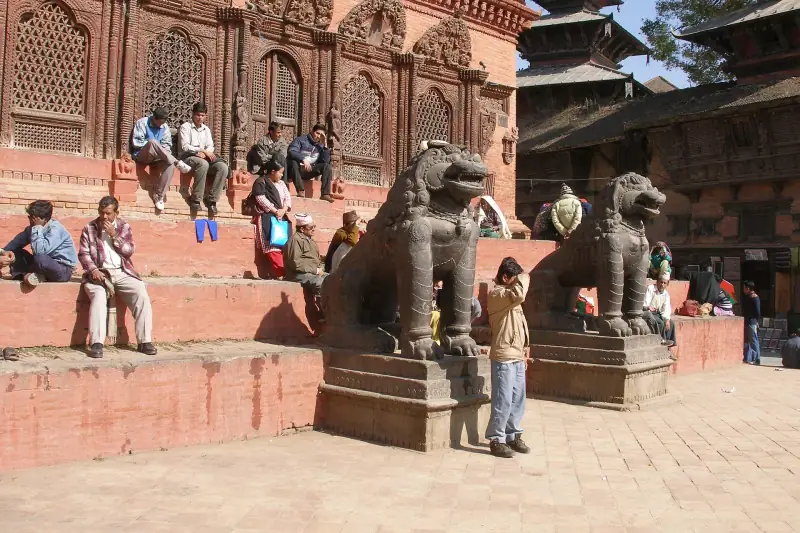
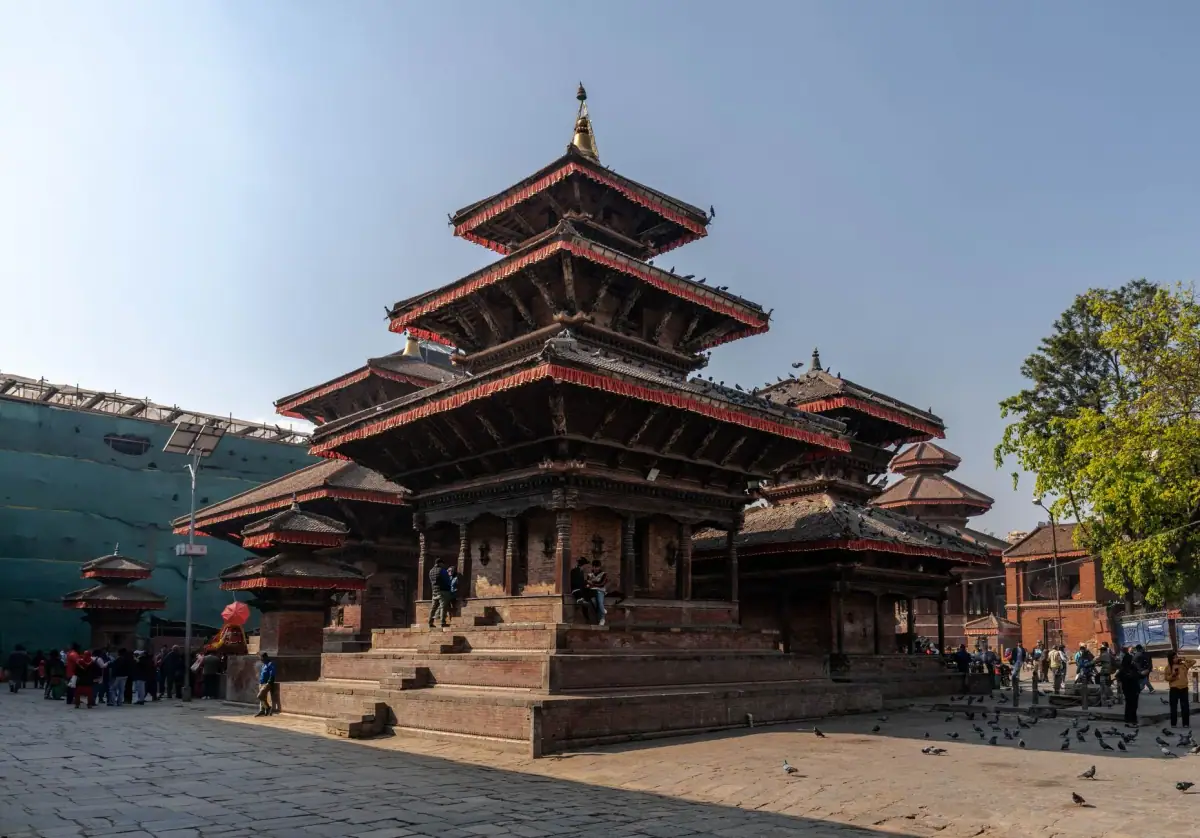
Kathmandu’s Durbar Square is the natural starting point of a visit. It gathers former royal palaces, pagoda temples with stacked roofs and courtyards with carved woodwork. This is where the valley’s kings were crowned, and the whole keeps a strong symbolic value for Nepalis.
The 2015 earthquake hit several monuments on the square hard, and some restoration works have lasted years. Depending on when you come, you will find renovated buildings and others still protected by scaffolding: it is also a way to understand the country’s recent history.
Do not miss the Kumari Ghar, the home of the “living goddess”, a young girl venerated as the incarnation of a deity. The inner courtyard, with its finely carved wooden windows, is visible from the entrance; photographing the Kumari herself is forbidden.
Foreign visitors are charged an entrance fee on the square. Plan about two hours to stroll, then let the neighboring lanes carry you toward Indra Chowk and Asan, where stalls of spices, fabrics and jewelry give a very lively picture of traditional Kathmandu.
Swayambhunath: the “monkey temple”
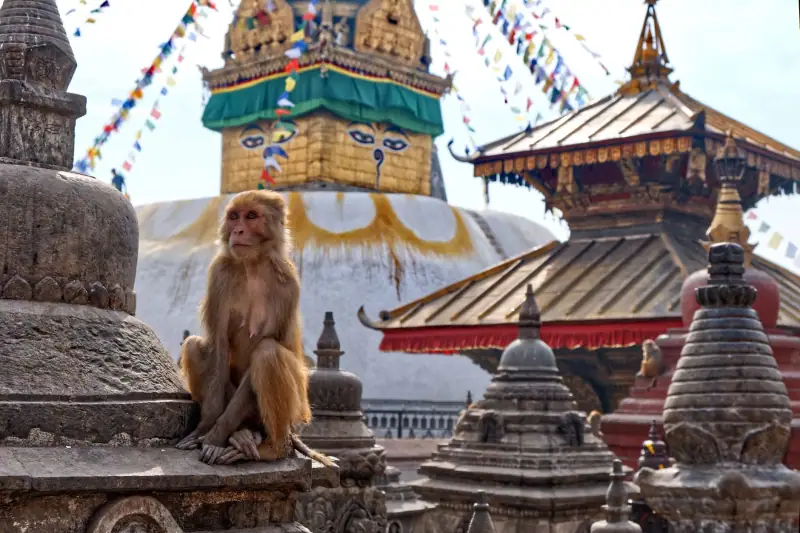
Set on a hill west of the center, Swayambhunath is one of the oldest and most recognizable Buddhist sanctuaries in the valley. Its white stupa, topped by a golden tower on which big eyes are painted watching the four directions, dominates the city. The macaques living there earned it its nickname.
You reach it by a long stone staircase lined with statues and prayer wheels, or by a road on the west side. Walk around the stupa clockwise, like the pilgrims, and enjoy the view over the valley, especially late in the afternoon when the light softens.
A few precautions: keep your bags closed and do not show food, because the monkeys are used to visitors and can be pushy.
Where to stay in Kathmandu
Thamel for atmosphere and services, calmer districts for quiet sleep: compare lodgings and reviews before booking.
Boudhanath: the great stupa of the Tibetan community
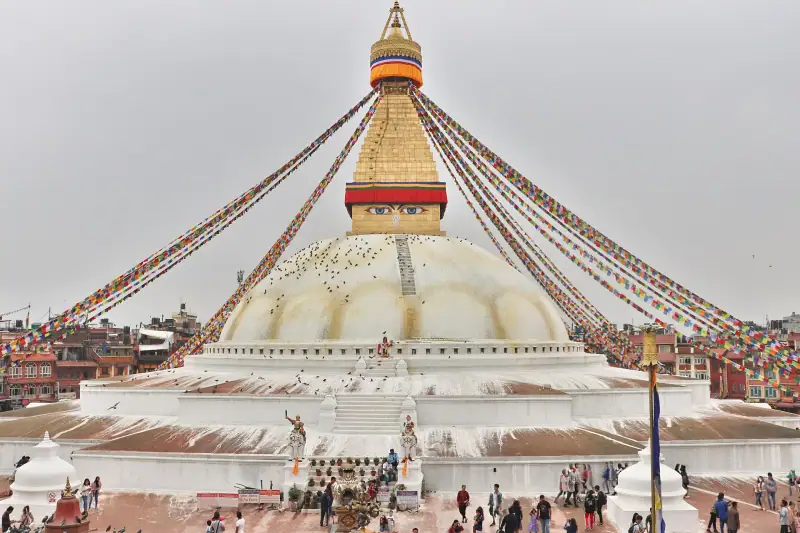
Boudhanath is one of the largest stupas in the world and the center of Tibetan Buddhist life in Nepal. Its vast white dome, golden tower with the Buddha’s eyes and garlands of prayer flags attract pilgrims and visitors at all hours.
The best time to go is dawn or dusk. The faithful then perform the kora, the walk around the stupa, counting their prayer beads and spinning the prayer wheels. Around the square, monasteries, shops of ritual objects and cafe terraces let you linger.
Boudhanath is east of the city, a few kilometers from the center: a taxi is the simplest way to get there. It is readily paired with nearby Pashupatinath for the same half day.
Pashupatinath: a Hindu temple on the sacred river
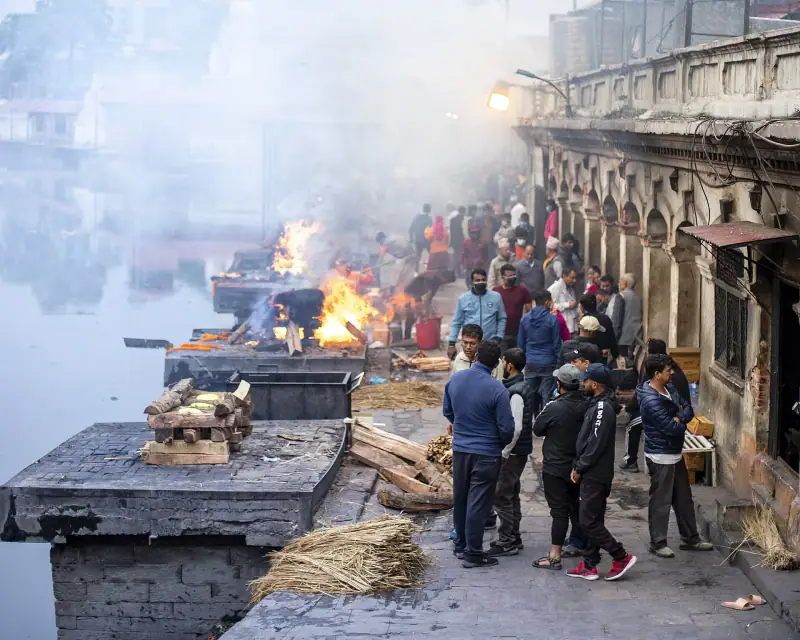
Pashupatinath is one of the great Hindu sanctuaries dedicated to Shiva. It extends over both banks of the Bagmati, a river considered sacred. The main temple is reserved for Hindus, but the site can be widely visited: terraces, small temples, paths in the neighboring forest and a view of the ghats.
Cremations take place regularly on the ghats by the water. For many travelers, it is a striking experience. Stay discreet, do not photograph mourning families up close, and keep a respectful distance. Sadhus, ascetics dressed in orange with painted faces, are numerous; they sometimes pose for payment, which is best clarified before taking out the camera.
Thamel: the travelers’ district
Thamel is the district where hotels, restaurants, trek agencies, gear shops and bars are concentrated. Its narrow lanes, saturated with signs, cables and motorbikes, are not the most authentic Nepal, but it is the best base to prepare a trek or rest after coming back from the mountains.
Take the chance to compare gear and agency offers before committing, and always compare several quotes. Also adopt the right habits: have prices explained in advance, politely refuse insistent approaches and keep your papers in a safe place.
To catch your breath, the Garden of Dreams, a neoclassical garden from the early 20th century laid out a stone’s throw from Thamel, offers a striking contrast with the city. There is an entrance fee, and the place is ideal for a quiet break.
Guided tours and excursions
A local guide helps decode the temples and the valley's history: look at the visits and excursions available around Kathmandu.
Patan: Newar art a few kilometers away
Patan, also called Lalitpur, adjoins Kathmandu to the south, across the Bagmati River. Its Durbar Square is often considered the most harmonious in the valley, with its brick and carved-wood temples and its museum housed in the former royal palace.
The city is known for its artisans, notably bronze casters and wood carvers, who carry on Newar know-how handed down for centuries. Strolling through the inner courtyards and lanes around the square is the best way to discover it. Half a day is enough, a bit more if you like museums.
Bhaktapur: the medieval city
Bhaktapur, in the east of the valley, has kept a rare medieval atmosphere. Its successive squares, multi-tiered temples, pottery workshops and red-brick houses are visited on foot, without the tumult of the capital. It is also a good place to taste juju dhau, the traditional “king of yogurts”, served in small terracotta pots.
Foreign visitors are charged an entrance fee. If you have time, spend a full day there or even a night: in the evening, the town empties of its groups and takes on a particular charm.
Other ideas to round out your stay
If you have more time, several options add to these classics:
- The national museum and the city’s small museums to better place the history of the valley’s kingdoms.
- The lanes of the old town, between Indra Chowk and Asan, for the market, spices and neighborhood life.
- A day hike on the surrounding hills, such as Nagarkot or Shivapuri, to glimpse the Himalaya in clear weather.
- A day in Bandipur, a preserved Newar village on the road to Pokhara, if you are continuing your trip.
- Cooking, meditation or yoga classes offered by several centers, to slow the pace after a few days of sightseeing.
Organizing your days in Kathmandu
Here is a realistic outline for three days, to adapt to your energy and the weather:
- Day 1: Durbar Square in the morning, old neighborhoods in the afternoon, evening in Thamel.
- Day 2: Swayambhunath at sunrise, then Garden of Dreams and a lunch break. Late afternoon at Boudhanath for the kora.
- Day 3: Pashupatinath in the morning, then Patan in the afternoon. Swap Patan for Bhaktapur if you prefer a more medieval atmosphere.
To get around, a taxi is the most practical; negotiate, or ask about the booking app in use, before getting in. Traffic can be slow, so avoid scheduling too many visits a day. To choose the best season for your wishes, see our guide when to go to Nepal.
Flights to Kathmandu
Flights to Nepal generally involve a stopover: compare routes and durations before booking.
Practical tips for a good visit
- Dress: shoulders and knees covered in religious places; take off your shoes when asked.
- Direction: walk around stupas and prayer wheels clockwise.
- Water and health: drink bottled or filtered water, and protect yourself from dust and pollution, which can irritate the throat.
- Altitude: Kathmandu is at about 1,400 m (4,590 ft).
- Respect: ask before photographing a person, avoid touching children’s heads and do not point your feet at statues or altars.
- Hours: sites generally open early in the morning, but hours and entrance fees change, so it is wise to check them before going.
Kathmandu is not an easy city, but it rewards those who take the time to slow down. A few well-chosen days are enough to understand why it remains the essential gateway to Nepal.
Frequently asked questions
How long do you need to visit Kathmandu?
Plan two to three days to see the city's major sites: Durbar Square, Swayambhunath, Boudhanath and Pashupatinath. Add a day if you also want to explore Patan and Bhaktapur, the two other former royal cities of the valley.
Which sites in Kathmandu are UNESCO listed?
The Kathmandu Valley is on the UNESCO World Heritage list with several groups of monuments, including Kathmandu's Durbar Square, Swayambhunath, Boudhanath, Pashupatinath, as well as the squares of Patan and Bhaktapur.
Can you enter the Pashupatinath temple?
The main sanctuary is reserved for Hindus. Other visitors can, however, walk around the site, watch the ceremonies from the opposite bank of the Bagmati River and discover the many side temples, respecting ceremonies in progress.
What should you wear to visit the temples?
Opt for clothes that cover shoulders and knees, and shoes that are easy to take off. In some temples and monasteries you must remove your shoes, and leather items may be forbidden inside some Hindu shrines.
Is Kathmandu pleasant to visit on foot?
The historic center and the Thamel district are very walkable, but traffic, noise and pollution can be tiring. To reach more distant sites such as Boudhanath or Pashupatinath, a taxi is the most practical.
More Nepal guides
Keep reading
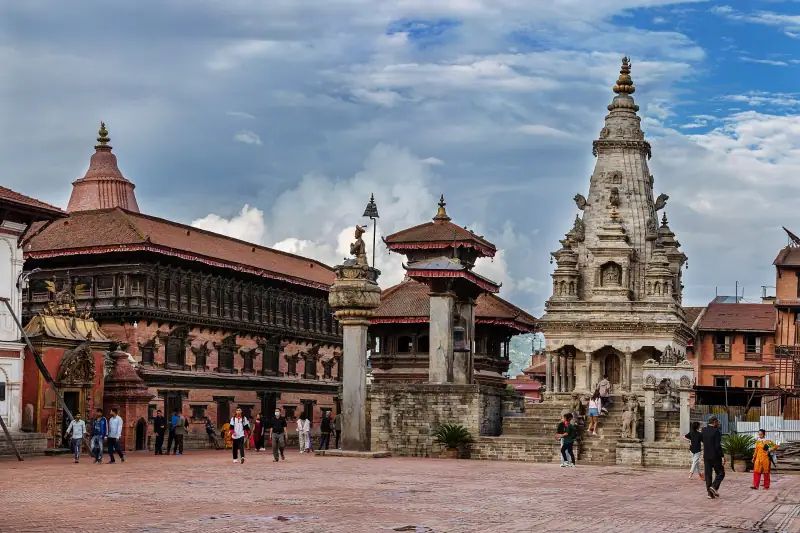
Visiting Bhaktapur and Patan: The Newar Cities of the Kathmandu Valley
Visiting Bhaktapur and Patan: Durbar Squares, Newar temples, Nyatapola, Golden Temple, crafts and tips to plan one or two days from Kathmandu.
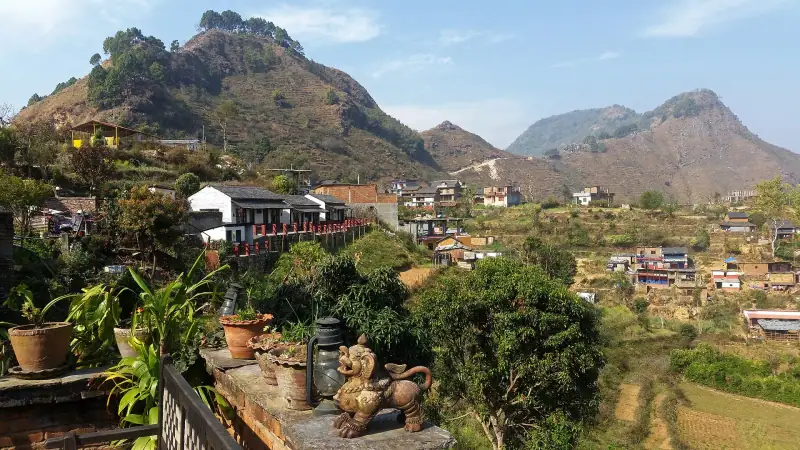
Bandipur, Nepal: Is It Worth the Detour Between Kathmandu and Pokhara?
Bandipur, a car-free Newar village between Kathmandu and Pokhara: access via Dumre, one night or half a day, Siddha Cave, Thani Mai and Tundikhel.
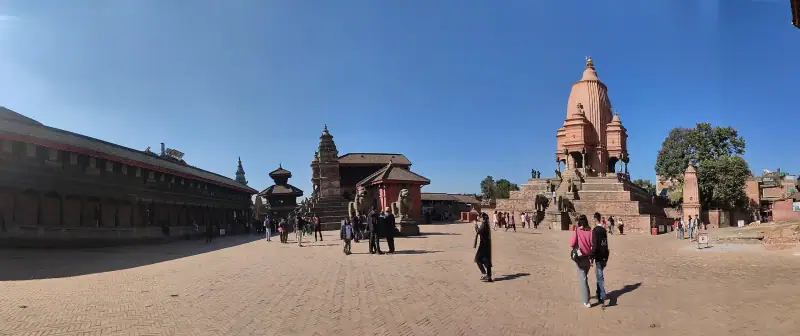
Complete Guide to Visiting Nepal: Regions, Highlights and Tips
Visiting Nepal: regions, cities, highlights, when to go, transport, where to stay and budget. The pillar guide to prepare your trip.
Ready-made
Nepal itineraries
3 days
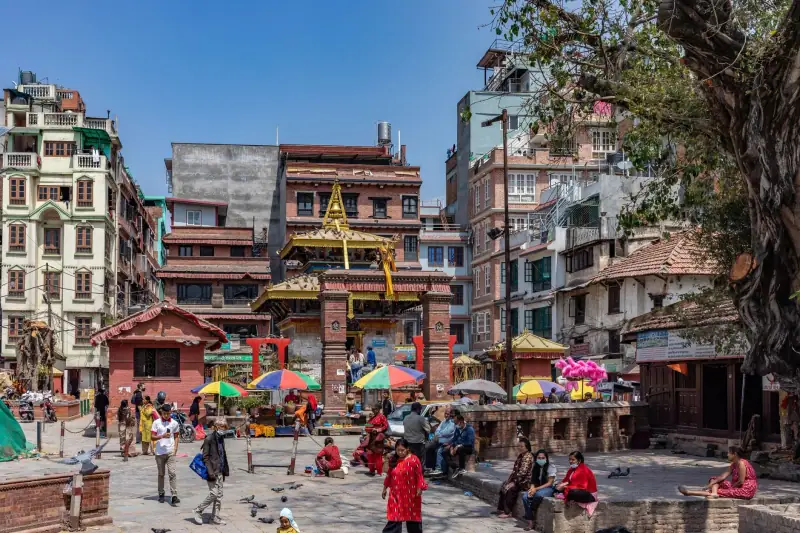
Kathmandu in 3 Days: Day-by-Day Itinerary, Temples, Newar Cities and Tips
A 3-day itinerary for Kathmandu and its valley: Durbar Square, Swayambhunath, Pashupatinath, Boudhanath, Patan and Bhaktapur, with transport and tips.
10 days
Nepal in 10 Days: Kathmandu, Pokhara and the Poon Hill Trek
A 10-day Nepal itinerary: Kathmandu temples, Pokhara's lake and a short 4-day Poon Hill trek, with tips, permits and a rough budget.
12 days
Nepal with Kids: A 12-Day Family Itinerary with Gentle Stages and Tips
KathmanduPokharaBandipurChitwan