What to see
Visiting Höfn: what to see and do on Iceland's southeast coast
We may earn a commission when you book through links on this page, at no extra cost to you. We don't visit or try the places we cover: we summarize published sources. How we work
In short
- Höfn is mostly a base: one night covers the harbor, a langoustine dinner and sunset over the glacier; two nights add Stokksnes, a glacier outing and Jökulsárlón.
- It is about 470 km (292 mi) from Reykjavik on Route 1, more than six hours of driving without stops, so most travelers break the trip near Vík or Skaftafell.
- Jökulsárlón lagoon is about 80 km (50 mi) west of Höfn, a little under an hour by road.
- Stokksnes charges an entry fee of around 800 to 1,000 ISK per person according to sources; check there.
Höfn (“the harbor,” pronounced roughly “Hurp”) is a small fishing port in southeast Iceland, set on a peninsula beside a lagoon. It has about 1,600 to 2,000 inhabitants depending on the source, which makes it the main service center of the southeast coast. Its asset is obvious on arrival: in front of the village, the glacier tongues of the Vatnajökull, Europe’s largest ice cap, stand out against the sky.
This guide helps you decide what to see and do in Höfn, how to organize your stop and which excursions to add around it. To place the town in a broader trip, start from our complete guide to visiting Iceland.
Höfn at a glance: what to expect
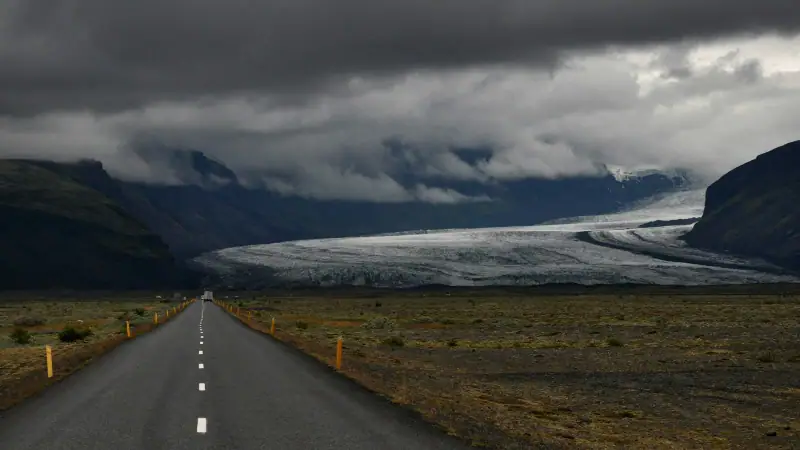
The town is about 470 km (292 mi) from Reykjavik on Route 1, which puts it at the limit of what many travelers plan for a stay of one or two weeks. It occupies a peninsula surrounded by water on three sides, with sandbars that make the channel entrance tricky for boats. Route 99 leaves Route 1 a few kilometers to the north to descend to the center, and the Almannaskarð tunnel, opened in 2005, replaced a pass known for its gusts.
Höfn resembles neither Reykjavik nor the postcard villages of the north. It is a working town: fish processing plant, active harbor, shops useful to residents. This simplicity is its charm, provided you come with the right expectations. You do not visit Höfn for a list of monuments, but for its light, its table and its position at the foot of the glacier.
The southeast coast climate is oceanic: relatively mild compared with the interior, but wind, rain and mist can arrive in minutes, even in summer. Pack warm layers and a waterproof jacket in every season, and see our article on when to visit Iceland to choose your period.
The harbor and center: a quiet stroll
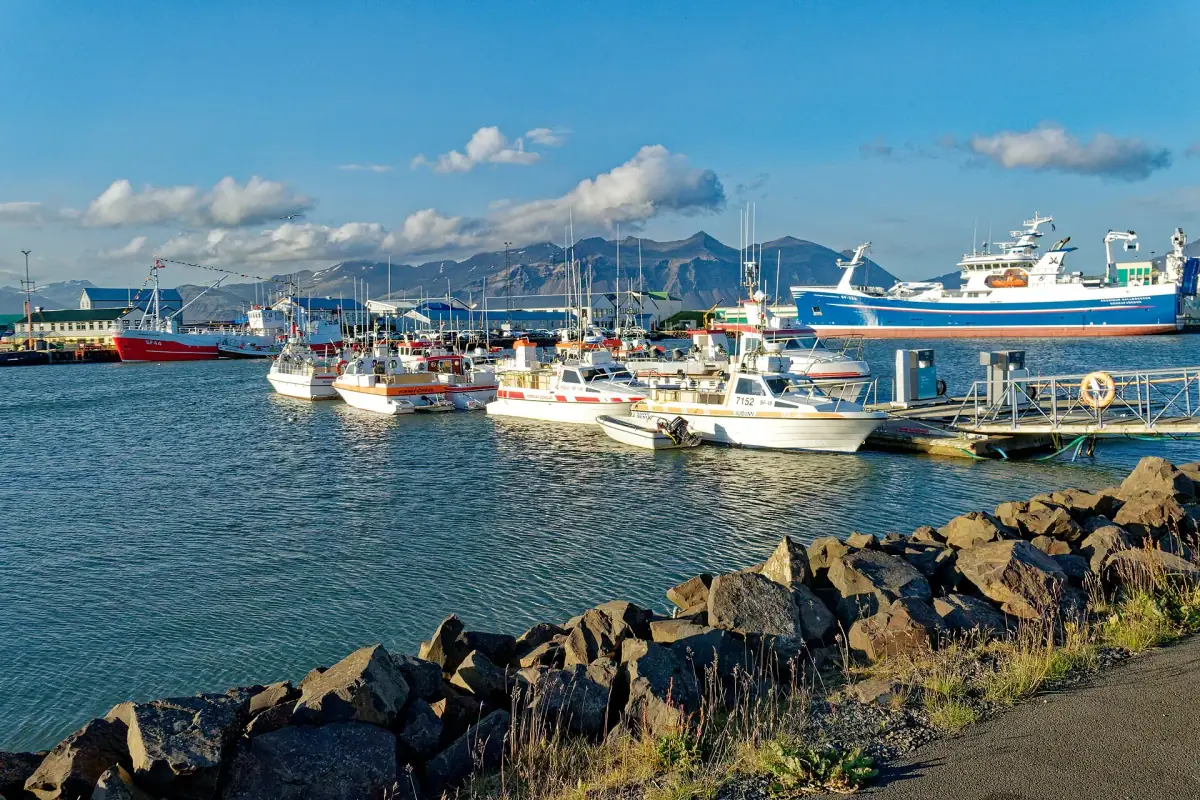
Start with the harbor, where you see fishing boats bringing in their catch. The atmosphere is that of a real working port, with warehouses, nets and gulls. In the evening, in clear weather, the low light on the water and on the distant glacier gives one of the village’s finest views.
The center is easily covered on foot. You find shops, a supermarket to stock up before the road, a gas station, a municipal pool and a few restaurants. It is also a practical stop for loading up on provisions: beyond, east or west, services are rare over long distances.
A few landmarks for your walk:
- The waterfront: several viewpoints let you admire the Vatnajökull beyond the lagoon.
- The center streets: low houses, well-kept gardens in summer, a quiet atmosphere out of season.
- The harbor area: ideal at the end of the day, when the boats come in.
Allow one to two hours to see everything, which leaves time for the sights nearby. If you want a livelier urban equivalent, our guide to visiting Akureyri presents the big town of the north.
The langoustine capital
If Höfn has a culinary reputation, it is thanks to the langoustine (humar in Icelandic, sometimes translated as “lobster” in Iceland, although it is a crustacean smaller than the European lobster). It is caught in the waters off the southeast coast, and the port makes it a flagship product. Several restaurants in town serve it grilled, in soup, gratinéed or with garlic butter.
A festival devoted to this product is held in summer. Dates vary from year to year: if it appeals to you, check the program with the local tourist office before fixing your reservation. Outside the event, restaurants serve langoustine all year, with availability that may vary by fishing season.
A few tips for eating well:
- Book dinner ahead in high season: the town is small, and seaside tables fill up fast in summer.
- Compare the daily specials: lunch menus are often more affordable than the evening menu.
- Also try the fish of the day: cod, saithe or Arctic char are regularly on the menu in Icelandic ports.
- Plan a comfortable budget: restaurant prices are high in Iceland. Our guide to the budget for Iceland gives pointers.
To understand what Icelanders eat day to day, read our article on Icelandic cuisine and its specialties.
Staying in Höfn
Compare hotels, guesthouses and apartments in Höfn, near the harbor and restaurants.
Stokksnes and Vestrahorn mountain
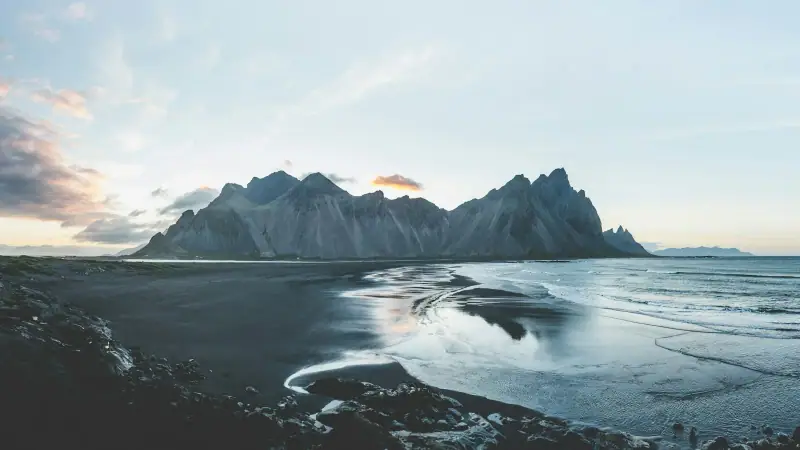
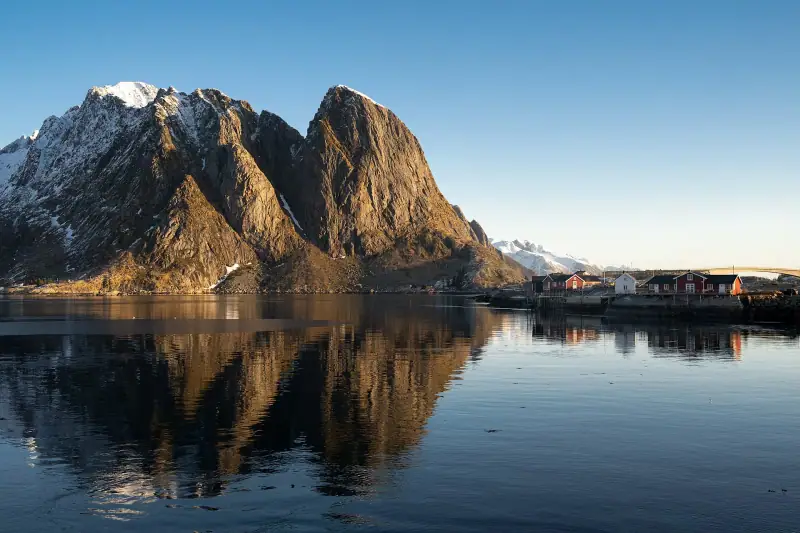
A good fifteen minutes’ drive east of the village, the Stokksnes peninsula is one of the most photographed landscapes in the country. Vestrahorn mountain raises its dark ridges above grass dunes and a large black sand beach. With favorable tide and light, the sea draws reflections that double the mountain, and this is the moment photographers wait for.
Access is via a private road: an entry fee, around 800 to 1,000 Icelandic króna per person depending on sources, is paid at the site entrance. Rates can change, so check at the entrance. At the entrance is a café that serves as a welcome point, as well as a fake Viking village built for a film project. It never served as a set and remains a photogenic curiosity in front of the mountain.
To enjoy the place:
- Come early or late: the light is softer, and there are fewer passing groups.
- Watch the tide and the wind: the most spectacular reflections depend on the state of the sea. The sand can be wet and the wind strong.
- Stay on the paths: the dunes are fragile, and powerful waves and water-soaked sand call for caution near the sea.
- Protect your gear: sand and fine spray get everywhere.
The place can be very quiet in winter and lends itself to northern lights nights, with the mountain in silhouette. Our article on the northern lights in Iceland explains how to improve your chances.
Vatnajökull: glacier walks and ice caves
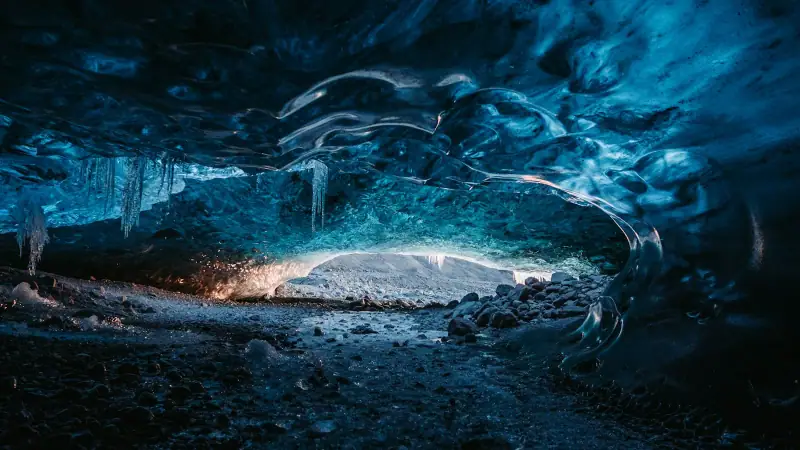
The Vatnajökull covers a large part of the southeast of the island and feeds many glacier tongues descending toward the plain. Several are accessible from Route 1 for guided excursions: ice hiking with crampons and ice axe, ice cave visits in winter, or a simple walk to the glacier front.
Two rules to remember. First: never climb a glacier alone. Crevasses, melt and unstable rocks make the terrain dangerous, and equipment is supplied by licensed operators. Second: ice caves are generally visited only in the cold season, when the ice is stable enough. Departures and locations change from year to year, depending on the state of the glacier: check the outings currently offered rather than relying on an old article.
Departures for ice hikes are generally from points along Route 1, at varying distances from Höfn. Compare durations, difficulty levels and cancellation terms before booking, and bring warm clothing, gloves and good walking shoes.
Glacier hikes and ice caves
Compare guided excursions on the Vatnajökull: equipment supplied, duration and cancellation terms.
Jökulsárlón and the ice-block beach
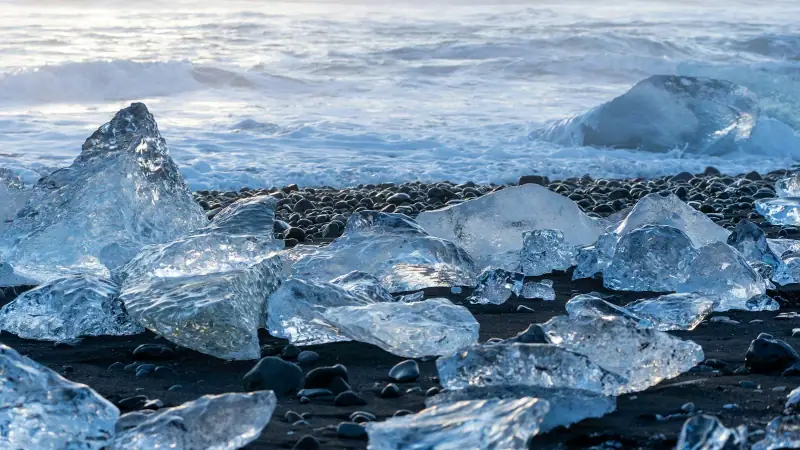
About 80 km (50 mi) west of Höfn, Jökulsárlón is the country’s most famous glacier lagoon. Blocks broken off the Breiðamerkurjökull glacier float there before flowing to the ocean through a short channel. Colors range from white to deep blue, and it is not rare to spot seals.
Just opposite, on the other side of the road, the black sand beach is strewn with ice fragments cast up by the sea. They sparkle in the sun and contrast with the sand: it is one of the most emblematic images of a trip to Iceland. Keep a safe distance from the water, as waves are powerful and the current dangerous.
Several options are open to you:
- A walk along the lagoon shores, free and possible all year.
- A boat trip (amphibious or semi-rigid depending on the operator) to approach the ice, generally seasonal.
- A visit at dawn or dusk, for softer light and fewer people.
From Höfn, allow half a day for the round trip and visit, or a day if you add a glacier walk. If you continue west on a road trip, our south coast itinerary guides you to Reykjavik via the major sights.
Bathing and relaxing
As throughout Iceland, hot bathing is part of local life. Höfn has a municipal pool with heated pools, used by residents and ideal after a day of driving or hiking. Hours and rates vary by season: check up-to-date information before heading out.
Remember the basic rule: a full soapy shower, without swimsuit, before entering the water. To compare other options in the country, natural baths, lagoons and neighborhood pools, read our article on hot springs in Iceland.
Watching birds and nature around the lagoon
The shallow waters and sandbars around Höfn attract many migratory and nesting birds, especially in spring and summer. Bird lovers can watch waders on the mudflats at low tide, Arctic terns during nesting and geese on the coastal meadows.
A word of caution: during nesting, terns defend their territory and may dive at walkers who come too close. Keep your distance, wear a hat and follow the signs.
Seals also frequent this coast and the Jökulsárlón lagoon. Watch them from afar, without approaching, and without feeding them.
What to do by season
In summer, days are very long and all services run: boat trips on the lagoon, glacier walks, restaurants open late. It is also the period when you need to book early, as lodging capacity is limited.
In spring and autumn, crowds drop. Some activities are reduced, roads are generally passable, but the weather is more variable. It is an interesting period if you are looking for calm.
In winter, days are short, the village is very quiet, and road conditions can change quickly. In return, ice caves are accessible, the ice-block beach is magnificent under the snow, and the northern lights are possible on a clear night. Check the weather and road conditions every morning before setting out.
Rent a car for the southeast coast
Compare rental companies to link Höfn, Stokksnes and Jökulsárlón at your own pace.
Getting there and around
- From Reykjavik: about 470 km (292 mi) on Route 1, more than six hours of driving without a stop. Many travelers break the trip with a night around Vík or Skaftafell.
- From Akureyri or the north: the road goes through the East Fjords. The trip is long: plan it for a full day and check the weather, as passes can be hit by snow or wind in winter.
- By bus: connections exist on Route 1, but with reduced frequencies outside summer. Ask the operators and leave a margin.
- In town: the center is walkable. For Stokksnes, Jökulsárlón and the glaciers, a car is strongly recommended.
Our article on driving in Iceland explains the rules to know: speed limits, wind, gravel roads and tracks closed to regular vehicles. A useful detail: fuel is scarce on some stretches, so fill up when you pass a station.
Where to stay in Höfn
Lodging includes hotels, guesthouses, apartments, a hostel and a campsite in season. It remains limited by the size of the town: in summer, book several months ahead if you have fixed dates. If you arrive without a reservation, you may have to stay farther along Route 1.
For a broader view of the types of lodging in the country, from camping to boutique hotels, see our guide to where to stay in Iceland.
Budget and practical tips
- Stock up on provisions in Höfn: shops are rare afterward, and roadside prices are higher.
- Plan generously for excursions: glacier walks and boat trips are a significant expense.
- Stay flexible: fog and rain are frequent, and a sight invisible one day can be splendid the next.
- Respect nature: do not walk on moss, stay on the paths and do not take ice or stones.
- Entry rules and insurance: entry rules depend on your passport. Check the official travel advice of your government before you book: travel.state.gov (US), GOV.UK (UK), travel.gc.ca (Canada), Smartraveller (Australia) (checked November 2026). Consider travel insurance covering medical costs and repatriation.
- Mobile network: check your carrier’s international plan or consider a travel eSIM before you go.
How long to stay in Höfn?
- A few hours: if you are passing through, the harbor, a langoustine at lunch and a look at the glacier are enough.
- One night: add Stokksnes at sunrise or sunset and a dinner facing the lagoon.
- Two to three nights: take the time to combine Stokksnes, Jökulsárlón, a glacier hike and an evening at the pool, without rushing along Route 1.
Höfn is not a destination to tick off, it is a stop that rewards those who take their time: fresh langoustines, a glacier on the horizon and end-of-the-world landscapes a few minutes away. One night here is enough to grasp the atmosphere, and a second lets you enjoy the coast calmly before getting back on the road east or west.
Frequently asked questions
How long does it take to visit Höfn?
The village can be covered in an hour or two, but Höfn is above all a base. One night lets you see the harbor, have a langoustine dinner and enjoy the sunset over the glacier. With two nights, you add Stokksnes, a glacier outing and the Jökulsárlón lagoon without rushing.
Is Höfn far from Reykjavik?
Allow about 470 km (292 mi) on Route 1, more than six hours of driving without counting stops, which means breaking the trip. Most travelers stop in Vík or near Skaftafell. Always check the weather and road conditions the same day, especially in winter.
Why is Höfn known for its langoustines?
The port is one of the country's major langoustine fishing places, and the town's restaurants make it their specialty. A festival devoted to it is held in summer: find out the year's dates before building your stay around it.
Can you see Vatnajökull from Höfn?
Yes, it is one of the village's assets: in clear weather, several glacier tongues of the Vatnajökull ice cap stand out on the horizon, north of the bay. When clouds are low, the view disappears, hence the value of staying flexible in your plan.
How far is the Jökulsárlón lagoon?
The glacier lagoon is about 80 km (50 mi) west of Höfn, a little under an hour by road in normal conditions. It combines easily with the neighboring ice-block beach, in half a day or a day from Höfn.
Do you need a car to visit Höfn?
The center is walkable, but the most spectacular sights (Stokksnes, Jökulsárlón, glacier hike departures) are spread along Route 1. Without a car, you need to rely on organized excursions, which are fewer outside summer.
Can you see the northern lights in Höfn?
Yes, from late summer to spring, on a dark night and under a clear sky. The village is dimly lit and the coast offers wide horizons. No appearance is guaranteed: everything depends on solar activity and the weather.
More Iceland guides
Keep reading

What to see on the Snæfellsnes Peninsula: volcano, beaches, craters and villages
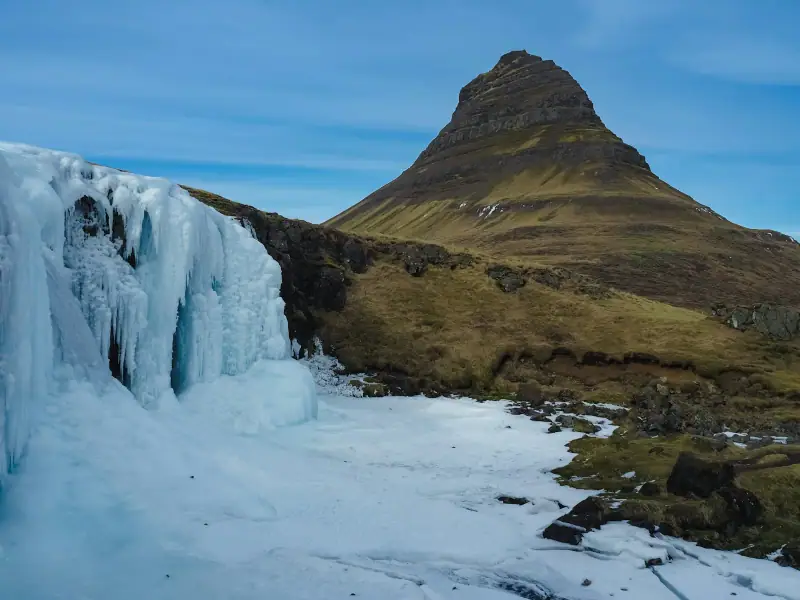
What to see in Snæfellsnes, Iceland: Snæfellsjökull glacier, Kirkjufell, Djúpalónssandur, Saxhóll, Gerðuberg, seals and fishing ports, site by site.
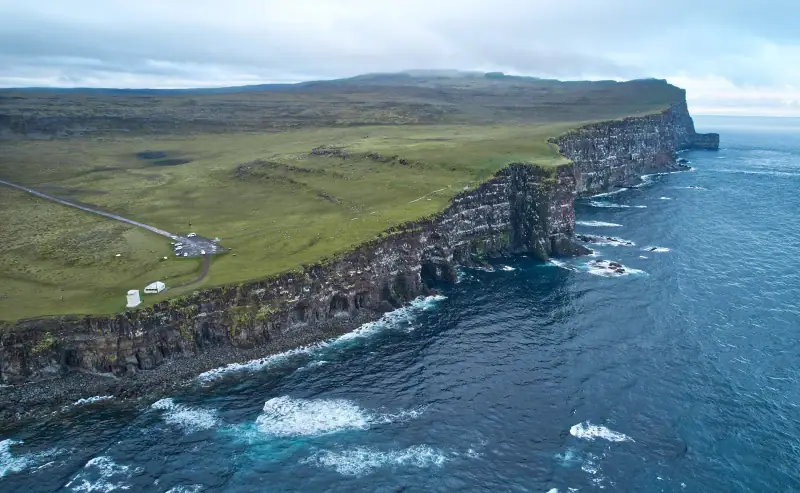
West Fjords: what to see between Látrabjarg, Rauðasandur and Dynjandi
Látrabjarg puffin cliffs, the pink Rauðasandur beach, Dynjandi waterfall, Patreksfjörður: what to see in the southern West Fjords of Iceland.
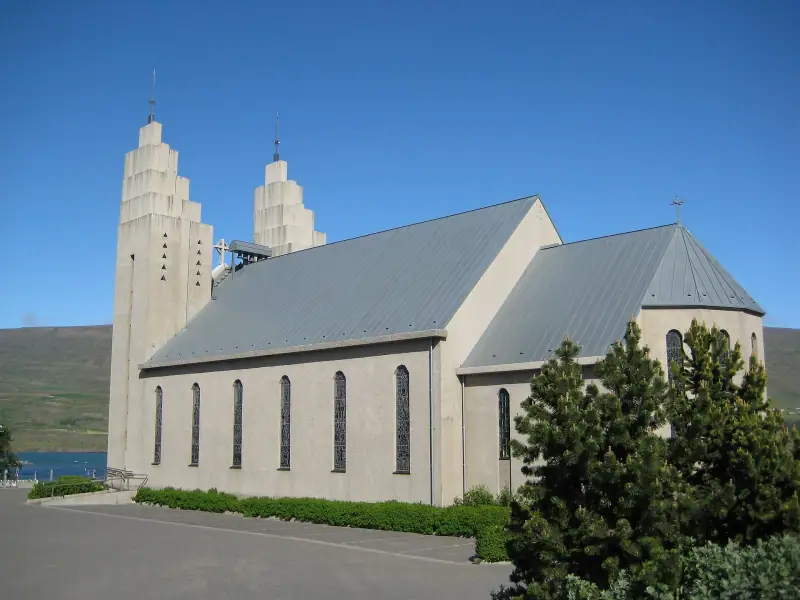
Visiting Akureyri: what to see and do in North Iceland's capital
Church, botanical garden, Eyjafjörður fjord, baths, skiing, whales and excursions: a guide to visiting Akureyri and planning your stay.
Ready-made
Iceland itineraries
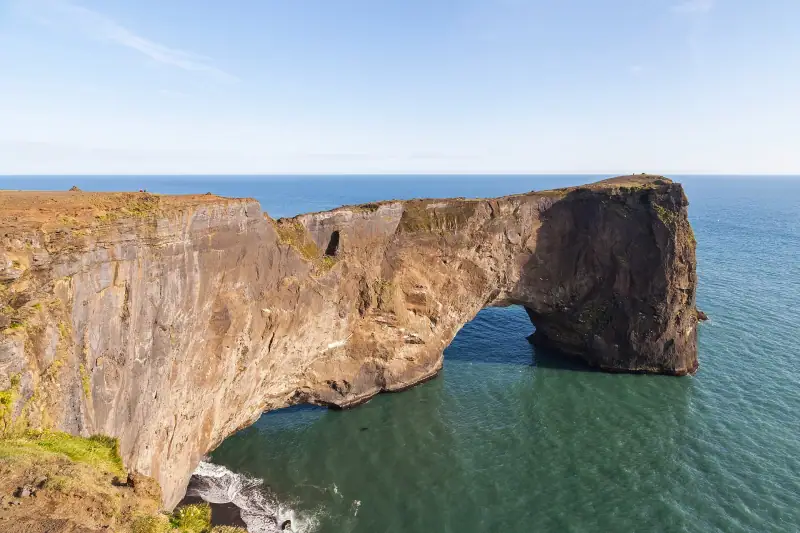
4 days
Iceland's south coast: a 4-day itinerary from Reykjavik to Jökulsárlón
A 4-day south coast Iceland itinerary: Seljalandsfoss, Skógafoss, Vík, Reynisfjara and Jökulsárlón lagoon, with distances, stops and practical tips.
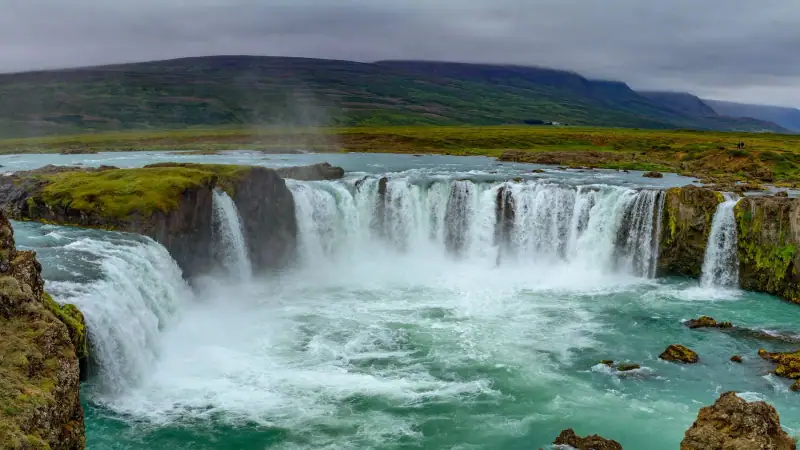
3 days
North Iceland in 3 days: Goðafoss, Mývatn and Húsavík
Lake Mývatn areaHúsavík
2 days
Snæfellsnes Peninsula: a 2-day itinerary from Reykjavik
Visit Iceland's Snæfellsnes Peninsula: Kirkjufell, Arnarstapi, Djúpalónssandur, Búðir and Stykkishólmur. A 2-day itinerary with drive times and tips.