Plan your trip
When to go to Iceland: seasons, northern lights and the midnight sun
We may earn a commission when you book through links on this page, at no extra cost to you. We don't visit or try the places we cover: we summarize published sources. How we work
In short
- There is no single best period: June to August brings very long days and clear roads; September to March brings a chance of northern lights, with shorter days and wilder weather.
- Northern lights season runs roughly September to March; plan at least four or five nights and get away from city lights.
- Highland F-roads generally open from late June or early July, depending on snow and melt.
- Puffins nest on coastal cliffs roughly from mid-April to mid-August; always keep a spare day in your plan for storms.
Choosing the date of your trip to Iceland changes everything: day length, accessible roads, animals you can watch and even the budget. Between the bright nights of summer and the long winter evenings suited to the aurora, the country has two very different faces.
This guide helps you choose the period that matches what you want, month by month, with the trade-offs to know before booking.
The main seasons in Iceland
Iceland has a subarctic oceanic climate: milder than you imagine on the coast, but very changeable. Locals often say that if you do not like the weather, you just have to wait a few minutes. You should therefore travel with several layers of clothing, whatever the season.
The year can be summed up in four main periods:
- Summer (June to August): very long days, clear roads, cool but pleasant temperatures. This is high season.
- Autumn (September to October): the night returns, first auroras possible, autumn colors in the tundra and fewer people.
- Winter (November to March): short days, snowy landscapes, northern lights and ice caves.
- Spring (April to May): days lengthen fast, snow recedes and the arrival of seabirds is in the air.
The farther you get from summer, the more margin you should plan in your schedule: a storm can delay a drive by a day. If you are planning a big tour of the country, always keep a spare day.
Summer: midnight sun and open roads
This is the simplest period for a first trip. Around the June solstice, the sun barely dips below the horizon: you can visit a waterfall at 10 pm without a headlamp, and fit in long driving days without stress. In the south of the country, people speak rather of bright nights, the true midnight sun being seen mostly in the north, notably from the island of Grímsey, crossed by the Arctic Circle.
Summer is also the season for most activities: hiking, whale watching from the north of the country, horseback rides and tours on Route 1. Interior tracks, called F-roads, generally open from late June or early July depending on snowmelt. They are driven with a suitable vehicle and require checking river ford conditions before you go.
Puffins nest on cliffs and coastal islets in the warm season, generally from mid-April to mid-August or so. It is the best time to see them up close, provided you follow local guidelines.
The flip side: it is high season. Lodging has to be booked long in advance, prices rise and famous sights, such as those of the Golden Circle, are busy. To avoid the crowds, set out early in the morning or late in the evening, taking advantage of the light.
Book early for an Icelandic summer
Hotels, guesthouses and apartments fill up fast from June to August: compare availability as soon as your dates are set.
Autumn and winter: northern lights and white landscapes
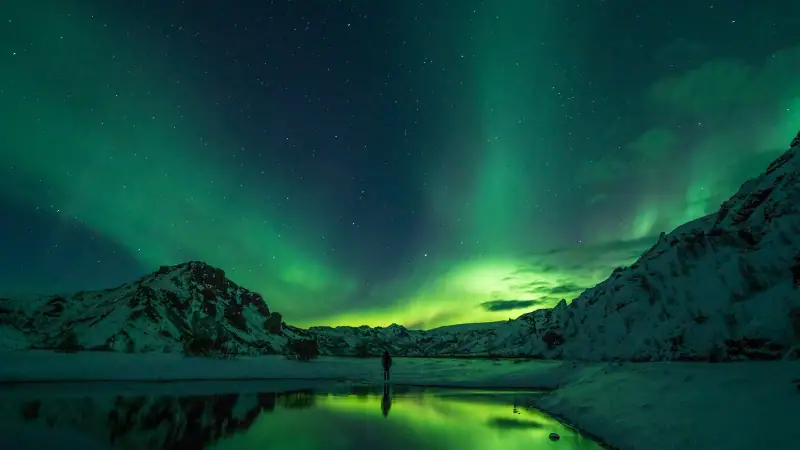
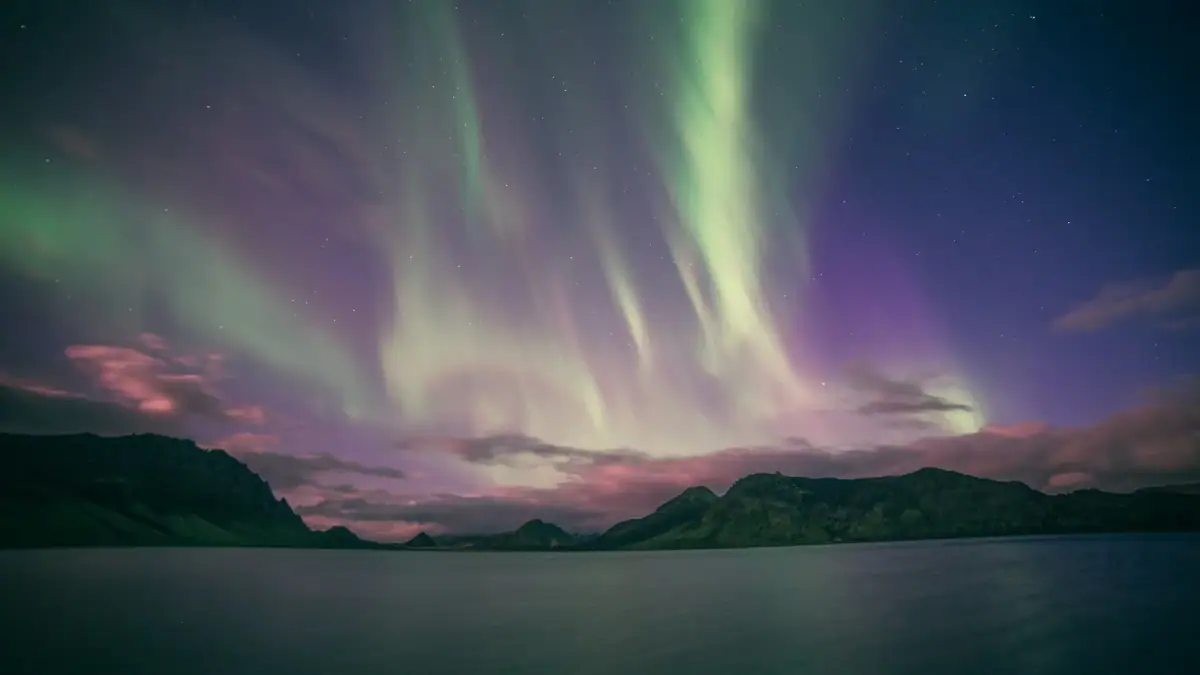
From the end of summer, the night returns and with it the chance to see the northern lights. The season generally runs from about September to March. Three conditions are needed: a dark sky, few clouds and enough solar activity. No outing is guaranteed, hence the value of planning several evenings, ideally on a stay of at least four or five nights.
To maximize your chances, get away from Reykjavik’s lights, check the cloud and auroral activity forecasts of the Icelandic meteorological service, and let your eyes adjust to the darkness for a few minutes. A guided night excursion lets you rely on a guide who knows where to find clear sky.
Winter also offers spectacular landscapes: partially frozen waterfalls, black sand beaches dusted with snow, hot springs that are a delight in cold weather. Ice caves are visited in winter with specialized guides, as access depends on the state of the glacier. Our guide to ice caves, snowmobiling and winter activities explains what to book and in what order.
The trade-off is clear: days are short, sometimes only a few hours of daylight in the depth of winter. You need to plan drives around the light, avoid driving at night on isolated roads and check road conditions every morning. Wind and ice can block some routes, notably in the north and east. Interior roads are closed.
Go northern lights chasing
Guided night excursions let you look for the aurora far from light pollution.
Spring: an in-between worth considering
From April to May, light gains ground quickly and crowds remain more moderate than in midsummer. It is an interesting period for those who want comfortable days without the July crowds. The climate remains very variable, however: late snow can still fall, and the interior of the country remains inaccessible.
It is also when seabirds gradually return to the cliffs, and when waterfalls are fed by snowmelt. The first whale watching trips are offered over the course of spring, from ports like Húsavík in the north.
In practical terms, spring calls for the same driving precautions as winter, with a safety margin in the schedule. In return, you enjoy lodging rates often more reasonable than in summer, to be checked when booking.
Choosing according to your wishes
To see more clearly, here is a simple grid:
- You want the northern lights: aim for September to March, with several nights there.
- You want long days and clear roads: June to August, booking early.
- You want to see puffins: from May to early August or so, on the coast.
- You dream of the Highlands: July and August, depending on track conditions and with a suitable vehicle.
- You want to avoid the crowds: early autumn or spring, accepting more uncertain weather.
- You are traveling for the first time: summer remains the simplest choice, especially for a first road trip on the south coast.
Whatever the season, leave flexibility in your plan. In Iceland, the weather sometimes decides for you, and a spare day avoids a lot of frustration.
Preparing your trip by season
Once the period is chosen, logistics play out in three steps: flights, lodging and getting around. For a summer stay, book flights and lodging several months ahead, because supply is limited in villages. For winter, you will have more flexibility, but it is better to plan flexible cancellations in case of storms.
For the car, compare offers before departure rather than on arrival. In winter, check that the vehicle is equipped for the season, and read the insurance terms, notably for gravel tracks and ash or sand storms.
Compare flights to Iceland
Fares vary widely by season: compare dates before locking in your stay.
One last piece of advice: whatever the season, take out travel insurance covering cancellation and medical costs.
FAQ: when to go to Iceland
The most frequent questions are grouped in the FAQ at the bottom of the page. In short, remember that summer suits long days and clear roads, winter suits the aurora and snowy landscapes, and spring and early autumn offer a good compromise for escaping the crowds. Whatever your choice, always keep a margin in your schedule to deal with the weather.
Frequently asked questions
What is the best time to go to Iceland?
There is no absolute best period: it depends on what you are looking for. June to August offers very long days, clear roads and access to the Highlands late in the season. From September to March, you can hope to see the northern lights, with shorter days and more unpredictable weather.
When can you see the northern lights in Iceland?
Generally from about September to March, when the night is dark enough. You need a clear sky and patience: plan several evenings and get away from Reykjavik's lights. No sighting is guaranteed.
Can you see the midnight sun in Iceland?
Around the June solstice, the sun barely dips below the horizon and the night is never truly black. In the south of the country, people speak rather of bright nights; the full midnight sun phenomenon is mostly seen in the far north, notably on the island of Grímsey.
Can you drive in Iceland in winter?
Yes, provided you are careful. Days are short, ice and wind can complicate driving, and some roads close at times. Check the weather and road conditions every morning, and adapt your plan.
When do the Highland roads open?
Interior tracks, known as F-roads, generally open from late June or early July, depending on snow cover and melt, and close in autumn. They require a suitable vehicle: find out about track conditions before you go.
More Iceland guides
Keep reading
Iceland budget: real costs, 3 priced profiles and money-saving tips
Budget for a trip to Iceland in 2026: lodging, car, meals and activities item by item, three priced profiles and tips to spend less.
Northern lights in Iceland: where and when to see them (complete guide)
See the northern lights in Iceland: best season, best spots around Reykjavik, the South, Snæfellsnes and the North, forecasts and photo tips.
Iceland with kids: trip ideas and activities for families
Traveling to Iceland with children: Reykjavik activities, whales, waterfalls, heated pools, car seats, daily pace and precautions to know.
Ready-made
Iceland itineraries
4 days
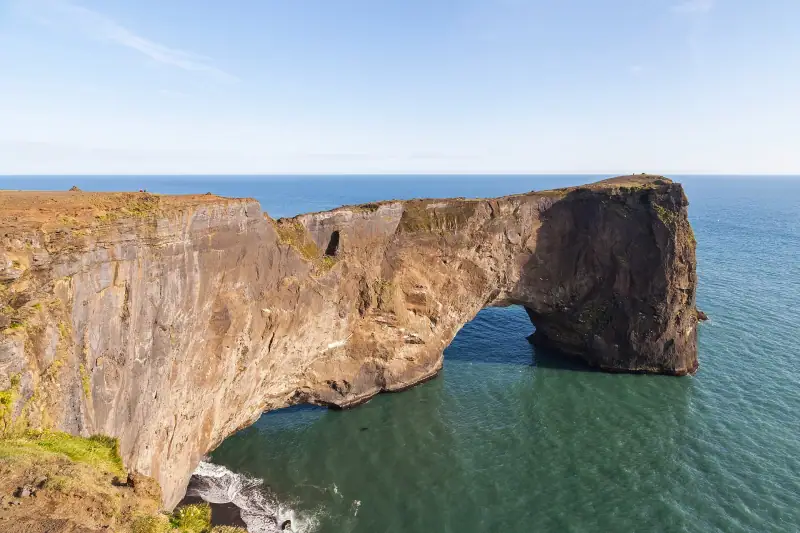
Iceland's south coast: a 4-day itinerary from Reykjavik to Jökulsárlón
A 4-day south coast Iceland itinerary: Seljalandsfoss, Skógafoss, Vík, Reynisfjara and Jökulsárlón lagoon, with distances, stops and practical tips.
3 days
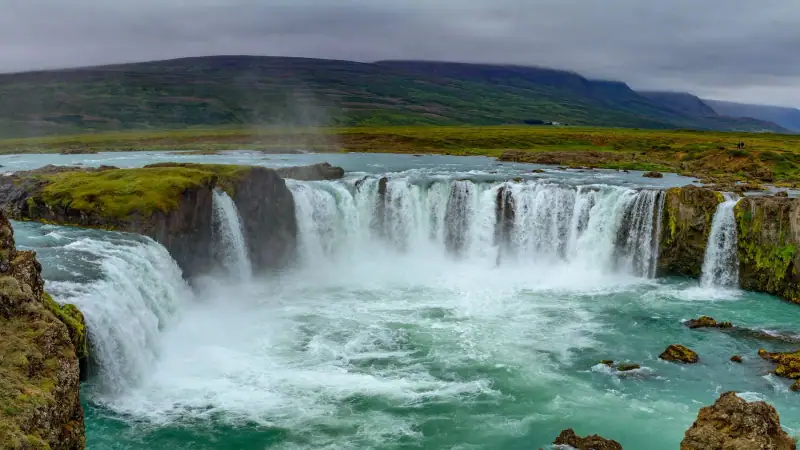
North Iceland in 3 days: Goðafoss, Mývatn and Húsavík
Lake Mývatn areaHúsavík
2 days
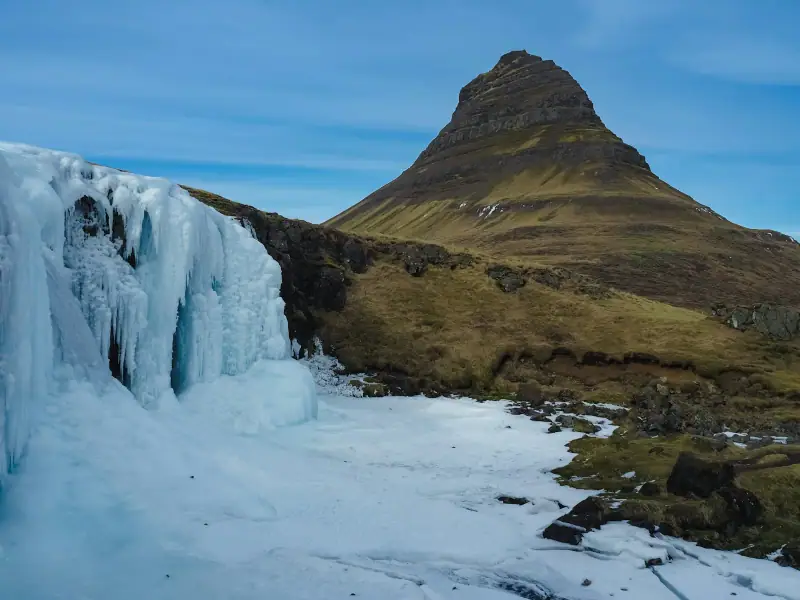
Snæfellsnes Peninsula: a 2-day itinerary from Reykjavik
Visit Iceland's Snæfellsnes Peninsula: Kirkjufell, Arnarstapi, Djúpalónssandur, Búðir and Stykkishólmur. A 2-day itinerary with drive times and tips.