What to see
What to see on the Snæfellsnes Peninsula: volcano, beaches, craters and villages

We may earn a commission when you book through links on this page, at no extra cost to you. We don't visit or try the places we cover: we summarize published sources. How we work
In short
- Must-sees: Kirkjufell and its waterfall near Grundarfjörður, Snæfellsjökull National Park with Djúpalónssandur beach, the Arnarstapi and Hellnar cliffs, the black church at Búðir and Stykkishólmur.
- Treat the peninsula in four zones: east and south coast, west tip, northwest coast, northeast.
- From one day (pick one half) to three or four days; two days with a night on the peninsula covers both halves.
- Gas stations are few and concentrated in towns such as Stykkishólmur, Grundarfjörður and Ólafsvík: fill up before heading west.
On a map, the Snæfellsnes Peninsula looks like a finger stretched toward the Atlantic, northwest of Reykjavik. Up close, it looks more like a concentrate of Iceland: a volcano topped by a glacier at one end, isolated mountains with a perfect silhouette at the other, and in between lava fields, craters, black pebble beaches, bird cliffs and quiet fishing ports.
Our two-day Snæfellsnes itinerary offers a turnkey route. This guide takes the opposite angle: it reviews the sights one by one, from south to north, so you can decide what deserves your time, whether you have half a day or four days. Travel times remain approximate, as wind, rain and photo stops change everything.
The peninsula at a glance: geography and organization
The peninsula is long and narrow, and a main road, which almost circles it, links its villages. The south coast, facing Faxaflói bay, is wilder, with lava fields and cliffs. The north coast, facing Breiðafjörður, holds the ports and fjords. In the center, a mountain range extended in the west by the Snæfellsjökull volcano forms the backbone of the region.
To avoid spreading yourself too thin, divide the peninsula into four zones:
- The east and south coast: Gerðuberg, Eldborg, Ytri Tunga, Búðir.
- The west tip: Snæfellsjökull National Park, Arnarstapi, Hellnar, Djúpalónssandur, Lóndrangar.
- The northwest coast: Hellissandur, Rif, Ólafsvík, Grundarfjörður and Kirkjufell.
- The northeast: Bjarnarhöfn, Helgafell, Stykkishólmur.
The road passes through the Hvalfjörður tunnel, then the Borgarnes area, before reaching the peninsula. For everything about rentals, driving rules and weather pitfalls, see our guide to driving in Iceland. A car remains the only really practical way to link the sights.
The east and south coast: basalt, craters and seals
Gerðuberg: a wall of basalt columns
It is often the first stop when arriving from the south. Gerðuberg is a cliff of basalt columns with regular edges, formed by the rapid cooling of lava. The site is easy to reach from the main road and can be covered in a few minutes. You can climb to the top for an open view of the plain. It is a first chance to understand how Iceland was built, lava layer after lava layer.
Eldborg: a perfect crater
Farther on, the Eldborg crater, the “fire castle,” rises in the middle of a lava field. Its vertical, almost regular walls make it one of the most distinct craters in the country. A trail lets you approach it and climb to the rim. Allow time for the round-trip walk, and bring good shoes: the ground is uneven and can be wet.
Ytri Tunga: meeting the seals
Ytri Tunga beach is known for its seals, which rest on the rocks at low tide. Sightings are frequent in summer, but never guaranteed. The rule is simple: keep your distance, avoid sudden movements and leave room for the animals. A pair of binoculars makes all the difference here, since it lets you watch them without disturbing them.
Búðir: the black church in the lava
On the south coast, the hamlet of Búðir is best known for its small black wooden church, isolated in a moss-covered lava field facing the sea. It was rebuilt in 1987 on the site of an 18th-century building. In clear weather, the glacier appears in the background: it is one of the most emblematic images of the region. There is also an isolated hotel nearby, but the point is to walk around the area, on the trails crossing the lava and reaching the coast.
Snæfellsjökull National Park: the west tip
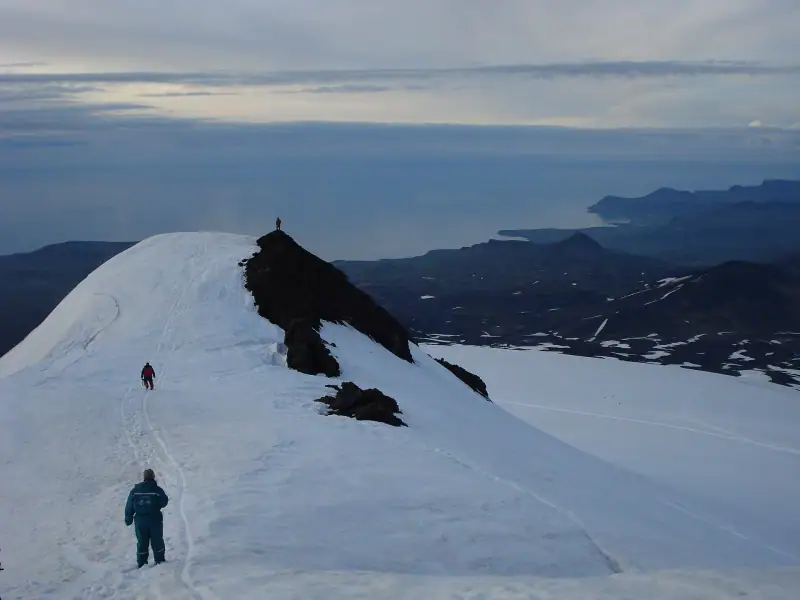
At the tip of the peninsula, Snæfellsjökull National Park covers about 170 km² (66 sq mi) and extends, according to the regional tourism presentation, from the summit of the mountain to the ocean. Its visitor center is in Malarrif, where an exhibition presents local nature and the remains of an old fishing station. The park is open all year, but conditions vary widely by season.
The volcano and its glacier
Snæfellsjökull is a volcano whose summit is covered by a glacier, visible from very far in clear weather, sometimes even from Reykjavik. It rises to nearly 1,450 meters (4,757 ft). Jules Verne made it the entrance to Journey to the Center of the Earth. Many visitors are content to admire it from the road, which is already superb. For the climb, hire a qualified guide: crevasses and weather call for caution.
Arnarstapi and Hellnar: cliffs and seabirds
These two hamlets are linked by a coastal trail of about 2.5 km (1.6 mi), easy and with little elevation change. It runs along basalt cliffs cut into arches, columns and coves where many seabirds nest in summer. Waves rush in with a crash, which makes the walk as loud as it is spectacular. Park at one end and walk there and back, or walk one way if you have two vehicles.
Djúpalónssandur: the black pebble beach
This beach, surrounded by lava rocks, is strewn with black pebbles smoothed by the sea. You can see lifting stones once used to test the strength of fishermen, as well as rusty remains of a wrecked trawler. The site is gripping, but the Atlantic is dangerous here: never turn your back on the waves, do not approach the water and keep your children close. Do not take any pebbles: the site is protected.
Lóndrangar and Vatnshellir
Not far away, the Lóndrangar are two basalt pinnacles, remnants of an eroded old crater. They are seen from a viewpoint reached by a short trail, with seabirds in summer. Closer to Malarrif, the Vatnshellir lava cave, about 8,000 years old, can only be visited with a guide: check and book ahead, as schedules vary by season.
Saxhóll and the Svörtuloft lighthouse
The Saxhóll crater is easily climbed by a metal staircase, and from its rim you take in a vast lava field with the glacier as a backdrop. Farther west, the Svörtuloft lighthouse stands at the end of a gravel road, at the edge of dark cliffs. It requires a detour and caution, especially in strong wind.
Staying in Snæfellsnes
Hotels, guesthouses and small lodgings on the peninsula: supply is limited, so book early in high season.
The northwest coast: fishing ports and Kirkjufell
Hellissandur, Rif and Ólafsvík: the Iceland of fishermen
On the north coast of the west tip, the villages of Hellissandur, Rif and Ólafsvík have long lived from fishing. They do not have postcard charm, but they show Iceland as it works: sheds, boats, fish drying racks and small museums. This is also where you find gas stations, shops and restaurants. To understand what people eat in these ports, read our article on Icelandic cuisine.
Grundarfjörður and Kirkjufell
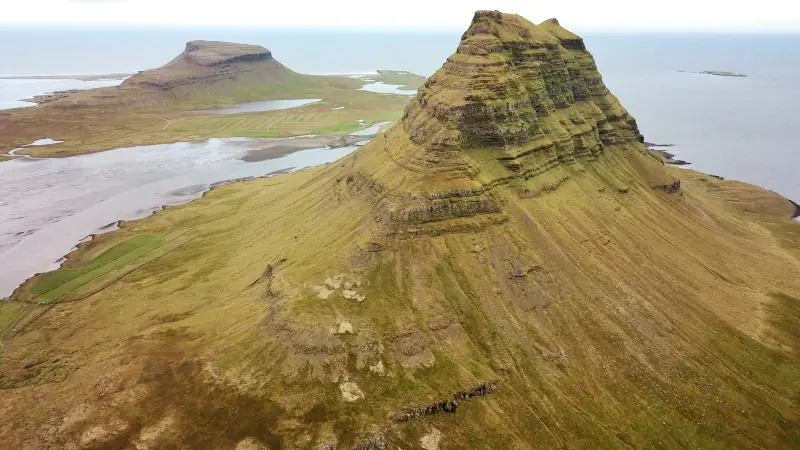
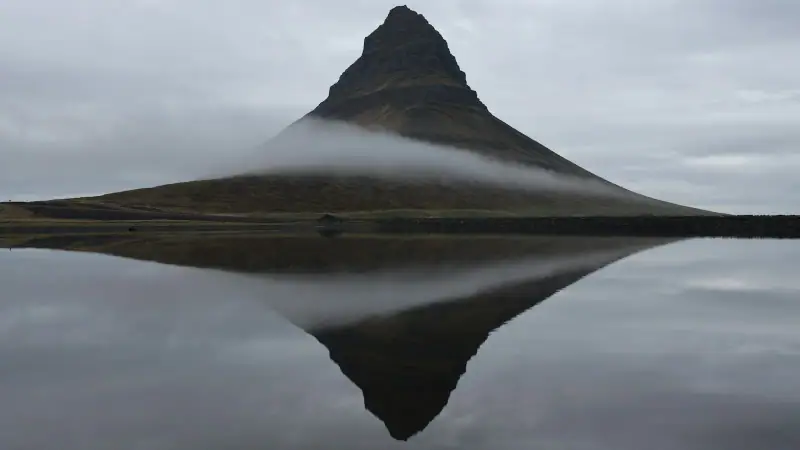
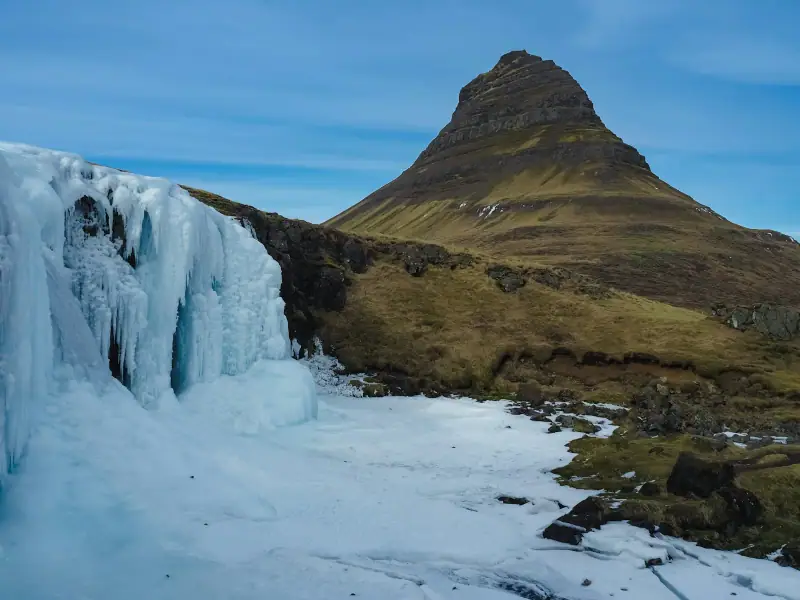
The village of Grundarfjörður faces Kirkjufell, an isolated mountain of about 460 meters (1,509 ft) with a rounded silhouette, instantly recognizable. The classic viewpoint is near the small neighboring waterfall, Kirkjufellsfoss, which lets you photograph it with water in the foreground. The place is very busy: come early in the morning or in the evening.
Kirkjufell is also a prime backdrop for the northern lights in winter, when the sky is clear. Our guide to the northern lights in Iceland explains how to optimize your chances. The climbing trail up Kirkjufell is steep and exposed: attempt it only if you are equipped and experienced, and never in bad weather.
Why light changes everything
In Snæfellsnes, the weather can go from bright sun to mist in a few minutes. Rather than put up with this variability, use it: an overcast sky shows off the waterfalls, a ray of sun on the glacier creates a striking contrast, and on summer evenings the golden light lasts for hours. A breathable windbreaker is part of the essential gear. Our page on accessories for Iceland completes the list.
The northeast: Bjarnarhöfn, Helgafell and Stykkishólmur
Bjarnarhöfn: fermented shark
The Bjarnarhöfn farm is known for its production of hákarl, fermented and dried Greenland shark meat, a very divisive Icelandic specialty. A small museum presents the traditional method, and you can taste it. It is often a memorable souvenir, for better or worse. Check the hours before going, as they vary with the season.
Helgafell: the hill of wishes
Near Stykkishólmur, the small hill of Helgafell is tied to a legend: according to tradition, whoever climbs it in silence, without looking back, and makes a wish at the top, sees it granted. The climb is short, and the view over the bay and islets is beautiful. The place is steeped in history, as it appears in the Icelandic sagas.
Stykkishólmur: the most charming port
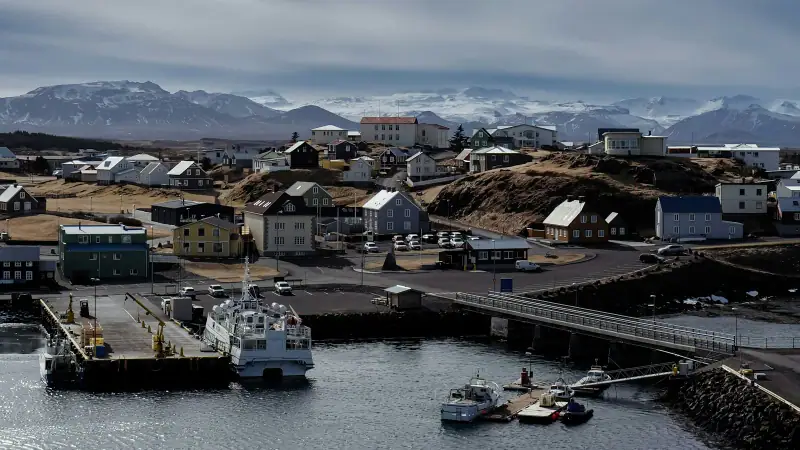
Stykkishólmur is the most pleasant of the peninsula’s ports, with its colorful wooden houses and islets in Breiðafjörður bay. It is visited on foot in an hour or two. It is also the departure point of the Baldur ferry to the West Fjords, an elegant way to extend the trip: our guide to the West Fjords details this region. Boat trips in the bay are offered to watch seabirds and other marine animals.
Excursions in Snæfellsnes
Would rather not drive? Compare guided day excursions from Reykjavik and boat trips.
How much time to plan and how to combine the sights
Depending on your time, here is how to split the visits:
- One day from Reykjavik: choose only one half. Either the south coast and west tip (Búðir, Arnarstapi, Djúpalónssandur), or the north (Kirkjufell, Stykkishólmur). Trying to see everything means spending the day behind the wheel.
- Two days: both halves with a night on the peninsula. Follow our two-day itinerary for the order of stops.
- Three to four days: take the time to walk, watch seals and birds, visit the Vatnshellir cave and make a detour to the Svörtuloft lighthouse.
If you are planning a broader stay, the peninsula combines well with the Golden Circle: these are two different departures from Reykjavik, not to be strung together on the same day. To choose your nights, our guide to where to stay in Iceland gives pointers.
Rent a car for Snæfellsnes
Compare rental companies to tour the peninsula at your own pace.
When to visit Snæfellsnes
From June to August, days are very long, roads clear and services open. It is the best season for seabirds and seals, but also the busiest: book lodging well in advance.
May and September offer more calm and superb light, with more changeable weather. Check that the services you need are open.
From October to April, the peninsula is very quiet. Days are short, wind and ice sometimes complicate driving, and some secondary roads may be closed. In exchange, you enjoy snowy landscapes and the chance of seeing the northern lights. To compare all the seasons, read when to visit Iceland.
Practical tips before you go
- Fuel: fill up before heading to the west of the peninsula, as stations are rare outside towns.
- Weather and roads: check the forecast and road conditions the same morning.
- Respect for the places: stay on the trails, do not take stones or plants, do not disturb the birds and seals.
- Hot baths: after a windy day, a hot spring does wonders; compare options in our guide to hot springs in Iceland.
- Budget: prices are high, especially in isolated villages. Our article on the budget for Iceland gives pointers.
- Entry rules and insurance: entry rules depend on your passport. Check the official travel advice of your government before you book: travel.state.gov (US), GOV.UK (UK), travel.gc.ca (Canada), Smartraveller (Australia) (checked November 2026). Consider travel insurance covering medical costs and repatriation.
- Mobile network: check your carrier’s international plan or consider a travel eSIM before you go. Coverage can be patchy: download your maps for offline use.
Our take
Snæfellsnes deserves its reputation as “Iceland in miniature”: you find most of the country’s landscapes within a few hours’ drive. The secret to enjoying it is not to rush. Choose three or four sights that really attract you, leave a margin for the weather, and plan at least one night there. The rest will come by itself: a seal on a rock, a glacier emerging from the clouds, a village where you stop for a coffee.
Sources
Frequently asked questions
What should you absolutely see on the Snæfellsnes Peninsula?
The essentials are Kirkjufell and its waterfall near Grundarfjörður, Snæfellsjökull National Park with Djúpalónssandur beach, the Arnarstapi and Hellnar cliffs, the black church at Búðir and the small port of Stykkishólmur. If you have time, add the Saxhóll crater, the basalt columns of Gerðuberg and the seals of Ytri Tunga.
Can you see seals in Snæfellsnes?
Yes. Ytri Tunga beach is known for seals resting on the rocks, especially in summer. No sighting is guaranteed: keep a good distance, speak softly and use binoculars rather than getting closer.
Can you climb the Snæfellsjökull glacier?
The glacier climb is done with a qualified guide: crevasses may be hidden under the snow and the weather changes fast. Ask at the park visitor center in Malarrif or at a local agency. You can easily admire the volcano without climbing it, from the road and several viewpoints.
Can you visit the Snæfellsnes Peninsula in winter?
Yes, but with caution. Days are short, wind and ice can complicate driving, and some services are closed. In return, the snowy landscapes and northern lights are superb. Check the weather and road conditions every morning.
What is the difference between this article and the 2-day itinerary?
The 2-day itinerary offers an organized route from Reykjavik. This guide describes each site in detail, with its particularities, to help you choose what interests you and build your own route.
Are there many gas stations on the peninsula?
Stations are few and concentrated in the main towns such as Stykkishólmur, Grundarfjörður and Ólafsvík. Fill up before heading to the west of the peninsula and do not expect a pump in every village.
Do you need a 4x4 to visit Snæfellsnes?
No. The main roads circling the peninsula are paved, and a regular vehicle is enough in summer. Some secondary access roads are gravel: read the terms of your rental contract before committing to them.
More Iceland guides
Keep reading
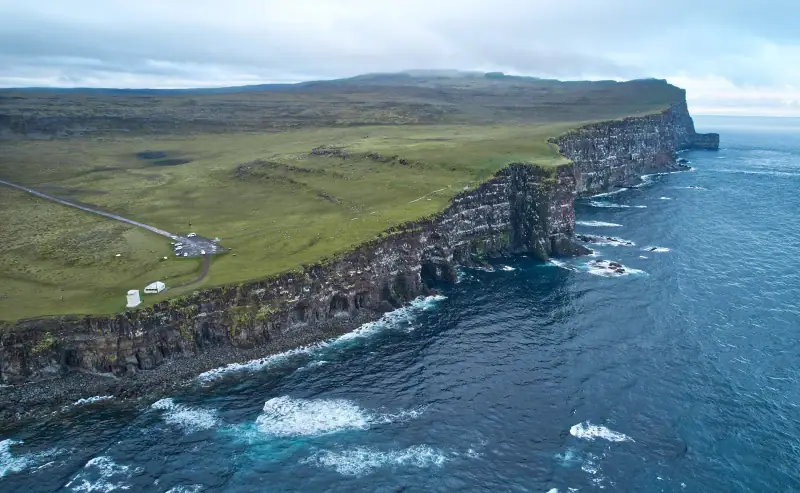
West Fjords: what to see between Látrabjarg, Rauðasandur and Dynjandi
Látrabjarg puffin cliffs, the pink Rauðasandur beach, Dynjandi waterfall, Patreksfjörður: what to see in the southern West Fjords of Iceland.
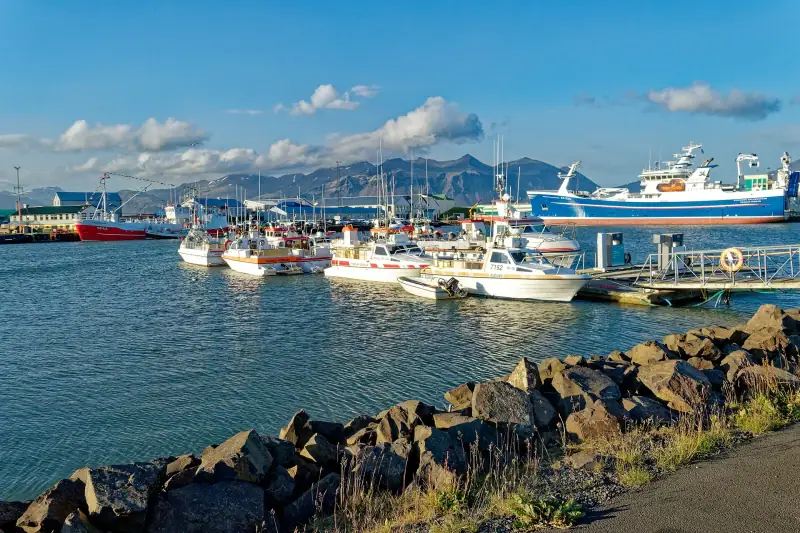
Visiting Höfn: what to see and do on Iceland's southeast coast
Langoustines, the Vatnajökull glacier, Stokksnes and the Jökulsárlón lagoon: a guide to visiting Höfn, planning your stop and choosing excursions.
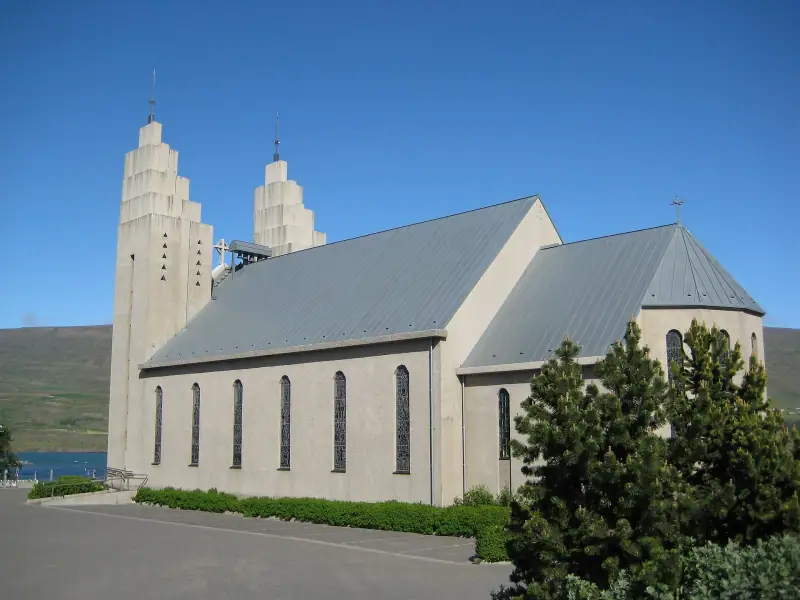
Visiting Akureyri: what to see and do in North Iceland's capital
Church, botanical garden, Eyjafjörður fjord, baths, skiing, whales and excursions: a guide to visiting Akureyri and planning your stay.
Ready-made
Iceland itineraries
4 days
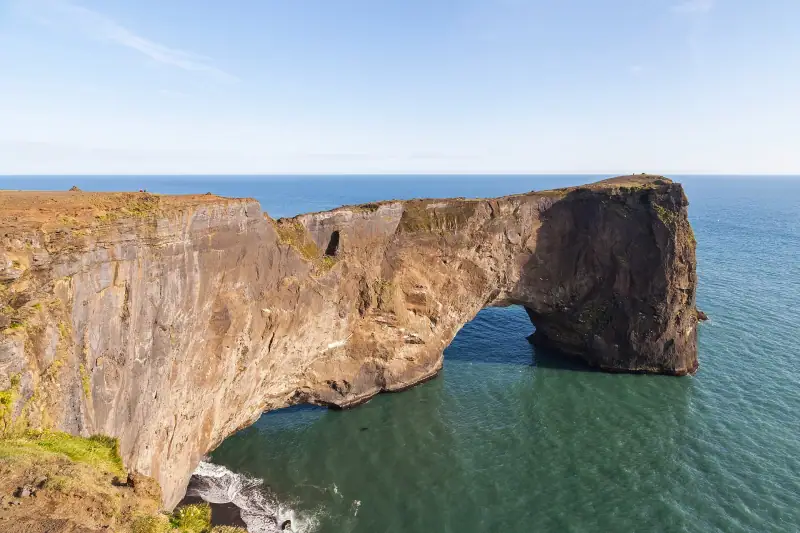
Iceland's south coast: a 4-day itinerary from Reykjavik to Jökulsárlón
A 4-day south coast Iceland itinerary: Seljalandsfoss, Skógafoss, Vík, Reynisfjara and Jökulsárlón lagoon, with distances, stops and practical tips.
3 days
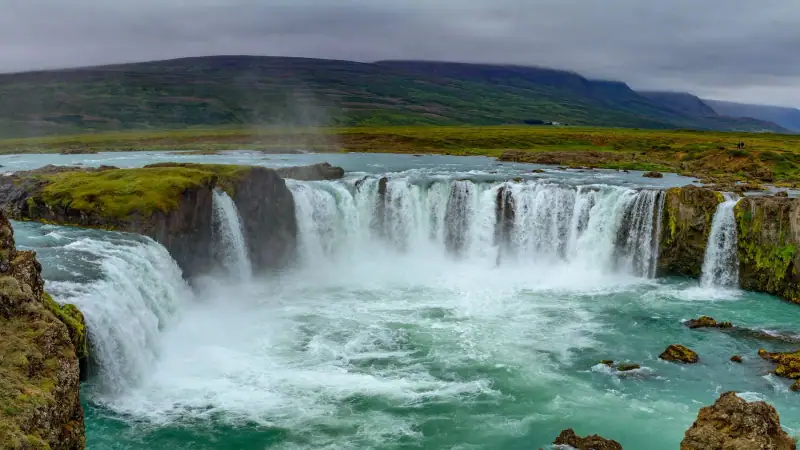
North Iceland in 3 days: Goðafoss, Mývatn and Húsavík
Lake Mývatn areaHúsavík
2 days
Snæfellsnes Peninsula: a 2-day itinerary from Reykjavik
Visit Iceland's Snæfellsnes Peninsula: Kirkjufell, Arnarstapi, Djúpalónssandur, Búðir and Stykkishólmur. A 2-day itinerary with drive times and tips.