What to see
Complete guide to visiting Iceland: regions, highlights, budget and tips
We may earn a commission when you book through links on this page, at no extra cost to you. We don't visit or try the places we cover: we summarize published sources. How we work
In short
- With 4 to 5 days, cover Reykjavik, the Golden Circle and part of the south coast. The full Route 1 loop (about 1,300 km / 808 mi) needs 8 to 10 days at minimum.
- June to August brings very long days and open roads; September to March offers northern lights but short days and less predictable weather.
- A regular car is enough on Route 1 in summer; a 4x4 is required on F-roads. Public transport serves few natural sites.
- Budget estimates for a week for two, excluding flights: about €1,100 (~$1,275) frugal, €3,200 (~$3,710) comfortable, €5,800 (~$6,730) or more upscale.
Iceland is an open-air laboratory. On an island home to fewer than 400,000 people, you go within a few hours from a lava field to a glacier, from a black sand beach to a steaming hot spring. Waterfalls number in the hundreds, volcanoes are still active, and roads often wind on without passing a single village.
This pillar guide gathers the essentials for planning your trip: an introduction to the country, its regions and its towns, the sights not to miss, the best season, how to get there and get around, lodging options and budget. Each section points to a more detailed article on the site, and the full list of our guides appears at the end of the page.
Iceland at a glance: what to know before you go
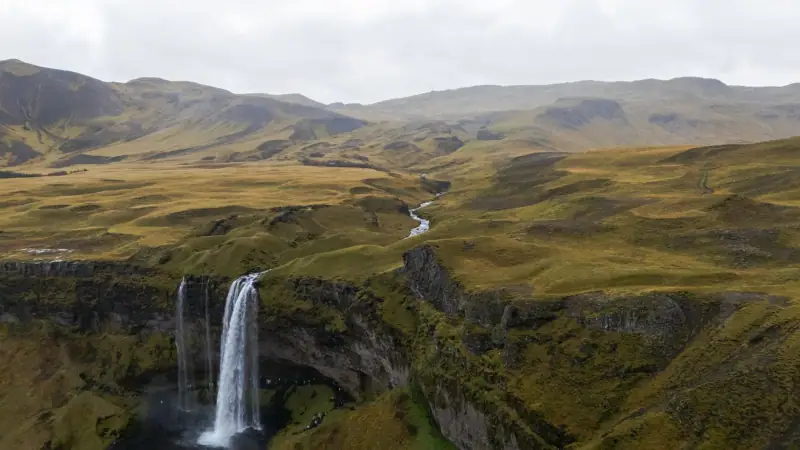
Iceland is a volcanic island in the North Atlantic, just below the Arctic Circle, which brushes its northern tip. It sits on the Mid-Atlantic Ridge, the boundary between the North American and Eurasian tectonic plates. That position explains why volcanism, geysers, lava fields and the geothermal energy that heats much of the country’s housing are everywhere.
Most of the population lives in the southwest, around Reykjavik. The rest of the country, especially the interior highlands, is almost empty. That gives nature a very wild character, but it also means distances between two towns can be long and you need to plan fuel stops, meals and nights.
A few practical points:
- Language: Icelandic is the official language, but English is spoken almost everywhere, in hotels, restaurants and shops.
- Currency: the Icelandic króna (ISK). Bank cards are accepted almost everywhere, even for very small purchases.
- Time zone: Iceland runs on Greenwich Mean Time all year, with no clock change.
- Water and electricity: tap water is excellent, and the sockets are the same as in continental Europe.
- Weather: it changes very fast. Locals say that if you do not like the weather, just wait five minutes. Always pack layers, a windbreaker and a waterproof jacket.
Entry rules depend on your passport. Check the official travel advice of your government before you book: travel.state.gov (US), GOV.UK (UK), travel.gc.ca (Canada), Smartraveller (Australia) (checked November 2026).
The main regions to know
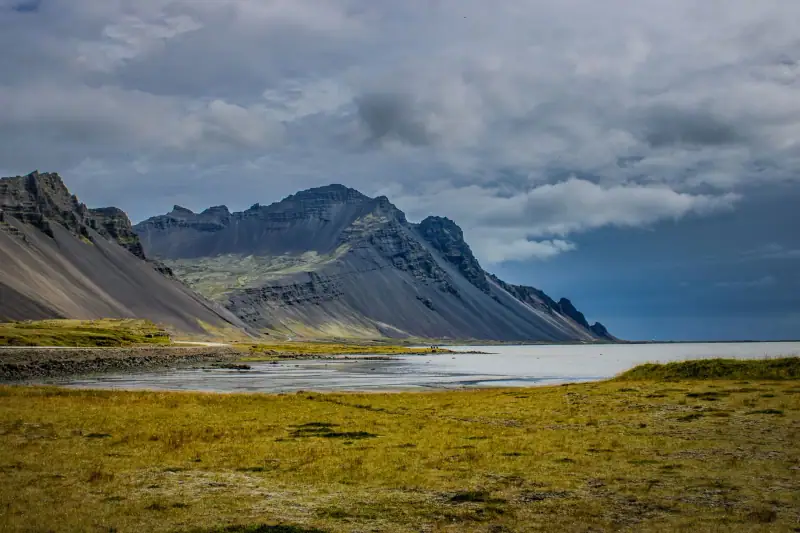
A trip to Iceland is usually organized around six main geographic areas. The distances between them vary a lot, which shapes the length of your stay.
Reykjavik and the Golden Circle
The capital and the southwest are the natural entry point to the country. Reykjavik is the most populous city and the only one that feels like a European capital, with its museums, cafés, shops and nightlife. It serves as a base for many day trips.
A short distance away, the Golden Circle brings together three major sights: Þingvellir National Park, the Geysir geothermal area and the Gullfoss waterfall. The loop is about 230 km (143 mi) and can be done in one day. All the details are in our article on the Golden Circle in Iceland.
The south coast
This is the most visited region after the capital, and for good reason: within a few dozen kilometers you can take in the Seljalandsfoss and Skógafoss waterfalls, the Reynisfjara black sand beach near Vík, the glaciers and the Jökulsárlón glacier lagoon. The road is easy, along Route 1, and the sights are close together.
Our 4-day south coast itinerary details the stages, driving times and stops not to miss. It is the best first road trip for anyone discovering the island.
Where to stay in Reykjavik to start your trip
Compare hotels, guesthouses and apartments in the capital, an ideal base for your first excursions.
North Iceland
Around Akureyri, the country’s second-largest urban area, the North has a quieter feel. You will find the Goðafoss waterfall, the volcanic Lake Mývatn region with its craters and fumaroles, and the small port of Húsavík, known as the departure point for whale watching trips.
These stops fit together well on the route described in our article on North Iceland in 3 days. The region is less crowded than the south coast, which appeals to travelers looking for calm.
The West Fjords
Isolated, deeply cut and spectacular, the West Fjords are the wildest region of the country. Ísafjörður is the main town. People come for the Látrabjarg cliffs, the Dynjandi waterfall and the feeling of being at the end of the world. Roads are often long and winding: allow time and do not expect high average speeds.
The Snæfellsnes Peninsula
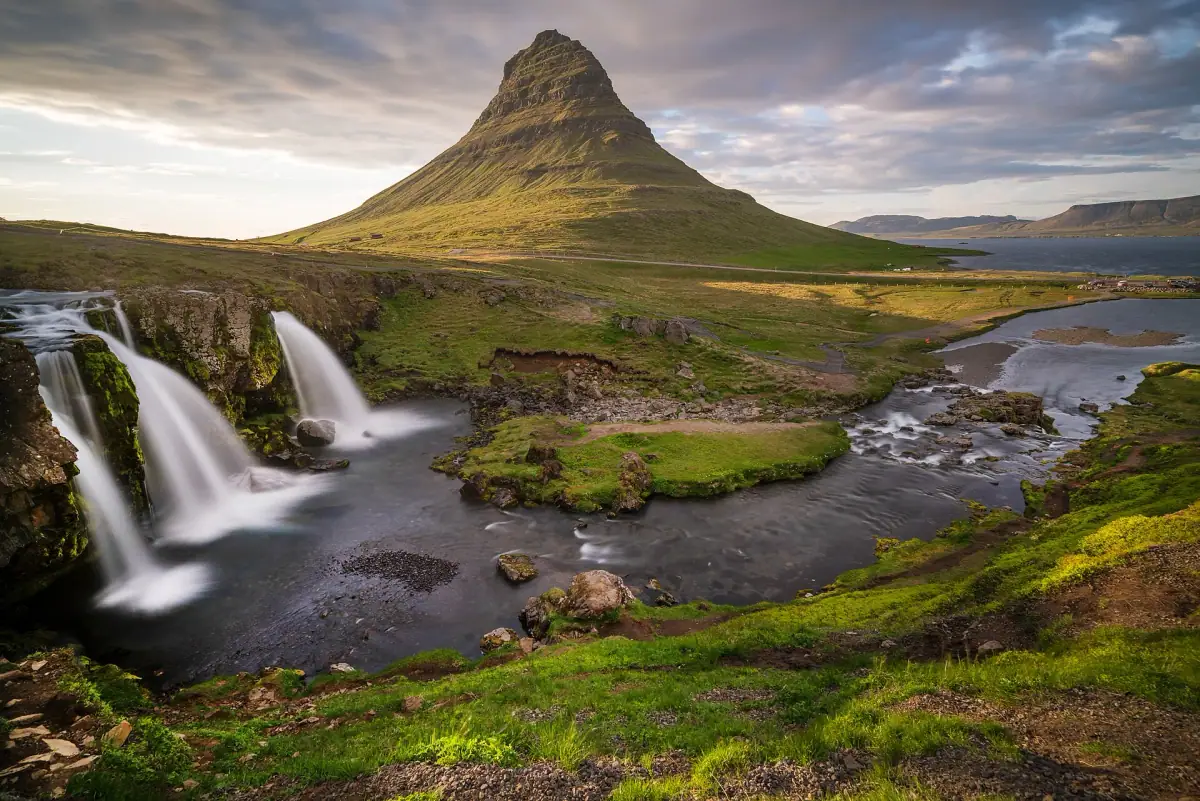
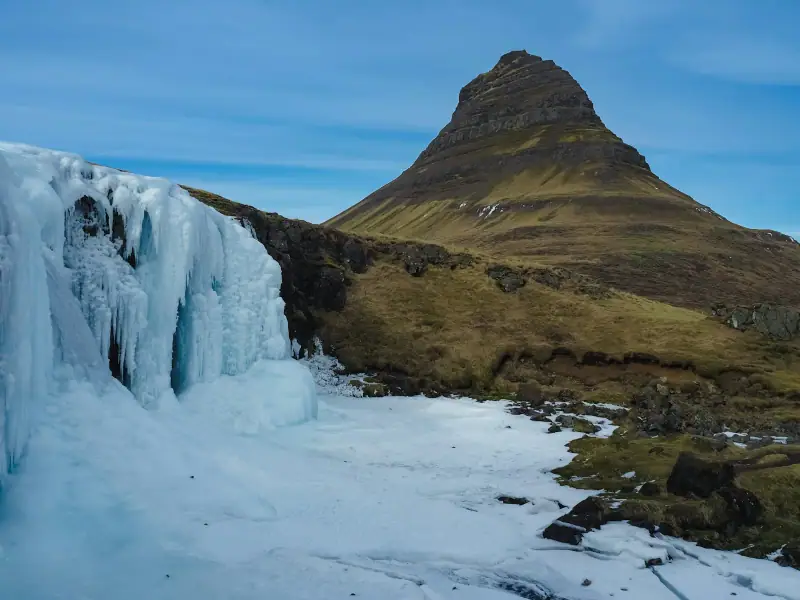
Often described as “Iceland in miniature,” this peninsula on the west side packs a glacier, beaches, lava fields, cliffs and fishing villages into a small area. The Kirkjufell peak, with its recognizable profile, is one of the most photographed sights in the country. It is an excellent option for a weekend from the capital: see our 2-day Snæfellsnes itinerary.
The East Fjords
The east coast is the most discreet. Route 1 runs along it, and it is often driven through too fast by travelers heading north or south. It rewards those who stop, though: colorful villages like Seyðisfjörður, mountain roads, an end-of-the-world atmosphere and fewer crowds.
Towns and villages to know
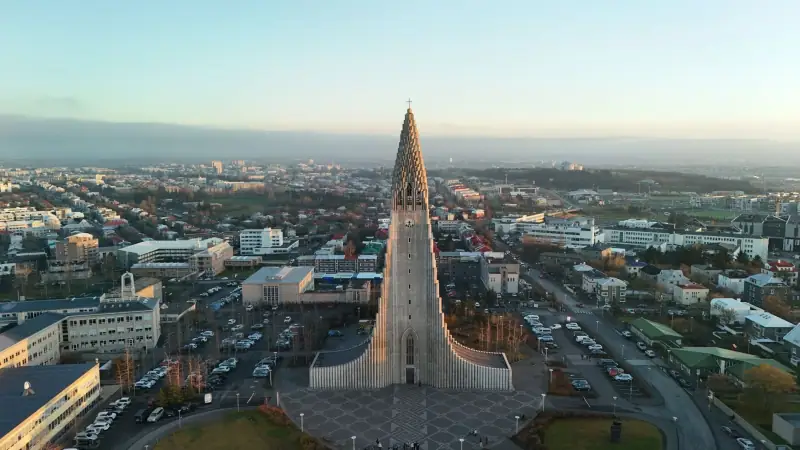
Iceland has no large metropolis, but several towns serve as natural stops on a trip.
- Reykjavik: the capital, with its museums, the Hallgrímskirkja church and its distinctive profile, its waterfront and its restaurants. Most people spend one to two days here, often before and after the road trip.
- Selfoss: in the southwest, a practical service town for shopping or refueling on the way to the south coast.
- Vík: the southernmost small village in the country, surrounded by cliffs and black beaches, a landmark on south coast itineraries.
- Höfn: a small port in the southeast, a usual stop for those continuing beyond Jökulsárlón, known for its langoustines.
- Akureyri: the big town of the North, with a pretty fjord, a botanical garden and good restaurants.
- Húsavík: the whale watching capital, with its white church and small harbor.
- Ísafjörður: the hub of the West Fjords, surrounded by steep mountains and arms of the sea.
These towns are all small by European standards. Each can be seen in a few hours, which is why people travel to Iceland more for the landscapes than for urban heritage.
Highlights for a first trip
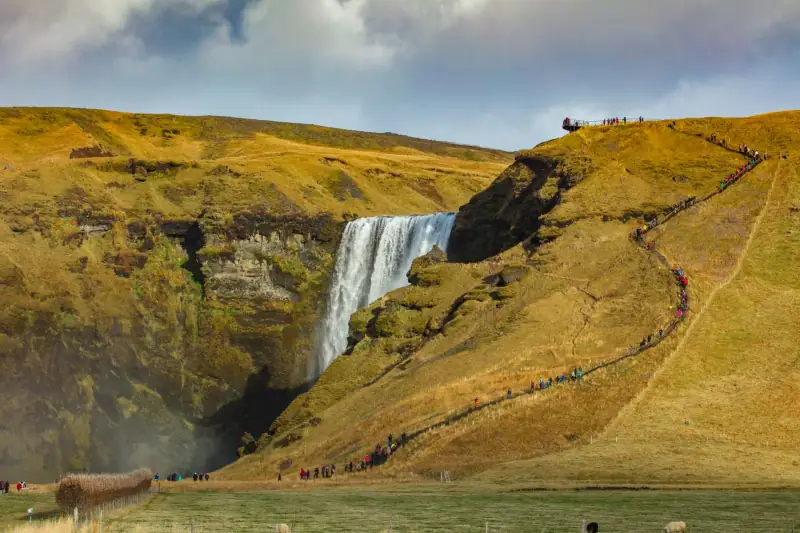
Making a list of sights in Iceland is a risky exercise, given how many there are. Here are the ones that appear almost every time in first-trip itineraries.
Þingvellir, Geysir and Gullfoss
The Golden Circle trio is the basic excursion. Þingvellir marks the site of the old Icelandic parliament, founded around the year 930, in the middle of a rift between two tectonic plates. Geysir offers the show of the Strokkur geyser erupting at regular intervals. Gullfoss, finally, drops in two tiers into a narrow canyon.
Seljalandsfoss and Skógafoss
These two south coast waterfalls are easy to visit from the road. At Seljalandsfoss you can, depending on conditions, walk behind the curtain of water. Skógafoss, wide and powerful, has a staircase climbing to the top and the start of a hiking trail. Spray is frequent: a waterproof jacket is useful.
Reynisfjara and Jökulsárlón
Reynisfjara is a black sand beach lined with basalt columns. It is beautiful but dangerous: large, unpredictable waves crash in without warning, and you must stay away from the water. Farther east, the Jökulsárlón glacier lagoon is filled with icebergs that broke off the Breiðamerkurjökull glacier. The ice drifts slowly toward the ocean, where some pieces end up stranded on the neighboring beach.
Hot springs and geothermal lagoons
Bathing in hot water in cold weather is almost a national ritual. Icelanders use their municipal pools all year, and visitors can choose between large developed lagoons, village pools and natural baths. Our guide to hot springs in Iceland explains how to choose, how to behave and what to book ahead.
The northern lights
One of the main reasons to travel in winter. The aurora needs a dark night, a clear sky and patience. Nothing is guaranteed, and you improve your chances by staying several evenings. Find our advice in the guide to the northern lights in Iceland.
Whales, puffins and wildlife
Húsavík, in the north, is a good departure point for boat trips. Summer is also puffin season: they nest on certain cliffs and islets along the coast. Arctic foxes, more discreet, live mostly in the West Fjords. With wildlife, keep your distance, follow local guidelines and prefer operators that limit their impact.
Tours and activities in Iceland
Whale watching, geothermal baths, guided tours: compare activities and book ahead in high season.
When to go to Iceland
There is no bad season, only seasons that suit different priorities. Our detailed article, when to visit Iceland, compares the months one by one. Here are the broad lines.
Summer (June to August). Days are very long, it barely gets dark at midsummer, and all the main roads are clear. This is when interior tracks gradually open, when you see puffins and when hikes are most accessible. It is also high season: lodging and car prices are at their peak, and you need to book early.
Autumn (September to October). The northern lights return with the darker nights, autumn colors tint the landscapes and crowds thin out. Prices are lower. The weather, on the other hand, becomes less stable.
Winter (November to March). The cold is moderated by the oceanic climate, but storms, snow and ice can upend a plan. Days are short, which limits the number of sights you can see. Ice caves, northern lights and snowy landscapes more than make up for it for those who like this atmosphere.
Spring (April to May). A transition season: days lengthen fast, prices stay reasonable and nature wakes up. Some mountain roads are still closed.
Whatever the season, always check the weather forecast and road conditions on the official Icelandic sites every morning before setting out.
How to get to Iceland
You reach Iceland only by air (or by boat from Denmark, a long and impractical crossing). The main international airport is Keflavík (KEF). Routes and schedules change, so the simplest approach is to compare offers on the airlines’ websites or on a comparison site of your choice.
Keflavík is about 50 km (31 mi) from Reykjavik, roughly 45 minutes by road. To reach the capital you can take a shuttle bus, a taxi, or pick up your rental car directly at the airport. If you arrive early in the morning after an overnight flight, a detour to a large geothermal lagoon near the airport is a pleasant way to start the trip, provided you book.
One useful point: many airlines offer extended stopovers at no extra cost on transatlantic flights. If you are planning a longer trip between Europe and North America, this can be a good chance to discover the island for a few days.
Find a flight to Reykjavik
Compare flights to Iceland and places to stay for your first night there.
Getting around once there
The car, the best option
As soon as you want to leave the beaten path, a car becomes almost essential. It lets you stop as the landscape calls, leave early to beat the groups and reach sights that buses serve poorly. Route 1, or the ring road, circles the island for about 1,300 km (808 mi) and is paved all the way.
For everything about rentals, insurance, F-roads, river fords and the rules to follow, read our guide to driving in Iceland and renting a car. In short: a regular car is enough for paved roads in summer, a 4x4 is mandatory on F-roads, and it is better to take one in winter.
Organized tours
If you do not want to drive, many operators offer day tours from Reykjavik: Golden Circle, south coast, Snæfellsnes Peninsula, northern lights viewing, bathing. It is the simplest solution for a short stay or a winter trip.
Buses, domestic flights and hitchhiking
Long-distance buses link the main towns, but with reduced frequencies outside summer. Domestic flights connect the capital to several towns, notably in the north and west. Hitchhiking exists but is not a reliable way to keep to a schedule.
Where to stay in Iceland
Lodging is one of the most expensive items, especially in summer. Options are varied: hotels in towns, family guesthouses, apartments, farm stays, hostels, campsites and, for van travelers, equipped stopping areas. In high season, book several months ahead, because small towns have few beds.
Our guide on where to stay in Iceland reviews the options by region: Reykjavik, south coast, north and fjords. A few general principles:
- In Reykjavik, choose according to your priority: being within walking distance of the center, or staying farther out but cheaper with parking.
- On the south coast, villages are small and choice is limited. Booking early is essential.
- In the north, Akureyri has the widest choice, and the Mývatn area has more rustic options.
- In the fjords, supply is limited and guesthouses are preferred.
- For camping, check the rules: wild camping is strictly regulated and most often limited to campsites equipped for vehicles.
Guesthouses and hotels on the south coast
Small towns fill up fast: compare the available places to stay around Vík.
What budget to plan
Iceland has a reputation for being expensive, and partly deserves it: dining out, summer lodging and car rental weigh heavily. Our article on the budget for Iceland puts figures on three profiles for one week, excluding flights, for two people. The orders of magnitude noted in 2026 are about €1,100 (~$1,275) for a very frugal trip, around €3,200 (~$3,710) for a comfortable stay and €5,800 (~$6,730) or more for an upscale version.
To keep spending under control:
- Cook: shopping at the supermarket and making sandwiches for lunch cuts the bill significantly.
- Use the free sights: most waterfalls, beaches and trails are open access. Tap water is excellent, so there is no need to buy bottled water.
- Travel outside high season: May and September offer good compromises between weather, light and prices.
- Book early: cars and lodging are cheaper when you book well in advance.
- Compare insurance: the car is a sensitive item, and damage from sand, gravel or wind is common.
To convert prices, keep the order of magnitude of about 150 ISK to €1 (about $1.16), and check the rate before you go.
What to eat in Iceland
Icelandic cuisine relies on fish, lamb, dairy products such as skyr, and a few more surprising traditional specialties. In the towns there is also a scene of creative restaurants reinterpreting these ingredients. Our guide to Icelandic cuisine and its specialties helps you choose what to taste and avoid tourist traps.
A classic to know: the kiosk hot dog, cheap and very popular locally. On tight budgets, supermarkets sell simple dishes, and gas stations sometimes serve decent hot meals on the road.
Safety and good practice
Icelandic nature is beautiful, but it does not forgive carelessness. A few simple rules avoid most accidents.
- Check the weather and road conditions every morning, especially outside summer.
- Follow the safety instructions on beaches like Reynisfjara: never turn your back on the ocean.
- Stay on the trails: moss and vegetation take decades to regrow.
- Do not drive off-road: it is forbidden and heavily fined.
- Tell someone your route if you go hiking, and carry what you need to protect yourself from the cold.
- Take out travel insurance covering medical costs, repatriation and activities.
For emergencies, 112 works throughout Iceland. An official safety app also lets you share your location if needed.
How to organize your trip by length
Here are guidelines for adapting the regions above to the time you have.
3 to 4 days. Stay in the southwest: Reykjavik, the Golden Circle, a geothermal bath and, if the weather allows, part of the south coast. In winter, add a northern lights excursion.
5 to 7 days. Combine the Golden Circle and the south coast as far as Jökulsárlón, with a night or two there, then a day on the Snæfellsnes Peninsula or a boat trip.
8 to 10 days. This is the minimum to attempt the whole of Route 1, alternating long stages and rest time. North Iceland then becomes reachable, with Akureyri, Goðafoss, Lake Mývatn and Húsavík.
12 to 15 days. You can add the East Fjords, the Snæfellsnes Peninsula and, with even more time, the West Fjords, which alone need several days.
Whatever the length, do not underestimate distances: speed limits are low, the weather can slow you down, and every photo stop takes time. It is better to see fewer sights and enjoy them.
All our guides to plan your trip
Here is the full list of articles on the site, sorted by theme, to go deeper into each aspect of your trip.
See
- Golden Circle in Iceland: Þingvellir, Geysir and Gullfoss in one day
Itineraries
- Iceland’s south coast: a 4-day itinerary from Reykjavik to Jökulsárlón
- North Iceland in 3 days: Goðafoss, Mývatn and Húsavík
- Snæfellsnes Peninsula: a 2-day itinerary from Reykjavik
Plan
- When to visit Iceland: seasons, northern lights and midnight sun
- Iceland budget: real costs, 3 profiles with figures and tips
- Driving in Iceland: car rental, 4x4, F-roads and rules to know
Stay
Do
- Northern lights in Iceland: where and when to see them (complete guide)
- Hot springs in Iceland: lagoons, pools and natural baths
Eat
- Icelandic cuisine: specialties to try and tips for eating well
For the most frequently asked questions, see the FAQ below. Enjoy your trip!
Frequently asked questions
How many days do you need to visit Iceland?
With 4 to 5 days, you can explore Reykjavik, the Golden Circle and part of the south coast. To drive the whole island on Route 1, which is about 1,300 km (808 mi) long, allow 8 to 10 days at minimum, and two weeks to travel without rushing and add the West Fjords.
When is the best time to visit Iceland?
It depends on what you are looking for. From June to August, days are very long, roads are clear and most interior tracks open. From September to March, the dark nights make northern lights viewing possible, but days are short and the weather is less predictable. Our guide to the best time to visit covers each month.
Do you need to rent a car in Iceland?
To get beyond Reykjavik and a few bus tours, it is strongly recommended: public transport serves few natural sites. A regular car is enough on Route 1 in summer. A 4x4 is mandatory on F-roads, and recommended in winter for more comfort and safety.
Is Iceland really expensive?
Yes, especially for dining out, summer lodging and the car. With good preparation the budget stays manageable: supermarket meals, camping or a guesthouse, free natural sites. Figures for three travel styles are detailed in our budget article.
Do you need a visa or special documents to visit Iceland?
Entry rules depend on your passport. Check the official travel advice of your government before you book: travel.state.gov (US), GOV.UK (UK), travel.gc.ca (Canada), Smartraveller (Australia) (checked November 2026). Travel insurance covering medical costs and repatriation is strongly recommended.
Can you see the northern lights and the midnight sun on the same trip?
No, the two phenomena belong to opposite seasons. The northern lights need a dark enough night, so autumn, winter and early spring. The midnight sun, or rather the bright nights, mostly concerns June and July.
More Iceland guides
Keep reading

What to see on the Snæfellsnes Peninsula: volcano, beaches, craters and villages
What to see in Snæfellsnes, Iceland: Snæfellsjökull glacier, Kirkjufell, Djúpalónssandur, Saxhóll, Gerðuberg, seals and fishing ports, site by site.
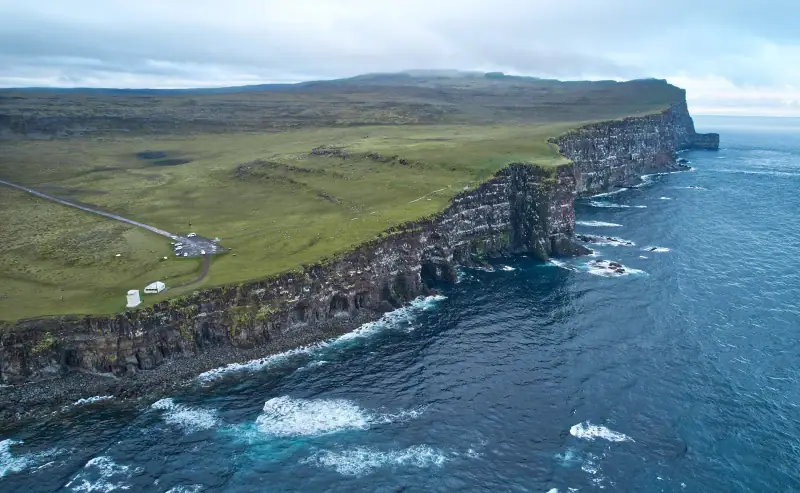
West Fjords: what to see between Látrabjarg, Rauðasandur and Dynjandi
Látrabjarg puffin cliffs, the pink Rauðasandur beach, Dynjandi waterfall, Patreksfjörður: what to see in the southern West Fjords of Iceland.
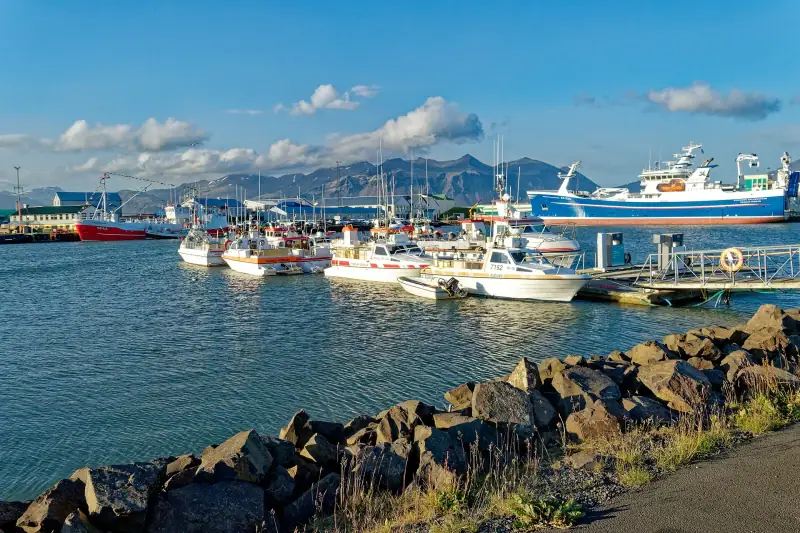
Visiting Höfn: what to see and do on Iceland's southeast coast
Langoustines, the Vatnajökull glacier, Stokksnes and the Jökulsárlón lagoon: a guide to visiting Höfn, planning your stop and choosing excursions.
Ready-made
Iceland itineraries
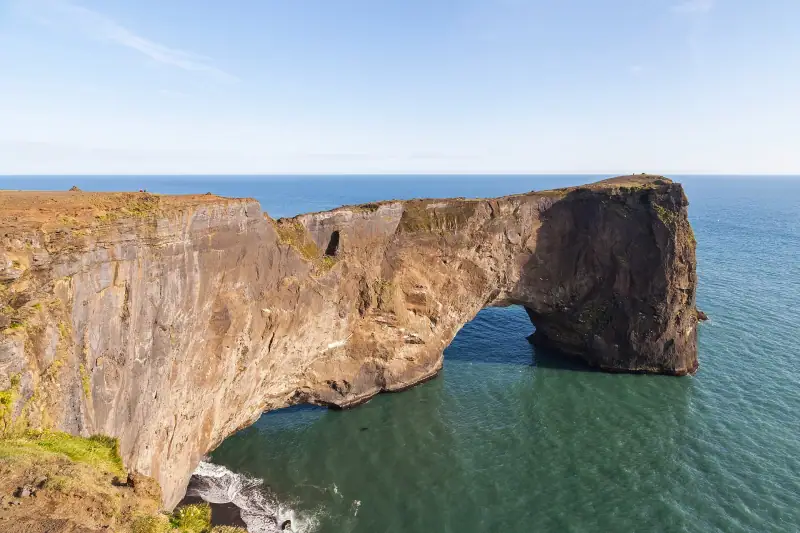
4 days
Iceland's south coast: a 4-day itinerary from Reykjavik to Jökulsárlón
A 4-day south coast Iceland itinerary: Seljalandsfoss, Skógafoss, Vík, Reynisfjara and Jökulsárlón lagoon, with distances, stops and practical tips.
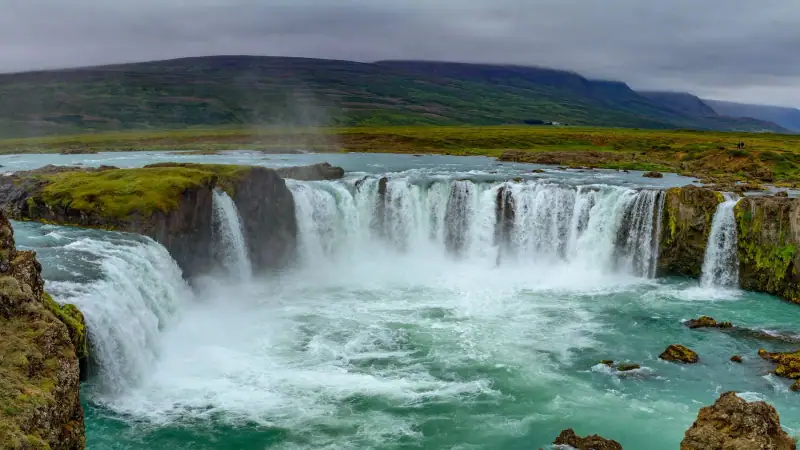
3 days
North Iceland in 3 days: Goðafoss, Mývatn and Húsavík
Lake Mývatn areaHúsavík
2 days
Snæfellsnes Peninsula: a 2-day itinerary from Reykjavik
Visit Iceland's Snæfellsnes Peninsula: Kirkjufell, Arnarstapi, Djúpalónssandur, Búðir and Stykkishólmur. A 2-day itinerary with drive times and tips.