Things to do
Northern lights in Iceland: where and when to see them (complete guide)
We may earn a commission when you book through links on this page, at no extra cost to you. We don't visit or try the places we cover: we summarize published sources. How we work
In short
- The season runs roughly from late summer to mid-April; September to March is most reliable. In midsummer the sky is not dark enough.
- Clouds matter more than solar activity: follow the aurora and cloud forecast, and get away from city lights.
- Plan at least four to five nights; no sighting is ever guaranteed.
- Good areas: Reykjavik and Þingvellir, the south coast and Jökulsárlón, Snæfellsnes and Kirkjufell, and the north around Akureyri and Mývatn.
Watching green curtains dance in the black sky is, for many travelers, the main reason to go to Iceland in winter. The country lies just below the zone where auroras are most frequent, and its vast unlit landscapes offer exceptional viewing spots. But the phenomenon remains unpredictable: it has to be prepared for, watched for and needs a bit of luck.
This guide explains how auroras work, when to go, where to position yourself and how to put every chance on your side, without unrealistic promises.
Understanding the northern lights
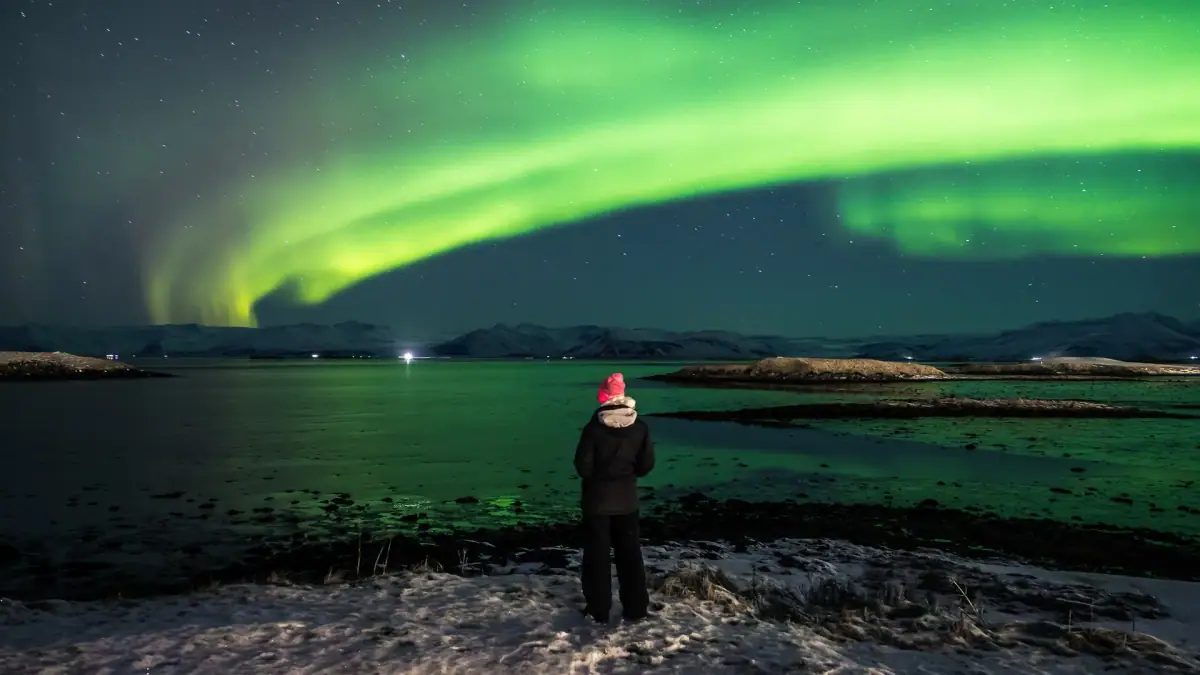
A northern light forms when charged particles sent by the Sun meet Earth’s atmosphere, guided by the magnetic field toward regions near the pole. They excite gases in the upper atmosphere, which emit light. Green is the most common color; purple and pink sometimes appear on the edges of the curtains on the most intense nights.
Two factors decide your evening:
- Solar activity, measured by the Kp index, from 0 to 9. In Iceland, even a moderate index is often enough, because the country is very close to the auroral zone.
- The weather, far more decisive than you might think. A very active night under a cloud ceiling shows nothing, while weak activity under a clear sky can already offer a pretty show.
To the naked eye, auroras often look paler and grayer than in photos, because the camera accumulates light for several seconds. So do not be disappointed: the real show is moving, and that is what makes it memorable.
When to go to see them
The season starts when nights become truly dark again, in late summer, and ends around mid-April. September to March are the most favorable months. In midsummer, the midnight sun simply prevents you from making them out.
A few guidelines for choosing:
- September and October: nights already dark, temperatures still bearable, roads generally clear. An excellent compromise.
- November to February: long nights, so many hours of viewing, but very short days, changeable weather and more demanding driving.
- March and early April: nights still fairly long, days lengthening, sometimes with beautiful clear conditions.
The Moon also counts: a moonless night or a thin moon makes auroras more visible. To compare seasons in detail, our guide to when to visit Iceland will help you weigh aurora, weather and activities.
Plan at least four to five nights: it is the best insurance against a series of overcast skies.
Around Reykjavik and Þingvellir
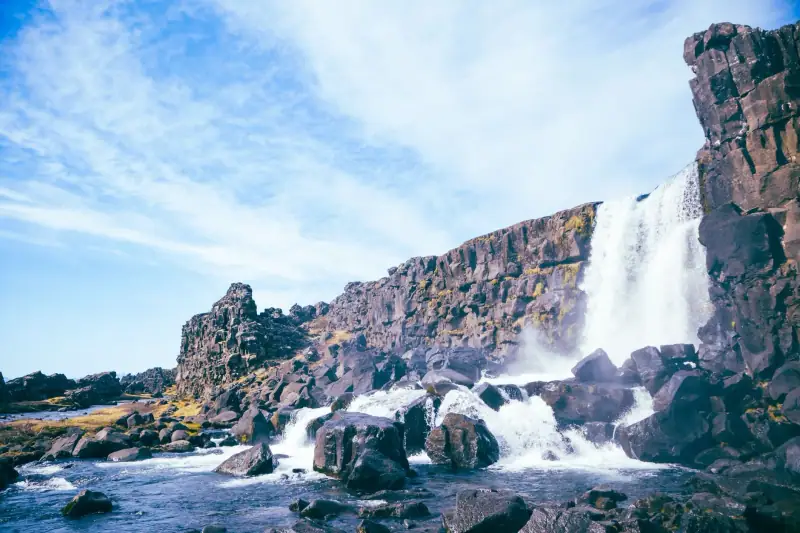
This is the simplest option for a short stay. Without leaving the capital region, you can find dark areas within a few dozen minutes’ drive, whether on the coast or inland.
Þingvellir National Park, about fifty kilometers (31 mi) from Reykjavik, offers a magnificent setting: a large plain, a lake and rift cliffs lend themselves to beautiful night photos. The site is easy to reach on the Golden Circle, but remember to check road conditions in winter and not to drive tired after a long day. To combine the day excursion and the evening viewing, see our guide to the Golden Circle.
Staying in Reykjavik during aurora season
Compare hotels and apartments in the capital, a practical base to watch for the aurora and explore around.
On the south coast and at Jökulsárlón
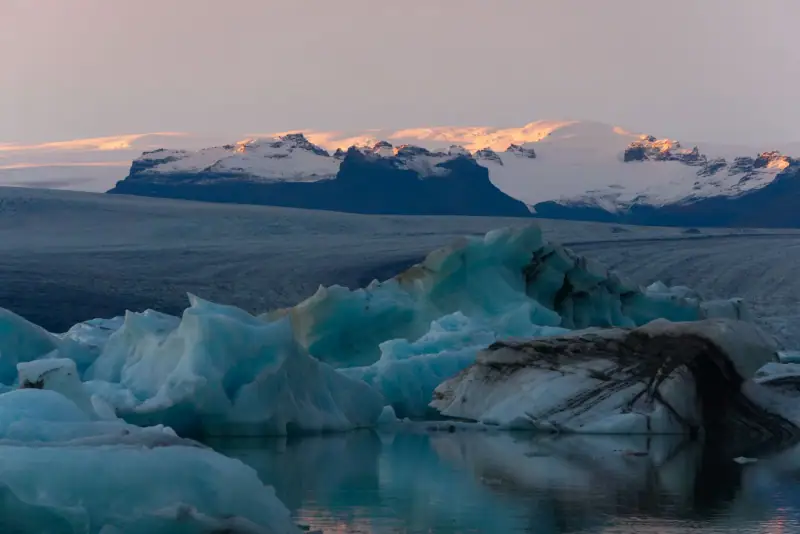
The south coast is known for its wide open horizons, black beaches and glaciers. Around Vík and farther east, the absence of large towns ensures a very dark sky, and the landscapes are spectacular in the background.
Jökulsárlón, the glacier lagoon, is an emblematic spot: auroras sometimes reflect on the water, with icebergs in the foreground. It is a prime spot if you are on a Route 1 road trip. Our south coast itinerary details the stops and distances to plan. Distances are long: if you plan an evening of viewing in the east, stay overnight nearby rather than driving at night.
A car gives real freedom for chasing the aurora, but driving at night in winter calls for caution: icy roads, wind, animals. Read our guide to driving in Iceland before booking.
Snæfellsnes Peninsula and Kirkjufell
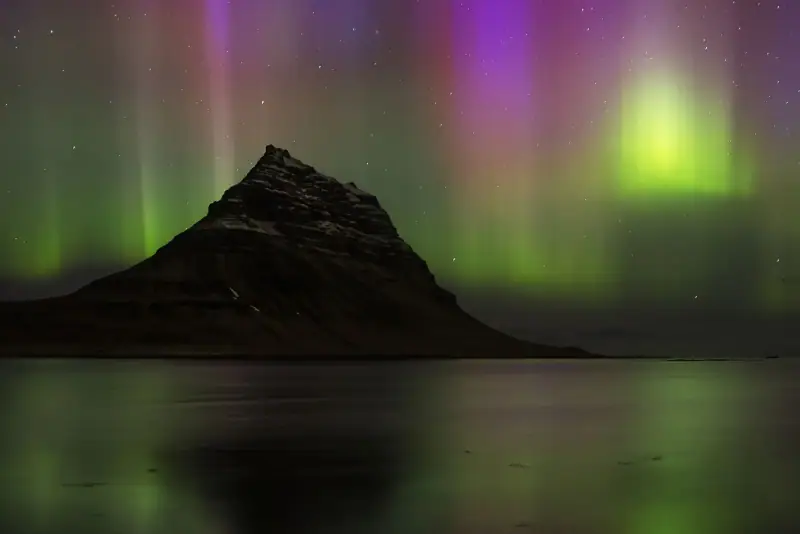
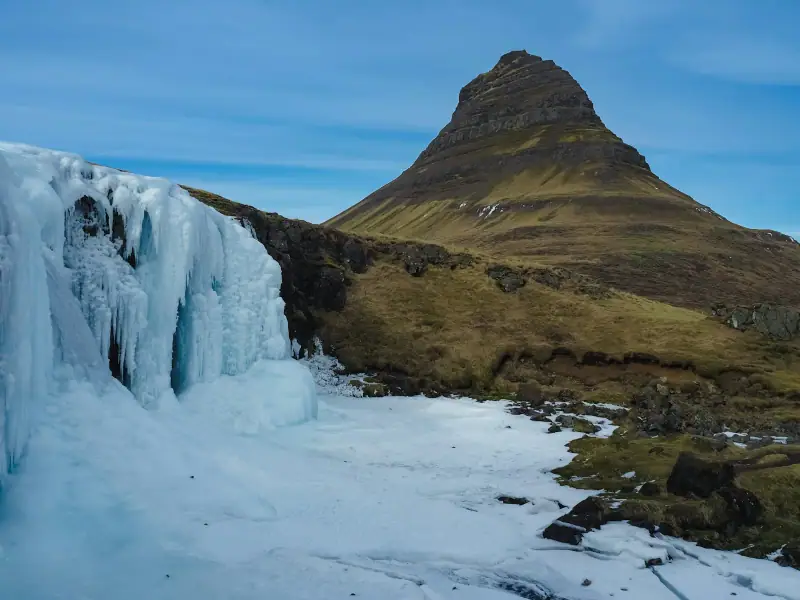
West of Reykjavik, the Snæfellsnes Peninsula concentrates varied landscapes in a small area: volcano, coast, fishing villages. Kirkjufell mountain, near Grundarfjörður, is one of the most photographed subjects in the country. Its conical silhouette, topped with green ribbons, is among the most famous images of Iceland.
It is an excellent choice for a two- or three-day getaway from the capital. The site is very busy during the day, quieter in the evening outside the tourist season. Dress very warmly: wind is frequent near the sea.
The north: Akureyri and Lake Mývatn
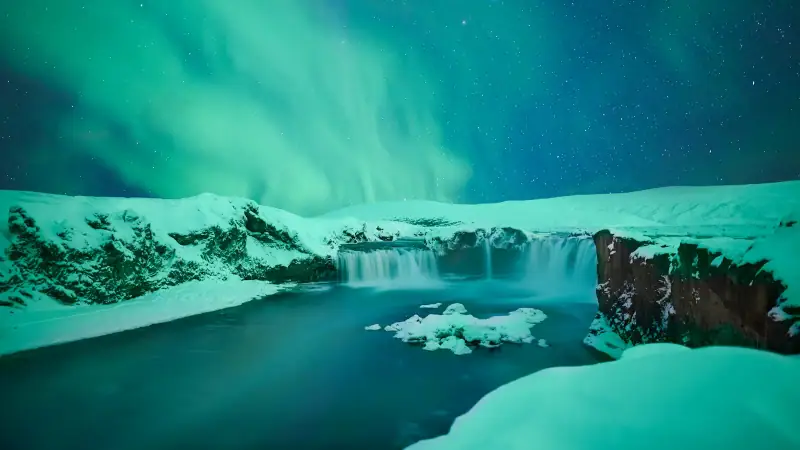
North Iceland often enjoys a drier sky than the south, and so more clear nights. The Akureyri and Lake Mývatn area is known for its clear nights and volcanic landscapes, and the towns there are small, so not very bright.
It is a sensible choice if you have more time or want to combine auroras, whale watching in Húsavík and geothermal baths. Hot springs are in fact one of the best ways to watch the aurora in comfort: see our guide to hot springs in Iceland.
Excursions to watch the aurora
No car or prefer not to drive at night? Compare guided aurora viewing outings from Reykjavik.
Forecasts and organizing the evening
A few habits simplify viewing:
- Check the cloud forecast before choosing a direction. The Icelandic meteorological service publishes a dedicated aurora forecast, combining activity and cloud cover: it is the go-to tool there.
- Get away from lights: a few kilometers are often enough. Avoid lit roads and turn off your headlights when stopped, parking without obstructing traffic.
- Let your eyes adjust: it takes about twenty minutes in the dark for night vision to be fully effective.
- Be patient: activity often comes in waves, with pauses. A thermos of a hot drink works wonders.
- Stay careful: never park on the roadway and do not walk on slippery or unstable ground in the dark.
Lodging in the open countryside offers a valuable advantage: some warn their guests in case of an aurora, and you can step outside in a few paces.
Photographing the aurora
You do not need to be a professional to get beautiful images, but a minimum of gear is required:
- A stable tripod: exposures last from a few seconds to about twenty seconds.
- A fast wide-angle lens, opened wide.
- Manual focus set to infinity, checked on a star or a distant light.
- Spare batteries kept in an inside pocket: cold drains them quickly.
- A remote release or self-timer to avoid blur.
Start with an exposure of a few seconds and adjust to the brightness of the aurora. A recent smartphone with night mode, set on a tripod, also gives good results.
Preparing for the cold and the unexpected
Waiting for the aurora means standing still in the cold and wind. Layer up: thermal underwear, fleece, waterproof windproof jacket, hat, warm gloves and insulated shoes. Spare socks and hand warmers are not a luxury.
As for organization, keep flexibility in your schedule: a rest day after a sleepless night, and the option to change region depending on the weather. Also consider covering your trip: travel insurance covering assistance and medical costs is a useful complement for a winter trip. Always check the coverage that applies to you.
Frequently asked questions
Answers to the most common questions are in the FAQ below. The essentials to remember: go between September and March, plan several nights, follow the cloud forecast more than the solar index, and get away from lights. With a bit of patience, Iceland’s green vault will make your trip a memorable one. To complement your evenings with days on the ice, see our guide to ice caves, snowmobiling and winter activities to book.
Frequently asked questions
What is the best time to see the northern lights in Iceland?
The season runs roughly from late summer to mid-April, when nights are dark enough. September to March are the most reliable months. In midsummer, the sky does not get dark enough to make out the aurora.
Do you need an organized tour to see the northern lights?
It is not mandatory. With a car, you can move away from city lights and follow weather and solar activity forecasts. A guided tour mainly brings the experience of guides, who pick the evening's spot according to the clouds, and spares you from driving at night.
Can you see the northern lights from Reykjavik?
Yes, when activity is strong and the sky clear, but urban lighting reduces contrast. A few minutes' drive toward the outskirts, or a dark spot by the sea, clearly improves viewing.
Are the northern lights guaranteed?
No. They depend on solar activity and especially on cloud cover, which is highly variable in Iceland. Planning several nights, and ideally a few spare days, greatly increases your chances.
What gear do you need to photograph the aurora?
A camera with manual exposure settings, a sturdy tripod, a fast wide-angle lens, and spare batteries kept warm, as cold drains them quickly. A recent smartphone with night mode can also give good results on a tripod.
More Iceland guides
Keep reading
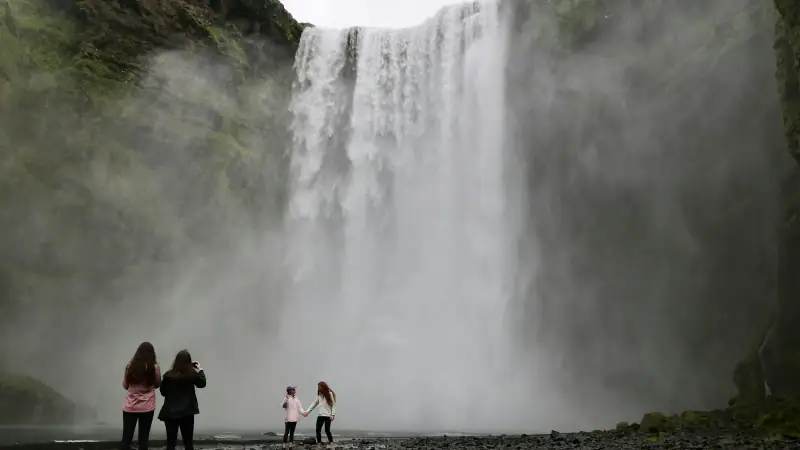
Iceland with kids: trip ideas and activities for families
Traveling to Iceland with children: Reykjavik activities, whales, waterfalls, heated pools, car seats, daily pace and precautions to know.
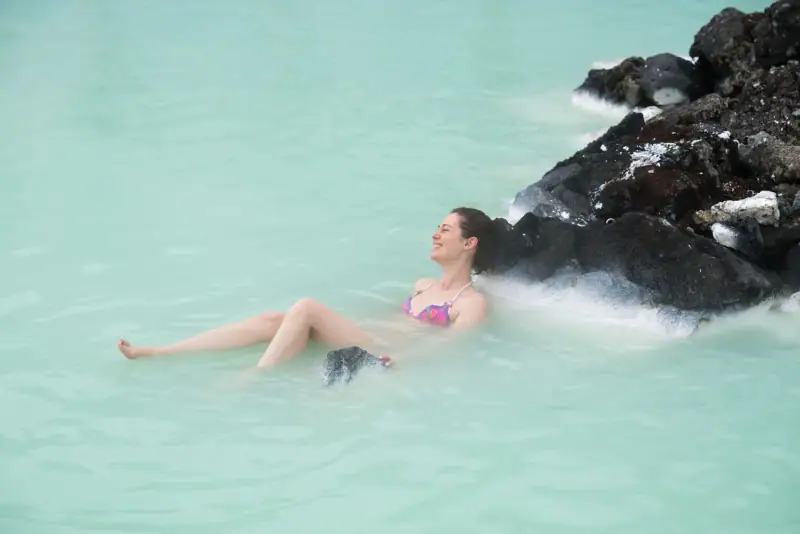
Hot springs in Iceland: lagoons, pools and natural baths
Blue Lagoon, Sky Lagoon, Mývatn, Secret Lagoon, Reykjadalur: which Iceland hot springs to visit, how to choose, book and follow local etiquette.
Iceland budget: real costs, 3 priced profiles and money-saving tips
Budget for a trip to Iceland in 2026: lodging, car, meals and activities item by item, three priced profiles and tips to spend less.
Ready-made
Iceland itineraries
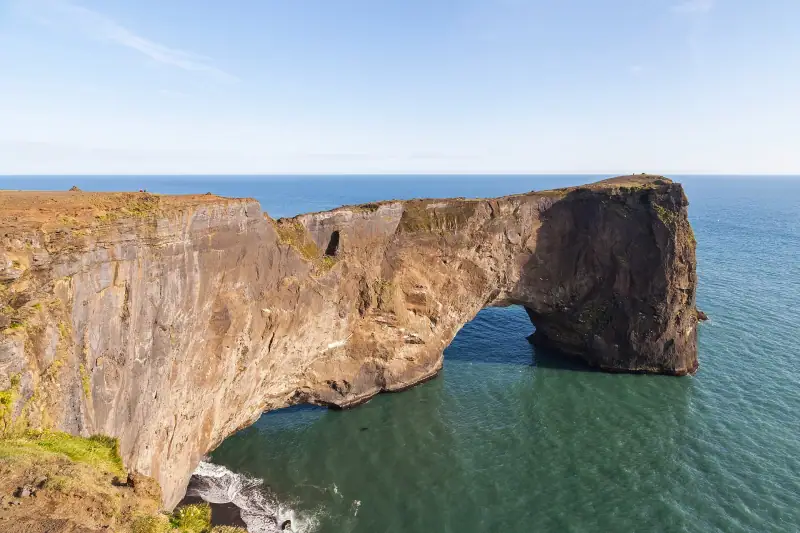
4 days
Iceland's south coast: a 4-day itinerary from Reykjavik to Jökulsárlón
A 4-day south coast Iceland itinerary: Seljalandsfoss, Skógafoss, Vík, Reynisfjara and Jökulsárlón lagoon, with distances, stops and practical tips.
3 days
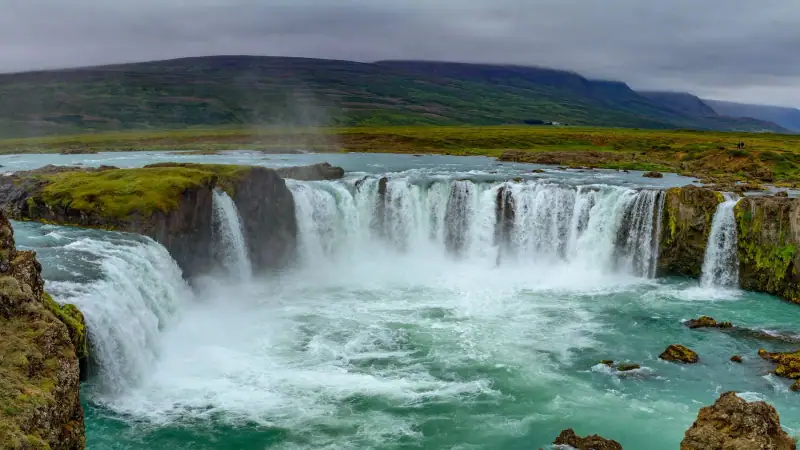
North Iceland in 3 days: Goðafoss, Mývatn and Húsavík
Lake Mývatn areaHúsavík
2 days
Snæfellsnes Peninsula: a 2-day itinerary from Reykjavik
Visit Iceland's Snæfellsnes Peninsula: Kirkjufell, Arnarstapi, Djúpalónssandur, Búðir and Stykkishólmur. A 2-day itinerary with drive times and tips.