Things to do
Hot springs in Iceland: lagoons, pools and natural baths
We may earn a commission when you book through links on this page, at no extra cost to you. We don't visit or try the places we cover: we summarize published sources. How we work
In short
- Blue Lagoon is the most famous and closest to the airport; Sky Lagoon is most practical from Reykjavik; Mývatn suits a northern stay; Secret Lagoon is simpler.
- Book time slots ahead for the big lagoons, especially in high season.
- A full soapy shower without swimsuit is mandatory before entering any pool or lagoon in Iceland.
- Wild hot springs can be scalding: stay within marked areas and never bathe in a spring whose temperature you do not know.
In Iceland, bathing in hot water is a ritual as much as a tourist activity. The island sits on intense geothermal activity, and residents have made bathing a social moment of relaxation, summer and winter. For a traveler, it is also the best way to recover after a day on the road or hiking.
This guide presents the main options, from developed big lagoons to municipal pools and natural baths, with the points to know to choose well and avoid bad surprises.
The most famous geothermal lagoons
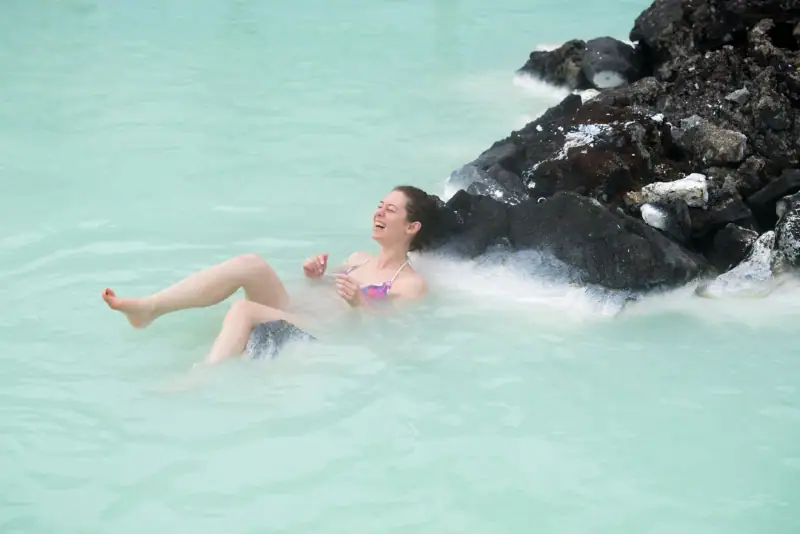
Developed lagoons are modern spas fed by geothermal water, with changing rooms, a bar and sometimes treatments. They are expensive, but offer a comfort hard to beat, especially under the snow.
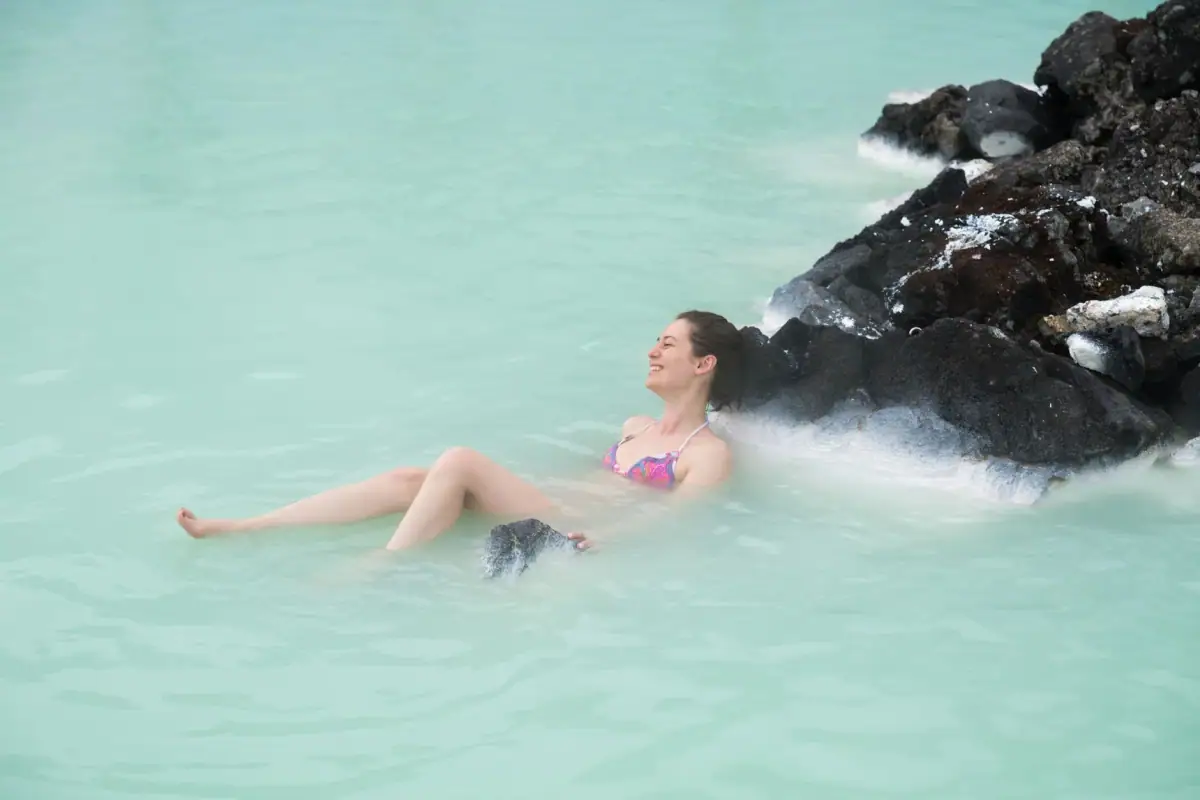
The Blue Lagoon, on the Reykjanes Peninsula, is the best known. Its milky, unreal blue water contrasts with the surrounding black lava. It is about 40 minutes by road from Reykjavik, and a short drive from Keflavík airport, which makes it a classic choice on arrival or departure day. The place is very busy: book your slot ahead and avoid midday hours if possible.
The Sky Lagoon, in Kópavogur, in the Reykjavik area, is only about ten kilometers (6 mi) from the center. Its infinity pool faces the Atlantic Ocean, and its wellness ritual alternates hot bath, sauna, cold plunge and shower. It is a good option for a half day without a rental car.
Both sites are very popular. If you are aiming for sunset or a winter evening, book even further ahead.
Staying in Reykjavik near the lagoons
Compare hotels and apartments in the capital, a practical base for the Sky Lagoon and Blue Lagoon.
Municipal pools, the local experience
Almost every Icelandic village has its public pool, heated by geothermal energy. You find a lap pool and, above all, “hot pots,” small hot water tubs where neighbors chat. Entry costs far less than a lagoon and the atmosphere is authentic.
Reykjavik has several pools of this kind, much loved by residents. It is often the simplest way to treat yourself to a hot bath on a road trip: spot the pool of the village where you spend the night and keep a swimsuit in your bag, always at hand.
The etiquette is simple but strict. Before entering the water, you must shower thoroughly with soap, without a swimsuit, in the changing rooms. Illustrated signs remind you of the areas to wash. This rule keeps the water clean without excess chlorine, and staff make sure it is respected. Foreign visitors who ignore it are quickly told off.
The northern baths around Lake Mývatn
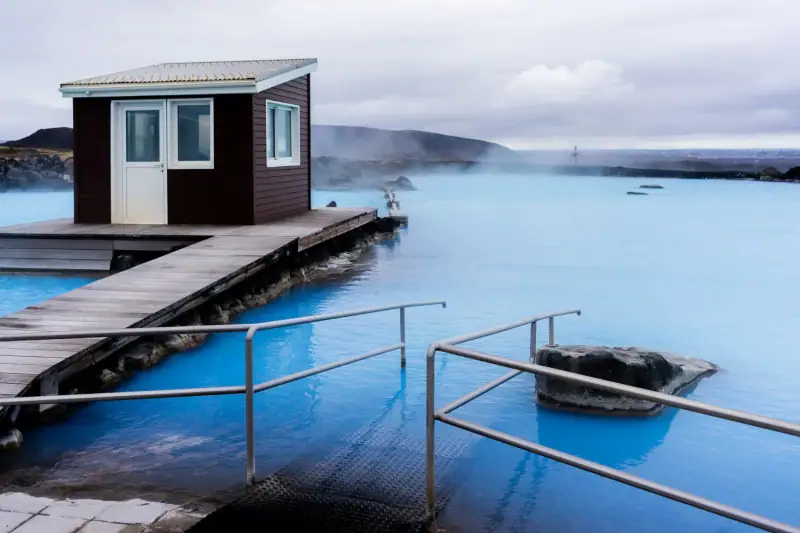
In the north, the Lake Mývatn region is a volcanic zone where the earth steams and bubbles. The Mývatn Nature Baths offer a large lagoon of mineral-rich water, with a temperature generally between 36 and 40 °C (97 and 104 °F). The place is clearly quieter than the Blue Lagoon and more pleasant for those traveling outside the Reykjavik area.
They are a little over an hour’s drive from Akureyri, and fit well into an itinerary combining the lake, lava fields and neighboring craters. Allow a good two hours there to enjoy it at leisure.
If you are planning a stay in this region, book your lodging early: supply is limited around the lake and the closest addresses go fast.
Staying in North Iceland
Compare lodging in Akureyri, practical for exploring Mývatn and its natural baths.
The Secret Lagoon, simple and authentic
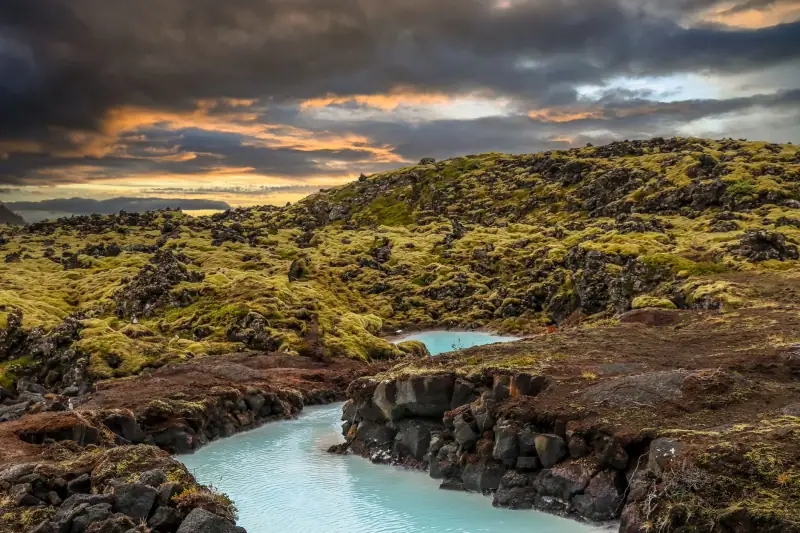
The Secret Lagoon, in Flúðir, is presented as one of the oldest natural pools in the country. The water is generally around 38 to 40 °C (100 to 104 °F), and a small geyser erupting regularly adds a particular charm. Facilities are rustic: simple changing rooms, few frills.
Flúðir is about an hour and a half by road from Reykjavik, which lets you add it to a day on the Golden Circle. You can read our Golden Circle guide to organize the day’s stops and decide which one to sacrifice if you are short on time.
Without a car, these destinations are harder to reach. Compare rental offers before departure rather than deciding on arrival, and keep in mind that the most authentic springs are often away from the main roads.
Reykjadalur, the hot river in the open air
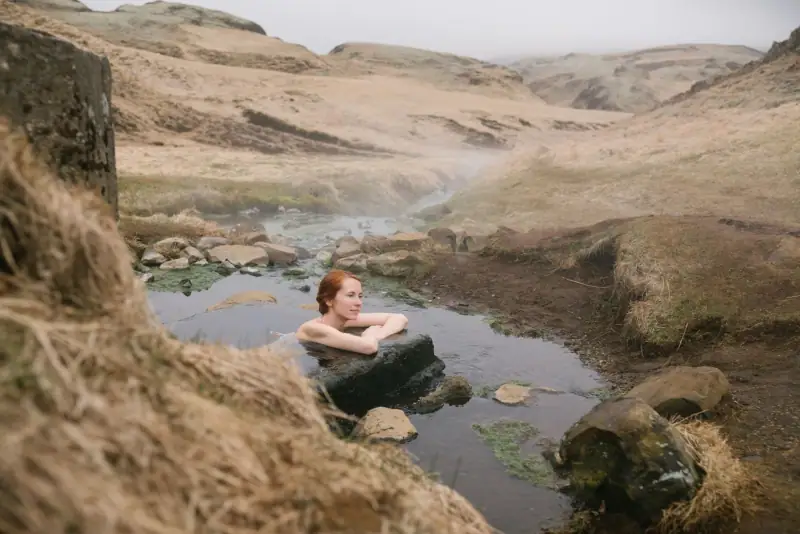
For wilder bathing, the Reykjadalur valley, near Hveragerði, holds a river where hot water from the ground mixes with the cold water of the stream. Access is free, but allow about 45 minutes of uphill walking to reach it, on a trail that can be muddy or snowy depending on the season.
A few tips for the experience:
- Wear your swimsuit under your clothes: changing stalls are basic, even nonexistent, and the wind can be icy.
- Choose the right spot: the water is hotter upstream and cooler downstream, adjust your position.
- Respect the trails and boardwalks, which protect fragile ground.
- Bring a towel and dry clothes in a waterproof bag for the way down.
Wild springs call for caution: some pools are scalding and not suitable for bathing. Never leave the marked areas and do not touch the water of a steaming spring without finding out first.
When to enjoy hot springs
You can bathe all year, but the experience changes with the season. In summer, the clear nights of the solstice let you bathe late under a soft light. In winter, the contrast between icy air and hot water is striking, and with a bit of luck, the northern lights may appear above the lagoon, provided you choose a site away from city lights.
For the most pleasant periods, see our guide to when to visit Iceland. If your itinerary includes lodging along the road, our article on where to stay in Iceland will help you place your stops near baths.
Book a geothermal bath or excursion
Compare lagoon entries and excursions with transfer from Reykjavik.
Practical tips before bathing
- Book the big lagoons ahead, especially in high season.
- Bring a swimsuit, a towel, sandals and a bag for wet items, or ask about rentals there.
- Tie up or protect your hair: the mineral water of the Blue Lagoon makes it dry and hard to untangle. Putting conditioner on your hair before bathing helps.
- Remove your jewelry, as mineral water can tarnish it.
- Bring water: long soaks in hot water are more tiring than you might expect.
- Do not leave valuables in a bag at the poolside: use the lockers provided.
A stay in Iceland is an expensive adventure: plan a budget for baths, but mix the formulas. A big lagoon for pleasure, municipal pools for everyday and a natural spring for adventure are enough to build a rich experience without blowing the budget. Finally, consider travel insurance before departure.
Frequently asked questions
What is the best hot spring in Iceland?
It depends on your itinerary. The Blue Lagoon is the most famous and closest to the airport, the Sky Lagoon is the most practical from Reykjavik, the Secret Lagoon appeals with its simpler atmosphere on the Golden Circle, and the Mývatn baths suit a stay in the north.
Do you need to book for the Blue Lagoon?
Yes, booking a time slot in advance is strongly advised, even essential in high season. The most popular lagoons regularly sell out at certain hours.
Do you have to shower naked before bathing?
Yes. In Iceland, a soapy shower without swimsuit is mandatory before entering a pool or lagoon. Private stalls are often available, but the pre-shower rule is very strictly enforced.
Can you bathe in hot springs in winter?
Yes, and it is even one of the great pleasures of the season: the water stays hot whatever the cold. Just bring a hat or tied-up hair, sandals and a well-warmed towel for the walk back to the changing room.
Is bathing in wild hot springs safe?
Not always. Water temperature varies strongly from one point to another and some springs are scalding. Ask there, respect the signs and trails, and never bathe in a spring whose temperature you do not know.
More Iceland guides
Keep reading
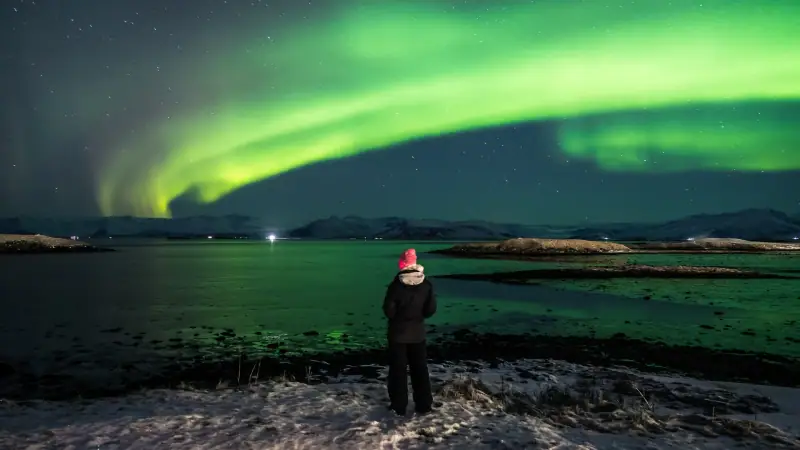
Northern lights in Iceland: where and when to see them (complete guide)
See the northern lights in Iceland: best season, best spots around Reykjavik, the South, Snæfellsnes and the North, forecasts and photo tips.
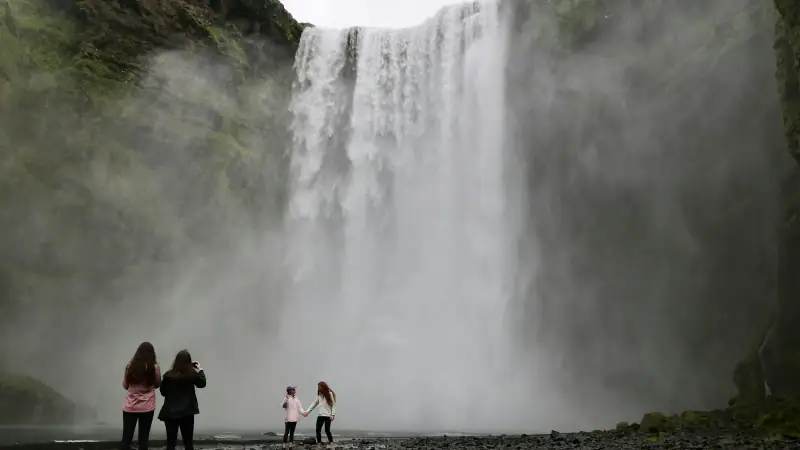
Iceland with kids: trip ideas and activities for families
Traveling to Iceland with children: Reykjavik activities, whales, waterfalls, heated pools, car seats, daily pace and precautions to know.
Iceland budget: real costs, 3 priced profiles and money-saving tips
Budget for a trip to Iceland in 2026: lodging, car, meals and activities item by item, three priced profiles and tips to spend less.
Ready-made
Iceland itineraries
4 days
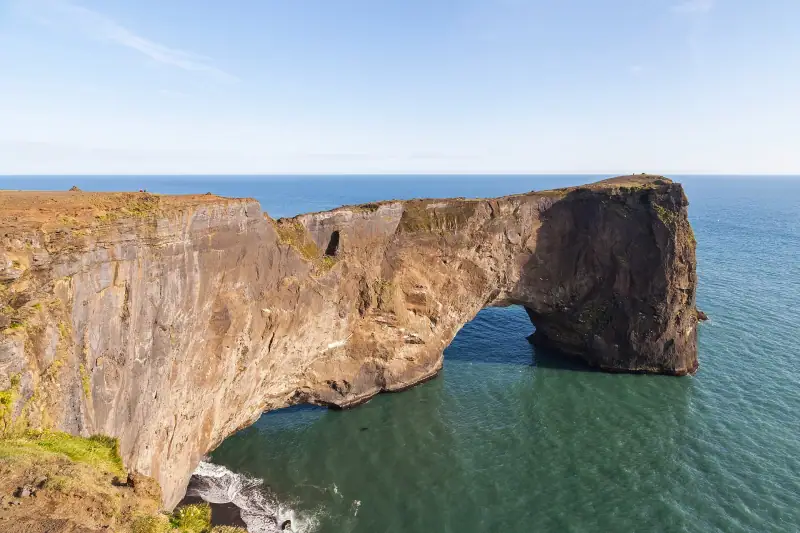
Iceland's south coast: a 4-day itinerary from Reykjavik to Jökulsárlón
A 4-day south coast Iceland itinerary: Seljalandsfoss, Skógafoss, Vík, Reynisfjara and Jökulsárlón lagoon, with distances, stops and practical tips.
3 days
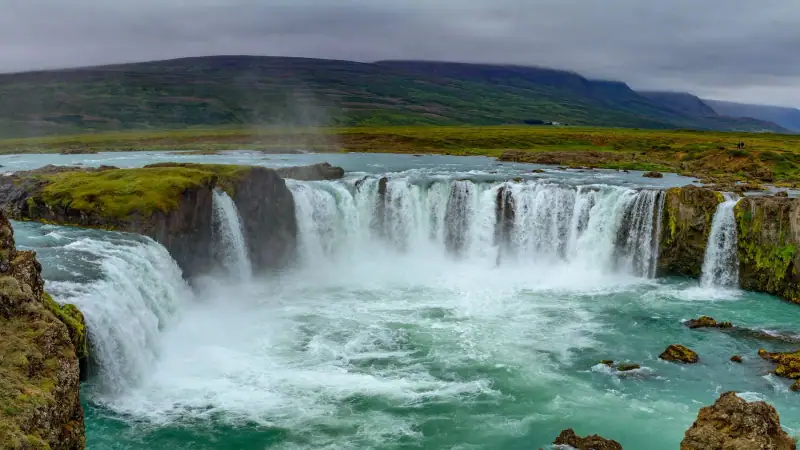
North Iceland in 3 days: Goðafoss, Mývatn and Húsavík
Lake Mývatn areaHúsavík
2 days
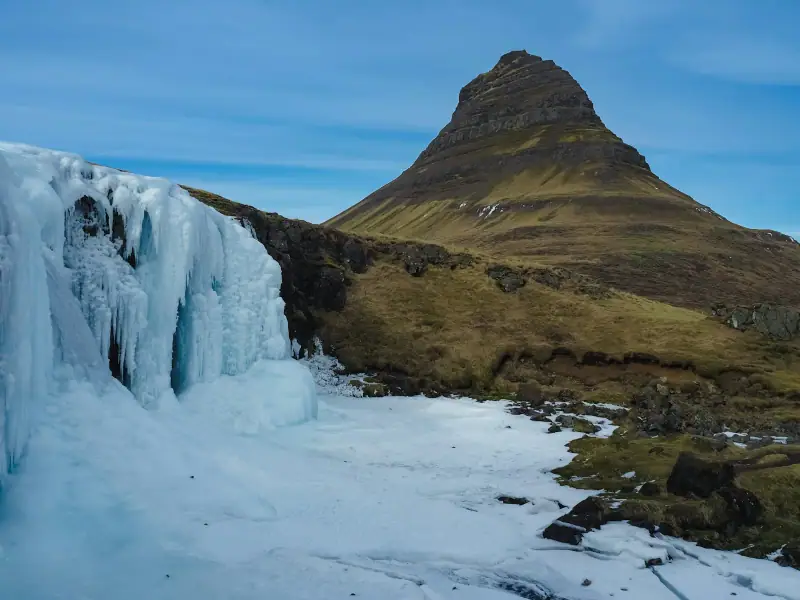
Snæfellsnes Peninsula: a 2-day itinerary from Reykjavik
Visit Iceland's Snæfellsnes Peninsula: Kirkjufell, Arnarstapi, Djúpalónssandur, Búðir and Stykkishólmur. A 2-day itinerary with drive times and tips.