What to see
Complete Guide to Visiting Tuscany: Cities, Highlights and Tips
We may earn a commission when you book through links on this page, at no extra cost to you. We don't visit or try the places we cover: we summarize published sources. How we work
In short
- A week covers the essentials: two or three days in Florence, a day in Siena, a Pisa and Lucca excursion, then Chianti or the Val d'Orcia.
- Spring (April to June) and early fall (September and October) are generally the most pleasant; summer is hot and busy, winter quieter but cooler and wetter.
- Big cities are well linked by train and bus; for Chianti, the Val d'Orcia and hilltop villages a car is by far the most practical, with limited traffic zones (ZTL) to watch.
- Tuscany is compact: the most visited cities are roughly 50 to 100 km (31 to 62 mi) apart.
Tuscany is one of those destinations whose image everyone thinks they know: rolling hills, rows of cypress trees, perched stone villages, a glass of red wine at dusk. That image is accurate, but it does not say everything. The region is also the cradle of the Renaissance, a playground for food lovers, a land of hot springs and wild coasts, and a place where you can go from a great art metropolis to a silent hamlet in under an hour.
This guide is the pillar article of the site. It presents the destination as a whole: the big regions, the main cities, the highlights, the ideal time to go, ways to arrive and get around, accommodation options and the budget to plan. At each step, links point you to our detailed guides to go further. If you prefer to start with a ready-made plan, go straight to our 7-day Tuscany itinerary.
Tuscany at a glance
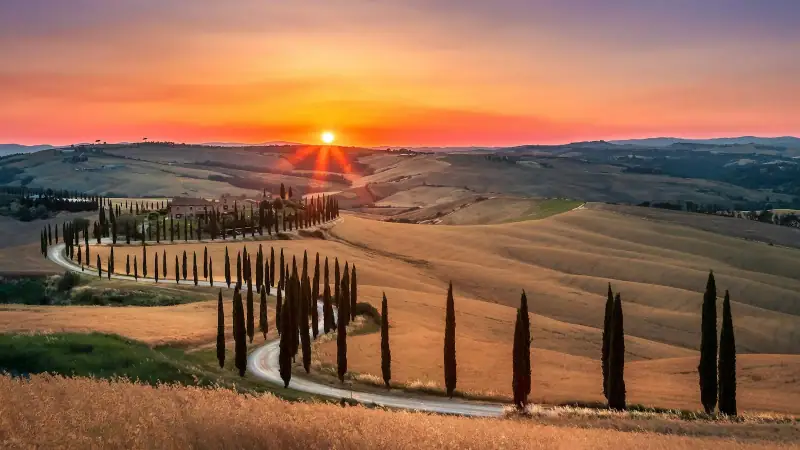
Tuscany lies in central-western Italy, between the Tyrrhenian Sea to the west, Emilia-Romagna and Liguria to the north, and Umbria and Lazio to the southeast and south. Its capital is Florence. To the west it is bordered by a coastline that includes the Tuscan Archipelago, of which the island of Elba is the best known. The interior is a succession of hills, fertile plains and small massifs, with the Apennines as a backdrop to the north and east.
This relief explains the variety of landscapes. In the northwest, the surroundings of Pisa and Lucca are an open plain toward the sea. In the center, the Chianti hills trace vineyards and woods. Farther south, the clay ridges of the Val d’Orcia offer the soft lines that made the region famous in photographs. Finally, the Maremma, by the sea, has an identity of its own: wilder, more rural, with beaches, pine forests and hot springs.
For a traveler, the key point is that Tuscany is compact. The most visited cities are separated by distances of the order of 50 to 100 km (31 to 62 mi). You can therefore, without much fatigue, set up your base in one place and fan out on day trips, or move from stop to stop and stay in several places.
The six major regions to know
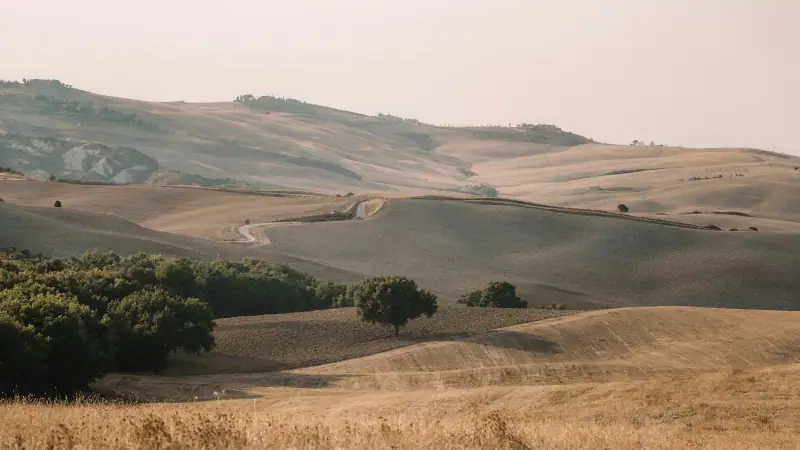
Our site divides Tuscany into six zones, which match the main ways of exploring it.
Florence and surroundings
Florence is the cultural heart of the region and the natural starting point for most trips. This is where the museums, palaces and great Renaissance monuments are concentrated. The city is also a transport hub: from its station, you can easily reach Pisa, Lucca, Arezzo or Siena. We detail how to explore it in Florence in 2 days.
Chianti
Between Florence and Siena, Chianti is a region of hills covered with vines and olive trees, wine castles and stone villages. It is the ideal zone for a drive, with stops at cellars for tastings. Our article on the Chianti road by car offers a route with the villages and cellars to look out for.
The Val d’Orcia
South of Siena, the Val d’Orcia is a UNESCO World Heritage cultural landscape. Here you find Pienza, Montalcino and, a little farther east, Montepulciano. It is postcard Tuscany: cypress-lined roads, isolated farms on the ridges, morning mist in the hollows. Our Val d’Orcia road trip guides you from village to village.
Siena and San Gimignano
This zone brings together two emblematic medieval cities. Siena is known for its shell-shaped Piazza del Campo and for its Palio, the horse race that enlivens the city twice each summer. San Gimignano, smaller, can be recognized from afar by its towers rising over the hill. To plan your stop in Siena, read Siena in one day.
Pisa and Lucca
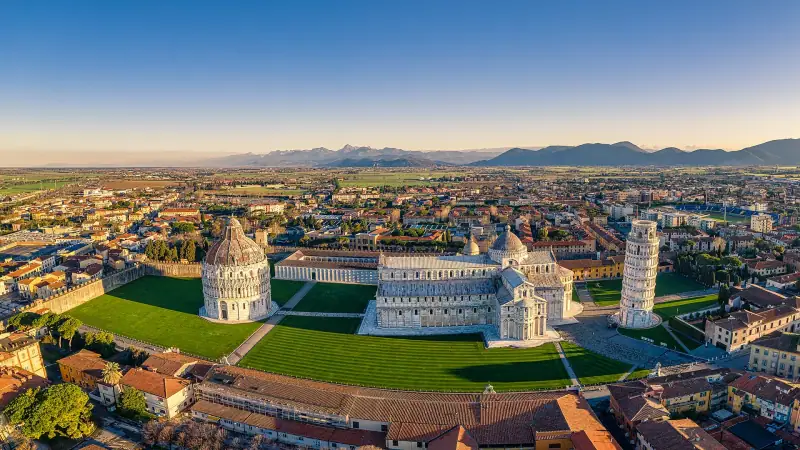
In the west, these two cities are close to each other and easily combined in one day. Pisa is famous for its Piazza dei Miracoli and Leaning Tower, Lucca for its walls turned into a tree-lined promenade. We detail the route and pace in Pisa and Lucca in one day from Florence.
The Maremma and the coast
In the southwest, the Maremma is the part least visited by travelers in a hurry. You find beaches, hilltop villages, the Saturnia hot springs and, offshore, the island of Elba, reachable by boat. It is a good option to complement a cultural trip with a few days of rest by the water.
The cities worth visiting
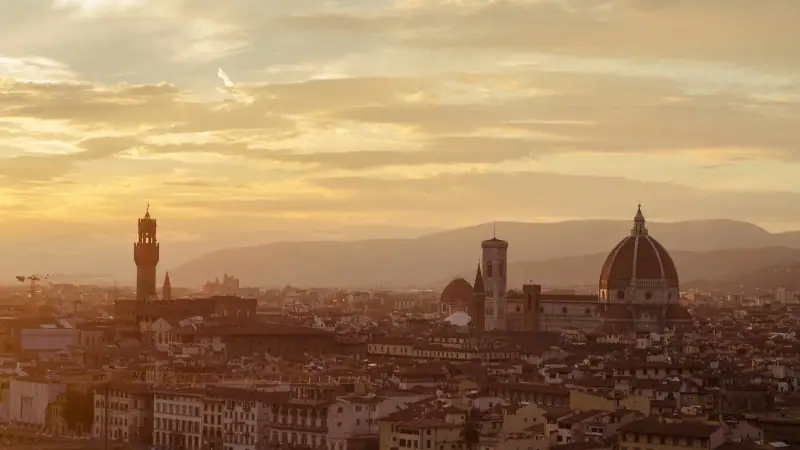
Florence: the Renaissance in the open air
Florence is both a museum city and a city where people live. The highlights can almost all be visited on foot, in a compact historic center: Santa Maria del Fiore cathedral and its dome, Piazza della Signoria, the Uffizi Gallery, the Ponte Vecchio and, on the other bank of the Arno, the Boboli Gardens and the Pitti Palace. The Accademia Gallery, home to Michelangelo’s David, is also very popular.
The main difficulty is crowds. Lines can be long at the major sites, especially in high season. Book tickets in advance for the major monuments and keep free time to stroll the streets and markets. Our article Florence in 2 days offers a realistic sequence that avoids back-and-forth.
Siena: the medieval rival
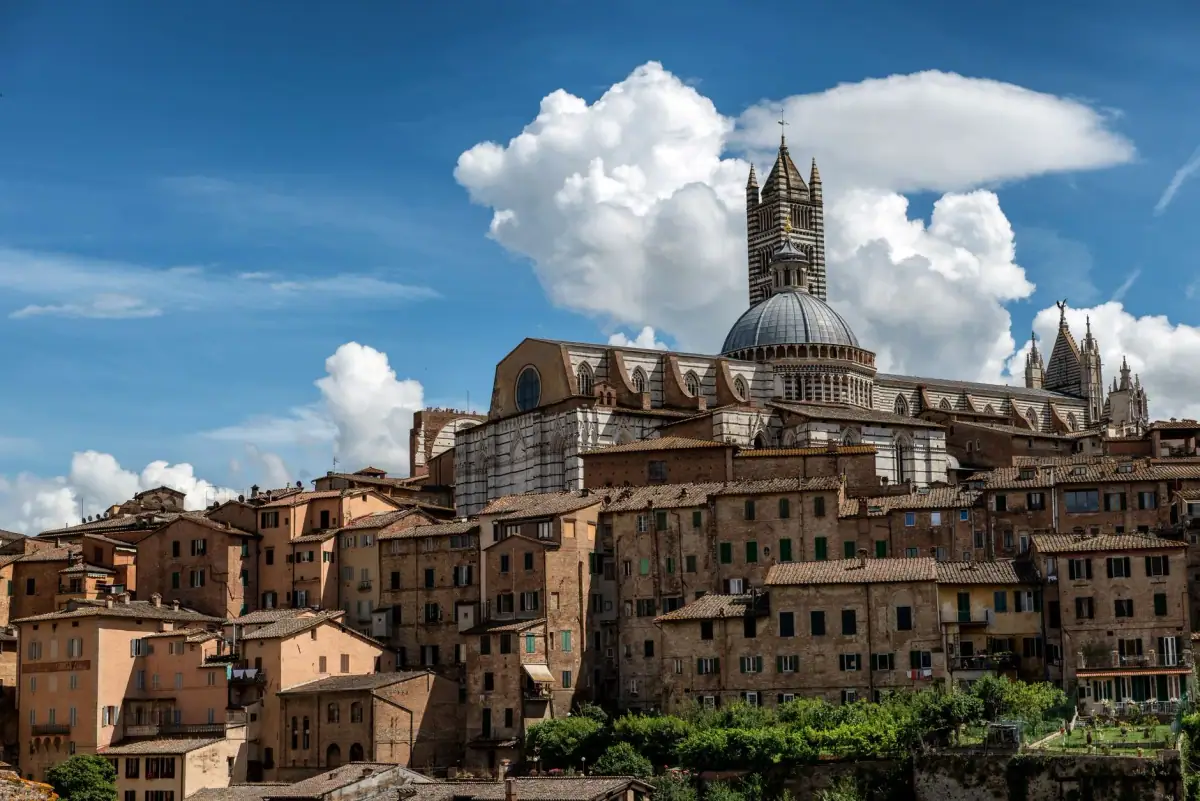
Siena, long Florence’s rival, has kept a remarkably homogeneous medieval center. Its heart is Piazza del Campo, gently sloping toward the Palazzo Pubblico and its tower. Nearby, the cathedral, with its inlaid marble floor and its facade striped in white and green, is one of the most striking monuments in the region.
The city is very doable as a day trip from Florence by bus or train, provided you accept not seeing everything. If you stay overnight, you will enjoy the city in the evening, once the groups have left. Everything is explained in our guide to visiting Siena in one day.
Pisa: much more than a tower
Many travelers come to Pisa only for the photo of the Leaning Tower. That is a shame: Piazza dei Miracoli also brings together the cathedral, the baptistery and the monumental cemetery, in a very coherent ensemble of Pisan Romanesque architecture. The city has a renowned university, which gives it a lively student life along the Arno.
A day visit is doable, especially since the airport is very close to the center. It is also a natural entry point for those arriving by air. To optimize your time, see Pisa and Lucca in one day.
Lucca: the quiet one
A few kilometers from Pisa, Lucca has kept its walls almost intact, which now form a large linear park where you walk or cycle above the rooftops. Inside, the city is made of medieval lanes, squares and churches, and the oval shape of the old Roman amphitheater. It appeals to those looking for a calmer atmosphere than Florence.
San Gimignano, Pienza, Montepulciano and Cortona
The small perched towns are the other face of Tuscany. San Gimignano is known for its stone towers. Pienza is an “ideal city” designed in the 15th century at the initiative of Pope Pius II, famous for its pecorino cheeses. Montepulciano overlooks a ridge and gives its name to a renowned red wine. Cortona, farther east, has a more intimate charm and views over the valley.
These villages are most often visited by car. They are very busy in the middle of the day but regain their calm from late afternoon, a good argument for staying a night there.
Hotels and farm stays in Tuscany
Compare stays in town and in the countryside for your dates and budget.
Tuscany’s highlights
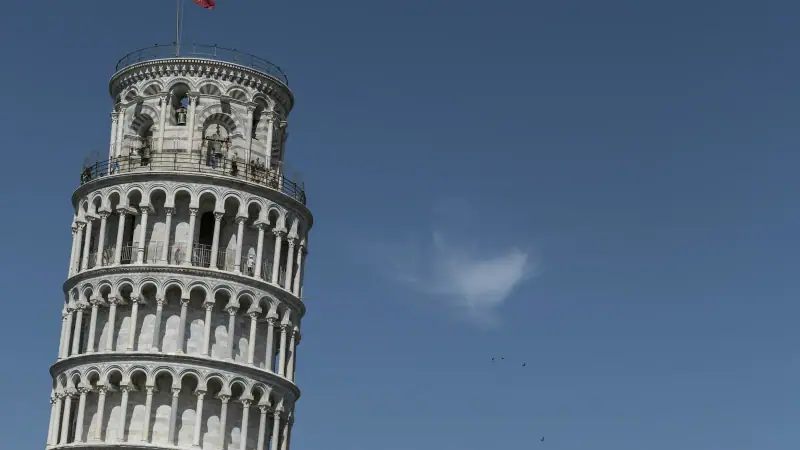
If you had to sum up the region in a list, here are the experiences that come up most often in successful trips.
- Climb the dome or the bell tower in Florence to see the city from the rooftops. The climb is by time slot and is worth booking.
- Spend an evening on Piazza del Campo in Siena, when the light falls on the red brick.
- Walk or cycle on Lucca’s walls, a simple and very pleasant moment.
- Take a cypress road in the Val d’Orcia in morning or evening light, when the hills are at their best.
- Taste a wine in a Chianti cellar, preferably with a visit of the property. Our advice is in the article on the Chianti road.
- Try the local specialties, from a slice of Tuscan bread to grilled meat, including pasta with game sauces. The complete list is in What to eat in Tuscany.
- Bathe in hot springs in the Maremma, another face of the region, ideal after several days of sightseeing.
Do not try to do everything. The most common trap in Tuscany is filling each day with three cities and two museums, and ending up exhausted. It is better to choose a few strong places and leave room for chance: a market, a café on a square, a detour along a small road.
When to go to Tuscany
The choice of period shapes the experience a lot. Tuscany can be visited all year, but its seasons have very different personalities.
Spring (April to June) is often considered the best season: temperatures are pleasant, the countryside is green and in flower, and days are already long. The most popular sites do start to fill up, though, especially around Easter and the May and June long weekends.
Summer (July and August) is hot, sometimes very hot, and it is high season. Stone cities store the heat, and midday visits can be uncomfortable. It is the time of festivals and events, such as the Palio di Siena, but also of the highest accommodation prices. If you go then, schedule visits early in the morning and late in the afternoon.
Fall (September to November) has its fans: temperatures become mild again, the light is beautiful, and it is the time of the grape harvest and olive picking. October is a very popular month, but the weather can be more changeable as November approaches.
Winter (December to February) is the quiet season. Museums are almost empty, prices drop, but days are short, the weather can be cool and damp, and some farm stays close.
For a detailed month-by-month table, with the pros and cons of each period, see our article Best time to visit Tuscany.
How to get to Tuscany
By air
The region has two main airports. Pisa’s is the most important for international flights, and it is very close to the city center, with a direct link to the station. Florence’s is smaller and very close to the center, and it mostly handles European flights. Depending on your departure city, airline and period, compare the two: arriving in Pisa can make sense if you start with Lucca, while Florence is the obvious choice if you stay in the regional capital. Book ahead for high season.
Flights to Pisa and Florence
Compare flights to Tuscany for your dates and departure city.
By train
Florence is a major Italian rail hub. High-speed trains link it to Milan, Bologna, Rome and Naples, which lets you combine Tuscany with a wider stay in Italy. Santa Maria Novella station is close to the historic center, and most hotels in the city are reachable on foot or by urban transport.
How to get around once there
Transport is probably the most decisive question in your preparation. For the big cities, trains and buses work well. Florence, Pisa, Lucca and Siena are easily linked, and most historic centers are visited on foot.
For hilltop villages, Chianti and the Val d’Orcia, a car is by far the most flexible way. Country roads are beautiful but narrow and winding, and historic centers are protected by limited traffic zones (ZTL). The habit to adopt is to park outside the walls, in a signed lot, and continue on foot.
A good strategy is to combine: the first days in Florence without a car, then a rental when you leave the city to explore the countryside. All the details (timetables, ZTL, choice of vehicle, fuel, tolls) are in our guide Getting around Tuscany.
Organized excursions are a third option, useful if you do not want to drive but want to see several villages in a day.
Day excursions in Tuscany
Tours from Florence to Siena, San Gimignano or Chianti, without driving.
Where to stay in Tuscany
The choice of accommodation depends on how you travel. There are three main options.
Staying in Florence. This is the most practical solution for a first stay, especially without a car. The city offers the widest choice of hotels, apartments and hostels, and its station lets you fan out on excursions. The choice of neighborhood matters: the historic center is ideal for visiting on foot, but noisier and more expensive, while some more residential neighborhoods offer better value. Our guide Where to stay in Florence details the areas.
Staying in a mid-sized city. Siena and Lucca are pleasant bases: quieter in the evening, more affordable than Florence, and well enough placed to fan out. A good compromise for those who do not like big cities.
Staying in the countryside. Farm stays (agriturismi), farms that offer rooms, sometimes meals and a pool, are one of the region’s specialties. They suit travelers with a car who want to take their time. The small villages of Chianti and the Val d’Orcia also offer charming hotels and guesthouses. Book early for high season, because small places have few rooms.
A classic formula for a week is to mix: two or three nights in town, then two or three nights in the countryside. It lets you enjoy both urban life and rural calm.
Do not forget the tourist tax, generally paid locally and varying by municipality and accommodation category. We cover it in our article on the budget in Tuscany.
Food: what to taste
Tuscan cooking is simple, built on quality products and peasant recipes: unsalted bread, olive oil, beans, grilled meats, cured meats, sheep’s cheeses, thick soups. Each zone has its specialties, and menus change with the seasons, with mushrooms, truffles and chestnuts in fall.
Wine is an essential part of the trip. Chianti is the best known, but the region also produces renowned wines around Montalcino and Montepulciano. Cellars offer tastings, often by reservation, and it is an excellent way to understand the landscape you are crossing. Our selection of specialties is in What to eat in Tuscany.
A few practical tips: lunch is between noon and 2 pm and dinner is often later. A “coperto,” a small per-person cover charge, may appear on the bill, and it is normal. In very touristy areas, move a few streets away from the main squares to find more authentic places.
To make food the common thread of your stay, a cooking class or a guided tasting is a good way to meet local producers.
Tastings and cooking classes
Wine tastings, cellar visits and Tuscan cooking classes from Florence.
How long to stay and which itinerary to choose
The ideal length depends on your wishes, but here are some guidelines.
- A long weekend (3 days): Florence first, with possibly half a day in Pisa or Siena.
- A week: Florence (2 to 3 days), Siena, Pisa and Lucca, then a foray into Chianti or the Val d’Orcia. This is the format of our 7-day itinerary.
- Ten days to two weeks: add nights in the countryside, a stop in the Maremma or on the coast, and lesser-known villages such as Cortona.
Whatever the length, a few principles simplify organization. Group nearby cities rather than stringing together long drives. Avoid changing hotels every day: two nights minimum in the same place, otherwise you spend your life packing and unpacking. And keep some margin in your days: country roads are slower than apps indicate, and unplanned stops often make the best memories.
For a single day, our detailed guides spare you from planning everything from scratch: Florence in 2 days, Siena in one day, Pisa and Lucca in one day, Val d’Orcia road trip and Chianti road by car.
What budget to plan
Tuscany is not a cheap destination, but it can adapt to several profiles. The first expense is accommodation, which varies enormously with the city, season and category: a hostel room, a city-center hotel and a farm stay with a pool are nothing alike. Meals come next, where you can eat simply at a reasonable price or move up to fine-dining restaurants.
Transport weighs little if you use the train and bus. It rises with a rental car, to which fuel, tolls and parking are added. Finally, visits add up quickly: the big Florentine museums, the Tower of Pisa or the Duomo dome all have an entry price, and it is worth booking them online in advance.
A few levers to control spending: travel outside summer, stay a little outside the center of Florence, have lunch in simple places rather than on the big squares, and use the train for links between cities. Our article Tuscany budget costs three profiles item by item, and includes ten tips to spend less.
Preparing your trip: formalities
Entry rules depend on your passport. Check the official travel advice of your government before you book: travel.state.gov (US), GOV.UK (UK), travel.gc.ca (Canada), Smartraveller (Australia) (checked November 2026). Check the validity of your documents well before departure, especially for children.
Comprehensive travel insurance is often advised, notably if you rent a vehicle or book activities in advance.
One last point of attention: traffic rules. Limited traffic zones are monitored by cameras, and fines arrive several months after the stay, through the rental company. It is best to avoid them systematically.
Tips for a successful stay
Here are a few habits that experienced travelers often share.
- Book the headline sites in advance: the Uffizi Gallery, the Florence dome or the Tower of Pisa work with time slots.
- Leave early, come back late: cities empty out in the early morning and evening, and that is when they are most beautiful.
- Bring comfortable shoes: cobbled streets and the slopes of hilltop villages are hard on the feet.
- Respect church dress codes: covered shoulders and knees are generally required.
- Keep cash and a card: cards are accepted almost everywhere, but small markets and some cafés prefer cash.
- Take a midday break in summer: many places are more pleasant early in the morning and at the end of the day.
- Leave room for improvisation: a village market, a side road, a producer’s lunch are often worth more than one more monument.
Key takeaways
Tuscany suits every pace. For a first trip, start from Florence, add Siena and Pisa-Lucca, and reserve two or three days for Chianti or the Val d’Orcia. Choose spring or early fall if you can. Rent a car only when you leave the big cities, and spend at least one night in the countryside.
To go further, here are all our guides, sorted by theme:
- Organizing your trip: Best time to visit Tuscany, Tuscany budget, Getting around Tuscany, Formalities for Tuscany.
- Itineraries: Tuscany in 7 days, Florence in 2 days, Pisa and Lucca in one day, Val d’Orcia road trip.
- Sights and activities: Siena in one day, Chianti road by car.
- Accommodation and food: Where to stay in Florence, What to eat in Tuscany.
Frequently asked questions
How long do you need to visit Tuscany?
A week lets you see the essentials: two or three days in Florence, a day in Siena, an excursion to Pisa and Lucca, then Chianti or the Val d'Orcia. With a long weekend, focus on Florence and one or two nearby cities. With ten days or more, you can slow down and stay in the countryside.
What is the best time to go to Tuscany?
Spring (April to June) and early fall (September and October) are generally the most pleasant: mild temperatures, green or golden landscapes, and the grape harvest in fall. Summer is hot and very busy, winter quieter but cooler and wetter.
Do you need a car to visit Tuscany?
Not for the big cities (Florence, Pisa, Lucca, Siena), which are well linked by train and bus. For Chianti, the Val d'Orcia and hilltop villages, however, a car is by far the most practical. Watch out for limited traffic zones (ZTL) in historic centers.
Where should you stay in Tuscany: in town or in the countryside?
The two combine well. Florence is a good base for the first days because it is very well served. For a longer stay, one or more nights in a farm stay (agriturismo) or a village in Chianti or the Val d'Orcia changes the feel of the trip, provided you have a car.
What budget should you plan for a stay in Tuscany?
The budget varies a lot with accommodation, season and means of transport. Accommodation is the biggest expense, followed by meals. Our dedicated budget article details three costed profiles, excluding flights, to help you calibrate your trip.
Do you need a visa or special papers for Tuscany?
Entry rules depend on your passport. Check the official travel advice of your government before you book: travel.state.gov (US), GOV.UK (UK), travel.gc.ca (Canada), Smartraveller (Australia) (checked November 2026).
Can you visit Tuscany with the family?
Yes. Distances are short, the food suits children and many farm stays have a pool and outdoor space. Plan light days, because museums and cobbled streets tire the youngest quickly.
More Tuscany guides
Keep reading
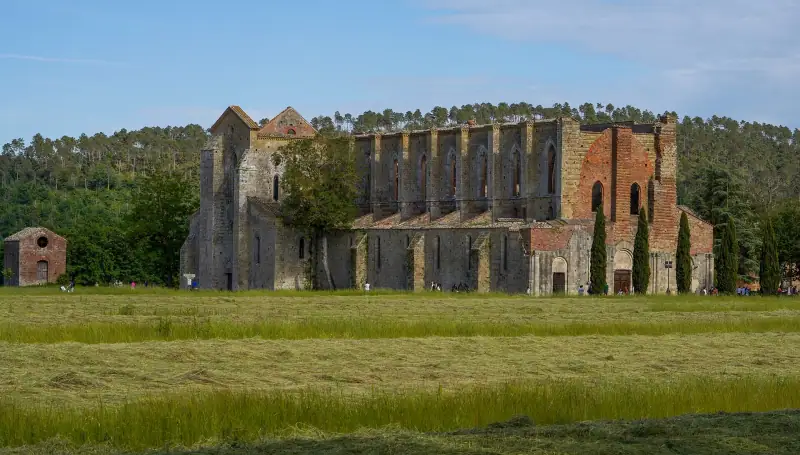
San Galgano Abbey and the Sword in the Stone: Hours, Prices and Access from Siena
Roofless abbey and Montesiepi hermitage near Siena: hours, 2026 rates, getting there without a car, visit length and what you really see.
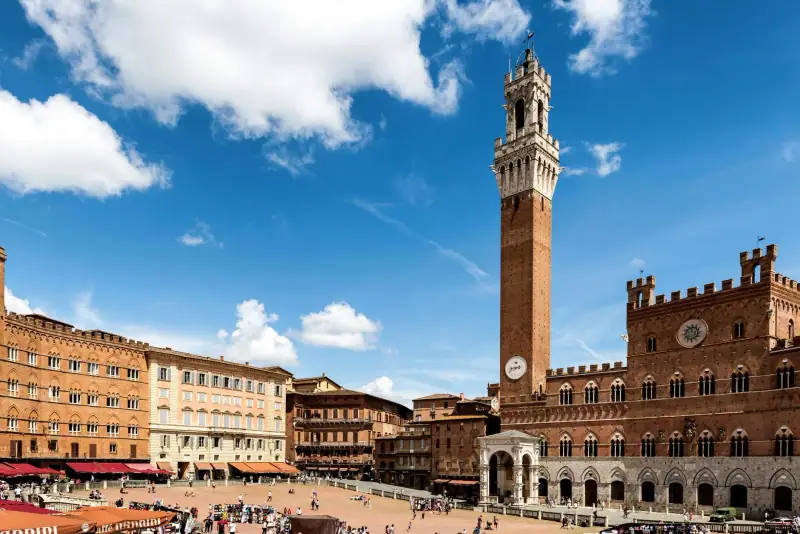
Siena in One Day: Itinerary, Highlights and Tips
What to see in Siena in one day? Piazza del Campo, the cathedral, Palazzo Pubblico, Torre del Mangia and local sweets: a realistic plan and practical tips.
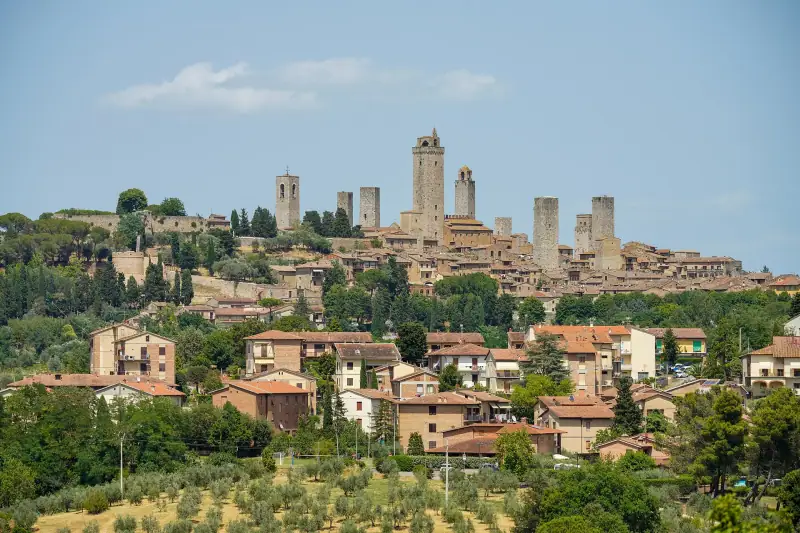
San Gimignano in One Day: Towers, Vernaccia and Tips
San Gimignano in one day: medieval towers, the Collegiata, vernaccia, the best time to avoid crowds and how to get there from Florence.
Ready-made
Tuscany itineraries
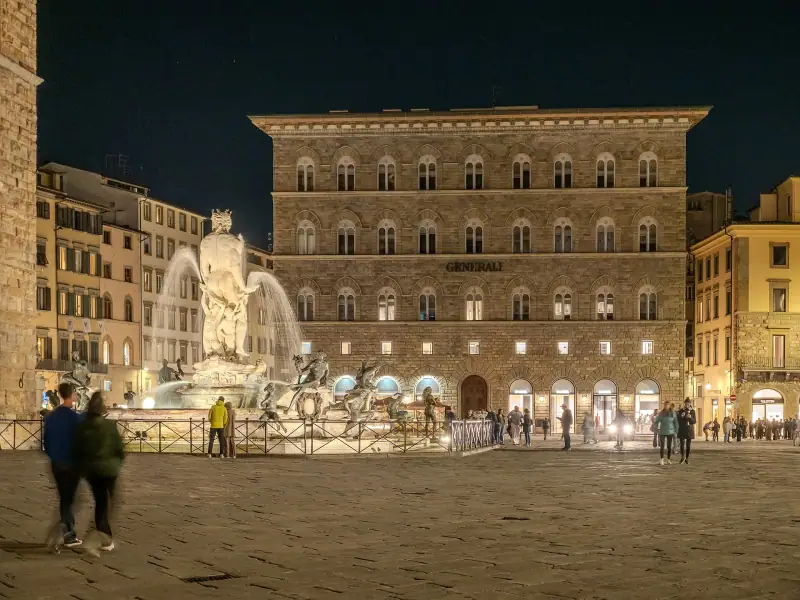
2 days
Florence in 2 Days: A Walking Itinerary, Day by Day
Florence in 2 days: Duomo, Uffizi, Accademia, Ponte Vecchio, Oltrarno and Piazzale Michelangelo. A realistic walking itinerary without rushing.
1 day
Pisa and Lucca in One Day from Florence: A Train Itinerary
Pisa and Lucca in one day from Florence: train itinerary, travel times, top sights and tips for enjoying both cities.
7 days
Tuscany in 7 Days: A Road Trip from Florence to the Val d'Orcia
A 7-day Tuscany itinerary: Florence, Pisa, Lucca, Chianti, Siena, San Gimignano and the Val d'Orcia, with realistic drives and practical tips.