Itineraries
Tuscany in 7 Days: A Road Trip from Florence to the Val d'Orcia
We may earn a commission when you book through links on this page, at no extra cost to you. We don't visit or try the places we cover: we summarize published sources. How we work
Day by day
- Days 1-2Florence: Duomo, Piazza della Signoria, Uffizi, Accademia, Oltrarno
- Day 3Pisa and Lucca by train, back to Florence
- Day 4Chianti wine road, then Siena
- Day 5San Gimignano, then drive south to the Val d'Orcia
- Day 6Pienza and Montepulciano
- Day 7Montalcino, then return the car
Weather through the year on this route
| Jan | Feb | Mar | Apr | May | Jun | Jul | Aug | Sep | Oct | Nov | Dec | |
|---|---|---|---|---|---|---|---|---|---|---|---|---|
| High °F (°C) | 5010 | 5211 | 5915 | 6418 | 7222 | 8127 | 8831 | 8831 | 7926 | 7021 | 5915 | 5211 |
| Low °F (°C) | 394 | 394 | 436 | 489 | 5513 | 6317 | 6820 | 7021 | 6317 | 5513 | 489 | 415 |
| Rain in (mm) | 2.255 | 2.255 | 2.255 | 2.460 | 2.050 | 1.640 | 1.025 | 1.435 | 3.180 | 4.1105 | 4.5115 | 3.075 |
Normals 1991–2020 at Pisa: averages over 30 years, not a forecast. Source: NASA POWER (MERRA-2), grid of about 50 km. Figures computed by us in November 2026.
In short
- The loop starts in Florence (days 1-2), takes the train to Pisa and Lucca (day 3), then drives through Chianti and Siena (day 4), San Gimignano (day 5), Pienza and Montepulciano (day 6) and Montalcino (day 7).
- Florence and the western cities work without a car; rent a car only for the rural part, picking it up when you leave Florence.
- Most historic centers, including Florence, Siena and Lucca, are limited traffic zones (ZTL) with automatic fines: park on the outskirts.
- Spring and early fall give the best balance of mild weather, light and crowds.
Tuscany lends itself wonderfully to a loop trip: in one week, you go from Renaissance palaces to the walls of Lucca, from the hills of Chianti to the hilltop villages of the Val d’Orcia. Distances stay reasonable, the roads are pleasant, and each stop offers a landscape or a table that lives up to its reputation.
Here is a seven-day itinerary, designed from Florence, that limits driving and leaves time to stroll. Drive times are indicative and vary with traffic and season. To choose your dates, see our guide to the best time to visit Tuscany.
Itinerary overview
| Day | Stop | Suggested transport |
|---|---|---|
| 1 and 2 | Florence | On foot |
| 3 | Pisa and Lucca | Train |
| 4 | Chianti and Siena | Car |
| 5 | San Gimignano and the road to the Val d’Orcia | Car |
| 6 | Pienza and Montepulciano | Car |
| 7 | Montalcino and return | Car |
The principle is simple: you enjoy Florence and the western cities without a car, then pick up a vehicle for the rural part of the trip. No day involves more than a few dozen kilometers of driving, which leaves room for improvised stops.
Days 1 and 2: Florence
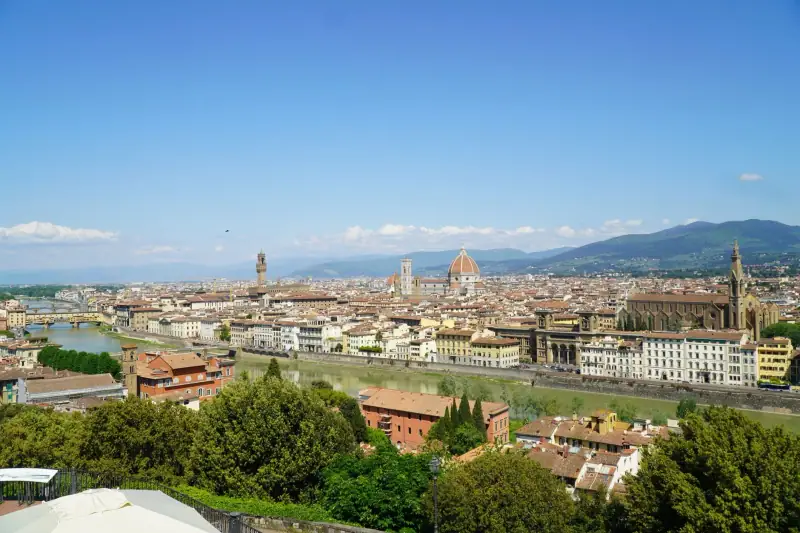
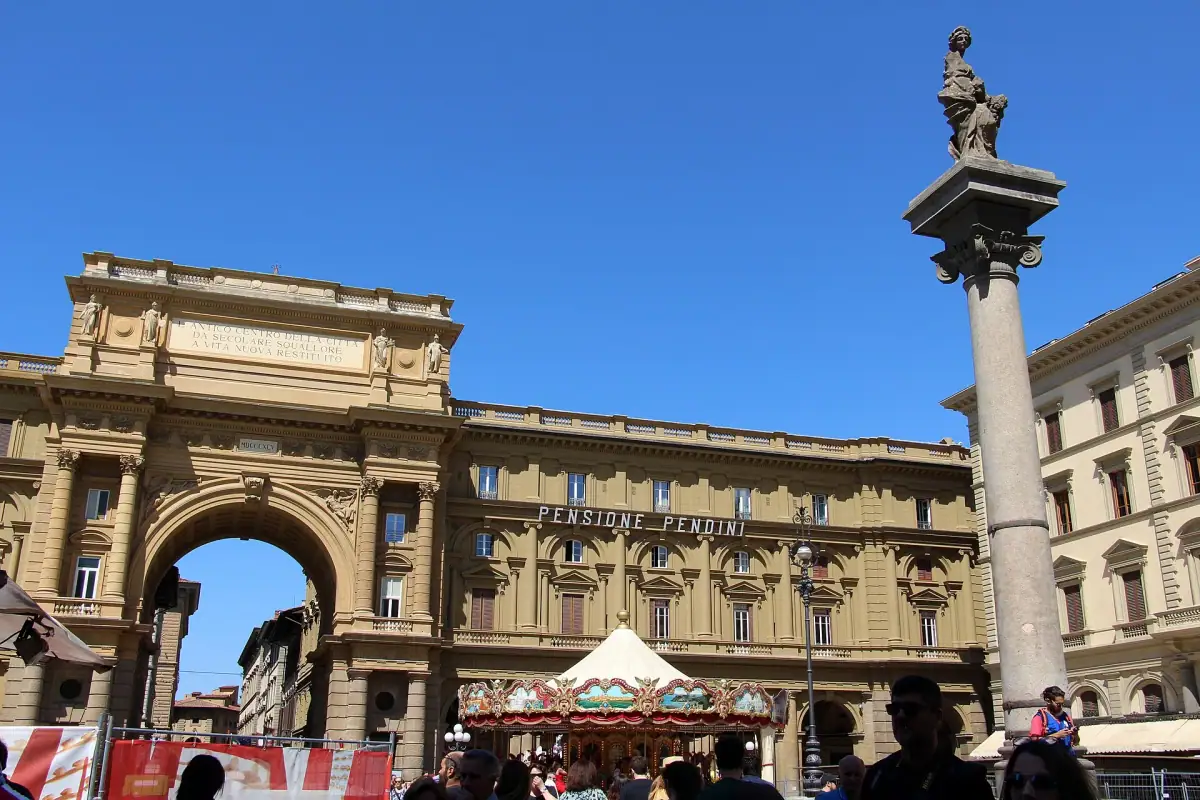
Two days is a minimum for Florence. The first can be devoted to the historic center: Santa Maria del Fiore cathedral and its dome, the baptistery, Piazza della Signoria and the Ponte Vecchio. In the evening, the heights of Piazzale Michelangelo offer one of the finest panoramas of the city at sunset.
The second day is for the big museums. The Uffizi Gallery gathers Renaissance masterpieces, and the Accademia Gallery houses Michelangelo’s David. Book your tickets in advance: in high season, the wait can be long. If you still have energy, cross the Arno to discover the Oltrarno district, quieter and more artisan.
To choose a neighborhood, our guide where to stay in Florence details the advantages of each area. A base near the station is particularly practical for the next day.
Hotels in Florence
Compare stays and book early, with free cancellation if possible.
Day 3: Pisa and Lucca by train
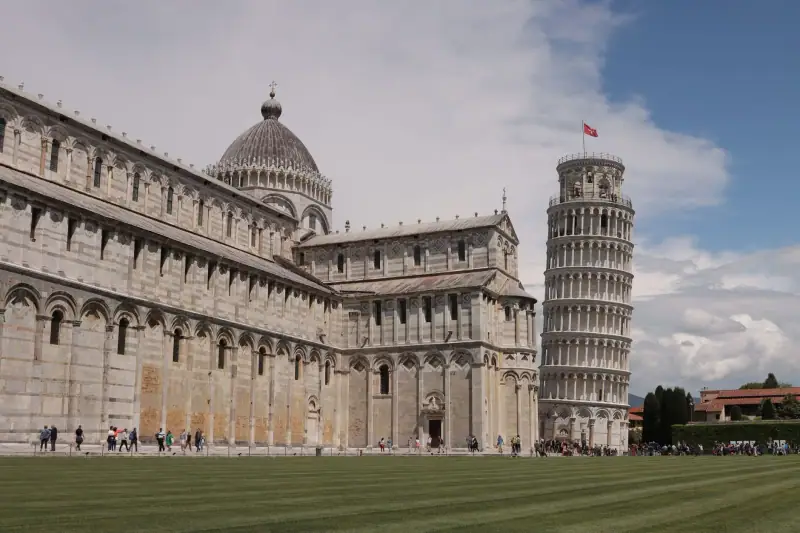
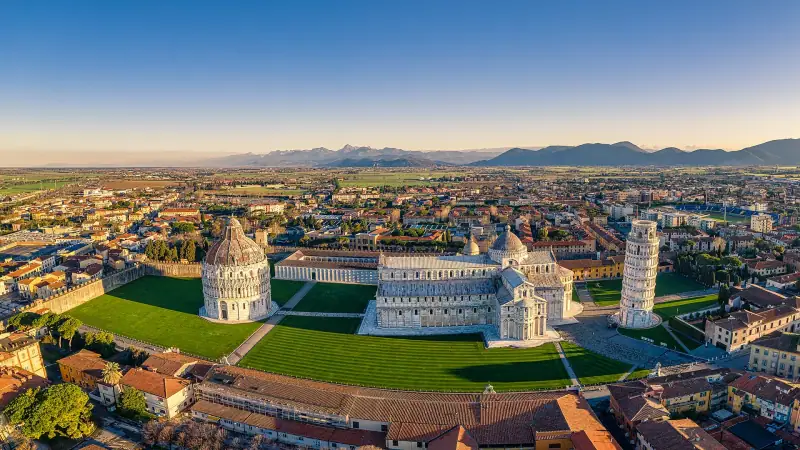
Pisa and Lucca are very easy to visit in one day from Florence, and the train avoids any parking worries. Allow about an hour to reach Pisa from Florence. Piazza dei Miracoli, with the Leaning Tower, the cathedral and the baptistery, can be covered in a morning. Climb the tower if you wish, by booking a slot in advance, or simply admire the ensemble from the lawn.
After lunch, head to Lucca, about 20 km (12 mi) from Pisa, on a short train ride. The city is ringed by 16th-century walls, turned into a tree-lined promenade that you tour on foot or by bike. Inside, Piazza dell’Anfiteatro, oval and lined with colorful houses, occupies the site of an ancient Roman amphitheater, and the medieval streets invite a quiet stroll.
Return to Florence at the end of the day. If you prefer not to retrace the trip, you can stay a night in Lucca instead, but the itinerary below assumes a return to Florence.
Day 4: Chianti and Siena
This is the day you pick up your car, preferably on the edge of Florence rather than in the center, to avoid the limited traffic zone. Allow about 70 km (43 mi) between Florence and Siena by highway, but the point of the day is to take the Chianti road, which winds through vines and olive groves, with villages such as Greve in Chianti.
This slower road turns the drive into a stroll: stop at a wine estate for a tasting, making sure you have a driver who does not drink, or book an organized cellar visit. Chianti Classico is recognized by the black rooster emblem on the bottle, a sign of the historic appellation.
Wine tastings in Chianti
Cellar visits, tastings and guided excursions to enjoy wine without driving.
Siena in the late afternoon
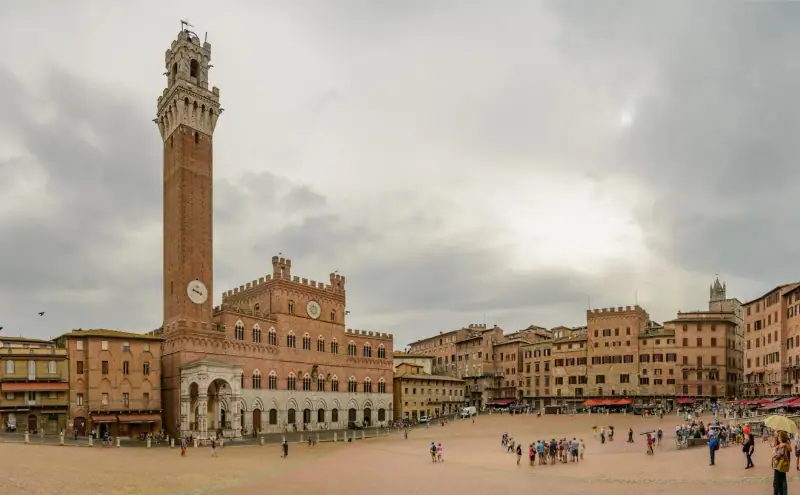
Once in Siena, park the car outside the historic center, which is also a limited traffic zone. Piazza del Campo, shell-shaped, is the heart of the city, dominated by the Palazzo Pubblico and its tower. The cathedral, with its marble floor and its facade striped in white and green, is one of Italy’s great Gothic monuments.
Stay overnight in Siena if possible: once the day’s groups have left, the city regains a very pleasant medieval atmosphere in the evening.
Day 5: San Gimignano and the road to the Val d’Orcia
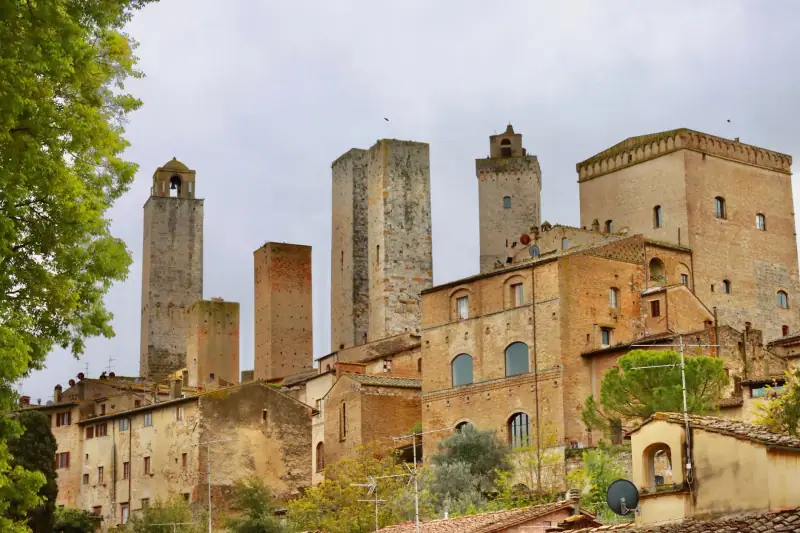
Leave Siena for San Gimignano, about 40 km (25 mi) away. This medieval village is famous for its stone towers, which draw a silhouette recognizable from afar in the landscape and earn it UNESCO World Heritage status. Arrive early in the morning to enjoy the lanes before the crowds, and taste vernaccia, the local white wine.
In the afternoon, head south to the Val d’Orcia. The drive is longer than the previous ones, but remains very reasonable and offers increasingly open landscapes. For the night, a farm stay in the hills is an ideal choice: you often get a dinner of farm products and a view of the cypress trees.
Stays in the Val d'Orcia
Farm stays, guesthouses and small charming hotels: compare and book in advance.
Day 6: Pienza and Montepulciano
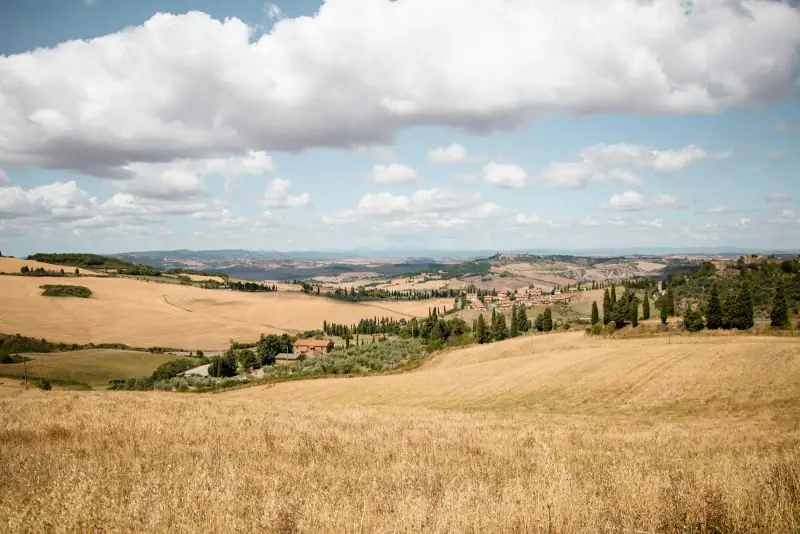
The Val d’Orcia is probably the landscape that makes people dream of Tuscany: gentle hills, cypress-lined roads, isolated farms and fields of wheat or grass depending on the season. Allow time to simply stop by the roadside and take photos.
Pienza, a small Renaissance town rebuilt at the initiative of Pope Pius II, is a UNESCO World Heritage Site. Its central square is remarkably harmonious, and the town is renowned for its sheep’s cheese, pecorino. Shops on the main street offer tastings.
Montepulciano, about 15 km (9 mi) away, sits on a ridge and overlooks the valley. The town is known for its wine, Vino Nobile di Montepulciano, and for its main street that climbs to the main square. Go into one of the underground cellars in the center for a tasting.
Day 7: Montalcino and return
For the last day, head to Montalcino, a small hilltop town famous for its Brunello, one of Italy’s great red wines. The 14th-century fortress overlooks the center and can be visited. The village’s cellars offer tastings, and the vineyards around lend themselves to a stroll.
Depending on your flight or train time, return the car in Florence, Pisa or Siena: allow a comfortable buffer, because country roads are slower than they look. If your departure is late, keep the morning to stroll unhurried and have lunch there.
Excursions and tours in Tuscany
Skip-the-line tickets, guided tours and day excursions to save time.
Practical tips for the road trip
- Limited traffic zones (ZTL): most historic centers, including Florence, Siena and Lucca, ban traffic for non-residents. Cameras issue fines automatically: ask your accommodation how to proceed.
- Parking: use the lots on the outskirts of towns and reach the center on foot.
- Picking up the car: rent it when you leave Florence, not at the start of the stay, so you do not pay for an unused vehicle during the city days.
- Pace: do not try to add a stop a day. The best moments are often lived in unplanned stops.
- Reservations: book museums, the Tower of Pisa and accommodation ahead, especially in spring and fall.
- Meal times: in Italy, lunch is eaten rather early and some restaurants close in the afternoon. Ask locally.
Adapting the itinerary to your stay
With less time, drop the Pisa and Lucca day or the Montalcino day. With more time, add a night in the Val d’Orcia or an excursion to Cortona, an Etruscan hilltop town in the east of the region. Wine lovers can devote a whole day to two or three estates, while village lovers will focus on the medieval towns.
Whichever formula you choose, keep in mind that Tuscany is savored slowly: it is better to see fewer places and take the time to settle on a terrace than to rush from one stop to the next.
Frequently asked questions
Are seven days enough to visit Tuscany?
Seven days let you see the big classics: Florence, Pisa, Lucca, Chianti, Siena, San Gimignano and the Val d'Orcia. You have to accept making choices and not seeing everything, since the region is much larger than this circuit.
Do you need to rent a car for a stay in Tuscany?
A car is very useful as soon as you leave the big cities: it gives access to the hilltop villages and the Chianti and Val d'Orcia roads. For Florence, Pisa or Lucca, the train is simpler, and the center of Florence is a limited traffic zone.
In what order should you visit Tuscan cities?
A loop starting from Florence works well: Florence, Pisa and Lucca, then Chianti and Siena, San Gimignano, and finally the Val d'Orcia before heading to the airport or station. It avoids needless back-and-forth.
Where should you stay during a Tuscany road trip?
A common pattern is two or three nights in Florence, one or two in Siena or Chianti, then in the countryside of the Val d'Orcia, often in a farm stay (agriturismo). Book early in high season.
What is the best season for this circuit?
Spring and early fall generally offer a good compromise between mild weather, light and crowds. Summer is very hot and busy, winter quieter but with short days.
More Tuscany guides
Keep reading
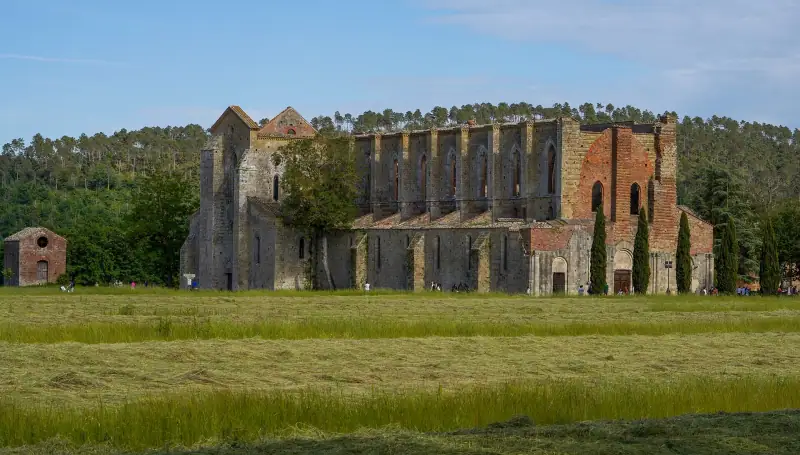
San Galgano Abbey and the Sword in the Stone: Hours, Prices and Access from Siena
Roofless abbey and Montesiepi hermitage near Siena: hours, 2026 rates, getting there without a car, visit length and what you really see.
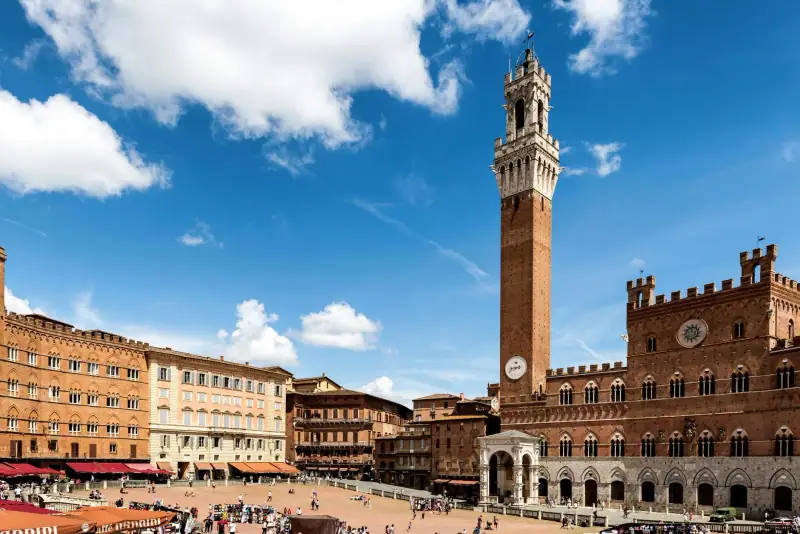
Siena in One Day: Itinerary, Highlights and Tips
What to see in Siena in one day? Piazza del Campo, the cathedral, Palazzo Pubblico, Torre del Mangia and local sweets: a realistic plan and practical tips.
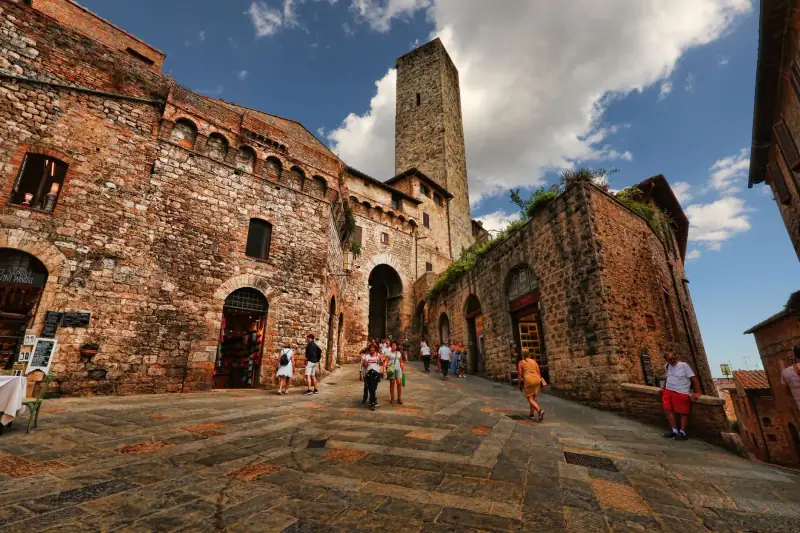
Where to Stay in Siena and San Gimignano: Neighborhoods, Villages and Tips
Where to stay in Siena and San Gimignano? Medieval center, areas by the walls or nearby countryside: pros, limits, parking and tips for choosing well.
Ready-made
Tuscany itineraries
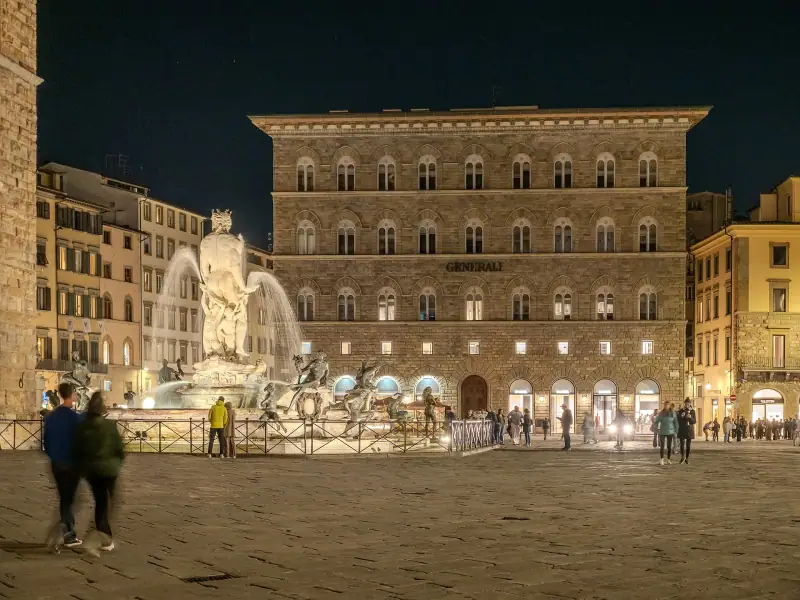
2 days
Florence in 2 Days: A Walking Itinerary, Day by Day
Florence in 2 days: Duomo, Uffizi, Accademia, Ponte Vecchio, Oltrarno and Piazzale Michelangelo. A realistic walking itinerary without rushing.
1 day
Pisa and Lucca in One Day from Florence: A Train Itinerary
Pisa and Lucca in one day from Florence: train itinerary, travel times, top sights and tips for enjoying both cities.
2 days
Val d'Orcia Road Trip: Pienza, Montalcino and Montepulciano
A 2-day road trip in the Val d'Orcia: Pienza, Bagno Vignoni, Montalcino and Montepulciano. Route, practical tips, wine and cypress-lined landscapes.