Things to do
Tuscany's Hot Springs: Saturnia, Bagni San Filippo and Natural Thermal Pools
We may earn a commission when you book through links on this page, at no extra cost to you. We don't visit or try the places we cover: we summarize published sources. How we work
In short
- The Cascate del Mulino near Saturnia are free, open 24 hours, with water at about 37.5 °C (99.5 °F) year-round.
- Bathing is not allowed in Bagno Vignoni's historic pool; for a soak, use a spa or the free springs nearby, such as Bagni San Filippo.
- Fall, winter and early spring are the most pleasant; July and August bring heat and crowds.
- A car is by far the simplest way to link Saturnia, Monte Amiata and the Val d'Orcia.
When you think of Tuscany, you picture Florence, its museums and the cypress trees of the Val d’Orcia. People often forget that the region’s underground is hot: from the south of the province of Siena to the Maremma, thermal springs have flowed since antiquity. Some feed very elegant wellness resorts, others flow freely into limestone pools where anyone can soak for free. This guide helps you choose between the two, plan, and respect these fragile places.
Why Tuscany is hot spring country
Central and southern Tuscany sit on a geological zone where rainwater seeps deep, heats up in contact with the rock, picks up minerals (sulfur, limestone, bicarbonates) and rises back to the surface. The result is hot water, often milky or turquoise, which deposits travertine and has sculpted pools, waterfalls and white cliffs over the centuries.
The Etruscans, then the Romans, already frequented these springs. In the Renaissance, powerful families, including the Medici, valued these waters for their supposed benefits. Today, Tuscan thermal bathing is experienced in two ways:
- Free springs, in the open countryside, with no services: you come with your swimsuit and leave the place clean.
- Thermal spas, paid, with built pools, changing rooms, treatments and sometimes adjoining hotels.
The two approaches are not opposed. Many travelers start with a waterfall at daybreak, then treat themselves to an afternoon of relaxation in a built pool. This activity fits well into a wider stay: see our 7-day Tuscany itinerary to place it in your plan.
The Saturnia waterfalls (Cascate del Mulino)
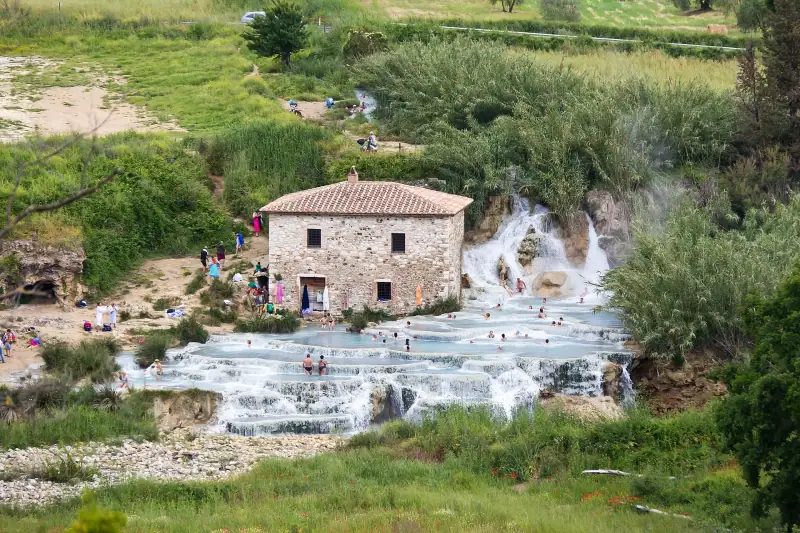
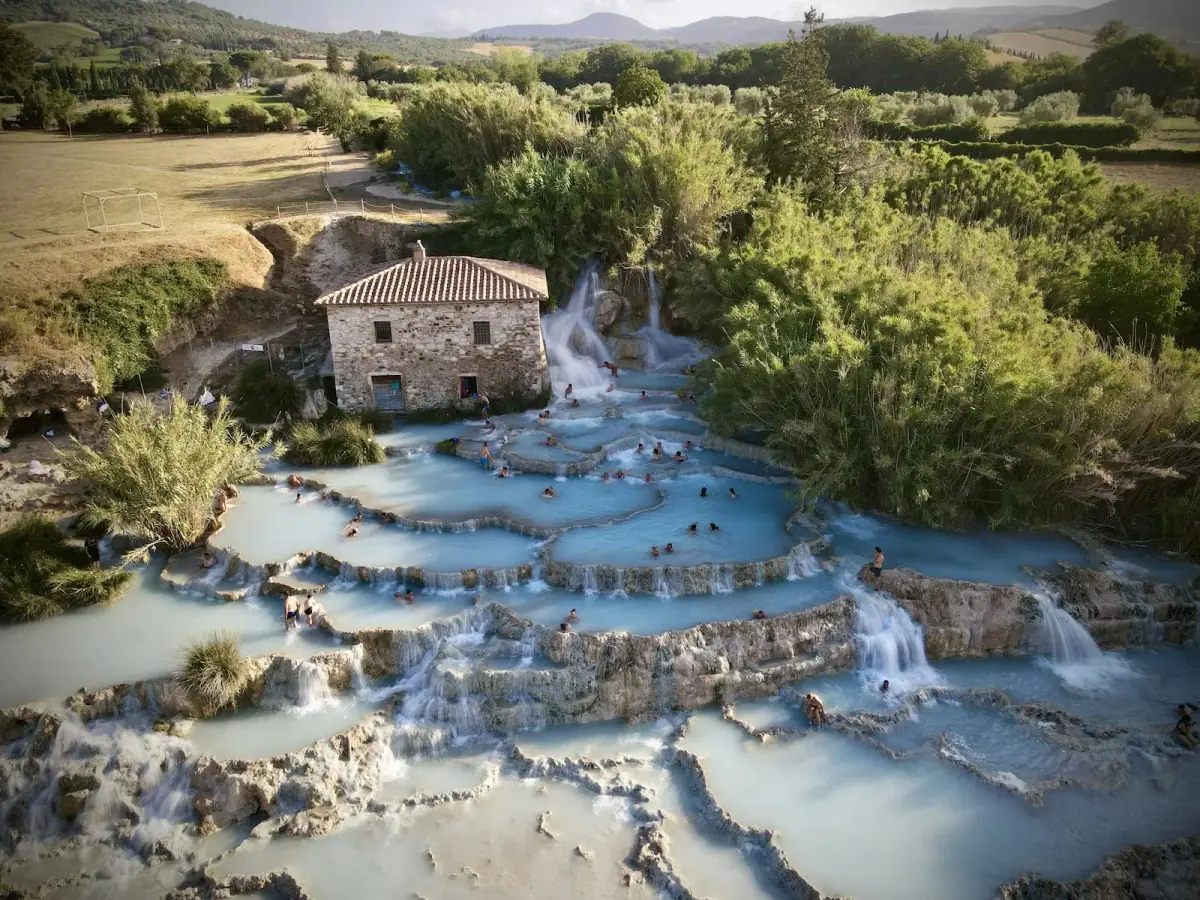
The Cascate del Mulino are probably the most famous free springs in Italy. They are near the village of Saturnia, in the Maremma, in southern Tuscany. The sulfurous water comes out at about 37.5 °C (99.5 °F) and flows from pool to pool over limestone terraces, at the bottom of a small valley. Access is free and open 24 hours a day: you can bathe in broad daylight, but also in the evening or at night, under the stars.
A few tips to enjoy them:
- Come early or late. In summer and on weekends, the pools fill up fast. Early in the morning, or at the end of the day, you will have a bit more room and softer light.
- Come off-season. In fall, winter or spring, water at 37.5 °C (99.5 °F) is a real treat while the air is cool.
- Bring water shoes. The limestone is slippery and the edges of the pools can be uneven.
- Leave valuables at the hotel. The site is open and has no lockers; a waterproof bag with the bare essentials is enough.
- No soap, no cream. These products degrade the water and the rock. Rinse before arriving, or afterward, at your accommodation.
If you want more comfort, a built thermal spa exists very close by, in Saturnia itself: the Terme di Saturnia resort, which uses the same thermal water in pools, with a spa and lodging. It is paid, quieter, and lets you bathe in any weather, with changing rooms and services. See the resort’s official website for rates and hours, which vary by season.
Bagni San Filippo and the “White Whale”
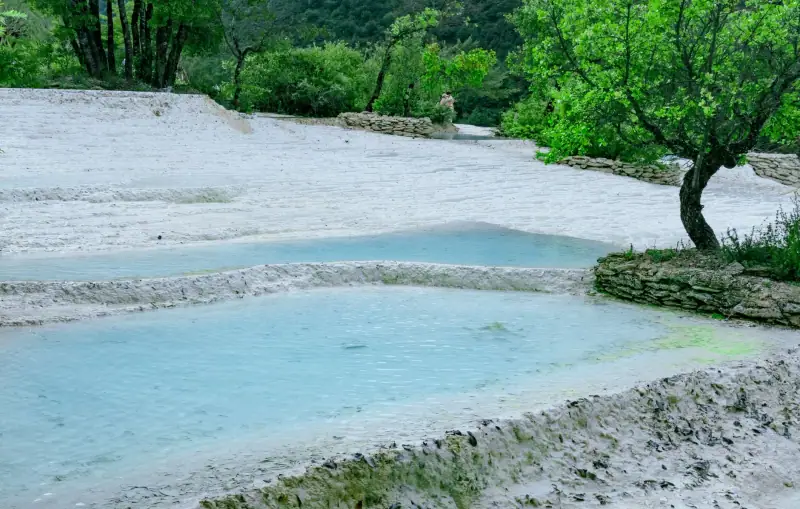
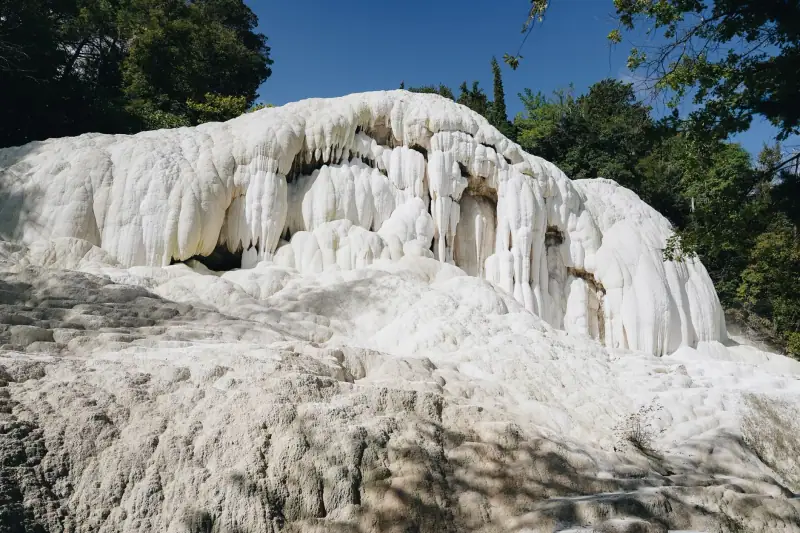
Farther north, on the slopes of Monte Amiata, the hamlet of Bagni San Filippo (in the municipality of Castiglione d’Orcia, in the Val d’Orcia) offers a very different experience. Here, a small hot stream runs through a wood, and the very mineral-rich water has deposited white limestone concretions. The most spectacular is nicknamed the “Balena Bianca” (the White Whale): an immense white formation over which small hot waterfalls trickle.
Depending on the point along the stream, the water temperature varies: some pools are very hot (up to about 48 °C / 118 °F according to local sources), others more temperate downstream. You reach it by a trail of about ten minutes through the woods, which naturally reserves the place for those willing to walk a little.
Good to know before you go:
- Walking shoes are useful: the trail can be damp, muddy and slippery.
- Test the water with your hand before getting in: the temperature changes from pool to pool.
- Do not scratch or break the limestone deposits: they formed over centuries.
- Follow local instructions. Access and bathing rules can change; ask the local tourist office before the visit.
This site combines very well with a day in the Val d’Orcia. For the rest of the itinerary (Pienza, Montalcino, cypress roads), see our Val d’Orcia road trip.
Staying near the hot springs
To enjoy the pools at opening or at dusk, staying in the Maremma avoids long round trips from Florence or Siena.
Bagno Vignoni: the village with a water square
Bagno Vignoni is one of the most unusual villages in Tuscany. In place of a paved square, there is a large rectangular pool filled with steaming thermal water, surrounded by houses and a small loggia. This “Piazza delle Sorgenti” is a postcard setting, particularly striking in winter and at early morning, when steam rises into the cold air.
Be aware, however: you can no longer bathe in this historic pool; swimming is forbidden. You stroll around it, photograph it, have a coffee on a terrace. To dip your feet or body, turn to the options nearby: a built thermal spa in or around the village, or, below the village, the small valleys where thermal water runs off from old mill installations. Here again, check accessibility and rules locally, as facilities change.
The village is very easy to fit into a day in the Val d’Orcia: it is close to Pienza and Montalcino, and its calm atmosphere invites strolling rather than sport. Allow one to two hours for the visit, more if you plan a treatment or a bath.
Other springs to explore
Tuscany has many other thermal sites, more discreet, that adventurous travelers enjoy:
- Bagni di Petriolo, on the Farma river, in the province of Siena, where hot water mixes with the river’s in natural pools, with the remains of an old establishment.
- Rapolano Terme, in the province of Siena, where you find both built pools and travertine zones, a short distance from Siena.
- The spas of the Chianciano and Montepulciano area, in the south of the province of Siena, with a long tradition of cures.
For each site, check access conditions and water quality before you go: some free springs are occasionally closed for maintenance or after heavy rain. A look at the local tourist office website avoids disappointment.
How to get around and plan
The hot springs are in rural areas where public transport is rare. A car is by far the simplest solution, especially to link Saturnia, Monte Amiata and the Val d’Orcia in one region. To compare transport and parking options, read our guide to getting around Tuscany.
A stay pattern that works well:
- One night in the Val d’Orcia or near Montalcino for a day going from village to village, with a stop at Bagno Vignoni.
- A morning at Bagni San Filippo, long enough for a bath in the forest.
- One night in the Maremma, near Saturnia, for the waterfalls at the end of the day or the next morning.
This combination fits naturally between a stay in Florence or Siena and a return toward the coast or the airport. Do not try to see everything: the point of hot springs is to slow down.
Excursions and activities in Tuscany
Don't feel like driving? Compare day excursions and experiences from Florence or Siena.
When to go and what to bring
The hot springs can be visited all year, but the pleasure is not the same by season. In summer, water above 37 °C (99 °F) is not always pleasant under 35 °C (95 °F) air, and the pools are packed. Conversely, on a cool fall or winter morning, when steam blends with mist, the experience is memorable. Early spring, with the green countryside, is also very pleasant. To refine your choice, see our guide to the best time to visit Tuscany.
In your bag, plan for:
- non-slip water shoes;
- a swimsuit, a microfiber towel and a robe or poncho for getting out of the water;
- a waterproof bag and a warm layer for winter;
- drinking water and a snack, as there are generally no shops or fountains at the free sites;
- a bag to carry out your trash.
For other ideas on useful gear, see our selection of accessories for Tuscany.
Rules, safety and respect for the places
The free springs look harmless, but they call for a minimum of care and respect:
- Take breaks. Hot water is tiring: keep drinking water with you.
- If you have a health condition or are pregnant, ask your doctor before bathing in hot water.
- Do not put your head under water in natural springs: thermal water is not sterile.
- Leave no trash, do not walk on fragile concretions and use no soap or shampoo.
- Respect the signs: temporary closures, swimming bans, private areas.
- Be discreet. The places are used by families, travelers and local residents: keep music and noise down.
These simple rules let the springs stay free and open. If you travel with children, choose the built facilities, safer and easier to reach.
Budget
The big advantage of free springs is their price: zero. Costs come mainly from fuel, any parking and lodging. Thermal spas, for their part, charge very variable rates depending on the season, the length of the bath and the treatments chosen. For an overall idea of the cost of a stay, read our budget for Tuscany.
A stop in the Val d'Orcia
To link Bagno Vignoni, Bagni San Filippo and Pienza without rushing, a night nearby changes everything.
Key takeaways
Bathing in a hot spring is one of the most memorable and least expensive experiences in Tuscany. Saturnia offers its turquoise pools with free access, Bagni San Filippo its white whale in the woods, and Bagno Vignoni its steaming pool in the heart of the village. Choose the season, leave early, bring good shoes, respect the places: the hot water will do the rest, between two village visits and two Tuscan meals.
Frequently asked questions
Are the Saturnia waterfalls free?
Yes, the Cascate del Mulino are free and open access, with no set hours, and you can bathe there day or night. A parking lot is nearby, and parking may be paid depending on the season: check locally.
What is the water temperature at Saturnia?
The water comes out of the springs at about 37.5 °C (99.5 °F) and stays pleasant all year, even in winter. It is sulfurous: a light egg smell is normal.
Can you swim in Bagno Vignoni?
The large historic pool that occupies the village's central square is for looking at, not swimming in: bathing is forbidden. To bathe, you have to go to a spa or to the free springs in the surrounding area.
What is the best time for Tuscany's hot springs?
Fall, winter and early spring are the most pleasant: the contrast between cool air and hot water is a pleasure, and there are fewer visitors than in summer. In July and August, heat and crowds make the experience less comfortable.
What should you bring to bathe in the free springs?
Non-slip water shoes, because the limestone rocks are slippery, a swimsuit, a towel, a waterproof bag for your things and drinking water. Avoid creams and soaps, which pollute the pools.
Can you combine hot springs with a visit to the Val d'Orcia?
Yes, very easily: Bagno Vignoni and Bagni San Filippo are in or near the Val d'Orcia, and Saturnia is farther south, in the Maremma. A car is strongly advised to link these sites.
More Tuscany guides
Keep reading
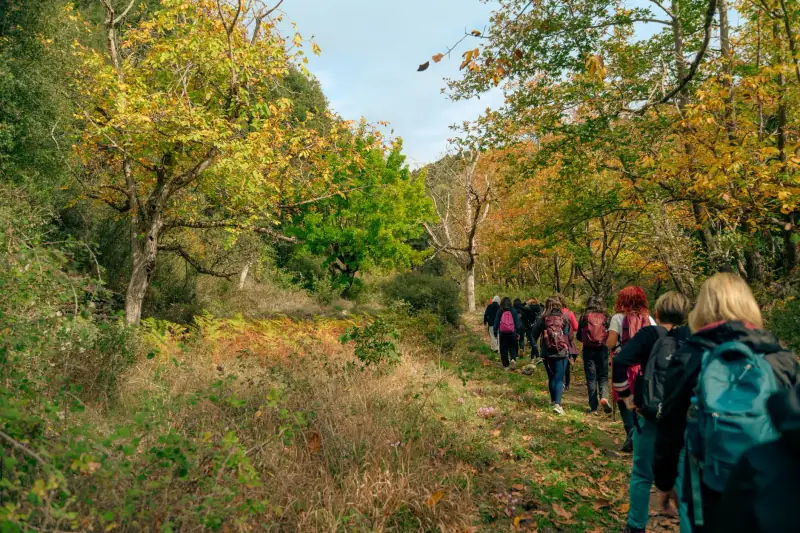
Hiking the Vie Cave of Pitigliano and Sovana Without a Guide: Route, Time, Difficulty
The vie cave of Pitigliano and Sovana can be hiked without a guide: 10 km loop, duration, shoes, archaeological park and mistakes to avoid.
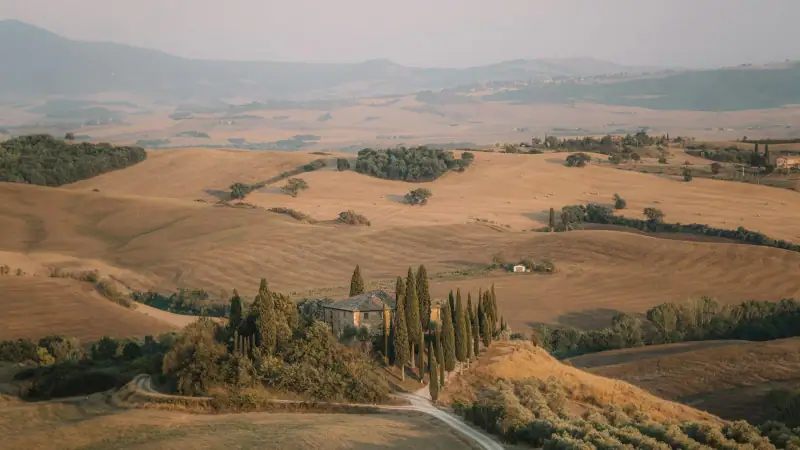
Things to Do in Tuscany: Biking, Hiking, Hot Air Balloons, Cooking and Local Festivals
What to do in Tuscany beyond museums? Biking in Chianti, hiking in the Crete Senesi, hot air balloons, cooking classes, the Palio: our activity ideas.
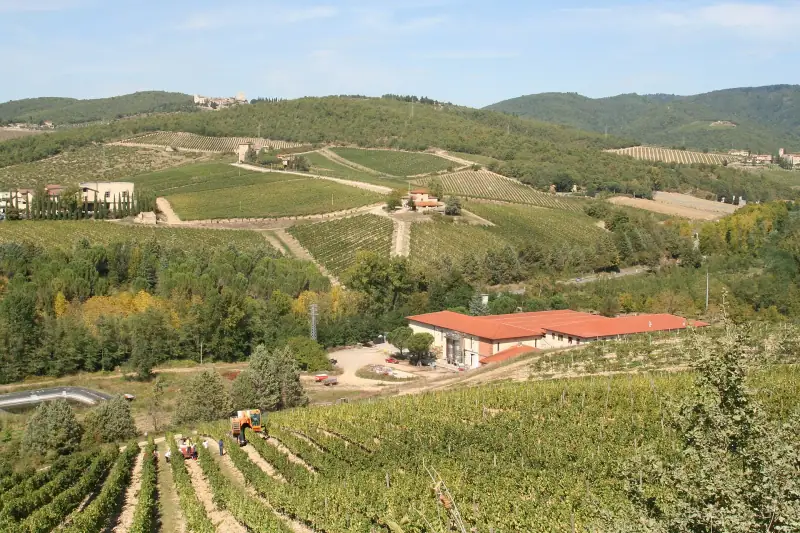
Driving the Chianti Road: Villages, Wineries and Tastings
A driving route in Chianti between Florence and Siena: Greve, Panzano, Radda, Gaiole, Castellina. Stops, wine tastings and practical tips.
Ready-made
Tuscany itineraries
2 days
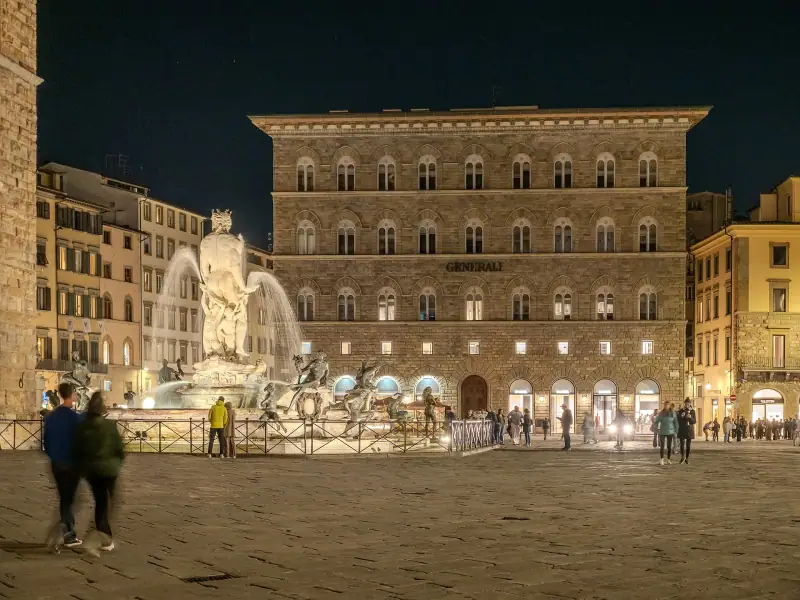
Florence in 2 Days: A Walking Itinerary, Day by Day
Florence in 2 days: Duomo, Uffizi, Accademia, Ponte Vecchio, Oltrarno and Piazzale Michelangelo. A realistic walking itinerary without rushing.
1 day
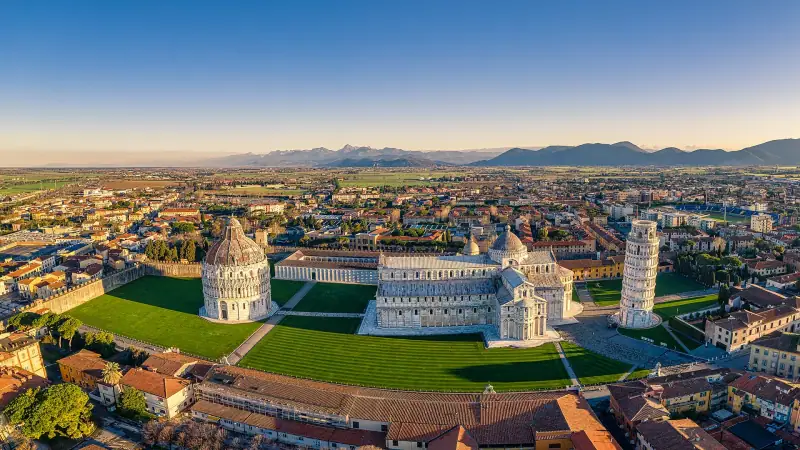
Pisa and Lucca in One Day from Florence: A Train Itinerary
Pisa and Lucca in one day from Florence: train itinerary, travel times, top sights and tips for enjoying both cities.
7 days
Tuscany in 7 Days: A Road Trip from Florence to the Val d'Orcia
A 7-day Tuscany itinerary: Florence, Pisa, Lucca, Chianti, Siena, San Gimignano and the Val d'Orcia, with realistic drives and practical tips.