Things to do
Wildlife watching in Tanzania: a guide to a successful safari
We may earn a commission when you book through links on this page, at no extra cost to you. We don't visit or try the places we cover: we summarize published sources. How we work
In short
- The Serengeti is richest in big cats and herds, Ngorongoro Crater has a dense concentration of animals, and Tarangire is known for elephants in the dry season.
- The best outing times are early morning and late afternoon, when animals are most active and the light is best.
- Better three nights in two parks than seven nights in five: distances are long and tracks slow.
- The guide is the most decisive factor; binoculars, a telephoto lens and a bean bag are the most useful accessories.
Watching wild animals in their natural habitat is the reason most travelers choose Tanzania. Yet two safaris of the same length can give very different experiences: one will chain encounters, the other will settle for a few zebras in the distance. The difference rarely comes down to luck alone. It depends on the park chosen, the season, outing times, the guide and a few simple habits that this guide details.
We do not promise any encounter: wildlife stays unpredictable, and that is what gives these moments their value. But by understanding how animals live and how the parks work, you improve your chances of fine sightings. To build a full stay, you can also see our 7-day safari itinerary in northern Tanzania.
Understanding Tanzanian wildlife before you go
Tanzania protects vast territories of savanna, forest and wetlands, and hosts very varied wildlife: big herbivores, big predators, primates, birds. A few basics help you know what you are looking for.
The Big Five and the other stars
The expression “Big Five” refers to five animals historically hard to hunt: the lion, leopard, elephant, buffalo and rhino. It has become a safari goal. In Tanzania, lions, elephants and buffalo are fairly common in the big northern parks. The leopard, nocturnal and discreet, is often spotted in trees or at dawn. The black rhino, highly threatened, takes more luck and a good guide.
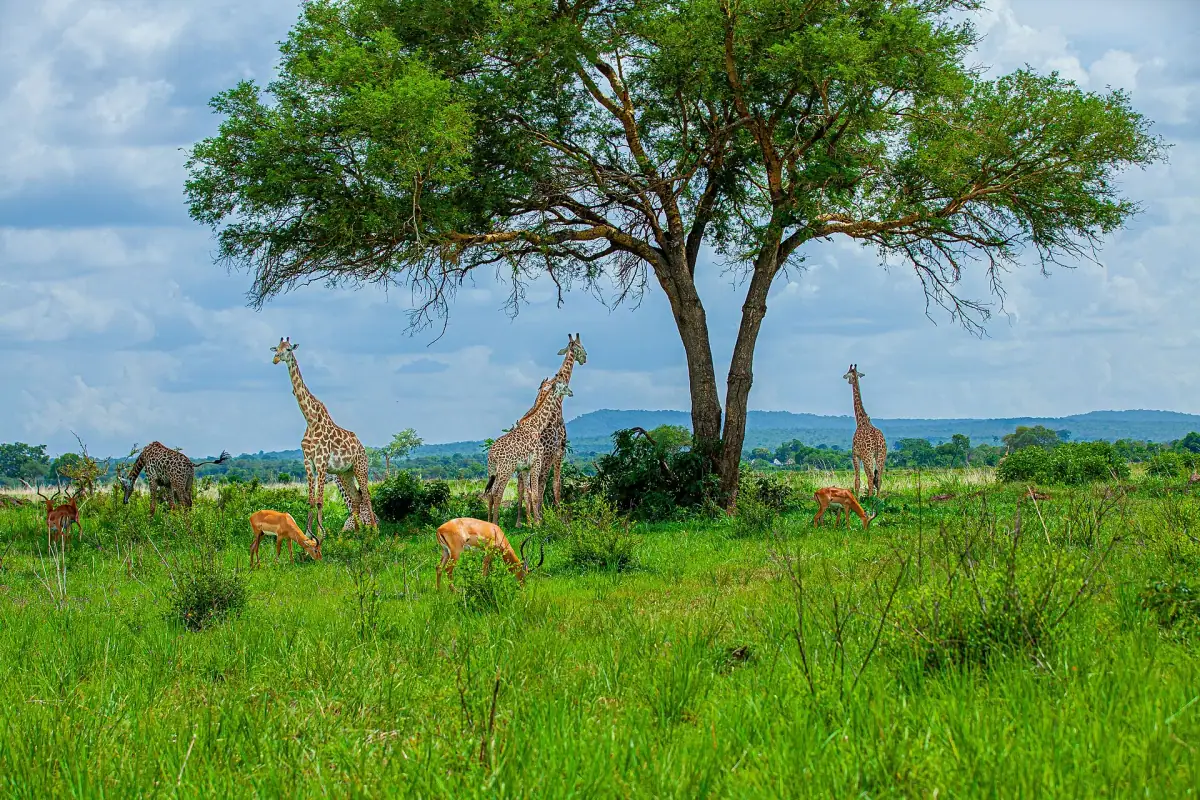
Do not limit yourself to this list. Giraffes, zebras, wildebeest, hippos, hyenas, cheetahs, warthogs, impalas, elands, baboons and hundreds of bird species make every outing interesting. Many travelers keep their best memories of simple scenes: a family of elephants crossing the track, giraffes drinking cautiously, a lion cub playing.
Predators and prey: reading behavior
A good observer quickly learns to read the signs. Animals all looking in the same direction, birds getting agitated, a group of vehicles stopped at the side of the track: these clues often reveal a predator. Lions spend much of the day sleeping in the shade; they hunt mostly in the cool hours. Cheetahs, for their part, hunt rather by day and often choose a small rise to watch the plain.
Your guide knows these signals and the behavior of each species. Do not hesitate to ask questions: in the field, the quality of a safari depends a lot on this dialogue.
Serengeti: cats and big herds
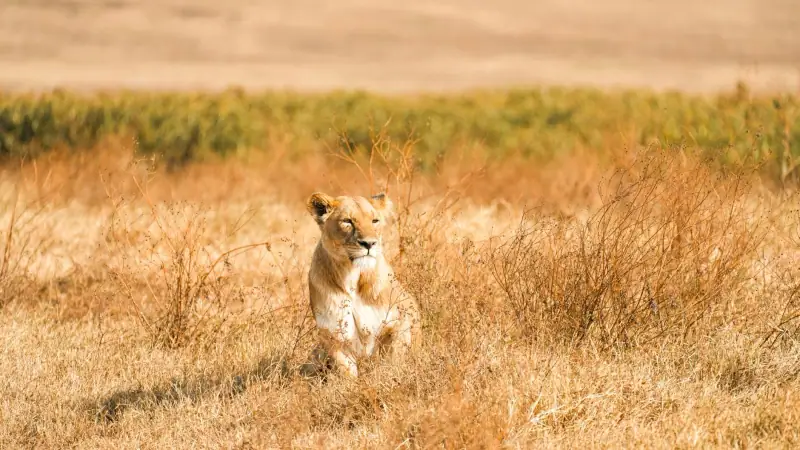
The Serengeti is the country’s most famous destination for watching animals, and for good reasons. Its open plains let you see far, which makes watching big predators easier. Lions, cheetahs, hyenas and, with some luck, leopards are regularly seen. Rocky areas and kopjes are natural lookout posts for cats.
The Great Migration of wildebeest and zebras sets the rhythm of the park’s year: the herds follow the rains and pastures, which changes where the animals concentrate by month. Our guide to the Great Migration in the Serengeti details where to look for the herds by season.
Even outside the spectacular crossing periods, the Serengeti remains interesting year-round thanks to its residents: cats, giraffes, hippos and many birds. Plan at least two to three nights there so you do not skim through the park, which is very large.
Another way to see the Serengeti: a hot-air balloon
Some operators offer a hot-air balloon flight at sunrise. It is not the cheapest activity, but it offers a unique perspective on the savanna and its herds, usually followed by a breakfast in the bush. It must be booked ahead, as places are limited.
Ngorongoro: one crater, a concentration of animals
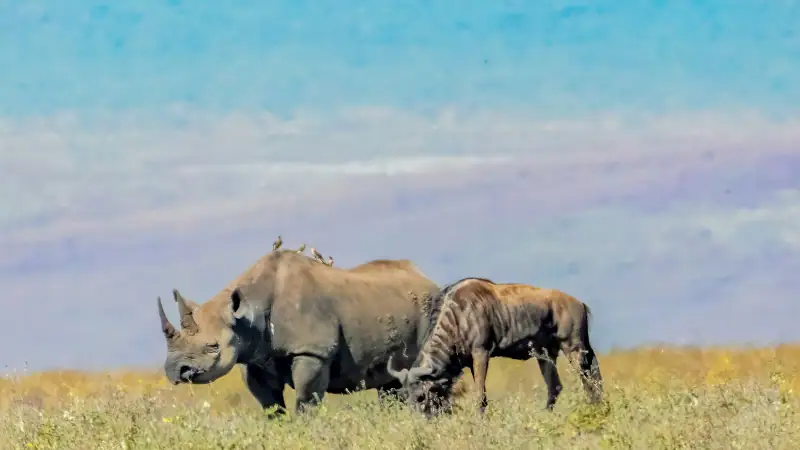
Ngorongoro Crater is an immense caldera whose floor shelters many animals in a relatively small space. You commonly see zebras, wildebeest, buffalo, hyenas, lions, hippos and elephants. It is also one of the few places in the country where you have a reasonable chance of glimpsing the black rhino, most often at a distance.
A peculiarity to know: giraffes do not live in the crater. They are found rather in the other parks of the circuit. To organize the visit, the descent times and the rules of the conservation area, see our guide to Ngorongoro Crater.
A few tips specific to the crater:
- descend early in the morning, when the light is lovely and traffic lighter;
- bring a jacket: it can be cool in the highlands and clouds often cling to the crater rim;
- keep in mind that the crater is very busy: an experienced guide will know how to place you at a good distance from groups of vehicles;
- time in the crater is limited, so organize your day accordingly.
Places to stay in Karatu
Karatu is a practical stop before Ngorongoro and the Serengeti: compare the hotels and lodges available.
Tarangire: the kingdom of elephants
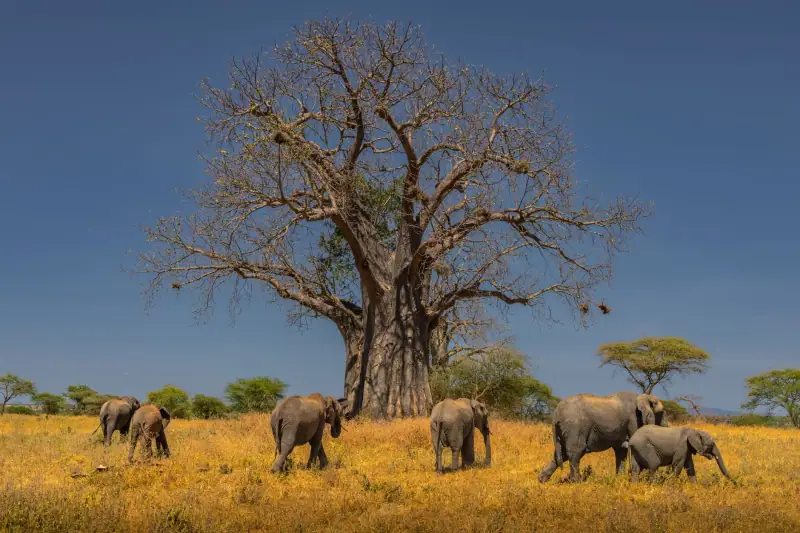
Tarangire National Park is known for its elephants and baobabs. In the dry season, animals gather around the Tarangire River, one of the few permanent water sources in the area: that is when viewing is most spectacular, with big elephant families, buffalo, giraffes, zebras, wildebeest and antelopes.
The park is also interesting for birding and for its landscapes of big baobabs. It is easily visited in a day from Arusha, but a night there lets you enjoy the morning and evening hours. For more detail, our article on Tarangire, its elephants and its baobabs will help you prepare the visit.
In the rainy season, animals disperse over a wider territory and vegetation is dense: sightings are more a matter of chance, but the park is calmer and the scenery greener.
Lake Manyara and Mto wa Mbu: a varied, accessible park
Lake Manyara National Park is smaller but very varied: groundwater forest, savanna, cliff and lakeshore. You readily see baboons, elephants, giraffes, hippos and many birds. Depending on the season and the lake level, waterbirds, including flamingos, may be present on the shores.
The park is famous for its lions, which occasionally rest in trees. This behavior is not guaranteed: see it as a possible bonus rather than a goal.
The small neighboring town of Mto wa Mbu is a good starting point for complementary activities: visiting banana plantations, the market, a bike ride in the countryside. It is a pleasant way to alternate wildlife watching with meeting local life.
Day safari from Arusha
Tarangire, Lake Manyara or Arusha park: compare day excursions with a guide and vehicle.
Arusha National Park: walking in the wild
Close to the town of Arusha, Arusha National Park is often forgotten by classic circuits. Yet it offers a welcome contrast: you see giraffes, buffalo, baboons, colobus monkeys and many birds, with Mount Meru as a backdrop. It also offers walks guided by a ranger, a different way to experience nature, at human height.
These walks are tightly supervised for safety reasons: you are accompanied by an armed ranger, you follow his instructions, and you never approach the animals. The point is not to multiply encounters, but to perceive the sounds, smells, tracks and small details of nature differently. It is an excellent option for a first or last day, close to the airport and the town.
When to go to watch wildlife
The season plays a major role. In the dry season, about June to October, vegetation is lower and animals concentrate around water points: this is the most favorable period for viewing in most northern parks. The green season, on the other hand, offers magnificent scenery, births of young and lower crowds, but animals are sometimes harder to spot in tall grass.
Our article when to go to Tanzania details the seasons, temperatures and busy periods. Just remember that there is no absolute bad season: there are seasons more or less suited to your priorities, whether viewing, budget or comfort.
Organizing your outings: times, length, guide
The best times of day
The two ideal slots are early morning and late afternoon. Animals are more active, temperatures gentler and the light more flattering. During the hot hours, many cats rest, which makes viewing more static: that is the time for a break at the lodge, a lunch and a nap.
Park opening hours are generally tied to sunrise and sunset. Most big parks forbid driving outside daylight hours and off the tracks. Follow the rules: they protect the wildlife and your safety.
How many days to plan
The longer you stay in one sector, the more chance you have of seeing interesting things. A simple rule: better three nights in two parks than seven nights in five parks. Distances are long, tracks slow, and transfers consume a large part of the day. Your budget too: see our safari budget in Tanzania to understand what weighs on the price.
Choosing your guide and vehicle
The guide is the most decisive factor in a successful safari. A good guide knows the terrain, spots the animals, understands their behavior and knows when to stay still. Ask your agency about its guides’ training, group sizes and the number of passengers per vehicle. A 4x4 with a pop-up roof and a guaranteed window seat for each traveler changes the quality of photos and comfort.
If you hesitate on the type of lodging, our article on where to sleep on a safari in Tanzania compares lodges and camps, with their impact on your outings.
Gear: binoculars, camera and clothing
Binoculars and photography
Binoculars are the most useful item of the trip: they let you spot a leopard in a tree, identify a bird or enjoy a scene without disturbing it. An 8x or 10x magnification suits well.
For photography, a telephoto lens is advised. A bean bag or support cushion placed on the window or door steadies the camera better than a tripod, which is impractical in a vehicle. Smartphones give good results for landscapes and close scenes, but quickly reach their limits for distant animals. Protect your gear from dust: a cloth, a plastic bag and a protective cover are very useful. For a full inventory, see our guide to useful accessories for Tanzania.
Clothing and protection
Choose neutral-colored clothes (beige, khaki, green), light and covering, to protect yourself from sun and insects. Bring a warm jacket for early-morning departures, a hat, sunglasses and sunscreen. Avoid very bright colors, and know that, depending on the area, some shades may attract more insects.
Behaving well around animals
Respect for wildlife is the golden rule. A few simple principles:
- Stay in the vehicle except where your guide expressly allows it.
- Speak softly and avoid sudden gestures: a disturbed animal may change its behavior or flee.
- Never feed the animals, including monkeys and baboons, which quickly become aggressive.
- Keep your distance: a good guide knows where to stop, so do not push him to get closer.
- Leave no litter: take your wrappers back to the lodge.
- Switch off the engine when the guide suggests it: silence lets you listen to the savanna and improves photos.
These rules do not limit the experience: they improve it. A calm animal can be watched longer and more naturally.
Preparing your trip and insurance
A safari is prepared several months ahead, especially for high season. Entry rules depend on your passport. Check the official travel advice of your government before you book: travel.state.gov (US), GOV.UK (UK), travel.gc.ca (Canada), Smartraveller (Australia) (checked November 2026). See also our article on entry formalities for Tanzania. For health, ask your doctor or a travel clinic, and see the official travel health pages (CDC in the US, TravelHealthPro in the UK), along with our guide to visa, health and vaccines. Travel insurance covering assistance and repatriation is recommended for a stay in remote areas.
After several days on the tracks, a beach extension to Zanzibar is possible.
Key takeaways
- Combine two or three parks rather than multiplying them: the Serengeti for cats, Ngorongoro for the concentration of animals, Tarangire for elephants.
- Favor outings early in the morning and late in the afternoon.
- A good guide makes all the difference: do your research before booking.
- Binoculars, a telephoto lens and a bean bag are the three most useful accessories.
- Respect wildlife: it is the condition for lasting sightings, for you and for the travelers who follow.
Frequently asked questions
What is the best park in Tanzania to see animals?
There is no absolute best park: it all depends on the season and what you want to see. The Serengeti is richest in big cats and herds, Ngorongoro Crater offers a high density of animals in a small space, and Tarangire is known for its elephants, especially in the dry season. Combining several parks maximizes your chances.
Can you see the Big Five in Tanzania?
Yes, it is possible, but the black rhino is the hardest to see: it is rare and found mainly in Ngorongoro Crater and a few protected areas. Lion, leopard, elephant and buffalo are more common. The leopard remains the most discreet of the four.
What time should you leave on safari?
Early in the morning, as soon as the parks open at daybreak, and in the late afternoon. These are the times when animals are most active and the light is best for photos. At midday, the heat pushes many animals to rest in the shade.
What gear should you bring to photograph wildlife?
A telephoto lens (roughly 200 to 400 mm) and a small bean bag or support cushion to steady the camera on the door are very useful. Also bring spare memory cards, extra batteries and dust protection. Binoculars are essential, even if you do not take photos.
Can you go on a walking safari in Tanzania?
Yes, but only in certain areas and always accompanied by an armed ranger or a licensed guide. Arusha National Park, for example, offers guided walks. In most big parks, the outing is by 4x4 vehicle.
Should you favor the dry season to see animals?
Generally yes: vegetation is less dense and animals gather around water points. The green season also has its assets, with more beautiful scenery, births of young and fewer people, but viewing is a bit less easy depending on the park.
More Tanzania guides
Keep reading
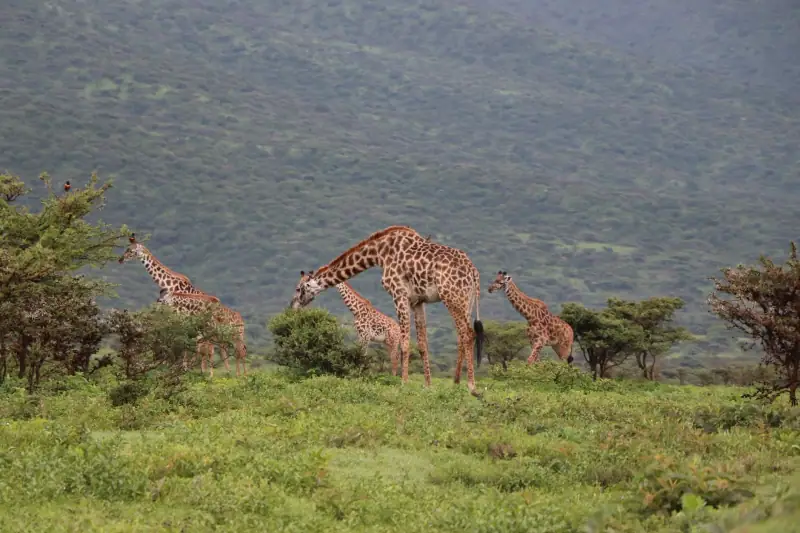
Arusha National Park: walking, canoeing and Mount Meru
Arusha National Park, near town: walking safari with a ranger, canoeing on the Momella lakes, Ngurdoto Crater and the Mount Meru climb. Practical guide.
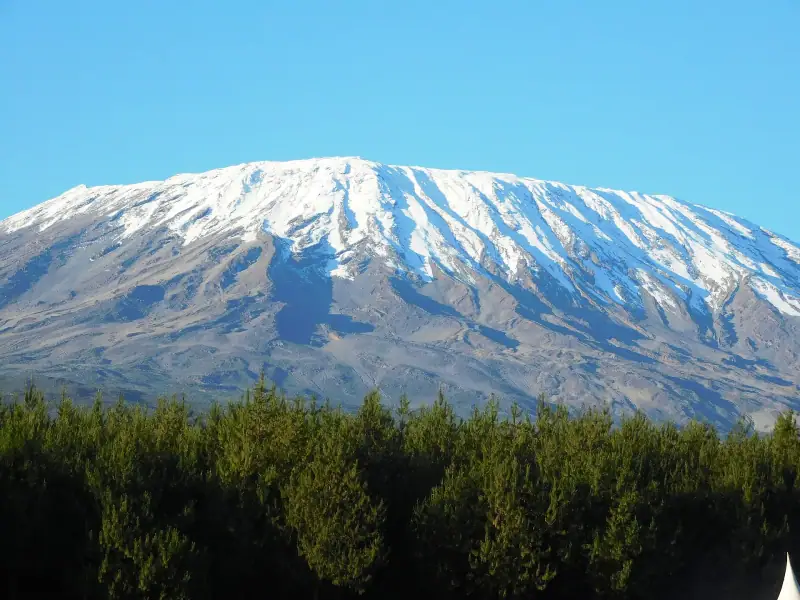
Climbing Kilimanjaro: routes, length and preparation
Climb Kilimanjaro, Africa's highest peak: comparing the Machame, Lemosho, Marangu and Rongai routes, ideal length, altitude and preparation.
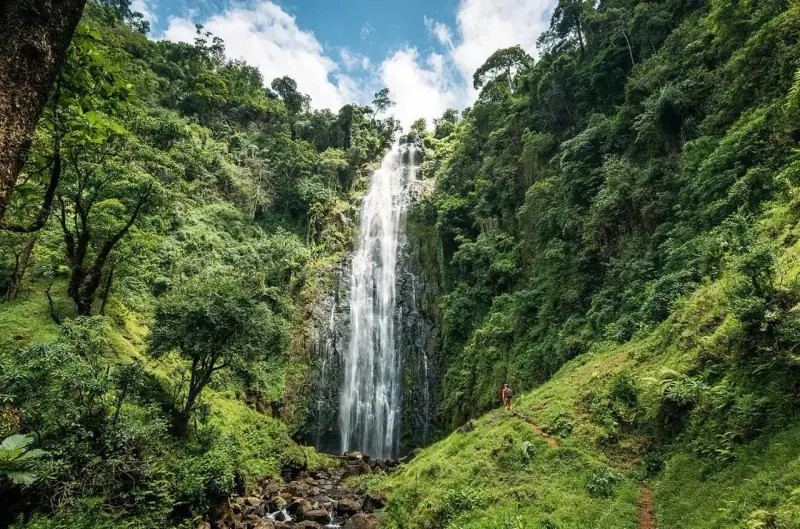
Materuni waterfall from Moshi: going without an agency, prices and guide
Materuni waterfall near Moshi: going alone or with an agency, guide, walking time, quoted prices, season, shoes and the coffee farm visit.
Ready-made
Tanzania itineraries
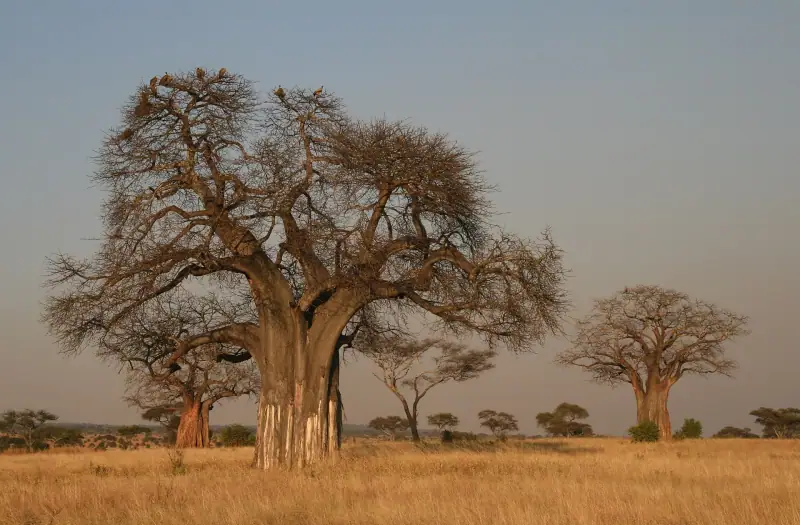
4 days
4-day safari in Tanzania: Tarangire, Manyara and Ngorongoro
A 4-day itinerary for a short safari in northern Tanzania: Tarangire, Lake Manyara and Ngorongoro Crater, with lodging, budget and practical tips.

8 days
Family safari in Tanzania: an 8-day itinerary with kids
A Tanzania safari circuit suited to children: short stages, accessible parks, pace, lodging, health and tips so the whole family enjoys it.
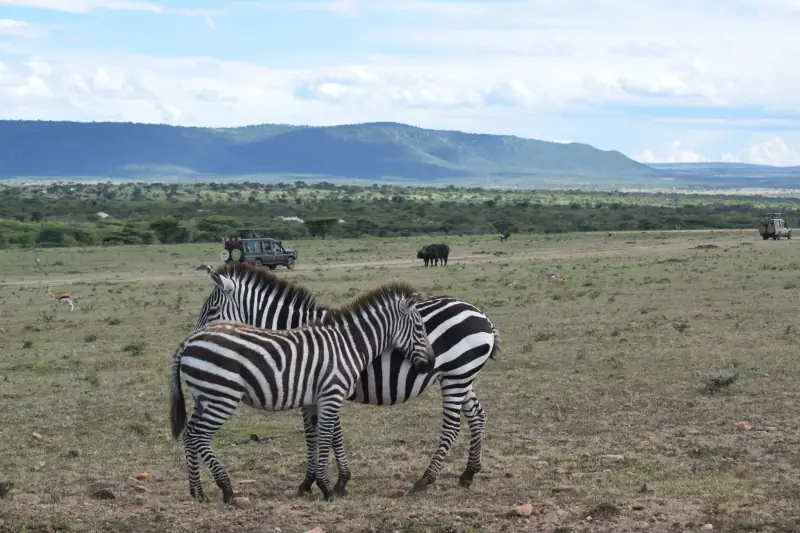
7 days
7-day safari in northern Tanzania: the complete itinerary
A 7-day itinerary for a first Tanzania safari: Tarangire, Lake Manyara, Ngorongoro and the Serengeti, with tips on planning and where to stay.