Things to do
Climbing Kilimanjaro: routes, length and preparation
We may earn a commission when you book through links on this page, at no extra cost to you. We don't visit or try the places we cover: we summarize published sources. How we work
In short
- The highest point is about 5,895 m (19,341 ft); the climb is a hike with no rope or ice axe, but altitude, cold and long stages are the challenge.
- Shortest routes take five or six days; seven or eight days on Lemosho or Machame leave more time to acclimatize and improve summit chances.
- A licensed guide is mandatory, so you go through a local operator or agency; Moshi is the usual base.
- The two dry seasons, January to March and June to October, are the most favorable.
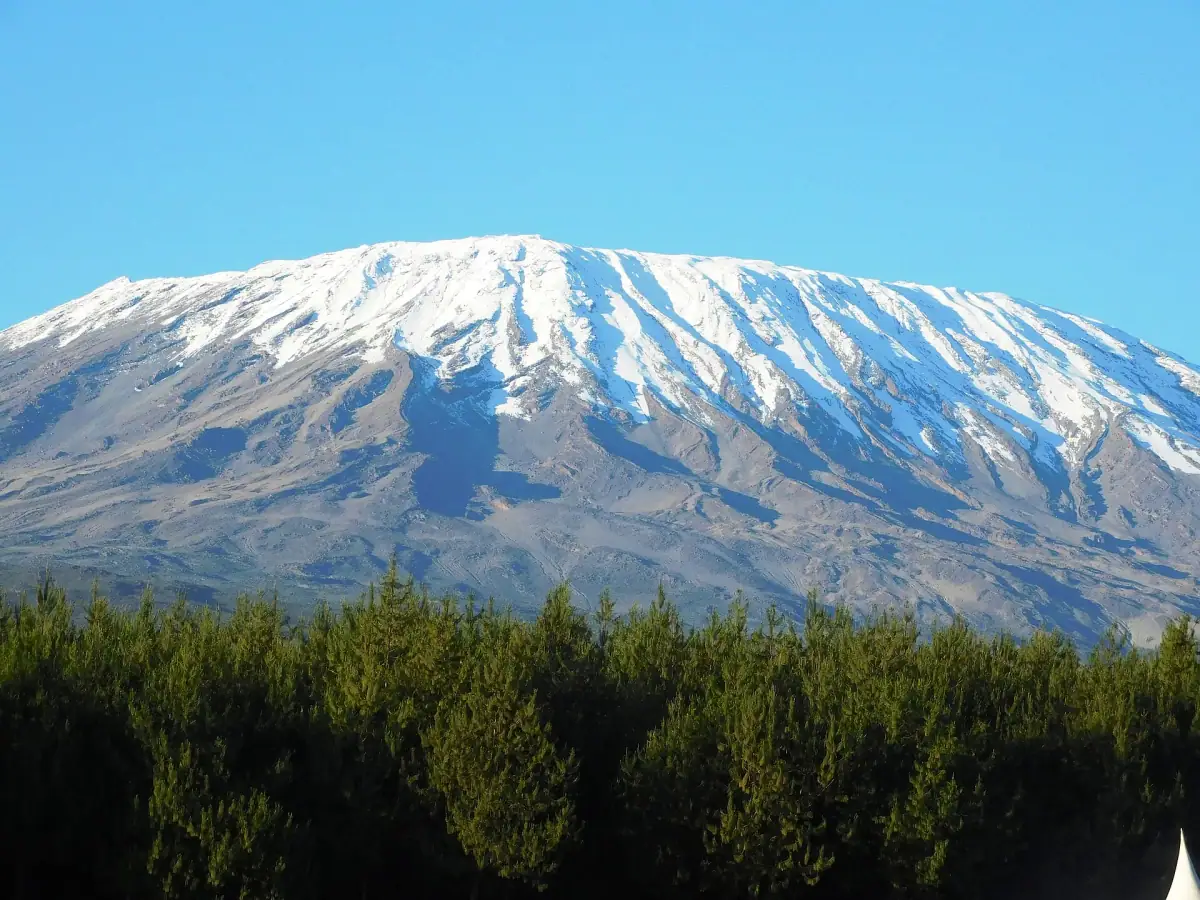
At about 5,895 meters (19,341 ft) at its highest point, Kilimanjaro is the highest summit in Africa and one of the highest freestanding volcanoes in the world. It is climbed without rope or ice axe, which makes it one of the most accessible of the “Seven Summits.” But altitude remains the real opponent, and the choice of route, length and operator weighs more than physical shape alone.
This guide compares the main itineraries and details the preparation. To choose your dates, also see our article when to go to Tanzania. For a shorter outing the day before or after the trek, the Materuni waterfall can be visited in half a day from Moshi.
Understanding the mountain
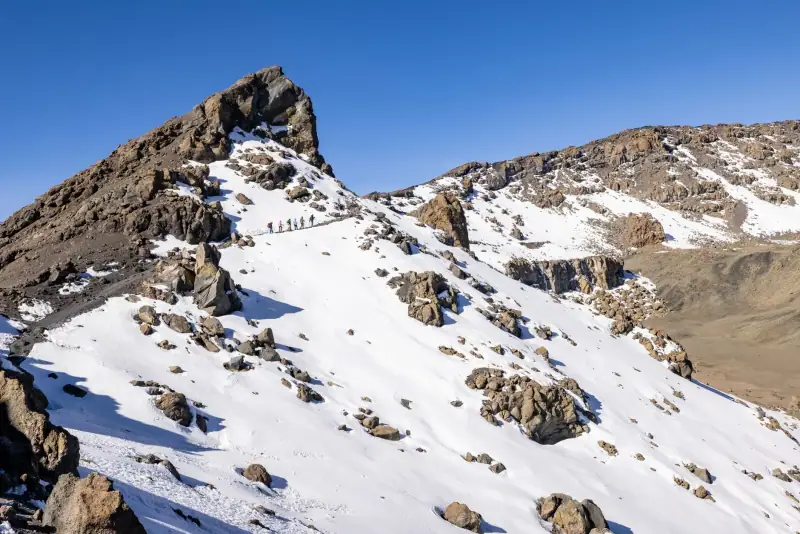
The massif is formed of three volcanic cones: Kibo, the highest and the only one to carry the summit, Mawenzi and Shira. It is protected within Kilimanjaro National Park, which explains the supervision rules and access fees.
One of the charms of the climb is crossing several vegetation zones in a few days:
- Farmland and humid tropical forest, at the bottom, often misty and rich in moss and ferns;
- Moorland and giant heather, more open, with big views;
- High-altitude desert, mineral and cold, where vegetation nearly disappears;
- The summit zone, swept by wind, where receding glaciers remain.
The contrast is striking: you set out in light clothing and finish with several insulating layers, a hat and thick gloves.
Choosing your climbing route
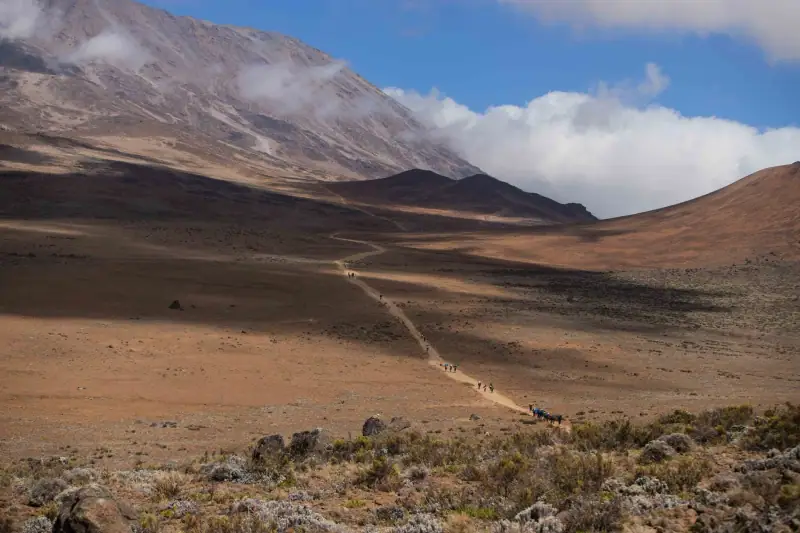
There are several access routes, each with its own character. The durations below are indicative and vary by operator.
Machame: the most popular
Often nicknamed the “Whiskey” route, it climbs the southwest side and offers varied scenery. It follows the “climb high, sleep low” principle, which helps with acclimatization. Lodging is in tents, and the pace is brisk: it is a scenic but busy route.
Lemosho: the best for acclimatizing
It starts in the west, in a wilder area, then joins the Machame route. Longer, it spreads the effort better and, in general, gives better chances of reaching the summit. It is often recommended for a first trek.
Marangu: the hut route
The only route with dormitory huts rather than tents, it goes up and down the same trail. Its short progression, over five or six days, leaves little time to acclimatize: it suits hikers who want to avoid camping, provided you add an extra day if possible.
Rongai: the northern route
It approaches the mountain from the north, on the Kenyan border side, in a drier and less busy sector. It is popular in the rainy season, since the north side gets less precipitation.
Umbwe and the Northern Circuit
The Umbwe route is the most direct and steepest: it is for experienced, well-acclimatized walkers. The Northern Circuit goes around the mountain and is the longest option, therefore the most favorable to acclimatization, for those with about nine days.
Kilimanjaro treks and climbs
Compare the guided packages offered by local operators: length, route, logistics.
How many days should you plan?
This is the most important question. The longer the climb, the more the body adapts to altitude and the more the chances of success rise. A six-day climb is possible, but seven or eight days are a better choice for most travelers.
Also keep in mind the logistics around the trek: arrival at Kilimanjaro International Airport, a night in Moshi for the briefing, then one or two recovery nights after the descent. In all, a stay of ten to twelve days easily fits a seven-day trek, with room for a safari.
Flights to Kilimanjaro
Kilimanjaro International Airport serves the region: compare offers for your dates.
Moshi, the starting base
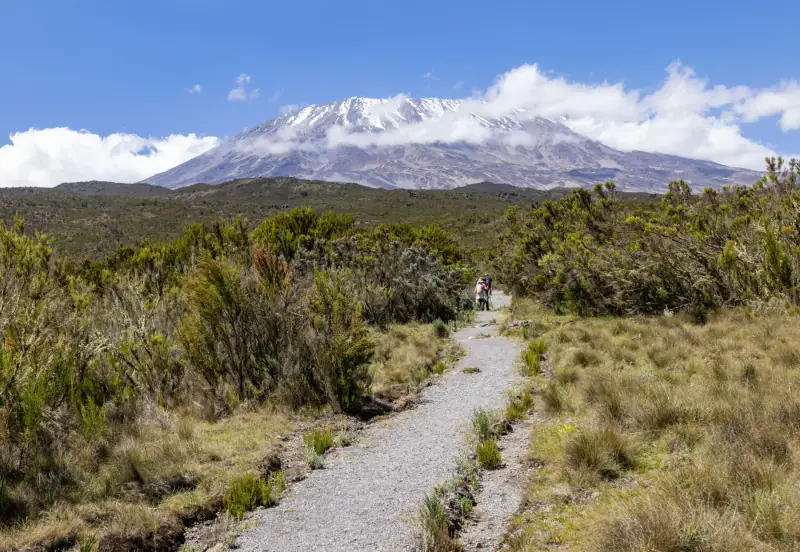
Moshi is the town at the foot of the mountain, near the main park access points. This is where the last details are settled: briefing with the guide, gear check, possible rental of a sleeping bag or warm jackets.
Lodging ranges from simple guesthouses to more comfortable hotels with gardens. A good bed the night before departure and a proper shower on return count for a lot for morale.
Hotels in Moshi
Book a night before departure and another after the descent to recover.
Which season to choose?
The two dry seasons, January to March and June to October, are the most pleasant: more passable trails, better visibility at the summit. Nights stay freezing at altitude whatever the season, and the weather can change quickly in the mountains. For the month-by-month detail, see our guide when to go to Tanzania.
If you want to combine trek and safari, it is generally more practical to do the climb first, then enjoy a calmer safari afterward: see our 7-day safari itinerary.
Preparing physically and mentally
No training is a guarantee, but serious preparation changes the experience:
- Walk regularly with a pack, for several hours in a row, in the weeks before departure;
- Break in your hiking boots over long distances before the trip: blisters can ruin the trek;
- Learn to walk slowly: the local watchword, “pole pole” (slowly), is the best advice for the climb;
- Hydrate regularly and eat, even without appetite: altitude often kills hunger.
Altitude
Altitude can affect anyone, regardless of age or fitness. Tell your guide about any concern right away. Ask your doctor or a travel clinic before you go, and see the official travel health pages (CDC in the US, TravelHealthPro in the UK). Also check that your insurance covers high-altitude hiking and repatriation.
Summit night
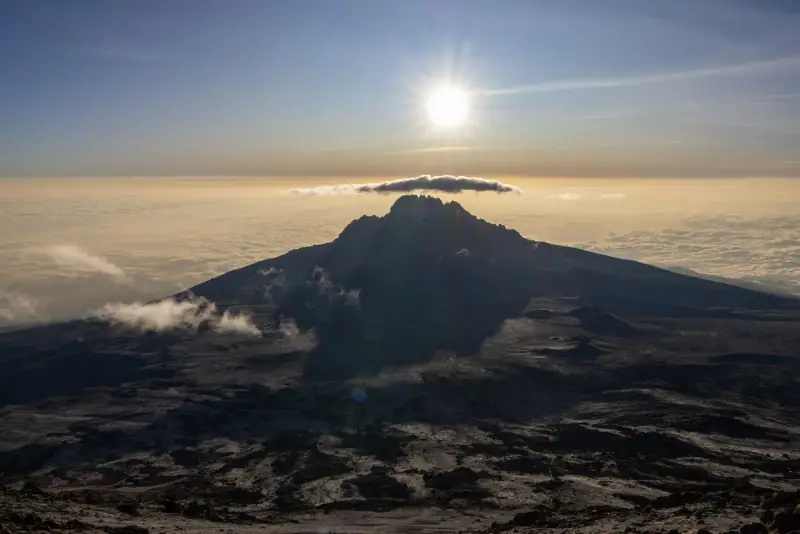
The final ascent is made at night, generally from about midnight, to reach the ridge at sunrise. It is very cold, the walk is slow and demanding, and the summit has to be earned. Arriving at Uhuru Peak, with daylight rising over the glaciers, remains a striking memory for many.
The descent is then faster, but long: bring trekking poles to ease the knees.
Gear and choosing an operator
The principle is layers: technical underwear, fleece, waterproof jacket and windbreaker, hat, warm gloves, sunglasses and a headlamp for summit night. Some of the gear can be rented there.
For the operator, find out how it treats its porters and guides: equipment, wages, load carried. A reputable operator works transparently and answers your questions precisely on the guide-to-client ratio, the route and the acclimatization plan.
Extending the trip
After the effort, nothing forces you to go home right away: northern Tanzania has plenty to recover with wildlife watching. A safari in Tarangire, Lake Manyara, Ngorongoro or the Serengeti follows naturally after a trek, since Arusha and Moshi serve as bases for both kinds of stay.
Keep a day or two of margin between the descent and the safari to let the body rest, dry the gear and settle the team’s tips. For a beach extension, Zanzibar is also an option after the trek.
Frequently asked questions
Do you need to be a mountaineer to climb Kilimanjaro?
No. Kilimanjaro is climbed as a hike, with no climbing gear or glacier technique. The difficulty comes from altitude, cold and the length of the stages, not the terrain: good fitness and a slow pace are enough for most trained walkers.
Can you climb without a guide?
No. The climb is regulated by the national park: a licensed guide is mandatory, and groups are generally accompanied by assistants and porters. You therefore need to go through a local operator or an agency.
How many days should you plan?
The shortest itineraries last five or six days, but seven to eight days on Lemosho or Machame leave more time to acclimatize and improve the chances of reaching the summit. Also plan one or two nights in Moshi before and after.
What is the best time to climb Kilimanjaro?
The two dry seasons, January to March and June to October, are the most favorable. The long rains, in spring, make the trails muddy and visibility poor.
Can you extend with a beach stay?
Yes, many hikers finish with a few beach days on Zanzibar.
More Tanzania guides
Keep reading
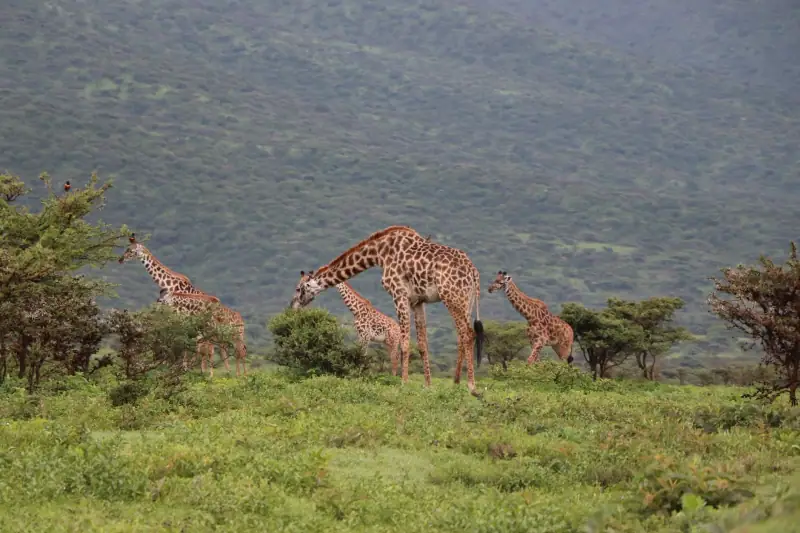
Arusha National Park: walking, canoeing and Mount Meru
Arusha National Park, near town: walking safari with a ranger, canoeing on the Momella lakes, Ngurdoto Crater and the Mount Meru climb. Practical guide.
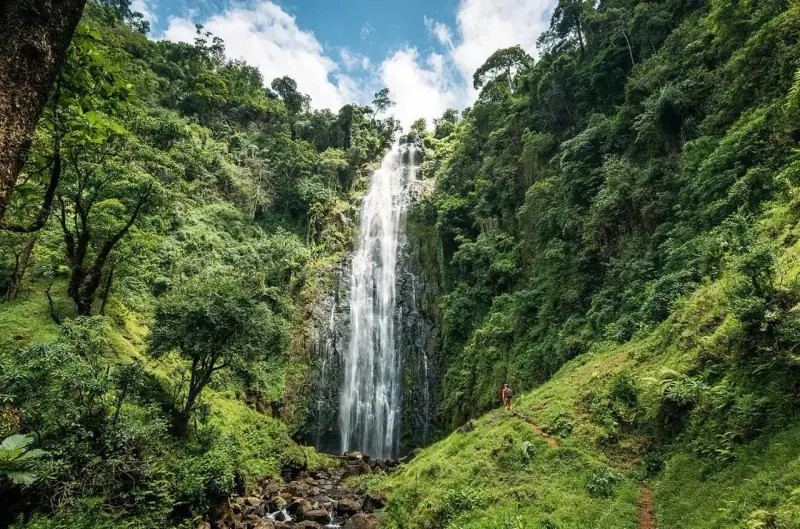
Materuni waterfall from Moshi: going without an agency, prices and guide
Materuni waterfall near Moshi: going alone or with an agency, guide, walking time, quoted prices, season, shoes and the coffee farm visit.
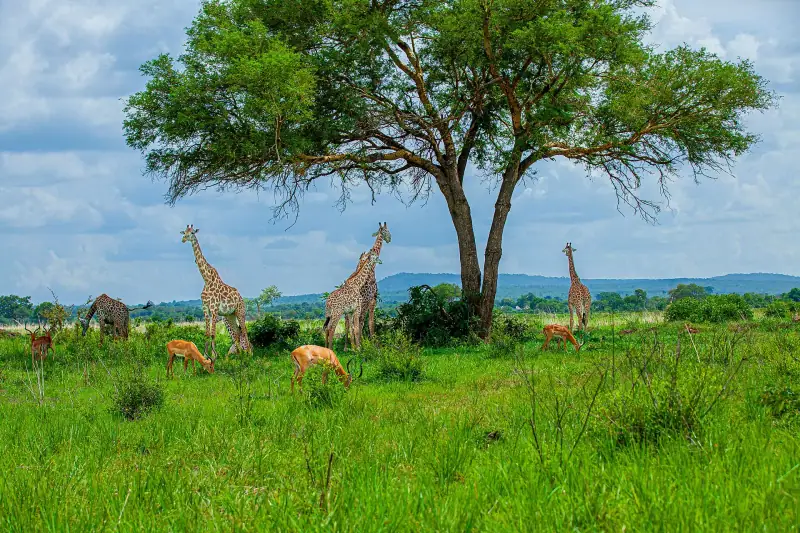
Wildlife watching in Tanzania: a guide to a successful safari
Big Five, big cats, elephants, flamingos: where and when to watch wildlife in Tanzania, how to choose your park, outing times and camera gear.
Ready-made
Tanzania itineraries
4 days
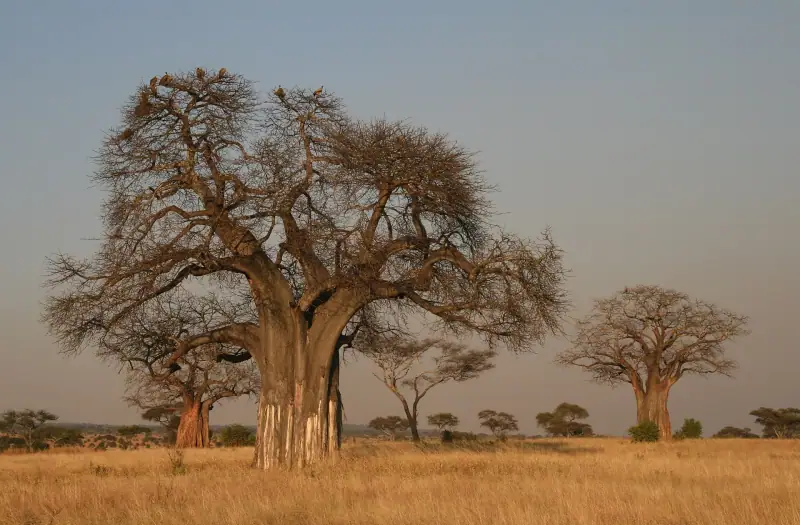
4-day safari in Tanzania: Tarangire, Manyara and Ngorongoro
A 4-day itinerary for a short safari in northern Tanzania: Tarangire, Lake Manyara and Ngorongoro Crater, with lodging, budget and practical tips.
8 days
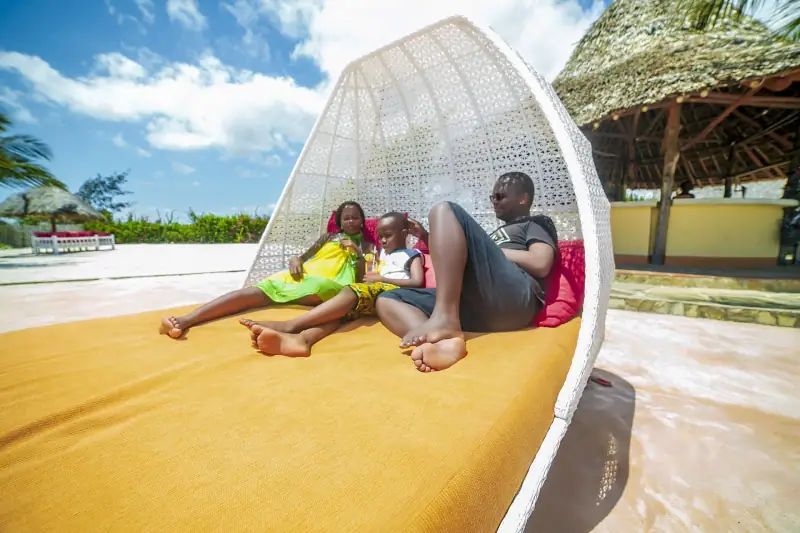
Family safari in Tanzania: an 8-day itinerary with kids
A Tanzania safari circuit suited to children: short stages, accessible parks, pace, lodging, health and tips so the whole family enjoys it.
7 days
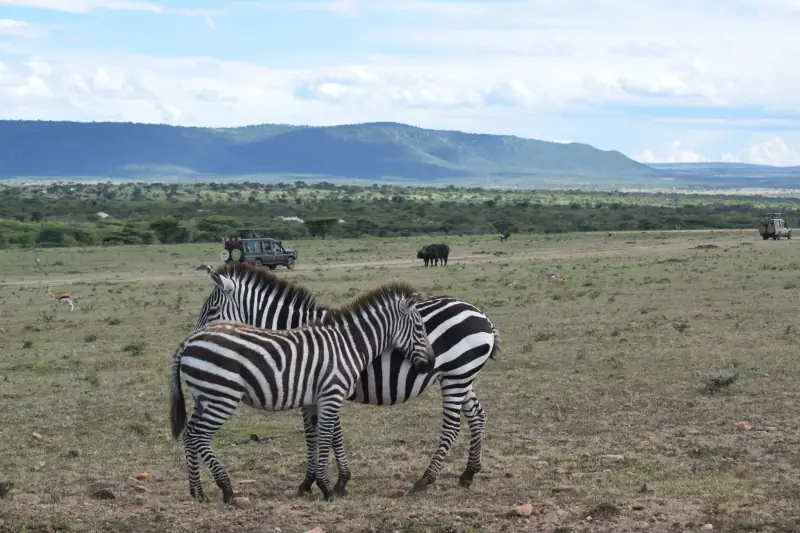
7-day safari in northern Tanzania: the complete itinerary
A 7-day itinerary for a first Tanzania safari: Tarangire, Lake Manyara, Ngorongoro and the Serengeti, with tips on planning and where to stay.