Things to do
Materuni waterfall from Moshi: going without an agency, prices and guide
We may earn a commission when you book through links on this page, at no extra cost to you. We don't visit or try the places we cover: we summarize published sources. How we work
In short
- You can go without an agency: transport to the village from Moshi, then a village guide for a walk of about 30 to 45 minutes.
- Materuni is about 15 km (9 mi) from Moshi; allow 30 to 45 minutes by car, up to an hour by minibus.
- Quoted 2026 offers run from about $35 to $125 per person depending on what is included; going without an agency is clearly cheaper.
- Wear shoes with grip: the trail is slippery after rain.
Are you in Moshi the day before or after a trek and looking for an easy outing that needs neither a safari agency nor mountaineering gear? Materuni waterfall, in a village on the slopes of Kilimanjaro, is one of the few excursions in the region that can be done in a day, on foot and at low cost.
In short: yes, you can go to Materuni waterfall without an agency: transport to the village from Moshi, then a village guide for the walk of about 30 to 45 minutes. An agency package costs more but includes the transfer, the meal and the coffee visit. Bring good shoes, because the trail is slippery.
Where is Materuni waterfall?
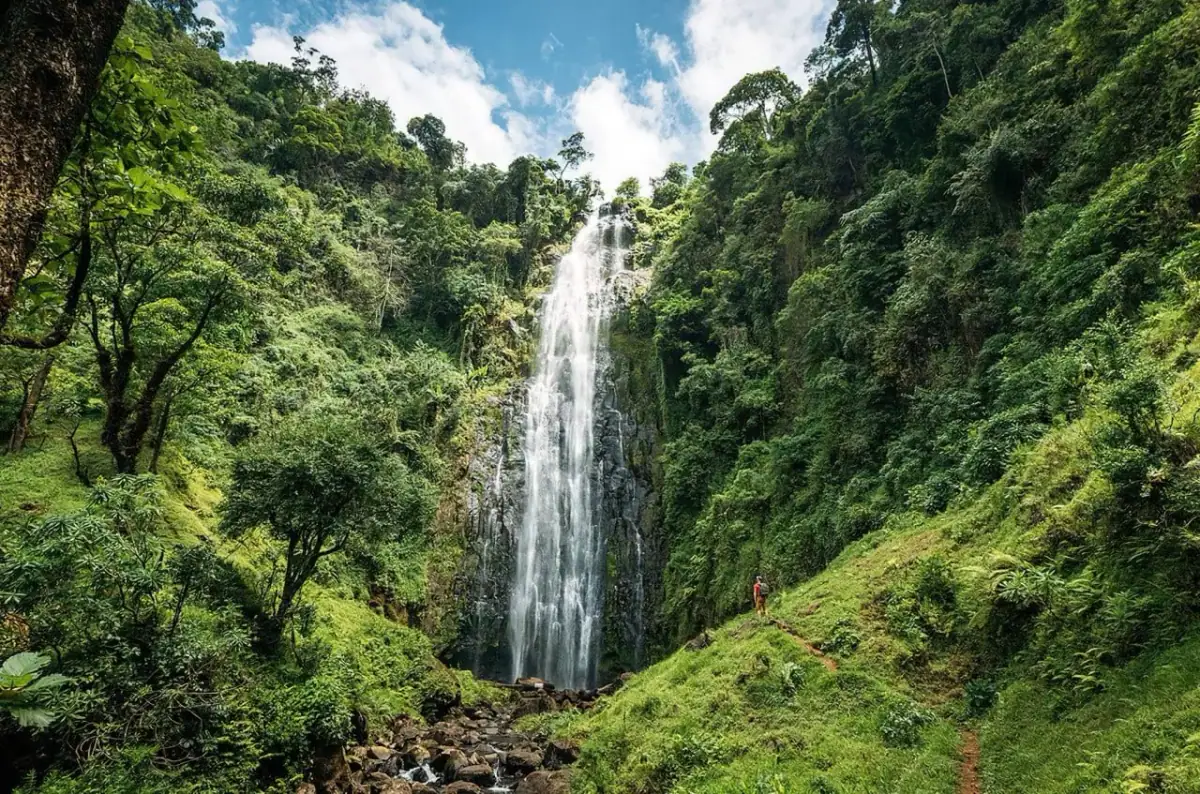
Materuni is a Chagga village above Moshi, on the southern flank of Kilimanjaro, about fifteen kilometers (9 mi) from town. Allow 30 to 45 minutes by car, up to an hour by minibus with the stops. The waterfall lies below the village, in a ravine covered with forest and banana groves.
Sources do not agree on the height of the fall: from 50 to 150 meters (165 to 490 ft) depending on operator sites, and 70 to 80 meters (230 to 260 ft) in the most often cited figures. Just remember that it is a big waterfall, spectacular above all in the wet season, and that the photo depends less on its height than on the light and the flow.
The excursion fits well into a stay around Kilimanjaro: we detail the mountain itself in our guide to climbing Kilimanjaro, and Moshi lodging in where to sleep in Arusha and Moshi.
Going without an agency: how-to
From Moshi by public transport
Locals go up to the slope villages by shared minibuses (dala dala), which leave from Moshi’s bus station. Ask the conductor for “Materuni” and check the last return of the day before getting off. The trip is cheap, but schedules are flexible: allow a margin so you do not come back after dark.
Taxi or motorcycle taxi
If you prefer a fixed time, a Moshi taxi drops you at the village and can wait for you there. Agree on the round-trip price before getting in, and ask the driver to wait or return at a set time. For a small group, this is often the simplest solution.
Finding a guide in Materuni
Once in the village, you will find local guides offering the walk to the waterfall. Agree on these before setting off:
- the total price, per person or for the group;
- whether the waterfall entrance is included;
- the planned duration and the end point;
- whether it also includes the coffee farm visit.
A village guide is the cheapest formula and the one that benefits the villagers most directly. Booking through lodging or a Moshi operator is more comfortable, but pricier.
How much does it cost? Rates noted
There is no single official price list: prices depend on the operator and the formula. Here are orders of magnitude noted in 2026 on operator pages:
| Formula | What is included | Price range |
|---|---|---|
| Without an agency | Public transport, village guide | Cheapest, to negotiate there |
| Half day with a Moshi operator | Guide, entrance, transport | About $35 per person |
| Full day | Guide, transport, lunch, coffee | About $60 to $125 per person |
| Private tour with hot springs | Private vehicle, meals, several stops | Clearly higher |
Always read the details: the same tour name can cover a simple walk or a full day. The guide’s tip is generally not included. To know how much to leave, see our page on tipping in Tanzania.
Materuni waterfall and coffee, with transfer
Compare day excursions from Moshi: guide, transfer and a coffee farm visit.
Difficulty: a 30- to 45-minute walk
The hike is nothing alpine. It crosses coffee, banana and avocado plantations, then descends into a wooded ravine. Operators speak of about 30 to 45 minutes each way. There are sections of steps and roots, and the return is a climb: it takes ordinary fitness, no particular training.
Points to watch:
- slippery ground after rain, especially on the descent;
- the moderate altitude of the village, though heat and humidity can tire you;
- water: bring a bottle per person;
- children: possible for children used to walking, with an adult next to them on the steep sections.
When to go: season and weather
The region has two rainy seasons: the long rains around March-May and the short rains around November. The waterfall’s flow is stronger after these periods, but the trail is then very slippery and some operators suspend the visit in April. In the dry season (roughly June to October), the walk is more comfortable and the morning often gives a clear view of the mountain.
For an overview of the months, see our guide when to go to Tanzania. In any case, leave in the morning: clouds often form on the slopes in the afternoon.
What you see besides the waterfall
The Chagga coffee farm
Most visits combine the walk and a stop at a coffee farm: picking, hulling, fire roasting and tasting. It is the most interesting part for understanding life on the slopes. If it appeals to you, our page on coffee and bananas around Moshi explains how it goes.
The Chemka hot springs
Some full-day trips add a stop at the Chemka hot springs, on the plain. It is a good complement if you have a whole day, less relevant if you only have a morning.
What to put in the bag
- shoes with grip, not sandals;
- a swimsuit and a small towel for swimming;
- a light rain jacket: showers are quick on the slopes;
- water and a snack;
- a little cash in shillings for the guide, coffee or drinks: small villages do not accept cards;
- mosquito repellent and sun protection.
Book ahead or on the spot?
In season, booking the day before is enough: the outing is in small groups. Booking ahead has two advantages: the price is fixed and the transfer from your hotel is assured. Booking there, you gain flexibility and savings, at the price of a negotiation. Both are fine for a short visit.
Before leaving, check current advice: your government’s travel advice for Tanzania lists the latest situation, with possible gatherings in the big cities. Avoid night travel and ask locally. Entry rules depend on your passport. Check the official travel advice of your government: travel.state.gov (US), GOV.UK (UK), travel.gc.ca (Canada), Smartraveller (Australia) (checked November 2026). On health, the local $44 insurance does not replace a private policy: coverage with assistance is useful. Ask your doctor or a travel clinic, and see the official travel health pages (CDC in the US, TravelHealthPro in the UK). Our page visa, vaccines and health summarizes the rest.
Hotels in Moshi
Sleep at the foot of Kilimanjaro and leave early for the waterfall.
To extend the stay by the ocean, the natural extension is Zanzibar.
Frequently asked questions
Can you go to Materuni waterfall without an agency?
Yes. The village of Materuni is on the slopes of Kilimanjaro, about fifteen kilometers (9 mi) from Moshi. You can get there by public transport or taxi, then hire a village guide there. Agency packages mostly add the hotel transfer, lunch and a coffee farm visit.
Do you need a guide for Materuni waterfall?
Visits are made accompanied by a village guide, and it is best to do so: the trail is dirt, it branches and becomes slippery after rain. The guide also supports the villagers' livelihoods. Confirm the rate before leaving.
How long is the walk?
Operators quote about 30 to 45 minutes on foot to reach the waterfall, with a few sloping and stepped sections. Allow half a day with the village and coffee visit, a full day if you add the Chemka hot springs.
Can you swim at the foot of the waterfall?
Yes, a natural pool forms at the foot of the fall and several operators offer swimming. The water is cool and swimming depends on flow and weather: bring a swimsuit and a light towel, and do not dive in after heavy rain.
What is the best season to go?
The flow is stronger during and after the rainy seasons, but the trail is then muddy. In the dry season, the walk is easier and the sky clearer. At least one operator says it does not offer the visit in April, in the middle of the rainy season: ask before booking.
How much does the visit cost?
Offers noted in 2026 run from about $35 to $125 per person depending on what is included (transport, guide, entrance, lunch, coffee). The version without an agency, with public transport and a village guide, is clearly cheaper. These rates move: confirm in writing.
More Tanzania guides
Keep reading
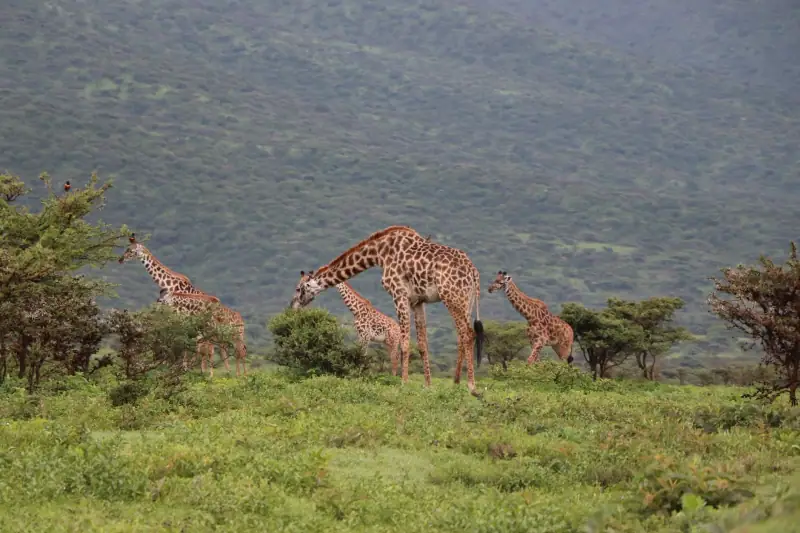
Arusha National Park: walking, canoeing and Mount Meru
Arusha National Park, near town: walking safari with a ranger, canoeing on the Momella lakes, Ngurdoto Crater and the Mount Meru climb. Practical guide.
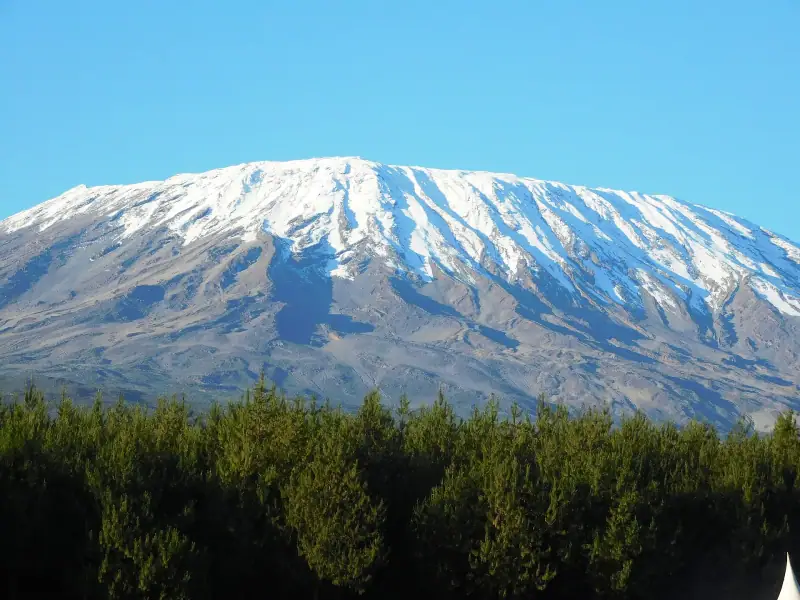
Climbing Kilimanjaro: routes, length and preparation
Climb Kilimanjaro, Africa's highest peak: comparing the Machame, Lemosho, Marangu and Rongai routes, ideal length, altitude and preparation.
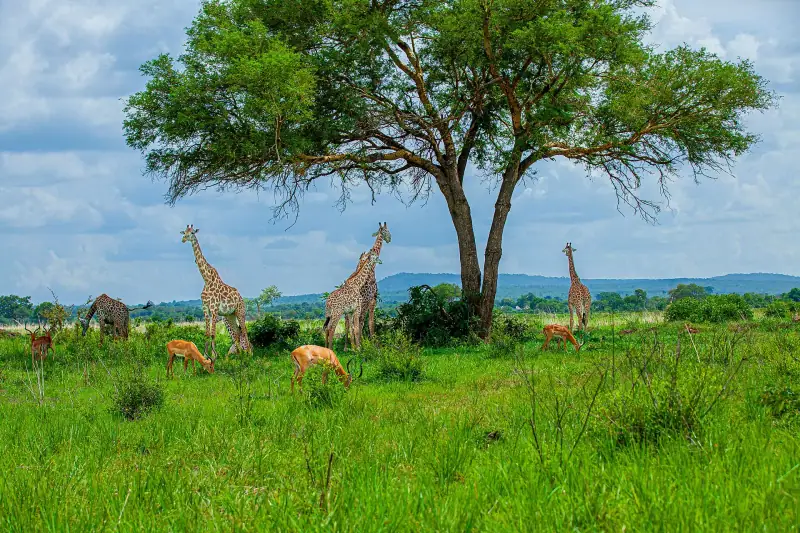
Wildlife watching in Tanzania: a guide to a successful safari
Big Five, big cats, elephants, flamingos: where and when to watch wildlife in Tanzania, how to choose your park, outing times and camera gear.
Ready-made
Tanzania itineraries
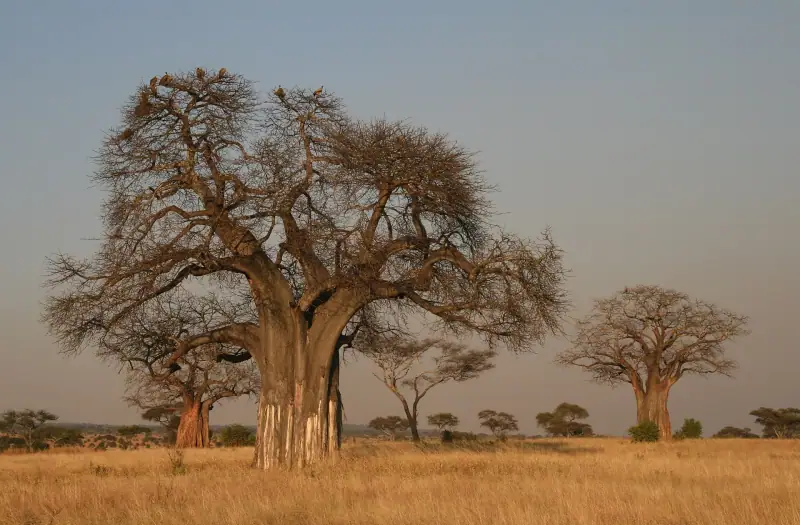
4 days
4-day safari in Tanzania: Tarangire, Manyara and Ngorongoro
A 4-day itinerary for a short safari in northern Tanzania: Tarangire, Lake Manyara and Ngorongoro Crater, with lodging, budget and practical tips.

8 days
Family safari in Tanzania: an 8-day itinerary with kids
A Tanzania safari circuit suited to children: short stages, accessible parks, pace, lodging, health and tips so the whole family enjoys it.
7 days
7-day safari in northern Tanzania: the complete itinerary
A 7-day itinerary for a first Tanzania safari: Tarangire, Lake Manyara, Ngorongoro and the Serengeti, with tips on planning and where to stay.