What to see
Serengeti and the Great Migration: when and where to see wildebeest in Tanzania
We may earn a commission when you book through links on this page, at no extra cost to you. We don't visit or try the places we cover: we summarize published sources. How we work
In short
- The migration is a permanent cycle: calving in the south from about January to March, river crossings in the north from about July to October.
- Plan at least two nights in the Serengeti, ideally three or four if you want to follow the herds or change area.
- The park covers about 15,000 km² (5,800 sq mi); Seronera and the center offer big cats year-round.
- Book well ahead for the high dry season and calving: the best-placed lodges and camps fill fast.
The Serengeti is arguably the most evocative name in East Africa. Its plains stretching to the horizon, its umbrella-shaped acacias and above all its Great Migration, one of the largest movements of wild animals on the planet, make it the flagship stop of many safaris in Tanzania.
This guide explains how the migration works, which area to aim for depending on the period, how long to stay and how to choose your lodging.
Serengeti National Park at a glance
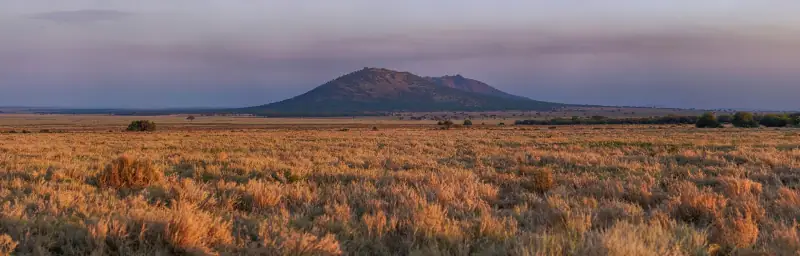
Serengeti National Park covers about 15,000 km² (5,800 sq mi) in northern Tanzania, near the border with Kenya, where it continues as the Masai Mara reserve. It is a UNESCO World Heritage site and forms, with the neighboring Ngorongoro Conservation Area, an immense ecosystem where wildlife moves freely.
Its name is said to come from a Maasai word evoking “the endless space,” and that is exactly the impression you keep on arriving: open plains dotted with granite rocks called kopjes, where lions and cheetahs like to station themselves to watch the surroundings.
The park divides into large sectors with different atmospheres:
- The south and the short-grass plains, near the Ndutu area, very popular early in the year.
- The center, around Seronera, accessible year-round and known for its big cats.
- The western corridor, crossed by the Grumeti River.
- The north, toward Kogatende and the Mara River, where the famous crossings take place.
To place the Serengeti in a full circuit with Tarangire and Ngorongoro, see our 7-day safari in northern Tanzania.
Understanding the Great Migration
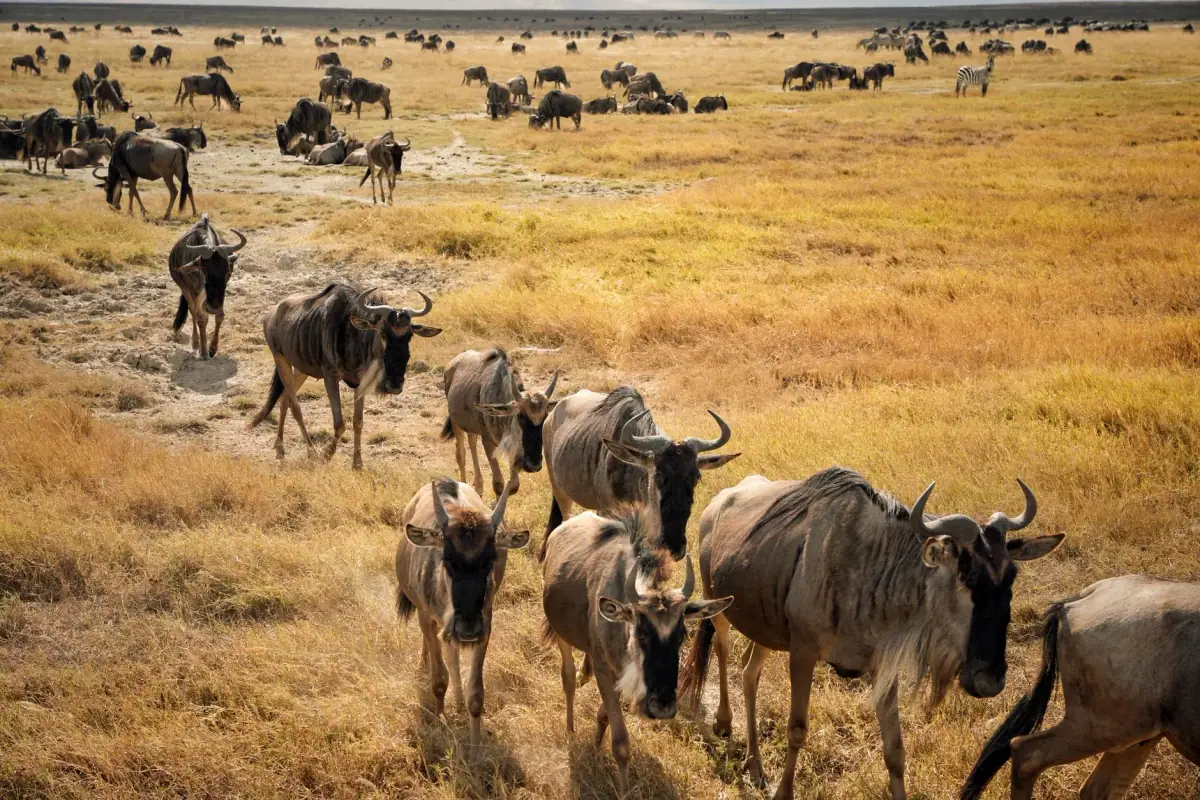
Contrary to popular belief, the migration is not a one-off event: it is a permanent cycle. More than a million wildebeest, joined by many zebras and gazelles, move following the rains and the regrowth of the grass, in a great loop across the Serengeti and the Masai Mara.
The cycle can be summarized as follows, with dates that vary from year to year:
- About January to March: the herds gather in the south, on the grassy plains. This is the calving period, with hundreds of thousands of young in a few weeks, and therefore many predators.
- About April to June: the animals move back up toward the center and west, often in long columns. The rains are then more marked.
- About July to October: the herds reach the north and cross the Mara River, a spectacular but unpredictable sight.
- About November and December: the return south begins with the short rains.
No one can guarantee the exact position of the herds on a given date. Guides keep informed of their movements by radio, which is a good reason to plan several nights there.
Flights to Tanzania
Compare flights to Kilimanjaro (Arusha) or Dar es Salaam to prepare your safari.
Where to see the migration by season
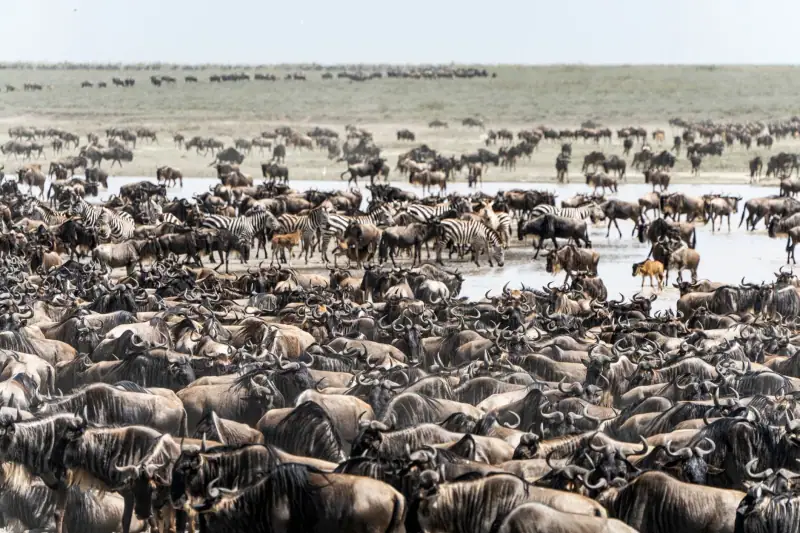
The right sector depends first on the time of your trip.
Early in the year, aim for the south of the park and the Ndutu region. The herds graze the short grass there, calving attracts lions, hyenas and cheetahs, and hunting scenes are frequent. Photographers love this period.
In the middle of the year, the center and west of the park become interesting, notably around the Grumeti River, where crossings generally take place at the start of the dry season. They are, however, less regular than those on the Mara River.
From about July to October, the north offers the most famous images: wildebeest hesitating at the water’s edge then plunging in, under the gaze of crocodiles. This sector is more remote, with fewer vehicles than in the center, but often requires dedicated lodging in the north.
If your dates are fixed, it is better to choose lodging according to the probable position of the herds. Our guide to when to go to Tanzania details the seasons and their advantages.
Seronera and the center: big cats year-round
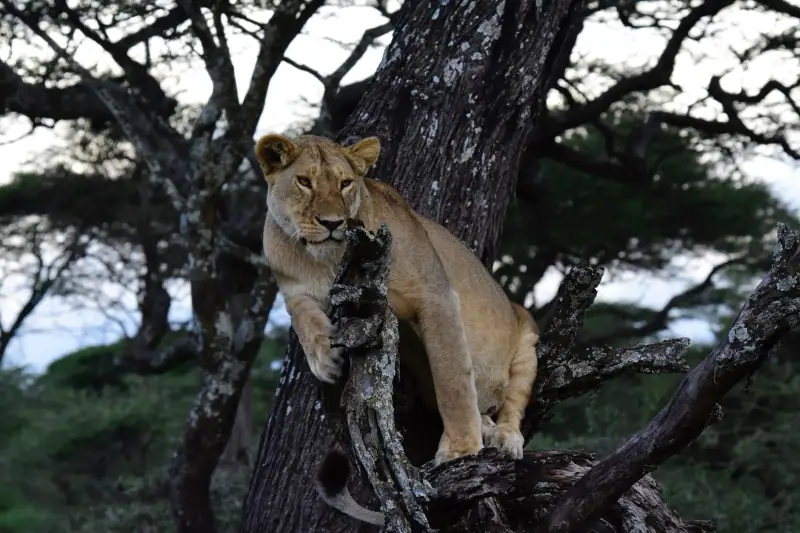
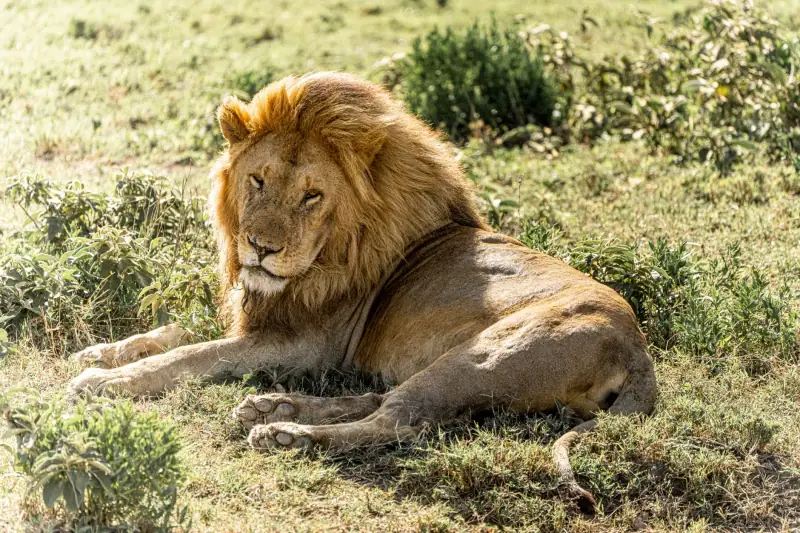
The Seronera region, in the heart of the park, is the easiest to reach and one of the best for watching big cats. Lions rest on the kopjes, leopards sometimes let themselves be spotted in the branches of big trees along the river, and cheetahs patrol the neighboring plains.
This zone has the advantage of not depending on the migration: even when the herds are far away, the resident wildlife remains abundant. It is therefore ideal if you travel at a time when the big movements are harder to predict.
In return, it is also the busiest sector. Leaving early in the morning, at park opening, lets you enjoy the best light and meet fewer vehicles.
How long to stay and how to get there
The Serengeti is vast and the tracks are slow: plan at least two nights, and rather three or four if you want to change area to follow the herds. A single day of visiting does not let you enjoy the park, since the drive absorbs most of the time.
Two main options to get there:
- The road from Arusha, with a common stop near Ngorongoro or in Karatu. The day is long, but the route crosses beautiful scenery and lets you combine several parks.
- A domestic flight to one of the park’s airstrips, faster but noticeably more expensive.
The great majority of travelers organize the stay with a driver-guide and a 4x4 with a pop-up roof, within a circuit combining Tarangire, Lake Manyara and Ngorongoro. To estimate the cost of the whole, see our safari budget in Tanzania. In the parks, self-driving is not the usual formula, and a rental car alone is not suited to a safari.
On the road, a stop at Ngorongoro Crater rounds out the discovery very well.
Where to sleep in the Serengeti
The offer falls into three main families:
- Lodges: comfortable, with a pool and restaurant, often in a commanding position over the plains.
- Fixed tented camps: a more immersive experience, with fitted tents and the sounds of the savanna at night.
- Mobile camps: set up near the herds according to the season, they offer the best closeness to the migration.
The choice is made first by location: a camp in the south early in the year, in the north in the crossing season, or in the center for a versatile base. Since the best-placed properties are limited, it is better to book early. For the night before or after the safari, Arusha offers a wide choice of hotels.
Places to stay in Arusha
Compare hotels for the night before or after your safari.
Practical tips for your safari
- Dress in layers: mornings are cool in an open vehicle, afternoons hot, and neutral colors are preferable.
- Bring binoculars and a telephoto lens: the animals stay at a distance, and good binoculars change the experience.
- Respect the park rules: stay in the vehicle, do not feed the animals and keep your distance.
- Protect yourself from sun and dust: hat, sunscreen, scarf and glasses.
- Ask your doctor or a travel clinic before you go, and see the official travel health pages (CDC in the US, TravelHealthPro in the UK).
- Stay flexible: nature does not follow a schedule, and that is what gives the sightings their value.
After the safari, some travelers extend their stay with a few days of beach on the island of Zanzibar.
Key takeaways
The Serengeti rewards travelers who give it time: at least two nights there, lodging chosen according to the probable position of the herds, and an experienced driver-guide. The migration is a permanent cycle rather than an appointment on a fixed date, and even outside the big movements, the cats and resident wildlife offer remarkable sightings.
To round out your preparation, see our guide to climbing Kilimanjaro, often combined with a safari.
Frequently asked questions
When can you see the Great Migration in the Serengeti?
The herds are always on the move. Calving takes place early in the year in the south of the park, and river crossings happen mostly between June and October in the north and west. Exact dates vary each year with the rains.
How many days should you plan in the Serengeti?
Allow at least two nights there, ideally three or four if you want to follow the migration or change area. The park is immense and the distances between zones are long.
Can you see animals in the Serengeti year-round?
Yes. Even when the big herds are far away, the park holds lions, elephants, giraffes, hyenas and many resident herbivores.
Do you need to book far in advance?
For the high dry season and the calving period, it is better to book several months ahead, since the best-placed lodges and camps fill quickly.
Can you extend the trip with a beach stay?
Yes, many travelers end their safari with a few beach days on Zanzibar.
More Tanzania guides
Keep reading
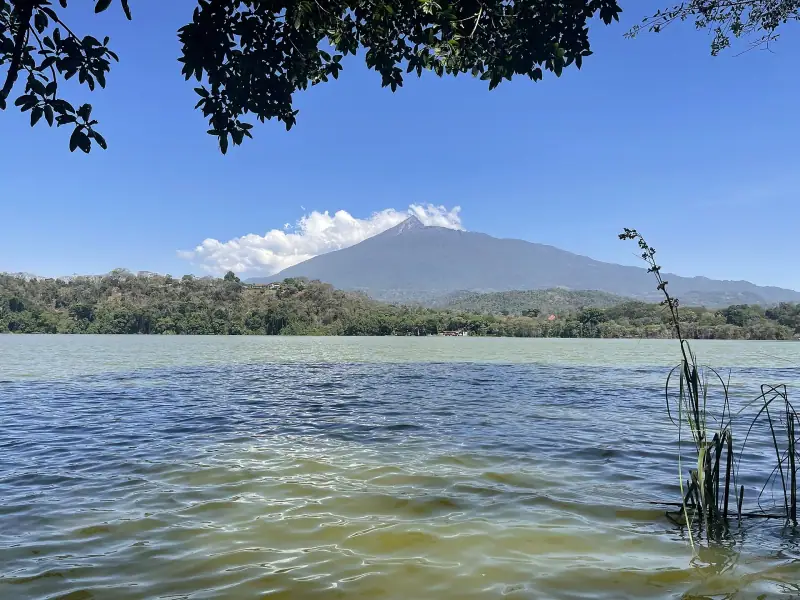
Lake Duluti near Arusha: canoeing, walking and prices for a half day
Is Lake Duluti worth a detour before or after a safari? Access from Arusha, canoeing, walking, birds, quoted prices and tips for a half day.
Complete guide to visiting Tanzania: regions, safari, budget and tips
Visit Tanzania: Serengeti, Ngorongoro, Tarangire, Kilimanjaro, when to go, how to get there, where to stay and what budget to plan. The pillar guide.
Tarangire National Park: elephants, baobabs and visiting tips
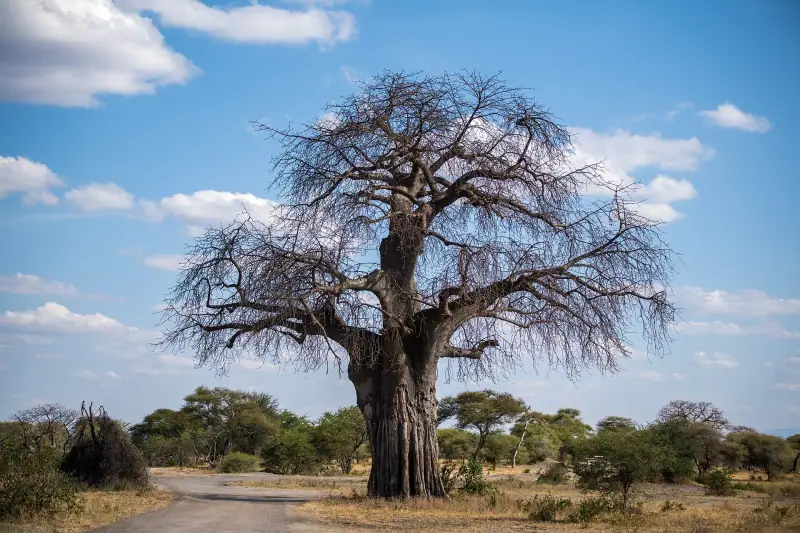
Visit Tarangire National Park in Tanzania: elephants, baobabs, best season, length of visit, lodging and tips for a successful safari.
Ready-made
Tanzania itineraries
4 days
4-day safari in Tanzania: Tarangire, Manyara and Ngorongoro
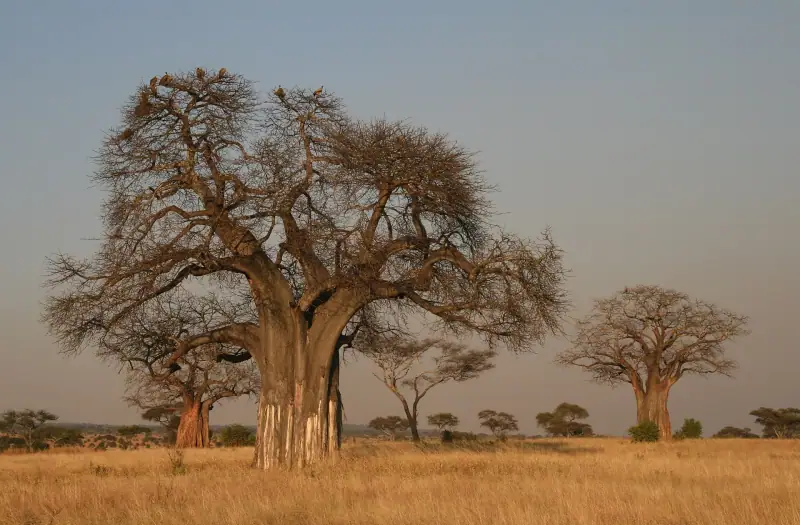
A 4-day itinerary for a short safari in northern Tanzania: Tarangire, Lake Manyara and Ngorongoro Crater, with lodging, budget and practical tips.

8 days
Family safari in Tanzania: an 8-day itinerary with kids
A Tanzania safari circuit suited to children: short stages, accessible parks, pace, lodging, health and tips so the whole family enjoys it.
7 days
7-day safari in northern Tanzania: the complete itinerary
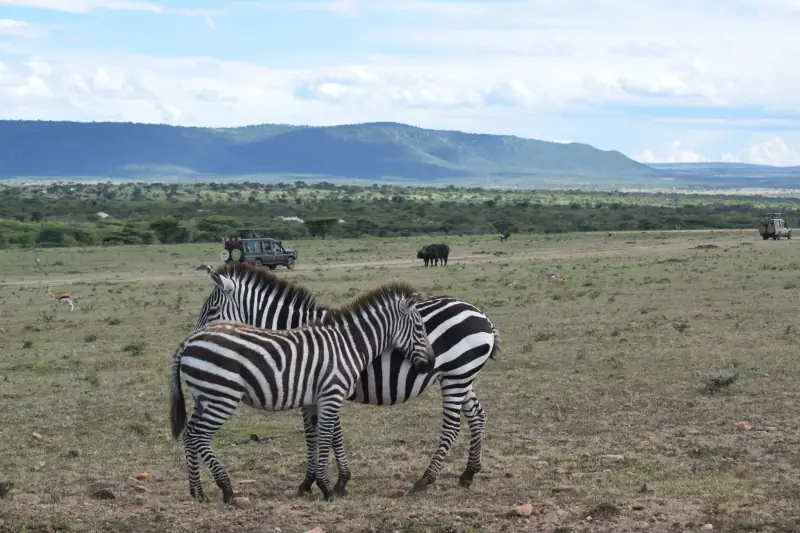
A 7-day itinerary for a first Tanzania safari: Tarangire, Lake Manyara, Ngorongoro and the Serengeti, with tips on planning and where to stay.