Where to stay
Where to stay on the Riviera Maya: Cancún, Playa del Carmen or Tulum?

We may earn a commission when you book through links on this page, at no extra cost to you. We don't visit or try the places we cover: we summarize published sources. How we work
In short
- Playa del Carmen is often the most balanced base: beach, restaurants, nightlife, Cozumel ferry, central position. Tulum suits couples seeking nature; Cancún suits families wanting big resorts.
- The coast is compact: about 65 km (40 mi) between Cancún and Playa del Carmen, and about the same from Playa del Carmen to Tulum.
- In Tulum, the village (pueblo) is the cheapest area; the coastal hotel zone has direct sea access but clearly higher prices.
- Plan about a week to combine beach, cenotes and a Maya site: three to four nights in a first base, then three to four in a second.
The Riviera Maya is a long ribbon of Caribbean coast stretching south of Cancún, between turquoise sea, jungle and archaeological sites. The coast is served by one main road and several towns with very different personalities: some are geared to big resorts, others to small places, bikes and beach cabins. Choosing where to sleep is therefore one of the most important decisions of your trip, because it sets your pace, your budget and how easy your excursions are.
This guide compares the main bases: Cancún, Playa del Carmen, Tulum and, for a wilder interlude, the Bacalar lagoon area. We deliberately name no specific property: the offer changes fast and it is better to compare recent reviews for your dates. For the general context, you can also see our complete guide to Mexico.
Distances at a glance: an easy coast to cover
Before choosing, remember that the coast is compact. Between Cancún and Playa del Carmen it is about 65 km (40 mi), roughly an hour by road. Between Playa del Carmen and Tulum, it is about the same distance. Cancún and Tulum are therefore a little over 130 km (81 mi) apart. These figures make it easy to change base, and even to sleep in one town while visiting the others on day trips.
This proximity has a consequence: no need to look for the “perfect” base to see everything. It is better to choose the atmosphere you want in the evening when you come back from excursions. Long-distance buses and shared minibuses remain simple and cheap, and most cenotes and Maya sites can be visited in a half day from any of these towns.
Hotels on the Riviera Maya
Compare lodging from Cancún to Tulum by dates and budget.
Cancún: big hotels and huge beaches
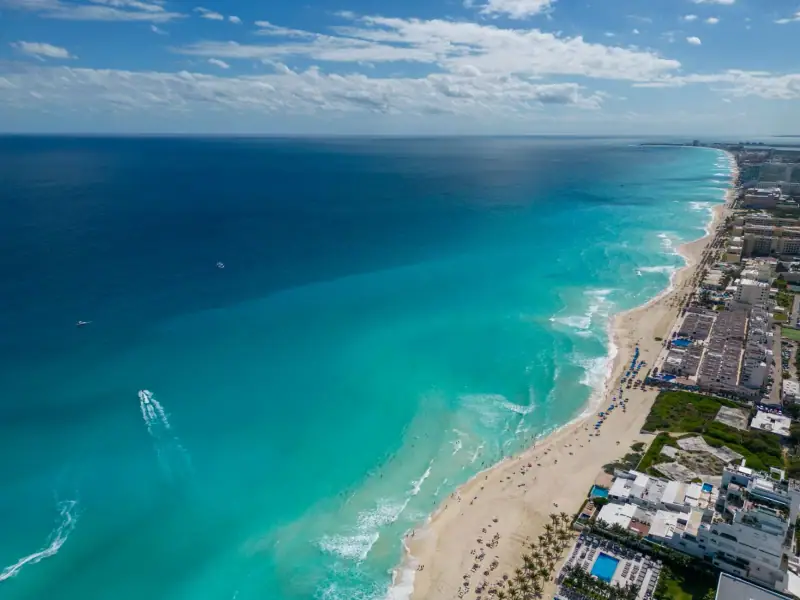
Cancún is split into two worlds. On one side, the hotel zone, a long strip of sand between the Caribbean Sea and the lagoon, lined with big hotels and all-inclusive resorts. On the other, downtown, more authentic and clearly cheaper, with its markets, neighborhood restaurants and hostels.
The hotel zone suits families and travelers who want a turnkey package: beach at the door, pools, entertainment, services and simple transfers from the airport, which is south of the city. Downtown appeals to budget travelers and those who want a taste of ordinary Mexican life, but it is far enough from the beach to need a bus or taxi.
Cancún is also the natural starting point for Isla Mujeres, reached by ferry from the north of the urban area. It is a practical base if your stay is short or if you arrive late or leave early by plane.
Who is it for? Families, fans of all-inclusive deals, short stays, travelers who want to minimize transfers. Less suited if you want a village feel or a very nature-focused stay.
Playa del Carmen: the most versatile base
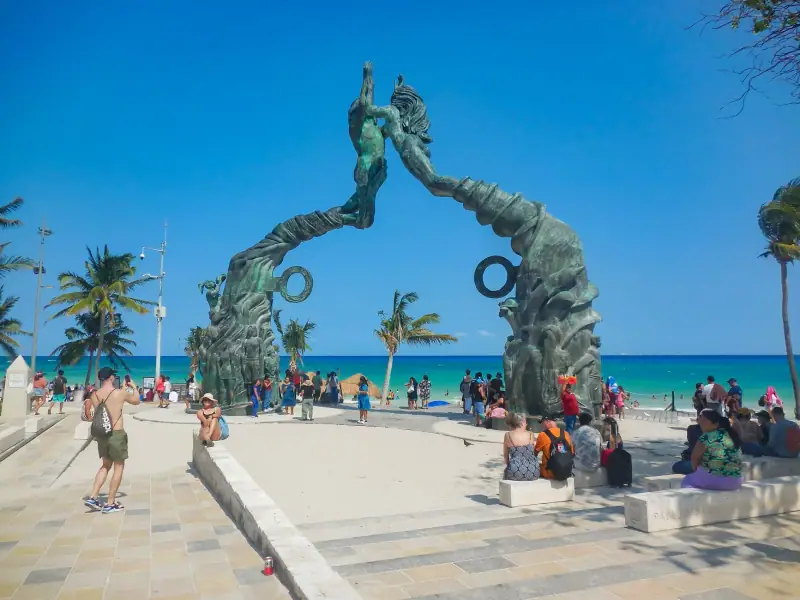
Playa del Carmen is the town where most travelers spend at least a few nights. Its pedestrian artery, Quinta Avenida, runs parallel to the sea and concentrates shops, bars and restaurants. From there you reach the beach on foot, and the town is compact enough that you do not need a car day to day.
Main assets: a very wide choice of lodging, from hostels to boutique hotels and apartments; lively nightlife; the ferry to Cozumel island, which leaves from the center; and a central position on the coast. It is also one of the simplest bases for day trips to the cenotes and Chichén Itzá, which we detail in our article on Yucatán cenotes and our guide to visiting Chichén Itzá.
The downside is the crowds: in high season, Quinta Avenida is very busy, and streets near the center can be noisy in the evening. To sleep more quietly, look at areas a little away from the main avenue, while checking the walking distance to the beach.
Hotels in Playa del Carmen
A practical, lively base, within walking distance of the beach and the ferry to Cozumel.
Tulum: nature, ruins and a bohemian vibe
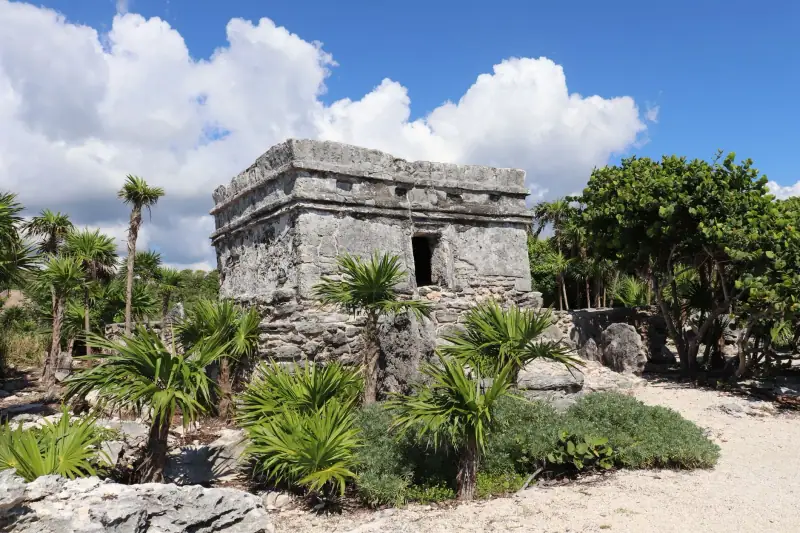
Tulum is the trendiest town on the coast, and also the one that demands the most thought, because it is organized into three distinct zones:
- The village (pueblo), inland, along the main road: restaurants, shops, agencies, lodging of all categories, the feel of a touristy small town. It is the cheapest area.
- The hotel zone road, which runs along the beach to the south: cabins, small boutique hotels, wild beaches, seaside restaurants. Prices are highest here, and comfort varies (electricity sometimes limited, Wi-Fi irregular).
- The archaeological site, perched above the sea, north of the hotel zone, which we describe in our guide to visiting Tulum.
The choice often comes down to a trade-off: the village for a reasonable budget and easy access to nearby cenotes, the coastal zone for the change of scenery of sleeping steps from the sea. In both cases, a bike is an excellent way to get around, and taxis are plentiful but sometimes expensive: ask the fare before getting in.
Tulum also has an international airport that opened in late 2023, but in 2026 its international service is limited and changes from one season to the next, so many flights still land in Cancún. Check which airlines and connections are offered when you book.
Who is it for? Couples, lovers of nature and cenote swims, travelers who like alternative atmospheres. Less suited to tight budgets in the coastal zone and to those looking for big-city nightlife.
Bacalar: the lagoon for a break off the beaten path
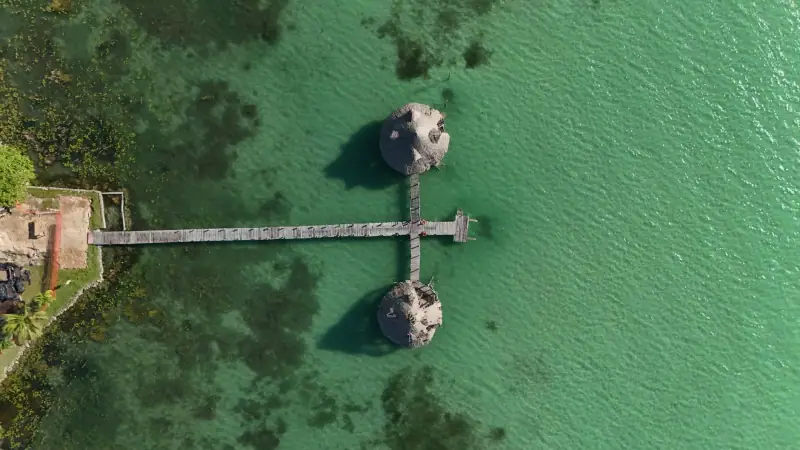
Further south, near the border with Belize, the small town of Bacalar sits on a large freshwater lagoon known for its shades of blue. The atmosphere is quiet: small family hotels, waterside lodging, kayaking, paddleboarding and swimming in a setting very different from the coastal beaches.
Bacalar is too far for a day trip from Cancún; it is better visited by extending the trip a few nights, for example after Tulum, as part of a circuit to the south. If your time is limited, it is better to concentrate on the main coast and keep Bacalar for a second trip.
Quick comparison: which base to choose?
| Criterion | Cancún | Playa del Carmen | Tulum | Bacalar |
|---|---|---|---|---|
| Atmosphere | Big hotels, all-inclusive | Lively, pedestrian | Nature, bohemian | Calm, lagoon |
| Budget | Wide range | Wide range | High by the sea | Rather moderate |
| Without a car | Hotel zone: yes | Very easy | Doable, bike advised | Harder |
| Ideal for | Families, short stays | First stay | Couples, nature | Quiet break |
This summary is indicative: prices and atmosphere vary a lot by season and by the exact street. If you hesitate, Playa del Carmen is the safe bet; add Tulum if you want more of a change of scenery.
Excursions from the Riviera Maya
Cenotes, Maya sites, snorkeling: guided outings from the coast.
Which type of lodging to choose?
The coast offers every format, and the right choice depends on your trip.
All-inclusive resorts dominate in Cancún and along some stretches of coast. They simplify organization (meals, drinks, entertainment) and suit families. Check what is really included (à la carte restaurants, water activities, quality of drinks) and the state of the beach in front of the hotel.
Small hotels and guesthouses offer more character and local food, especially in Tulum and Playa del Carmen. Read recent reviews carefully for noise, cleanliness and the reliability of hot water or air conditioning.
Hostels are numerous in the coastal towns and suit solo travelers or tight budgets. They often offer dorms and private rooms.
Apartments and rentals are handy for a long stay: kitchen, space, often good prices from a few nights.
Finally, think about air conditioning: in this hot, humid climate it is almost essential in most periods, and a fan alone may not be enough. To plan the whole budget, see our article on the budget for a trip to Mexico.
Choosing your season and neighborhood
The choice of base is tied to the season. High season is winter, when the weather is drier and milder; prices are higher and lodging fills quickly, so it is better to book early. In summer, humidity is high, storms are frequent and the hurricane season runs from summer to fall. Sargassum, brown seaweed that washes up on some beaches, varies a lot from year to year: if swimming in front of the hotel is essential, read recent reviews and look at travelers’ photos. Our article on the best time to visit Mexico details this calendar.
Finally, check the cancellation policy: flexible bookings are valuable when tropical weather can upset plans.
Combination ideas by length of stay
Here are a few simple splits, to adapt to your pace:
- 5 to 6 nights: a single base, Playa del Carmen or Tulum, with day trips to the cenotes and a Maya site.
- 7 to 9 nights: three to four nights in Playa del Carmen then three to four in Tulum, to alternate liveliness and nature.
- 10 nights or more: add Bacalar at the end of the stay, or Mérida and inland Yucatán for culture, as in our 10-day Mexico itinerary.
If you arrive in Cancún, the simplest is to sleep the first night near the airport or go straight to your first base by bus or private transfer, then move south without going back through Cancún.
Practical tips before booking
- Check the exact location on the map: “Tulum” or “Playa del Carmen” in a listing can mean an address several kilometers from the center or the beach.
- Ask about extra fees: tourist taxes or service fees are sometimes payable at the property, depending on the property.
- Carry cash for small shops and taxis, even if cards are widely accepted in hotels.
- Protect yourself from the sun and mosquitoes: sunscreen suited to marine environments, repellent and light long clothing for the jungle.
- Plan ahead for entry rules: they depend on your passport. Check the official travel advice of your government before you book: travel.state.gov (US), GOV.UK (UK), travel.gc.ca (Canada), Smartraveller (Australia) (checked November 2026).
- Take out suitable travel insurance before you go.
The Riviera Maya rewards travelers who take the time to choose their base. Remember the simple rule: Cancún for the turnkey package, Playa del Carmen for versatility, Tulum for nature and Bacalar for calm. Whatever you choose, stay flexible: the closeness of the towns always lets you adjust your stay along the way.
Frequently asked questions
Where should you stay on the Riviera Maya for a first trip?
Playa del Carmen is often the most balanced base: beach, restaurants, nightlife, the ferry to Cozumel and a central position for reaching cenotes and Maya sites. Tulum appeals more to couples seeking nature and calm, Cancún to families who want big seafront resorts.
Should you stay in Cancún or Playa del Carmen?
Cancún offers big hotels, very long beaches and an international airport right there. Playa del Carmen is more compact, more pedestrian and easier for going out in the evening without a car. If you mainly come for the beach and all-inclusive, Cancún fits; if you want a town to explore on foot, choose Playa.
Where to stay in Tulum: the village or the seafront hotel zone?
The village (the pueblo) is cheaper, with many restaurants and varied lodging, but the beach is a few kilometers away. The coastal hotel zone offers direct sea access and a more natural feel, but clearly higher prices. You can get between the two by bike or taxi.
How many nights should you plan on the Riviera Maya?
Allow at least a week to combine beach, cenotes and a Maya site without rushing. Three to four nights in a first base, then three to four in a second, let you vary the atmosphere without multiplying suitcase moves.
Can you manage without a car on the Riviera Maya?
Yes, it is quite possible: long-distance buses and shared minibuses (colectivos) link the main towns on the coast, and organized excursions serve cenotes and archaeological sites. A car becomes useful if you want to link distant sites at your own pace.
Which period should you choose to avoid sargassum and hurricanes?
Sargassum landings vary from year to year and mostly affect late spring and summer, while the hurricane season runs from summer to fall. See our best-time guide and check recent forecasts before booking.
More Mexico guides
Keep reading

Sleeping near Cancún airport: late arrival or early flight, which option to choose?
Night arrival or dawn flight: should you sleep near Cancún airport? Nearby hotels, transfers, budget and alternatives in town, explained.
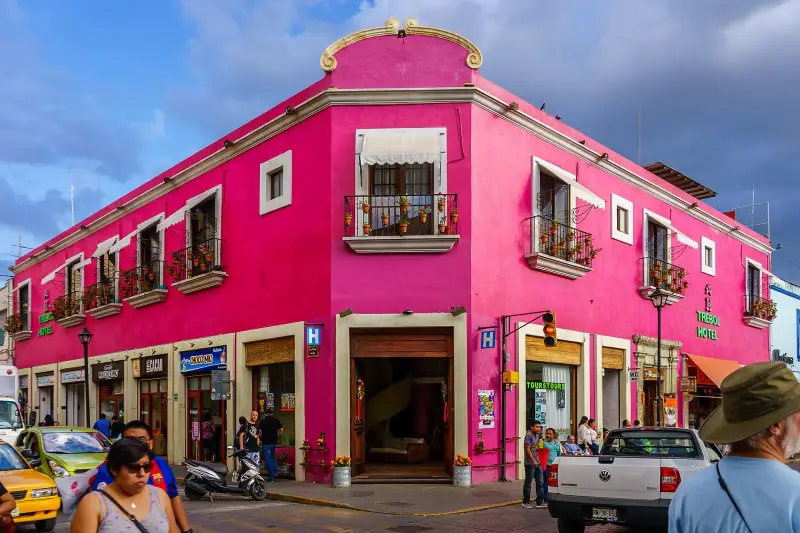
Where to stay in Oaxaca: neighborhoods, types of lodging and tips
Centro, Jalatlaco, Xochimilco, Reforma: compare the neighborhoods to stay in Oaxaca, the types of lodging, busy periods and tips for booking.

Where to stay in Mexico City: the best neighborhoods for your trip
Roma, Condesa, Centro Histórico, Polanco, Coyoacán: compare the neighborhoods to stay in Mexico City by budget, interests and travel style.
Ready-made
Mexico itineraries

7 days
Yucatán road trip in 7 days: Cancún, Valladolid, Mérida and Chichén Itzá
TulumValladolidMérida
Can be adapted in the planner
7 days
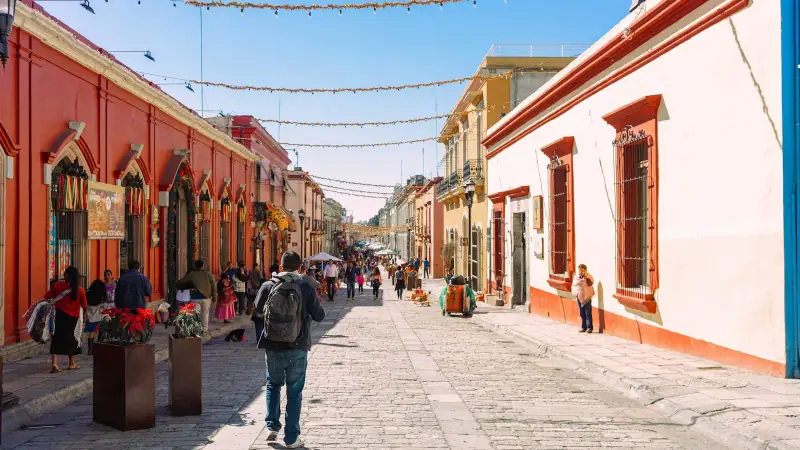
Mexico City, Puebla and Oaxaca in one week without a car: a realistic bus itinerary
Mexico CityPueblaOaxaca
3 days
3 days in Mexico City: a day-by-day itinerary for a first stay
What to do in 3 days in Mexico City? Historic center, museums, Coyoacán, Xochimilco or Teotihuacán: a realistic itinerary with altitude and transport tips.