What to see
Complete guide to visiting Madagascar: regions, highlights and tips
We may earn a commission when you book through links on this page, at no extra cost to you. We don't visit or try the places we cover: we summarize published sources. How we work
In short
- Madagascar is divided into five regions: the Highlands, the South and RN7, the West, the North and the East. Distances are counted in days more than kilometers.
- The dry season, roughly May to October, is the most comfortable for a first trip; November to April is the rainy season, with cyclone risk on the coasts.
- A car with a driver is the most common way to travel; plan no more than 150 to 200 km (93 to 124 mi) a day by road and keep spare days.
- Two weeks allow two or three regions; add a third week for the West or the North. Currency is the ariary; carry cash outside towns.
Madagascar is like no other destination. The fourth-largest island in the world, detached from Africa for tens of millions of years, it has developed wildlife and plants found almost nowhere else: lemurs, chameleons, giant baobabs, limestone stone forests, sandstone canyons. People come for nature, but also for Malagasy culture, the food, the rice-paddy landscapes and the famously slow roads.
This richness has a flip side: organizing a trip to Madagascar takes preparation. Distances are counted in days more than kilometers, the major sites are scattered, and seasons strongly influence what you can do. This complete guide to visiting Madagascar is the site’s main article. It presents the country, its five major regions, the highlights, the best periods to go, how to arrive and get around, the types of lodging and how to build your budget. At each step, it points to our detailed guides.
Madagascar at a glance: what to know before you go
Madagascar is an island in the Indian Ocean, off the east coast of Africa, from which it is separated by the Mozambique Channel. It covers a vast area with strongly contrasting terrain: central Highlands, a humid and green east coast, a drier west coast and semi-arid zones in the south.
The capital is Antananarivo, often called “Tana”. The currency is the ariary. The official languages are Malagasy and French; English is less commonly spoken outside tourist areas.
What makes the country unique is above all its endemism: the vast majority of lemur and chameleon species and many plants live only here. This explains the value of the national parks and reserves, which are almost always visited with a local guide.
Madagascar is also a country where living standards are modest and infrastructure is limited. Plan for flexibility: a trip can take longer than expected, schedules are indicative, and surprises are part of the journey. With the right mindset and a realistic itinerary, it is a memorable destination.
The five main regions to know
To find your way, the trip is generally divided into five main areas. Each has its identity, its landscapes and its ideal period.
The Highlands: Antananarivo, Antsirabe, Fianarantsoa
In the center of the country, the Highlands are the historic and cultural heart of Madagascar. They hold the capital, Antsirabe, a spa town known for its pousse-pousse rickshaws, and Fianarantsoa, a highland town with its old town and vineyards. The landscape is a succession of hills, terraced rice paddies and red-brick villages. It is also the starting point of most circuits. Nights are cool in the southern winter.
The South and the RN7: Ranomafana, Isalo, Ifaty
National road 7 links Antananarivo to Toliara and crosses varied landscapes: mountains, plateaus, sandstone canyons and, at the end, the coast. It is the most classic itinerary for a first trip. It passes through Ranomafana, a high-altitude rainforest, then the Isalo massif, before reaching the beaches of the Toliara region. Our article on national road 7 details the stages.
The West: Morondava, baobabs and tsingy
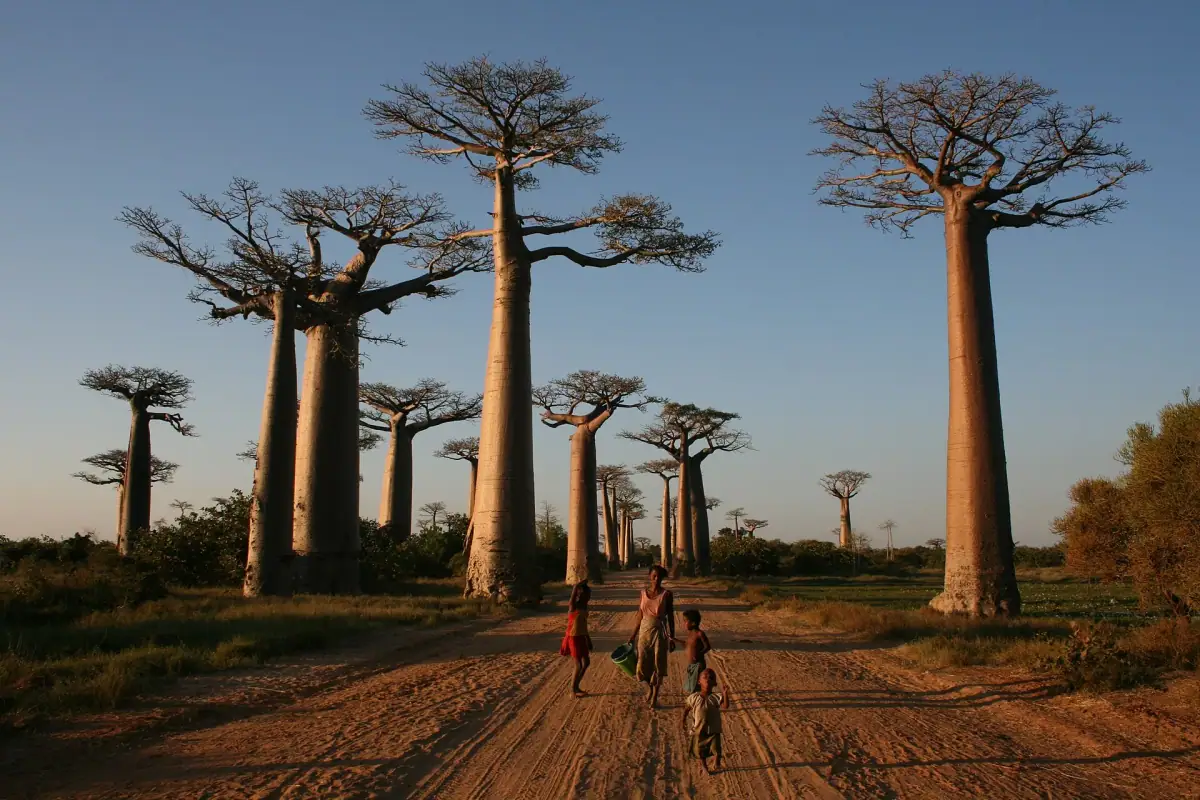
The west coast is the region of baobabs and tsingy. Morondava is the gateway to the Avenue of the Baobabs, probably the country’s most famous image, and the starting point toward the Bemaraha tsingy, a UNESCO-listed landscape of limestone blades. The region is hotter and drier. Tracks there are rougher, notably in the rainy season.
The North: Diego Suarez, Nosy Be, Ankarana
The north brings together very different landscapes: the bay of Diego Suarez (Antsiranana), the limestone formations of Ankarana and tropical islands such as Nosy Be. It is the most seaside region, ideal to extend a circuit with a few days of beach, snorkeling or boating. Nosy Be can be reached by plane from the capital, which avoids long trips.
The East: Andasibe, the Pangalanes Canal, Sainte-Marie
The east is the humid, green face of the island. It holds the Andasibe-Mantadia reserve, the Pangalanes Canal, a long network of lakes and canals parallel to the coast, and Sainte-Marie Island, known for its beaches and, in season, humpback whale watching. It is also the region most exposed to rains and cyclones: the dry season remains preferable.
Cities to know
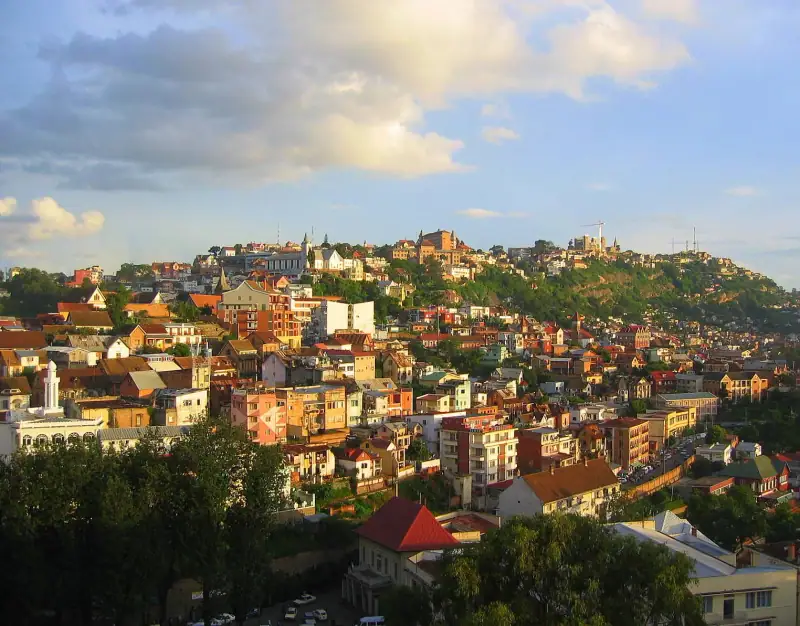
Madagascar is not a country of big tourist metropolises, but a few towns serve as stops and deserve a detour.
Antananarivo is the entry point for most travelers. Built on several hills, it is explored on foot in its old districts, with its stairs, markets and panorama from the Rova. It is lively, sometimes congested. One or two days are generally enough, time to recover from the trip and prepare what comes next.
Antsirabe, south of the capital, is a highland town known for its quiet atmosphere, colorful pousse-pousse rickshaws and crafts. It is a pleasant first stop on the RN7.
Fianarantsoa is considered the intellectual and religious capital of the Highlands. Its old town, perched on a hill, is the most interesting part. The region is known for wine and tea production.
Toliara (Tulear) is the southwest’s big city, the end point of the RN7 and the starting point toward the beaches of Ifaty. It is hot, dry and fairly lively.
Morondava, on the west coast, is a quiet seaside town. People stop there mainly for the baobabs and the tsingy.
Diego Suarez (Antsiranana), at the far north, is a bay town, an ideal base to explore Montagne d’Ambre, Ankarana and the surroundings.
Nosy Be, finally, is the big tourist island of the northwest, with beaches, perfume-plant plantations and sea excursions. Our guide Nosy Be: what to do, beaches and excursions helps you organize your stay.
Flights to Madagascar
Compare flights to Antananarivo and choose your dates according to the season.
Madagascar’s highlights
If you had to remember only a few sites, these are the ones that come up almost always in a first trip. Our detailed selection is in the article what to see in Madagascar: the 10 top sights.
The Avenue of the Baobabs
Near Morondava, a dirt track is lined with large baobabs, some reaching several tens of meters. The light of sunrise and sunset makes the place particularly photogenic, and it is one of the country’s emblematic images. To avoid the crowd and choose the best hour, see our guide to the Avenue of the Baobabs.
The Bemaraha tsingy
Tsingy are eroded limestone blades, sharp and tightly packed, forming a stone forest. The Tsingy de Bemaraha reserve is a UNESCO World Heritage site. The route combines walkways, ladders and suspension bridges, with safety equipment provided. Access is long from Morondava and the visit is planned over several days: see our guide to the Bemaraha tsingy.
Isalo National Park
The Isalo massif offers landscapes of eroded sandstone, canyons, ochre plateaus and natural pools. It is explored on foot, with a guide, on trails of a few hours or several days. Lemurs can be seen on some routes. Practical details are in our article on Isalo National Park.
Andasibe-Mantadia and the indris
East of the capital, Andasibe is one of the best places to see the indri, the largest lemur, whose song echoes through the rainforest. Outings are with a guide, by day and sometimes at night. The site can be reached from Antananarivo in a few hours by road, which makes it an ideal first wildlife excursion. Find all the tips in our guide to Andasibe-Mantadia.
Nosy Be and the northern islands
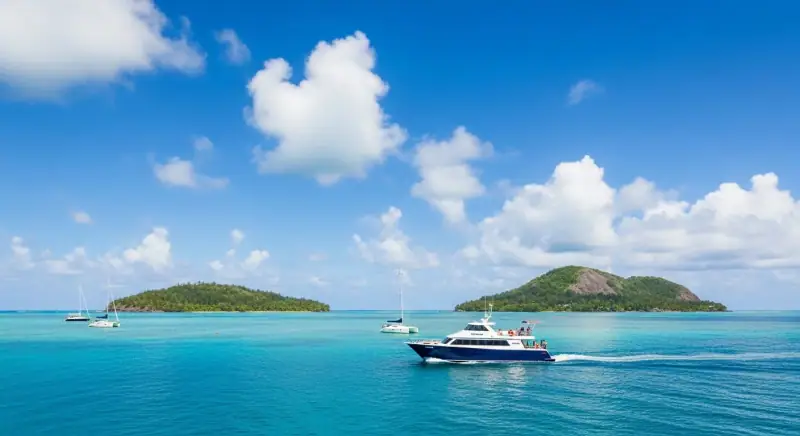
For relaxation, Nosy Be and its neighboring islets offer beaches, boat rides, perfume-plant plantations and seabeds that are pleasant for snorkeling. They are ideal extensions after a circuit on the roads of the interior.
Ambohimanga and Malagasy culture
North of the capital, the royal hill of Ambohimanga is a UNESCO World Heritage site. This former fortified royal city remains a place of memory and spirituality for the Malagasy. Visited with a local guide, it provides precious cultural bearings before discovering the rest of the country.
When to go to Madagascar
Choosing the period is one of the most important decisions. Madagascar has two main seasons: a dry and cooler season, roughly May to October, and a hot and humid season, roughly November to April, marked by rains and the risk of cyclones on the coasts.
The dry season is the most comfortable for a first trip. It rains little, roads are more passable and hikes in the parks are more pleasant. It is also the period when wildlife is easiest to see. In the Highlands, nights can be cool, even cold at altitude.
The rainy season turns landscapes green and reduces visitor numbers, but it complicates travel: some tracks, notably in the west, become difficult or even impassable, and cyclones can hit the east coast and the north. Some lodgings adapt their activity.
Each region has its nuances. The south and west are drier, the east stays humid all year, and the north has its own rhythm, which sometimes lets you combine regions depending on the season. Our article when to go to Madagascar details the weather region by region and month by month. Also think of booking early if you travel in high season, because availability of lodging and domestic flights shrinks.
How to get to Madagascar
Most travelers arrive by plane in Antananarivo, at Ivato international airport (TNR). Other connections go through hubs in the region or in Africa.
For travelers who want to go straight to the north, Nosy Be airport receives flights from the capital and, depending on the season, some international flights. Check the connections when you book.
Formalities are not to be neglected: entry rules depend on your passport. Check the official travel advice of your government before you book: travel.state.gov (US), GOV.UK (UK), travel.gc.ca (Canada), Smartraveller (Australia) (checked November 2026). Insurance including repatriation is advised.
On health, ask your doctor or a travel clinic, and see the official travel health pages (CDC in the US, TravelHealthPro in the UK). Bring a first-aid kit and mosquito repellent.
How to get around Madagascar
This is the point that surprises travelers most: getting around takes time. Roads are often narrow, winding in the mountains, shared with trucks, zebu carts, bicycles and pedestrians. A 200 km (124 mi) stage can take half a day, even a day.
Car with a driver
This is the most common option. The driver knows the road, the stops and the current conditions, and you avoid tiring driving. It also offers flexibility to stop in villages or at a viewpoint. It suits couples, families and small groups.
Organized tour
Handy if you want lodging, park guides and transfers put together. It is often the simplest solution for a first stay, notably in the west, where tracks call for a suitable vehicle.
Domestic flights
To reach the north, the west or the coast, the plane saves a lot of time. Domestic flights can however be changed or delayed: keep a margin before your international flight.
Shared taxis (taxis-brousse) and buses
Cheap, but slow and inflexible: they suit experienced travelers with time, less so those with a tight program.
Renting a car
Renting without a driver is possible but not recommended for first stays, because of the state of the roads and night driving, to be avoided in all cases. If you consider renting, check the driving rules for foreign visitors with official sources before you go.
Where to stay in Madagascar
Lodging varies greatly by region. In Antananarivo, you find hotels of all levels, guesthouses and a few charming addresses. On the RN7, the stops at Antsirabe, Fianarantsoa and near Isalo offer simple hotels, lodges and bungalows. In the west, lodging around Morondava is mostly small hotels and seaside bungalows. In Nosy Be and on the north coast, the offer ranges from guesthouses to upscale seafront resorts.
A few principles help you choose:
- Book ahead the key nights: arrival in Antananarivo, stops near the parks, a beach stay in high season.
- Think about location rather than maximum comfort for transit stops: a simple night is often enough.
- Check the conditions: hot water, electricity, air conditioning or mosquito net, depending on the region and the season.
- Keep a more generous budget for places where the setting really matters: seaside, a lodge near a park.
Hotels in Antananarivo
Compare hotels in the capital for the first and last night of your trip.
Our article where to stay in Madagascar presents in detail the types of lodging and the best areas region by region.
What to eat: an overview of Malagasy cuisine
Malagasy cuisine is simple, tasty and centered on rice, served at almost every meal. It comes with “laoka”, a side dish of meat, fish or vegetables. Zebu, fish, shrimp, greens (cooked leafy greens) and romazava, a dish of meat and leaves, are among the dishes you will often come across.
On the coast, fish and seafood are the stars. Condiments and chilies are found everywhere to spice up dishes. Tropical fruits are excellent: mangoes, lychees in season, bananas, pineapples. For drinks, coffee, tea and rum infused with fruit and spices are among the classics.
For health precautions, favor bottled water with a sealed cap, avoid ice cubes in doubtful places and choose busy restaurants. Our guide to Malagasy cuisine and its specialties to try helps you spot the dishes worth trying.
Activities: nature, hiking and sea
Madagascar is above all a destination for nature activities.
Wildlife watching. Lemurs, chameleons, birds, frogs: national parks and private reserves offer day and night outings. A local guide is essential: he or she spots the animals and knows the trails.
Hiking. From a few hours to several days, walks take place in Isalo, at Ranomafana, at Andasibe or around the tsingy. Bring good shoes, water and sun or rain protection depending on the region.
The sea. In Nosy Be, on Sainte-Marie and on the southwest coast, people snorkel, dive, take boat rides and sometimes watch humpback whales in season. Check the period and conditions with your lodging.
Culture. Markets, villages, crafts, royal sites, terraced rice paddies: taking time to meet residents is one of the finest ways to travel here. Respect the “fady”, the local taboos, which your guide will explain.
Excursions and activities in Madagascar
Browse the available excursions: guided visits, nature outings and boat rides.
Which itinerary to choose?
The hardest part is choosing. Here are three approaches for a first trip, to adapt to your length and the season.
Two weeks: the Highlands and the RN7. This is the classic circuit: start in Antananarivo, stops at Antsirabe and Fianarantsoa, Ranomafana as an option, Isalo, then Toliara and the beaches of Ifaty. It combines culture, landscapes and nature. For the detail of stages and durations, see our article on the RN7.
Two weeks: the west. Morondava, the Avenue of the Baobabs and the Bemaraha tsingy form a spectacular circuit that is demanding in travel. It suits the dry season better.
Three weeks: combining two major axes. By adding Andasibe or a beach extension in Nosy Be, you can combine several regions, using the plane for some sections.
A useful rule: never plan more than 150 to 200 km (93 to 124 mi) a day by road, and plan spare days. Surprises (rain, a closed road, a breakdown) are common, and a schedule that is too tight spoils the pleasure.
What budget to plan for Madagascar?
It is hard to give a single amount, because the gaps are large depending on travel style. The main items are as follows:
- The international flight: often the biggest item. Prices vary strongly with the season and how early you book: compare offers several weeks ahead.
- Local transport: car with a driver, domestic flights, taxis-brousse. A car with a driver costs more than shared transport but is simpler.
- Lodging: very variable between a simple room in a mid-sized town and an upscale bungalow in Nosy Be. The capital and the seaside islands are more expensive than the interior.
- Parks and guides: national park entry fees and guide services are required at most sites. Ask about current rates.
- Visa and insurance: any visa fee depends on your passport and the length of stay (see the official sources above), and insurance with repatriation is advised.
- Meals: local food is cheap, tourist restaurants cost more.
Rather than aiming for an average budget, set a ceiling per item. For money, withdraw ariary in town, because ATMs are rare between major stops, and keep cash for small purchases, tips and parks. Rates change: check with providers when you book.
Practical tips for traveling well
- Plan for flexibility. A half-day shift is normal. Do not plan an important flight the day after a long road trip.
- Travel light but equipped. A waterproof jacket, good shoes, a headlamp and a hat are useful almost all year. Also bring warm layers for nights at altitude.
- Respect residents. Ask permission before photographing, respect sacred places and follow your guide’s advice on the “fady”.
- Support the local economy. Favor local guides, craftspeople and lodging, and do not give money to children: prefer supporting a school or a recognized association.
- Pay attention to safety. Avoid driving at night, do not show valuables and check the official travel advice of your government before leaving (see the sources above).
- Protect wildlife. Do not feed lemurs, do not touch them and keep your distance, as guides ask.
Where to start?
If you are preparing your trip, here is a suggested order to follow:
- Choose your dates with the article when to go to Madagascar.
- Check your formalities: passport, visa, health, insurance.
- Select your stops with what to see in Madagascar.
- Build the itinerary, for example with the RN7.
- Book your nights with where to stay in Madagascar.
- Complete with activities: Andasibe, Isalo, Bemaraha tsingy, Nosy Be and the Avenue of the Baobabs.
- For food, browse our guide to Malagasy cuisine.
In summary
Madagascar rewards travelers who take their time. Choose one or two regions rather than the whole island, travel in the dry season for a first stay, plan spare days and use a driver or local guide to get the most out of the roads and parks. Between baobabs, tsingy, canyons, lemur forests and the beaches of the north, you will have what it takes to compose an unforgettable trip, at your own pace and according to your budget.
Frequently asked questions
How long do you need to visit Madagascar?
Two weeks allow you to combine two or three regions, for example the Highlands, the RN7 and a beach. With three weeks, you can add the west (baobabs, tsingy) or the north. Distances are short on the map but roads are slow: it is better to see less and take your time.
What is the best period to go to Madagascar?
The dry season, roughly May to October, is the most comfortable for a first trip: little rain, more passable roads, good conditions for hikes and wildlife watching. November to April is the rainy season, with a risk of cyclones on the coasts.
Do you need a visa for Madagascar?
Entry rules depend on your passport. Check the official travel advice of your government before you book: travel.state.gov (US), GOV.UK (UK), travel.gc.ca (Canada), Smartraveller (Australia) (checked November 2026).
Is it possible to travel alone in Madagascar?
Yes, many travelers do, but getting around takes organization: slow roads, few comfortable transport options and rare ATMs outside towns. Many choose a car with a driver, an organized tour or domestic flights for long distances.
Can you drive yourself in Madagascar?
It is possible but not recommended for a first stay: narrow, winding roads, pedestrians, carts and trucks, and night driving to avoid. A car with a driver is the most common option, because the driver knows the road and the stops.
What are the must-see sights of Madagascar?
The classics are the Avenue of the Baobabs near Morondava, the Bemaraha tsingy, the Isalo massif, the Andasibe reserve for indris, Nosy Be and the royal hill of Ambohimanga near Antananarivo.
Where can you see lemurs in Madagascar?
Andasibe-Mantadia is famous for the indri, the largest lemur. Ranomafana, Isalo and several reserves in the west and north also let you see them. Lemurs live naturally only in Madagascar.
Is Madagascar a beach destination?
Yes, especially in the northwest around Nosy Be, on the southwest coast toward Ifaty and on Sainte-Marie Island in the east. They complement a nature circuit well. Choose the coast according to the season, because the weather differs from one side to the other.
More Madagascar guides
Keep reading
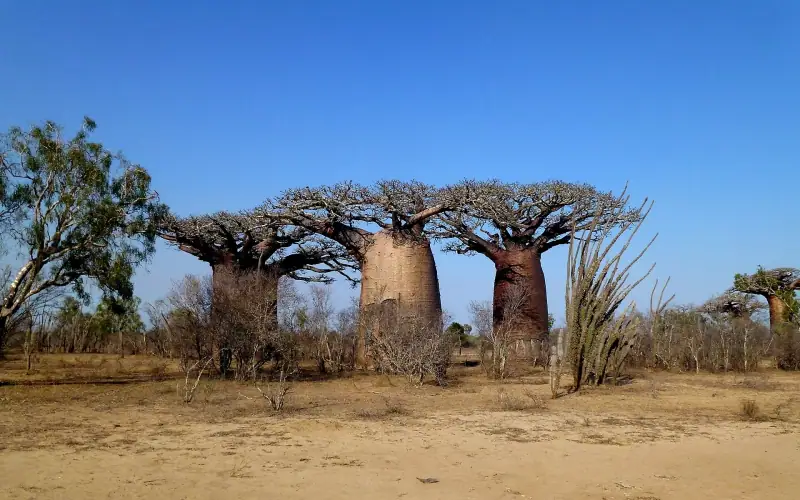
What to see in Madagascar: the 10 top sights
What to see in Madagascar? Baobabs, tsingy, Isalo, Andasibe lemurs, Nosy Be: a selection of 10 top sights to help you prepare your trip.
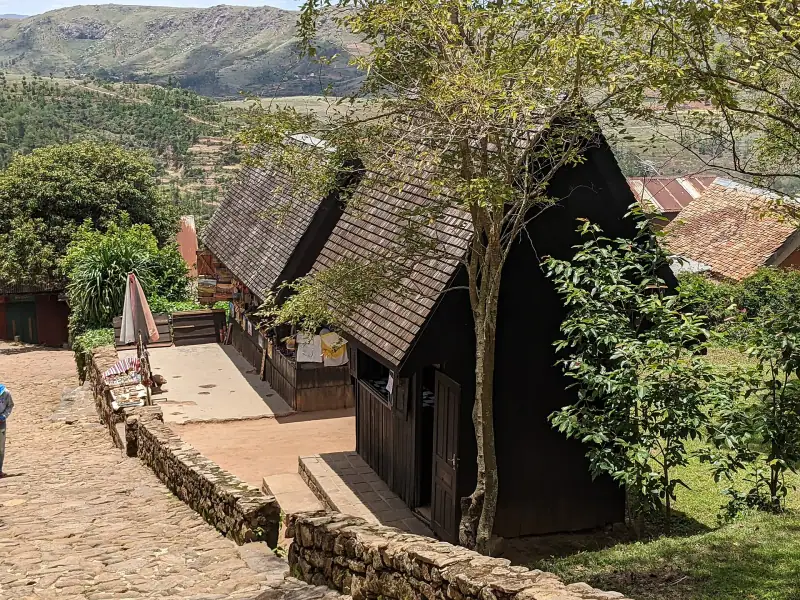
Ambohimanga from Antananarivo: access, prices, hours and a half-day visit
How to visit the royal hill of Ambohimanga from Antananarivo: access by taxi or bus, prices, opening hours, site rules and length of the visit.
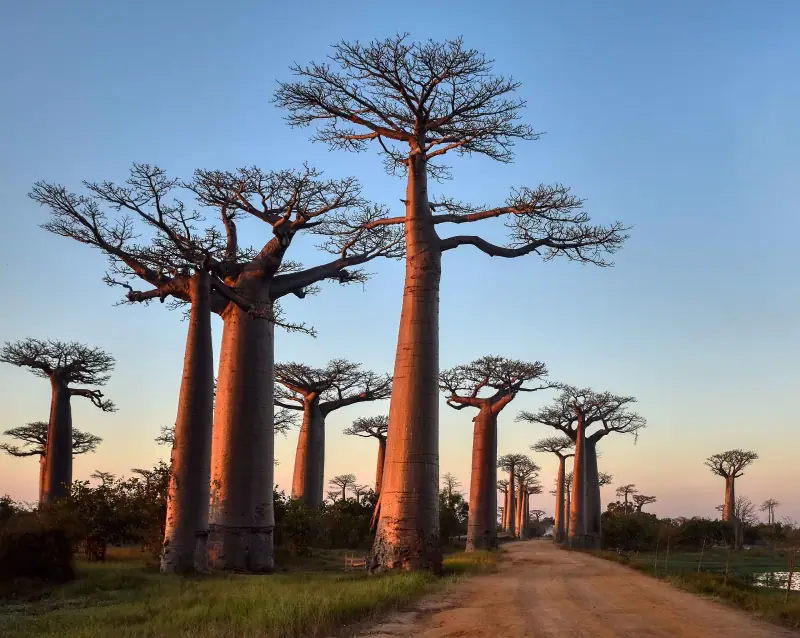
Avenue of the Baobabs in Morondava: how to visit
Guide to the Avenue of the Baobabs near Morondava: best time, getting there from Antananarivo, Kirindy, Bemaraha tsingy, length of stay and tips.
Ready-made
Madagascar itineraries
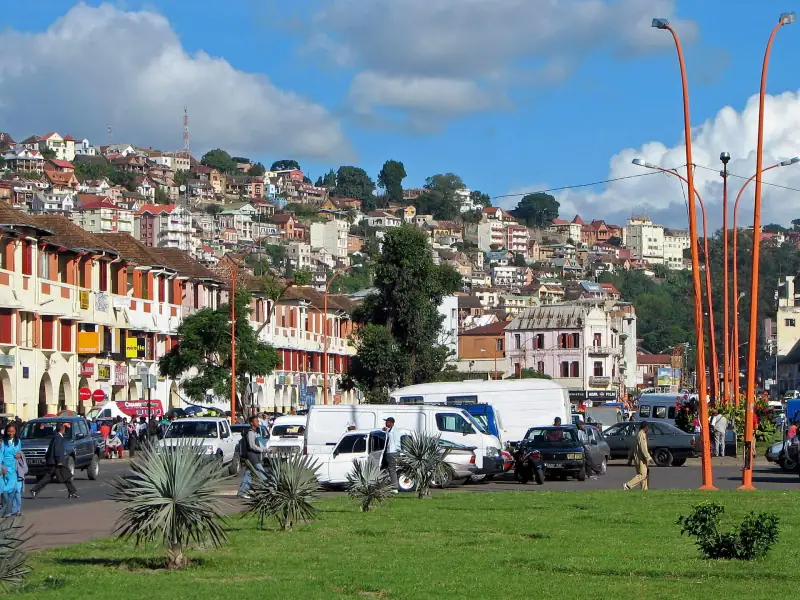
12 days
National road 7 in Madagascar: itinerary from Antananarivo to Toliara
Detailed RN7 itinerary in Madagascar: Antsirabe, Fianarantsoa, Ambalavao, Isalo and Toliara. Stages, drive times, practical tips and trip organization.
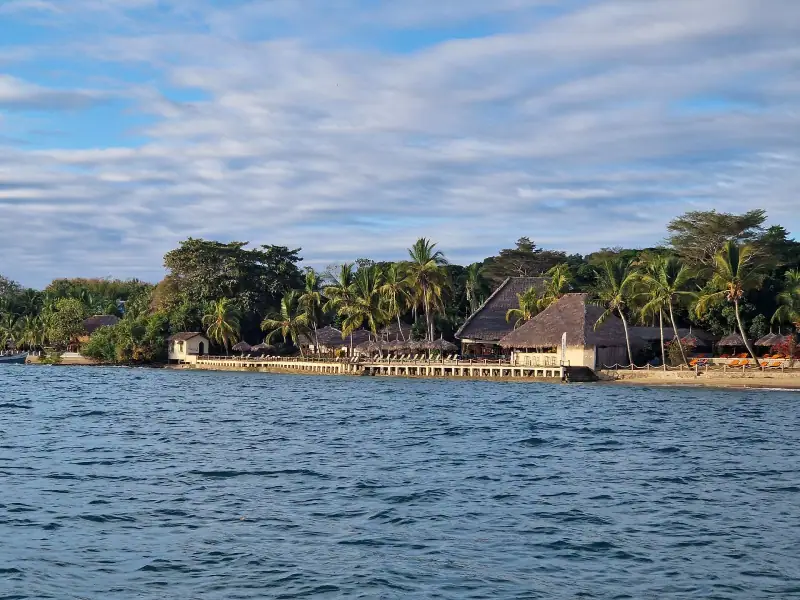
14 days
Madagascar in 2 weeks: day-by-day itinerary and variants
A 14-day itinerary in Madagascar: Andasibe, RN7, Isalo, beach, with two variants (West and baobabs, North and Nosy Be), pace, transport and time budget.
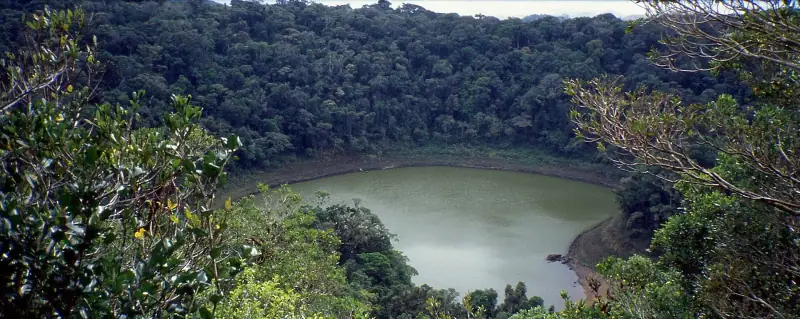
7 days
Northern Madagascar in 7 days: Diego Suarez, Ankarana and Montagne d'Ambre
7-day itinerary in northern Madagascar: Diego Suarez, Montagne d'Ambre, Red Tsingy, Ankarana, Ramena and an end in Nosy Be, with realistic trips and tips.