What to see
What to see in Madagascar: the 10 top sights
We may earn a commission when you book through links on this page, at no extra cost to you. We don't visit or try the places we cover: we summarize published sources. How we work
In short
- The ten sights run from the Highlands to the south, the west, then the north and the islands: Antananarivo, Ambohimanga, Andasibe, Ranomafana, Isalo, the baobabs, the tsingy, Nosy Be, Sainte-Marie, Diego Suarez.
- Sites are scattered and roads slow, so choose one or two regions rather than trying to see everything.
- Two weeks allow two or three regions; add a third week to include the west or the north.
- Guides are required in most parks; the Bemaraha tsingy can be closed in the rainy season.
Madagascar is the fourth-largest island in the world, and one of the most singular. Separated from Africa for a very long time, it is home to wildlife and plants found almost nowhere else: lemurs, chameleons, baobabs of astonishing shapes, stone forests. This richness has a downside: the major sites are scattered and the roads are slow, which forces you to choose.
Here are 10 sights in Madagascar, presented from the Highlands toward the south, the west, then the north and the islands. To choose your dates, see also our guide on when to go to Madagascar.
Antananarivo and the Rova hill
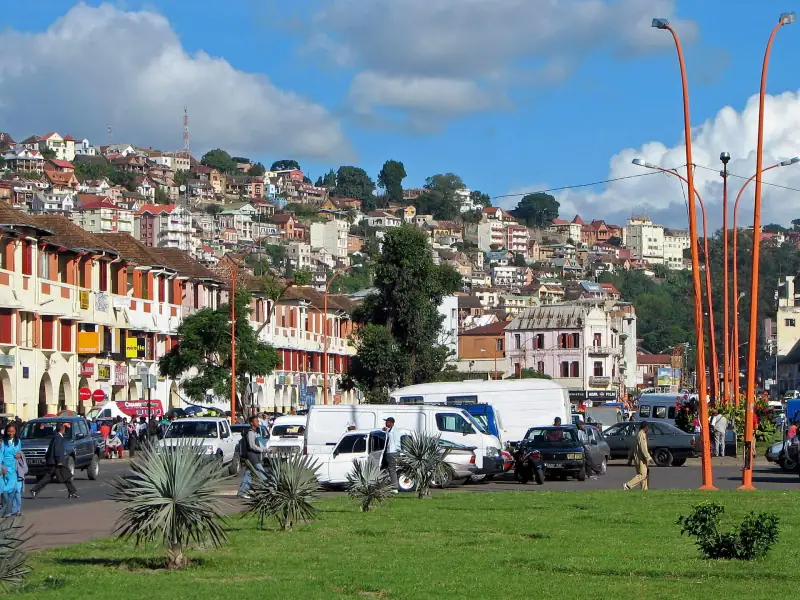
The capital is the arrival point for most travelers. Built on several hills, it is best discovered on foot in its old districts, with steep stairs and tiered houses. At the top of the city, the Rova, a former royal complex, overlooks the plain and offers one of the best panoramas over the city.
The site was badly hit by a fire in 1995 and has undergone restoration work since. Even if people mainly come for the view and the history of the Merina monarchy, it gives good bearings before heading to the rest of the country.
Antananarivo is a lively city, often congested. One or two days are generally enough: time to recover from the trip, discover the markets and prepare what comes next. The city is also the starting point of the RN7 to the south and of the road to the east.
Ambohimanga, the sacred hill
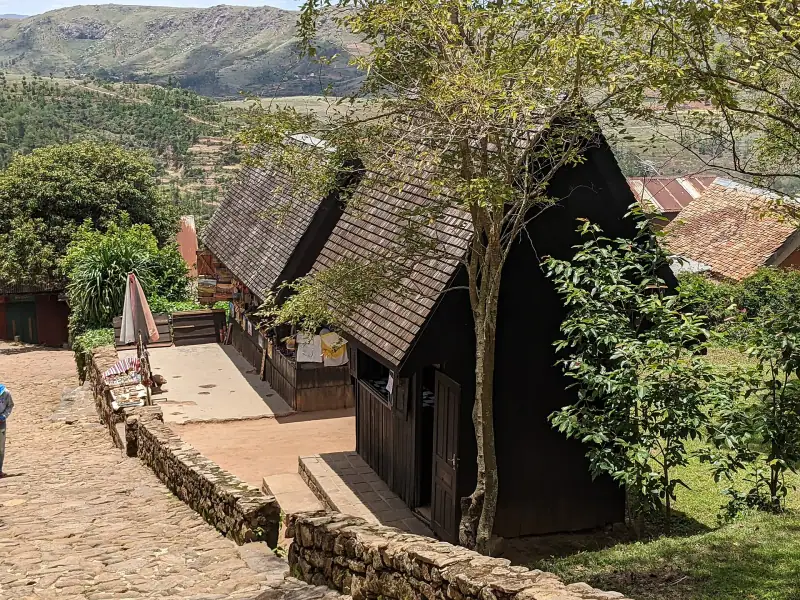
North of the capital, the royal hill of Ambohimanga has been a UNESCO World Heritage site since 2001. A former fortified royal city, it remains a very important place of memory and spirituality for the Malagasy.
You find stone gates, wooden palaces and a wide view over the surrounding hills. The visit is done with a local guide who explains the rites and taboos tied to the place. It is easily organized as a half day from Antananarivo, which makes it an excellent first cultural excursion.
Follow the rules at the site: some areas are sacred, and the regulations may ask you to take off your shoes or not to photograph certain places.
Hotels in Antananarivo
Compare hotels in the capital for the first and last night of your trip.
Andasibe and the indris
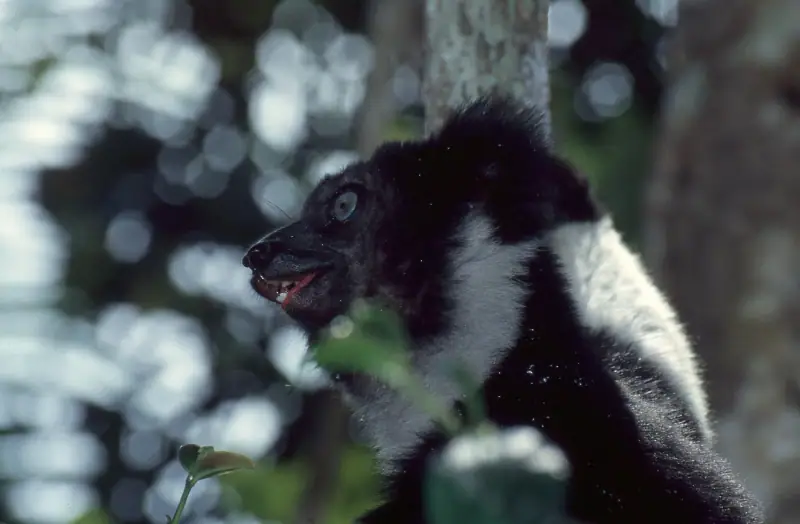
East of the capital, the Andasibe-Mantadia region is one of the best places to see the indri, the largest of the lemurs. Its calls, which carry very far through the rainforest, are among the most striking memories of a stay in Madagascar.
The reserve and the neighboring park are explored on foot with a guide, on trails through dense forest. You also come across other lemurs, chameleons, frogs and many birds. Night walks let you discover nocturnal species.
Generally allow three to four hours by road from Antananarivo, depending on traffic when leaving the city. Plan at least one night there to enjoy the forest early in the morning, when animals are most active. The climate is humid: bring a waterproof jacket and good shoes.
Ranomafana, rainforest of the Highlands
Further south, Ranomafana National Park protects a lush mountain forest crossed by rivers and hot springs. It is part of the Rainforests of the Atsinanana, a UNESCO World Heritage site.
The park is known for its diversity of lemurs, including rare bamboo lemur species, as well as its chameleons, birds and orchids. Hikes are done on foot with a guide, on trails that can be slippery.
Ranomafana lies on the road between Antsirabe, Fianarantsoa and the south, which makes it easy to include in an RN7 circuit. Nights can be cool and damp there, even in the dry season.
The Isalo massif
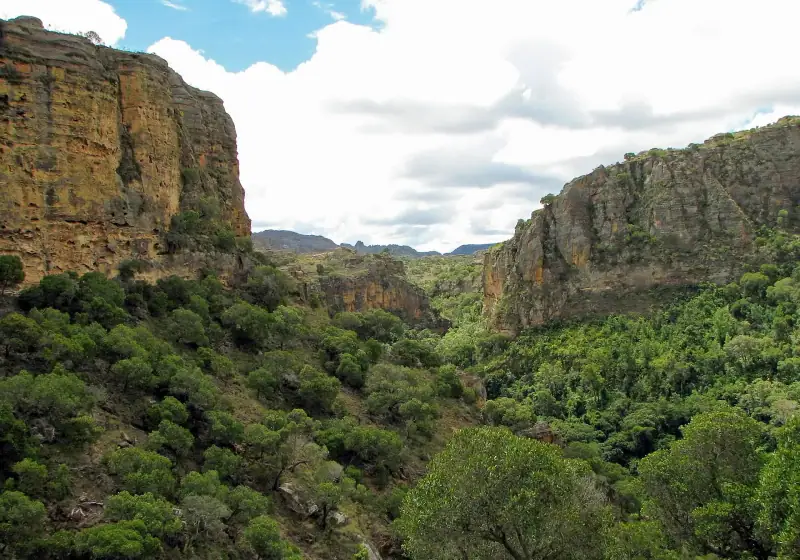
On the RN7, Isalo National Park completely changes the scenery: eroded sandstone, canyons, ochre plateaus and savanna. It is one of the most photographed sites in southern Madagascar, and one of the most pleasant to explore on foot.
Hikes range from a simple walk of a few hours to multi-day routes. They lead to canyons, natural pools and open viewpoints over the cliffs. You also see lemurs, notably ring-tailed lemurs, recognizable by their ringed tails.
The heat is strong in the middle of the day: set off early, carry plenty of water and protect yourself from the sun. The park is normally visited with a licensed guide.
Flights to Madagascar
Compare flights to Antananarivo: fares vary strongly with the period and the stopovers.
The Avenue of the Baobabs, near Morondava
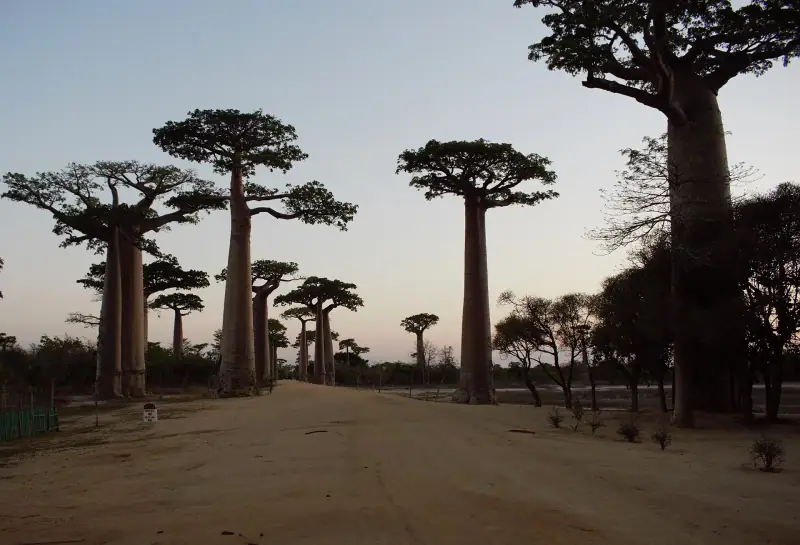
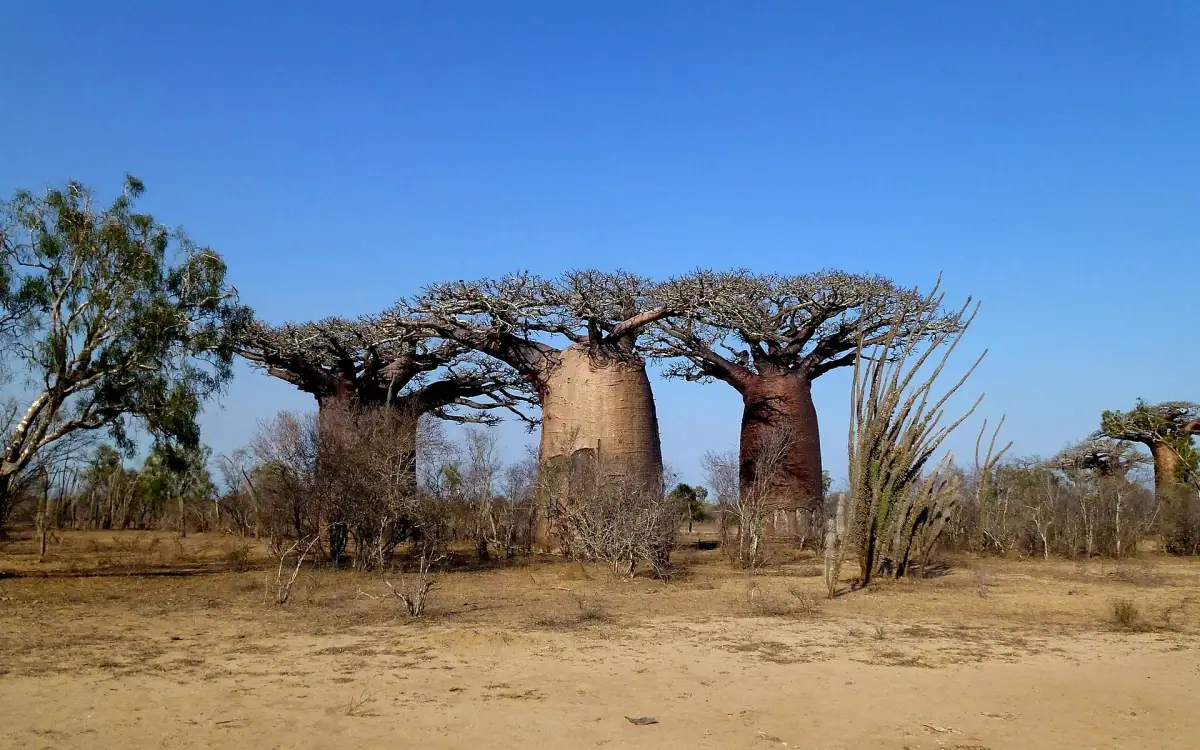
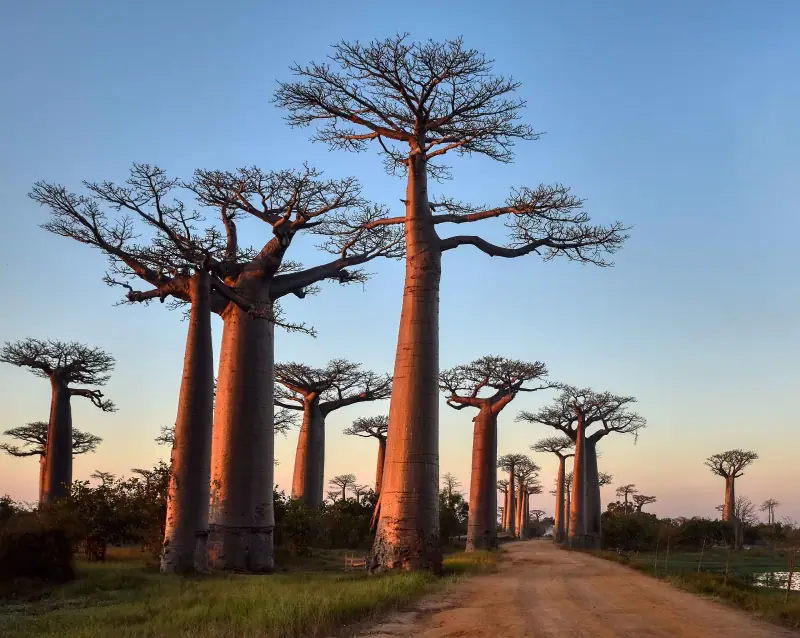
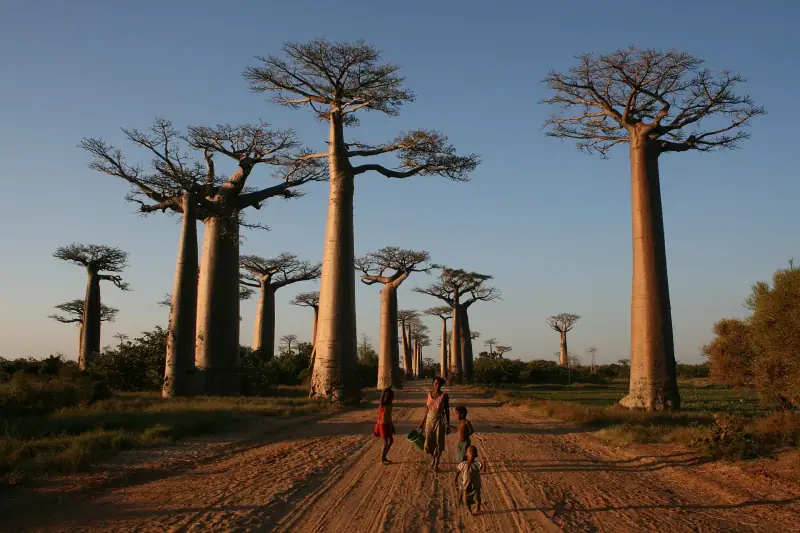
This is the emblematic image of Madagascar: Grandidier’s baobabs, tall and slender, lined up on both sides of a dirt track near Morondava, on the west coast. The late-afternoon light gives them golden, then red hues, much sought after by photographers.
The avenue is generally visited at the end of the day, at sunset, or very early in the morning to avoid the crowd. It is a short distance from Morondava, but the trip from the capital is long: many travelers take the road over several days or choose a domestic flight.
These trees are fragile and their environment is changing. Stay on the paths, do not climb the trunks and favor local guides so that the visit also benefits residents.
The Bemaraha tsingy
North of Morondava, the Tsingy de Bemaraha Strict Nature Reserve has been UNESCO-listed since 1990. Its “tsingy” are sharp limestone blades forming a stone forest, crossed by gorges, caves and dry forests.
The visit includes walkways, suspension bridges and equipped passages, with a safety harness. It requires a minimum of fitness, but no particular climbing experience. You come across lemurs, birds and plants adapted to drought.
Access is among the hardest on the island: the track is long, sometimes impassable in the rainy season, and the site can be closed during that period. Ask your host or a local operator before leaving, and build margin into your schedule.
Nosy Be, the big island of the northwest
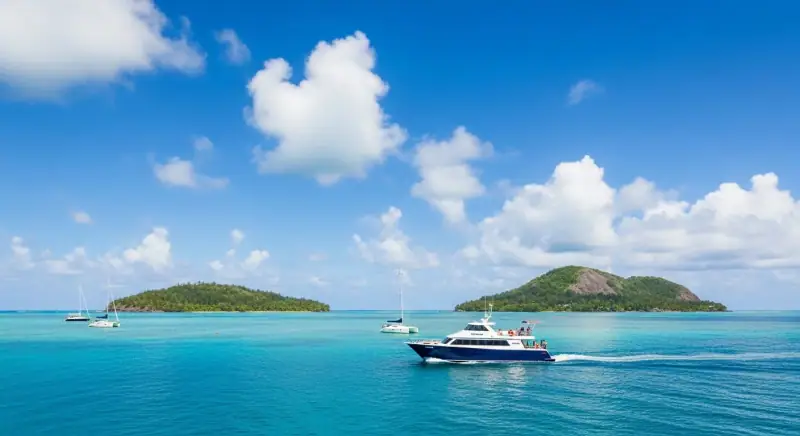
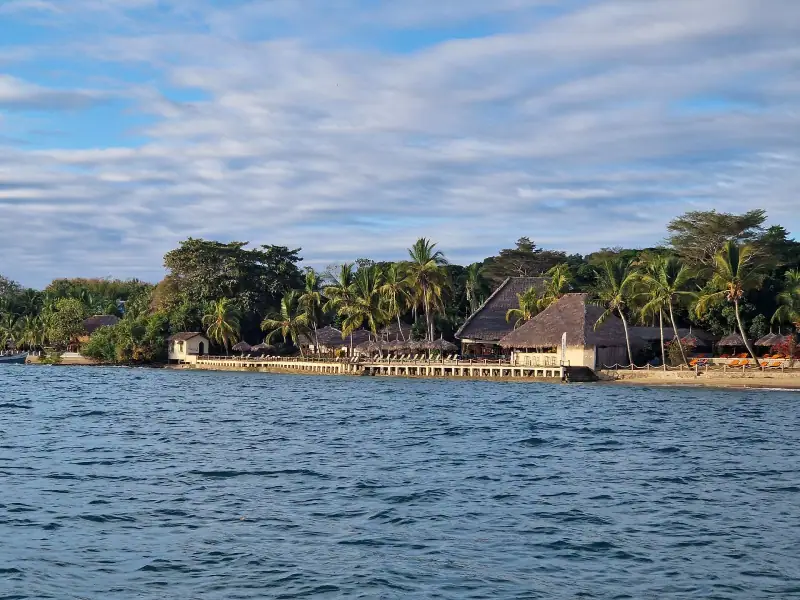
Nosy Be is Madagascar’s best-known seaside resort. Located off the northwest coast, it offers beaches, islets, warm waters and water activities: snorkeling, diving, boat trips, turtle watching.
The island is also known for its ylang-ylang, vanilla and sugarcane plantations, and for its Lokobe Reserve, home to lemurs and chameleons. Nosy Be serves as a base to reach neighboring islets by boat.
It is a good option to end a circuit: after the long roads of the interior, a few beach days help you recover. It can be reached by plane from the capital, which avoids long trips by road.
Excursions in Madagascar
Browse the guided visits and excursions available there: hikes, sea trips, nature tours.
Sainte-Marie Island and the humpback whales
On the east coast, Sainte-Marie Island (Nosy Boraha) is a long, narrow island lined with beaches and coconut groves, with a relaxed atmosphere. It is known for watching humpback whales, which visit its waters during the southern winter, approximately from July to September.
The island also has a past tied to piracy, with a pirate cemetery you can visit. You get around easily by scooter or bicycle, and you can combine beaches, diving and walks inland.
Whale-watching trips should be done with a reputable operator who respects approach distances and limits observation time. Ask how they supervise the activity before booking. Our guide to watching whales at Sainte-Marie details the season, booking and how a trip unfolds.
Diego Suarez and the north: Ankarana and Montagne d’Ambre
In the far north, the Diego Suarez (Antsiranana) region brings together varied landscapes: a bay famous for its beauty, mountain forests and limestone massifs. Montagne d’Ambre National Park, cool and humid, holds waterfalls, lemurs and many chameleons. The Ankarana reserve, drier, is known for its tsingy, caves and canyons.
This region is less visited than the RN7 or the west, but it requires more time and transport budget. It suits travelers who have already seen the big classics or who want a quieter trip, combining nature and sea.
Air links between the capital, Nosy Be and Diego Suarez make it possible to reach the north without going by road. For logistics, a local guide or operator remains an asset.
How to choose among these sights?
No trip lets you see everything. Here are a few classic combinations depending on length:
- A first two-week trip: Antananarivo, Andasibe, Ranomafana, Isalo, then a few beach days.
- The landscapes of the west: Morondava, the Avenue of the Baobabs and the Bemaraha tsingy, with time for the tracks.
- Nature and beach: Antananarivo, Andasibe, then Nosy Be or Sainte-Marie, with domestic flights.
- A quieter trip: a single region, with short stages and local guides.
Practical tips to remember:
- Plan generously: trips often take longer than expected, especially in the wet season.
- Use local guides: they are required in most parks and enrich the visit.
- Consider domestic flights for long distances, keeping some margin between connections.
- Choose your dates according to your priorities: see our guide on when to go to Madagascar.
- Travel light and respectfully: stay on the trails, do not feed the animals and take your litter with you.
In short, Madagascar rewards travelers who take their time. Choose two or three stops, leave room for the unexpected and favor encounters with residents and wildlife: that is what makes the Great Island so rich.
Frequently asked questions
What are the must-visit sights of Madagascar?
The classics are the Avenue of the Baobabs near Morondava, the Bemaraha tsingy, the Isalo massif, the Andasibe reserve for indris, Ranomafana park, Nosy Be and Sainte-Marie Island, not forgetting Antananarivo and the royal hill of Ambohimanga.
How long do you need to visit Madagascar?
Two weeks allow you to combine two or three regions, for example the Highlands, the RN7 and a beach. To add the west or the north, allow three weeks, because trips are long and roads slow.
Where can you see lemurs in Madagascar?
Andasibe-Mantadia is famous for the indri, the largest lemur. Ranomafana, Isalo and several reserves in the west and north also let you see them. Lemurs live only in Madagascar.
Which sites in Madagascar are UNESCO-listed?
Among the best known are the royal hill of Ambohimanga, the Tsingy de Bemaraha Strict Nature Reserve and the Rainforests of the Atsinanana, which include Ranomafana park.
Can you see everything in a single trip?
No, and it is not desirable. Distances are large and roads slow. It is better to pick one or two regions and take your time, even if it means coming back to discover the others.
More Madagascar guides
Keep reading
Ambohimanga from Antananarivo: access, prices, hours and a half-day visit
How to visit the royal hill of Ambohimanga from Antananarivo: access by taxi or bus, prices, opening hours, site rules and length of the visit.
Avenue of the Baobabs in Morondava: how to visit
Guide to the Avenue of the Baobabs near Morondava: best time, getting there from Antananarivo, Kirindy, Bemaraha tsingy, length of stay and tips.
Complete guide to visiting Madagascar: regions, highlights and tips
Visiting Madagascar: regions, cities, highlights, when to go, how to get there and around, where to stay and budget. The main guide to prepare your trip.
Ready-made
Madagascar itineraries
12 days
National road 7 in Madagascar: itinerary from Antananarivo to Toliara
Detailed RN7 itinerary in Madagascar: Antsirabe, Fianarantsoa, Ambalavao, Isalo and Toliara. Stages, drive times, practical tips and trip organization.
14 days
Madagascar in 2 weeks: day-by-day itinerary and variants
A 14-day itinerary in Madagascar: Andasibe, RN7, Isalo, beach, with two variants (West and baobabs, North and Nosy Be), pace, transport and time budget.
7 days
Northern Madagascar in 7 days: Diego Suarez, Ankarana and Montagne d'Ambre
7-day itinerary in northern Madagascar: Diego Suarez, Montagne d'Ambre, Red Tsingy, Ankarana, Ramena and an end in Nosy Be, with realistic trips and tips.