What to see
Avenue of the Baobabs in Morondava: how to visit
We may earn a commission when you book through links on this page, at no extra cost to you. We don't visit or try the places we cover: we summarize published sources. How we work
In short
- The avenue lies about 20 km (12 mi) from Morondava, roughly half an hour by road, along the track toward Belo sur Tsiribihina.
- Sunset is the busiest and most sought-after time; sunrise is calmer with equally good light. The dry season, roughly May to October, is best.
- From Antananarivo, fly (fastest) or drive: the road generally takes two long days with a night on the way.
- Allow two to three nights in Morondava for the avenue, Kirindy Forest and the beach; the Bemaraha tsingy add at least four to five days in total.
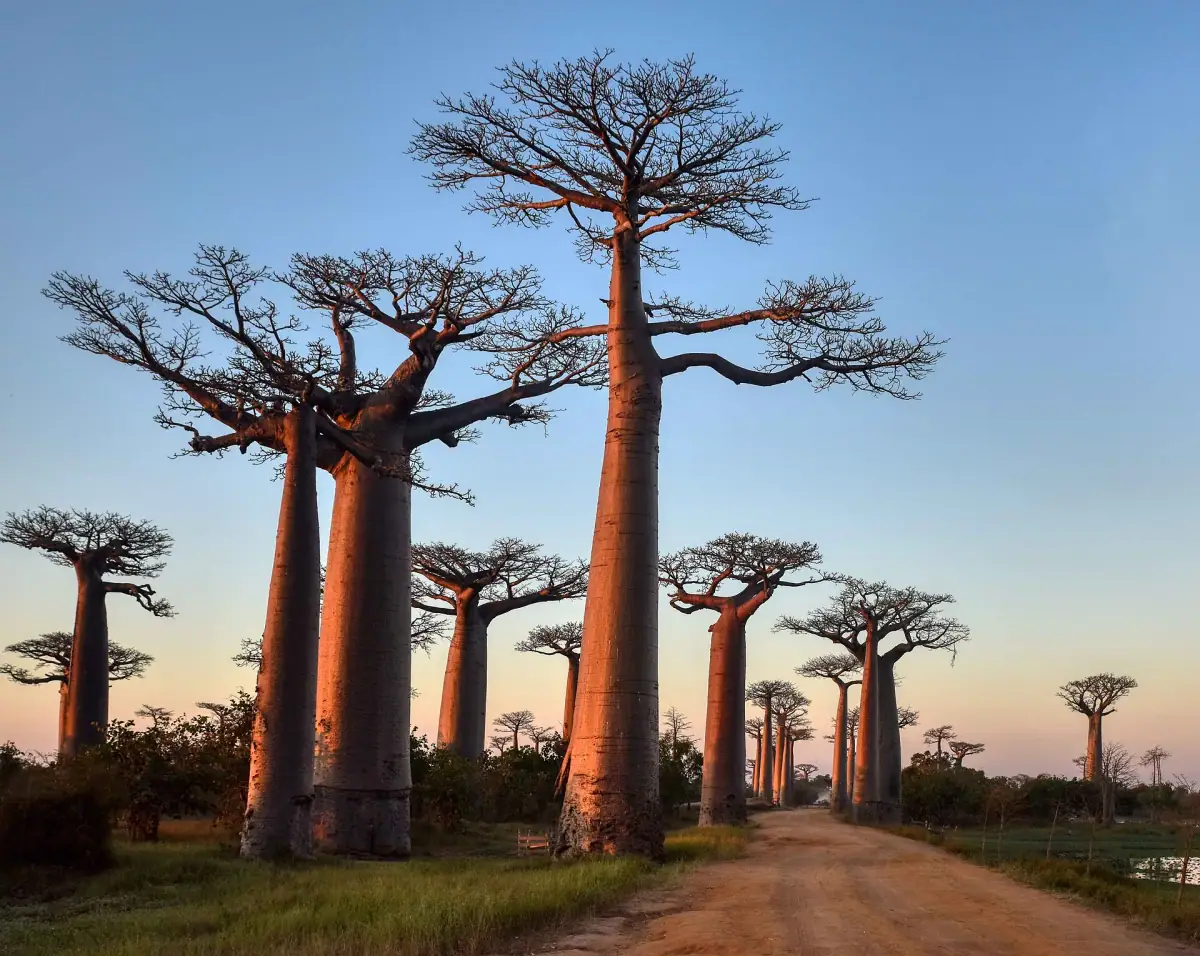
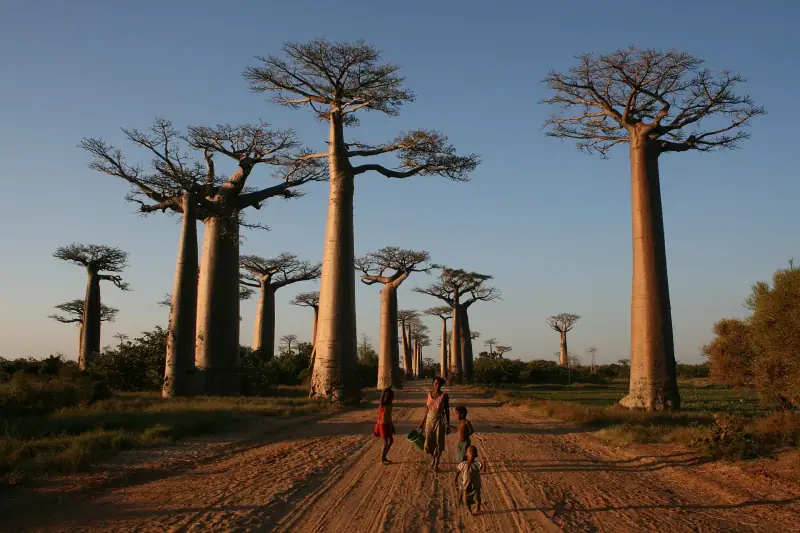
The Avenue of the Baobabs is one of the most famous images of Madagascar. Along a red dirt track, tall baobabs with smooth trunks raise their flattened crowns to the sky, with a silhouette that suggests trees planted upside down. At dusk, the scene takes on orange hues you do not forget.
This guide explains how to organize the visit from Morondava: access, time of day, neighboring sites and practical tips to avoid beginner mistakes.
Understanding the Avenue of the Baobabs
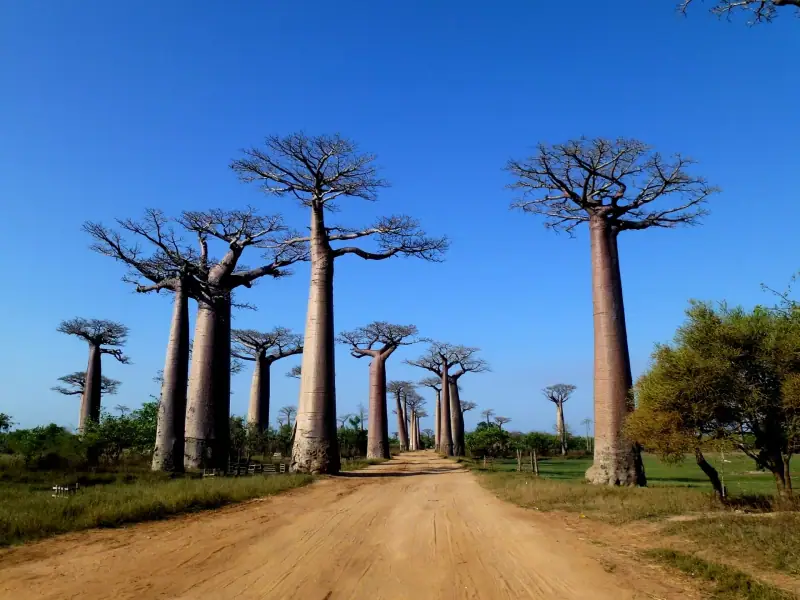
The avenue is in the west of the country, in the Morondava region, about twenty kilometers (12 mi) from town. It lines the track that continues north toward Belo sur Tsiribihina. The trees are baobabs of the species Adansonia grandidieri, also called Grandidier’s baobab, endemic to Madagascar. The tallest exceed thirty meters (about 100 ft) in height, and some are estimated to be several centuries old.
These baobabs are survivors of a dense forest that once covered the area. Clearing for crops removed the rest of the vegetation, and the isolated trees, too imposing to be felled easily, remained standing along the road. The site now has protected status, which gives it new visibility, but it remains a place where people live: residents, zebu carts and children pass between the trees every day.
To place the avenue among the country’s major sights, see our article what to see in Madagascar.
Morondava, the ideal base
Morondava is a small coastal town on the Mozambique Channel. It serves as the starting point for the avenue, Kirindy Forest and, further north, the Bemaraha tsingy. The atmosphere is peaceful, with a dark-sand beach, fishing pirogues and a few simple to comfortable lodgings along the seafront.
Staying in town lets you adapt the visit to the light rather than leave on an imposed schedule. Lodging ranges from small family guesthouses to more comfortable bungalows. In high season, roughly July to September, it is best to book ahead.
Accommodation in Morondava
Compare hotels and bungalows near the beach and the start of the road to the Avenue of the Baobabs.
Getting to Morondava from Antananarivo
Morondava is far from the capital, and the choice of transport greatly changes how the trip is organized.
- By plane: a domestic flight links the capital to Morondava, avoiding several days of road. It is the simplest solution if your stay is short. Schedules and frequency vary with the season: check them before locking your dates.
- By road: the trip goes through the Highlands, then descends west. It generally takes two full days, with a night on the way. The road crosses beautiful landscapes, but it is long and tiring.
- An organized tour: many tour operators offer the Avenue of the Baobabs in a circuit that includes transport, lodging and a guide.
If you have already planned the RN7, you can read our national road 7 itinerary to consider a wider loop of the country.
Flights to Madagascar
Compare flights to Antananarivo before heading to the west of the country.
When to see the avenue: light and season
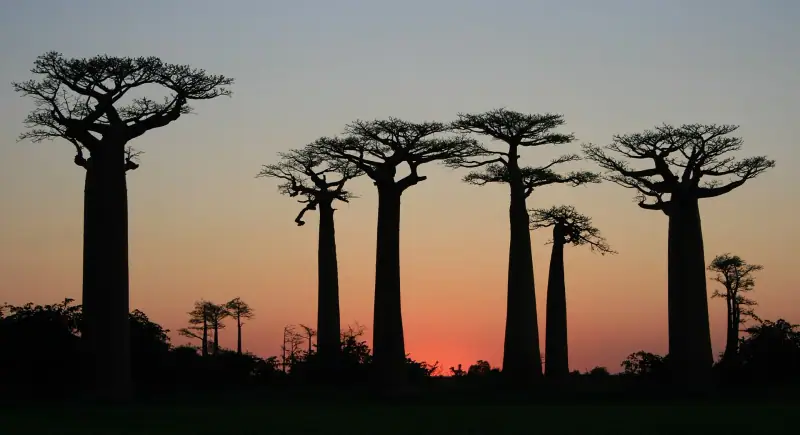
The time of day matters more than the season. At sunset, the trunks take on a coppery hue and the dust in the air softens the light. It is also when crowds are biggest: minibuses and cars arrive at the same time, and photographers take their places on the track.
Sunrise is an interesting alternative. There are fewer people, the air is cooler and the light is just as beautiful. If you have two evenings, you can try both moments.
As for the season, the dry period, roughly May to October, offers clear skies and passable tracks. The rainy season, from the end of the year to early spring, makes roads more difficult and travel less reliable. Our guide when to go to Madagascar details these periods.
A few tips for the visit:
- Bring water, a hat and closed shoes: the ground is dusty.
- Respect residents and ask before photographing anyone.
- Do not climb the trees and leave no litter.
- Bring small change in ariary for possible access fees and craft sellers.
The other baobabs around Morondava
The avenue is not the only baobab site in the region. A few kilometers away, much-photographed isolated trees, sometimes called the “lovers” baobabs, are intertwined with each other. They can be reached in the same outing as the avenue, which lets you combine the two in half a day.
The further you get from the main road, the calmer the landscapes. Some circuits include villages, rice paddies and sacred or isolated baobabs. These outings are done with a local guide or driver, who knows the tracks and customs.
Kirindy Forest and its animals
North of Morondava, the dry forest of Kirindy is one of the region’s main reserves. It is home to lemurs and various endemic animals, including the fossa, Madagascar’s largest carnivore. Night visits let you see small nocturnal lemurs, with a site guide.
It is a very good complement to the avenue: you go from a landscape of crops and isolated baobabs to a dense forest. Sightings are never guaranteed, as these are wild animals, but guides know where to look. For other places to see lemurs, read our guide to Andasibe-Mantadia.
Excursions in Madagascar
Browse the guided visits and excursions offered in the country.
Extending to the Bemaraha tsingy
The Bemaraha tsingy, spectacular limestone blades, can be reached from Morondava. The trip is long and done on tracks, with a river crossing by ferry. Depending on the season, access can change: rains sometimes complicate or interrupt traffic.
If this site appeals to you, do not treat it as a simple day excursion. Plan several days, a suitable vehicle with a driver and booked lodging. The pace is demanding, but the landscapes justify the effort for those who like adventure.
Organizing your stay: length, budget and local transport
For a visit centered on the avenue, two to three nights in Morondava are enough: a first evening for the avenue, a morning for sunrise, a day for Kirindy or the beach. With the tsingy, allow about a week from Antananarivo, depending on the mode of transport.
In town, getting around is generally by car with a driver, local taxi or tuk-tuk for short trips. Renting a vehicle without a driver is possible in some cases, but the tracks and local driving make it not recommended for a first stay. The budget varies a lot with comfort level, mode of transport and season: ask for several quotes before booking.
Practical tips
- Health: ask your doctor or a travel clinic, and see the official travel health pages (CDC in the US, TravelHealthPro in the UK).
- Gear: sunglasses, sunscreen, insect repellent and a headlamp for the evenings.
- Money: bring cash in ariary, because card payments are rare outside the main hotels.
- Photography: avoid drones without first checking local regulations.
- Pace: distances are short on the map, but tracks are slow. Keep a margin in your schedule.
The Avenue of the Baobabs takes a bit of organization, but it remains one of the most striking landscapes in Madagascar. With two or three evenings and a little patience, you will leave with images worth the detour.
Frequently asked questions
Where is the Avenue of the Baobabs?
It is in western Madagascar, about twenty kilometers (12 mi) from Morondava, along the track leading to Belo sur Tsiribihina. You reach it in about half an hour from town.
What is the best time to visit?
Late afternoon, for sunset, is the most sought-after time, but sunrise is calmer and the light just as beautiful. The dry season, roughly May to October, is the most favorable.
How do you get from Antananarivo to Morondava?
Two options: the domestic flight, which is fastest, or the road, which generally takes two long days with a stop on the way. Check schedules and airlines before booking, because options vary.
How long should you plan?
Two to three nights in Morondava let you see the avenue at sunset and sunrise, reach Kirindy Forest and enjoy the beach without rushing.
Can you combine the Avenue of the Baobabs with the Bemaraha tsingy?
Yes, it is a classic combination, but it takes time: the road to the tsingy is long and crosses tracks that are sometimes difficult. Allow at least four to five days in total from Morondava.
More Madagascar guides
Keep reading
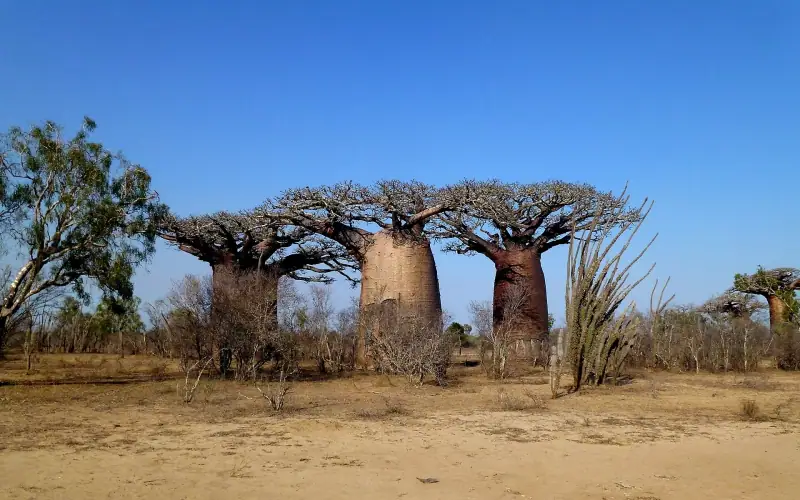
What to see in Madagascar: the 10 top sights
What to see in Madagascar? Baobabs, tsingy, Isalo, Andasibe lemurs, Nosy Be: a selection of 10 top sights to help you prepare your trip.
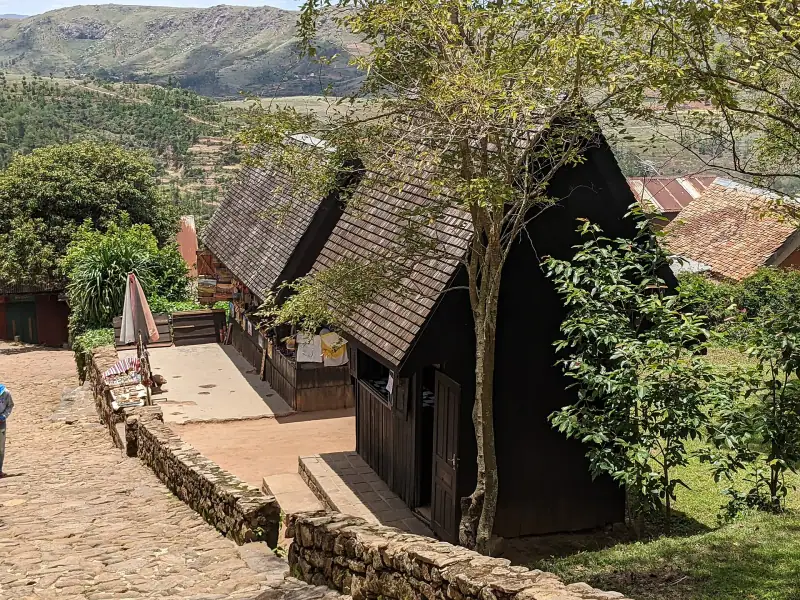
Ambohimanga from Antananarivo: access, prices, hours and a half-day visit
How to visit the royal hill of Ambohimanga from Antananarivo: access by taxi or bus, prices, opening hours, site rules and length of the visit.
Complete guide to visiting Madagascar: regions, highlights and tips
Visiting Madagascar: regions, cities, highlights, when to go, how to get there and around, where to stay and budget. The main guide to prepare your trip.
Ready-made
Madagascar itineraries
12 days
National road 7 in Madagascar: itinerary from Antananarivo to Toliara
Detailed RN7 itinerary in Madagascar: Antsirabe, Fianarantsoa, Ambalavao, Isalo and Toliara. Stages, drive times, practical tips and trip organization.
14 days
Madagascar in 2 weeks: day-by-day itinerary and variants
A 14-day itinerary in Madagascar: Andasibe, RN7, Isalo, beach, with two variants (West and baobabs, North and Nosy Be), pace, transport and time budget.
7 days
Northern Madagascar in 7 days: Diego Suarez, Ankarana and Montagne d'Ambre
7-day itinerary in northern Madagascar: Diego Suarez, Montagne d'Ambre, Red Tsingy, Ankarana, Ramena and an end in Nosy Be, with realistic trips and tips.