Things to do
Andasibe-Mantadia: seeing lemurs and indris in Madagascar
We may earn a commission when you book through links on this page, at no extra cost to you. We don't visit or try the places we cover: we summarize published sources. How we work
In short
- Andasibe is about 140 km (87 mi) east of Antananarivo by national road 2; the trip generally takes 3 h 30 to 5 h.
- Visits are with a licensed local guide; morning is the best time, and a guided night walk shows nocturnal lemurs.
- One night in Andasibe is a minimum; two nights leave time to add Mantadia National Park, wilder and reached by a track.
- The indri, the largest living lemur, is the star species; sightings of any animal are never guaranteed.
East of Antananarivo, the rainforest of Andasibe-Mantadia is one of the easiest places to reach to watch lemurs in the wild. Above all you hear the song of the indri, a melodious and powerful call that crosses the canopy at dawn. For a first stay in Madagascar, it is often the first escape from the capital, before the RN7 or the west coast.
This guide details how to get there, which animals to hope for, how to organize the visit and what to expect there, without unrealistic promises: wild animals remain unpredictable.
Andasibe-Mantadia: presentation of the site
The name actually covers two different areas, often visited together:
- Analamazaotra Special Reserve, the historic part of Andasibe, the most visited, with short, well-marked trails.
- Mantadia National Park, larger and wilder, with longer trails and denser forest.
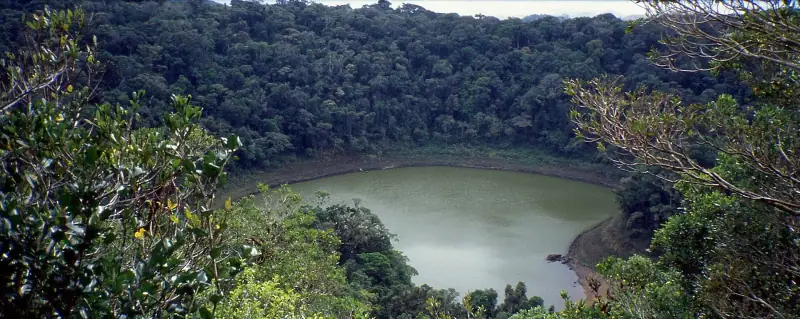
The climate is humid, with mid-altitude rainforest vegetation: tall trees covered with moss and epiphytes, tree ferns, lianas and orchids depending on the season. Mist is frequent in the morning, which gives the forest a very particular atmosphere.
The site is visited on foot, with a guide, on trails that can be slippery. It suits most travelers in ordinary good physical shape, including families with children old enough to walk a few hours.
How to get to Andasibe from Antananarivo
The distance is about 140 km (87 mi), but the trip takes much longer than the distance suggests. National road 2 crosses hilly areas, villages and sections busy with trucks. Generally allow 3 h 30 to 5 h, more if you leave mid-morning.
Three options exist:
- A car with a driver, the most practical and the most common among visitors, which lets you leave early and stop on the way.
- An organized tour, which often includes lodging, entry fees and a guide.
- Shared transport, cheaper but slower, suited to travelers with time.
If you arrive by plane in Antananarivo, plan a night in the capital before heading east, especially after a long flight. To prepare your arrival, you can compare flights to Madagascar.
Flights to Madagascar
Compare flights to Antananarivo, the starting point of the Andasibe excursion.
The lemurs you can see
Madagascar is the only place in the world where lemurs live in the wild, and Andasibe lets you see several species in a short time.
The indri, star of the site
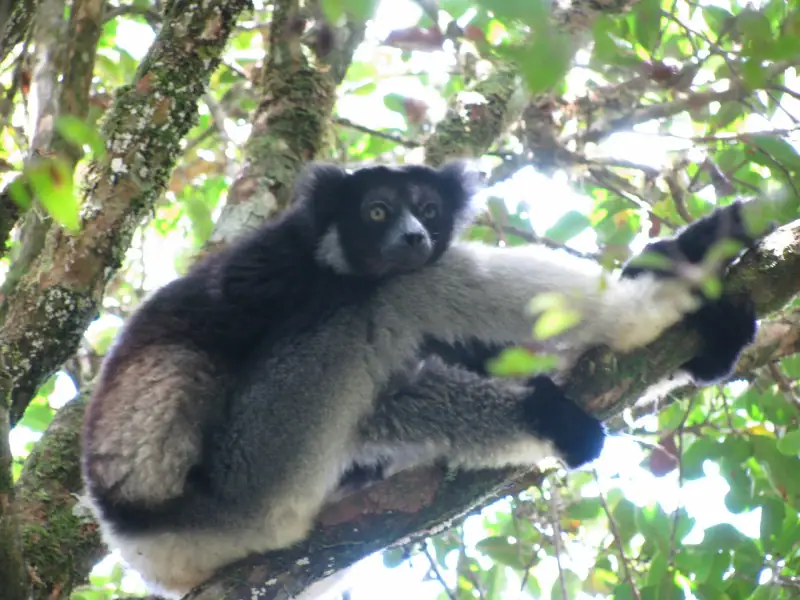
The indri is the largest of the living lemurs. Recognizable by its black-and-white coat, its large round ears and its lack of a visible tail, it moves in great vertical leaps between trunks. Its song, produced as a group, carries very far and remains the most striking memory of the visit. Guides can often locate groups thanks to these calls, which are more frequent in the morning.
The diademed sifaka and other species
With luck and depending on the sectors, you may also see:
- the diademed sifaka, with a light, contrasting coat, which moves in spectacular leaps;
- the common brown lemur, easier to spot, often active by day;
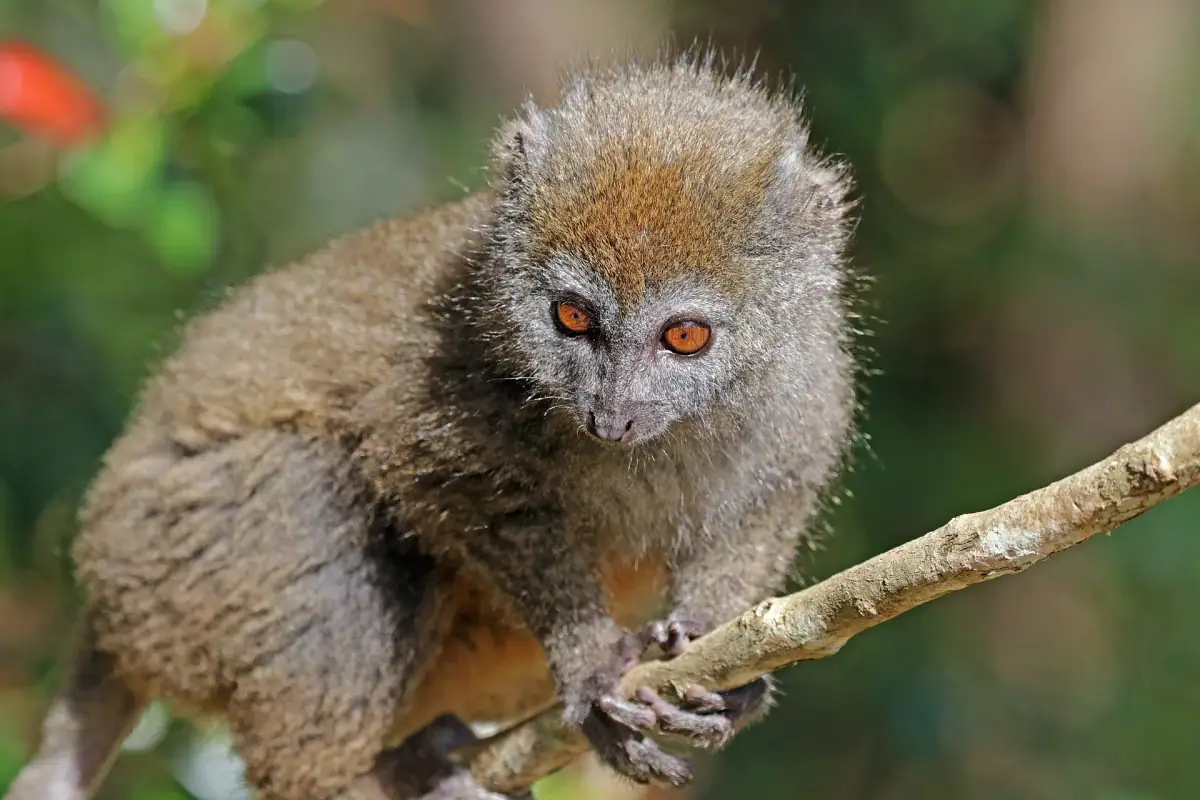
- the bamboo lemur (hapalemur), which feeds on bamboo;
- several nocturnal species, such as mouse lemurs, very small, observable at nightfall.
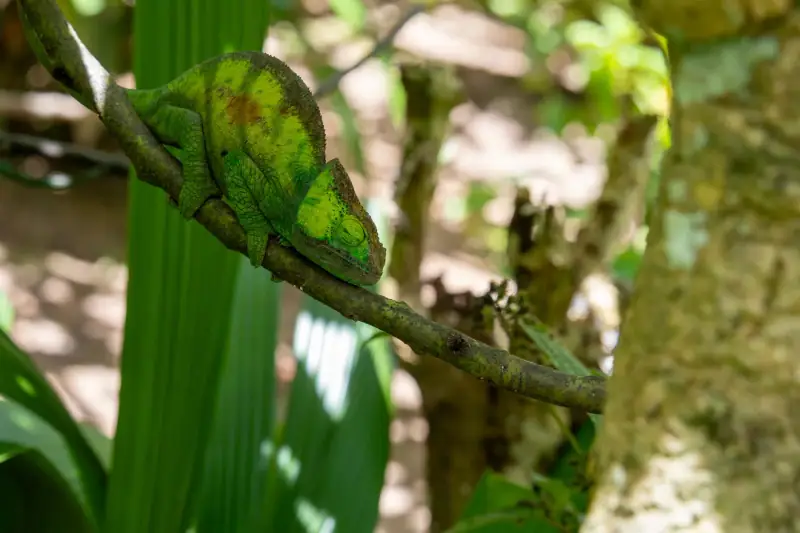
The forest also holds chameleons, geckos, frogs and many birds. A sighting is never guaranteed: distance, weather and time of day play a decisive role.
Organizing the visit: guide, hours and night walks
The visit must be made with a local guide, arranged at the entrance or through your lodging. Guides know the animal groups and their habits, and their eyes spot what the visitor does not see.
Morning is the best period: animals are more active, indris sing and the light is soft. A walk of two to three hours is generally enough for a first approach.
The night walk is done with a headlamp or flashlight, with a guide, on trails near the village. It lets you see nocturnal lemurs, chameleons sleeping on branches and geckos with remarkable camouflage. Bring warm clothes: it quickly gets cool.
To stay respectful of wildlife, follow the guide’s instructions: do not touch the animals, do not feed them, do not use flash and keep your distance. Entry and guide fees change regularly: ask the body managing the parks or your lodging before you leave.
Excursions and guided visits
Discover the excursions offered in Madagascar: parks, lemurs and guided visits.
Mantadia National Park
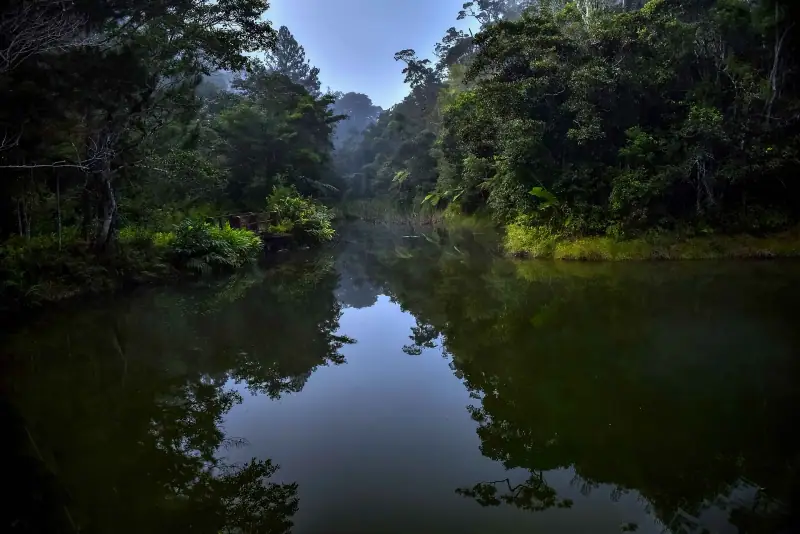
Mantadia is wilder and less visited. The forest is denser, the trails longer and access takes more time: the access road is a track, sometimes difficult after rain. Many travelers devote a full day to it, returning to Andasibe in the evening.
Mantadia’s appeal is a primary-forest atmosphere less affected by visitor numbers, and good chances of seeing indris and the diademed sifaka. In return, sightings take more walking and patience.
If you can’t decide between the two, remember this: Analamazaotra suits a short, accessible visit; Mantadia suits those who have a day and want to walk more.
Where to stay in Andasibe
Lodging is concentrated around the village of Andasibe and along the park access road: small hotels, bungalows and eco-lodges at the forest edge. Comfort is simple to mid-range, with a family atmosphere. Sleeping at the forest edge lets you hear the indris’ calls at dawn, sometimes from the room.
Book ahead in high season, notably during school holidays and from July to September. Bring a fleece or sweater: nights are cool, with humidity.
Accommodation in Andasibe
Compare the hotels and lodges near Andasibe forest.
When to come and what to prepare
The eastern forest is humid all year: rain can come in any season. The dry season, roughly May to October, is generally more comfortable, with less muddy trails, but mornings remain cool and misty. The hot months bring more rain and lush vegetation, but also slippery trails. To compare seasons across the island, read our guide when to go to Madagascar.
What to bring:
- good walking shoes with a lugged sole;
- a light waterproof jacket and a fleece;
- a headlamp for the night walk;
- insect repellent and binoculars, very useful for watching the canopy;
- a camera with zoom, without flash.
Andasibe combines easily with other stops. For a wider tour, see our selection what to see in Madagascar, or the national road 7 itinerary to continue south. If you want to get around by car, a vehicle with a driver remains the simplest solution on these roads.
Frequently asked questions
In short: allow at least one night in Andasibe, leave the capital early, book a guide for the morning walk and keep realistic expectations. Seeing an indri in the mist while listening to its song is among the finest moments of a trip to Madagascar.
Frequently asked questions
Where is Andasibe in relation to Antananarivo?
Andasibe is east of the capital, about 140 km (87 mi) along national road 2. The trip generally takes between 3 h 30 and 5 h depending on traffic and road condition.
How long do you need to visit Andasibe-Mantadia?
One night in Andasibe is a minimum, allowing a morning walk, the best for watching wildlife, and a night outing. Two nights leave time to add Mantadia park.
Which lemur is the most emblematic of Andasibe?
The indri, the largest living lemur, whose powerful song carries very far through the forest. It is the flagship species of the site.
Do you need a guide to visit the park?
Yes, the visit is with a licensed local guide, who spots the animal groups and knows their habits. It is generally arranged at the park entrance or by your lodging.
Can you visit Andasibe in a day from Antananarivo?
It is possible but tiring, because the road takes a large part of the day. Sleeping in Andasibe is preferable, notably to enjoy the forest early in the morning.
More Madagascar guides
Keep reading
Nosy Be: what to do, beaches and excursions on the perfume island
What to do in Nosy Be? Beaches, snorkeling, Nosy Komba, Nosy Tanikely, Lokobe Reserve, ylang-ylang: a guide to plan your stay on the perfume island.
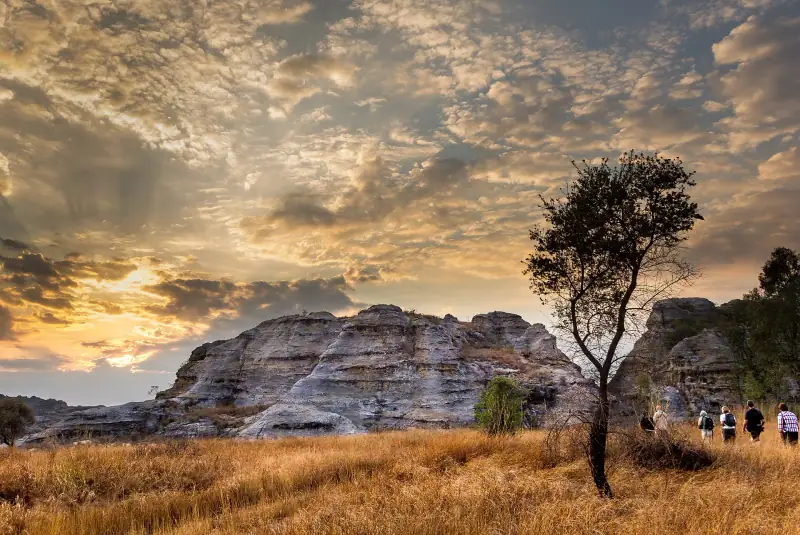
Isalo National Park: hikes, canyons and natural pools
Isalo National Park in Madagascar: hikes, Monkey Canyon, natural pools, sunset, lemurs and practical tips to prepare your visit.
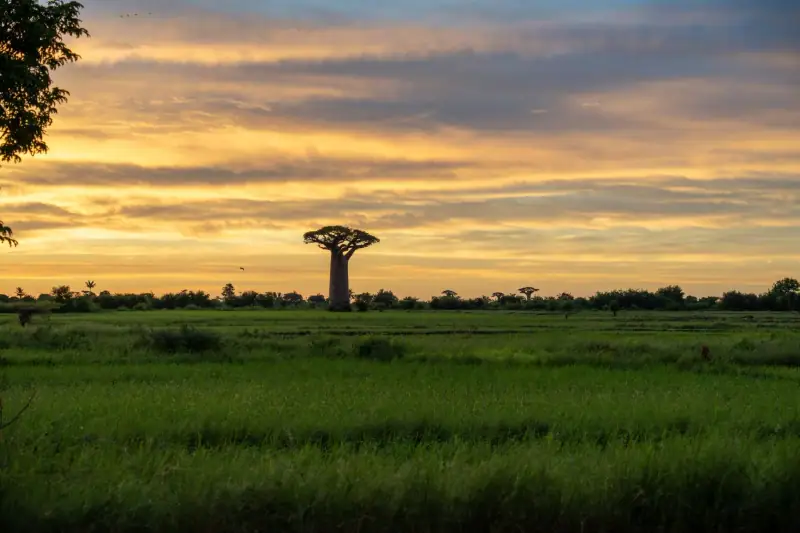
When to go to Madagascar: seasons, weather and best months
When to go to Madagascar? Dry season, rains, cyclones, whales, lemurs: a region-by-region guide to choosing the best time to travel.
Ready-made
Madagascar itineraries
12 days
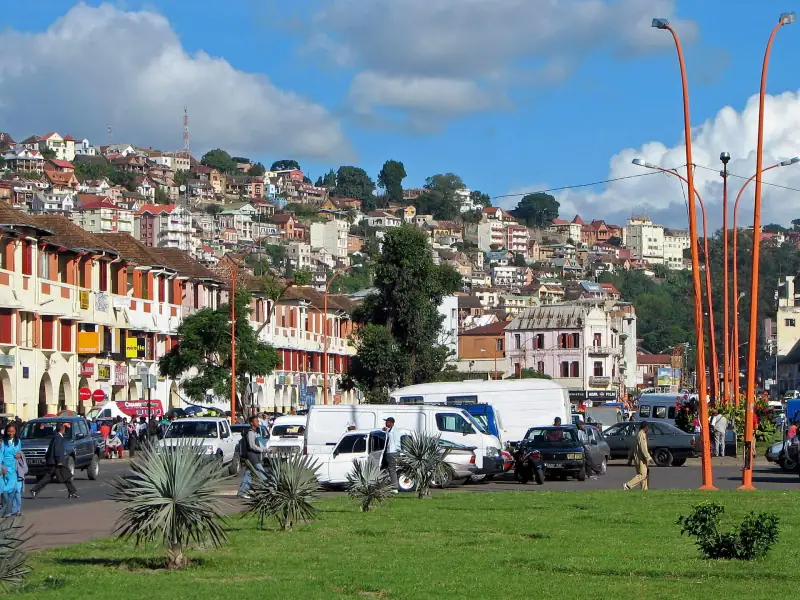
National road 7 in Madagascar: itinerary from Antananarivo to Toliara
Detailed RN7 itinerary in Madagascar: Antsirabe, Fianarantsoa, Ambalavao, Isalo and Toliara. Stages, drive times, practical tips and trip organization.
14 days
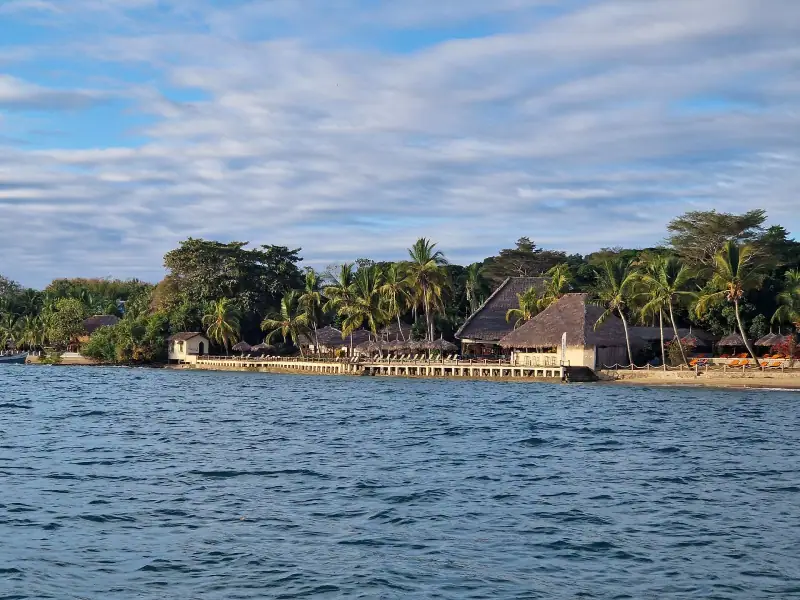
Madagascar in 2 weeks: day-by-day itinerary and variants
A 14-day itinerary in Madagascar: Andasibe, RN7, Isalo, beach, with two variants (West and baobabs, North and Nosy Be), pace, transport and time budget.
7 days
Northern Madagascar in 7 days: Diego Suarez, Ankarana and Montagne d'Ambre
7-day itinerary in northern Madagascar: Diego Suarez, Montagne d'Ambre, Red Tsingy, Ankarana, Ramena and an end in Nosy Be, with realistic trips and tips.