Itineraries
Egypt 7-day itinerary: Cairo, Luxor and Aswan in one week
We may earn a commission when you book through links on this page, at no extra cost to you. We don't visit or try the places we cover: we summarize published sources. How we work
Day by day
- Days 1-2Cairo and Giza: pyramids, Sphinx, museum, Islamic Cairo
- Day 3Flight to Luxor, east bank: Karnak and Luxor Temple
- Day 4Luxor west bank: Valley of the Kings, funerary temple
- Day 5Luxor to Aswan, with stops at Edfu and Kom Ombo
- Day 6Aswan: Philae Temple, High Dam, felucca ride
- Day 7Return to Cairo and departure
Where to sleep
- Cairo2 nights
- Luxor2 nights
- Aswan2 nights
In short
- The week covers Cairo and Giza (days 1-2), Luxor (days 3-4), the transfer to Aswan (day 5), Aswan and Philae (day 6) and the return to Cairo (day 7).
- Fly between Cairo and Luxor (about one hour): the road or night train would cost half a day to a full day.
- Abu Simbel is possible as a day excursion from Aswan with a very early start, but it replaces another visit.
- The week comes down to three habits: leave early, prioritize, book ahead.
Seven days to discover Egypt: it is short, but doable if you accept not seeing everything. This itinerary concentrates the week on the three stops that form the heart of the classic trip: Cairo and Giza, Luxor, then Aswan. No multi-night cruise, no detour to the Red Sea: it favors domestic flights and a steady but realistic pace.
If you have three more days, our 10-day Egypt itinerary adds a Nile cruise and Abu Simbel. If your week is already fixed, read on: everything is designed to limit dead time.
We have deliberately avoided overly precise travel times: they vary with traffic, schedules and the mode of transport you choose. Check them when you book.
The 7 days at a glance
Here is the structure of the week:
- Days 1 and 2: Cairo and Giza (pyramids, museum, Islamic Cairo)
- Day 3: flight to Luxor, east bank (Karnak and Luxor Temple)
- Day 4: Luxor west bank (Valley of the Kings, funerary temples)
- Day 5: road or train to Aswan, with possible stops at Edfu and Kom Ombo
- Day 6: Aswan, Philae and felucca
- Day 7: return to Cairo and departure
This setup has one advantage: the arrival flight and the return flight are in the same city, Cairo, which simplifies international tickets. Domestic flights can also be grouped on a single booking.
Before you go: what to sort out in advance
A week leaves no room to improvise on paperwork. Three points to handle before departure:
- Entry requirements: visa, passport, validity. Entry rules depend on your passport. Check the official travel advice of your government before you book: travel.state.gov (US), GOV.UK (UK), travel.gc.ca (Canada), Smartraveller (Australia) (checked November 2026). More in our article on entry requirements for Egypt.
- Budget: domestic flights, guides and entry fees weigh more than accommodation. Our guide to the budget for a trip to Egypt helps you estimate the total.
- Season: the itinerary is more pleasant from October to April. See the guide on the best time to visit Egypt.
Also consider travel insurance covering medical costs and cancellation: on a short, linked-up stay, a missed flight is expensive.
Days 1 and 2: Cairo and the Giza pyramids
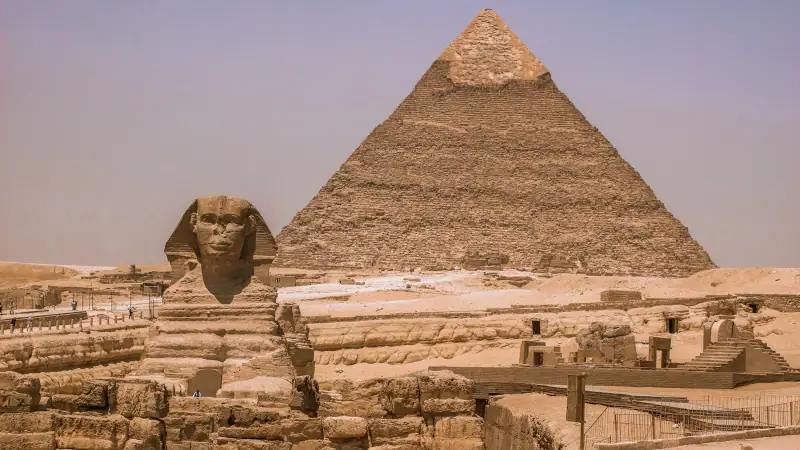
Cairo is a dense, noisy and fascinating gateway. With only two days, you have to prioritize.
Day 1: pyramids and Sphinx. As soon as you arrive, head to the Giza plateau. The pyramids are best visited at opening time, before the heat and the arrival of groups. Take the time to walk around the plateau, look at the Sphinx from different angles and enjoy the overview from the panoramic viewpoint. Our guide to the Giza pyramids and the Sphinx details how to organize the visit, access to the interiors and the pitfalls to avoid.
If your plane lands late, do not force it: better to spend the evening at the hotel and tackle Giza the next morning, even if that shifts the rest.
Day 2: museum and Islamic Cairo. Spend the morning at the museum of ancient Egypt: the collections of pharaonic objects give meaning to the temples you will see later in the south. In the afternoon, dive into the lanes of the historic districts, among mosques, madrasas and markets. Our article on Islamic Cairo and Khan el-Khalili helps you organize this half day. Late afternoon is the best time to stroll in the bazaar, when the light softens and the temperature drops.
Where to stay in Cairo for a busy week
On a short stay, the choice of neighborhood matters: near Giza, you save time in the morning; downtown, you are closer to the museum and restaurants. Our guide on where to stay in Cairo compares the options. For only two nights, a well-located, quiet hotel is better than a luxury property far from everything.
Hotels in Cairo and Giza
Compare hotels in Cairo and Giza by location, reviews, breakfast and cancellation terms.
Day 3: flight to Luxor and the east bank
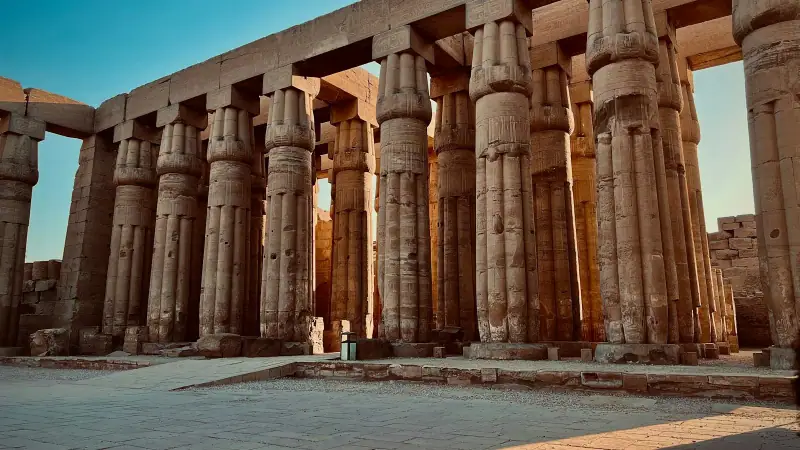
In the morning, take the domestic flight from Cairo to Luxor. The trip takes about an hour, which leaves the afternoon free to start sightseeing. That is the whole point of flying on a one-week itinerary: the road or the night train would cost half a day, or even a day.
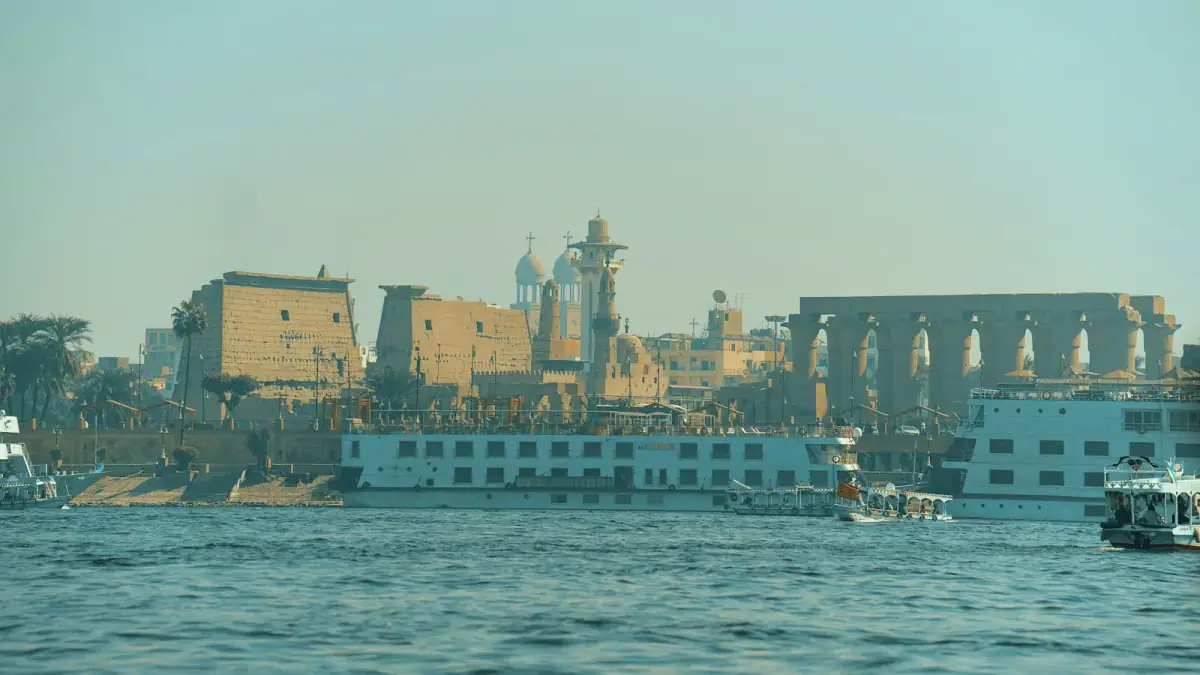
Luxor is often described as the largest open-air museum in the world, and the city is split in two by the Nile: the east bank, that of the living, with the great urban temples, and the west bank, that of the dead, with the necropolises. For this first day, stay on the east bank:
- Karnak Temple, an immense religious complex built over many centuries, with its hypostyle hall of monumental columns.
- Luxor Temple, more compact, in the center of the city. It is especially beautiful at the end of the day, when the lighting brings out the columns and statues.
If you have energy, a walk along the corniche at sunset ends the day pleasantly. Our guide to visiting Luxor, Karnak and the Valley of the Kings details each of these sites.
Bring water, a hat and good shoes: the temple floors are uneven, and shade is rare in the middle of the day.
Day 4: Luxor’s west bank
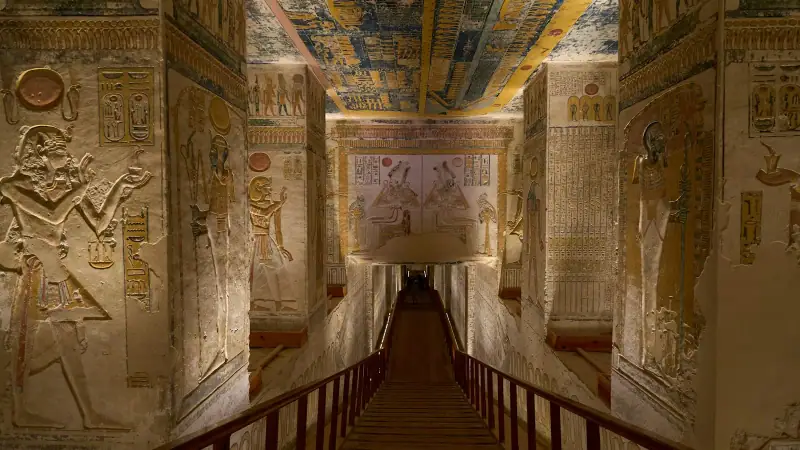
This day is one of the most striking of the week. Leave early in the morning, because the heat climbs fast on these very exposed sites, especially outside the cool season.
The classic west bank program includes:
- The Valley of the Kings, where the tombs of many New Kingdom pharaohs are found. Several tombs are included in the basic ticket, others need a supplement: ask at the ticket office which ones are open, as access changes with restoration periods.
- A funerary temple, such as that of Hatshepsut, set against the cliff, whose terraced architecture is very recognizable.
- The Colossi of Memnon, which take a few minutes to visit on arrival or departure.
A day with several stops is easier with a driver or a guide: the sites are far apart and public transport does not suit a tight schedule. The late afternoon can be given to rest, a late lunch by the Nile or a felucca ride in Luxor.
For accommodation, our article on where to stay in Luxor compares the east and west banks. For two nights, the east bank is more practical: restaurants, transport and urban temples nearby.
Guided tours in Luxor
Discover excursions in Luxor: guided visits of the Valley of the Kings, the west bank temples and Karnak, with transport.
Day 5: from Luxor to Aswan
Day 5 is a transition day, and there are several ways to do it depending on your wishes and budget.
Option 1: the road with stops. A private driver takes you from Luxor to Aswan, stopping at the temples of Edfu and Kom Ombo. Edfu has the Temple of Horus, one of the best preserved in the country. Kom Ombo is an unusual temple, dedicated to two deities, whose riverside setting is very beautiful at the end of the day. This option lets you see two major sites without a cruise, but the day is long: leave early and plan breaks.
Option 2: the train or a flight. If you prefer to save your strength, a train between the two cities or a short flight leaves the afternoon free in Aswan. You then give up Edfu and Kom Ombo, but gain rest time.
Option 3: a short cruise. If you are set on sailing, some short options exist, but they consume a large part of the week. Our article on the Nile cruise between Luxor and Aswan compares durations and services. In a 7-day itinerary, this is a choice to make deliberately: it will replace part of the land visits.
Whichever option you choose, arrive in Aswan at the end of the day, settle in and enjoy dinner by the Nile. The rhythm of the city is clearly slower than Cairo’s.
Day 6: Aswan, Philae and felucca
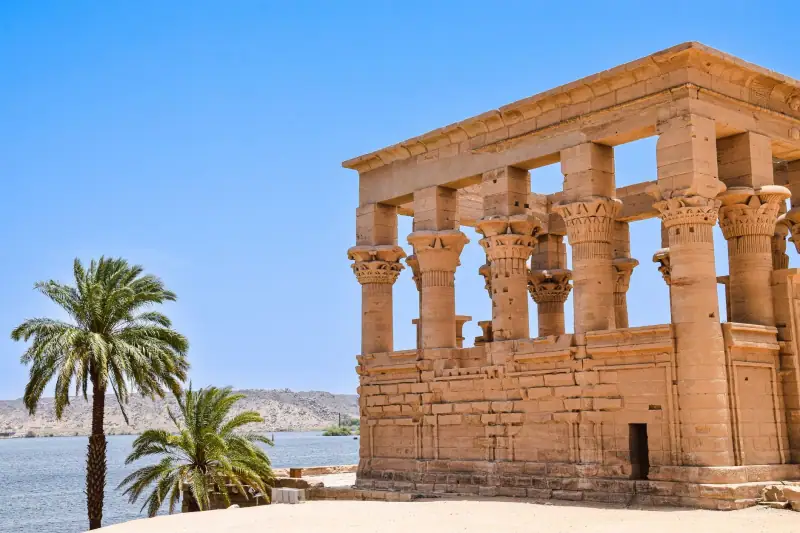
Aswan is calmer than Luxor and Cairo, with a strong Nubian feel. For this day, the classic program includes:
- Philae Temple, set on an island and reached by boat. Dedicated to Isis, it was moved to escape rising waters after the High Dam was built, a fascinating story to hear from a guide at the site.
- The High Dam and its views over Lake Nasser, to understand the importance of the structure in the country’s recent history.
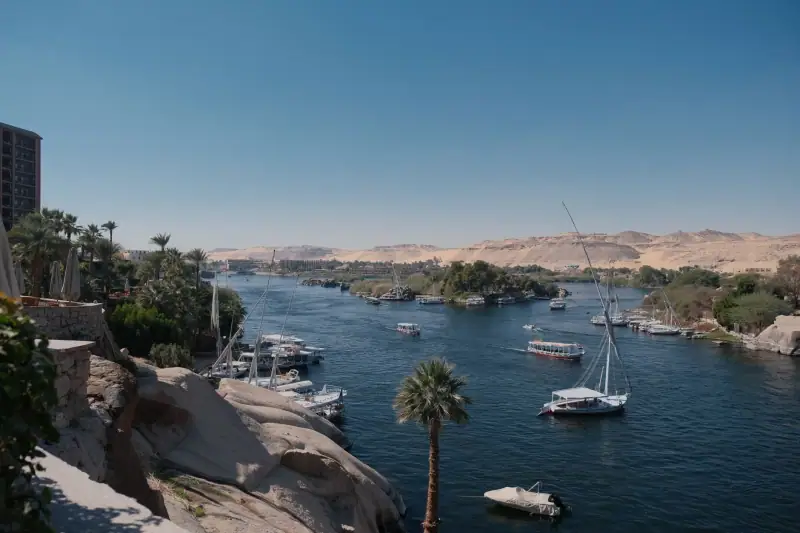
- A felucca ride around the Nile islands, ideal at the end of the afternoon when the light is soft and the heat drops.
To learn more about the sites of the region, read our guide to Aswan, Philae and Abu Simbel.
Fans of crafts and color can also stroll in Aswan’s souk, more relaxed than those of Cairo, or visit a Nubian village. Keep some energy for these moments: they are often the warmest memories of the trip.
What about Abu Simbel?
The Abu Simbel temples are among the most impressive sites in the country, but they take a long day from Aswan, with a very early start and several hours of round-trip driving. On 7 days, two possibilities:
- Replace the day in Aswan with the Abu Simbel excursion, and give up Philae.
- Extend your stay by a day and go to 8 days.
In all cases, book this excursion ahead and prepare for a physical day. The 10-day itinerary includes it naturally.
Excursions in Aswan
Discover excursions in Aswan: Philae Temple, felucca ride, Nubian village and the Abu Simbel excursion.
Day 7: return to Cairo and departure
The last day is devoted to the return. Depending on the time of your international flight, there are two cases:
- Evening international flight: take a domestic flight in the morning from Aswan to Cairo, with time for lunch and, if you wish, another round of the bazaar for last souvenirs.
- Early-morning international flight: better to return to Cairo the day before, which cuts part of the day in Aswan. Plan for it when you book.
Never plan a tight return: a delayed domestic flight can jeopardize the international one. Keep at least several hours of margin between the domestic arrival and the international departure, and check your insurance.
Hotels in Aswan
Compare hotels in Aswan by dates, Nile view, reviews and cancellation terms.
Tips to keep up the pace
A week in Egypt is intense. A few habits simplify the trip a lot:
- Leave early: sites are more pleasant and less crowded in the early morning, and the heat is more bearable.
- Take breaks: plan a quiet lunch and some rest at the hotel in the middle of the day, especially in Luxor and Aswan.
- Stay hydrated: always carry water, plus a hat, sunglasses and sunscreen.
- Dress appropriately: light but covering clothes, to respect customs in religious places and protect yourself from the sun.
- Get support: a trusted guide or driver saves precious time, especially for Luxor’s west bank and the day 5 transfers.
- Carry cash: for tips, small purchases and some entry fees, small change is useful.
For a packing list, our article on useful accessories for Egypt can help you prepare your suitcase.
Adapting the itinerary to your profile
This itinerary can be adjusted:
- Families: cut the west bank to a half day, avoid very early starts with young children and add hotel breaks. The felucca is often a big hit.
- History enthusiasts: keep more time for the Cairo museum and Karnak, and skip the day 6 ride.
- Travelers looking for rest: drop Aswan and spend three nights in Luxor, a calmer stay but with less variety.
- Diving fans: Egypt is also a Red Sea destination. Our article on diving in the Red Sea at Hurghada and Marsa Alam shows how to combine culture and diving on a longer stay.
For an overview of the destination, see also our complete guide to Egypt.
Key takeaways
A week in Egypt takes organization, but it remains very rewarding: the Cairo pyramids, the temples of Luxor and the calm of Aswan make a varied trip, without too much transport if you fly for the long distances. The secret fits in three phrases: leave early, prioritize, book ahead. With these principles, you can enjoy each stage without running, and you will always have a good reason to come back for the rest of the country.
Frequently asked questions
Is one week enough to see the essentials of Egypt?
Yes, as long as you accept making choices. Seven days let you see the Cairo pyramids, the temples and the Valley of the Kings in Luxor, then Aswan. Abu Simbel, Alexandria, the Red Sea and the oases need more time.
Should you take domestic flights on a 7-day itinerary?
It is strongly advised. Between Cairo and Luxor, the flight takes about an hour, versus a night on the train or a long day on the road. Over a week, every half day saved counts.
Is it better to do a cruise or stay on land in one week?
A cruise of several nights takes up a large part of the week on its own. For 7 days, a land stay in Luxor then Aswan, possibly with a short felucca ride, is easier to organize. Our article on the Nile cruise compares the options.
Can you add Abu Simbel to this itinerary?
It is possible as a day excursion from Aswan, with a very early start. You then have to give up another visit or some rest time: plan for it when you book.
What is the best season for this itinerary?
From October to April, temperatures are more bearable, especially in the south where summer is very hot. See our guide on the best time to visit Egypt to compare the seasons.
Do you need to book ahead?
Domestic flights, accommodation and guided tours are best booked ahead, especially in high season. Site entry tickets are generally paid at the entrance, but check the terms at the time of your stay.
More Egypt guides
Keep reading
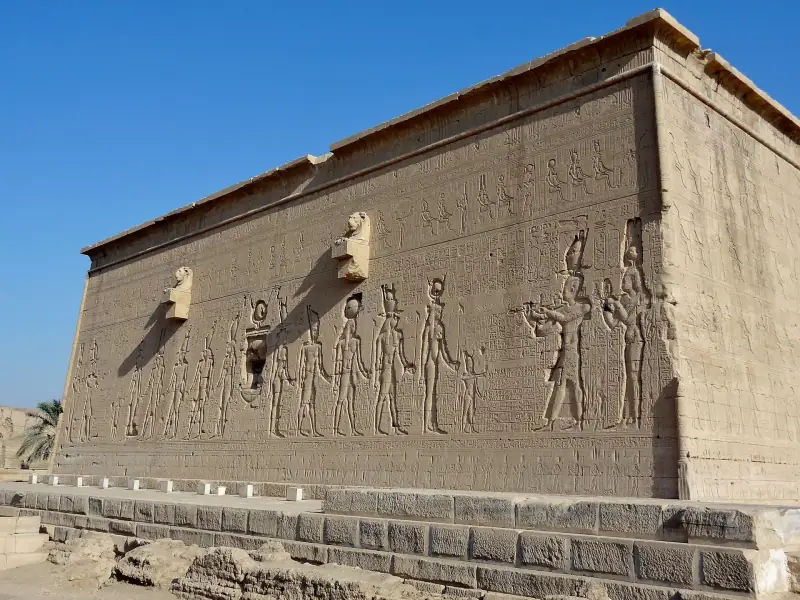
Dendera from Luxor: is the Temple of Hathor worth the detour?
Dendera Temple from Luxor: distance, how to get there, hours, official prices, visit length and what you see (astronomical ceiling, roof, crypts).
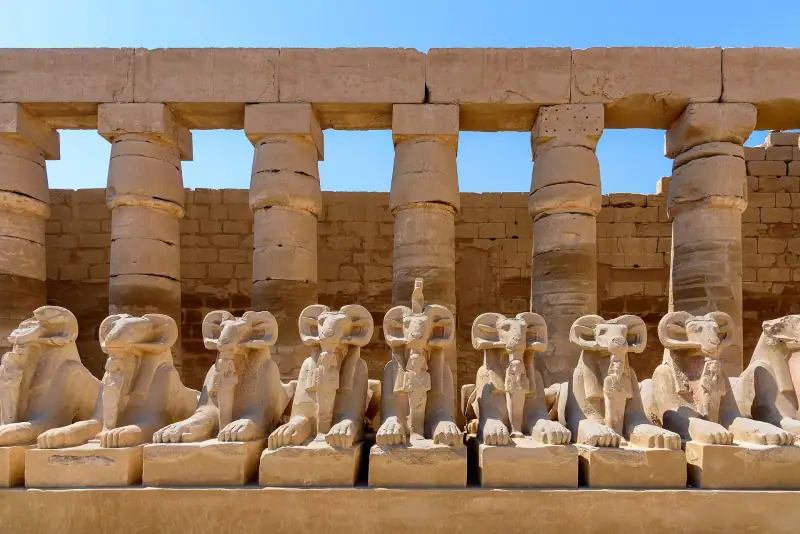
Visiting Luxor: Karnak, the Valley of the Kings and the temples of ancient Thebes
What to see in Luxor? Karnak, Luxor Temple, the Valley of the Kings, Hatshepsut: organizing the two banks, visit length and practical tips.

Where to stay in Luxor: east bank or west bank, neighborhoods and tips
Where to stay in Luxor? The lively east bank near Karnak or the quieter west bank near the Valley of the Kings: areas compared, with booking tips.
Ready-made
Egypt itineraries
4 days
3 days
3 days in Cairo: a day-by-day itinerary from the pyramids to Islamic Cairo
What to do in 3 days in Cairo? Giza pyramids, museums, Coptic and Islamic Cairo, Saqqara: a realistic day-by-day itinerary with practical tips.
10 days
Egypt 10-day itinerary: Cairo, Luxor, Aswan and a Nile cruise
A day-by-day 10-day Egypt itinerary: Cairo pyramids, Luxor, a Nile cruise, Aswan and Abu Simbel. Pace, transport and tips to organize it.