Where to stay
Where to stay in Luxor: east bank or west bank, neighborhoods and tips

We may earn a commission when you book through links on this page, at no extra cost to you. We don't visit or try the places we cover: we summarize published sources. How we work
In short
- The east bank is the most practical for a first stay of two or three nights: restaurants, train station, cruise docks, Luxor Temple and Karnak close by.
- The west bank is calmer and rural, closer to the Valley of the Kings and the funerary temples, and suits stays of three nights or more.
- Two nights show the essentials of both banks; three nights allow a more comfortable pace.
- Even with a Nile cruise, plan at least one night on land in Luxor before or after, to visit both banks without rushing.
Luxor is often called “the largest open-air museum in the world”. Built on the site of ancient Thebes, the city is split in two by the Nile: in the east, the living city, its shops and its great temples; in the west, the necropolises, the sugarcane fields and the villages. Choosing where to stay in Luxor is therefore first of all choosing your bank, and with it your atmosphere, your getting around and your pace.
In this guide, we compare the areas useful to travelers: the center of the east bank, the corniche, the surroundings of Karnak, the rural west bank, as well as the option of a cruise boat. We have deliberately not named any establishment: the offer changes fast, and recent reviews are always the best criterion at the time of booking.
How to choose your accommodation in Luxor
Luxor is a mid-sized city, much easier to get around than Cairo. Trips are short, but the heat can make getting around tiring for much of the year. Before comparing hotels, three questions help you decide:
- What is your program? If you plan Karnak, Luxor Temple and the market, the east bank is ideal. If you leave at dawn for the Valley of the Kings, the west bank saves you time.
- What atmosphere do you want? Restaurants, cafés and evening life on the east bank; silence, gardens and birdsong on the west bank.
- How many nights are you staying? For two nights, a central base simplifies everything. Beyond that, you can afford to vary the pleasures.
Whatever you decide, check the air conditioning, whether there is a pool and the walking distance to the nearest landmark. These details matter more than a hotel’s stars.
The east bank: the most practical choice for a first stay
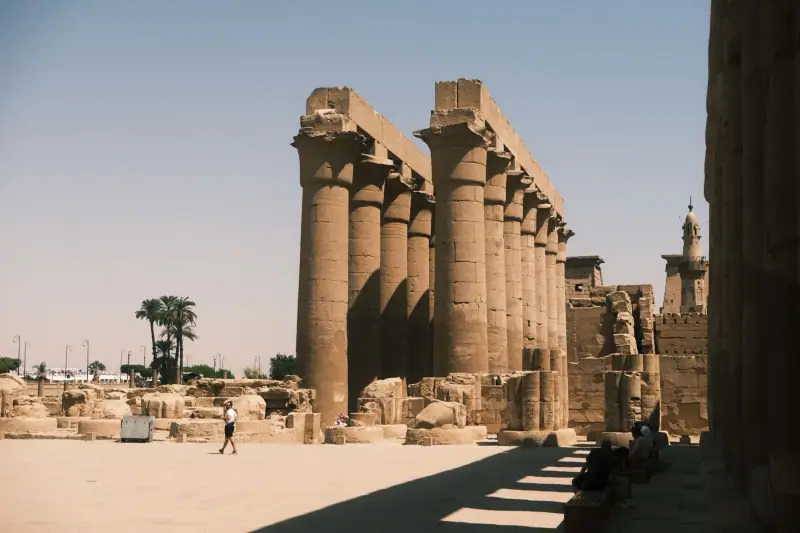
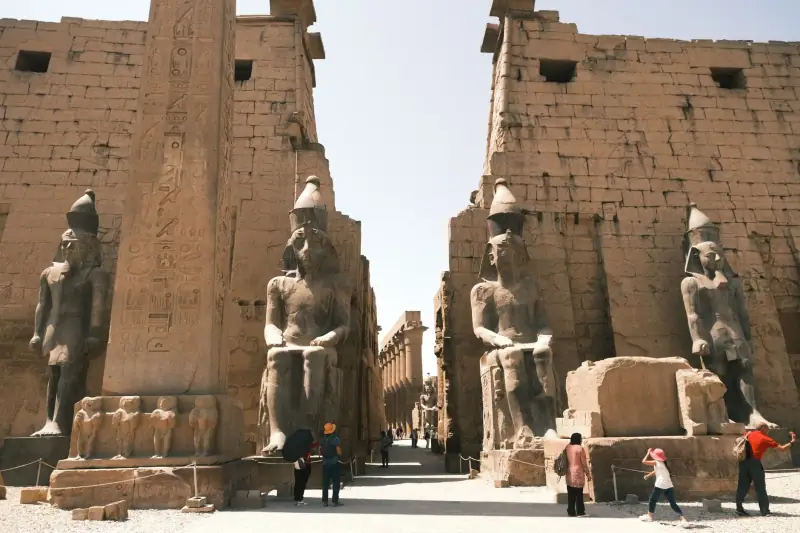
The east bank concentrates most of the city’s life: the train station, restaurants, shops, travel agencies, the docks where cruise boats moor and the two great ancient sites, Luxor Temple in the city center and the Karnak complex a bit farther north. It is the simplest base for a first trip.
Pros: accommodation is the widest here, from the small budget guesthouse to the large riverside hotel. You can dine out without taking a car, and transfers to the train station or the airport are quick. The east bank sites can largely be visited on foot or with a short taxi ride.
Cons: the center is lively and sometimes noisy. Hassle from vendors, carriage drivers and touts are frequent, especially near Luxor Temple and the docks. A smile and a firm “no, thank you” are generally enough, but it can wear you down over time.
Who for? Travelers on short stays, those taking the train or a cruise boat the next day, and anyone who likes having restaurants within reach. Our guide to visiting Luxor, Karnak and the Valley of the Kings details what you can see on each side of the river.
Hotels in Luxor, east bank
Compare hotels in central Luxor and on the corniche, and filter by reviews, breakfast, pool and free cancellation.
The Nile corniche: staying by the river

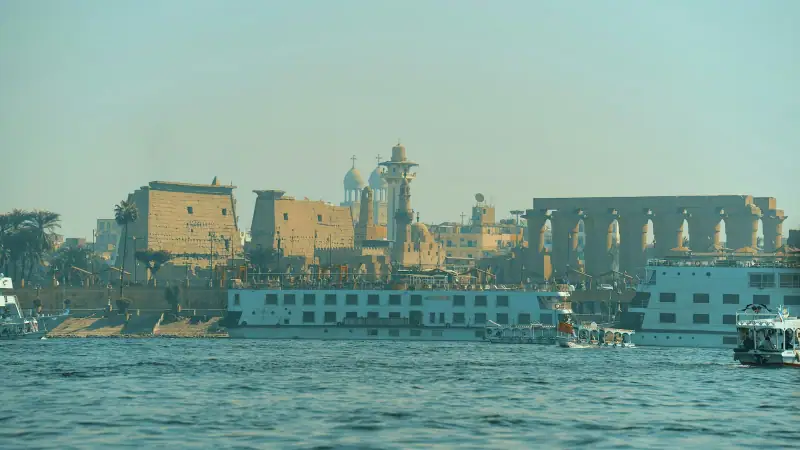
The corniche runs along the Nile on the east bank, from the city center to the surroundings of Karnak. This is where many mid-range and upper-category hotels are found, sometimes with a terrace or pool overlooking the water. In the evening, the light on the river and on the hills of the west bank is one of the finest sights in the city.
Pros: a room with a Nile view really changes the experience of the stay. Feluccas, those traditional sailboats, pass under your windows, and riverside walks are pleasant at the end of the day. Hotels here are generally more comfortable than those inland.
Cons: rates are higher than behind the center, and you are sometimes farther from small local restaurants. Street-facing rooms can be exposed to traffic noise, while those on the river side are calmer.
Who for? Couples, travelers who like terraces and those who want to enjoy their hotel between visits. Explicitly ask for a Nile-side room when booking or on arrival.
Around Karnak: a calmer area to the north
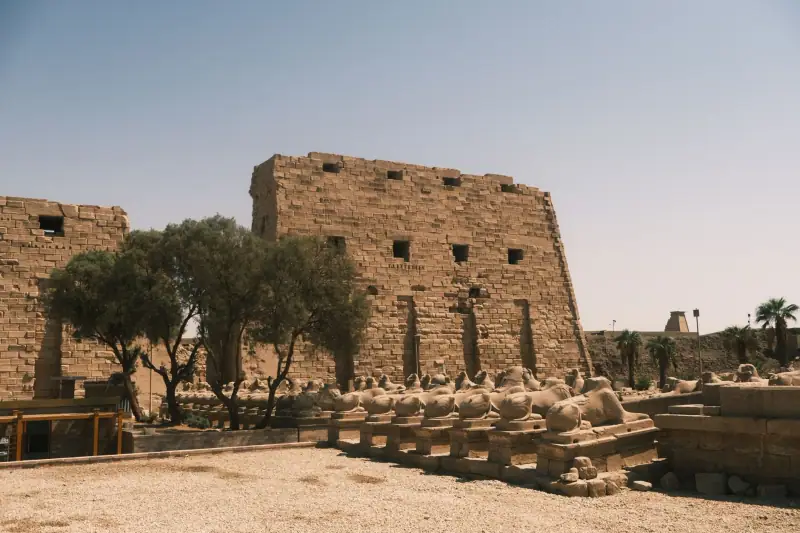
Karnak lies north of the city center, linked by a large avenue. The area is a bit less lively than the center, with more spread-out hotels, restaurants and shops. You stay here mainly to be close to the temple and avoid the early-morning crowds.
Pros: you are among the first at the site’s opening, when the light is beautiful and the tour buses have not yet arrived. The neighborhood is generally more peaceful than the heart of the city.
Cons: restaurant choice is more limited, and you will take a taxi or a carriage to reach the center in the evening. If you want a hotel within walking distance of Luxor Temple, this is not the right choice.
Who for? Travelers who want to avoid the crowd, archaeology fans and those staying several nights. For the others, the center remains more practical.
The west bank: calm, fields and villages
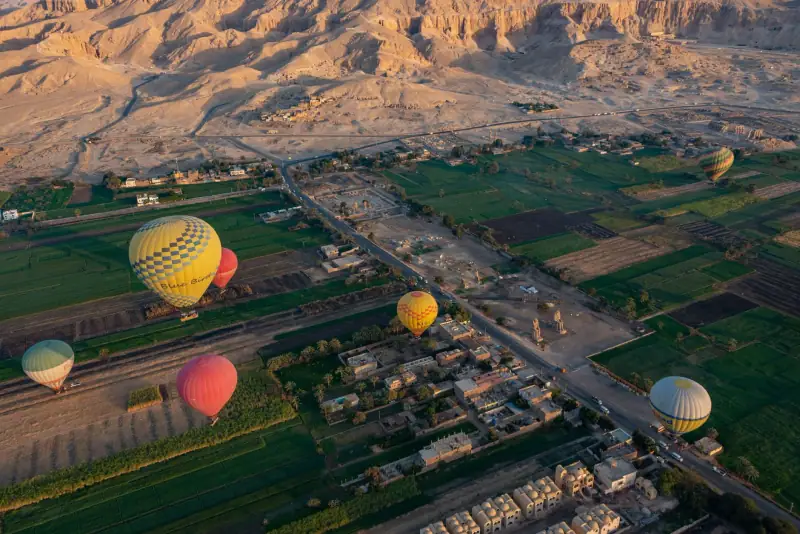
On the other side of the Nile, the west bank is a completely different setting. Here, no great boulevards: roads lined with fields, villages, small guesthouses, a few hotels with gardens and, on the horizon, the arid cliffs that shelter the Valley of the Kings, Hatshepsut Temple and the nobles’ necropolises. Most visitors only pass through in the daytime, but staying here offers a very different atmosphere.
Pros: calm, first of all. You wake to roosters and birds rather than car horns. You are much closer to the funerary sites, best visited early in the morning to avoid the heat. Guesthouses are often run by families, with simple, friendly cooking. Many travelers also come here to watch the sunrise balloon flights over the valley, a very popular activity in Luxor (see our guide to hot-air ballooning in Luxor).
Cons: restaurant choice is smaller, and evening outings are limited. To reach the east bank and its sites, you have to cross the Nile, by bridge or by boat, which adds time. If you have only one night, the logistics can seem heavy.
Who for? Travelers who like calm and authenticity, those staying three nights or more, photographers and sunrise lovers. A few practical pointers: ask the establishment about the transfer from the train station or airport, and about the possibility of hiring a driver for the day.
East bank or west bank: the comparison
To help you decide, here is a summary of what you gain and lose on each side:
- Restaurants and evening life: clearly more choice on the east bank.
- Calm and rural setting: the west bank wins by far.
- Access to Karnak and Luxor Temple: east bank, on foot or almost.
- Access to the Valley of the Kings and the funerary temples: faster from the west bank.
- Transport to the station, airport and cruise boats: east bank, simpler.
- Budget: economical options on both sides, but the choice is wider on the east bank.
Many travelers choose the east bank for the first night, for convenience, then spend a night on the west bank if they stay longer. This alternation gives a very good overview of the two faces of the city without changing hotels too often.
Staying on board: the Nile cruise option
Luxor is one of the two main starting points of Nile cruises, along with Aswan. Staying on board is therefore a serious alternative to a hotel, especially if you plan to go down or up the river between the two cities. During the cruise, you visit the temples of Edfu and Kom Ombo in the daytime and sleep on the boat, which saves hotel nights.
Our article on the Nile cruise between Luxor and Aswan details the course, the stops and the points to check before booking. Note: even with a cruise, plan at least one night on land in Luxor before or after, so you can visit both banks without running. Many packages leave only half a day for the major sites.
Tours and excursions in Luxor
Valley of the Kings, Karnak, Hatshepsut Temple, balloon flight: compare excursions with a transfer from your hotel among the offers.
Which accommodation category to choose in Luxor?
The offer is varied. In Luxor you find hostels and small guesthouses for small budgets, many mid-range hotels with pools, large riverside establishments and, on the west bank, charming guesthouses. Rates vary strongly with the season, the view and the amenities: compare several dates and several areas before deciding. To estimate the total cost of your stay, our guide to the budget for traveling in Egypt gives general reference points.
A few tips for choosing your category:
- Small budget: a simple guesthouse on the east bank is enough if you spend the day out. Still check the air conditioning and read recent reviews on cleanliness.
- Mid budget: favor a hotel with a pool. After a morning under the temple sun, it makes a real difference.
- Higher comfort: a hotel on the corniche, with a terrace on the Nile, or an establishment with a garden on the west bank.
- Travelers seeking authenticity: a guesthouse on the west bank, with family meals.
When to book and which season to choose
Season matters enormously in Luxor, because the heat is very marked in summer. The most pleasant months run from autumn to spring, with mild days and cool evenings. It is also the busiest period, so the most expensive. In summer, rates are lower, but visits must be made very early in the morning, sometimes right at opening, with a break at the hotel during the hottest hours: a pool and good air conditioning then become essential. Our article on when to visit Egypt compares the seasons in more detail.
A few pointers for booking:
- High season and school holiday periods: book several weeks ahead to have choice.
- Free cancellation: it gives flexibility if your plan changes, notably if you hesitate between a hotel and a cruise.
- Recent reviews: an establishment can change management or condition in a few months, so trust the comments from the last season.
Getting around from your hotel
In Luxor, people get around a lot by taxi or car with a driver, and sometimes by carriage on the east bank, for short trips. In all cases, agree on the price before getting in, especially if you are not using an app. For the west bank sites, often far from each other, a driver for the morning is often simpler and more comfortable than multiplying rides.
To cross the Nile, you can choose between the bridge, located outside the center, and the ferries or small boats that link the two banks directly. The boat crossing is a pleasant moment, especially at the end of the day. If you stay on the west bank, ask your hotel to organize a transfer rather than negotiating each trip. For an opening-time excursion such as the Dendera temple, plan a departure around 5:30 or 6 am. Walking remains possible on the east bank, but avoid the hottest hours, between late morning and mid-afternoon.
Practical tips before booking
Before confirming your booking, a few simple checks will spare you disappointments:
- Locate the hotel on a map relative to the bank, the Nile and the sites you want to see.
- Read the terms for cancellation, breakfast and any extra fees.
- Check air conditioning and hot water, important depending on the season.
- Tell them your arrival time if you arrive late: many establishments offer a transfer from the station or airport.
- Carry small bills in cash for tips, customary in hotels and restaurants.
- Check your entry requirements: entry rules depend on your passport. Check the official travel advice of your government before you book: travel.state.gov (US), GOV.UK (UK), travel.gc.ca (Canada), Smartraveller (Australia) (checked November 2026). More in our article on entry requirements for Egypt.
If your trip starts in Cairo, also see our guide on where to stay in Cairo to choose your neighborhood before reaching Luxor by train or plane.
Hotels in Luxor: compare rates
Pool, Nile view, breakfast included: compare the city's hotels by your dates and budget.
Our recommendations by profile
To conclude, here is a simple summary:
- First stay, two nights: a hotel on the east bank, near the corniche, to do everything without stress.
- Stay of three nights or more: two nights on the east bank, then one night on the west bank for the calm and the sunrise.
- Couples: a room on the Nile, river side, or a charming guesthouse on the west bank.
- Families: a hotel with a pool and reliable air conditioning, on the east bank to limit trips.
- Small budget: a simple guesthouse on the east bank, with good recent reviews.
- Before or after a cruise: a night on land near the east bank, close to the boarding dock.
Luxor is visited slowly, between the ruins and walks by the river. A well-chosen place to stay saves you time, comfort and energy to fully enjoy these exceptional sites.
Frequently asked questions
Is it better to stay on the east bank or the west bank of Luxor?
The east bank offers more restaurants, shops and transport, with Karnak and Luxor Temple nearby. The west bank is calmer and rural, close to the Valley of the Kings and the funerary temples. For a first stay of two or three nights, the east bank is generally more practical; the west bank appeals to those seeking calm and an authentic setting.
How many nights should you plan in Luxor?
Two nights show the essentials of both banks. Three nights give a more comfortable pace, with time to add the nobles' tombs, a felucca ride or a sunrise on the west bank.
Should you book your hotel in Luxor ahead?
It is advisable in high season, from autumn to spring, and during school holiday periods. Booking early gives more choice of location and lets you favor free-cancellation rates.
Can you skip the hotel by doing a Nile cruise?
Yes, a cruise between Luxor and Aswan includes accommodation on board. Many travelers still add one or two nights on land in Luxor before boarding or after disembarking, to visit without rushing.
How do you get between the two banks?
A bridge links the two banks outside the city center, and public ferries and local boats cross the Nile at the level of the city. Taxis and private drivers are the simplest way to reach the west bank sites, which are sometimes scattered. Always agree on the fare before getting in.
Do Luxor hotels have air conditioning and a pool?
Most mid-range and upper-category hotels have air conditioning, and many have a pool, very welcome after a morning of sightseeing. Check these amenities in the description, especially for small guesthouses.
More Egypt guides
Keep reading
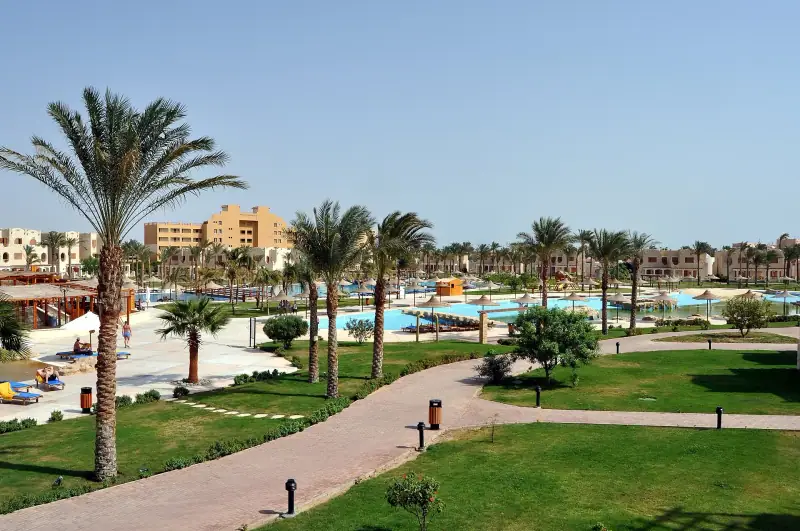
Where to stay in Hurghada and Marsa Alam: resorts, areas and tips
Where to stay on the Red Sea? Hurghada, El Gouna, Sahl Hasheesh and Marsa Alam compared, with all-inclusive plans, reef access and tips before booking.
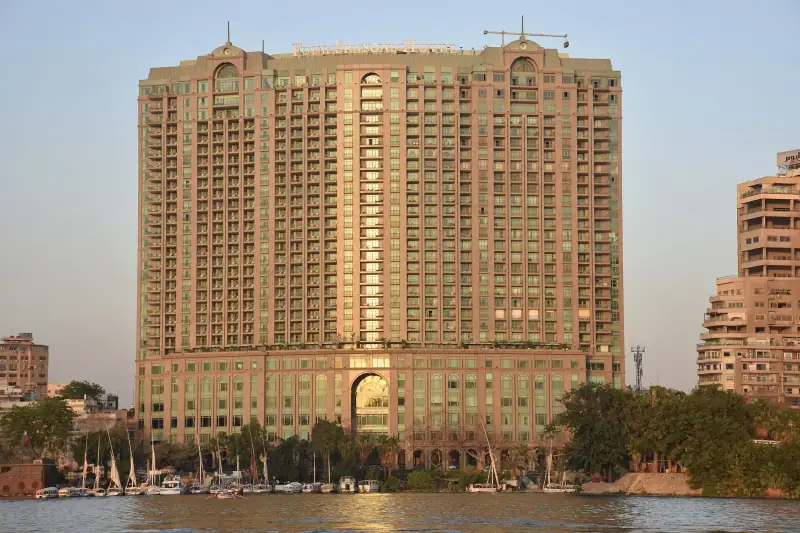
Where to stay in Cairo: neighborhoods, tips and accommodation deals
Where to stay in Cairo? Giza, Zamalek, downtown, Islamic Cairo or Garden City: neighborhoods compared to choose your hotel by stay and budget.
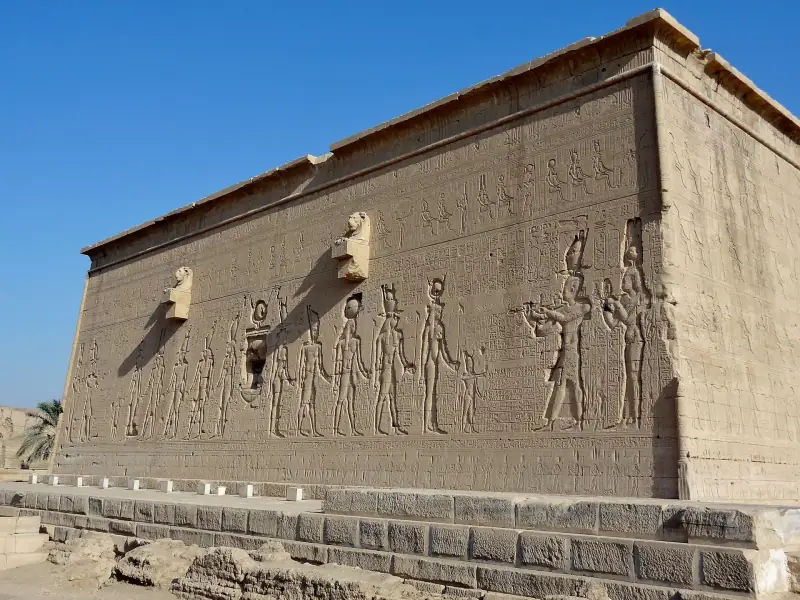
Dendera from Luxor: is the Temple of Hathor worth the detour?
Dendera Temple from Luxor: distance, how to get there, hours, official prices, visit length and what you see (astronomical ceiling, roof, crypts).
Ready-made
Egypt itineraries
4 days
3 days
3 days in Cairo: a day-by-day itinerary from the pyramids to Islamic Cairo
What to do in 3 days in Cairo? Giza pyramids, museums, Coptic and Islamic Cairo, Saqqara: a realistic day-by-day itinerary with practical tips.
7 days
Egypt 7-day itinerary: Cairo, Luxor and Aswan in one week
CairoLuxorAswan