What to see
Visiting the Giza pyramids and the Sphinx: a practical guide
We may earn a commission when you book through links on this page, at no extra cost to you. We don't visit or try the places we cover: we summarize published sources. How we work
In short
- Allow half a day for the Giza plateau: the three pyramids, the Sphinx and panoramic viewpoints; add one to two hours to go inside a pyramid or ride a camel or horse.
- Go at opening time, early in the morning: cooler, softer light and fewer people. The pleasant season runs from autumn to spring.
- Entering the Great Pyramid needs a separate ticket with limited places; the passages are narrow, low and poorly ventilated, so skip it if you are claustrophobic.
- The Grand Egyptian Museum is close to the plateau, so many travelers give half a day to the pyramids and half a day to the museum.
There are sites you think you know from having seen them in photos. The Giza pyramids are among them, and yet the shock is real when you discover these masses of stone standing at the edge of the desert, with Cairo’s buildings in the background. They are the last survivor of the seven wonders of the ancient world and the first stop of almost every trip to Egypt.
This guide helps you visit the Giza pyramids and the Sphinx in good conditions: what you see there, how to organize the visit, whether it is worth entering a pyramid and how to limit the crowds and the hassle from touts. For the rest of your trip, also see our guide to Luxor, Karnak and the Valley of the Kings, and to choose your dates, our article when to visit Egypt.
The Giza plateau: three pyramids and a necropolis
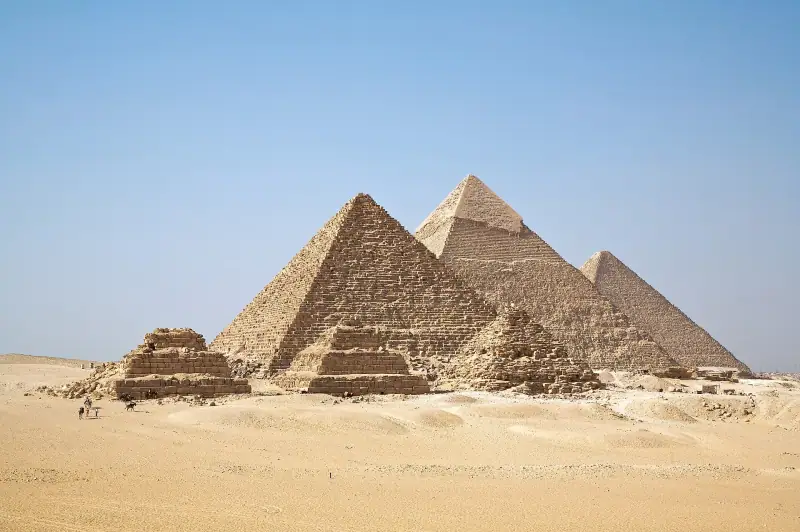
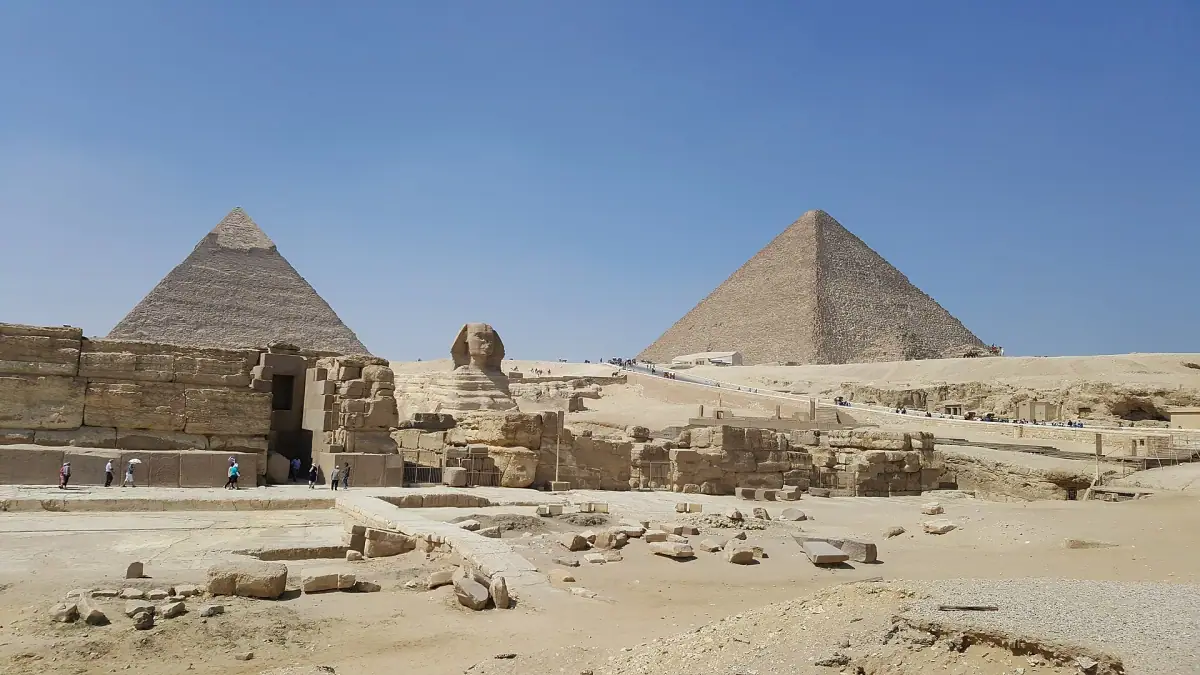
The Giza plateau is an Old Kingdom necropolis, built about 4,500 years ago by the pharaohs of the 4th dynasty. Three great pyramids are lined up diagonally, accompanied by small queens’ pyramids, mastabas of dignitaries and ruined funerary temples.
- The Pyramid of Khufu: the largest and the oldest of the three. It stands today at nearly 140 meters (460 ft), a little less than originally, because its top and casing have disappeared over time.
- The Pyramid of Khafre: a bit lower, but set on slightly higher ground, which gives the impression that it dominates its neighbor. It keeps a piece of its polished limestone casing near the top.
- The Pyramid of Menkaure: clearly smaller, the most modest of the three, surrounded by three small satellite pyramids.
The plateau is vast and very exposed: there is almost no shade. Bring good closed shoes, a hat, water and sunscreen, even in winter.
The Pyramid of Khufu: should you go in?
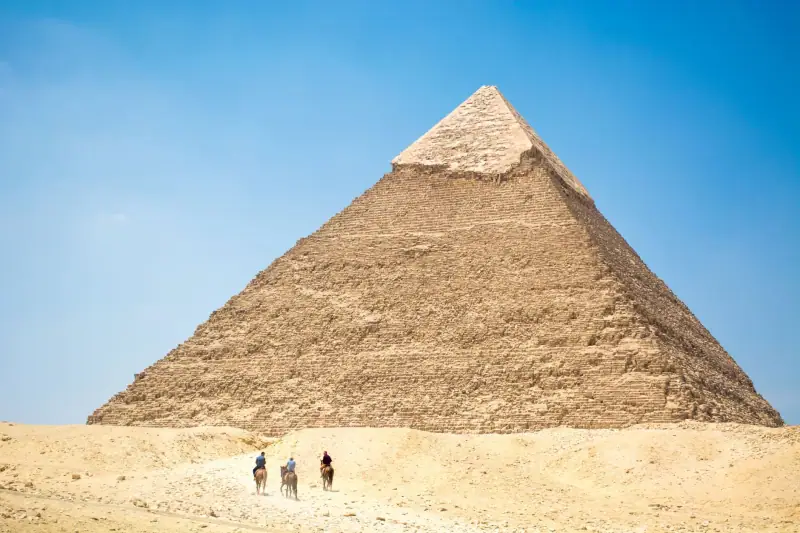
The inside of the Great Pyramid is a striking memory for some travelers, a disappointment for others. You enter by a narrow passage, then climb a long ascending gallery to the King’s Chamber, a bare granite room, almost empty, housing an undecorated sarcophagus.
The experience is mostly about atmosphere: you move bent over, in hot, stuffy air, with other visitors. There are no paintings or hieroglyphs to admire, unlike the tombs of the Valley of the Kings. Access is subject to a separate ticket and a limited number of places, and conditions can change from one period to another.
Our tip: if you are claustrophobic, prone to dizziness or bothered by heat, skip it. You will lose little: the outside view and the scale of the stone blocks, visible from the foot of the pyramid, are impressive enough. Other pyramids on the plateau or nearby are sometimes open depending on the period, and the interior can then be visited more calmly.
Guided tours of the Giza pyramids
Transport, tickets and an Egyptologist guide: compare tours of the Giza plateau and the Sphinx to suit your wishes.
The Sphinx: guardian of the plateau
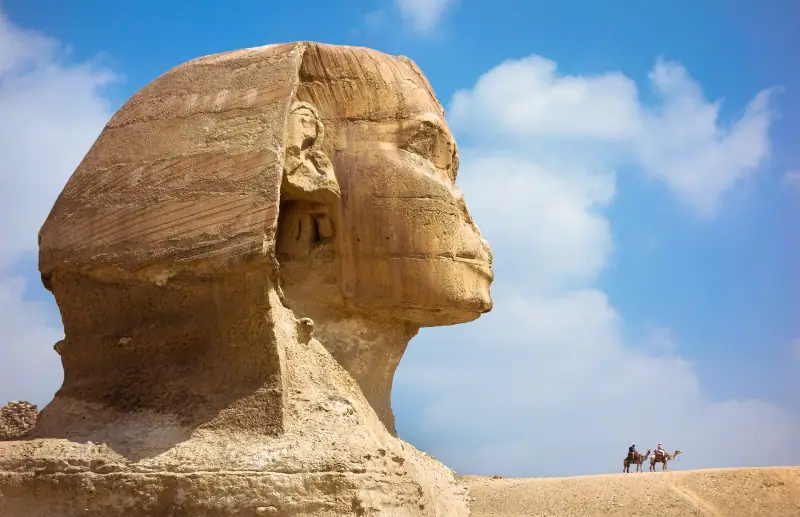
Carved directly into the plateau’s rock, the Sphinx is a recumbent lion with a human head, about 70 meters (230 ft) long. It is generally attributed to the reign of Khafre, whose pyramid and temple it seems to guard. Its face, damaged by erosion and time, remains one of the most famous images of Egypt.
The Sphinx is visited at the foot of the causeway that leads to the Pyramid of Khafre, next to the valley temple. You cannot get right up to it: access is limited to viewing terraces. The best photos are taken in late morning or late in the afternoon, when the light shapes the relief well, but opening time remains the most pleasant moment to avoid the crush.
Panoramic viewpoints
To take in the three pyramids at one glance, you need to step back into the desert. A panoramic viewpoint is set up on a height of the plateau, on the south-west side: you see the pyramids lined up, with the desert as the only backdrop, far from the city. It is the best spot for group photos.
Several options let you enjoy the desert around the site:
- on foot: the simplest way to set your own pace;
- by camel or horse: a typical experience, but rates are often negotiated insistently. Fix the price and duration before getting on, and politely refuse unplanned offers;
- by car or minibus: some guided tours include a road circuit with stops at the main viewpoints.
In the evening, a sound and light show is presented facing the Sphinx. It appeals mostly to travelers who like classic tourist atmospheres: times and languages offered vary, so ask before going.
The Grand Egyptian Museum, steps from the plateau
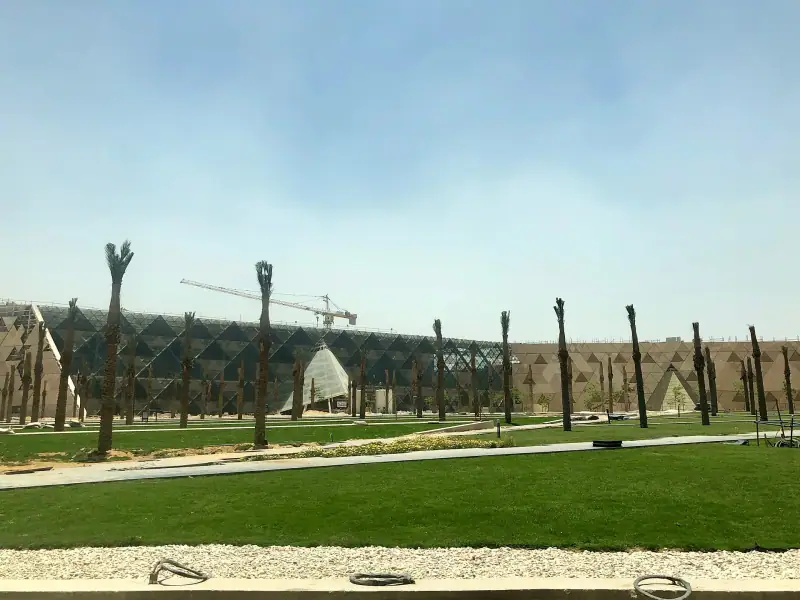
Near the plateau, the Grand Egyptian Museum presents major collections of ancient Egypt, including the famous collection linked to Tutankhamun. It is a large modern museum, whose visit easily takes several hours. For a two-day stay in Cairo, many travelers give half a day to the pyramids and half a day to this museum.
Since opening and ticketing arrangements have changed in recent years, check hours, prices and entry conditions on the official site before going. The downtown museum in Cairo also remains an option for antiquities fans.
Organizing your day at Giza
Here is a simple sequence that avoids peak hours.
- At opening: enter the plateau, tour the three pyramids and take a group photo at the panoramic viewpoint.
- Mid-morning: the Sphinx and valley temple, then possibly entering a pyramid, only if it appeals to you.
- Late morning or lunch: a break in the shade at a restaurant nearby, before the heat becomes unpleasant.
- Afternoon: the Grand Egyptian Museum, or back to Cairo for the Islamic district and the great bazaar.
The pyramids are easily visited on an organized excursion from your hotel in Cairo, with transport, entries and a guide. It is the simplest option for a first stay: you do not have to deal with driver negotiations or ticket logistics.
Where to stay to visit the pyramids
Two main options are open to you. The first is to stay near the Giza plateau: some establishments have a view of the pyramids from their terrace or rooms, a real pleasure at sunrise. The second is to stay in central Cairo, more practical for exploring the Islamic district, restaurants and museums, with a taxi ride to the pyramids.
For a first trip, a night or two with a view of the plateau is worth it if your budget allows: you skip the morning trips and gain quick access to the site at opening.
Find a hotel near the Giza pyramids
Plateau view or central Cairo: compare accommodation by your dates and budget.
Going further: Saqqara, Dahshur and Memphis
If you have one more day, the sites south of Cairo complete the Giza visit well. Saqqara has the Step Pyramid of Djoser, often presented as the oldest great stone construction in history, as well as several decorated tombs. Dahshur, quieter, is known for its pyramids with a particular profile, often less crowded than those of Giza. Memphis, former capital of the Old Kingdom, keeps a small open-air museum.
These sites combine into a day excursion from Cairo, with a driver or an organized tour. They are a very good alternative for travelers who want to see pyramids in a calmer setting.
Practical tips to avoid pitfalls
- Hours: arrive at opening. Heat and crowds rise quickly from late morning, especially in high season.
- Tickets: the plateau entry and that of each pyramid are separate. Prices and conditions change: check before you go.
- Hassle: vendors, spontaneous “guides” and camel owners are insistent. A firm, polite “no, thank you”, without stopping, is generally enough.
- Taxi: agree on the price before getting in, or use a ride app. Avoid “free tour” offers made in the street.
- Clothing: light covering clothes, closed shoes, hat and glasses. Sand and dust are everywhere.
- Photos: drones are banned without permission, and photography rules vary inside the monuments.
- Health: bring plenty of water. It is hard to find on the plateau itself, and prices there are high.
Compare flights to Cairo
Find a flight to Cairo, the starting point for visiting the pyramids, by your dates and budget.
The Giza pyramids are well visited in half a day, but deserve preparation: wake up early, choose your priorities and accept leaving aside what does not appeal to you. Then continue your trip to Upper Egypt, where Luxor and its temples await.
Frequently asked questions
How long do you need to visit the Giza pyramids?
Allow half a day for the plateau: a tour of the three pyramids, the Sphinx and panoramic viewpoints. Add one to two hours if you go inside a pyramid or take a camel or horse ride.
Can you go inside the Pyramid of Khufu?
Yes, but access is limited and subject to an extra ticket, with a restricted number of places. The passages are narrow, low and poorly ventilated: avoid it if you are claustrophobic. Check current conditions at the site.
What is the best time to visit Giza?
At opening, early in the morning, for the cool, soft light and fewer people. The most pleasant season runs from autumn to spring, as summer is very hot.
Do you need a guide to visit the pyramids?
It is not mandatory, but a licensed Egyptologist guide helps you understand the history of the site and avoid touts. Always agree on the fee before the visit starts.
Are the Giza pyramids in Giza or in Cairo?
They are on the Giza plateau, on the western edge of Cairo. The city of Giza is part of Greater Cairo, and the road from the center is done by taxi or car with a driver.
More Egypt guides
Keep reading
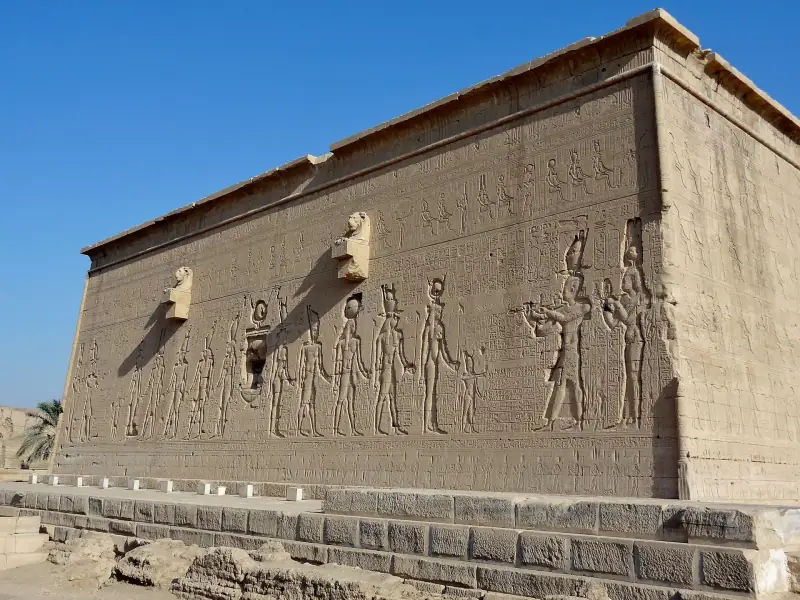
Dendera from Luxor: is the Temple of Hathor worth the detour?
Dendera Temple from Luxor: distance, how to get there, hours, official prices, visit length and what you see (astronomical ceiling, roof, crypts).
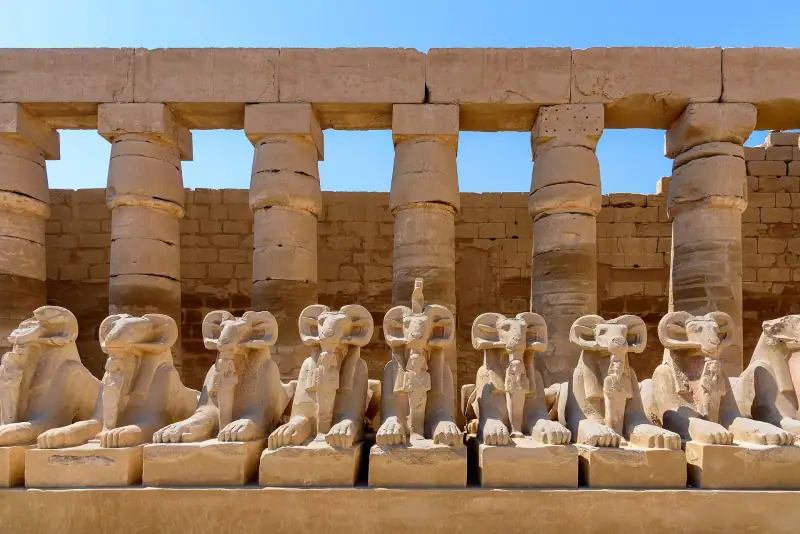
Visiting Luxor: Karnak, the Valley of the Kings and the temples of ancient Thebes
What to see in Luxor? Karnak, Luxor Temple, the Valley of the Kings, Hatshepsut: organizing the two banks, visit length and practical tips.
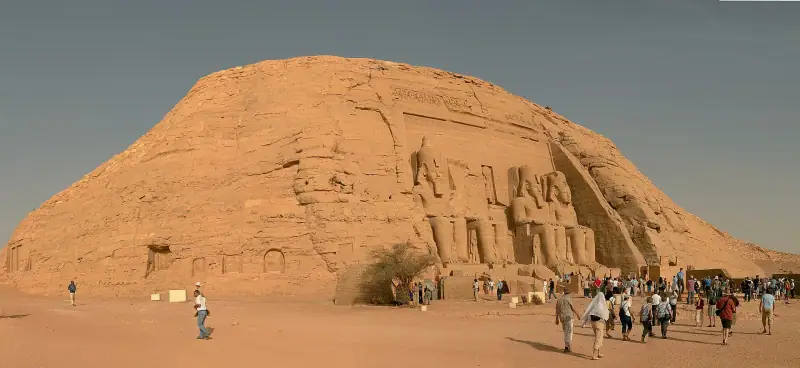
Complete guide to visiting Egypt: regions, must-sees, budget and tips
Visiting Egypt: regions, cities, must-see sites, best time, transport, accommodation and budget. The pillar guide to prepare your trip.
Ready-made
Egypt itineraries
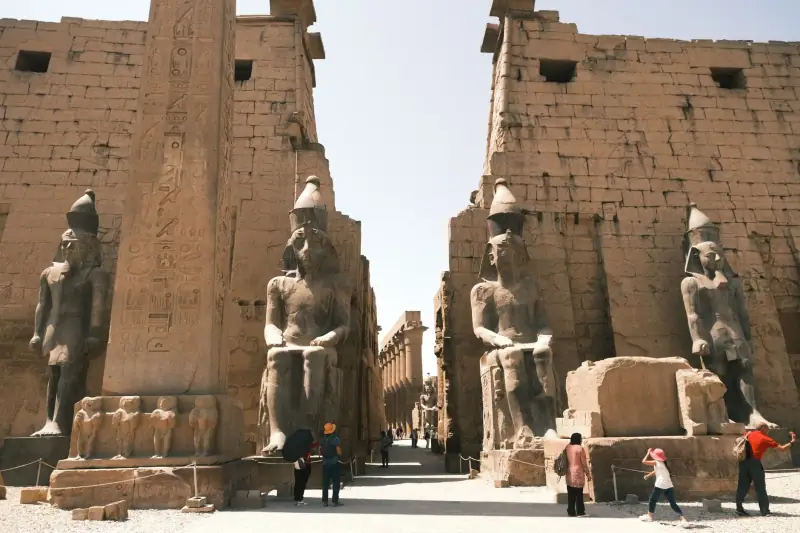
4 days
3 days
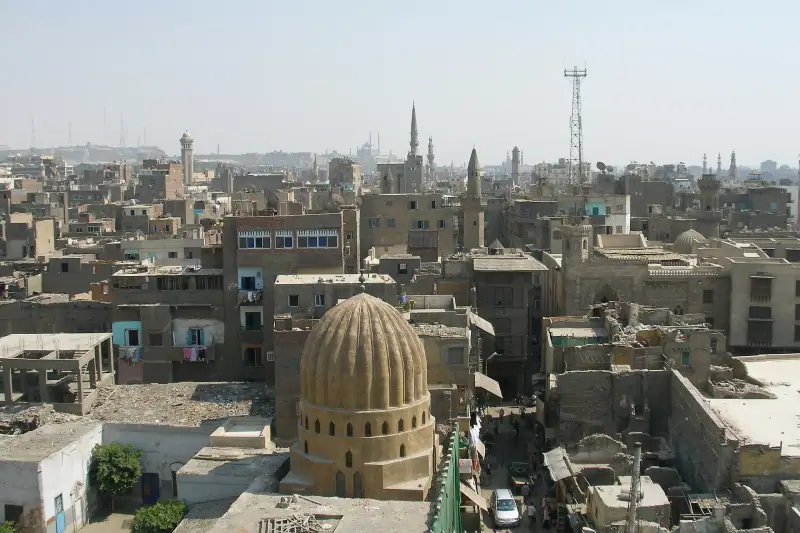
3 days in Cairo: a day-by-day itinerary from the pyramids to Islamic Cairo
What to do in 3 days in Cairo? Giza pyramids, museums, Coptic and Islamic Cairo, Saqqara: a realistic day-by-day itinerary with practical tips.
7 days
Egypt 7-day itinerary: Cairo, Luxor and Aswan in one week
CairoLuxorAswan