What to see
Visiting Aswan: Philae Temple, Abu Simbel, felucca rides and Nubia
We may earn a commission when you book through links on this page, at no extra cost to you. We don't visit or try the places we cover: we summarize published sources. How we work
In short
- Allow two full days for the main Aswan sites (Philae, a felucca around Elephantine, the High Dam), half a day more for the Nubian Museum and one more day for Abu Simbel.
- Abu Simbel lies about 280 km (174 mi) south of Aswan; excursions leave very early in the morning, and road conditions can change, so ask your hotel or agency.
- Philae was moved to Agilkia island and Abu Simbel to a higher artificial hill, both in UNESCO-led rescue campaigns.
- Visit between October and April when temperatures are most bearable; in summer, go early in the morning.
Aswan is the southernmost city of classic Egypt, and one of its most pleasant. Here, the Nile widens around granite rocks and palm-planted islands, feluccas glide on the water and the pace is clearly slower than in Cairo or Luxor. It is also the gateway to Nubia, with its colorful houses and its own traditions.
For anyone preparing a trip to Egypt, visiting Aswan is a chance to discover two major sites: Philae Temple, dedicated to the goddess Isis, and, farther south, the Abu Simbel temples, cut into the cliff under the reign of Ramses II. In this guide, we detail the visits, the logistics and tips to organize your stay, whether you arrive on a Nile cruise, by train or by plane.
Philae Temple, Isis’s sanctuary on its island
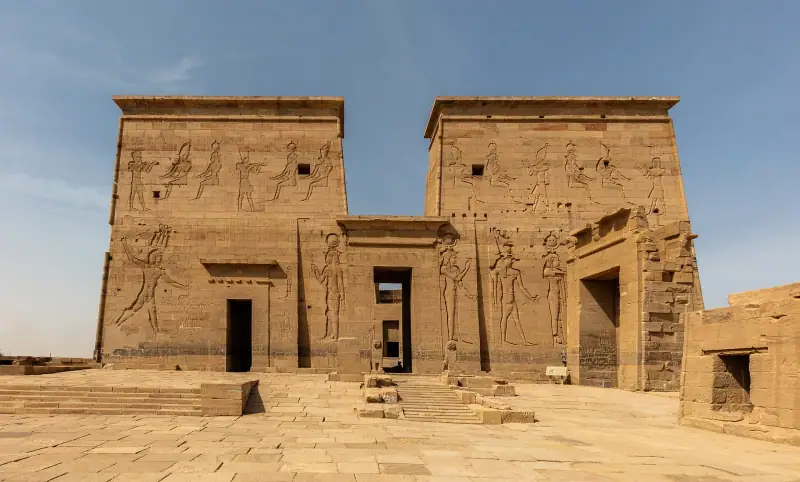
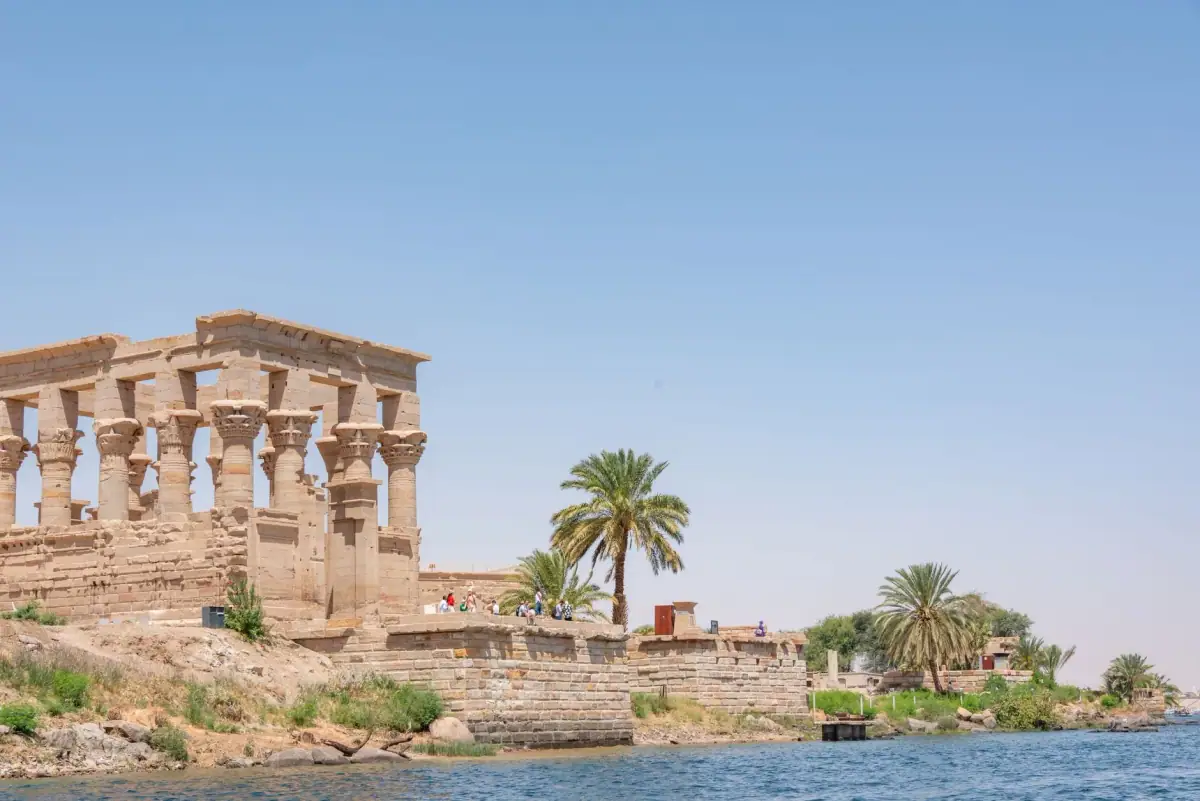
Philae is often considered one of the most beautiful sites in Egypt, largely thanks to its setting: a group of pylons, colonnades and chapels set on an island, reached by boat. Arriving over the water, with the stone silhouettes slowly taking shape, is part of the experience.
The temple is dedicated to Isis, a major goddess of the Egyptian pantheon, and her cult was maintained here very late, into the Roman and Byzantine period. You see reliefs from different eras, worship scenes and, across the courts and halls, traces of the site’s religious evolution.
A temple moved stone by stone. Philae is not at its original location. The construction of the Aswan High Dam was going to drown the original island: the temple was therefore dismantled and rebuilt on the neighboring island of Agilkia, as part of a major international rescue campaign under UNESCO. The current landscape was carefully recreated to respect the appearance of the original site.
How to organize the visit:
- Access: you take a small motorboat from a landing south of Aswan. The crossing is short. Boats wait until they have enough passengers, and the crossing price is negotiated or paid according to current rates: ask your hotel or guide.
- Duration: allow about two hours at the temple to see everything without rushing.
- Best time: early morning, before the cruise groups, or at the end of the day when the light is softer.
- Sound and light show: a show is generally offered in the evening. Times and languages vary: check them before booking.
Our tip: take the time to walk around the island on the outside of the temple. The small buildings and the views over the Nile are often less crowded than the great pylon.
Guided tours of Aswan and Philae
An Egyptologist guide makes the reliefs of Philae much easier to read: compare excursions and traveler reviews.
Abu Simbel, the colossi of Ramses II
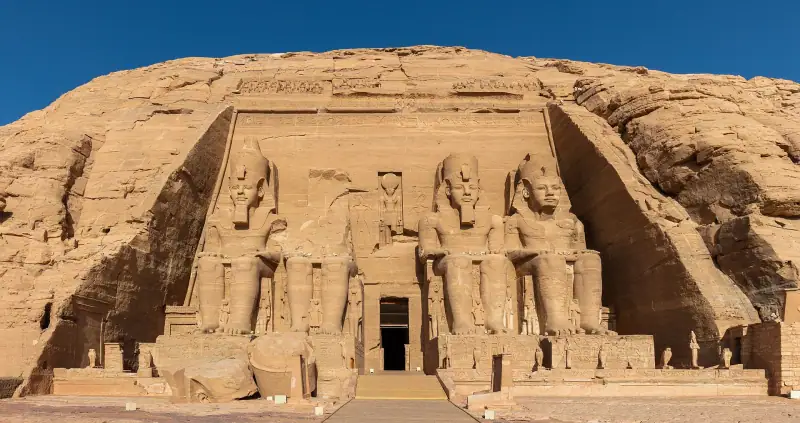
Abu Simbel is one of the most striking excursions in Egypt, and one of the longest. The site has two temples dug into the cliff: the great temple, dedicated to Ramses II and several deities, and the small temple, devoted to Queen Nefertari and the goddess Hathor.
The facade of the great temple is guarded by four immense seated statues of Ramses II. Inside, the halls sink into the rock and are covered with reliefs, notably scenes linked to the Battle of Kadesh, which the pharaoh had celebrated as a great victory.
Another UNESCO rescue. Like Philae, Abu Simbel was moved because of the lake formed by the High Dam. The two temples were cut into blocks and rebuilt higher up, on an artificial hill, in the 1960s. This operation remains one of the great world heritage preservation projects.
The solar phenomenon. The temple was oriented so that, twice a year, the sun’s rays enter the sanctuary and light several statues at the back. This phenomenon is generally celebrated around February 22 and October 22. These days attract many people and require booking far in advance.
How to get there:
- Distance: Abu Simbel is about 280 km (174 mi) south of Aswan, in the middle of the desert, not far from the Sudanese border.
- Organized excursion: the most common is to leave very early in the morning by minibus, visit the site around mid-morning, then return to Aswan in the early afternoon. The day is long.
- By air: some flights let you avoid the road, depending on the season. Schedules change regularly.
- Safety and formalities: traffic rules on the desert road have evolved over the years. Have your hotel or agency check the current conditions when you book.
At Abu Simbel, visiting the two temples generally takes a little over an hour, with free time for photos. Bring water, a hat and sunscreen: there is no shade on the forecourt.
A felucca ride around Elephantine
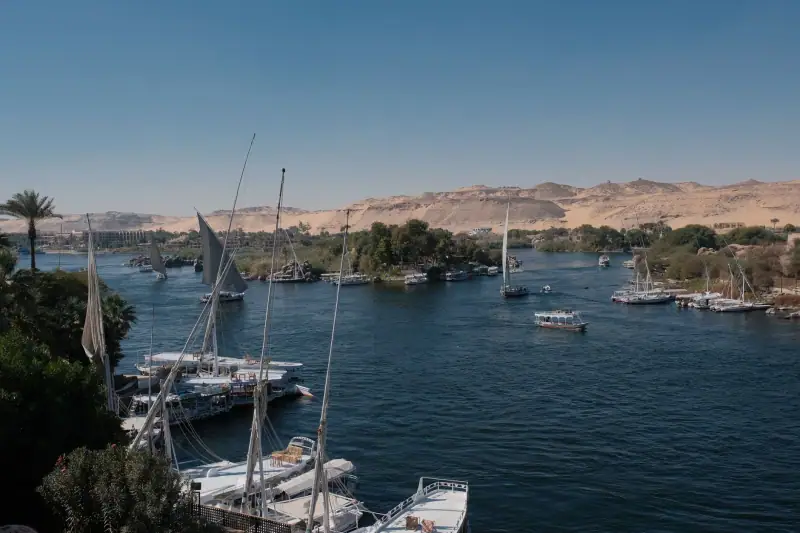
The felucca is the traditional sailboat of the Nile, and Aswan is probably the place where it is most pleasant to take one. The river is wide there, the banks are lined with palm trees and rocks, and the breeze makes the heat milder.
The classic ride goes around Elephantine Island, the botanical garden on Kitchener’s Island and the west bank, where you can see the Aga Khan mausoleum. It generally lasts between one and three hours depending on the route chosen. The wind sometimes decides the pace: with no breeze, the captain may use an engine or oars.
Worth noting:
- The fare is negotiated before boarding, and it is better to fix the duration and route. Your hotel can point you to a reliable captain.
- Sunset is a very popular time, but also busier.
- A stop at Elephantine lets you discover an ancient archaeological site and a Nubian village, though the visit is on foot and with little infrastructure.
Where to stay in Aswan?
Nile view, proximity to the corniche or calm on the west bank: compare accommodation by your dates.
The High Dam and Lake Nasser
The Aswan High Dam, completed in the 1970s, transformed life in Egypt: it regulates the Nile floods, produces electricity and allows irrigation all year. It also created the immense Lake Nasser, whose waters swallowed part of Nubia and forced the relocation of many temples and entire populations.
The visit is short: you go to the road that crosses the dam, stop for the view over the lake and look at the monument dedicated to Egyptian-Soviet friendship. It is often combined with Philae in a half day. It is not a spectacular site in itself, but it helps you understand why so many sites in the region had to be saved.
To go deeper, you can also see the Temple of Kalabsha, also moved, reached by boat on the lake. This outing needs specific organization: ask a local agency.
The Nubian Museum and the Nubian village

Aswan is the best city in Egypt for understanding Nubian culture. The Nubian Museum traces the history of this region, from prehistoric times to the modern era, with objects, models and explanations about the population displacements caused by the dam. It takes one to two hours and is an excellent complement to the temples.
Another highlight is a visit to a Nubian village, reached by boat from the bank. You discover brightly painted houses, sand lanes, family cooking and often a warm welcome. Several families offer tea, a meal or a henna tattoo. For a respectful visit:
- Ask before photographing residents and the inside of houses.
- Favor visits organized by residents or by recognized agencies.
- Bring small change for craft purchases and tips.
The Unfinished Obelisk and other visits
If you have time, a few sites round out the stay well:
- The Unfinished Obelisk: located in the old granite quarries, it was abandoned because of a crack. It is a chance to see traces of stone extraction in pharaonic times. The visit takes about thirty minutes.
- Aswan souk: a long, lively street, parallel to the corniche, where you find spices, hibiscus, fabrics and souvenirs. Prices are negotiable, and the atmosphere is generally more relaxed than in Cairo.
- The Tombs of the Nobles: on the west bank, tombs of dignitaries of the Old and Middle Kingdoms, reached by a small path and offering a pretty view over the river.
- St. Simeon Monastery: a ruined Coptic complex, in the west bank desert, reached on foot or by camel.
How to organize your stay in Aswan
Aswan fits naturally into two types of trip. The first is the Nile cruise between Luxor and Aswan, which lets you discover Edfu and Kom Ombo on the way. The second is a circuit by train or plane from Cairo, with a stop in Luxor. Both formulas combine well with a Red Sea stay to end the trip.
Example of a three-day plan:
- Day 1: arrival, a walk on the corniche, souk and a sunset felucca around Elephantine.
- Day 2: morning at Philae, then the High Dam and the Unfinished Obelisk. The afternoon is free for the Nubian Museum.
- Day 3: excursion to Abu Simbel, with a very early start and a return in the early afternoon.
For the other stages of the trip, see our guide to Luxor, Karnak and the Valley of the Kings and the one on the Giza pyramids and the Sphinx. To choose your dates, see also when to visit Egypt.
Practical tips for visiting Aswan
- Heat: Aswan is very hot in summer. Schedule visits early in the morning and keep midday hours for the pool or a nap.
- Clothing: light covering clothes, a hat, sunglasses and good shoes. Bring a light jacket for winter evenings.
- Tickets: each site has its own ticket office. Prices and hours change, so check them before your visit.
- Transport: in Aswan, you get around on foot on the corniche, by taxi for farther sites and by boat for the islands. Agree on the price before getting in.
- Approaches: vendors and felucca captains are insistent. A polite “no, thank you” is generally enough.
- Water and health: drink bottled water, protect yourself from the sun and keep a small snack for long excursions.
Aswan is one of the finest places in the country to slow down, after the bustle of Cairo and Luxor. Between Philae, Abu Simbel and the colors of Nubia, it is a stage that gives a trip to Egypt a more human dimension, at the scale of the river.
Frequently asked questions
How long do you need to visit Aswan?
Allow two full days to see the main sites: Philae Temple, a felucca ride around Elephantine and the High Dam. Add half a day for the Nubian Museum, and one more day if you go to Abu Simbel.
How do you get to Abu Simbel from Aswan?
Abu Simbel is about 280 km (174 mi) south of Aswan. You go on an organized excursion by minibus or by car with a driver, with a very early start, or by plane on some routes. Traffic conditions on this road can change: ask your hotel or agency before booking.
Why was Philae Temple moved?
The construction of the Aswan High Dam in the 20th century was going to submerge the original island. In an international campaign under UNESCO, the temple was dismantled and rebuilt on nearby Agilkia island, where it can be visited today.
Do you need a guide to visit Philae and Abu Simbel?
It is not mandatory, but it is very useful. The reliefs, cartouches and religious scenes take on their full meaning with the explanations of an Egyptologist guide, notably at Philae where the site is rich in detail.
What is the best time to visit Aswan?
From October to April, when temperatures are most bearable. In summer, Aswan is one of the hottest cities in the country: visits are then made early in the morning, and long excursions like Abu Simbel call for good hydration.
Can you swim in the Nile at Aswan?
It is best not to. Favor your hotel pool and enjoy the river from a felucca, which remains the most pleasant way to appreciate it.
More Egypt guides
Keep reading
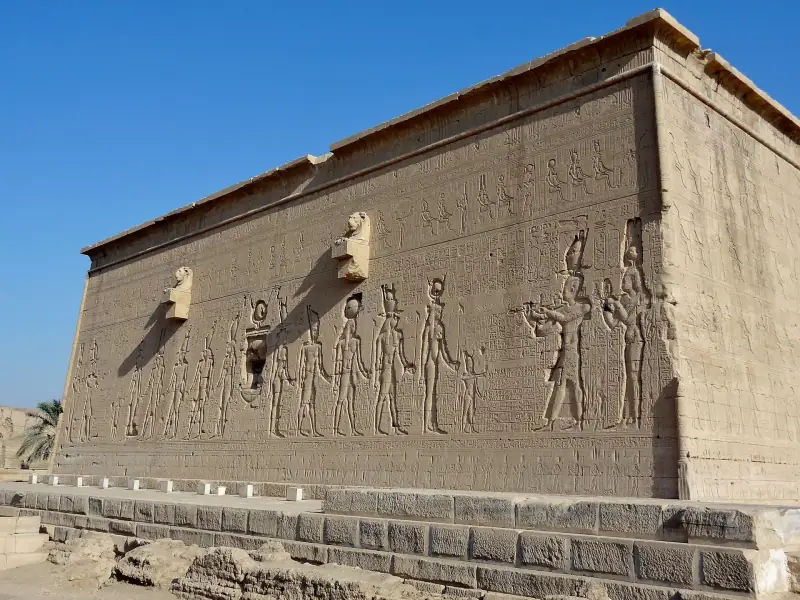
Dendera from Luxor: is the Temple of Hathor worth the detour?
Dendera Temple from Luxor: distance, how to get there, hours, official prices, visit length and what you see (astronomical ceiling, roof, crypts).
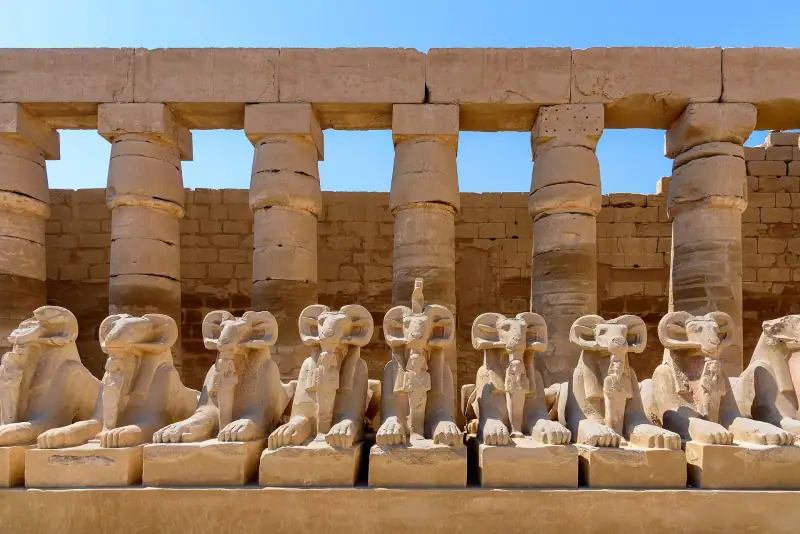
Visiting Luxor: Karnak, the Valley of the Kings and the temples of ancient Thebes
What to see in Luxor? Karnak, Luxor Temple, the Valley of the Kings, Hatshepsut: organizing the two banks, visit length and practical tips.
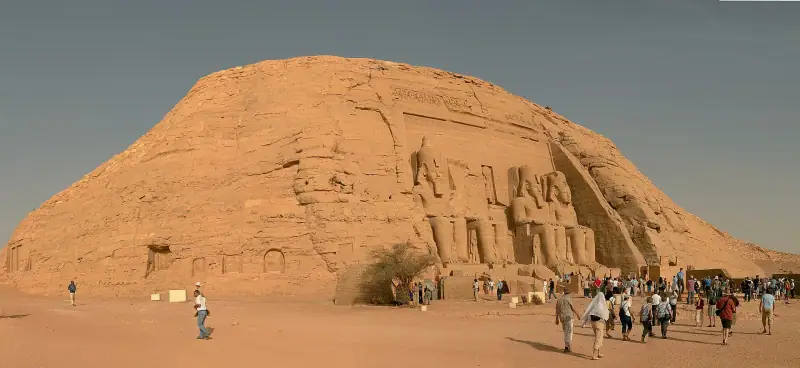
Complete guide to visiting Egypt: regions, must-sees, budget and tips
Visiting Egypt: regions, cities, must-see sites, best time, transport, accommodation and budget. The pillar guide to prepare your trip.
Ready-made
Egypt itineraries
4 days
3 days
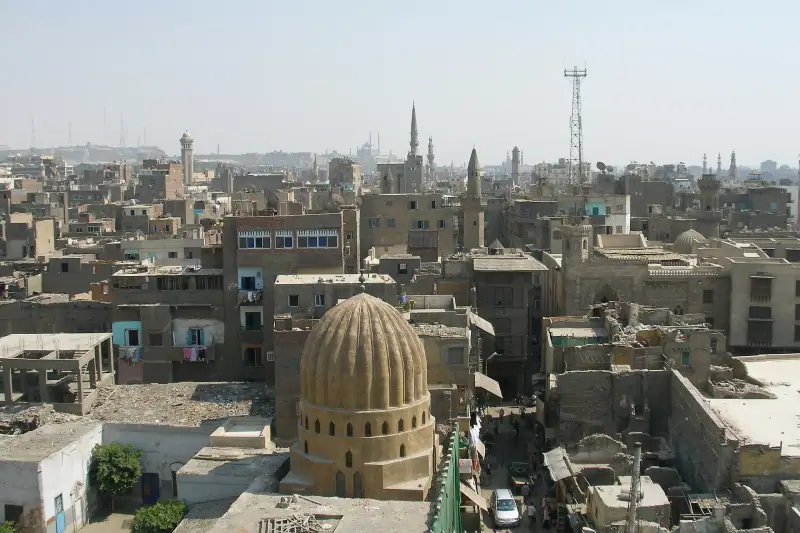
3 days in Cairo: a day-by-day itinerary from the pyramids to Islamic Cairo
What to do in 3 days in Cairo? Giza pyramids, museums, Coptic and Islamic Cairo, Saqqara: a realistic day-by-day itinerary with practical tips.
7 days
Egypt 7-day itinerary: Cairo, Luxor and Aswan in one week
CairoLuxorAswan