Itineraries
3 days in Cairo: a day-by-day itinerary from the pyramids to Islamic Cairo
We may earn a commission when you book through links on this page, at no extra cost to you. We don't visit or try the places we cover: we summarize published sources. How we work
Day by day
- Day 1Giza pyramids, Sphinx and Grand Egyptian Museum
- Day 2Coptic Cairo, Citadel, Ibn Tulun Mosque, Khan el-Khalili
- Day 3Saqqara (and Memphis or Dahshur), or felucca and free time
In short
- Day 1 covers the Giza plateau and the Grand Egyptian Museum, day 2 Coptic Cairo, the Citadel and Islamic Cairo, day 3 Saqqara or a freer day on the Nile.
- Group visits by area, because Giza is on the western edge and historic Cairo is in the center and east.
- Start early: crowds arrive mid-morning, the heat rises quickly and the light is better in the morning.
- The article gives no precise prices or travel times, since they vary with traffic, season and booking date. Check them before you go.
Cairo overflows with monuments, car horns, and centuries of history stacked on top of each other. Three days seem short, yet it is the ideal length for a first stay, whether as a city break or as the starting point of a longer trip. This itinerary is built by geographic area, so you do not lose hours in traffic from one end of the metropolis to the other.
The plan: the Giza plateau and the Grand Egyptian Museum on the first day, Coptic Cairo, the Citadel and Islamic Cairo on the second, and Saqqara or a freer day on the third. If your stay is part of a wider trip, our 7-day Egypt itinerary shows how to link Cairo with Luxor and Aswan.
We have deliberately avoided overly precise travel times and detailed prices: they vary with traffic, season and booking date. Check them before you go.
The 3 days at a glance
- Day 1: Giza pyramids, Sphinx and Grand Egyptian Museum
- Day 2: Coptic Cairo, Saladin’s Citadel, Ibn Tulun Mosque, then an evening in the Khan el-Khalili district
- Day 3: Saqqara (and possibly Memphis or Dahshur), or a felucca ride and free time
The logic is simple: Giza lies to the west, on the outskirts, while historic Cairo is concentrated around the center and the east. By giving a full day to each pole, you cross the city only once a day.
Before you go: what to sort out
A short stay leaves no room for improvising on paperwork. Three points to handle:
- Entry requirements: passport, visa, validity. Entry rules depend on your passport. Check the official travel advice of your government before you book: travel.state.gov (US), GOV.UK (UK), travel.gc.ca (Canada), Smartraveller (Australia) (checked November 2026). More in our article on entry requirements for Egypt.
- Budget: site entry fees, driver, meals. The guide to the budget for a trip to Egypt gives orders of magnitude.
- Season: choose October to April if you can. See when to visit Egypt.
Also consider travel insurance covering medical costs and cancellation.
Where to stay for three days in Cairo
The choice of neighborhood shapes your stay. Three main areas come up most often:
- Downtown, around Tahrir Square and neighboring districts: practical for the metro, the central museums and restaurants, with a very urban feel.
- Zamalek island, in the middle of the Nile: calmer, greener, appreciated for its cafés and galleries.
- The Giza area, near the pyramids: ideal if you want to see the plateau at sunrise or from a rooftop, but farther from the rest of the city.
For three nights, a hotel downtown or in Zamalek is a good compromise; the Giza area suits a stay centered on the pyramids. Our guide on where to stay in Cairo details the neighborhoods and hotel categories.
Find a hotel in Cairo
Downtown, Zamalek or pyramid views: compare hotels by dates, reviews and cancellation terms.
Day 1: the Giza pyramids and the Grand Egyptian Museum
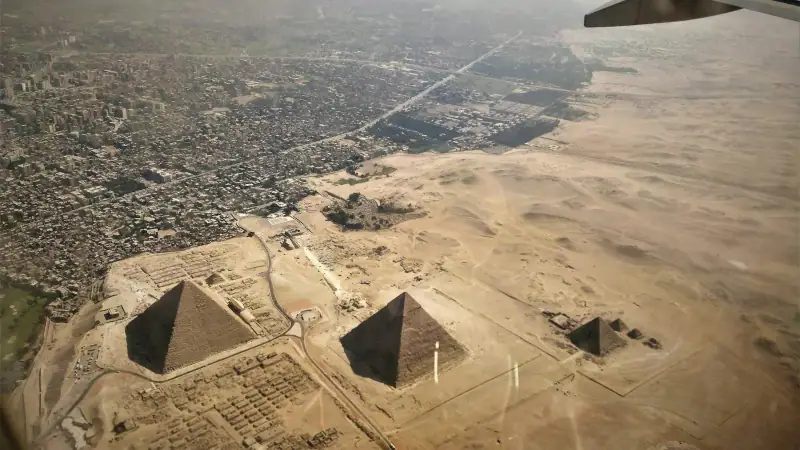
Start with the Giza plateau, as early as possible. Groups arrive mid-morning, the heat climbs fast and the light is better in the morning. The site brings together the three great pyramids, those of Khufu, Khafre and Menkaure, as well as the Sphinx and several necropolises. Our complete guide to the Giza pyramids and the Sphinx details what to see and how to organize the visit.
A few tips for the morning:
- Allow two to three hours for the plateau, more if you go inside a pyramid, which can be narrow and hot.
- Bring water, a hat and good shoes: the ground is sandy and there is little shade.
- Beware of approaches: offers of camel or horse rides, fake guides, “gifts”. A polite, firm refusal is enough, and it is best to agree on the price before mounting an animal.
- The panoramic viewpoint, set back from the site, gives the classic image of the three pyramids in a row.
Guided tour of the pyramids
A guide and a transfer from your hotel make the morning at Giza simpler: compare the guided tours available.
Afternoon at the Grand Egyptian Museum
The Grand Egyptian Museum is very close to the Giza plateau, so you can link the two visits without crossing the city again. It officially opened in late 2025 after many years of work. Its monumental hall, grand staircase and galleries devoted to ancient Egypt make it one of the largest archaeological museums in the world, notably with the complete funerary furniture of Tutankhamun.
To visit it well:
- Allow at least three hours, more if you like to take your time.
- Do not try to see everything: pick two or three themes (the pharaohs, Tutankhamun, daily life) and follow them.
- Check ticket booking terms and opening hours before you come, as they change and some areas may have special rules.
At the end of the day, if you still have energy, dinner in the Giza area or a return to the center are both possible. A sound and light show is offered on the plateau in the evening; check times and available languages before planning it.
Day 2: Coptic Cairo, the Citadel and Islamic Cairo
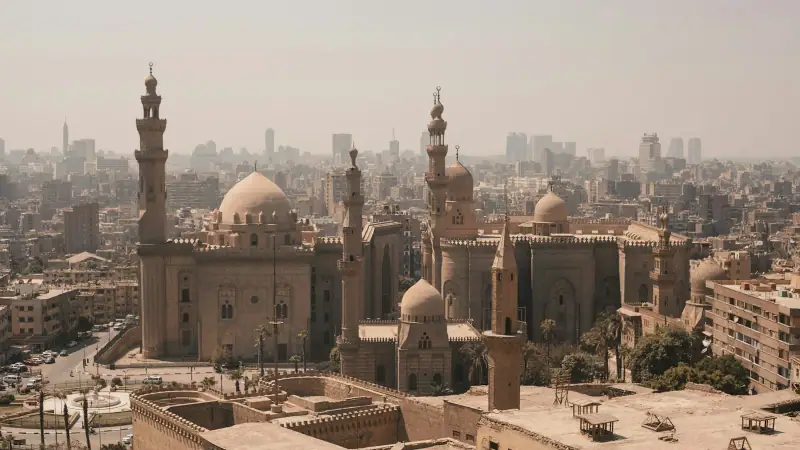
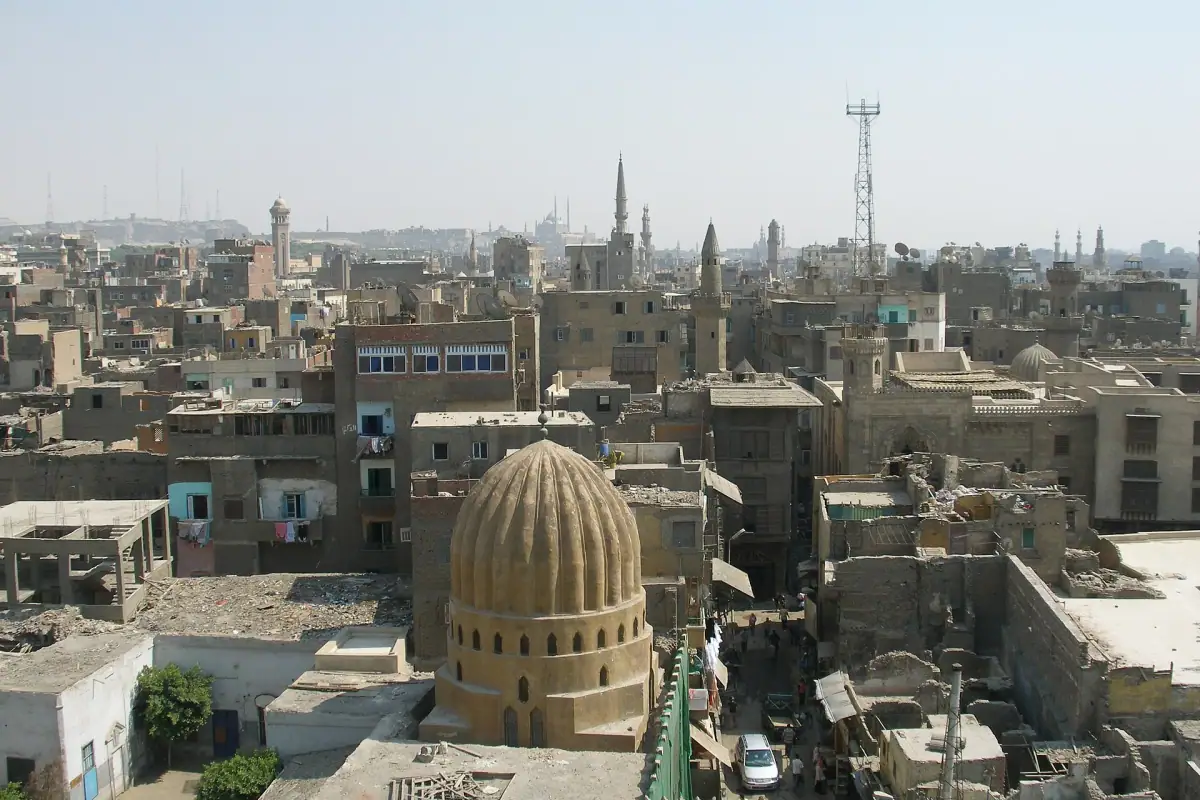
The second day is devoted to historic Cairo, a dense area where you pass from one era to another in a few metro stops or a few minutes by taxi.
Morning: Coptic Cairo
Coptic Cairo, in the old town district, brings together churches, a museum and a synagogue within an area you can cover on foot. You will find the Hanging Church, named for its position above an old Roman bastion, as well as narrow lanes and shrines tied to moments in Egypt’s Christian history. It is a sector often skipped by quick tours, yet it shows an essential side of the country: a Christian community present since the first centuries.
Allow about two hours, in modest clothing covering shoulders and knees, out of respect for the places of worship.
Saladin’s Citadel
Next, head to the Citadel, a medieval fortress built by Saladin in the 12th century on a height overlooking the city. It houses several mosques and museums. The most visible is the Mohamed Ali Mosque, a 19th-century building of Ottoman inspiration, with its domes and slender minarets: the interior is vast and bright, and the terrace offers a wide view over the city.
Allow two hours there. Again, respectful dress is expected, and you sometimes have to take off your shoes to enter the mosque.
The Ibn Tulun Mosque
Near the Citadel, the Ibn Tulun Mosque, from the 9th century, is one of the oldest mosques in the city. Its large square courtyard, plain arcades and minaret with an outside ramp make it a very photogenic visit, much calmer than the busiest sites. It is an excellent counterpoint to the Citadel.
Guided tour of historic Cairo
Coptic Cairo, the Citadel and the Islamic quarter: compare half-day or full-day guided tours among the offers.
Late afternoon: the Khan el-Khalili district
End the day in the Islamic quarter, around Al-Muizz Street, the mosques and the gates of the old city, then the great bazaar of Khan el-Khalili. This is when the atmosphere is liveliest: lights, the smell of spices, copper workshops, souvenir shops, cafés where you linger over a tea. Our article on Islamic Cairo and Khan el-Khalili covers the monuments worth seeing and how to haggle without stress.
For dinner, stay in the area or head to an Egyptian restaurant: koshari, ful, taamiya or grilled meats are safe choices. If food interests you, see our article on Egyptian dishes to try.
Day 3: Saqqara, or a freer day
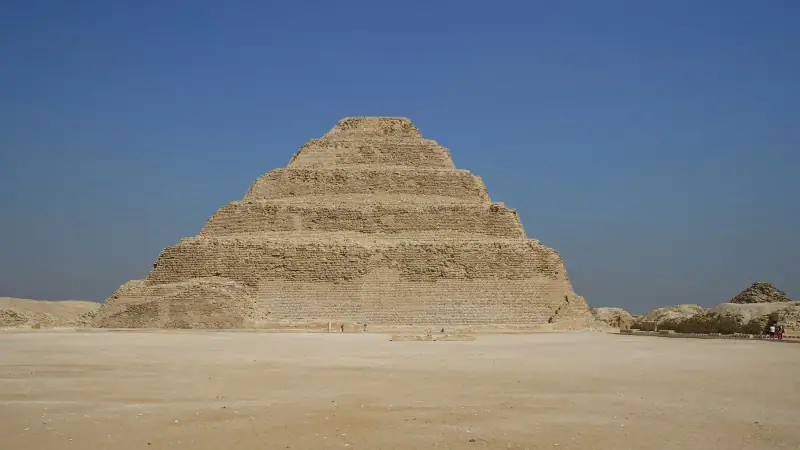
For the last day, two options depending on your energy and interests.
Option A: Saqqara and its pyramids
Saqqara, about 30 km (19 mi) south of Cairo, is the old necropolis of Memphis, the capital of Egypt in the Old Kingdom. It has the Step Pyramid of Djoser, considered one of the first great stone constructions in history, and many tombs decorated with colorful reliefs. It is less crowded than Giza, and often more moving.
Depending on your time, you can add:
- Memphis, the old capital, of which an open-air museum remains with a large statue of Ramses II;
- Dahshur, with its pyramids, including the Bent Pyramid, interesting for understanding how pyramid architecture evolved.
It is advisable to book a driver or an excursion: public transport is impractical, and the trip depends heavily on traffic. A half day is enough for Saqqara; add two to three hours if you combine Memphis or Dahshur.
Excursion to Saqqara and Memphis
Transport, guide and site entry: compare half-day to full-day excursions from Cairo.
Option B: felucca and free time
If you prefer a gentler pace, spend the day on the Nile and in the modern districts. A ride on a felucca, the traditional sailboat, is one of the best moments of relaxation on a stay: you glide along the river at the pace of the wind, with the city as a backdrop. Departures are generally from the Nile banks, notably downtown and toward Zamalek; always agree on the price and the duration before boarding.
You can then stroll in Zamalek, visit a downtown museum if you wish, or simply sit on a café terrace. After two busy days, this is often the best way to finish.
Getting around Cairo without losing time
Traffic is one of the main challenges of the stay. A few pointers:
- Ride-hailing apps are practical for trips in town: the price is shown in advance and there is no negotiation.
- Regular taxis remain common; fix the price before leaving if the taxi has no meter.
- The metro is fast and very cheap for crossing the center; some cars are reserved for women, the others are mixed.
- A driver for the day is a good option for Giza and Saqqara, as it avoids stops, negotiations and waiting.
Always group visits by area and leave an hour’s margin between two distant sites. Driving yourself in Cairo is not recommended for a first stay: a driver or ride-hailing is simpler.
Practical tips for your three days
- Leave early: mornings are cooler and sites are calmer.
- Dress modestly, especially in places of worship: shoulders and knees covered.
- Drink regularly and protect yourself from the sun, even in winter.
- Keep small change for tips, called baksheesh: they are common for small services.
- Watch for spontaneous offers: a “free guide” or an “offered” visit often ends in a purchase.
- Do not overload the schedule: better to see fewer places and enjoy them.
Adapting the itinerary to your profile
- Families with children: keep Giza, the felucca and the Grand Museum, and lighten Islamic Cairo. Breaks are essential.
- History enthusiasts: give day 3 to Saqqara, Memphis and Dahshur, and prefer the Grand Museum to any other city visit.
- Atmosphere and photography fans: focus on Ibn Tulun, Al-Muizz Street and Khan el-Khalili at the end of the day.
- Longer stay: add a day for the downtown museum and another excursion, or continue south with our 10-day itinerary.
Key takeaways
Three days in Cairo make a dense but realistic stay: Giza and the Grand Egyptian Museum, Coptic Cairo, the Citadel and the Islamic quarter, then Saqqara or a freer day on the Nile. The trick is to group visits by area, leave early and keep a margin for traffic. To go further, see our complete guide to Egypt.
Frequently asked questions
Are three days enough to see Cairo?
Three days let you see the essentials: the Giza pyramids, a major museum, Islamic Cairo and the Citadel. They are not enough to go deep, but they make a dense and coherent stay as long as you group visits by area.
Should you visit the Grand Egyptian Museum or the museum on Tahrir Square?
The Grand Egyptian Museum, near the pyramids, shows most of the collections in modern displays, including the Tutankhamun ensemble. The historic museum on Tahrir Square is still interesting for its old-fashioned atmosphere. With three days, pick one of the two unless museums are your priority. Check the state of the collections before booking, as objects have been transferred.
How do you get around Cairo?
Ride-hailing apps, taxis and the metro are the most common options. Traffic is heavy: leave a margin between two distant visits and group those in the same area.
Can you fit in Saqqara on the same trip?
Yes, as a half day, about 30 km (19 mi) south of Cairo. You can combine it with Memphis or Dahshur, by car with a driver or on an organized excursion.
What is the best time for a 3-day stay in Cairo?
From October to April, temperatures are more pleasant for walking and sightseeing outdoors. Summer can be very hot in the middle of the day. Our guide on the best time to visit Egypt details the seasons.
Do you need a guide to visit Cairo?
It is not mandatory, but a licensed guide adds a lot of context at the pyramids, Saqqara and Islamic Cairo, and limits unwanted approaches. Book ahead through a known provider if you can.
More Egypt guides
Keep reading
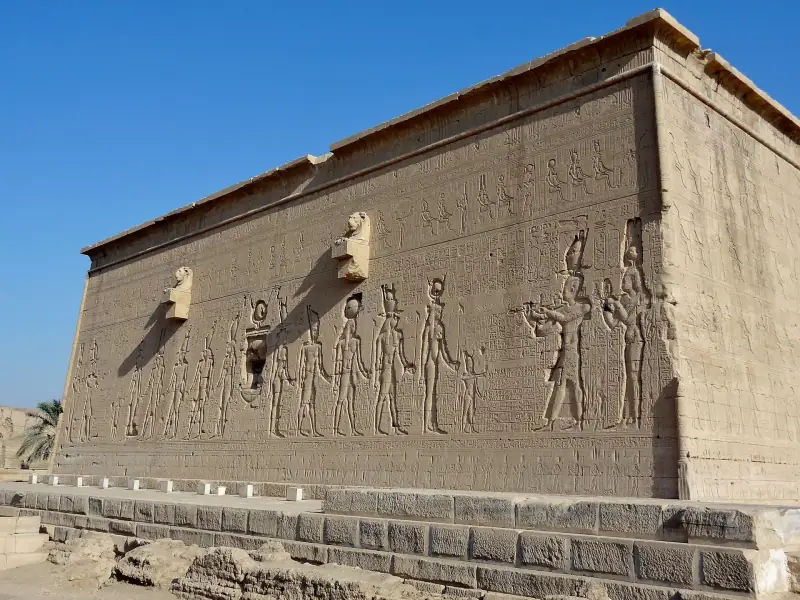
Dendera from Luxor: is the Temple of Hathor worth the detour?
Dendera Temple from Luxor: distance, how to get there, hours, official prices, visit length and what you see (astronomical ceiling, roof, crypts).
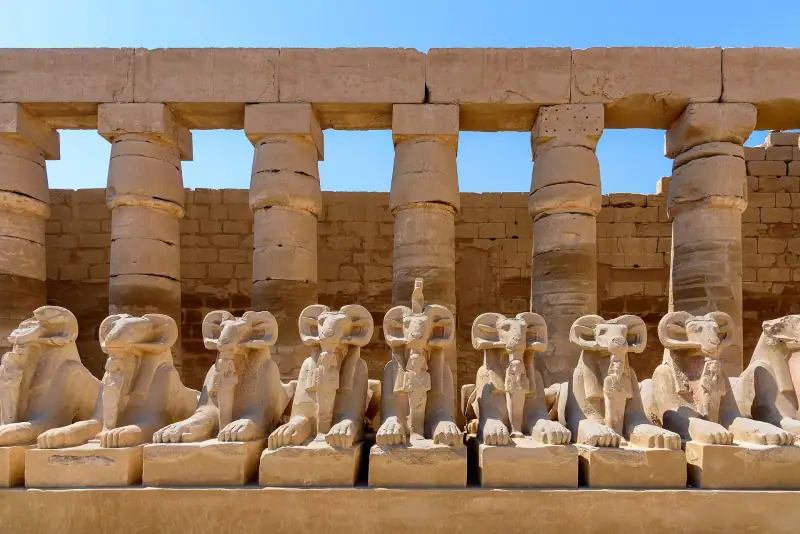
Visiting Luxor: Karnak, the Valley of the Kings and the temples of ancient Thebes
What to see in Luxor? Karnak, Luxor Temple, the Valley of the Kings, Hatshepsut: organizing the two banks, visit length and practical tips.

Where to stay in Luxor: east bank or west bank, neighborhoods and tips
Where to stay in Luxor? The lively east bank near Karnak or the quieter west bank near the Valley of the Kings: areas compared, with booking tips.
Ready-made
Egypt itineraries
4 days
7 days
Egypt 7-day itinerary: Cairo, Luxor and Aswan in one week
CairoLuxorAswan
10 days
Egypt 10-day itinerary: Cairo, Luxor, Aswan and a Nile cruise
A day-by-day 10-day Egypt itinerary: Cairo pyramids, Luxor, a Nile cruise, Aswan and Abu Simbel. Pace, transport and tips to organize it.