What to see
Visiting Luxor: Karnak, the Valley of the Kings and the temples of ancient Thebes
We may earn a commission when you book through links on this page, at no extra cost to you. We don't visit or try the places we cover: we summarize published sources. How we work
In short
- Two full days cover the essentials: one for the east bank (Karnak and Luxor Temple), one for the west bank (Valley of the Kings, Hatshepsut Temple, Medinet Habu).
- Visit Karnak at opening time and Luxor Temple at the end of the day, when it is lit up; the Valley of the Kings entry ticket usually covers a limited number of tombs.
- Some tombs, including Tutankhamun's, generally need an extra ticket; each major site has its own ticket office.
- Three nights give a more comfortable pace; Dendera is a half-day trip about an hour and a half away.
Luxor is often presented as the largest open-air museum in the world. Built on the site of ancient Thebes, capital of New Kingdom Egypt, the city is crossed by the Nile and brings together on its two banks some of the most impressive sites in the country. Gigantic columns, royal tombs with painted walls, temples standing facing the desert: you come here to go back more than three thousand years in history.
This guide helps you visit Luxor without scattering your efforts. We explain the logic of the two banks, cover the key sites, suggest an itinerary over two or three days and give a few practical tips. To choose your dates, also see our guide on when to visit Egypt, because the heat of Upper Egypt strongly shapes visiting comfort.
Understanding Luxor: the east bank and the west bank
For the ancient Egyptians, the Nile separated two worlds. On the east bank, where the sun rises, they built temples and places of life. On the west bank, where it sets, they dug tombs and raised funerary temples. This logic still explains how a visit is organized today.
- East bank: the modern city, the corniche, hotels, the market, Luxor Temple and the Karnak complex.
- West bank: sugarcane fields, then desert and cliffs. Here you find the Valley of the Kings, the Valley of the Queens, Hatshepsut Temple, Medinet Habu and the Colossi of Memnon.
One day per bank is the simplest pace. The two banks are linked by the bridge or by the small boats that cross the river, a very short and picturesque trip.
Karnak Temple, a site of extraordinary scale
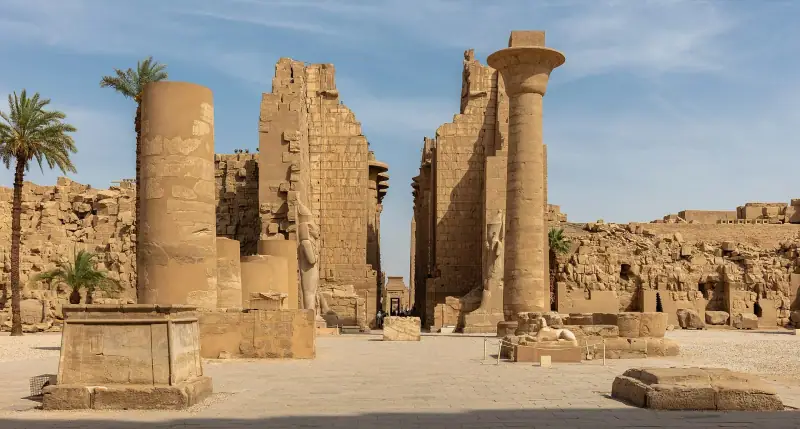
Karnak is not a single temple but a vast complex of sanctuaries, pylons, courts and chapels, enlarged over centuries by many pharaohs. It was devoted above all to the god Amun-Ra and is one of the largest religious complexes of Antiquity.
The showpiece is the great hypostyle hall, a forest of colossal columns, the tallest of which tower over the visitor. The shafts and capitals are covered with hieroglyphs and reliefs. Take the time to look up, but also to look at the details, sometimes still tinted with their original colors.
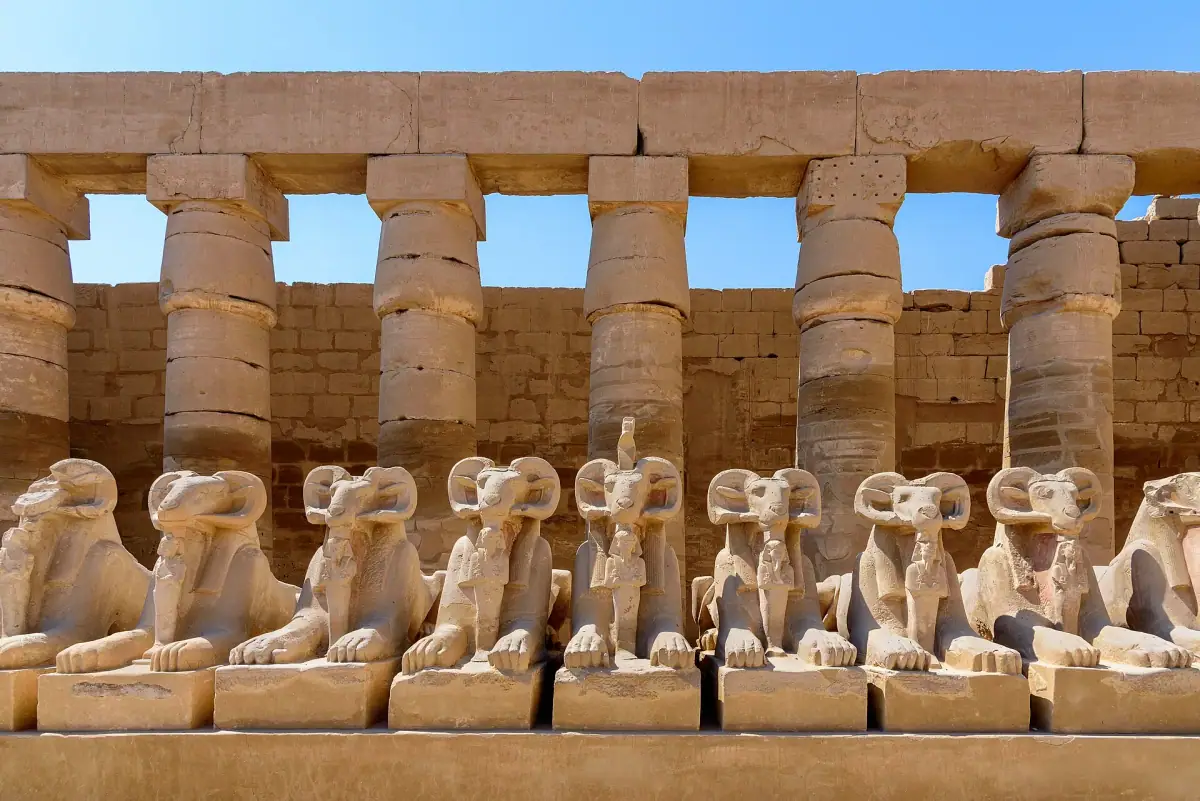
Among the other highlights are the obelisks, the sacred lake and the avenue of ram-headed sphinxes that greets visitors at the entrance. Allow half a day for a serious visit: the site is large, exposed to the sun and has little shade.
Our tip: arrive at opening. Organized groups mostly gather in mid-morning, and the low morning light shows off the stone well.
Guided tours of Karnak and Luxor
An Egyptologist guide gives meaning to the reliefs and columns: compare tours and traveler reviews.
Luxor Temple, magical at nightfall
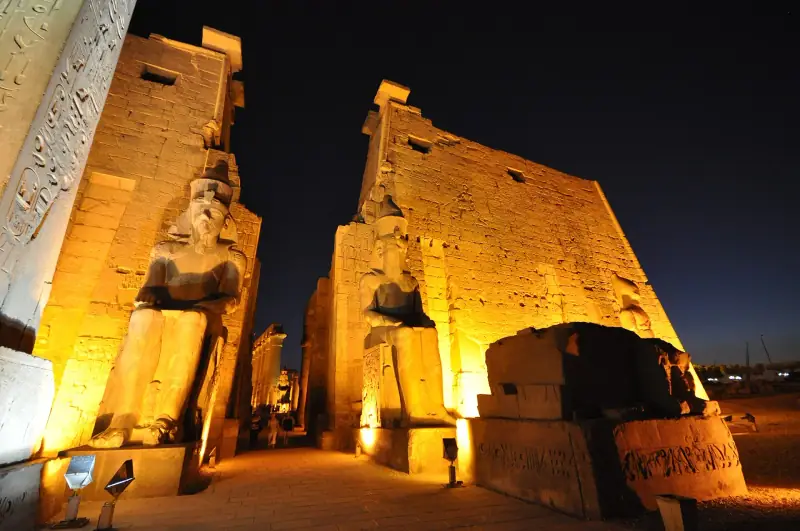
Located in the middle of the city, on the Nile, Luxor Temple is more compact than Karnak, but very harmonious. It was linked to Karnak by a great avenue of sphinxes, part of which has been uncovered over the course of excavations. You admire an imposing facade, colossi of the pharaoh, an obelisk and a colonnaded court.
Its great strength is its night lighting. Once the sun has set, the stone takes on golden tones and the columns stand out against the dark sky. Many travelers go at the end of the day, after spending the morning at Karnak, which lets you enjoy a milder temperature. The visit itself is short: an hour or two is enough.
The Valley of the Kings, in the heart of the Theban necropolis
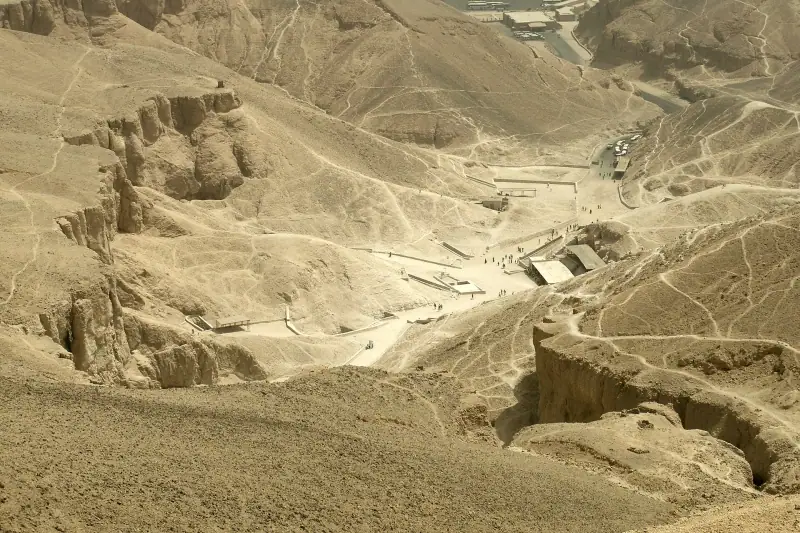
On the west bank, the Valley of the Kings is an arid ravine, overlooked by a peak shaped like a natural pyramid. This is where the pharaohs of the New Kingdom had themselves buried, in tombs dug into the rock, out of sight. More than sixty tombs have been recorded, but only some are open to the public, on a rotation depending on the period.
The entry ticket generally gives access to a limited number of tombs, to choose at the entrance. The walls of some tombs are covered with funerary texts and painted scenes in surprisingly vivid colors, telling the king’s journey into the afterlife. The most famous tombs, such as that of Tutankhamun, may require an extra ticket. It is modest in size, but known worldwide for the discovery of its treasure in 1922.
A few tips to make the most of the site:
- arrive early: the valley is very exposed and heat builds up fast;
- bring water and a hat, shade is rare;
- find out about photography rules, which change by period;
- do not try to see everything: three or four well-chosen tombs are better than a race.
Hatshepsut Temple at Deir el-Bahari
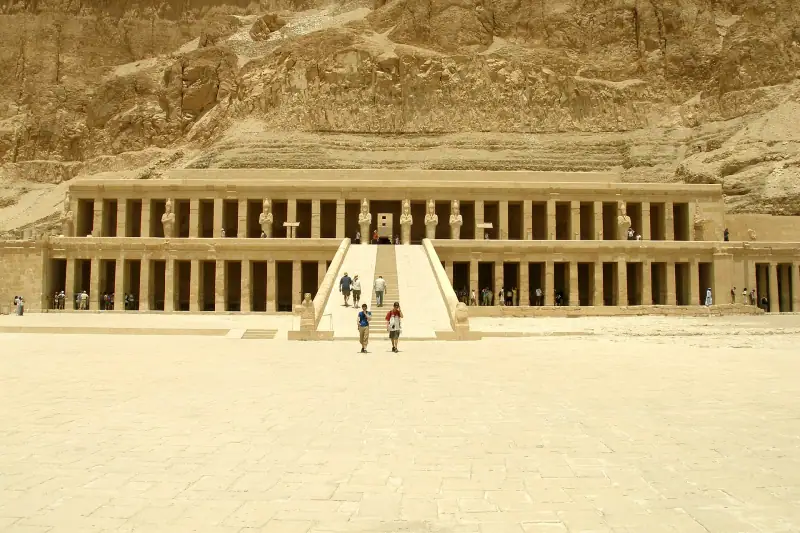
Set against a limestone cliff, the funerary temple of the queen-pharaoh Hatshepsut is one of the most astonishing pieces of architecture in Egypt. Its large colonnaded terraces, built in tiers, seem to rise from the mountain. The silhouette, surprisingly modern, contrasts with the more massive style of the other Theban temples.
The reliefs on the terraces notably evoke a sea expedition to the land of Punt, a famous episode of the reign. The site can be visited in an hour or two and combines naturally with the neighboring Valley of the Kings. It offers little shade: morning remains the best time.
Find a hotel in Luxor
East bank for proximity to temples and restaurants, west bank for calm: compare accommodation by your dates.
Medinet Habu, the Colossi of Memnon and other west bank sites
If you have time, the west bank holds other fine visits, often calmer than the great classics.
- Medinet Habu: the funerary temple of Ramses III, remarkable for its large, well-preserved reliefs, notably the battle scenes.
- The Colossi of Memnon: two giant seated statues, remains of the entrance to a vanished funerary temple. The stop is quick, ideal on the way to the other sites.
- The Ramesseum: the funerary temple of Ramses II, of which only ruins remain, but imposing ones.
- The Valley of the Queens and the nobles’ tombs: tombs of queens, princes and dignitaries, often decorated with scenes of daily life, more intimate than the royal tombs.
To cover these sites, which are far from each other, the simplest is to hire a taxi or a driver by the half day, or book an organized excursion.
Organizing your stay: a two- or three-day itinerary
Luxor suits a stay of two to three nights, whether you are on a cultural circuit or at the end of a Nile cruise.
- Day 1, east bank: Karnak at opening, a break at the hottest hour, then Luxor Temple in the late afternoon and dinner in town.
- Day 2, west bank: Valley of the Kings, Hatshepsut Temple, then the Colossi of Memnon and Medinet Habu if time allows.
- Day 3, your choice: nobles’ tombs, Valley of the Queens, Ramesseum, Luxor Museum or a felucca ride at sunset.
With one more day, the most worthwhile half day outside town is the Temple of Hathor at Dendera, about an hour and a half by road.
Many travelers round out their stay with a hot-air balloon flight at sunrise over the west bank, a spectacular experience but subject to the weather. Book it with a reliable organizer and keep a margin in your schedule; prices, cancellations and children’s age limits are detailed in our guide to hot-air ballooning in Luxor.
Luxor lies south of Cairo, in Upper Egypt. You reach it from the capital by plane, train or on a Nile cruise. To compare flight options, here is a flight comparator.
Practical tips for visiting Luxor
- Heat: in summer, temperatures in Upper Egypt are very high. Visit early, drink a lot and protect yourself from the sun. Winter is the most pleasant season.
- Clothing: light covering clothes, good walking shoes (rocky ground in the Valley of the Kings) and a hat.
- Tickets: each site has its own ticket office, and some tombs cost extra. Prices and hours change, so check them before your visit.
- Hassle: vendors and drivers are insistent around the sites. A polite, firm “no, thank you” is generally enough. Agree on a taxi price before getting in.
- Guide: a licensed guide adds a lot to the visit, notably at Karnak and in the tombs.
Luxor combines easily with Cairo and the Giza pyramids, then with Aswan and the Nile cruise: it is one of the essential stops of a first trip to Egypt.
Frequently asked questions
How many days do you need to visit Luxor?
Two full days let you see the essentials: one day for the east bank (Karnak and Luxor Temple), one for the west bank (Valley of the Kings, Hatshepsut Temple, Medinet Habu). With three days, you visit at a more comfortable pace and add the nobles' tombs or the Luxor Museum.
What is the difference between Luxor's east bank and west bank?
The east bank, on the sunrise side, has the modern city and the temples of Karnak and Luxor, associated with life. The west bank, on the sunset side, concentrates the necropolises and funerary temples: Valley of the Kings, Valley of the Queens, Hatshepsut Temple and Medinet Habu.
Can you visit Luxor without a guide?
Yes, the sites are accessible independently, with a taxi or driver for the west bank. An Egyptologist guide does add a lot to understanding the inscriptions and carved scenes, especially at Karnak and in the tombs.
What is the best time of day to visit the sites?
Early in the morning, at opening, to enjoy the cool and lower crowds. In summer, the heat in Upper Egypt is very strong: plan visits early in the day and keep the afternoon for rest or a felucca ride.
Do you need a separate ticket for each site?
Yes, each major site has its own ticket office. Some tombs in the Valley of the Kings, including Tutankhamun's, generally need an extra ticket. Prices and conditions change: check them at the ticket office or with your organizer before you go.
More Egypt guides
Keep reading
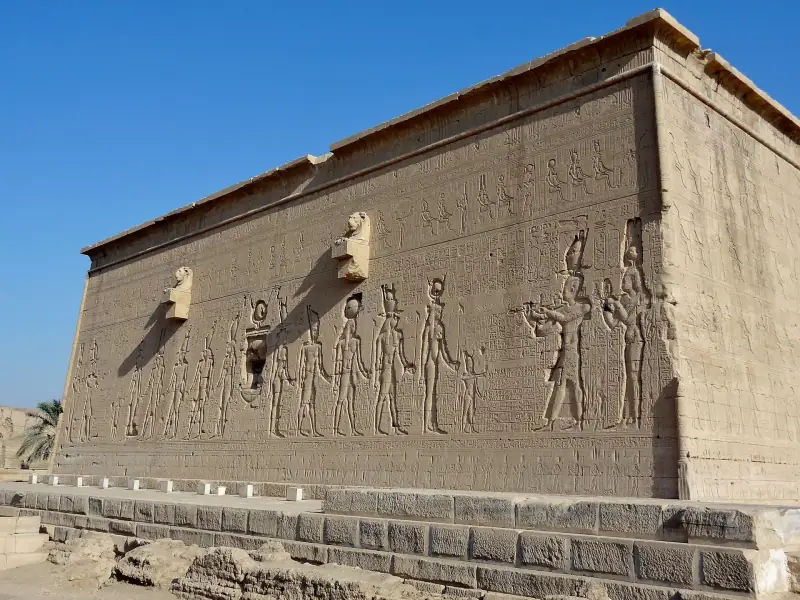
Dendera from Luxor: is the Temple of Hathor worth the detour?
Dendera Temple from Luxor: distance, how to get there, hours, official prices, visit length and what you see (astronomical ceiling, roof, crypts).
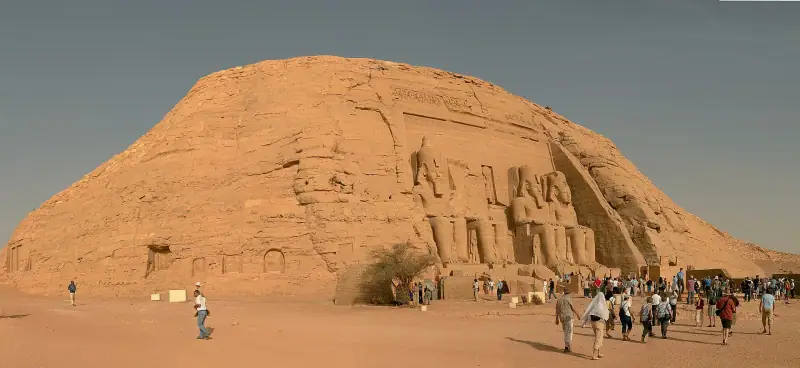
Complete guide to visiting Egypt: regions, must-sees, budget and tips
Visiting Egypt: regions, cities, must-see sites, best time, transport, accommodation and budget. The pillar guide to prepare your trip.
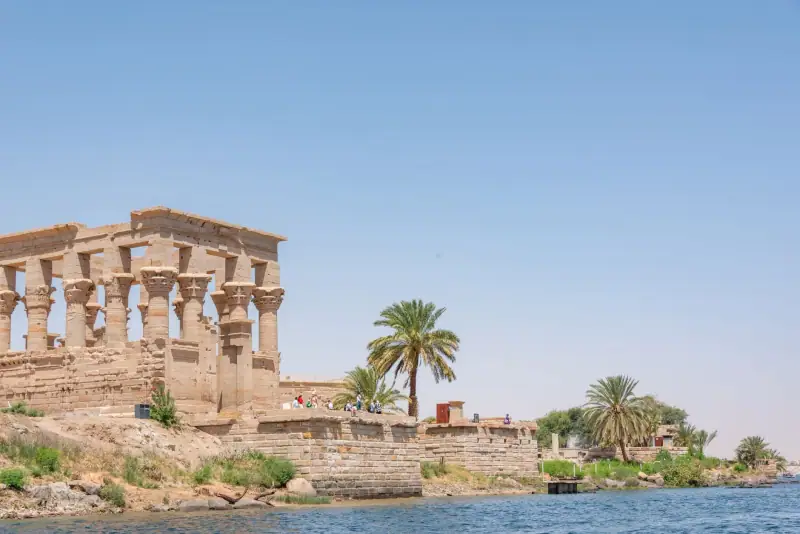
Visiting Aswan: Philae Temple, Abu Simbel, felucca rides and Nubia
What to see in Aswan? Philae Temple, Abu Simbel, a felucca around Elephantine, a Nubian village and the High Dam: visit planning, durations and tips.
Ready-made
Egypt itineraries
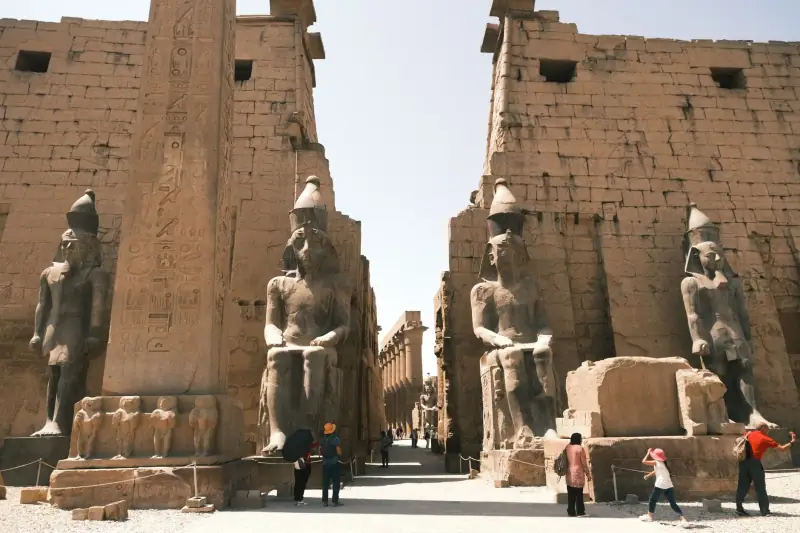
4 days
3 days
3 days in Cairo: a day-by-day itinerary from the pyramids to Islamic Cairo
What to do in 3 days in Cairo? Giza pyramids, museums, Coptic and Islamic Cairo, Saqqara: a realistic day-by-day itinerary with practical tips.
7 days
Egypt 7-day itinerary: Cairo, Luxor and Aswan in one week
CairoLuxorAswan